Category: Editorials

  • Editorial – November 2016

    Art Education is Stuck

    Two years ago someone suggested I answer the question ‘What Happened to Art Education?’. This appealed slightly because it was a subject about which I thought I ought to know more than was the case. Something is clearly awry when so many complaints are aired about the poverty of tuition and when degree shows have become such forgettable, even laughable accumulations of artless clutter.

    My own experience of teaching in art colleges has been limited. In the 1980s I was a tutor in the Photography Department at the Royal College of Art. Admittedly I was hopeless at it. Eventually I quit because of personal embarrassment that my contribution was inadequate and that students deserved better. One problem was that I couldn’t discover precisely how judgements of quality were arrived at – so much seemed arbitrary and capricious, obvious to others but opaque to me. During those years, and subsequently, I lectured and talked at many colleges around the country without ever considering myself an educationalist. Despite overwhelming feelings of being a charlatan imminently in danger of humiliating exposure, to my shame I never refused offers of work – infrequent as these were I needed the paltry fees they generated.

    Not surprisingly the possibility of researching the story of how art education had come to be the way it is aroused my curiosity. As a functionary on art papers for over 25 years I’ve received hundreds of complaints from art students about the absence of practical instruction and of the coercion applied to force students to work in ways contrary to their natural instincts.

    In contemporary art’s administration and education a dead end has undoubtedly been reached. For example, we’ve had nearly thirty years of sameness from the Turner Prize (see page 26). The kind of stunt featured in it now is much the same as it was decades ago. The unchallenged authority of State Art means that indifferent, instantly forgettable work will endure apparently in perpetuity. This year it’s a pile of coins, a few years back it was a pile of ash, and before that piles of second-hand furniture, clothes, rice and stones. Who now recalls (or cares) what all these pile-stunts ‘challenged’ or ‘subverted’? I know I can’t. For the first time stylistic evolution has stopped dead. We’ve reached the end of art history and the beginning of terminal boredom.

    In fine art education we have also attained the equivalent nihilist cul de sac courtesy of State Art’s stranglehold. Those who were taught to do nothing practical now demand others do the same, because this is all they know and their continued employment depends on conformity to an intolerant and self-satisfied orthodoxy. Around 1980, for the first time in 140 years, art education stopped evolving. Everything associated with the past had been dropped and replaced by the ultimate democratic liberty of everyone doing whatever they please.

    In this issue I am publishing my research findings. I’ve tried to précis the story of fine art education from its origins, concentrating on England, and particularly since 1945 when the downhill slalom began.

    I encourage those with greater experience and knowledge to correct any errors and misapprehensions. Within reason I’ll publish all replies. The detailed story of what has happened to lead us to the present dead end needs telling. Regrettably, the inconvenient truth is that at the moment the Government can only afford to issue art students with a vocationally worthless but very costly piece of paper.

    I haven’t been able to propose any way forward because I’m not sure there is one, the current system being so securely rooted in the Establishment. No improvement will take place while a convenient consensus continues to exist between political parties that State Art is all there is. The Left supports State Art because it wants to be seen as progressive, anti-élitist and open-minded while the Right is terrified of being labelled stuffy, reactionary and uncool. Thus, whoever is wielding power State Art will always remain the art of the State.

    At the end of the piece I’ve made some recommendations. If adopted these would make it easier for those who wish to receive a traditional art education without having to experience the prejudice which currently prevents them receiving equal treatment.

    David Lee
    The Jackdaw Nov/Dec,  2016

  • Editorial – September 2016

    Pictures of Nothing and Very Like

    John Moores Exhibition 2016

    Most of Europe’s countries are either bankrupt or in economic meltdown, their infrastructure crumbling and public services reduced; the Middle East and Levant are in post-apocalyptic ruin, in part the result of lies told in our own Parliament; an exodus of desperate humanity is seeking refuge from a criminal death-cult; innocents are being slaughtered in streets all over Europe by brainwashed loonies; across the globe are pockets of strategically induced and entirely avoidable famine; infant mortality in parts of Africa is at worse levels than in Georgian Britain; meanwhile, at home we have thousands of steelworkers needlessly losing their jobs; pension pots of the poorest being robbed wholesale by bloated ocean-going bellies; armies of formerly skilled artisans reduced to wearing hairnets in order to package fatty swill fuelling an obesity epidemic; we have a political élite who are out of touch with what voters think and who award themselves large pay increases and eyewatering expenses and property perks; we are returning to the bad old days of increasing numbers sleeping rough on the streets; we have an education system – 13 years of free, full-time tuition – which is the envy of the Third World but at the end of which a large proportion of our children still can’t read, write or speak their own language properly; pension companies and fat cats steal our money and get away with it, their bosses paying themselves 130 times what their average worker earns; we stand watching powerlessly as an age of repellent inequality in finance, housing and opportunity runs out of control; a materially obsessed populace is beset by mass addictions to alcohol, shopping and virtual reality; our highly educated young adults, already burdened with colossal debts before they’ve done a day’s work, can’t find anywhere decent, affordable or secure to live, public housing for some irrational reason having been killed off; we have profitable companies who employ a disgraceful but fashionable new form of exploitation called ‘internship’, slavery by any other name; and many adults can’t even afford to live on their minimum wages because of engineered restrictions placed on the hours they are allowed to work.

    If ever there were importunate subjects and narratives for visual artists to address surely it is now. But where are the Hogarths, Herkomers, Fildes, Greens, Dorés, Millais’, Bretons, Bastien-Lepages, L’Hermittes, Holls, Caton-Woodvilles, Sickerts, Dixes, Groszs and Kitchen-Sinkers of today? Of all the places they really ought to be, they are not to be found in Liverpool. As far as the latest John Moores (Walker Art Gallery until November 27th) is concerned the world outside might as well not exist.

    What then are the painters in this exhibition up to? With the exception of three of the 54 works (selected from 2,500 entries) they are concerned with aspects of painting itself. They seem exclusively devoted to navel-gazing irrelevance, and in some instances even seem deranged by it. Encouraged by post-modernism, coercive institutions, weak museums and the debased state of art education, they have been reduced to paranoia to the extent of painting pictures of nothing. And so inadequately limited has been their expensive further education that even if they wanted to they own no means of communicating to others.

    All the painters in the John Moores can come up with is variants of the following drivel, and I quote from the catalogue:


    “My paintings are visual fictions with concrete reality.”

    “I shift from one painting to another, experimenting playfully with mark making.”

    “My practice is to construct paintings that fix colour and form in various, tense economies.”

    “As I work, a painting’s alchemical make up, and the substance and process, is reflected in sync with my ideas and experiences.”

    “My work revolves around the merging of private and public spaces.”

    “My practice explores perceptions of pictorial space and the extent to which figuration can be used as a tool for pictorial enquiries.”

    “As a painter, I enjoy the problem of using two dimensions to convey an experience of time and space in the physical world.”

    “My works are explorations of the art world.”

    “My current paintings are an exploration of the intangible within the human condition.”

    “My practice takes up aspects of inherently human activity that begin with the hand.”

    “In my interrogations of the technical problems of the medium, I frequently conceive of painting as a two-dimensional stage space that curtails fictive distance as it represents it.”


    The judges are no better. Here is Ansel Krut, who used to be a serious painter, describing the winner (above): “The painting uses an almost minimal vocabulary to open up a world of great sympathetic imagination. It touches on the nature of silence, on distance and on exclusion. But most importantly, it touches on the privileges of looking.” Ansel, old chap, you’ve caught the disease. Who seriously gives tuppence for “the privileges of looking”, whatever they might be? I spent six years at some of the best universities in the world in order to have not the faintest idea what you’re on about. Who have you written this crap for? People are they? How many? Three?

    The catalogue introduction is the work of another judge, one Richard Davey, an art critic who is also a priest. Suffice to say what he has written will be incomprehensible to his parishioners, if he has any left. As far as State Art is concerned priests make perfect critics. They already believe a pile of fantastical tripe so it’s no real sweat to convince themselves – by using the religious blind faith State Art always demands of its adherents – that incompetent daubing irrelevant to everything except itself is highly significant. The winner’s work is described by Davey in that phrase beloved of desperate State Art hacks – “deceptively simple”. That one always makes me laugh. Believe me there is nothing deceptive about this picture. There are no hidden depths, veiled revelations or secret corners. Pure and simple it is simple. What you see is all there is. There is nothing of life here. It was born quite dead.

    Artists have been hand-picked for their credulity in having fallen for the irrelevant precepts of an incompetent art education. Surely a good artist is by definition someone who communicates, not just to three others in the know but to everyone. They should consider it their duty to be involving, otherwise what’s the point? These painters don’t seem to realise that they’ve been thoroughly cheated by charlatans.


    Being part of the Establishment, State Art has taught and encouraged those in its seminaries to surrender the right to be important and to make lasting work. This disgraceful orthodoxy has condemned its painters to be fashionable for seconds but irrelevant in perpetuity. Fine art ‘university’ education is the most outrageous  failure, but it is a disaster we seem incapable of escaping.

    For what it’s worth the thoughtful pictures are Steph Goodger’s crude efforts based on famous 1871 photographs of Parisian communards ranged in tiers of coffins, a subject with obvious modern echoes; a decent enough account by Mandy Payne of a concrete landing on a grim housing estate; and a Polaroid-size monochrome by Nicholas Middleton showing a group of people staring into a tunnel used as a fly-tipping site. These works all committed the sin of having a subject other than what happens if you subject paint to this, that or the other means of application. They weren’t great paintings but their authors were at least making some effort to refer to life.

    I’m the sort of non-academic simpleton dismissed as unsophisticated and disadvantaged by those who select and show this sort of stuff. They tell me that I’m not looking hard enough or often enough, and that I’m not ‘poetic’ or ‘sympathetic’. In truth my failing is to like pictures that are beautifully painted and which move me about failings and fragilities,  love, tenderness and fear, death too, and which open my eyes and senses to things I haven’t seen or felt. Why should anyone give a toss about how paint behaves under this or that condition, any more than if a great writer uses two, three or all eight fingers to type with? Such matters are an impertinence. We’ve now had more than a generation of this stagnation and it’s become boring beyond endurance.

    The John Moores is what you get if you don’t teach people to look beyond themselves and the insularity of Serota’s frightened and petrified art world. It’s also what you get if you allow an important prize to be kidnapped by an intolerant doctrine like State Art.

    May I suggest that in 2018 the prejudging of the John Moores be conducted exclusively online by a programme which automatically eliminates entrants using any of the following words; ‘exploring’, ‘exploiting’, ‘challenging’, ‘testing’, ‘examining’, experimenting’ – and especially if these precede ‘notions’, ‘practices’, ‘aspects’ or ‘theories’. No accomplished artist ever used any of these descriptions because genuine artistic intelligence precludes such nonsense.

    An extraordinary paradox in recent art, including the paintings featured in the current John Moores, is that the Left staunchly defends allegedly ‘progressive’ artists who paint nothing comprehensible or recognisable. As art has travelled further away from appreciation by the masses (a phenomenon first noticed by a troubled William Coldstream in the mid-1930s), so the Left has supported more avidly art’s increased exclusiveness. Don’t you find that odd? 

    David Lee
    The Jackdaw Sept/Oct 2017


  • Editorial – July 2016

    Der Clapham Strassenbahn

    When very young, and when not train spotting, I was a keen bus spotter. It was an ideal apprenticeship for a fledgeling art historian. It involved identifying, sometimes at a considerable distance (through rain), the beautifully crafted, hand-built models, of which there were many different marques and specifications. Every town corporation in the county had its own company, each with its distinctive colour combinations and decorative embellishments. All of these buses were built in England: for example, Crossley’s, whose factory was only a few streets from our house in east Manchester, built a splendid three-axle trolleybus for the Denton run up Hyde Road. By the age of ten I could have told you where I was – Rawtenstall, Stalybridge, Bolton, Ramsbottom – by their buses. My two favourites were Crosville’s single-decker Bristols and Lancashire United’s Foden double-deckers (ex-Sandbach) with their Art Deco frills. Identification could often be established by sound alone. The Bristol whined through its gears and even bouncing downhill roared alarmingly as though it was straining in bottom. The Foden’s engine turned over with a reassuring metallic tick, not unlike a loud blackcap.

    In 1970 I visited Holland for the first time arriving at Rotterdam railway station via a local stopping train through polder landscape from The Hook – the diesel was bright yellow and blue with a blunt bull nose, quite unlike the flat-faced, toilet-green electrics on our local line (built at Wolverton Works). Everywhere were whiffs of Art Nouveau. Tendrils, ogives and curlicues cut no ice in Manchester; we liked bricks, circumcised chimneys and oblong windows. The art of Mondrian, Vantongerloo, van Doesburg and van der Leck here made thrilling, perfect sense. Colours were primary, graphics Symbolist, planning rational – here Modernism was alive. Lancs looked nothing like this. Thus, we got Lowry and they produced Rietveld: Oldham Road Dwellings versus the Schroder House… I still love both.

    These geriatric musings were prompted by a news report from Birmingham. A councillor was expressing delight with the city’s new trams. “They give a real European feel to Birmingham,” she trilled in that comical voice they have – a royal European foil. “We look as though we’re royally part of Europe now.” Indeed indeed, Brum’s trams were designed and built (like Edinburgh’s) outside San Sebastian. From Eindhoven to Berlin, Toulouse and Bratislava Brum’s trams now await at every Ryanair outpost.

    Manchester also has an expanding tram network. Nippy and frequent they’re criminally dear but, like Brum’s, our trams are ever so European … they are even owned by the French company that runs the Paris Metro. And if on your travels you happen to visit Cologne, Croydon or Blackpool (which until 2012 had unique double-decker trams with streamlining and two-way seats) you’ll see Manchester’s trams there as well, because they’re built by the same lot in Germany and southern Spain.

    Two days after this issue goes to press the referendum takes place. My grouse with the EU is that it’s meddling regulations have contributed significantly to making everything and everywhere look the same. By insinuating uniformity it has replaced difference with committee-induced sterility. But why must Birmingham or Blackpool have to look like Budapest? And what sly brainwashing has been sneaked through to convince municipal jobsworths that such pan-European overlaps are in any way desirable? You might as well walk around Europe now with eyes closed because you know that flats and offices, clinics and swimming pools, buses and trams, cars and vans will look just like home, because they are the same, and all dictated from Brussels (whose own trams, incidentally, also mimic Manchester’s because they derive from the same production line near Dresden). The homogenising of appearances resulting in the visual poverty of surroundings, courtesy of the EU, is the most grievous cultural loss of my lifetime. Before we joined the EU, streets across our continent were a free museum and immeasurably more stimulating to experience than they are now. It is precisely because anything but variety is unendurable that I loathe the EU.

    David Lee
    The Jackdaw Jul/Aug 2017

  • ‘Sculpture’ v. sculpture

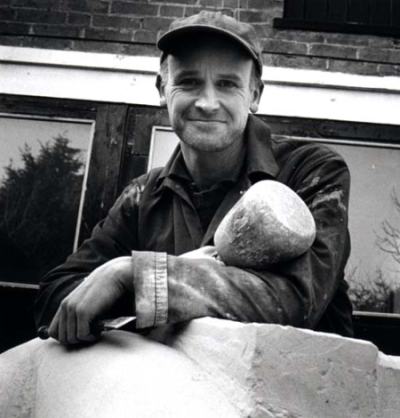
    Martin Jennings

    Among the least impressive legacies of arts administrators’ obsession with Modernism and its aftermath is the impossibility of predicting a work’s status solely from its appearance. You might form your own view about it, but you can’t predict what State Art’s opinion will be because there are no published criteria or guidelines for making such a judgement. You can’t second guess a whim. The bottom line is that we have allowed a body of ‘experts’ to evolve who unashamedly make it up as they go along. This gullibility on our part for allowing it to happen, and the smug charlatanism of those in authority who are impervious to and ignoring of criticism, is the inevitable result of being for decades under the thumb of an establishment which – for all its daily protestations to the contrary – is not only awash with cash and therefore patronage, but has decided, god-like, that anything at all can be art if it says it is. In its way State Art’s is as extreme a form of capricious and intolerant dictatorship as any regime in North Korea.

    There is a useful current example of how fossilised prejudice and arbitrariness inform establishment policy. It concerns two works of public art each designed for city locations. Both are, on the face of it, conventional figurative bronzes. Superficially similar though they may seem, to the Arts Council there is an enormous gulf in acceptability between the two, a difference invisible to you and I. One of these works, that recently unveiled outside the tacky new public library in Birmingham and called A Real Birmingham Family, is a ‘challenging’ piece presenting two local women and their children. The other, depicting women in overalls and commemorating the crucial contribution of female workers to the steel industry during the World Wars, will soon be unveiled in Sheffield.

    The Birmingham sculpture is by former Tate trustee Gillian Wearing. Obviously she didn’t make the sculpture herself, a skilful craftsman will have run it up from snaps. The result is a hideous, styleless simulacrum of real people, the point of it being to promote the view that nuclear families are not now the norm – how very trendy, how perfectly BBC. This sort of conceptual conceit must of necessity be a sculpture-free zone because the last thing Wearing wants is for the object to be gauged by its form rather than for its ‘idea’ – albeit one which, to the rest of us, would be so small as to be not worth the effort and expense of illustration. As sculpture it stinks, it’s stillborn.

    In contrast, the Sheffield piece is a work of imagination and looks like a sculpture because it was made, with his own hands, by Martin Jennings, a renowned specialist in this area of modelling and invention. To State Art this sort of traditional approach is vile anathema.

    But here’s the real rub. Conceptual art, even when it comes in the otherwise despised bronze figurative form, is funded by the Arts Council, to whom Wearing is well known. She has had two national touring shows and has exhibited in every ACE-funded gallery. ACE also bought in 1999, for £30,000, her Turner Prize winning film in which two dozen coppers stand silently still for an hour. Confirmation of her A-list status is supported by the fact that 31 of her works are in the Tate, Arts Council, British Council and Government collections: curiously, all four own an edition of the same print, unnecessary duplication of a kind that ought to have been outlawed years ago. Wearing’s family sculpture was administered by local Ikon Gallery, which itself receives over half a million a year from the public.

    In contrast, Sheffield had to find all the money through public donations because Martin Jennings is the wrong kind of artist.

    State Art always prefers ears to eyes and has never based funding decisions on the merit of what you actually see. Why artists nationwide are not campaigning about ACE’s continued unfair discrimination and casuistry is baffling.

    Here is yet another filthy, indefensible racket.

    David Lee

    Jan/Feb 2016

    http://www.martinjennings.com/Biography.aspx

  • Do you feel patronised?

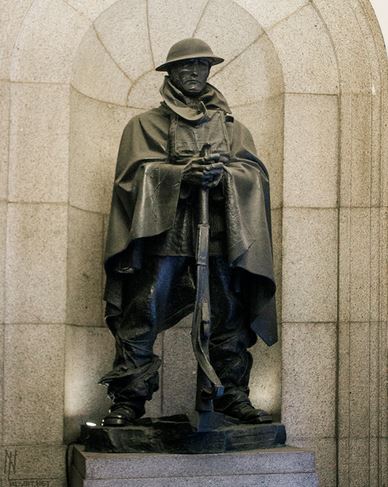
    Jagger SentryCrossing the centre of Manchester recently heading for the match, an old friend asked me to step inside a handsome Victorian mill considered the Medici Palace of Cottonopolis.  He’d worked on the conversion of this pile years before and hadn’t forgotten the impression a particular bronze made on him as he entered the building each morning. Although he admits to knowing nothing about art no one needed to tell him this statue was remarkable. He could see it and feel it for himself. It had left its mark.

    Between the grand arched entrance, so typical of quattrocento Florentine palazzi, and the high lobby are matching shrines hidden from the street. On the right is the domineering silhouette of a figure instantly recognisable to fans like myself as Charles Sargeant Jagger’s The Sentry. This was a most pleasant surprise. There’s no mistaking the gravity of an encounter with Jagger’s work, recognition is immediate, the signature unique. His pieces celebrate the staunch resolve and dignity of ordinary blokes. I tried to locate this piece decades ago but never managed to see it, the building having for years been boarded up. Surviving calls from rapacious developers for its demolition, the 1856 edifice eventually reopened in 1982 as the Britannia Hotel, since when its ground floor bars and cafés have become popular night haunts.

    In the matching chapel opposite the imposing figure are inscribed in granite the names of 87 employees of S and J Watts, the wholesale haberdashers for whom the mill had originally been built, who had been killed in the Great War. Erected in 1921 the sculpture was among Jagger’s first commissions following the delayed start to his career caused by his own exemplary military service.

    Though undeniably impressive few of those entering the complex will notice the sculpture. They are probably too eager to avail themselves of, among other thrills awaiting, a ‘Happy Hour’ offer of two pizzas and two pints for fifteen quid, the advertising board for which stands a few feet from Jagger’s plinth.

    Eight years ago the bayonet was hacked off in a drunken prank and has never been replaced despite this being an important detail of a Grade II* listed work. To check on the original appearance including bayonet (the maquette is inset opposite), there are reduced versions in Liverpool’s Walker Art Gallery, at Eltham Palace in south-east London (Stephen Courtauld, who lived there, was a fellow officer with Jagger in the Royal Worcesters and, coincidentally, it was his family’s textile firm which eventually bought the Watts building), and in the museum at Rotherham where Jagger was born, the son of a colliery manager.

    Exactly 100 years ago, Jagger (1886-1938), who had on declaration of war instantly volunteered with the Artists Rifles, arrived back in England from Gallipoli via a Malta hospital having been shot through the shoulder, a potentially disastrous injury for a carver and modeller. But Charles recovered quickly and was re-posted to the Western Front where, in April 1918 during the German Spring offensive, he was sniped through the chest two inches above his heart. Astonishingly, he survived and was awarded an MC for conspicuous bravery. This wound undoubtedly contributed to a cruelly early death due to heart failure accelerated by overwork.

    When the war ended he took up the Rome Scholarship won before the outbreak when graduating from the RCA. Recommended by George Frampton, he was soon making war memorials, a job for which, given his experiences, no one could have been better qualified. Jagger famously said: “I got to love the Tommy in the Trenches and I’ve tried to show him as I knew him – not as he looked on parade at home.” The caped sentry’s legs are protectively swaddled in sack cloth against the cold and wet, an informal addition to uniform permitted during frontline duty.

    When The Sentry was unveiled opinion was split down the middle. Liverpool architect Charles Reilly remarked: “It is extraordinarily impressive as it stands there with intense immobility, a little large and crude perhaps for its surroundings; such a figure makes one understand the rock of national character against which the German flood broke in vain. It is truly monumental in its combined steadfastness and power. It is sculpture like this, and this only, free from any trivial suggestions, that can at all express the depth of feeling the war called forth.”

    Meanwhile, Roger Fry, who was always proud to know better than anyone else and who had already established himself as chief standard bearer for the avant garde, wrote of Jagger’s figure: “Nothing approaches the commonness, the effective, brutal, catch-penny vulgarity of his work”.

    Fry and his fixer followers won the subsequent taste war hands down. Jagger, Ledward, Frampton were forgotten, their works neglected, even wantonly ruined in the case of Jagger’s Unilever carvings. Understanding how the Establishment operated Fry was the first of a breed – today totally victorious – whose addiction to artistic novelty, whatever character it takes, is all and absolute. He was the first to proclaim loudly his low opinion of everything traditional, a view which eventually became so uncritically accepted as to become a basic qualification for anyone seeking preferment in the visual arts – Fry is the Vito Corleone of State Art. Those who refused to follow where Fry, Clark, Keynes and Co. led were dismissed as so many reactionary simpletons. To be an apostle of the avant garde was to be right – no argument. Thus, Fry’s heirs have learnt over decades of ascendancy to assume a patronising aesthetic and intellectual superiority over the rest of us. They treat us like blind children who are too thick to learn the big secret to which they themselves, alone, exclusively, enjoy special privileged access and insight.

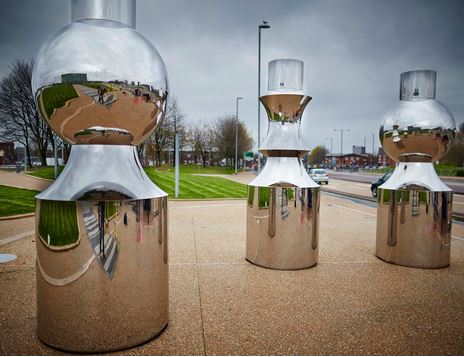
    All I would ask is that you look for yourselves and are not cowed by those claiming to know best. Because they don’t. Perhaps Manchester’s Jagger really is vulgar, meritless and pedestrian. And perhaps Ryan Gander’s reflective bollards are, truly, “a world masterpiece”. What do you think?

    Leaving Jagger behind, as chance would have it our route to the ground took us past Gander’s chromium cruet. (It was a very cultural evening.) “What do you make of that?”, I enquired casually. “What’s it for?”, my friend asked.

    David Lee

    March/April 2016

    Ryan Gander Manchester


  • Museums – our national genius

    PompeiiI may frequently express criticisms about their finer workings but British museums and galleries are generally superbly run. Heroic efforts are made to minimise the impact of funding cuts so that even regular visitors will notice little or no impact. From looking at the outward face of our museums you would never guess the country was in anything like the mess the numbers would indicate. They open on time: they have excellent facilities; their staffs are visible, willing and helpful; their experts are sought after the world over; they are clean; they have disability access to the ceiling; their bookshelves cater to all types of reader and interest; and their collections are by and large well maintained, sensitively exhibited and most supply informative captions. Many of them have for centuries been kept open free of charge for everyone, often against all odds and arguments. They are exemplary resorts of enlightened thinking about education and the preservation of history. This quiet effectiveness is a substantial achievement which is easy to take for granted. The truth is that when it comes to museums, in Britain we have been spoilt.

    This native genius was recognised recently when the Italian Culture Minister announced a fundamental shake-up in his own country’s major museums by throwing open twenty directorships to all-comers. Heading the published lists of dream candidates were many Britons. That Italy desperately needs help running its museums can not be in any doubt in the minds of those who have recently visited that country.

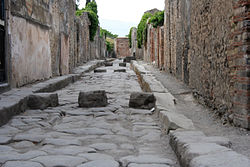
    Newspapers have lately reported that Pompeii is at last rising from the ashes of incompetence and corrupt administration. Having been partially rescued from beneath the sludge of AD79, in recent years other man-made ravages have befallen this astounding place –  structures have collapsed, excavation has ceased, and the site has been subjected to looting and vandalism. All of that, we are proudly informed, is now in the past. Sanity has set in and the place is safe in Italian hands. Millions of euros (doubtless originating in Germany) are being lavished to turn Pompeii into less than the unloved disgrace it has been in the recent past.

    Don’t believe a word of it. If Pompeii is typical of how Italy runs its museums – and it does seem to be – no wonder British and German experts are being wooed, because even organising the basics efficiently defeats Italians.

    The situation is hopeless and it starts as soon as you arrive. Gates open half an hour late, which especially annoys those scores who have arrived early to steal a march on a punishing summer sun. Once admitted, crowds jostle forever to buy a ticket because only two people are taking money. Matters are made worse because neither has any change. They accept only the correct money which must involve coins. In Italy it is virtually impossible to have coins not least because no one will give them to you: they hoard them like juju beads. The inevitable chaos is entirely avoidable and compounded when concessionary cards are not accepted unless accompanied by a passport. Endless negotiations ensue with each now sweating and thoroughly exasperated visitor. You then try the bookshop for a guide and detailed map. They don’t have any change either and diagrams in the Blue Guide are better than the childish plan costing a euro. So extreme is the provocative indifference of staff it can only be intended as a calculated insult. It’s as though they don’t want you here.

    In general museum bookshops and cafés are, throughout Italy, not seen as important revenue earners or as crucial a part of further education as we treat them in Britain. At Reggio’s museum they provide a rudimentary brochure for 7 euros about the Riace bronzes, the most precious sculptures of the ancient Greek world. Many of those making the trek to this furthest bunion of land will be willing to pay a premium for something more detailed. There is no bookshop at Tiberius’s villa in Sperlonga, the remarkable Villa Poppeia at Oplontis, or at the Agrigento Museum with its stunning collection of red and black ware.

    The anarchy characterising admission to Pompeii follows you about the site. In nearly all the most treasured areas there is no visible security. At the distant Villa of the Mysteries, to which I arrived in advance of everyone else, not a soul was there to protect what are among the most important paintings in the history of classical art. Perfect for me, despite the fact that they weren’t properly visible because unlit, but I fear dwelling on the damage parties of Europe’s and Asia’s squealing, uninterested and accessoried oiks might wreak on a place like this – they look with their hands.

    They say that Pompeii is the place in which to wander, get lost and release your imagination. Indeed it is, but you can’t do this because too little of even the excavated area is open. Crime-scene tape forces you to remain on thoroughfares which rapidly become Wembley Way on cup final day.

    At the farthest extremities of the site there are no services. There is nowhere to sit comfortably or to buy the fluid necessary when, as on my recent visit, the temperature soars beyond forty degrees centigrade. There are water fountains if you are prepared to trust the liquid coming out of them in a city with a pervasive smell of drains and where essential social infrastructure of hygiene and refuse collection have disintegrated. (Naples is a memorable city but filthier even than Oldham.) A third of my eight hours were spent sitting reading either Mary Beard or an old guidebook while trying to satisfy unquenchable thirst. An air-conditioned café on the periphery near the amphitheatre with coins in the till, simple food and cold drinks, and ice cream, would have cleaned up. By the time they’ve beaten the long procession around to the theatres, all visitors are as stripped and dessicated as Peter O’Toole staggering across the Devil’s Anvil. It would be so easy to make this unique place even more of a memorable experience than it is.

    Beside its serial inconveniences, the site’s main offence has to be a new building of which administrators are so proud as to make it a feature of all publicity material. As with many European museum extensions, this contract has gone to a person with no visual sense at all. It is a large pyramid whose job is to display in a sort of cock pit the famous plaster casts of the perished. This structure should have been built almost anywhere other than where it has been. Placed bang in the middle of the amphitheatre, the full effect of that otherwise special place is thus ruined. Visitors are not allowed on to the terraces so the only panoramic experience of it is as you enter the arena, only to find the view impeded by a structure which has ‘Brussels’ written all over its design and materials.

    Pompeii’s amphitheatre is significant. It was built in the first century BC (160 years before the Colosseum) and was the first permanent stone Roman amphitheatre; other similar arenas are a refinement of the incipient form found here. It has two sets of external diagonal staircases giving access to upper tiers. On a previous visit I’d had been struck by the impact of the interior, and was looking forward to seeing it again, a spectacle now regrettably sacrificed to a populist stunt.

    Pompeii is not unusual in Italy. Other sites seem equally to be run for the benefit of anyone except visitors. Lack of facilities are routine. At Herculaneum closed areas include the Villa of the Papyri, the quayside wharves housing all the skeletons of those attempting to flee by boat, the still underground cruciform pool as well as numerous insulae. Visitor services are rudimentary and limited to what can be dispensed from a machine. The ‘bookshop’ is hopeless for anything but souvenir trash. Even the National Archaeological Museum in Naples has whole wings and floors closed and, again, vending machines and few seats in place of a cafeteria.

    Italian museums are throwing away money whose collection would allow them respite from EU- and IMF-imposed cuts to Government and local expenditure. The Tate self-generates an astonishing 63% of its own income. The National Gallery makes three times more from cafés and shops than it does from exhibition admissions. The Royal Academy rakes in almost twice as much from retail activities than it does from ticket sales.

    Also, as with Pompeii, the protection of priceless treasures is generally so disgraceful it’s almost an invitation to looting and theft. At the museum of Tiberius’s villa near Sperlonga, which contains some of the most important Augustan sculpture, four middle-aged attendants, obviously recipients of some local authority sinecure, are slumped in the entrance indifferent to what is happening throughout the otherwise unprotected museum and grounds. Hardly any information is provided on this amazing site which has a massive coastal grotto – now busy with the aerobatics of rare pallid swifts – originally housing sculptures possibly by Polidorus of Rhodes, to whom some attribute the Laocoon. The same is true at the great museum in Agrigento where only the celebrated eponymous Ephebe – a close relative of the Kritios Boy in Athens (and which recently cropped up on the cover of Private Eye) – has its personal attendant playing games on a mobile telephone. In four hours at Hadrian’s Villa, in a complex the size of a large village, there was no security at all. Apart from the ticket office lady it was a ghost town. This is a definite advantage, as it allows furtive exploration of decorated areas inside the baths which are inexplicably taped off.

    A word of advice for cultural tourists to the Campagna. For the first time I visited the atmospheric Villa Poppeia, ten minutes from Pompeii in Torre Annunziata (Oplontis). Also interred in 79 this is not on tourist routes yet houses the finest collection of frescoes in the four Pompeiian styles you’ll see anywhere. Go in the evening and you’ll wander undisturbed. Its murals should be compulsory viewing for any art history student, and especially for those with a developed interest in the evolution of how a third dimension is depicted. Steep recessions and trompe l’oeil effects are dazzling and the drawing, particularly of figures, is flawless and exhibits complete assurance. Being Imperial in origin – Poppeia, poor lass, was Mrs Nero – these paintings are of a quality which knocks spots off most decoration encountered in the urban houses of Pompeii and, to a lesser degree, Herculaneum. Poppeia could afford artists for whom foreshortened figures in complicated groupings and poses were second nature. Natural history scenes of flowers, insects and birds in a long painted trellis and arcade beside a swimming pool are thrilling beyond description, the most magical work of its type I’ve ever seen.

    Any defence of Britain’s museums should start with the magnificent fundamental principle underpinning every aspect of their existence: this is that we actually want those who own them and their contents, the public, to benefit from their existence. Everything is done to further this aim. We encourage attendance and hope that some, whose curiosity is roused, may often return. Many have argued, including myself, that the commercialising of British museums is a disgrace. Having experienced the alternative I take it all back. In difficult conditions our national museums are doing a tremendous job. They now need to address urgently problems caused by their own success, most notably that of overcrowding.

    David Lee

    2015

  • Fibres torn from the brain

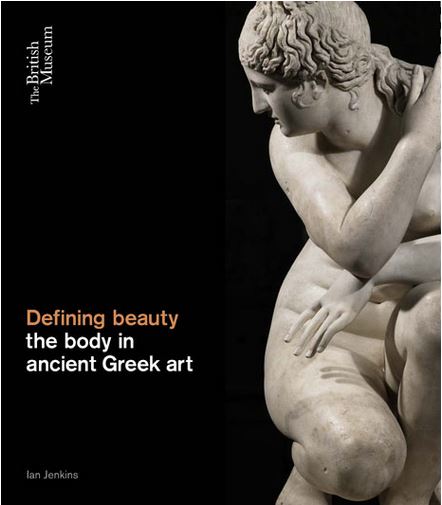
    Body in ancient Greek artIn all the doting coverage of ‘Defining Beauty: The Body in Ancient Greek Art’ at the British Museum, no mention was made of the fact that the bulk of major exhibits featured were from the museum’s own collection. Stupidly, I had believed – and perhaps was even misled by advance publicity – that the exhibition would feature a range of major sculptures I hadn’t seen before. I should have known better. During the months before the display opened, regular visitors would have noticed a weekly disappearance of prize pieces from the Greek and Roman galleries. Indeed, for two months in advance of the show half the Duveen gallery exhibiting Parthenon material was crudely boarded off like a building site. Art critics, many of whom nowadays are at sea dealing with anything made before last weekend, were bowled middle stump by Defining Art. They didn’t know the BM sufficiently well to realise that many works for which they were recommending the public pay handsomely could have been seen free any time in the preceding 262 years and will be free again after July 5th when the spectacle closes. It serves the museum right that attendance for what was doubtless planned as a cash-cow blockbuster hasn’t risen above a trickle. A sad irony is that works are better appreciated in the deserted exhibition than they are normally when enveloped by noisy swarms of disaffected foreigners shuffling along with scarcely a glance at anything deemed unworthy of a selfie. It goes without saying that the more important works illustrated in the accompanying book (which isn’t a catalogue), indeed the crucial ones to the show’s thesis, were not included in the exhibition: they live in Greece, a country with whom regrettably we have no dealings.

    We’ve become inured to the scam operated by many museums whereby they demand payment for what should be gratis. And the Department of Culture, the House of Commons’ Select Committee, and assorted museum trustees, all otherwise so proudly defensive of our free museums, let them get away with it. However, Defining Beauty set new standards in such fraud. With the exception of a rare bronze of middling quality recently trawled from the Adriatic off Croatia, the influential Belvedere torso from the Vatican and a few oddments, I emerged feeling well and truly robbed of £16.50.

    In previous issues I’ve criticised the BM for misrepresenting the experience of a visit there. We’ve been told often, mainly by the Director, that the museum tells a definitive story of classical sculpture and civilisation and shouldn’t be tampered with – this is their Elgin Marbles Sicilian defence. The collection is too patchy to attempt any such thing. And even if it were not, all the galleries are not open at the same time anyway. Visitors are never allowed to see the full story. Recently, I was ejected from two rooms in quick succession as they were closing only minutes after opening. They claim shortage of cash but in the last 15 years the BM has spent hundreds of millions on two major building projects, one of which is a shopping mall with a vile swimming pool roof. Constant closures ensure that many of the more fascinating pieces are off bounds every day. On my most recent visit galleries housing the Bassae frieze and the Mausoleum of Halicarnassus were, as usual, shut. But at least the wondrous, blissfully empty architecture galleries, in my experience closed for years, were open ­– a red letter day indeed.

    ­ As I write, news arrives that the BM has leased for five years 500 works to a Qatari museum for an undisclosed fee. Depletions to galleries of the sort mentioned above will, it seems, become a permanent fixture as the museum realises its main financial asset is the quality of collections they can pimp to the highest bidder (which, conveniently, fucks Greece). Am I the only one who thinks renting masterpieces in bulk to the Middle East is just a tad risky?

    We are entering a different age to that post-war world of museums where I discovered escape, solitude, inspiration and willing expertise on tap. Museums no longer principally exist to benefit those dedicated to what they preserve. I regret this loss of innocence and its replacement by venal opportunism. At the same time, I’m grateful to have experienced the best of it while it lasted.

    David Lee

    July/August 2015

  • Are you disadvantaged?

    The Department of Culture recently published a White Paper, the first from that department since Jennie Lee’s in 1965, and apparently only its second ever. This chic pamphlet, in truth more PR exercise than policy document, prominently contains that new-age mantra, “access must be increased for those from disadvantaged backgrounds”. The Arts Council also write this sort of optimistic guff, and they don’t mean it either. They only mean it if the ‘disadvantaged’ are prepared to like what the Arts Council want them to like. God forbid that the ‘disadvantaged’ should actually express preferences of their own. And this must echoes its 1965 predecessor – they were on message then too: “The best must be made more widely available.” Imperative or not, nothing happened. The disadvantaged, and presumably they mean anyone who doesn’t visit museums, weren’t seduced by free admission then and they won’t be today, or tomorrow.

    If contemporary art fanatics had their way they’d make gallery attendance compulsory, requiring a form of mass re-education: “You will watch this interminable video by our favourite and extremely challenging blurry filmmaker from Kazakhstan … who we got plastered with three nights running at the Gwangdong Biennale.”

    Access to museums already being free, how might the disadvantaged be forced into submission? Two possible answers suggest themselves. You could round up pasty-faced skulkers on a sink estate, deposit them outside a museum and have the director and his staff fire kalashnikovs round their feet until they flee into the galleries. Alternatively, you could exhibit the sort of stuff which might appeal to these disadvantaged folk. A display of assault rifles, stillettos and machetes perhaps, or violent video games and snuff movies, or panoramic tellies with full Sky Sports and pornography packages. You might scatter burger boxes, skunk butts, crisp bags and beer tins under the pictures in order to make everyone feel at home. And why not offer them a couple of free ten-pound bets? That seems to work.

    Curiously, there’s no word in the White Paper about the ‘advantaged’ who don’t visit museums. This includes most aristocrats. They’re also thick, inbred, ill-mannered, drug-crazed and unemployable. And do tell me Squire Vaizey – while I’ve got you on – am I disadvantaged because I’d rather have my teeth pulled by Hogarth’s dentist than sit through an opera? Give me Buddy Holly any day than some caterwauling eyetie. And I’d rather divebomb naked with my mouth open into a slurry pit than sit through a ballet or a ‘modern dance’, whatever that is. Give me a Sergio/Yaya one-two every time. No, let me go a-disadvantaging myself cabbing Deltics at Barrow Hill, or trudging across Rivvie Pike, or tending the world’s most expensive courgettes, or watching whimbrels where they’re not supposed to be, or just having a few pints in the Cheshire Cheese (again). Rather any of these pastimes than visit a palace of bogus crap like Tate Modern. Am I disadvantaged? Are you talking to me? Well are you talking to me?

    This White Paper has the self-congratulatory, de-haut-en-bas tone associated with all Arts Council literature, which, suspiciously, this document closely resembles in appearance. Every page tells its own tinted porky-pie diagram and the most obsequious political correctness oozes like dripping from every letter. It has also decided, again like the Arts Council in its own PR, what the outcomes will be even before policies have been implemented: “They will be inspired by their experiences and will be encouraged to inspire others.” Talk about the Gestapo: “You vill be spired-in! Or you vill be shot!”

    Will this White Paper alter the social demographic of museum attendance which has remained static for decades? Not a hope.

    Squire, I’ve been in more museums than you’ve had hot dinners and, yes, I am still seriously disadvantaged. Throughout my entire adult life I’ve been cheated by State Art’s monopoly force-feeding me a diet of conceptual and minimal trash of no discernible merit. The only thing I’ve been seriously disadvantaged by is State Art’s prejudice against the sort of work which – for all my peasant upbringing and scummy tastes – I’ve always preferred to look at.

    David Lee

    DCMS White Paper disadvantaged editorialMay/June 2016


  • Brian Sewell (1931-2015)

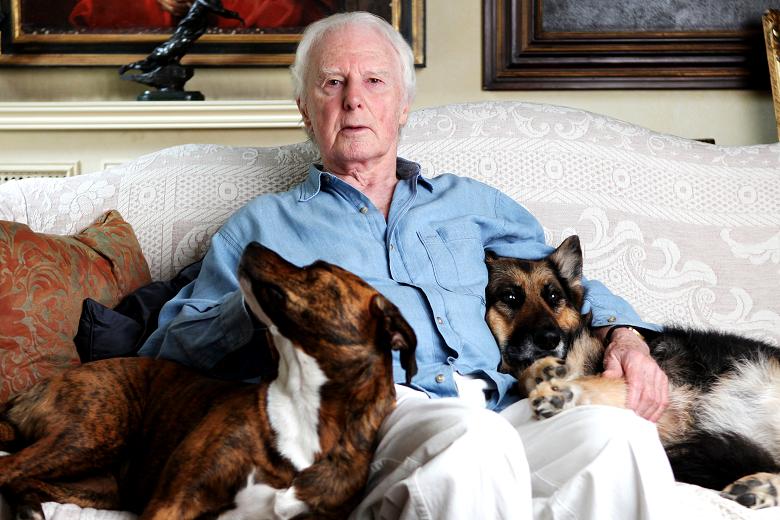
    beautifulbrianwithdogsIt isn’t my intention to repeat the tediously familiar stories peddled by obituarists relating controversies which Brian’s inclination to mischief and provocation helped encourage. Instead I want to address two issues unconsidered elsewhere: his astonishing generosity and the disgraceful but typical hypocrisy of the BBC towards him. Brian was a working man. He called himself ‘working class’, a description some dismissed as affectation. It wasn’t. Like his commuter readers he needed to work in order to survive. Neither was he rich. Nevertheless, he still donated liberally to promising but needy art history students and charities, in particular those dealing with homelessness and the welfare of animals, and he encouraged friends to do the same. Equally, buying work from promising youngsters in order to get them started was to him a duty. He was also selflessly free with his time, knowledge and contacts. When he was your friend you felt it.

    In early 2000 I quit editing Art Review, for which Brian had contributed many superb pieces on 20th century art’s main figures and which always arrived in uncorrected typescript as though having emerged perfectly like a Mozart manuscript. He telephoned and asked me what I would do now. I told him that I was devising the inaugural issue of The Jackdaw, which would continue the opposition to State Art’s absurd and damaging monopoly I’d begun only tentatively (for commercial reasons) at Art Review. He mused a second and said that to give such a venture any chance of long-term survival it would be very expensive. I disagreed, arguing that I could keep costs down by not employing anyone, including myself, or renting an office and having poncy stationery. I’d tried to raise investment for the idea but no one took the bait. The next morning I received in the post from Brian a cheque for £10,000. This staggering act of generosity and confidence was undeserved and his insistence I accept it terrified me. I told him I’d pay it back as soon as I could. Circumstances – including my unique hopelessness as a capitalist – meant that it took me thirteen years to honour my words – thirteen! – and only then as a result of an unexpected legacy. It was a relief to be able to redeem the debt not least because, in consequence of a change in the Standard’s ownership leading to revised employment conditions for the staff, Brian was having to do the same work for a fraction of what he’d formerly been paid. He needed the money. But never once in all those years did he raise the subject of my debt let alone ask for it to be repaid. And, of course, he refused any interest on the grounds that, as he wrote to me, ‘my failings are many but they do not include usury’.

    Without Brian The Jackdaw would not have survived beyond a handful of issues. I don’t think many who follow the terrain would disagree with the assessment that, of all his contemporaries in art criticism, in art historical terms he was easily the most knowledgeable. Given his ability to speak clearly and articulately – without artbollocks (which he always pedantically insisted to me should be properly spelt artballocks) – and because of his reputation as an elegant and amusing essayist – don’t forget he won both the Orwell and Hawthornden Prizes – he was hurt by the fact that Radio 4 never once asked him to appear in a review role on either of its main art programmes, Front Row or its predecessor Kaleidoscope. The list of waffling no-hopers in art criticism those programmes have employed would fill pages, but they never asked him. He would never have admitted it publicly but this omission hurt. What a surprise then that not six hours after his last difficult breath, his death made the main BBC news where he was lauded as an influential leading critic, blah blah. If they thought this was true why did they so rarely use him? The answer is simple. The BBC’s programmes, which in the visual arts are uncritical advertisements for their subjects, are willing promoters of the disgraceful sewer that is State Art, about which Brian held damning views. Over the years he suggested many programmes, all rejected. It speaks volumes that the BBC asked Grayson Perry to give the Reith Lectures, but not Brian. Of all the many independent voices we never hear, his cruel neglect in particular demonstrates that in visual art you will be marginalised unless you toe the establishment line.

    David Lee

    The Jackdaw November/December 2015


  • Des beaux-arts

    Des beaux-arts

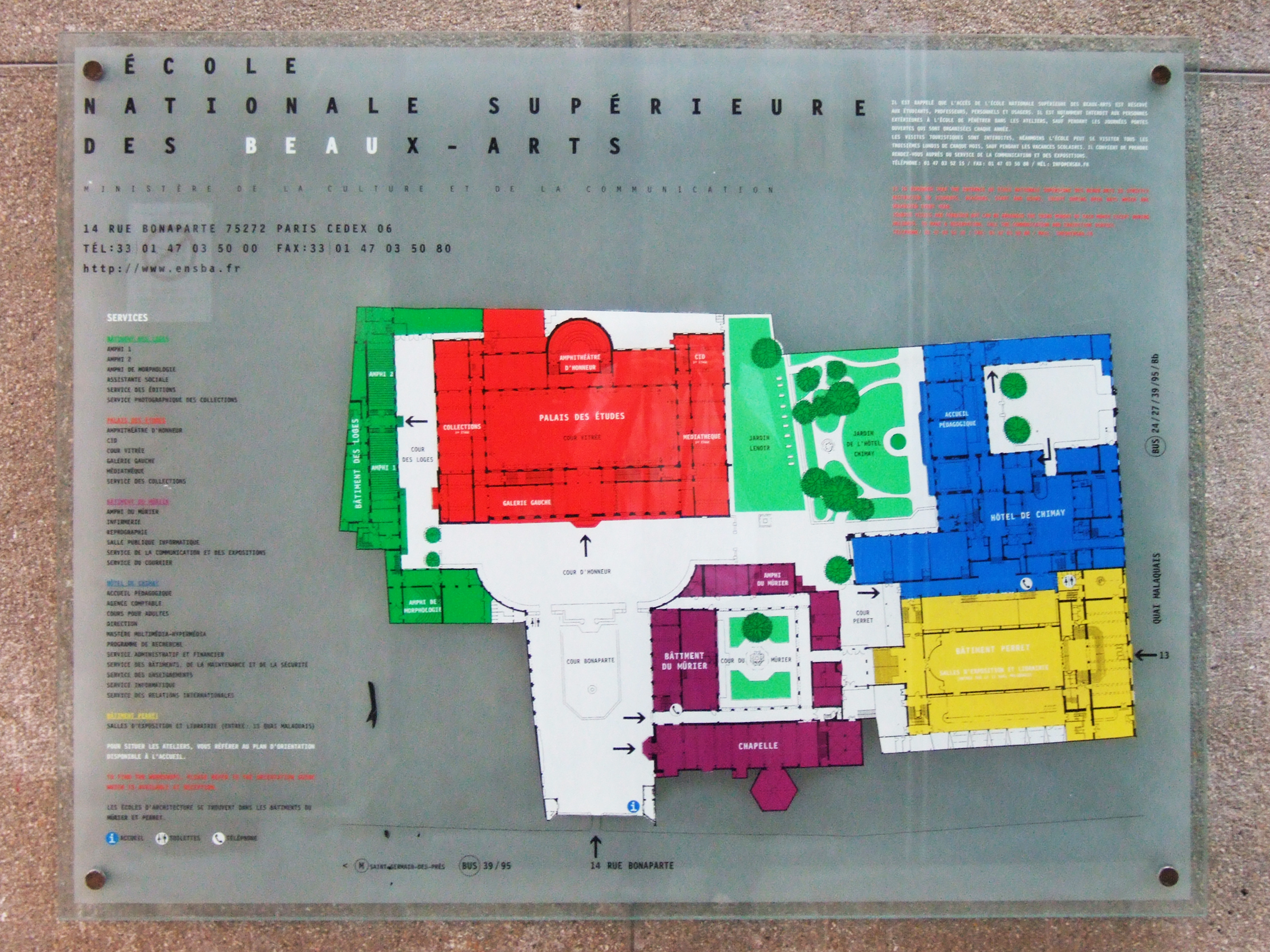
    Anthony Daniels visits a degree show at the École Nationale Supérieure des Beaux-Arts in Paris.


    I am in blood

    Stepped in so far that, should I wade no more,

    Returning were as tedious as go o’er.

    Macbeth, Act 3 scene iv

    No one would have understood better than Macbeth the logic of the inexorable destruction by the art education establishment of artistic tradition, and thereby the value of practically all subsequent artistic production. The process must continue, or those who were and are responsible for it must admit their guilt and lose their jobs. Their livelihoods, if not their lives, are at stake. Therefore that establishment must continue to see worth in worthlessness and deep significance in the utterly trivial, and to persuade the public that if it does not do likewise the fault lies with its own lack of sophistication and powers of discrimination. The art education establishment draws aid and comfort from the following quasi-syllogism taken from art history, the kind of vulgate that is now, alas, familiar to every art student:

    Van Gogh was not understood in his lifetime and sold not a single painting to the public. Van Gogh was a great painter. His story was typical of art history down the ages. Artists X, Y, and Z are not understood and the public neither appreciates nor buys their work. Therefore artists X, Y, and Z are great artists like Van Gogh.

    The errors both empirical and logical in this syllogism hardly need pointing out; but it haunts the mind of many of those who teach art, and probably the minds of many critics too. To miss the next Van Gogh! To be quoted in the future only as the man or woman who saw nothing in Van Gogh! That fate does not await those who extol art in which subsequent generations take no interest and see no merit. Their vaticinations are merely forgotten rather than ridiculed; and it is better to be forgotten than held up to ridicule. They therefore take Pascal’s bet with regard to current artists, however worthless they may secretly think, or even know, their work to be.

    In Paris recently I went to see an exhibition of the work of graduates of the École Nationale Supérieure des Beaux-Arts, selected by a jury for its special merit. Had the process that has turned practically all British art schools into kindergartens for the ambitious but untalented (except in the most fundamental art of our time, self-promotion) occurred across the Channel? Called Possibles d’un monde fragmenté, even the rather curious syntax of the title aroused my apprehensions – and in a sense I was not to be disappointed. The exhibition was precisely what I thought it was going to be, a tiresome extension of Duchamp’s joke taken au sérieux more than a century later. I doubt that any joke in the history of the world has had a longer life or a more disastrous effect than Duchamp’s.

    To judge by my visit, the Parisian public voted with its feet and stayed away, even though entry to the exhibition was free of charge. It was not that that public had lost its taste for art, far from it; you had to queue (as well as pay) to get into Perugino at the Musée Jacquemart-André, for example, or the seasons in Japanese art at the Musée Cernuschi. A public that is open to such widely different artistic traditions is not bigoted, uninformed or undiscriminating; it is simply uninterested in the cheap trash, for the close examination of which life is far too short.

    To describe the exhibits – the various scraps of rag, bits of wood, video clips, piles of various objects, bits of twisted metal, empty spaces, dirty polythene stretched out on three-dimensional frames, scraps of paper scribbled on and so forth, oh God how tedious! – would be to do them far too much honour. It still astonished me, though probably it should not have done, that these ‘projects’, as the young ‘artists’ insisted on calling their productions, were the fruit of five years’ ‘study’ after having left school, study in what the director of the École Nationale, in his introduction to the catalogue, called, apparently without irony and certainly without self-knowledge, ‘one of the last havens of the classical humanities’. The few paintings, in what no doubt the director would have called ‘the classical humanist tradition’, gave a clear indication of an inadequate technical mastery and therefore of training. Whether the students entered the École with any God-given talent, and therefore whether the director was a true corruptor of youth, it was impossible from these paintings to say; but their minds had been so filled with intellectual junk that the more they thought, the worse things got.

    The jury claimed modestly that it did not select the 19 félicités among the 87 graduates of the school on any principle, aesthetic or intellectual, other than a coup de coeur occasioned by their works: but what kind of heart could be moved by, for example, a photograph in lurid, vulgar colours of a woman’s finger with painted fingernail pressing on a cancel button of an electric toaster to make two pieces of industrially-sliced toasted bread pop up? Indeed, if such a work could occasion a coup de coeur, what must the emotional content be of the work of the 68 graduates not selected for special approbation?

    That it should come to this in a city as richly saturated with art as any in the world! Could there have been more eloquent testimony to our civilizational exhaustion, at least as far as fine art is concerned, than this exhibition of the félicités of the Beaux-Arts? Surrounded by incomparable artistic wealth, the félicités produced the kind of grubby and depressing bric-à-brac that any reasonably conscientious femme de ménage would feel ashamed not to clear away or at least to cover up when visitors were expected. O originality, what crimes are committed in thy name!

    Not that the young artists are free of ideas, far from it, alas. Their brains are fairly buzzing with ideas, or rather with the simulacra of ideas. There are interviews with them in the catalogue that accompany the illustrations of their work, conducted by art critics who speak a kind of portentous hermetic language: ‘How does your approach fit in with the inheritance of the institutional critique of the 1960s and 70s, which aimed to critique the authority systems of contemporary art?’ or ‘The recurring problematic of these pieces is spatio-temporality and the notion of outer limits.’

    Notwithstanding the ‘problematic of spatio-temporality,’ the cultural references of the artists seem rather restricted in time, the 1960s being almost prehistoric for them, of the same era, more or less, as the Lascaux cave paintings. And many of them seem to suffer from science-envy, as if art were of no real social, intellectual or cultural significance nowadays, the action, as it were, being nowadays all in science and technology. (It does not occur to them that their own activities help to make this self-fulfilling.) Hence they often refer to their studios as ‘laboratories’ and their activities as ‘experiments’, using the words in the true scientific sense and not as mere metaphors. They call their jottings about possible future work ‘research notebooks’. Several of them claim to be very interested in sciences such as geology, biology and astrophysics, as if charcoaling a big black circle on a map of the stars to represent a black hole was evidence of serious interest rather than of intellectual frivolity. Whenever one of these artists uses an expression such as ‘I am interested in…’ or ‘I am fascinated by…’ you know that something shallow or opaque is about to follow. Here is what an artist had to say about his ‘project’, which seemed to consist of cheap wooden trestles and frames with polythene stretched in them, all to the sound of a dreary voice recording:

    The issue that haunted me as I conceived the project was how to position the recording instruments as well as objects stemming from the exploitation of an intimate space. The space that attracted me most at the Palais des Beaux-Arts was the second floor balcony. I’d  like to set up two modified periscopes through which a few objects installed on the ceiling could be observed. I’d also like to build a small ambulatory space, 1.65 meter high – which is to say my own height – which could be used as a partition, an installation and a space where I could share with visitors.

    Reading this, I felt almost sorry for the young artist so dishonestly congratulated by the jury, thereby cruelly giving him the impression that his work and his vapid reflections upon it (haunted, indeed!) were of value, and possibly setting him on a lifetime course of pointless and worthless endeavour. Better that he should be a street-sweeper – a useful and honourable occupation, after all – than waste his existence thus.

    The problem, perhaps, is that the idea of being an artist still has romantic cachet, independent of the worth of any art actually produced. The problem with the young artists of the Beaux-Arts is that they are more attached to the idea of art than to art itself. They are not like the six characters of Pirandello is search of an author: they are would-be artists who want to express themselves and who are in search of a subject to express themselves about, as well as a career. Hence their professed interest in astrophysics and the like: the universe is a mere prop to their desire to express themselves and be noticed.

    The contrast could not have been greater with an exhibition of Haitian art held at the same time in Paris at the Grand Palais. Haitian artists are not necessarily technically accomplished – though the self-taught sculptors of Port-au-Prince are infinitely more so than the sculptors taught at the Beaux-Arts – but it is obvious at a glance that their artistic expression comes from an inner compulsion to try to make sense of their world and their experiences, and is therefore often very moving as well as aesthetically pleasing.

    Neither the director of the school, Nicolas Bourriaud, nor the chairman of the jury, Enrico Lunghi, wrote in their introductions to the catalogue as if the school were an educational establishment where such things as skill and technique should be taught. This, it seems, would be beneath the dignity both of the teachers and students. Instead, as Bourriaud puts it:

    … if we are strengthening our ties with art centers, museums, foundations and other cultural institutions, it is in order fully to take on the role every school should play within its artistic ecosystem: that of a space for reflection.

    It is clear that for Bourriaud, teaching is at the very best secondary, perhaps not even necessary at all: for Man is a born artist, and all he has to do to achieve his innate artistry is to ‘reflect’ on what is already within him.

    It will come as no surprise, I should imagine, to readers to learn that the catalogue was published with a subvention of the French Ministry of Culture and Communication, without which it would certainly not have been published at all. As Enrico Lunghi, director of Luxembourg’s museum of modern art and chairman of the jury, puts it:

    We could speak of an institution [the Beaux-Arts] among others, where, without seeming to, the foundations of dominant powers are reproduced and consolidated, inasmuch as the sociology of students prefigures the art world, which is not particularly open to social diversity.

    Or to artistic diversity, for that matter.

    Anthony Daniels

    The Jackdaw, March-April 2015