Tag: BBC

  • Art: Cool and Uncool – William Varley Reviews Addicted to Sheep

    So, as all cool sentences begin, I think that the best TV programme I saw last was Addicted to Sheep. In many ways this BBC4 documentary was reminiscent of the French film Être et Avoir about a remarkable teacher in a school in the remote Auvergne, although a good deal less winsome. It focused on the lives of the Hutchinson family, tenant farmers in Upper Teesdale. In their remote valley ewes are called “yowes” and at the children’s school they still sing “There is a green hill far away”. The Hutchinson children help with the lambing, including the gruesome task of dealing with still-born lambs.

    What is so admirable about them is that they have an uncomplaining, unflinching attitude to a life that is harsh and elemental. I doubt whether they have recently visited their nearest gallery, the Bowes Museum at Barnard Castle, or the Baltic at Gateshead. I also suspect that the issues which so exercise the post modern, post Christian urban élites: multiculturalism, egalitarianism, transnational progressivism (no borders), environmentalism, feminism and the rest of that plethora of right-on attitudes, don’t preoccupy them. For a start, they don’t have the time. Without wishing to patronise them, they probably believe that the acronym L.G.B.T. stands for a brand of sheep dip. All of this, in the opinion of the ‘enlightened’, particularly art world instrumentalists, makes them seriously uncool.

    How does one define ‘cool’? There are still people around who think that it’s a gently meandering style of jazz, but most of us know that it’s simply a matter of a self-appointed élite determining what is acceptable and unacceptable. It’s a phenomenon which transcends ages and classes, from the tiny tyrant berating her parents for not recognising the world significance of ‘One Direction’ to the State Art apparatchik wincing as he patiently fields one’s less than enthusiastic reaction to a ‘challenging’ new installation. In Jonathon Rose’s brilliant book, The Intellectual Life of the British Working Classes, the anthropologist Mary Douglas describes it thus:


    Art trends may have as brief a shelf life as stock exchange trends, and they depreciate rapidly if one fails to catch the latest wave in architecture, or literary theory. The names that Bohemia adopted for itself – avant-garde, advanced, progressive, le dernier cri, new wave, cutting edge, modernist, postmodernist – all reflect the Anxiety of Cool, the relentless struggle to get out in front and control the production of new cultural information. Bohemia is ‘subversive’ only in that it seeks to wean consumers away from older cultural products in order to sell them new ones.


    That description is one of brash economics but, of course, we’re all familiar with the broader pattern of Cool, the Godfather of which is Marcel Duchamp.

    Ad Reinhardt once remarked that all artists had to make a choice between Mondrian and Duchamp, between advocates of the hand- made, and those of the ready-made. As Jackdaw readers know, Duchamp, asserting that all art was mere taste, allegedly exhibited a urinal under the title of Fountain at the Armory Show in New York in 1913. Actually, as Jackdaw readers also know, that anarchic gesture was performed by one of his girlfriends as the Armory Show was ‘unselected’. Still, as someone who was intoxicated by word-play, puns and conceits, he was the epitome of the intellectual dandy. Apparently effortlessly, he invented kinetic art, optical art, conceptual art, and his great hermetic narrative, The Large Glass. Consolidating these innovations he left to allegedly mediocre followers.

    His biographer Robert Lebel wrote that he regarded the ready-mades as sacralisation or transubstantiation. (How God-like is that?) However, “His real motive with them was to depreciate our ordinary and tacitly accepted notions of value in order to exalt the strictly private and sovereign choice which is accountable to no one. With the ready-mades”, said Lebel, “he meta-ironically demonstrated his incontestable power to be TAKEN AT HIS OWN WORD which is the unmitigated artist’s privilege.” You can see where that gets us: art is anything you say it is, a situation that leads inexorably to the empty stunts of the Turner Prize and the vulgar extravagances of the Pinault Collection. Still, for his loyal disciples in the State Art Establishment his reputation is unassailable. There have been notable heretics from the general orthodoxy though. In his book The Banquet Years, examining the pioneering days of Modernism, Roger Shattuck remarked that Duchamp’s strategy of ‘nominating’ useful objects to art status was “essentially self-consuming, a reversion to dead level after an initial shock.” More recently, in The Winter of our Culture, Jean Clair (real name Gérard Régnier) the former Director of the Picasso Museum in Paris, described Duchamp’s Armory Show as “works of provocation and derision presented by a cynical dandy”.

    The High Priestess of Cool was, of course, Susan Sontag. During the ’60s and ’70s she was the doyenne of American intellectuals and in her seminal book Against Interpretation, she issued two decrees that in retrospect seem to have underpinned the visual art that developed afterwards. Attacking the discrimination between hierarchies of art as ‘philistine’, she effectively substituted a plateau view of culture for the existing pyramidal order. Henceforth, there was to be no qualitative distinction to be made between high and popular culture, art and entertainment. In this scenario, Elvis Presley could give Mozart a friendly wave across a level playing field. The ‘dumbing down’ consequences of this were, of course, appalling and eventually she could see it. She died 12 years ago, but shortly before her death she condemned ‘the triumph of a pernicious relativism.’

    I am not prepared to say the satisfactions derived by art are no different structurally, in context, or in quality or in importance, from other kinds of satisfactions. I am not prepared to think that the satisfaction I might get in front of a Chardin, a Vermeer or a Vuillard is in any way similar to the satisfaction I would get watching a beautifully pitched baseball or inspecting a shoe collection.

    Her recantation was welcome, but it was too little, too late: the damage to the impermeability of high culture had already been done.

    The other hugely influential aspect of her ‘new sensibility’ was the idea (echoing Matthew Arnold perhaps) that art should concern itself with the moral criticism of life and be used as ‘a tool for changing consciousness’. Whether or not her writings were the cause or whether the true believers in an art for use developed their own ideology, in subsequent decades a veritable deluge of issues appeared. They mostly consisted of that left liberal menu of Goodthink favoured by the BBC that I’ve already mentioned: multiculturalism etc.. They are very useful for ‘virtue signalling’. “Let’s do the Holocaust”, artists would say, “or perhaps child abuse”. This is empty posturing, a bit like wearing Aids ribbons. It’s also about as far removed from Kathe Kollwitz’s nightmare visions as it’s possible to be. As the wife of a Berlin doctor Kollwitz knew poverty and illness at first hand. Her emotion was earned, not affected. Still, quangocrats and councillors who dole out funding love emotional incontinence. Current affairs and politics are things they can understand: the structural music of painting invariably remains a mystery to them. And insofar as they reinforce the fallacy that visual art is simply a medium or receptacle of a socio-political statement, it’s a godsend to those media hacks deputed to discuss them.

    Some issues, however, are so uncool that they’re off limits. Take the case of Kamel Daoud, for instance. This distinguished Algerian (Muslim) novelist wrote an article in Le Monde in late January denouncing the wave of sexual assaults that had occurred during Cologne’s New Year’s Eve celebrations. He didn’t temporise, calling the assailants Muslim men:

    The refugee-immigrants come from the vast universe of sorrow and horror which is the sexual misery of the Arab-Muslim world. The subjugation of women is the psychological Gordian knot at the core of the world of Allah, and hence the inspiration of the death cult that claims to defend it.

    You can easily guess the reaction to that: an academic fatwa; and erstwhile friends telling him, with the greatest kindness, to stick to writing novels and, politically, to shut up. Our politicians, of course, favour the ‘Religion of Peace’ narrative and as far as our art world is concerned, in contrast to the scathing visual indictments of Abu Ghraib how many denunciations of suicide, bombings, jihadist beheadings and the like can you think of? None? I can think of one. A couple of years ago in an exhibition in Rome I saw a small black singlet in the form of a hijab presented by the Egyptian feminist Ghada Amer. Unsurprisingly she now lives in New York.

    Another aspect of cool is the cult of novelty. I remember Lawrence Gowing back in the ’60s presenting the imperative to many young artists “to make it new”. At the time it worried me, being far too prescriptive. As someone who believes that originality should be involuntary rather than willed, I would have advised “Make it good”. Giles Auty in The Jackdaw was scathing in identifying the ‘novelty trap’ in which ‘ism’ inexorably succeeds ‘ism’ and thereby invalidates its predecessor. (Auty estimated that about 40 ‘isms’ occurred in the 20th century, each having about 2.25 years of life.) In his irreverent article he suggested that, according to the novelty narrative, “western art should be read as a kind of art-historical relay race which culminates in the death of painting … because there are no more apparent avenues left to explore”, a process which he maintained was “both spurious and infantile”. Astutely, he demonstrated how the art world had hijacked from science the rhetoric of progress with the consequence that anyone who refused to embrace it was certifiably reactionary and uncool. Of course there are some exceptional exponents of hybrid media such as the prodigious William Kentridge, but the strategy of State Art is to impose novelty on a baffled public. Amongst that public there are some blasphemers, though. The late Henning Mankell believed that “One of the tasks of art is to provide people with companions. I have seen people in paintings who I hope to meet in the street one of these days…” How uncool can you get? The Scottish prose-poet Nan Shepherd, ‘married’ one might say, to the Cairngorms, had a similar capacity for empathy. The ‘technoscape’ may be cool but engaging with actual landscape is extraordinarily rewarding. Like Wordsworth in The Prelude, she believed that “sustained contemplation of outer landscapes led to a subtle understanding of the spirit.” Her attitudes correspond almost exactly with those of several painters I respect. All of her senses were engaged when experiencing landscape and art, of course, should be enjoyed through the senses. She could smell the rain: so could Constable. (Those experiences and spiritual rewards are also shared by the Hutchinsons.)

    When I reflect on State Art’s prioritising of novelty, however, I recall Andrew Brighton’s observations in Consumed by the Political in which he said, “The propagating of serious art amongst people who are relatively uneducated is an act of cultural aggression” and, emphasising the underlying totalitarianism of this ostensibly generous agenda suggested that, “The idea that people without art are lesser or inferior beings is a ridiculous assumption, a piece of moral vanity akin to a religionist’s belief that only those of their faith or sect are capable of real virtue.”

    Hard it may be for the quangocrats to grasp this, but there are thousands of people who live happy, fulfilled lives entirely without art. The irony is that the attempt of the Kulturkampf to dragoon people into an involvement with art is founded more upon a campaign of exclusion rather than inclusion. But to return to the Hutchinsons. My lingering image of the Addicted to Sheep documentary is of their eldest daughter, about 10 years old, sitting in the landscape making a painting by using her eyes – and making a pretty good fist of it (above). All is not lost.

    William Varley
    The Jackdaw
  • Charles Thomson: Lies, Damned Lies and Serota at the BBC

    Sir Nicholas Serota, director of the Tate Gallery, has used the platform of the BBC in a blatant attempt to deceive the nation. Either that or he is genuinely deluded himself. Both options render him unfit for major public office.

    He was confronted on Radio 4 programme The Reunion: Tate Modern on September 23rd by Sue MacGregor, regarding the Tate’s purchase in 2005 of its trustee Chris Ofili’s work The Upper Room. She observed with wry understatement, “The Charity Commission said you didn’t quite follow the rules here.”

    In 2006, as the BBC then reported, Charity Commission chief executive Andrew Hind said there were “serious shortcomings … In any charity we would be concerned that such basic matters were neglected, but in a charity of the size and stature of the Tate we are very disappointed.”

    The Guardian expounded, “The Tate has broken the law … By law, trustees cannot receive monetary benefit from their charity without express permission, usually from the commission. The Tate failed to seek permission … The Charity Commission’s full recommendations and criticisms, laid out in a lengthy document, also said the Tate failed to manage conflicts of interest … Failed to seek independent valuation of works by artist-trustees … Had no defined policy relating to purchases from artist-trustees … Had insufficiently clear acquisition policies … Kept insufficient records of trustee meetings.”

    The Daily Telegraph called this verdict “one of the most serious indictments of the running of one of the nation’s major cultural institutions in living memory”.

    “After an in-depth review lasting ten months by the Commission”, stated The Times, Serota “accepted the criticisms” and “was genuinely contrite”. The Evening Standard confirmed, “Sir Nicholas said today he accepted all the Charity Commission’s findings”.

    In stark contrast, his response to Sue Macgregor ten years later was an astonishing and shameless attempt to hoodwink the nation and evade blame with a trivialising revisionism that implied gross misconduct by the Charity Commission. To the supportive laughter of his entourage on the programme, Serota declared smoothly – as if it were established fact – the evasive nonsense, “The rules of course were invented after we had flouted them.”

    Serota has a history of obfuscation, whether lies, half-truths, delusions, evasions or omissions. In 2004, he applied for a grant from the Art Fund towards the purchase of The Upper Room. He signed a form saying that there had been no prior commitment to the purchase of the work (a condition of funding). Thanks to journalist Chris Hastings and the Freedom of Information Act, it was revealed that, eight months prior to the application, the Tate had paid a £250,000 deposit. Serota blamed it on “a failing in my head”.

    In 2005, I was quoted in The Observer: “Serota, as the director, chooses the trustees, and the trustees are then responsible for reappointing the director. The director then buys the trustees’ work.” In 2008, this was brought up in Varsity (the Cambridge Student Newspaper), where Serota defended himself with another flagrant falsehood: “I don’t have any part to play in their appointment.”

    The September 2005 Tate board minutes state: “The Director [Serota] reported that two strong candidates were to be interviewed for the position of Artist Trustee by a panel comprising himself, Paul Myners and the Independent Assessor.” In the May 2007 minutes, another trustee interview is on record with a panel of three trustees, the independent assessor and Serota.

    The Board of Trustees of the Tate Gallery Annual Accounts 2005-2006, 2006-2007, 2007-2008, and 2008-2009 all say in the section on trustees: “The key stages of the appointment are overseen by a panel, which will normally include the Director.”

    Also in Varsity, Serota said about the trustees, “Why would I want to win their support?” The simple answer to that is that he is their employee, as he explained in 1993 in the Independent on Sunday, when he hoped to be appointed for a second seven-year term as Tate Director: “Tate trustees fall in and out of love with their director and I’ll only discover whether they have fallen out of love with me in 1995 when they discuss my contract … The jury’s out.”

    On the Radio 4 programme, MacGregor confronted Serota about an event in October 2003 that became public the following year, namely “that Charles Saatchi offered you his entire collection … it was worth 200 million – for nothing.” Serota denied this: “I wish he had … he did have a great collection. Sadly he never did offer it to us.”

    This response is consistent with Serota’s version to the press in 2004, when he said that Saatchi’s offer was not for a gift but for a loan of work, which he (Serota) immediately rejected (none of which was mentioned to MacGregor).

    Surprisingly, Serota’s reply was immediately contradicted on the programme by former Tate trustee, Michael Craig-Martin, who admitted there had in fact been an offer of work: “Unfortunately what was offered to the Tate was not the great collection with the great things in it, most of which were already gone by that time. They had been sold by that time.”


    As it happens, that is incorrect. At the time of the offer in 2003, Saatchi still had in his collection iconic Brit art works, including Damien Hirst’s shark, Tracey Emin’s bed, Rachel Whiteread’s plaster cast of a room, Mark Quinn’s head made from frozen blood, Sarah Lucas’s table with two fried eggs and a kebab, Marcus Harvey’s Myra Hindley painting with children’s hand prints, Ron Mueck’s sculpture of his dead father, the Chapman’s penis-nosed mannequins and Chris Ofili’s Virgin Mary painting with elephant dung.

    Serota continued about Saatchi: “Michael [Craig-Martin] and I with Janet De Botton spent a great deal of time in the late nineties trying to persuade him to give, not his collection, but maybe ten works from his collection as a founding collection for Tate Modern. But I’m afraid he didn’t feel for one reason or another able to do that.”

    This is obviously another failing in Serota’s head. In 2004, the Evening Standard reported that in 1998, “Saatchi offered 86 works by 57 British artists – including Langlands & Bell, Turner Prize winner Martin Creed and Glenn Brown” (as well as Richard Billingham, Richard Wilson and Chantal Joffé). A Tate spokeswoman confirmed the offer of 86 works, which were rejected as “The trustees felt on this occasion the works would be better suited in a collection elsewhere.”

    Regarding The Upper Room scandal, Christopher McCall QC wrote to the press in 2005 condemning “expediency … which has an appeal to an overbearing executive”. The Times said of the Tate: “If it had been a company, the verdict would have sent shareholders into a panic.” No doubt if it had been a government, resignations or sackings would have followed the public outcry. Surely we have the right to expect the same standards across the board in public life, including the arts.

    Serota has not displayed a level of behaviour and integrity to remain a figurehead and step into another prime position as Chairman of the Arts Council. His record is tarnished and far from admitting to his mistakes, he has the blinkered arrogance to pretend they never happened.

    We need leaders who do not have recurrent failings in their head.

    Charles Thomson
    The Jackdaw

  • Laura Gascoigne: Tainted by Experience – March 2017

    When the former controller of BBC Radio 3 John Drummond published an autobiography in 2001, he called it ‘Tainted by Experience’ – an ironic reference to the reason given by a Birtist suit at the Beeb for his being ‘let go’ a decade earlier. I haven’t read the book, but the expression was used by William Varley in a positive sense to describe a group of mature artists showing at Northumbria University Gallery in 2011, and it stuck in my mind. As it happens, Northumbria University Gallery is now itself under new management since its director of 38 years’ standing, Mara Helen Wood, was ‘let go’ by the university executive for being similarly ‘T by E’, as reported by Varley on these pages last year.

    Following the revolt of ‘the people’ against ‘the experts’ currently convulsing western democracies, we face the prospect – daunting or exhilarating, depending which side of the populist fence you’re on – of an expert-free future. If this is a revolution, as some people seem to think, then post-modern art has long been in its vanguard. Ever since Marcel Duchamp (or Baroness Elsa von Freytag-Loringhoven, take your pick) pissed on the art experts with Fountain in 1917, expertise in art has been a dirty word. This causes particular problems for avant-garde painters, since paint, unlike sanitary ware, is an impressionable substance that too readily absorbs the taint of experience. As a measure of contemporary artists’ desperation, an exhibition of young Canadian painters at Pippy Houldsworth in 2008 was titled Learned Helplessness.

    The fashion for bedroom painting, currently running in tandem with the fashion for lumber-room sculpture, appears to support Joseph Beuys’ egalitarian philosophy that “everyone is an artist”. Technique is not the only casualty of this ostensible democratisation; knowledge of art history is another victim. In Elizabeth Fullerton’s Artrage: The Inside Story of the Britart Revolution, Liam Gillick says of his Goldsmiths generation: “We didn’t sit around talking about El Greco… It’s as if we started without any history”. The blanking of history was about more than democratisation; it was a bid by ambitious young artists to turn over a clean sheet and astonish the world with the newness of their art.

    Fifteen years after Gillick was nominated for the Turner Prize, the world is still waiting. As previous nominee Tracey Emin rightly predicted: “You’ll never get a fucking radical winning the fucking Turner Prize”. The reason is that the sheet was never clean. It wasn’t true that the yBas started without any history; they just started with a lot less of it. They referred, deferred even, to history as reverently as the German Expressionists who copied El Greco; the difference was that they refused to look further back than Duchamp. And so, in the place of newness, we got repetition. Those who fish for ideas in a small art historical pond are bound to keep catching the same old fish others have put back. I’m in perfect agreement with Roland Barthes’ claim in The Death of the Author that there’s no such thing as original creation since we all draw on a “ready-formed dictionary”, but it follows that the shorter the dictionary, the more restricted the creative scope.

    Last year’s Turner Prize exhibition was admittedly an improvement, but it has long felt as if the jury is operating a points system whereby nominees are awarded marks for every reference to a post-modern forbear. Rather than democratising contemporary art, this sort of specialist reference-spotting is as much a game for an art-educated elite as identifying classical allusions once was for a cultivated audience of Renaissance humanists. What it produces is elitism on the cheap, shorn of the technical skill and aesthetic pleasure that made Renaissance art enjoyable by all audiences, educated or not. It’s an elitism dressed in sloppy paint and everyday detritus whose learned helplessness is about as convincing as Marie Antoinette’s attempt to pass for a milkmaid.

    The perception that the non-expert is in charge was always as false in art as it now is in politics. The grim reality of our post-truth era is that people tainted by experience in all walks of life are being cleansed from positions of influence to make way for managers. The days of class war may be formally over, but the days of management class war are just beginning. Everywhere the tainted by experience are being pushed aside to make way for management apparatchiks parachuted in to impose blue skies thinking on areas of life in which they are blissfully innocent of expertise. Before Nicky Morgan’s Academy Schools programme hit the Brexit buffers, even parent governors – the original exemplars of taint by experience – were under threat of replacement by professionals with “the right skills”.

    Has anything good ever fallen out of a blue sky? In Waziristan blue skies merely increase the probability of a drone-fired Predator missile landing on your wedding party. The public has been comprehensively duped into directing its ire against ‘experts’ and ‘elites’, when it’s managers who should be in the firing line. Elites don’t always wield power, nor are they necessarily any better off than the Maybot’s JAMs. Art history may be such a specialist subject that the AQA exam board wanted to drop it from its A-level syllabus, but your average art historian is almost tragically lacking in influence and generally about as poor as a church mouse – ditto your average university lecturer or research scientist. The only elite with clout is the managerial one that has got us into the mess we’re currently in, and can be counted on to fail to get us out.

    The battle for elitist art history has been won, for now, and museum directors remain one of the few classes of managers with specialist knowledge and experience in their fields. But the management ideologues are already circling. The Culture White Paper drawn up by Ed Vaizey a year ago announced, on the subject of museums: “We want to ensure that they are as best placed as they can be to continue supporting our aspirations for access, place-making [no, me neither] and soft power.” As if this wasn’t sinister enough, it proposed the creation of a “Commercial Academy for Culture to improve and spread commercial expertise in the cultural sectors.” No mention of improving knowledge.

    In an interview in the Guardian last September, James Flynn – the veteran American academic who revolutionised our understanding of human intelligence by demonstrating that environment is the dominant influence on IQ – was asked how, given the steady global rise in average IQ scores since the 1930s, Americans could have elected Donald Trump as President. His explanation was that “the rise of visual culture means far fewer people read serious novels and history. They live in a bubble of the present, believing what they are told because they have nothing to position it against.”

    I agree about the ‘bubble of the present’, but I question his use of the term ‘visual culture’. It’s visual, yes, but is it culture? Culture doesn’t feed off the present, it grows on the past. Sever its connection to the past and culture dies, clearing the field for commercial expertise in the cultural sector.

    Laura Gascoigne
    The Jackdaw Mar/Apr 2017

  • Brian Sewell (1931-2015)

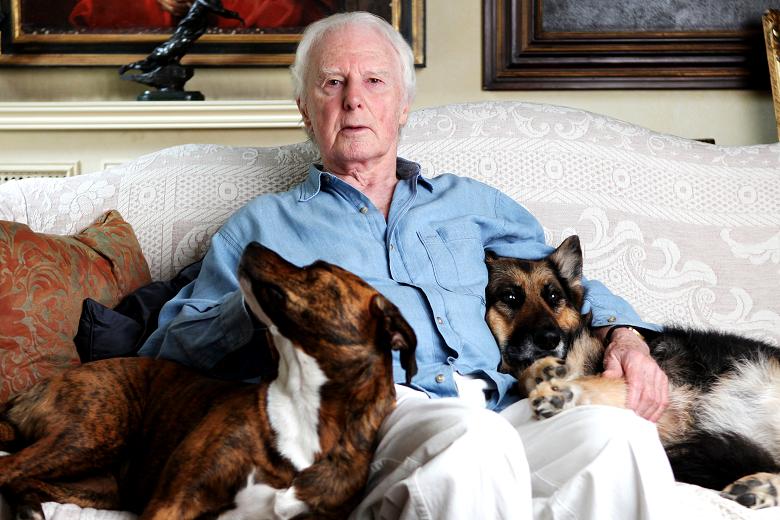
    beautifulbrianwithdogsIt isn’t my intention to repeat the tediously familiar stories peddled by obituarists relating controversies which Brian’s inclination to mischief and provocation helped encourage. Instead I want to address two issues unconsidered elsewhere: his astonishing generosity and the disgraceful but typical hypocrisy of the BBC towards him. Brian was a working man. He called himself ‘working class’, a description some dismissed as affectation. It wasn’t. Like his commuter readers he needed to work in order to survive. Neither was he rich. Nevertheless, he still donated liberally to promising but needy art history students and charities, in particular those dealing with homelessness and the welfare of animals, and he encouraged friends to do the same. Equally, buying work from promising youngsters in order to get them started was to him a duty. He was also selflessly free with his time, knowledge and contacts. When he was your friend you felt it.

    In early 2000 I quit editing Art Review, for which Brian had contributed many superb pieces on 20th century art’s main figures and which always arrived in uncorrected typescript as though having emerged perfectly like a Mozart manuscript. He telephoned and asked me what I would do now. I told him that I was devising the inaugural issue of The Jackdaw, which would continue the opposition to State Art’s absurd and damaging monopoly I’d begun only tentatively (for commercial reasons) at Art Review. He mused a second and said that to give such a venture any chance of long-term survival it would be very expensive. I disagreed, arguing that I could keep costs down by not employing anyone, including myself, or renting an office and having poncy stationery. I’d tried to raise investment for the idea but no one took the bait. The next morning I received in the post from Brian a cheque for £10,000. This staggering act of generosity and confidence was undeserved and his insistence I accept it terrified me. I told him I’d pay it back as soon as I could. Circumstances – including my unique hopelessness as a capitalist – meant that it took me thirteen years to honour my words – thirteen! – and only then as a result of an unexpected legacy. It was a relief to be able to redeem the debt not least because, in consequence of a change in the Standard’s ownership leading to revised employment conditions for the staff, Brian was having to do the same work for a fraction of what he’d formerly been paid. He needed the money. But never once in all those years did he raise the subject of my debt let alone ask for it to be repaid. And, of course, he refused any interest on the grounds that, as he wrote to me, ‘my failings are many but they do not include usury’.

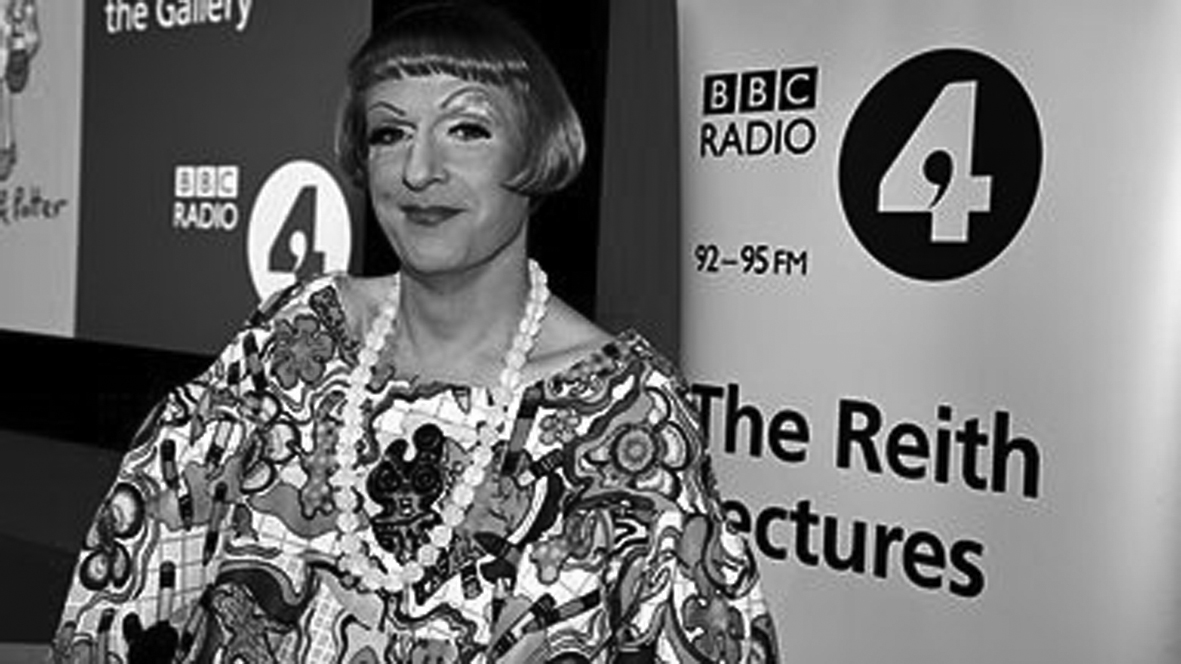
    Without Brian The Jackdaw would not have survived beyond a handful of issues. I don’t think many who follow the terrain would disagree with the assessment that, of all his contemporaries in art criticism, in art historical terms he was easily the most knowledgeable. Given his ability to speak clearly and articulately – without artbollocks (which he always pedantically insisted to me should be properly spelt artballocks) – and because of his reputation as an elegant and amusing essayist – don’t forget he won both the Orwell and Hawthornden Prizes – he was hurt by the fact that Radio 4 never once asked him to appear in a review role on either of its main art programmes, Front Row or its predecessor Kaleidoscope. The list of waffling no-hopers in art criticism those programmes have employed would fill pages, but they never asked him. He would never have admitted it publicly but this omission hurt. What a surprise then that not six hours after his last difficult breath, his death made the main BBC news where he was lauded as an influential leading critic, blah blah. If they thought this was true why did they so rarely use him? The answer is simple. The BBC’s programmes, which in the visual arts are uncritical advertisements for their subjects, are willing promoters of the disgraceful sewer that is State Art, about which Brian held damning views. Over the years he suggested many programmes, all rejected. It speaks volumes that the BBC asked Grayson Perry to give the Reith Lectures, but not Brian. Of all the many independent voices we never hear, his cruel neglect in particular demonstrates that in visual art you will be marginalised unless you toe the establishment line.

    David Lee

    The Jackdaw November/December 2015


  • Performance before content – Eric Coombes is disappointed…

    Performance before content – Eric Coombes is disappointed…

    …by the frivolity and lack of ambition and academic rigour in the 2014 Reith Lectures.

    Immediately after his predictably rapturous greeting at the first performance, Grayson Perry raised the question of why he was asked to give this year’s Reith Lectures. Well, for the first time in their sixty-six years, they were to be given by a “visual artist”. Could one imagine the BBC not to have chosen a winner of, or at least nominee for, the Turner Prize? Gormley having withdrawn a couple of years ago, how many remotely entertainable candidates lay in that small heap of the capriciously favoured? “Professor” Tracey Emin?  Damien Hirst? Even the BBC might have balked at the near-catatonic inarticulacy of a Martin Creed. But Perry vacuously claimed that his selection was explained by his being “a practising artist” – which, in reality, was not even a sufficient condition of eligibility.

    This limitation of the field of candidates was not, of course, mentioned. Does inadvertency, naïvety or cheek account for his drawing our attention to another factor a few minutes later, when he said “… anybody can have a life in the arts ­– even me! An Essex transvestite potter … the mafia has even let me in”?  As he proclaimed this, dressed and painted in a flamboyant caricature of femininity, Perry basked in the sycophantic admiration of that “mafia”, including such luminaries as Nicholas Serota. In a video clip, we glimpse the Lord Patten, laughing with respectful indulgence. Was Perry, brazenly, knowingly but deniably, mocking the ideological conformism of his audience? Far from erecting an obstacle to advancement, his ostentation of social and sexual deviance augmented his value for an establishment delighted to advertise the orthodoxy of its ideological commitment to “inclusiveness”. He is surely far too intelligent not to understand this.

    This is not to say that he was or is acting out a pretence. I have no reason to suppose that he exaggerates his compulsion to indulge in cross-dressing, either for the purpose of publicity, or to exploit the politically correct fashion that inverts the cruelty towards deviance often prevailing in the past. There is neither reason nor need to question his own account of his idiosyncrasies. But a pretence that matters very much lay in the BBC’s affecting to suppose a series of pantomime acts to be the vehicle of serious thought. There is no surprise in the corporation’s colluding with that dispiriting regime of compulsory frivolity, which everywhere imposes itself. But the Reith Lectures have had a special symbolic significance in upholding the BBC’s claim to “enrich the intellectual and cultural life of the nation”, despite the tinyness of their contribution to its total output. They constitute a significant test of the corporation’s commitment to its responsibilities. Previous lecturers have been a somewhat mixed bunch, and, as well as very eminent thinkers, the list includes some whom the criterion of intellectual integrity might have excluded. And one wonders about obvious absences, such as Isaiah Berlin or Ernst Gombrich, whether they were ever invited. Nevertheless, there seems to have been, hitherto, a serious effort to recruit serious thinkers – even if, in some cases, their seriousness might be questionable. There has, of course, been a relaxation of tone in recent years, the talks being given before live audiences and sweetened by the familiarity of their compère, Sue Lawley. But their presentation for the first time this year as pantomime suggests that the assertion of the high-flown sentiments in the foregoing quotation is the bluster of pretence.

    The background to this pantomime is the dominating cult of celebrity, which now draws everything into its moral ambit, where the very notion of an argument’s requiring an attention span longer than a five-year old’s becomes an elitist affront to the general public. With its huge resources, the BBC has not only the duty, but also the capacity to resist this dominance. The blame for the debacle of this year’s Reith Lectures therefore falls squarely on the BBC and, of course, on the state-art establishment to which it complacently defers. Perry himself, like his largely fawning reviewers, was probably unaware of how far he was out of his intellectual depth.

    What was said in the “lectures”?  Many matters connected with the visual arts – practical, sociological, financial etc. – were raised, often autobiographically, and usually flippantly. Specific observations were sometimes shrewd, but never enlightening to the undeluded; and no path of consequentiality led from one to another. Essentially, there was no argument at all, although individual points of unconsummated discussion were half identified by confused gestures. And the failure to take the slightest trouble to get things right, would – or would not that long ago – have disgraced a sixth-former.

    One illustration: In the first “lecture” he announced himself to be “very sceptical of the idea that you can find a kind of empirical way of judging quality, particularly in art”. How bizarre! Would we say of a sonnet by Shakespeare, or a painting by Turner, that it achieved “high quality”? Are these samples of a commodity? His “scepticism” amounts to doubting that there could be non-aesthetic criteria, readily and “empirically” applicable, by which to determine an aesthetic judgement. Who exactly has ever held such an “idea”? The manifest impossibility of such criteria has standardly been taken as central to the philosophical discussion of aesthetic judgement. His confusion here exemplifies a characteristic inability of the uneducated to understand that there is a distinction between empirical and conceptual questions (a distinction that may not be easy to make in a particular case). To be “sceptical” about the existence of such criteria is a little like being “sceptical” about the possibility that two plus two equals five. Since it is not the kind of thing about which further information might show us to be mistaken, it is idle to fuss about purported practical examples. Nevertheless, we should perhaps note that it would be difficult to imagine anything better chosen to illustrate his state of confusion, or his failure to get things right, than his main example of the supposed acceptance of such “empirical” criteria. This was the content of the “Venetian Secret”, a notorious hoax played on Royal Academicians in the late 18th century. But the “Venetian Secret” did not even purport to offer criteria of aesthetic judgement, being concerned only with the technique of painting.

    To the extent that a unifying theme can be discerned, it was identified in the toe-curling words of the embarrassingly unembarrassable Sue Lawley, introducing the third “lecture”.  “So far we’ve tried to assess the nature of what art is”.  Oh dear.  What is art?  A dauntingly big question one might think. Or possibly a small and unimportant question. If a genuine question at all, it is a philosophical question, and the questionability of its genuineness might itself raise philosophical questions, as could the question of whether, if genuine, it is big and grand or small but noisy.

    Such big (or small) questions have, together with their gratuitously assumed burden of objects and practices, entered and colonized the world of state art, as if the philosophy of art – or rather, one part of it, eccentrically construed – were central to, or even constitutive of, the work of artists, qua artists. It is not obvious why competence in this subject should be conferred by the practice of art, nor why it should purport to feature as central to the education of art students, as if directly relevant to artistic practice; rather than arising, if arising at all, in a complementary area of study, established to enhance the humane benefits of that education. When that still happened, these matters were sometimes in the hands of the intellectually competent.

    One consequence of the comprehensive destruction of our system of higher education in the visual arts, from which Perry emerged as a graduate, is a glut of people who deludedly suppose themselves competent in matters entirely beyond their intellectual scope. In the second “lecture” Perry asserted “anything can be art … but I think the boundaries are sociological, tribal, philosophical and maybe even financial.”  Well, can anything “be” art or not? What does that mean?  Does one and the same thing become or cease to be “art” according to whether it falls under the jurisdiction of one or other of this strange ragbag of disparate conceptual regimes? Or is this just a confused way of noticing the obvious point that what is accepted, valued or promoted may vary with circumstances or interests? In this “lecture”, Perry did not notice himself making two crucial but eminently challengeable assumptions: first, that to ask what is art is equivalent to asking how to determine whether some object is a work of art; and secondly, that such a determination would be a matter of definition, or decision procedure, to establish the boundary of a category.  Those assumptions provided Perry with his title “Beating the Bounds” and hence with his pantomime prop, a riding crop, which he brandished at intervals to signify “beating” at some supposedly significant “landmark” on the boundary of art.

    This amused an easily amused audience; but it was hardly enlightening. First: the concept of art cannot properly be considered without some attention to other arts besides the visual, even if the latter is one’s main concern. Secondly, the concept of art is a mental capacity which we exercise in certain kinds of human activity: it is not primarily a principle for categorizing objects in the world. The question of how objects are identified as works of art, if interesting at all, is interesting only if it throws light on that capacity – and that cannot be simply presupposed. And thirdly, though widely assumed, the notion that we grasp a concept only if we can adequately define a corresponding word, or precisely determine the boundary of a category, is fallacious. A distinguished philosopher suggested that it should be dubbed “Socrates’ fallacy”. With much of human life, especially in the arts, it is the central areas that matter: the boundaries are often indeterminable, precisely because their determination is unimportant.

    There is a large philosophical literature on these issues, only some of which is difficult. But the foregoing points are very simple; and although they might not occur spontaneously to every educated person, they would be encountered in the course of a modest dip into that literature, which is enjoined – one might have supposed – by the responsibility of maintaining the intellectual standing of the Reith Lectures. But Perry is not an educated person. I hope that this is not interpreted as a sneer, for I have a good deal of sympathy with him. To learn about his appalling childhood and abusive upbringing – recounted without self pity – is to admire him for defeating the power of conditions which deprived him of most of what we normally take to be needed for healthy mental growth. (I assume that the published account is essentially truthful.) Despite those squalid circumstances, he gained a place at one of the most successfully academic schools in the country, and, for a while, did very well. He is certainly not stupid.

    But these “lectures” exhibit, in some respects, the limitations of an intelligent but previously uneducated first-year student: inability to sustain argument, or even to understand what it would mean, or the need, to do so; complete unawareness of important distinctions; and so on. They also betray that ignorance of one’s own ignorance which imprisons the minds of many beginning students and prevents their progress – an imprisonment from which, of its nature, it is hard to escape, since awareness of the need to escape is absent. It is, of course, impossible here to consider why much of alleged “higher education” not only fails to deal with this problem, but in many areas actually aggravates it – perhaps by continuing that practice of systematically flattering intellectual immaturity which, especially in the arts, appears to constitute a significant part of secondary schooling. The intellectual level of this year’s Reith Lectures surely reflects the diseducation Perry received in the chaos of fraudulence which has engulfed “higher education” in the visual arts.

    And they betray not in content, but in form, the destructive effect on humane discourse of the crass utilitarianism destroying us, which can understand only linear explanations, in which everything is reduced to something other than itself – something simpler and grosser.  In his supposed tour of art’s boundaries, Perry considered not what art is, but only which “art” is most promoted, sold or otherwise rewarded, or what is, for any reason, accepted as art. (And if this is held to be a false distinction, then that needs to be argued.) He was, perhaps, not so much the fraudster in this ridiculous pantomime of pretence, as the contentedly defrauded – the victim of what we laughingly call “higher education” and of the BBC’s irresponsible frivolity.

    Eric Coombes

    The Jackdaw, 2014

  • BBC arts coverage (part 34)

    Two months ago, having been criticised for their useless visual arts coverage, which tends to be levelled at children and others of grotesque collective ignorance, the BBC promised us a raft of excellent arts programmes. Perhaps things were looking up.

    One of these has now hit the screen … with a splat. The organisation has clearly learned nothing from the criticism levelled against them. It’s more of the same; windmill-gesturing commentators mouthing repetitive mantras who emphasise their earnestness by raising the volume and begging to be believed.

    The programme – and the Jackdaw only watched the first episode (life being literally too short in his case for the following instalments) rehearses the now familiar territory of the women artists in art history who, women claim, have been neglected and overlooked because of some terrible male subterfuge refusing to admit their quality. Seemingly, there is now an annual television programme dealing with this ‘travesty’. We know the names of the women artists before they are mentioned, for they are always the same ones. The source manual for all these series is Germaine Greer’s original book, The Obstacle Race, published decades ago. Greer ought to receive a royalty from programmes like this. Honestly, based on the title you could have written down the shooting schedule for this series in under five minutes.

    The programme was presented by social historian Professor Amanda Vickery who repeated herself throughout in order to get across her four soundbytes whilst falling foul of the criticism she meted out to others. Instead of showing work which would convince us that this neglected artist was unfairly overlooked we saw the Prof’s decent little arse disappearing around corners, up aisles, down passages, climbing staircases. In many instances it was probably more of a work of art than most of the stuff we were prevented from seeing because of the director’s obsession with it.

    In the case of Properzia de Rossi (1490-1530), a Bolognese sculptor, we were shown a couple of crudely carved cherry stones and a relief carving of Joseph and Potiphar’s Wife (left). By the standards of Renaissance sculpture this is a so-so carving of the quality you might find in a side corridor at the back of the V&A, and I think Professor Vickery would have admitted as much if she had been any kind of expert on the subject. Arms revolving uncontrollably like a compass at the north pole, she indicated a crudely carved arm (marked on the illustration) and claimed it had the power of a Michelangelo carving. Even small on the screen this was embarrassing bollocks.

    The programme fell foul of the BBC’s usual problem of showing too much of an over-enthusiastic presenter forced to behave like a second-hand car salesman. In one instance the crew went to the Prado to show us a Sofonisba Anguissola portrait but focused on the presenter stood next to it. We didn’t get an opportunity to take in properly the whole picture. By all means have the presenter talking over the visuals but for heaven’s sake let us see the picture so we can make a judgement.

    One assumes the series went on to discuss Artemisia Gentileschi, truly an accomplished painter and a fascinating individual, but most  interested viewers would not have stayed around to find out.

    Art, not presenters, is important.

    It is essential when claiming neglect for certain artists that we are shown work of a standard disabusing us of unfair preconceptions. Some women artists deserve better than this annually served up nonsense.

    David Lee

  • BBC arts programming… and the shock of something good

    BBC arts programming… and the shock of something good

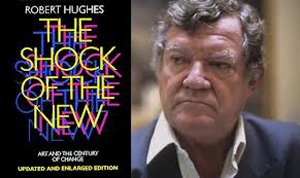
    My word what a revelation Robert Hughes’ The Shock of the New has been second time around. It was pretty good when first aired all those lifetimes ago in 1980. The fourth episode, it had Utopia in the title, reviewing the history of trendy architecture in the 20th century, was the best television about art for decades. It was alive with the authority, enthusiasm and cleverness of its presenter … and of how many current art presenters could one honestly use those words? It should be compulsory viewing in all schools and colleges with tests at the end to ensure attentiveness. Everything is there, from fact to polemic, beautifully expressed by Hughes, and edited with lengthy holds on the buildings themselves so an eager viewer might understand precisely what point the author is making. It encourages its audience to look at the screen, and then to look about them at the buildings in their own lives. And Hughes is one hell of a stimulating guide, whose opinions and insights you want to follow up with a visit to the library. He makes you want to know more.

    One can’t help thinking with regret (and deep resentment) that no way would the BBC commission anything as good as this now. They wouldn’t have the guts to aim so high. They’d think it far too highbrow and well beyond the level of those who wouldn’t watch an art programme whatever the depths plumbed to accommodate their ignorance. The terror of being accused of elitism has bred cowardice. No longer has the BBC the confidence required to say to someone of Hughes’s extraordinary talent: ‘Here’s the money, go and surprise us’.

    Instead, the BBC prefers presenters who know next to bugger all, those who puff their friends and bowl underarm questions; those who genuflect before State Art orthodoxy. Being expert in nothing these people are affably protean, capable of repeatedly delivering the obvious observation about any topic for which weak inexperienced researchers have copied and pasted paragraphs from Wikipedia. (The excellent Mary Beard is the sole exception to this.) Arts programmes on the BBC are now so uncritical they are little more than adverts for their subjects. And the other channels are even worse.

    Come back dear Robert, we’ll even forgive you the sycophancy of more recently calling Hockney ‘the greatest living watercolorist’, which, of course, he wasn’t and still isn’t. It’s only a pity that the recently deceased Hughes can’t bring the programme beyond the 1970s. Can you imagine Yentob trying to update The Shock of the New? What a shudder-inducing thought that is. The result would be pitiable PC guff cobbled together from the State Art handbook.

    Finally, as an example of how low ambitions for programme making can sink, the ‘expert’ presenters of a recent series concerning art on BBC2 were told that they could not use a phrases such as ‘figurative art’ and ‘Impressionism’, unless they were defined, because viewers wouldn’t understand them. How thick does the BBC believe its audience to be? And is such an audience even worth bothering about? This indicates how little faith the BBC has in its viewers to self-educate, and the depths it is willing to plumb to patronise an audience. In the chase for crude ratings the BBC’s obligation to educate has been sacrificed. Its policy has pleased nobody.

    The real shock in The Shock of the New is its identification of the frightening collapse in standards of BBC arts programme making since 1980.

    David Lee

    The Jackdaw October 2012