Tag: Royal Academy

  • The way we are now – why ‘avant garde’ is now an obsolete term

    McQueen copyThe Times – God bless its little cotton socks – has just been celebrating the triumphal return of the 1990s as a creative force. “Suddenly contemporary art” it crows, “was part of popular culture. The Royal Academy’s landmark Sensation show in 1997 was a turning point.”

    It was so indeed, but not exactly in the terms the article intends. Here in Britain, Sensation marked perhaps the very last moment when it was possible to talk about an avant-garde in the visual arts with any appearance of authenticity. The show was widely hailed as the beginning of something – as the moment when the visual arts in Britain turned over a new leaf, as the moment indeed when British artists surged to the very forefront of innovation, displacing both the French and the Americans, who, each in turn, had carried forward the baton in the race to create what was entirely and indubitably new.

    Looking back now, the exhibition seems, on the contrary, to have marked the instant when the hands of the clock moved on, and the whole notion of avant-gardism ran out of steam. To quote the Times once again: “The beginning of the decade was all about exhibitions in abandoned warehouses and empty office blocks. By the end, thanks to Damien Hirst and his gang of barricade-storming rebels and Charles Saatchi, the ad-man-turned-art-dealer, it was more champagne and cocaine and exploding auction prices.” Only a little further on was the day when Tracey Emin RA, once high priestess of the YBA Movement, would celebrate her 50th at Annabel’s, London’s most establishment nightclub, in the company of Princess Eugenie, granddaughter of H.M. the Queen.

    The avant-garde came late to Britain, and imploded late. Long before 1997 there had been signs that the impetus to innovate was beginning to falter. It is, I think fair to say that most of its energy was already exhausted towards the end of the 1970s, when the terms Post Modern and Post Modernism came into vogue. Art was no longer defined by its urge towards novelty, by its eager embrace of some definition of the new. Instead, it was characterized by its relationship to what already existed in the recent past. This impulse has been further defined by the fashion for ‘appropriation’ – that is, for making exact copies of images that already exist as a paradoxically innovative act.

    It is possible to look at the present situation in the visual arts using several different perspectives. One is the immense expansion of the contemporary art world. The old avant-gardes were confined to Western Europe and the United States, with perhaps an acknowledgement of what happened in Russia in the first two decades of the 20th century, and a dim consciousness of certain developments in Latin America. This expansion owes much to modern communications – first to the fact that colour printing became radically cheaper, which led in turn to the birth of the musée imaginaire or museum without walls. Secondly, to the digital revolution and the birth and rapid growth of the Internet, which has made possible the immediate diffusion of images from a huge variety of different sources. Google, and ye shall find.

    This means that it is increasingly hard to see any clear direction in the general progression of art. If we are looking for the proverbial ‘shock of the new’, it often seems that the shock of the exotic (something unfamiliar, coming from a culture very different from our own) will do just as well instead. It is, of course, necessary to acknowledge, when saying this, that the original 20th century avant-garde made free use of certain exotic sources – look for example at the relationship between Cubism and what Picasso described as “l’art négre”.

    Of course there is yet another paradox here, which is that the appeal of African tribal art to Picasso and a group of his artistic contemporaries was precisely its (to them) hermeticism – the fact that they in fact knew little and cared less about what the tribal artists were trying to express. Now we not only see too much – we are also in a position to know too much. Just go to Google, and ask the right questions. It is impossible to resist asking, knowing that the answers are within such easy reach. Today there is really no such thing as an innocent eye.

    Another important factor here has been the influence of official institutions – in particular museums of modern and contemporary art. These offer one of the main channels through which contemporary art now reaches a mass public. One may argue that television and the Internet are in practical terms just as important, but the fact is that these institutions see themselves as being entitled to govern the agenda. Their priorities are set by two things. First, those in charge of them (though they may vigorously deny this) see themselves as the high priests of a cult. A lot of the more characteristic manifestations of contemporary art, as presented by official organizations, now quite openly call for the response, “Lord, I believe – help Thou mine unbelief.” Or, in more demotic form, “I believe you – thousands wouldn’t.” There are, notoriously, often no objective correlatives that can be used as measures of quality, or even of interest.

    Secondly, museums – not surprisingly – feel a strong sense of responsibility towards those who supply their funding. The problem here is that the givers of money often tend to measure success in brutally populist terms. How many people are coming through the doors? What is the demographic breakdown, in terms both of generation and of class. Are a full range of taxpayers getting their money’s worth?

    The result has been a rush towards supposedly populist forms, chief among them performance art and video. The problem here is that what museums deliver using these media, often in spaces not very suitable for the purpose, compares unfavourably with what the audience gets from better established forms of artistic expression that overlap – i.e. with theatrical performance (nowadays often very radical and imaginative, in addition to being a great deal more disciplined), and things seen in cinemas and on television. In addition to this, where film is concerned, the technical resources available outside the museum or fine-art context are often much richer and more sophisticated. Money talks ­– this is why the best television commercials often far outstrip, in terms of technical finesse, anything presented as ‘artist’s video’.  It is no wonder that a number of artists who made their reputations in that field have now made the transition to being career film directors. The recent career of Sam Taylor-Johnson offers a case in point.

    It is worth noting, in this context, that looking at painting or sculptures is, in general, a different kind of looking from looking at video or even at performance. Video demands that you look from a fixed point of view, and the same is true of many, though not absolutely all, examples of performance art. Video and performance both impose a fixed time span on the audience. With paintings and sculptures the situation is different. You look from the angle and distance you choose. You look for a moment, or for a much longer span. You are free to walk away, then look again from a different viewpoint. Both physically and psychologically it is a very different kind of experience.

    In this connection it is perhaps worth noting that Tate Modern’s current director, Chris Dercon, is due to leave the institution in 2017, to become director of the  experimental Volksbühne theatre in Berlin. In recent months, Tate Modern, having made a big deal about providing new spaces for performance art, has gone rather quiet on the subject. One wonders if its enthusiasm for this art-form will survive Mr Dercon’s departure?

    A conspicuous feature of the contemporary art world as we now have it is its close alliance to the fashion industry. To a large extent, this is something inherited from the earliest phases of the Modern Movement. One thinks in particular of the huge impact made by Diaghilev’s Ballets Russes on the Paris fashion industry. The impact of the Ballets Russes on the leading pre-World war couturier Paul Poiret is well known, but the influence was more general than this. Maison Paquin, for example, hired Leon Bakst, one of the chief Ballets Russes designers, to sketch ensembles for its collections. Chanel had a Russian phase, with outfits that echoed the shapes of Russian peasant tunics.

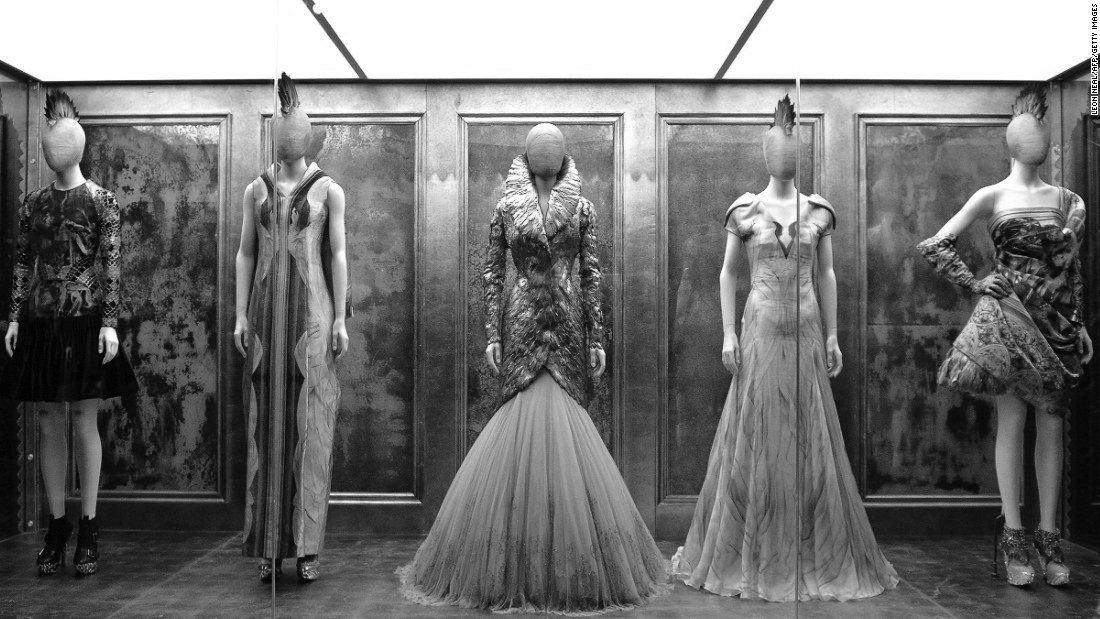
    During the past year, probably the most successful exhibition staged by any major London museum has been Savage Beauty (see illustration) at the V & A, a retrospective devoted to the work of the designer Alexander McQueen. More than 480,000 people saw it, and special late-night showings had to be laid on for the two weekends at the end of its run. Public enthusiasm for the event is, in current circumstances, not surprising. The fashion industry commands powerful PR. It is also much less bound by theories and intellectual constraints than the art world and it certainly has no inhibitions about luxury, and no shame about the money required to support luxury. Yet fashion is conservative in this sense – it gives you something to ‘see’. However ridiculous some of its visual inventions may be, fashion design never neglects the purely visual effect.

    Wear it if you can afford it. Wear it if you dare. And you can be damn sure that people are going to look at you and that they will probably remember what they saw.

    Fashion designers also, as it happens, have much less self-consciousness about ‘appropriation’ than today’s would-be avant-gardists. Fashion designers have always been magpies – they borrow without shame and recycle without inhibition. The point, for them, is to give what is borrowed a new twist. If the audience doesn’t recognise where a particular idea or effect originated, so much the better. With appropriation-art the opposite is the case. You have to know what is being so sedulously copied, otherwise you’re out of the loop.

    One refuge for avant-garde aspirationists, lacking visual inventiveness, has been to take refuge in supposedly radical politics. The visual arts have had an uneasy relationship with politics ever since the French Revolution. It was particularly strong in France during the first two-thirds of the 19th century, and reached a kind of climax in the days of the Paris Commune. This involvement, and the price that could be paid for it, is illustrated by the career of Gustave Courbet.

    There was certainly political involvement between some elements of the visual arts avant-garde and the political left during the first half of the 20th century, but the relationship was always uneasy, as the history of the Surrealist Movement amply illustrates. One still gets a great deal of talk on this subject today. The current Venice Biennale, due to finish on November 22nd, features continuous readings from the three volumes of Karl Marx’s Das Kapital. Whether anyone will pay attention to the words of this text – anymore than most of the traditionally religious pay attention to the actual words of the Mass when recited in Latin – must, I think, be seriously in doubt. In fact, left wing events, safely quarantined in museums, are now a familiar form of preaching to the converted. A good example, here in London, was Mark Wallinger’s installation, State Britain, which won the Turner Prize in 2007. This was a faithful reconstruction of the Peace Camp by the late Brian Haw, which existed for a while out in the open, directly in front of the Houses of Parliament. The Tate Britain web site rather smugly notes that: “Mark Wallinger’s work is noted for its succinct social commentary and political resonance.”

    Yes, indeed. And forgive my asking, but if this now almost-forgotten work ever had any real political impact, in which location would that have been more likely to happen?

    The avant-garde, as we once knew it, is as dead as the proverbial dodo. It is not going to rise again like Lazarus. It’s time we looked for something else, even if we don’t yet know what that is. London is now, for better or worse, a world metropolis. It is full of bright young artists from everywhere you can think of, all enthusiastically making work – much of which can be at least loosely described by the two nouns ‘painting’ and ‘sculpture’. Definitions can wait. Forget the museums. Go to the bustling galleries in Shoreditch and take a look.

    Edward Lucie-Smith

    September/October 2015
  • Museums – our national genius

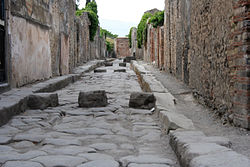
    PompeiiI may frequently express criticisms about their finer workings but British museums and galleries are generally superbly run. Heroic efforts are made to minimise the impact of funding cuts so that even regular visitors will notice little or no impact. From looking at the outward face of our museums you would never guess the country was in anything like the mess the numbers would indicate. They open on time: they have excellent facilities; their staffs are visible, willing and helpful; their experts are sought after the world over; they are clean; they have disability access to the ceiling; their bookshelves cater to all types of reader and interest; and their collections are by and large well maintained, sensitively exhibited and most supply informative captions. Many of them have for centuries been kept open free of charge for everyone, often against all odds and arguments. They are exemplary resorts of enlightened thinking about education and the preservation of history. This quiet effectiveness is a substantial achievement which is easy to take for granted. The truth is that when it comes to museums, in Britain we have been spoilt.

    This native genius was recognised recently when the Italian Culture Minister announced a fundamental shake-up in his own country’s major museums by throwing open twenty directorships to all-comers. Heading the published lists of dream candidates were many Britons. That Italy desperately needs help running its museums can not be in any doubt in the minds of those who have recently visited that country.

    Newspapers have lately reported that Pompeii is at last rising from the ashes of incompetence and corrupt administration. Having been partially rescued from beneath the sludge of AD79, in recent years other man-made ravages have befallen this astounding place –  structures have collapsed, excavation has ceased, and the site has been subjected to looting and vandalism. All of that, we are proudly informed, is now in the past. Sanity has set in and the place is safe in Italian hands. Millions of euros (doubtless originating in Germany) are being lavished to turn Pompeii into less than the unloved disgrace it has been in the recent past.

    Don’t believe a word of it. If Pompeii is typical of how Italy runs its museums – and it does seem to be – no wonder British and German experts are being wooed, because even organising the basics efficiently defeats Italians.

    The situation is hopeless and it starts as soon as you arrive. Gates open half an hour late, which especially annoys those scores who have arrived early to steal a march on a punishing summer sun. Once admitted, crowds jostle forever to buy a ticket because only two people are taking money. Matters are made worse because neither has any change. They accept only the correct money which must involve coins. In Italy it is virtually impossible to have coins not least because no one will give them to you: they hoard them like juju beads. The inevitable chaos is entirely avoidable and compounded when concessionary cards are not accepted unless accompanied by a passport. Endless negotiations ensue with each now sweating and thoroughly exasperated visitor. You then try the bookshop for a guide and detailed map. They don’t have any change either and diagrams in the Blue Guide are better than the childish plan costing a euro. So extreme is the provocative indifference of staff it can only be intended as a calculated insult. It’s as though they don’t want you here.

    In general museum bookshops and cafés are, throughout Italy, not seen as important revenue earners or as crucial a part of further education as we treat them in Britain. At Reggio’s museum they provide a rudimentary brochure for 7 euros about the Riace bronzes, the most precious sculptures of the ancient Greek world. Many of those making the trek to this furthest bunion of land will be willing to pay a premium for something more detailed. There is no bookshop at Tiberius’s villa in Sperlonga, the remarkable Villa Poppeia at Oplontis, or at the Agrigento Museum with its stunning collection of red and black ware.

    The anarchy characterising admission to Pompeii follows you about the site. In nearly all the most treasured areas there is no visible security. At the distant Villa of the Mysteries, to which I arrived in advance of everyone else, not a soul was there to protect what are among the most important paintings in the history of classical art. Perfect for me, despite the fact that they weren’t properly visible because unlit, but I fear dwelling on the damage parties of Europe’s and Asia’s squealing, uninterested and accessoried oiks might wreak on a place like this – they look with their hands.

    They say that Pompeii is the place in which to wander, get lost and release your imagination. Indeed it is, but you can’t do this because too little of even the excavated area is open. Crime-scene tape forces you to remain on thoroughfares which rapidly become Wembley Way on cup final day.

    At the farthest extremities of the site there are no services. There is nowhere to sit comfortably or to buy the fluid necessary when, as on my recent visit, the temperature soars beyond forty degrees centigrade. There are water fountains if you are prepared to trust the liquid coming out of them in a city with a pervasive smell of drains and where essential social infrastructure of hygiene and refuse collection have disintegrated. (Naples is a memorable city but filthier even than Oldham.) A third of my eight hours were spent sitting reading either Mary Beard or an old guidebook while trying to satisfy unquenchable thirst. An air-conditioned café on the periphery near the amphitheatre with coins in the till, simple food and cold drinks, and ice cream, would have cleaned up. By the time they’ve beaten the long procession around to the theatres, all visitors are as stripped and dessicated as Peter O’Toole staggering across the Devil’s Anvil. It would be so easy to make this unique place even more of a memorable experience than it is.

    Beside its serial inconveniences, the site’s main offence has to be a new building of which administrators are so proud as to make it a feature of all publicity material. As with many European museum extensions, this contract has gone to a person with no visual sense at all. It is a large pyramid whose job is to display in a sort of cock pit the famous plaster casts of the perished. This structure should have been built almost anywhere other than where it has been. Placed bang in the middle of the amphitheatre, the full effect of that otherwise special place is thus ruined. Visitors are not allowed on to the terraces so the only panoramic experience of it is as you enter the arena, only to find the view impeded by a structure which has ‘Brussels’ written all over its design and materials.

    Pompeii’s amphitheatre is significant. It was built in the first century BC (160 years before the Colosseum) and was the first permanent stone Roman amphitheatre; other similar arenas are a refinement of the incipient form found here. It has two sets of external diagonal staircases giving access to upper tiers. On a previous visit I’d had been struck by the impact of the interior, and was looking forward to seeing it again, a spectacle now regrettably sacrificed to a populist stunt.

    Pompeii is not unusual in Italy. Other sites seem equally to be run for the benefit of anyone except visitors. Lack of facilities are routine. At Herculaneum closed areas include the Villa of the Papyri, the quayside wharves housing all the skeletons of those attempting to flee by boat, the still underground cruciform pool as well as numerous insulae. Visitor services are rudimentary and limited to what can be dispensed from a machine. The ‘bookshop’ is hopeless for anything but souvenir trash. Even the National Archaeological Museum in Naples has whole wings and floors closed and, again, vending machines and few seats in place of a cafeteria.

    Italian museums are throwing away money whose collection would allow them respite from EU- and IMF-imposed cuts to Government and local expenditure. The Tate self-generates an astonishing 63% of its own income. The National Gallery makes three times more from cafés and shops than it does from exhibition admissions. The Royal Academy rakes in almost twice as much from retail activities than it does from ticket sales.

    Also, as with Pompeii, the protection of priceless treasures is generally so disgraceful it’s almost an invitation to looting and theft. At the museum of Tiberius’s villa near Sperlonga, which contains some of the most important Augustan sculpture, four middle-aged attendants, obviously recipients of some local authority sinecure, are slumped in the entrance indifferent to what is happening throughout the otherwise unprotected museum and grounds. Hardly any information is provided on this amazing site which has a massive coastal grotto – now busy with the aerobatics of rare pallid swifts – originally housing sculptures possibly by Polidorus of Rhodes, to whom some attribute the Laocoon. The same is true at the great museum in Agrigento where only the celebrated eponymous Ephebe – a close relative of the Kritios Boy in Athens (and which recently cropped up on the cover of Private Eye) – has its personal attendant playing games on a mobile telephone. In four hours at Hadrian’s Villa, in a complex the size of a large village, there was no security at all. Apart from the ticket office lady it was a ghost town. This is a definite advantage, as it allows furtive exploration of decorated areas inside the baths which are inexplicably taped off.

    A word of advice for cultural tourists to the Campagna. For the first time I visited the atmospheric Villa Poppeia, ten minutes from Pompeii in Torre Annunziata (Oplontis). Also interred in 79 this is not on tourist routes yet houses the finest collection of frescoes in the four Pompeiian styles you’ll see anywhere. Go in the evening and you’ll wander undisturbed. Its murals should be compulsory viewing for any art history student, and especially for those with a developed interest in the evolution of how a third dimension is depicted. Steep recessions and trompe l’oeil effects are dazzling and the drawing, particularly of figures, is flawless and exhibits complete assurance. Being Imperial in origin – Poppeia, poor lass, was Mrs Nero – these paintings are of a quality which knocks spots off most decoration encountered in the urban houses of Pompeii and, to a lesser degree, Herculaneum. Poppeia could afford artists for whom foreshortened figures in complicated groupings and poses were second nature. Natural history scenes of flowers, insects and birds in a long painted trellis and arcade beside a swimming pool are thrilling beyond description, the most magical work of its type I’ve ever seen.

    Any defence of Britain’s museums should start with the magnificent fundamental principle underpinning every aspect of their existence: this is that we actually want those who own them and their contents, the public, to benefit from their existence. Everything is done to further this aim. We encourage attendance and hope that some, whose curiosity is roused, may often return. Many have argued, including myself, that the commercialising of British museums is a disgrace. Having experienced the alternative I take it all back. In difficult conditions our national museums are doing a tremendous job. They now need to address urgently problems caused by their own success, most notably that of overcrowding.

    David Lee

    2015

  • Manet at the Royal Academy

    Manet at the Royal Academy

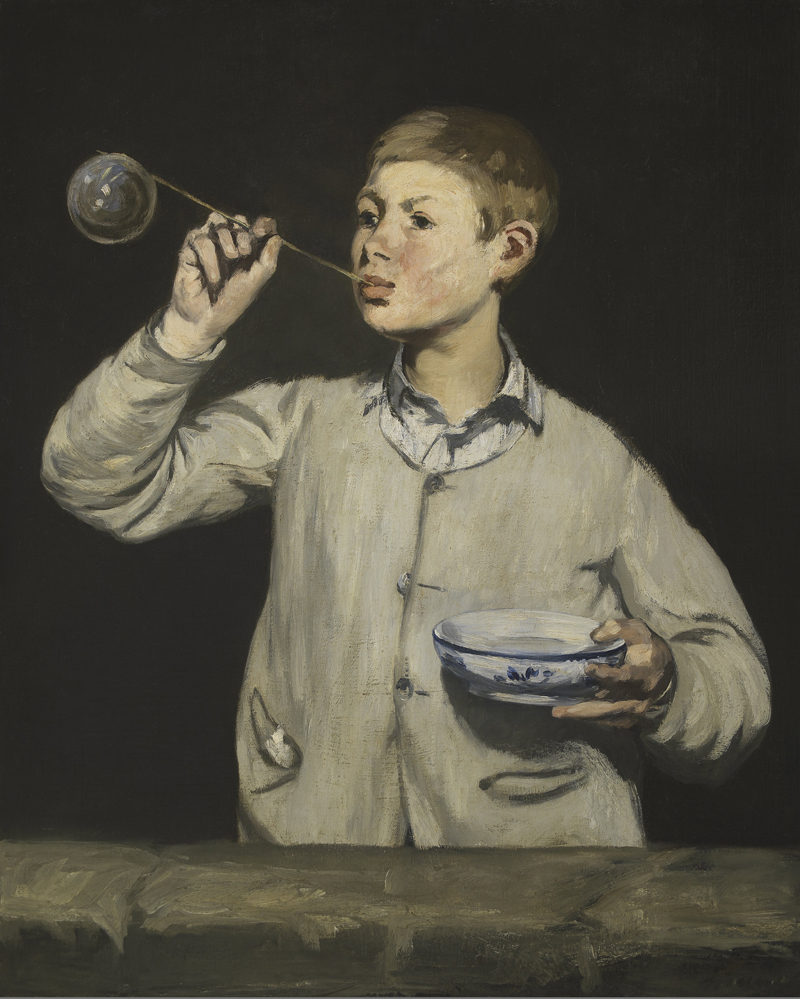
    Seven years ago the Courtauld Institute mounted a thrilling exhibition by showing only two works by Manet. Admittedly they were both undoubted masterpieces, the Barmaid at the Folies Bergere of 1883 and The Luncheon from Munich of 1868. It demonstrated that an absorbing experience could be staged with the import of only one picture. We all know what a brilliant, enigmatic piece the Barmaid is, but the earlier scene of post-prandial insouciance was equally dazzling and also ambiguous, even mysterious, in subject. Of both pictures one asks in genuine bewilderment: ‘What is going on here?’ And the answer is up to you to make of them what you will by considering every last detail.

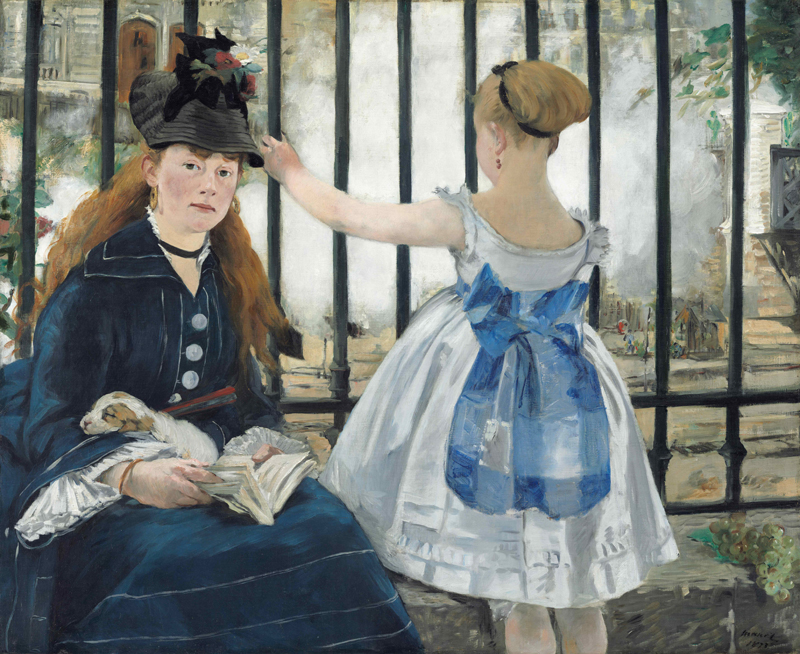
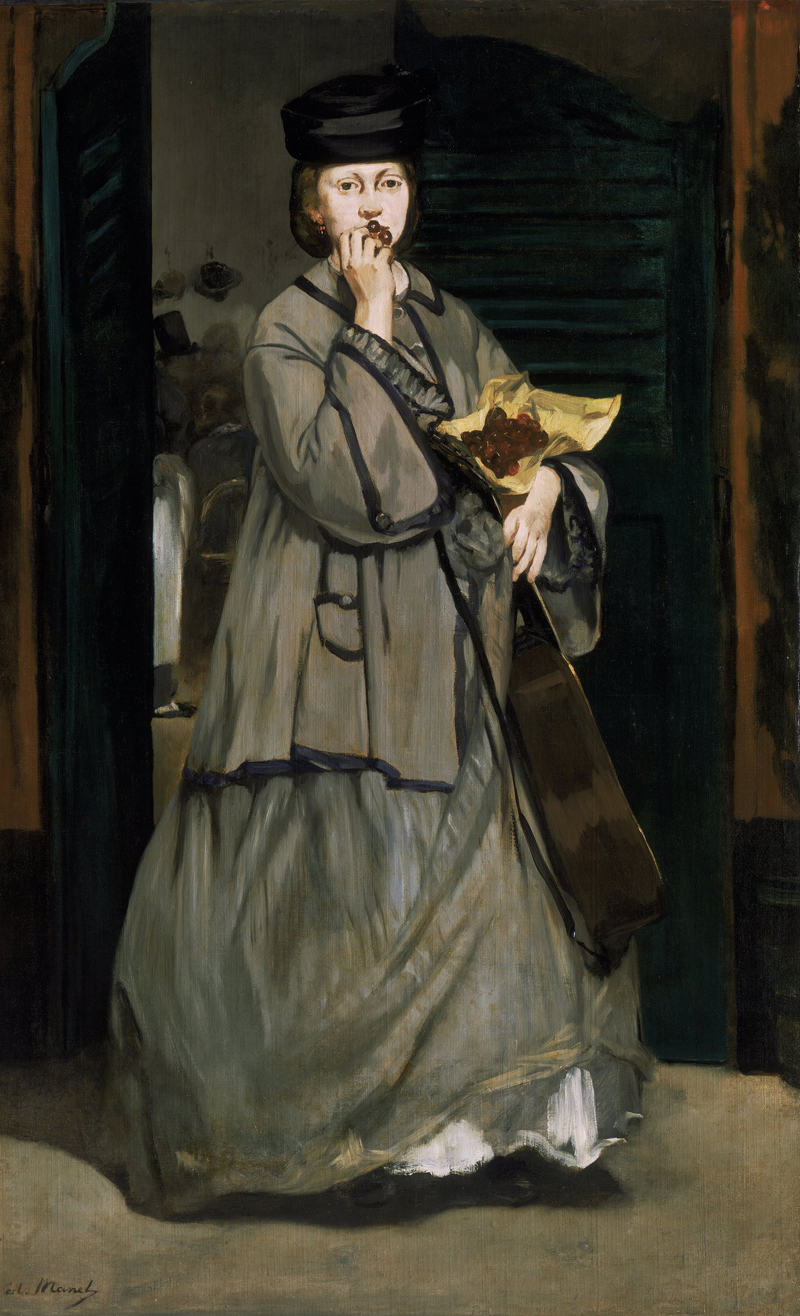
    Manet’s best paintings rarely fall easily into any genre; an ulterior motive, even in what might appear to be a straightforward portrait, is never far away. For example, what is this interrupted reader in The Railway doing beside the track with a bunch of grapes on the parapet, a puppy dog, a hissing loco and an apparently bored daughter? Whatever it is, there is clearly more than meets the eye in the painter’s relationship with his favourite model Victorine Meurent, for it is she who appears in many of the better works, including The Street Singer.

    The Luncheon features again in the Manet exhibition at the Royal Academy (until April 14th) and by itself is worth the £15 admission fee. The right hand vertical quarter of the painting showing an unknown man still wearing a hat and smoking a cigar beside the wreckage of lunch, itself a still life so brilliant it’s hard to recall anything anywhere comparably so fine, has got to be among the most amazing passages of painting on show in London.

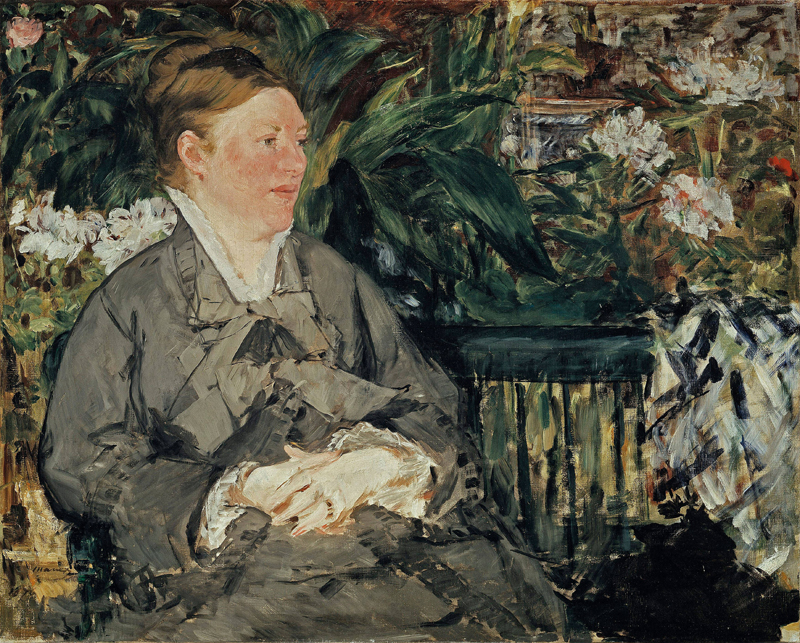
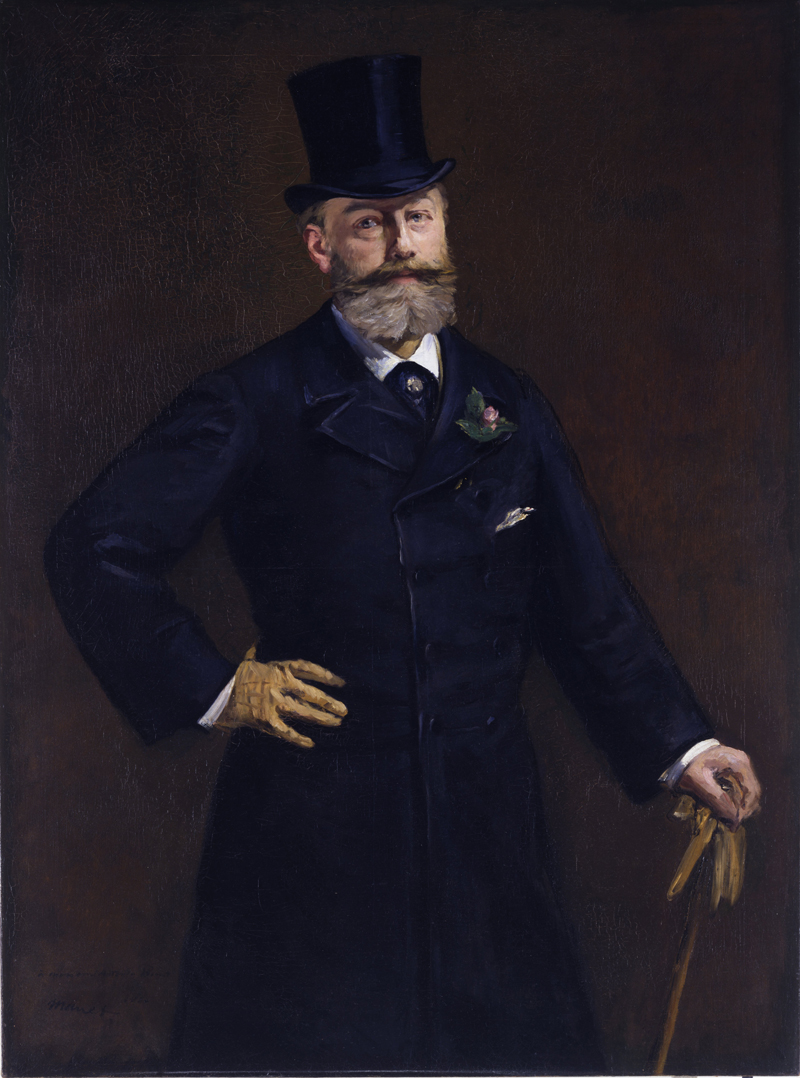
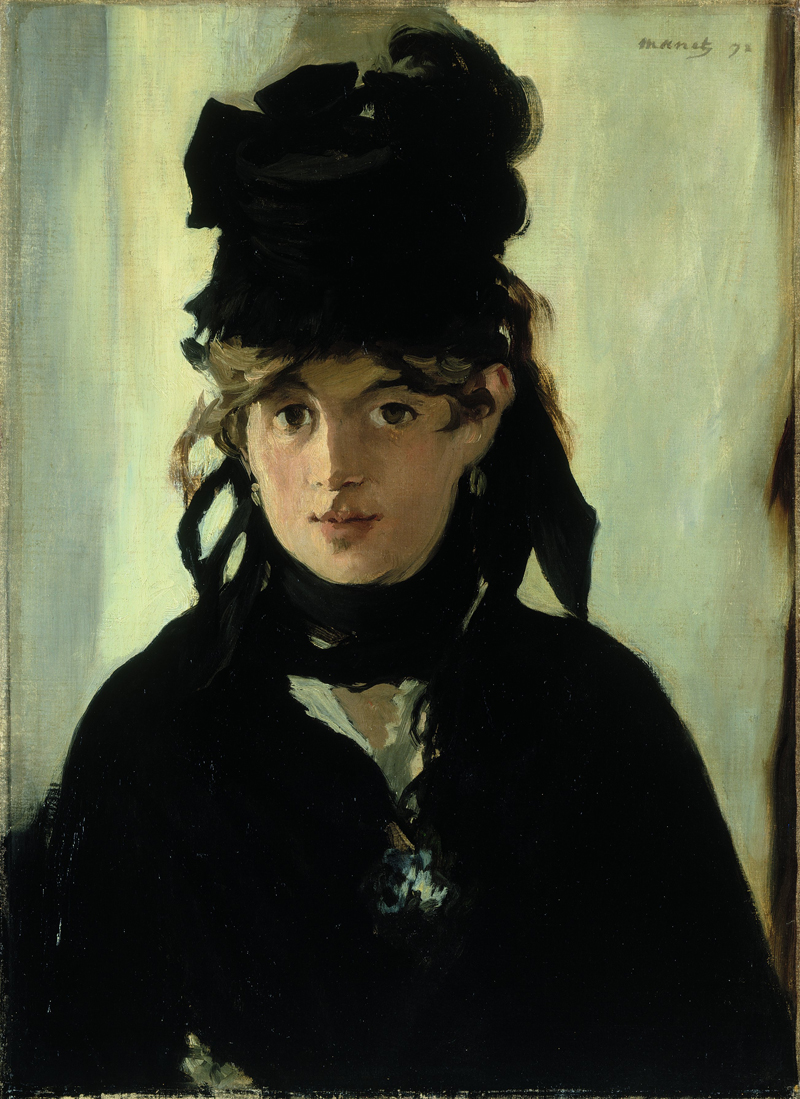
    The exhibition as a collection is a mixed bag. Besides The Luncheon there are half a dozen masterpieces – the aforementioned Street Singer (from Boston), which knocks spots off anything even roughly equivalent by Whistler; The Railway (from Washington), which looks to have been disadvantageously cleaned to a jarring sheen; and four portraits depicting Zola, Astruc, Mallarmé (no larger than A4, this picture is breathtaking, and a brilliant character study) and Duret are all you really want to trouble yourself with. The rest are varying degrees of stocking filler. The poor old RA, struggling desperately on its uppers and fending off poverty, had to fill up the rooms somehow and this is what the dears could get. Most of it isn’t much to write home about but it will be perfectly sufficient to get the nuke-proof knicker brigade of Adelstrop reaching for their rail passes and lorgnettes and gagging to fork out fifteen quid.

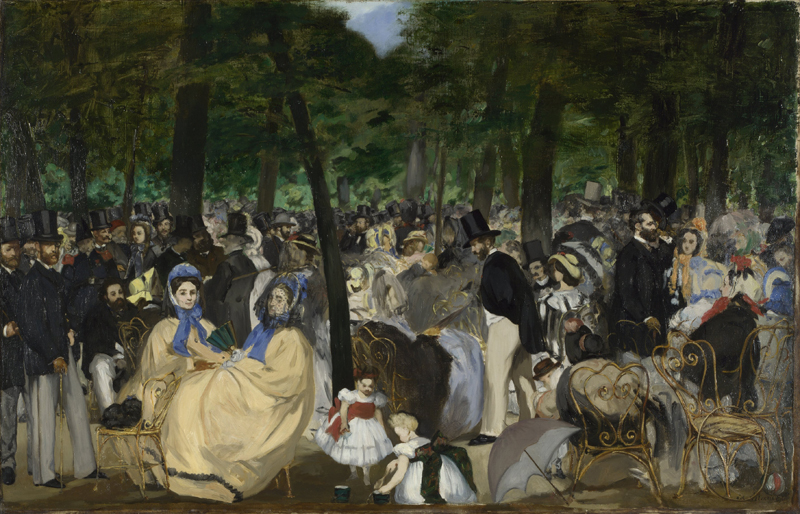
    The best Manet in London, the Barmaid, is not here, though familiar items from the National Gallery are; the uniformed Tuileries consortium of stuffed shirts for some reason receiving a room to itself. An invented gathering of Manet’s friends from every sphere of progressive cultural life (and what an anal bunch they look) in the familiar setting of ornamental gardens in central Paris, this must be some sort of assertion of class or caste pride, for there’s no sense here of bohemianism or the avant-garde at play. Looking at this bunch, with their underpants full of thistles, it’s hard to think of them getting up the Establishment’s nose.

    Most intriguing is the lack of finish evident in many pictures, some of which  were not exhibited during Manet’s lifetime; perhaps he was fearful of the inevitable opprobrious response. As early as Degas came to the same conclusion, Manet also discovered that a painting might reach fruition well before it appeared complete in conventional terms. Thus begins here with genius the reductiveness which soon descended into absurdity.

    Ever respectful of its charitable obligations, the Academy is offering a chance for a few to view the exhibition on a Sunday evening throughout the run in a less crowded gathering conducive to actually seeing the work on display. For thirty quid the ever-giving institution will even chuck in a glass of wine, doubtless from its own cave.

    David Lee

    The Jackdaw January 2013

    http://www.royalacademy.org.uk/exhibitions/manet/