Tag: DCMS

  • Fibres torn from the brain

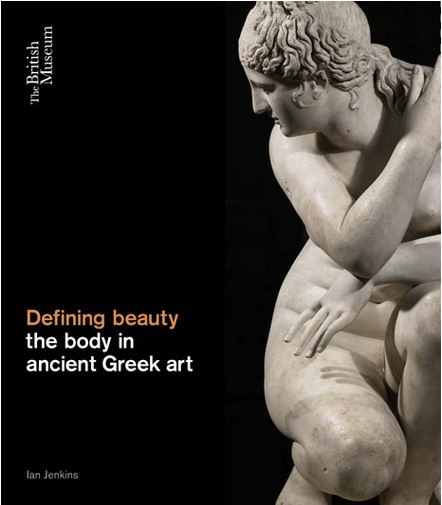
    Body in ancient Greek artIn all the doting coverage of ‘Defining Beauty: The Body in Ancient Greek Art’ at the British Museum, no mention was made of the fact that the bulk of major exhibits featured were from the museum’s own collection. Stupidly, I had believed – and perhaps was even misled by advance publicity – that the exhibition would feature a range of major sculptures I hadn’t seen before. I should have known better. During the months before the display opened, regular visitors would have noticed a weekly disappearance of prize pieces from the Greek and Roman galleries. Indeed, for two months in advance of the show half the Duveen gallery exhibiting Parthenon material was crudely boarded off like a building site. Art critics, many of whom nowadays are at sea dealing with anything made before last weekend, were bowled middle stump by Defining Art. They didn’t know the BM sufficiently well to realise that many works for which they were recommending the public pay handsomely could have been seen free any time in the preceding 262 years and will be free again after July 5th when the spectacle closes. It serves the museum right that attendance for what was doubtless planned as a cash-cow blockbuster hasn’t risen above a trickle. A sad irony is that works are better appreciated in the deserted exhibition than they are normally when enveloped by noisy swarms of disaffected foreigners shuffling along with scarcely a glance at anything deemed unworthy of a selfie. It goes without saying that the more important works illustrated in the accompanying book (which isn’t a catalogue), indeed the crucial ones to the show’s thesis, were not included in the exhibition: they live in Greece, a country with whom regrettably we have no dealings.

    We’ve become inured to the scam operated by many museums whereby they demand payment for what should be gratis. And the Department of Culture, the House of Commons’ Select Committee, and assorted museum trustees, all otherwise so proudly defensive of our free museums, let them get away with it. However, Defining Beauty set new standards in such fraud. With the exception of a rare bronze of middling quality recently trawled from the Adriatic off Croatia, the influential Belvedere torso from the Vatican and a few oddments, I emerged feeling well and truly robbed of £16.50.

    In previous issues I’ve criticised the BM for misrepresenting the experience of a visit there. We’ve been told often, mainly by the Director, that the museum tells a definitive story of classical sculpture and civilisation and shouldn’t be tampered with – this is their Elgin Marbles Sicilian defence. The collection is too patchy to attempt any such thing. And even if it were not, all the galleries are not open at the same time anyway. Visitors are never allowed to see the full story. Recently, I was ejected from two rooms in quick succession as they were closing only minutes after opening. They claim shortage of cash but in the last 15 years the BM has spent hundreds of millions on two major building projects, one of which is a shopping mall with a vile swimming pool roof. Constant closures ensure that many of the more fascinating pieces are off bounds every day. On my most recent visit galleries housing the Bassae frieze and the Mausoleum of Halicarnassus were, as usual, shut. But at least the wondrous, blissfully empty architecture galleries, in my experience closed for years, were open ­– a red letter day indeed.

    ­ As I write, news arrives that the BM has leased for five years 500 works to a Qatari museum for an undisclosed fee. Depletions to galleries of the sort mentioned above will, it seems, become a permanent fixture as the museum realises its main financial asset is the quality of collections they can pimp to the highest bidder (which, conveniently, fucks Greece). Am I the only one who thinks renting masterpieces in bulk to the Middle East is just a tad risky?

    We are entering a different age to that post-war world of museums where I discovered escape, solitude, inspiration and willing expertise on tap. Museums no longer principally exist to benefit those dedicated to what they preserve. I regret this loss of innocence and its replacement by venal opportunism. At the same time, I’m grateful to have experienced the best of it while it lasted.

    David Lee

    July/August 2015
  • Are you disadvantaged?

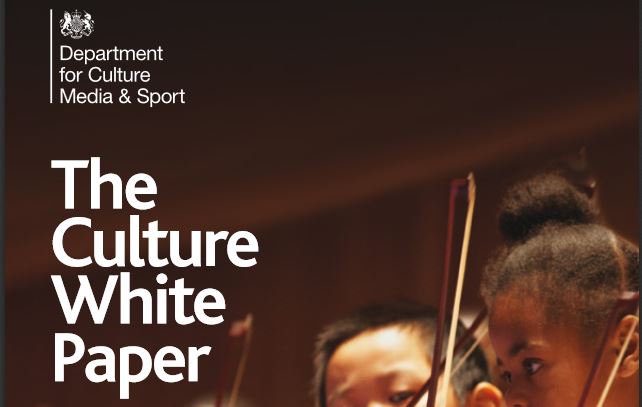
    The Department of Culture recently published a White Paper, the first from that department since Jennie Lee’s in 1965, and apparently only its second ever. This chic pamphlet, in truth more PR exercise than policy document, prominently contains that new-age mantra, “access must be increased for those from disadvantaged backgrounds”. The Arts Council also write this sort of optimistic guff, and they don’t mean it either. They only mean it if the ‘disadvantaged’ are prepared to like what the Arts Council want them to like. God forbid that the ‘disadvantaged’ should actually express preferences of their own. And this must echoes its 1965 predecessor – they were on message then too: “The best must be made more widely available.” Imperative or not, nothing happened. The disadvantaged, and presumably they mean anyone who doesn’t visit museums, weren’t seduced by free admission then and they won’t be today, or tomorrow.

    If contemporary art fanatics had their way they’d make gallery attendance compulsory, requiring a form of mass re-education: “You will watch this interminable video by our favourite and extremely challenging blurry filmmaker from Kazakhstan … who we got plastered with three nights running at the Gwangdong Biennale.”

    Access to museums already being free, how might the disadvantaged be forced into submission? Two possible answers suggest themselves. You could round up pasty-faced skulkers on a sink estate, deposit them outside a museum and have the director and his staff fire kalashnikovs round their feet until they flee into the galleries. Alternatively, you could exhibit the sort of stuff which might appeal to these disadvantaged folk. A display of assault rifles, stillettos and machetes perhaps, or violent video games and snuff movies, or panoramic tellies with full Sky Sports and pornography packages. You might scatter burger boxes, skunk butts, crisp bags and beer tins under the pictures in order to make everyone feel at home. And why not offer them a couple of free ten-pound bets? That seems to work.

    Curiously, there’s no word in the White Paper about the ‘advantaged’ who don’t visit museums. This includes most aristocrats. They’re also thick, inbred, ill-mannered, drug-crazed and unemployable. And do tell me Squire Vaizey – while I’ve got you on – am I disadvantaged because I’d rather have my teeth pulled by Hogarth’s dentist than sit through an opera? Give me Buddy Holly any day than some caterwauling eyetie. And I’d rather divebomb naked with my mouth open into a slurry pit than sit through a ballet or a ‘modern dance’, whatever that is. Give me a Sergio/Yaya one-two every time. No, let me go a-disadvantaging myself cabbing Deltics at Barrow Hill, or trudging across Rivvie Pike, or tending the world’s most expensive courgettes, or watching whimbrels where they’re not supposed to be, or just having a few pints in the Cheshire Cheese (again). Rather any of these pastimes than visit a palace of bogus crap like Tate Modern. Am I disadvantaged? Are you talking to me? Well are you talking to me?

    This White Paper has the self-congratulatory, de-haut-en-bas tone associated with all Arts Council literature, which, suspiciously, this document closely resembles in appearance. Every page tells its own tinted porky-pie diagram and the most obsequious political correctness oozes like dripping from every letter. It has also decided, again like the Arts Council in its own PR, what the outcomes will be even before policies have been implemented: “They will be inspired by their experiences and will be encouraged to inspire others.” Talk about the Gestapo: “You vill be spired-in! Or you vill be shot!”

    Will this White Paper alter the social demographic of museum attendance which has remained static for decades? Not a hope.

    Squire, I’ve been in more museums than you’ve had hot dinners and, yes, I am still seriously disadvantaged. Throughout my entire adult life I’ve been cheated by State Art’s monopoly force-feeding me a diet of conceptual and minimal trash of no discernible merit. The only thing I’ve been seriously disadvantaged by is State Art’s prejudice against the sort of work which – for all my peasant upbringing and scummy tastes – I’ve always preferred to look at.

    David Lee

    DCMS White Paper disadvantaged editorialMay/June 2016


  • Top people

    Top people

    The new Culture Minister is Maria Miller. Her background is in marketing (Texaco and an ad agency) which means she’ll be in heaven when blather is required. She was born in Wolverhampton and is MP for Basingstoke, both places whose connections to Culture are so obvious they don’t need repeating here. She joined the Conservative Party aged 21 when Mrs Thatcher was PM – the year after the miner’s strike. Not surprisingly, therefore, nothing in her constituency notes suggests even the remotest interest in art, though she is instrumental in the Campaign for a Phosphate Free Basingstoke. We recommend she begins her job by inserting a hand grenade firmly up Ed Vaizey’s arse and watching closely for signs of life.

    http://www.culture.gov.uk/news/news_stories/9320.aspx

    Peter Bazalgette, the television auteur who brought you Big Brother, has been appointed Chairman of the Arts Council. He will probably do nothing at all and replaces the previous person who did nothing at all next January. A monkey could be an effective Chairman of the Arts Council. Let’s face it, how difficult is it to give money to the same recipients every year?

    http://www.artscouncil.org.uk/news/arts-council-news/sir-peter-bazalgette-new-chair/

    David Lee

    The Jackdaw September 2012