Recent Articles

  • The RA is not a charity

    The RA is not a charity

    Inspired by landscape painter Patrick Cullen, The Jackdaw Sept-Oct 2011 reprinted pieces about the Royal Academy that have appeared in The Jackdaw over the last eleven years. All deal with the genuine fears of artists that the Summer Exhibition is progressively a closed shop whilst being marketed as an ‘Open’. Patrick’s research succinctly reinforces previous claims made by artists that the chances of an outsider featuring in the Summer Exhibition are now so seriously diminished that no gambling man would ever accept such long odds. Justifiably over the years this has become a common lament because, as Patrick demonstrates, an inverse logic now seems to apply: as the cost of having a work considered increases (currently £25 per item) so the chance of successful selection is reduced. Even a less cynical person than myself must conclude that the Summer Exhibition has become a calculated ploy to fleece lesser-known artists, many of whom can ill-afford the submission fees in the first place. This is done in order to shore up the finances of a membership-only club many of whose beneficiaries are already well-to-do artists; indeed some are among the world’s wealthiest. This Robin-Hood-in-reverse ploy is surely a perverse betrayal for an organisation purporting to be a charity. Where the Royal Academy is concerned, it would seem that charity not only begins at home but ends there as well.

    The Academy is a registered charity whose annual accounts may be examined on the Charity Commission’s website. (Did you know, for example, that the President of the RA trousers sixty grand a year? And there I was thinking he gave his time selflessly for God, the Coalition and the dog’s bollocks of gold chains.) Notwithstanding our frequent claims in these pages that it is no longer an ‘Academy’ using any accepted definition of that term – and how can it be when a downright charlatan like Gary Hume is Professor of Painting? – I have arrived at the conclusion that it is no longer a charity either, if, that is, it ever was one. My purpose here is to demonstrate that the Royal Academy is a business, pure and simple, and bears negligible resemblance to a charity. It does less and less for artists in general and more and more for its Academicians in particular.

    My understanding of charity is doubtless an old-fashioned one. She stands among Giotto’s virtues in the Arena Chapel, the junoesque rustic dispensing grain, veg and manna to the needy. A modern equivalent is The Salvation Army, an organisation for which I have personal fondness. Somewhat of a laughing stock these days with their Victorian uniforms, simple principles and enthusiastic (if not exactly euphonious) brass bands at Christmas time, they look after the poor, lonely and deserted. They perform visible good works and they do it without living high on the hog by siphoning off donations to pay for posh offices, flamboyant places of worship or overpaid officials. They cared for two of my relatives, one of whom, a vagrant grandfather persecuted with imprisonment by those unsympathetic to his irrepressible free spirit, lived and died in a Salvation Army hostel, the last of many with which he had over 40 years of wandering become acquainted. The Army’s charitable works are conspicuous and basic – hot soup, shelter, a bunk, a bath and a kind word for the homeless.

    Using the Sally’s criterion of free giving the Royal Academy scarcely looks anything like a charity. It is a strange charity indeed whose main beneficiaries are the organisation’s own members; namely, the 116 Royal Academicians, many of the most celebrated artists of the day, for whom its Mayfair stately home functions as a gentlemans’ club.

    Exactly what services does the Academy supply to the public to deserve its charitable status? It runs an art school in its basement, much like any other for which students pay fees. It puts on exhibitions for which it extorts stiff admission charges effectively excluding all but the better off who don’t need charity anyway. It is a business which mounts exhibitions, flogs unnecessary souvenirs and feeds and waters the well-heeled. On the face of it the Royal Academy gives nothing away to anyone sufficiently disadvantaged to merit the description ‘charitable institution’.

    In its defence it doesn’t receive a farthing from the Arts Council, although there’s no reason why it shouldn’t qualify. Another ‘charity’, the Whitechapel Art Gallery, which receives £1.5 million per year in public subsidy as well as regular infusions from the National Lottery in fulfilment of seemingly permanent lebensraum ambitions, is charging a steep admission of £9.50 for its current Thomas Struth retrospective (and if you book in advance they’ll throw in lunch for thirty of forty quid apiece). What does the Whitechapel give in return for its charitable status if not free admission to the shows it mounts? I’ve sang this song before, and it’s always been received with deafening indifference, but what is a charity doing subsidising the promotion of a famous German photographer whose works are now selling at auction for over a million dollars apiece and who is represented by two of the world’s wealthiest dealers? I don’t get it. How does any of this constitute ‘charity’? The dealers themselves should be paying for the privilege of promoting their artist in this public arena in order that the Whitechapel can show the work free of charge and therefore make at least some stab at fulfilling its charitable educational responsibilities. For the duration of the Struth exhibition at least, the Whitechapel is not a charity at all, it is, like the RA, a business.

    Defenders of the Academy are ever eager to announce as loudly as they can shout it, that it receives no public subsidy, a statement that has become accepted wisdom. This is the kind of half truth many of us expect nowadays from arts organisations eager to parade their thrift, enterprise and cost-effectiveness. Needless to say, it isn’t true. There is the small matter of its premises, Burlington House, for which the Academy holds a 999-year lease (850 years of which remain) vouchsafed at a peppercorn rent by the Secretary of State for Employment, Transport and the Regions. A massive building, a palace indeed, with a suite of arguably the finest rooms in Britain, a furlong from Piccadilly Circus … What, I wonder, might the Candy brothers extract for this peach? No public subsidy? Pull the other one.

    Leaving aside its objective “to engage with the widest possible public”, which it doesn’t and never has done, in its declaration of charitable objectives the Academy states a purpose “to represent the professional interests of all artists and architects to the public and to government.” Its only real connection with “all artists” is the annual Summer Exhibition, the first of which was staged in 1769 and hung 136 works by the 34 founding members. Helping artists, whose average income incidentally is below the Government’s poverty line, is an aim worthy of a charity. But the Academy is gradually reneging even on this, for the small charitable purpose it performs in showing the work of those who have little opportunity to exhibit elsewhere is now badly eroded. The impression any outsider might form is that the Academy would, if it might get away with burying such bad news, rid itself completely of outside submissions to the Summer Exhibition, but it can’t because of the money this contributes to a precarious balance sheet.

    Details of the Summer Exhibition’s finances are omitted from the accounts so I’ve had to work them out for myself. I visited the exhibition a fortnight before it finished in order to make a record of sales. My rough figures are probably only as good as the doubtless desultory information provided.

    There were over 12,000 entries to this year’s exhibition, 1,117 of which were displayed. A thousand will have been the work of the RAs themselves. So 11,000 entries at £25 each is £275,000. Assuming that half of the average annual 150,000 attendance pay the exhibition entrance charge as non­members at £10 apiece, this delivers another £750,000. With a fortnight still to go, although one suspects the overwhelming majority of sales were long completed, the number of works sold was 3,812, of which 3,436 were editioned prints. The number of works sold by RAs was 1,004 (26%) and by outsiders 2,808 (74%). The total value of works sold was £3,199,975, of which £1,648,499 (52%) was generated by RAs. In terms of their value to the Academy, Academicians, though they sell half the number of works, are worth more than outsiders: the average cost of a sold work by an RA being £1,642 against the equivalent figure for an outsider of £553. But this doesn’t take into account the fact that the work of non-members, as Patrick Cullen demonstrates below, occupies only 29% of the overall space. (Interestingly, only 7% of the works sold are paintings and sculpture, the other 93% are editions – comprising 90% prints and 3% photographs).

    The Academy takes a 30% commission on all sales, including those of RAs – which generates another £960,000. The prima facie revenue of the Summer Exhibition, therefore, comes to ca. £1,985,000; a figure that might easily be doubled when you consider – and this may surprise you as it did me – that its shops and restaurants contribute more revenue (£9 million) than exhibition takings (£8.5 million) throughout the year. When costs are taken into account I assume the profitability of the Summer Exhibition is in the region of £3 million. To understand something of the importance of the milch cow that is the Summer Exhibition to the overall financial health of the Royal Academy, in the last published accounts the annual surplus was as low (on a turnover of £31 million) as £600,000.

    Far from reducing the number of outsiders exhibiting, the Academy should be encouraging more participation from non-members because not only would they be conforming better to their charitable purpose of representing “all artists”, but they would also make more money. With this in mind they should make more room for outsiders by ejecting the works of Honorary RAs like Jeff Koons. He and his ilk don’t need to exhibit at the Royal Academy, State Art being more than generous to them already. To have hidden in the corner of the courtyard the major work of an RA sculptor, James Butler, whilst giving prominence to the already over­-exhibited gaudy tat of Koons was an insulting mistake. Is promoting Koons, or Ruscha, or Kiefer, really consistent with the Academy’s charitable status? No it isn’t, indeed it is completely unjustified and inconsistent with it. Likewise, the now accepted practice of inviting artists, usually the friends of RAs, should also be stopped for it is a naked scam. The space released should be given to more of those from the open submission.

    Furthermore, in order to rectify the system by which poorer artists have their pockets rifled in order to keep the RAs in the club to which they have become accustomed, the Academy should charge RAs 40% or even 50% commission on sales. This is the least of what they would pay an art dealer. An increased figure for RAs would allow a reduction to the existing 30% for those not fortunate to be members. This would enable the Academy to fulfil one function of any charity, this being the voluntary redistribution of wealth from those who are prosperous to those who struggle.

    If the Royal Academy doesn’t wish to help more artists by showing and selling their work, and thereby allowing them a better than basic living, its bogus charitable status should be removed and it should be re­classified as the business it is and taxed as such. At the moment it serves no obvious charitable function.

    http://www.patrickcullen.co.uk/

    http://www.royalacademy.org.uk/exhibitions/summer-exhibition-2012/

    David Lee

    The Jackdaw Sept-Oct 2011

  • Gruel for the masses

    Gruel for the masses

    The State should be more circumspect than to behave like a private collector. Unfortunately, collecting and exhibiting in national collections according to narrow personal tastes and loyalties is established practice. Those employed to run Contemporary Art are selected because they have been carefully programmed in the tenets of State Art and if they have doubts keep quiet about them. But functionaries of State Art are not spending their own money and therefore in the policies governing collection and exhibition they should reflect the best from the full range that is being produced and not just follow those few desperately eking out the fag end of Opportunism. A damaging aspect of State Art has always been that it refuses to acknowledge anything outside its own narrow prejudices, which stop dead at those artists represented only by major art dealers and sold expensively in rigged markets by auction houses. Healthy dividing lines between museum curators and directors, auction houses and the most fashionable art dealers no longer exist. The system stinks worse than an open sewer, but many love the smell and wish to waft it over the rest of us so we might come to like it too.

    State Art apostles all help one another in pursuance of their little ambitions. They are a happy club who play hard. Their governing Synod, which comprises all of those contributors to the unhealthy smell noted above, swarm off one week to Margate aboard the same train, the next week to Wakefield aboard the same train, days later they commune aboard the same flight to Venice, and the week after that they chink glasses again at the Basel Art Fair – it’s a hard life is State Art. Decisions made among themselves during these junkets will be imposed everywhere. What results from this process is the repeated exhibition of the same few artists. This keeps the rest of us in ignorance of so much that might otherwise have been stimulating. Most of my generation will never know what we have missed because we have lived our entire professional lives under a State Art regime administered by curators terrified to jeopardise their careers by thinking for themselves. Predictability being the worst of State Art’s crimes, we are never surprised.

    Also like many of my generation, I suspect, I no longer feel the urge to see everything, having already viewed so much so often that hasn’t justified its hysterical praise by those with mysterious interests in promoting it. I’m sure Miro was a fascinating old cove but I’ve visited his studio in Palma and, to be honest, provided with a large enough mop and baths of black and the primaries, a toddler could produce in an afternoon most of the work on display there. Miro at the Tate? No thanks. Likewise Emin at the Hayward. Seen them before, and life is too short to indulge further the solipsism of an idiot. The problem for those of us with decades of exhibitions behind us is that this sort of material, the kind of thin work we are constantly exhorted to idolise,  has become unavoidable. It gets everywhere. Nowhere is safe from it.

    I recently visited the Orkneys for its birds and stones. Knowing that the Pier Arts Centre in Stromness held a donated collection of carefully selected minor works by important 20th century British artists, this was an early port of call. The permanent collection is the generous gift of Margaret Gardiner, who wrote an acclaimed biography of Barbara Hepworth and had an eye for quality which probably exceeded her modest purse. Nevertheless, she accumulated covetable, domestic-sized pieces by Hepworth, Moore, Nicholson, Piper, Heron, Frost, Lanyon and others, all of which will spark memories in knowledgeable viewers while touching those nerves and recesses where appreciation resides. The original gallery, at the heart of a busy harbour, has been done up courtesy of the Arts Council Lottery (£4 million) and there is now room for temporary displays and craftsy souvenirs. I was hoping to see here work by artists from north of Inverness and Aberdeen – the likes of Frances Walker for example – those whom one is unlikely to encounter elsewhere. No such luck.  What they had on display were some scribbles and unsavoury looking skidmarks by Cy Twombly, of the ‘highly significant’ sort which cause State Art fanatics to collapse in a religious swoon, and a collection of inept portraits and even worse ‘landscapes’ by another fashionable and ludicrously expensive American artist, Alex Katz. (Twombly is represented by Larry Gagosian; Katz by Pace Wildenstein.) Both are described as ‘influential’. God help us, who with?

    Katz’s portraits were trendily wooden, flat and unmodelled, the sitters characterless, boneless in some cases, and tediously stylised. Anyone whose eye has been nurtured by rich historical portraiture from Al Fayum and the Roman republic to Ravenna, Moroni, Rembrandt, Lawrence and Spencer couldn’t possibly see anything other than low-fat insipidity in Katz’s daubs. And his small landscapes, truly awful pictures, were so awkward and incompetent they were unworthy of hanging in a Women’s Institute. But no, they had been air-freighted 700 miles north of London for the benefit of Orcadians and those, like me, doggedly twitching for whimbrel and black guillemot. (Incidentally, en passant, the former you can more often hear than see and the latter, considerable rarities elsewhere on northern coasts, bobble about common as muck in Scapa Flow. Youalso ought to know about the corsair ravages of great skuas marauding in press gangs on Hoy – more engaging than either Twombly or Katz could ever be – but that’s for a different and probably a better magazine.) The presence of Katz in the northern isles wouldn’t have been quite so annoying had I not seen the same shallow gimmickry only a few months before, by accident note, in the National Portrait Gallery. I’d been bewildered then by what was officially considered to give this stuff precedence over works by effortlessly superior British portrait painters. Both Twombly and Katz are part of the Artists’ Rooms series which are enjoying a permanent tour of the country. This is the “generous gift”, by the way, for which we paid Anthony d’Offay £42 million. Artists’ Rooms, organised by the Tate, are the process, it would seem, by which nobody in the country will be safe from the tradenames of State Art. They are coming to a place near you whether you like it or not.

    On the way south I didn’t stop for Jeff Koons at the Scottish National Gallery of Modern Art in Edinburgh (another Artist’s Room) having seen the trash he has to offer too many times before. I stopped instead at Wakefield where a £35 million museum (Arts Council Lottery: £5.5 million) designed by David Chipperfield has opened in honour of local artist Barbara Hepworth (1903-1975).  This shed of grey slate, forbiddingly windowless for the most part,  replaces the old Wakefield Art Gallery which was housed in the municipal Edwardian pile up the hill. Despite the beauty of a small number of masterpieces it contained, that was a gloomy, unloved place where, not surprisingly, few ventured. Despite its off-putting appearance, the new grey gallery is an improvement and stands beside an attractive weir (grey heron, grey wagtail) on the Calder 25 minutes walk from the railway station. Inevitably, the building has been overpraised by architecture scribblers. It is nothing at all remarkable, but is agreeable enough inside. Apart from the foyer, which is coloured in regulation Serota mud, the rest is white and spacious, the light a mixture of rationed natural and mains. The whole place is blighted by that self-inflicted virus of modern galleries and museums, patrolling attendants armed with squawking radios which destroy all attempts at uninterrupted concentration.

    The historic Wakefield collection, mainly mid-century Modernism which is representative more than notable, is scarcely worth writing home about for anyone well acquainted with the field, but is augmented by apposite loans from elsewhere, mainly the Tate – a sensible use of their hidden reserves. From a loyalty point of view the display does Hepworth no favours. Gabo was more inventive in three dimensions with form, materials and especially string, while Moore, represented by two fine early sculptures, a reclining figure carved in writhing elm and the modelled cement head, render the nearby Hepworths stodgy and a bit simple. Her drawing of a surgical operation – these are usually her best things when seen reproduced small in books – looked vague next to one of Moore’s best shelter drawings. In this company Hepworth might be second rate but she’s still world famous in Wakefield.

    Given that Arts Council money has gone in, they and their lieutenants, and particularly the dead hand of their State Art doctrine, are already calling the shots in the exhibition programme. The opening show is throwaway stuff. Doubtless during the selection process political correctness intervened something like this: we need a young female sculptor with impeccable State Art credentials, phone Serota.  The chosen candidate was one Eva Rothschild, who is Irish. Fresh from the ponderous, overblown constructivism she served up last year at Tate Britain, she arrives here with playground materials and colours, inarticulate tangles of stuff on stands signifying heaven only knows what.  Beside the humanist Hepworth this skip-fodder insults her memory.

    Apart from Hepworth and Moore, think of the important contribution of Yorkshire to British sculpture in the last century – national figures like Kenneth Armitage, George Fullard, Austin Wright, Ralph Brown, Hubert Dalwood and all those gifted tutors and Gregory Fellowships at Leeds. The new museum had years to plan a retrospective of an important local sculptor, or a mixed show of work ripe for reassessment, but instead they present scraps by yet another over-exhibited fashionable novice with no discernible sculptural ability. As usual with the Arts Council, their programming is a lazy failure.

    Needless to say the Council’s finest snake oil salesmen have been scratching their heads over Rothschild. Following months of screwed up paper they cobbled together this salvo of lucidity: “This exploration of the intrinsic power and meanings carried by objects produced a transformational encounter between the animal forms and the symbolic and narrative potential of Rothschild’s work.” One of these days, soon I hope, they will realise they are communicating with fellow humans.  But the Arts Council don’t do editing or clarity, and neither is conciseness in their lexicon: “There is a playful defiance of gravity and materiality in many of these sculptures that probe, test and occupy the gallery space.” Probe, test, occupy the gallery space … No, you’ve got me there. Perhaps the good folk of Cleckheaton and Goole are fluent in this guff, but I doubt it.

    David Lee

    The Jackdaw Jul-Aug 2011

  • Tate Trustees and the public interest

    The Tate recently named two new trustees, one of whom is painter Tomma Abts. She is a 44-year-old German, recently appointed Professor of Painting at the Kunstakademie in Düsseldorf, who won the Turner Prize in 2006. As an artist trustee, she replaced Jeremy Deller, who won the Turner Prize in 2004. Abts’s paintings are all the same small size (48 x 38cms) – it is claimed this tic is conceptually crucial for a reason never convincingly explained – and consist of polite abstract designs which might have looked original on curtains at the 1954 Ideal Home Exhibition. So much for the Cutting Edge. The Tate claims her pictures “possess a formal definition and coherence that suggests that they could never have existed any other way … [and] seem to achieve what only painting can, inhabiting both this reality as an object or ‘thing’, and a parallel world with its own set of rules and relationships that demand to be judged on their own terms.” As per with their interpretive literature, all helpful stuff. Am I being cynical? Yes. Why? Because using any sensible criteria Abts doesn’t deserve to be a trustee of an important British museum.

    The job of Tate trustees is to oversee the efficient running of the gallery “as guardians of the public interest” – and please note that it says  ‘the public interest’ not ‘State Art’s interest’, for as you will discover these two mutually exclusive agendas tend to become blurred in the minds of certain individuals. Improbable as it sounds, guidelines for the functions of trustees are drawn up by the Tate itself, not by independent arbiters. Such complacency hardly reassures an outsider that the public interest, rather than the Tate’s, is being looked after. Indeed, such self-scrutiny is hardly better than the continuing disgrace of policemen investigating their own mistakes.

    In 2008 the number of trustees was increased from 12 to 14 and as required by the Museums and Galleries Act 1992 “at least three” of these must be artists. Thirteen are appointed by the Prime Minister and the last is nominated by the trustees of the National Gallery from among their own membership. Unlike their fellow trustees, who are mainly those with business expertise, and who can serve up to two terms of four years (a period of office trimmed recently from five), artist trustees currently serve only one term of four years. You may find it odd – I certainly do – that while there are three contemporary artists with gilt-edged State Art credentials on the Tate’s board of trustees there is no place for a single art historian. I’m obviously old-fashioned because a museum of historical art with no art historians sitting on its governing board seems verging on the perverse.

    When an artist trusteeship becomes vacant it is widely advertised in the papers, giving the impression that any capable, knowledgeable, articulate artist of repute might apply. Nothing could be further from the truth, for there is a codicil written in invisible ink along the bottom of these ads, which reads: “If you have not won or at the very least been nominated for the Turner Prize, kindly fuck off and don’t waste our time.” The Tate squanders scarce cash paying for these advertisements which are nothing short of a calculated deception. Artist trustees are in fact a self-appointed clique comprising only winners of the Turner Prize with a couple of reliable also-rans chucked in. Since new regulations were imposed in 1992 the only exceptions to this rule have been Julian Opie, who famously refused his nomination for the Turner on the grounds that the prize “had become a frivolous publicity stunt”, and Bob and Roberta Smith, the sobriquet of a dimwit called Patrick Brill, who is otherwise a regular purveyor of infantile stunts at Millbank – you may recall his Tate Christmas tree whose lights visitors were asked to illuminate by peddling a generator. He’s very concerned about the environment apparently.

    Being a trustee involves attending six meetings a year and is said to require a day a month in reading and preparation. I must point out that the Tate’s artist trustees are easily the worst attenders at these meetings, and are frequently absent. In the case of Anish Kapoor (Turner Prize winner, 1991) his absenteeism, which included missing half the meetings in two consecutive years and scarpering early from others, would have surely seen him sacked from the board of any efficiently run private enterprise.

    Of currently serving artist trustees two are Germans – besides Abts the other is magazine photographer Wolfgang Tillmans (Turner Prize winner, 2000). Could they really not find a British photographer, or even a British abstract painter, worthy of these positions? Admittedly, Germans do most things better than we do but surely this is insulting to British artists. And how can a professor at a German art school, which presumably requires her to actually attend some of the week, perform the duties of a trustee required to be resident here?

    The process by which artist trustees are selected – laughably characterised as “an open competition” or “an open competitive process” – is indicative of what happens when a clique achieves a complacent monopoly and is allowed by servile arts commentators to get away with it. Minutes of meetings make it clear that artist trustees are encouraged to invite applications from those they consider suitable as their own replacements, especially when candidates who have responded to the ads are not considered worthy, which one may reasonably surmise is always. Indeed, I wonder if there was ever a case of a successful artist trustee having responded to the ads rather than having been – that weasel word – ‘invited’ to apply… And so Turner Prize winners beget other Turner Prize winners, or at the very least other near-misses of that persuasion.

    Candidates for artist trusteeships are interviewed by a panel comprising trustees, including the artists, plus an “independent assessor” who is present to ensure that legal niceties, “best practice” etc., are observed and everything looks above board. But how can it be above board when only Turner Prize winners are appointed? Perhaps this independent assessor ought to be involved from the start of the process in order that more than Turner Prize nominees might be seriously considered, if for no other reason than to keep up appearances of openness. Eyebrows would be raised at such a narrowness of potential candidates in any other sphere of public life: imagine, for example, the Commander-in-Chief of the armed forces always being selected from the same regiment.

    You may ask why is it so important for the convenient running of the Tate that its artist trustees are always winners of the Turner Prize. The answer is for the obvious reason that having been awarded a career-changing gong by the institution of which they are now overseers, they will never rock the boat by asking too many tricky questions about the Tate’s direction in its dealings with contemporary art. This is one of many ways by which State Art has become institutionalised: no one but the reliably subservient is ever allowed on the inside to question Tate, or indeed Arts Council, policies.

    On the other hand these parti pris trustees can be useful when outside criticism of the Tate becomes noisy. For example, in July 2004 Trustees discussed newspaper coverage of a Tate work, Rodin’s The Kiss, which Cornelia Parker (who was nominated for the Turner in 1997, the year it was won by Gillian Wearing, inevitably herself a recent artist trustee), had the previous year controversially wrapped up with a mile of string. This stunt was claimed by the artist to be “challenging the claustrophobic nature of relationships”. Artist trustees present in the meeting (which included the aforementioned Wearing) were able to defend their fellow artist for the benefit of other sceptical trustees. They pointed out that it was the job of the Tate to provoke controversy and discussion, which this work did.

    It is in the interests of these artist trustees to support the Director. They know they will be serving only for a brief period following which they might reasonably look forward to the reward of a Tate retrospective or other continued patronage, purchases etc.

    Serota has stated a preference for such younger trustees. Referring to the trusteeship of Anthony Caro many years before, he remarked in 1998 to the Sunday Times: “Tony was well over 60 when he became a trustee. He was a very effective trustee, actually. He cared passionately about certain things and was a powerful force … but it just seems to work better when you have artists who are a new generation, or indeed erring on the younger side, really.” And we know why he thinks it “seems to work better”, because older artists of a more independent, more knowledgeable, more experienced character might argue cogently for a policy or direction other than the one being pursued by the Director. They have nothing to lose by disagreeing with him. Let’s face it, the current crop of artist trustees is in Serota’s pocket. They owe him and he knows it. He can rely on their support without a second thought.

    In a 2008 interview Serota said of his trustees: “I don’t have any part to play in their appointment”. Remember this, it’s important and we’ll return to it in a second.

    Many years ago Serota said that public nominations for the Turner Prize (perhaps you don’t remember that ridiculous charade whereby we all wasted our stamps and faxes) were seriously considered by the judges. We discovered in 2006 what we already knew, courtesy of an indiscreet Turner Prize judge, that this was in fact a lie and they were binned with risible disregard. We also discovered at the same time, and from the same source, that Turner Prize judges were given a list of appropriate artists and exhibitions – just to help them along you know, point them in the right direction. And there we were thinking in the innocence of our ignorance that they might nominate anyone…

    Serota also stated in 2005 that the Tate only rarely acquired work by serving trustees. The Jackdaw checked up on that and discovered (see the editorial for Dec/Jan 2006 on our website) that he wasn’t telling the truth. Indeed, this whopper cost him a bollocking from the Charity Commission. There were also a number of other flagrant economies with the truth concerning the Tate’s acquisition of work by serving trustee Chris Ofili, who was naturally a Turner Prize winner (1998), which also resulted in another six of the best from the CC. (I almost mentioned here the fact that in the last editorial – also on our website – we indicated how the Tate recently misled us over their attendance figures, but you must be getting fed up with that one.)

    So, bearing in mind Serota’s far from perfect form, when he remarks “I don’t have any part to play in their appointment” I need to ask myself: ‘Do I give him the benefit of the doubt and believe him this time?’ Well, as it happens, no I don’t. Even cursory familiarity with the Trustees’ minutes betrays this one as untrue. On the contrary he is frequently involved in their appointment; indeed, the process of Trustee appointment is administered by his own office. He even attends candidate interviews “in an advisory capacity”. Presumably he offers ‘advice’ which plays no material part in the process, so why is he there in the first place? Indeed, we read on: “The key stages of the appointment are overseen by a panel which will normally include the Director.” (Who, presumably, doesn’t play any part.) On one recent occasion he encourages artist trustees to nominate likely candidates for their replacement knowing only too well the sort of artists they are likely to suggest. No part?

    Let’s have this one straight: Serota is ‘advising’ on the appointment of someone, a trustee, who will function as his own employer. This is a wretched abuse of the supposed ‘independence’ of process and would be considered as much in any other public body. It is, as usual, as blatant a conflict of interest (not to mention a betrayal of ‘the public interest’ about which the process purports to be so concerned) as you would expect to find at the Tate, whose management of conflicts of interest, incidentally, was declared woefully inadequate by none other than the Charities Commission.

    The Tate should not be involved with either the compiling of its own trustees’ duties, or in the nomination or selection of Trustees themselves. How can ‘the public interest’ be considered served when the organisation under scrutiny is writing the job description of its own scrutineers. If we are to have artist trustees let’s have them from a cross-section of the artist community and not just those representing the Turner Prize. And let’s have some eminent art historians in there too.

    David Lee

    The Jackdaw May-Jun 2011

  • You read it here first

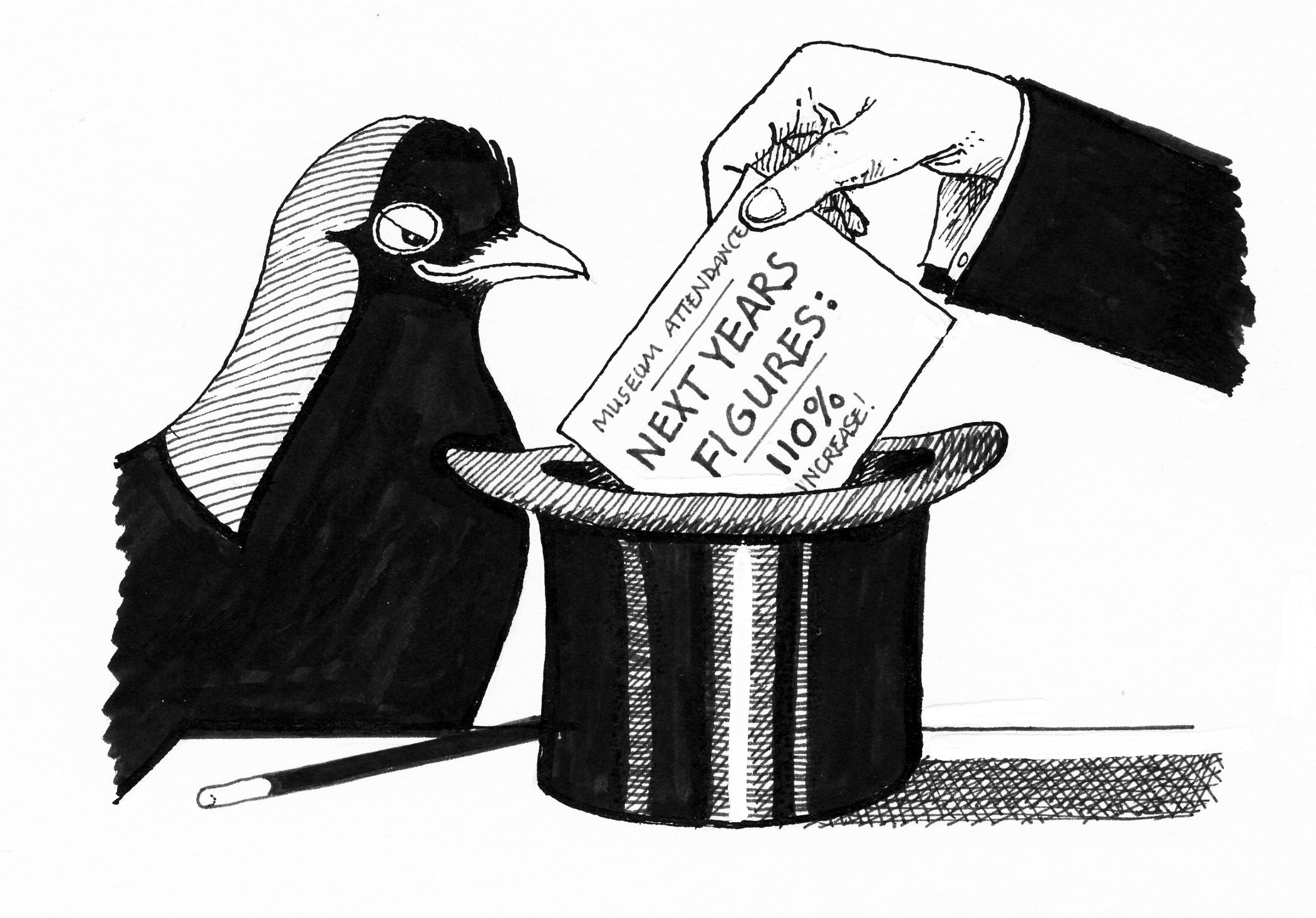
    In due course, when it has become accepted as a truism, I expect Lee’s First Paradigm – as I’ve modestly decided to name my new theory – to gather a Nobel Prize. LFP concerns museum attendance, and it goes like this: “The proportion of any indigenous population sufficiently stimulated by a love of art and history to visit museums is a constant.”

    Like all beautifully simple ideas I can’t understand why someone didn’t think of this before. Having poured over many lists of figures and statistics it becomes obvious that the numbers of home nationals visiting museums is resistant to all social engineering. No attempt to force the masses to drink at the well of art will ever succeed. It seems to me, therefore, that no point is served wasting scarce resources, curatorial or financial, endeavouring further in this regard. Museums might safely rid themselves of their ‘outreach’ departments and the layers of personnel who sit about trying to dream up ways of persuading flatulent couch potatoes through Robert Smirke’s octastyle portico at the British Museum. Art appreciation, the thought-provoking ambience of museums, even the language of sensitiveness and reverence for the past, these are a closed shop whose doors can not be forced open for those congenitally ill-disposed to appreciate them. The commitments to understanding art and to developing a love of museums alight upon a person without either warning or calculation, and often without rhyme or reason, most often when we are still young. Indeed, as with the incidence of ginger hair or lefthandedness, museum-going is more likely genetically encoded than it is the result of response to stimuli such as, say, an advertisement for Pompeo Batoni along the side of a double-decker bus. Like it or not, and it is an unpalatable fact for the do-gooding and politically correct to swallow, museums will always be for those who gravitate to what they have on offer driven there by some innate predisposition, curiosity or intelligence.

    In what follows, I shall have to assume – against my better judgement and experience – that the attendance figures with which I’ve been supplied bear at least some relationship to the truth…

    The journey to LFP began as a result of a serious short item thrown away at the end of the last editorial. There, I reflected upon the latest fiction from the Tate Gallery. They claimed that one justification for spending £45 million to renovate and rearrange Tate Britain – whose last building project was completed only ten years ago – was the increase in attendance at the museum over the previous decade leading to unanticipated wear and tear. Using their own figures I demonstrated how in fact the attendance at Tate Britain had actually gone down by 12.5% in the previous ten years, and over the previous 17 years by as much as 28%. In fact, in the 21 years of President-For-Life Serota’s imperium, with its routine claims of overwhelming Turner Prize popularity, huge public support for State Art in general, and greatly widened audience participation among Kalahari bushmen, Liverpudlian delinquents etc. etc., attendance at Tate Britain has not increased at all.

    Having over recent decades become used to politicians’ lies of omission, we all know that you can prove any old cobblers with statistics, but the Tate’s statement was demonstrably factually incorrect. I repeat: according to their own figures in the last ten years attendance at Tate Britain has dived by an eighth.

    Until recently it was common to see museum directors justifying their insistent pleas for yet more taxpayers’ cash with claims, naturally never substantiated, that their museums were more popular than at any time since the opening of Alexander’s library. These same directors rely on a docile press not to check such ex cathedra pronouncements. Those malingering time-servers called ‘Chief Arts Correspondents’ have much to answer for: they merely copy out what they’ve been told in press releases without ever thinking to verify any of it, although surely this should be their principle function. Admittedly they have to be wary of whose feet they tread on, for fear of suddenly finding themselves outside the loop, not to mention off the party and junket circuit.

    Attendance figures at Tate Britain fluctuate but neither increase nor decrease. The graph of visitor numbers is a modestly undulating flat line. In long periods of peace time, such as those of the last thirty years, figures rise and fall slightly according to a number of unpredictable variables: the whims of audiences; the weather; the economy; the presence of a popular (or ignored) blockbuster in exhibition schedules; and, crucially, the capriciousness of foreign tourists. Did you know for example that only one in four tourists visiting London make their way to the British Museum which, being free to enter, has to constitute the best value for money anywhere in the world? It begs the question: if not for this what the hell do the other three-quarters bother coming here for? This result, by the way,  undermines the fact that most foreigners state their main reason for visiting is our free galleries and museums.

    The popularity of our national museums is not, as is implied by their directors, a result of more British people visiting because of the sterling efforts made by their superfluous ‘outreachers’ or their overmanned and overpaid marketing regimes, or even their wrongheaded policies of dumbing down displays in order to attract idiots, but because more foreigners have been tempted through their free portals. The single biggest factor in national museum attendance is not the damascene conversion to culture of indigenous telly addicts but the relative buoyancy of foreign tourism. Post-1945, as soon as food rationing ended in ’54 and cheap travel kicked in, attendance figures rise steeply. In the case of the British Museum the proportion of foreign visitors has been as high as 55% (2001) and 60% (2010) of total attendance, although the museum sometimes claims, based on casual estimates, that the figure is as low as a third. In my weekly experience of the British Museum this is surely a serious underestimate as virtually every other visitor is, to my eye, almost always conspicuously a tourist.

    One might have predicted that the rapid increase over the last generation in the proportion of those taking a ‘university’ education would have resulted in an audience increase, museum-going customarily being considered a pursuit of the better educated. No evidence in published figures supports such a conclusion. Accepting that the better educated are those who attend museums, I am tempted to conclude that, despite the obviously engineered improvements in exam results and wholesale increases in the armies of unemployed now brandishing worthless degree certificates, the overall educational standard of the population would appear to be at best unaltered.

    Likewise, the disgraceful obsession, also relentlessly accelerated during the last generation, of museums actively encouraging disruptive parties of noisy schoolchildren, who constitute between 12% and 15% of total attendance figures. These too would not appear to have translated into any discernible increase in the numbers of adult museum-goers. The latest figure, by the way, for museum attendance is that 37% of the adult population of the UK visit a gallery or museum once a year, although museum bodies routinely claim the proportion to be between 50% and 60%. The truth is we don’t really know and, as you will discover below, the figures are hopelessly unreliable.

    The British Museum has kindly supplied me with their attendance records from 1760 (12,000 visitors), the year in which it opened in Bloomsbury. Like those at Tate Britain, audience levels at the BM have in the last generation reached a plateau of maturity. If there is on average a tiny edging upwards, this can be put down to a rising population. There is also the matter, indicated in several recent surveys, that the same people are tending to visit museums more frequently: I alone, for example, constitute around 50 in the museum’s annual attendance figure. Over the last 25 years numbers visiting the British Museum have gone down slightly as a proportion of the country’s population. This is explained by the fact that in the last ten years, that is in the aftermath of 9/11, fewer foreigners have visited Britain; indeed, fewer in 2006 than in 1991 despite the collapse in the cost of airline tickets.

    During the 19th century blocks of annual figures rise by the same number (c.14,000) every year, suggesting they were either estimated or made up: they are certainly too suspect for drawing any serious conclusions. Two figures which stand out are those for 1851, the year of the Great Exhibition, and 1862, when another similar International Exposition was mounted. In 1851 the attendance of 2,615,380 was the same proportion of the indigenous population as is the annual attendance today, although there were undoubtedly included a higher proportion of British nationals then than now, because foreign travel was neither as cheap and convenient nor as common in 1851 as it is today. It would take the British Museum until 1972, the year of the hugely popular Tutankhamun exhibition, to achieve an attendance figure higher than that achieved in 1851 – and this despite the considerably more than doubling of the population during the intervening period.

    Museum directors have been bombarded by threats and menaces from successive Ministers to make their institutions more popular to those who are uninterested in them. This, Ministers think, will better justify the museums’ public subsidies – £45 million p.a. in the case of the BM. LFP suggests this is impossible because in a period of settled peace the base figures for those visiting museums scarcely alters. With the benefit of LFP, museums might now resist the populist urgings of ignorant politicians and safely return to their core purpose of scholarship.

    David Lee

    The Jackdaw Mar-Apr 2011


  • Leave museums alone

    Mallard

    There is an argument that if it were not for the largesse of the National Lottery since 1994 our museums and galleries would still be trudging knee-deep through the Dark Ages. I happen not to subscribe to the view that the experience of visiting my favourite museums and works of art has been improved in any way by having hundreds of millions spent on the buildings and galleries housing them; in fact the reverse is often true. It is unfathomable to me why museums bother wasting massive sums in the delusion that these often tackily refurbished places will suddenly become miraculously more appealing, and particularly to those who are anyway demonstrably uninterested in culture, history or objects. For my own part, the pictures, sculptures and artefacts which have become a part of my life are still there, the same as ever, revered the same as before.

    In many ways I preferred those more civilised Dark Ages before museums became playgrounds and refectories flogging food the low paid can’t afford. Those were the golden days when galleries were escapes from barbarism. Is it really too much to expect school parties to keep their mouths shut when they enter museums and galleries? And why aren’t they promptly kicked out when they do? The National Gallery, for example, is no longer a place of retreat, for concentration there is now virtually impossible.

    The record of the Lottery is a grim one in the visual arts. Only a collection of fools could have got it so wrong. Courtesy of the Arts Council-administered Lottery the Ashmolean has been converted into a department store; the British Museum has received a hideous swimming-pool roof and some fraudulent stonework; and new galleries of wince-inducing ugliness and irrelevance to their local communities have spread across the country like a pox (see page 12 for the latest of these). And don’t forget the cool billion that was wasted on the Dome – no one now mentions that disgrace. Then there have been the stillborn basket cases. New words are required for the chronic incompetence and waste represented by the Earth Centre near Doncaster and the Popular Music Museum in Sheffield, both of which are dead, and The Public in West Bromwich that is only nominally alive. There are, to boot, currently running sores in Newcastle and Colchester and more bailings-out than were ever managed by the brave crews of Bomber Command.

    Many changes to museums have been carried out not because they were necessary but for the singularly rotten reason that money was available to be spent. Also, a new belief – one which among politically correct jobsworths is treated as Holy Writ – spread through the land deeming that museums are dull places which can be made “more accessible” to those who don’t care for museums and won’t enter one even when they are free. The theory is that if you take an object which is marvellous anyway and anywhere and put it in a new place which looks more like a Bond Street shop, and then you surround it with information boards, films and painted narrative scene settings as if it were playing a walk-on role in a period soap opera, it will come alive and be instantly worshiped by an idiot. Such treatment actually achieves the opposite: it more often kills artefacts stone dead, because their special aura of mystery is neutralised and our imagination is prevented from working with their peculiar secrets.

    This theory is doubly flawed because art is not truly understood or appreciated, or loved, because of what you read about it but because of the enigma of what it is and what it signifies beyond words. The way to encourage a fascination with history and a precious appreciation of the beautiful is not achieved by ‘context’ or ‘explanation’ but by looking; hard looking pure and simple. Filling visitors’ heads with parrotable sound bites impedes the slow-burn of appreciation. Deciphering for oneself is the springboard of all genuine enquiry and enduring interest. Following on from that comes naming, further discovery and, perhaps eventually, scholarship. A great work of art will always speak for itself more eloquently than the words of any interpreter, especially those manglers of language who seem to find job security in galleries and museums. Yes, information helps but it isn’t essential and it should be kept inconspicuous and to the point.

    Museums should not spoon-feed visitors: they should encourage discovery and lifelong interest through observation and the arousing of curiosity. To aim the displays of museums at the hitherto uninterested is wasted effort. Those from any background who want genuinely to be involved in art will first catch on and then catch up.  In the meantime the quiddity of the object must remain sacrosanct and unpolluted.

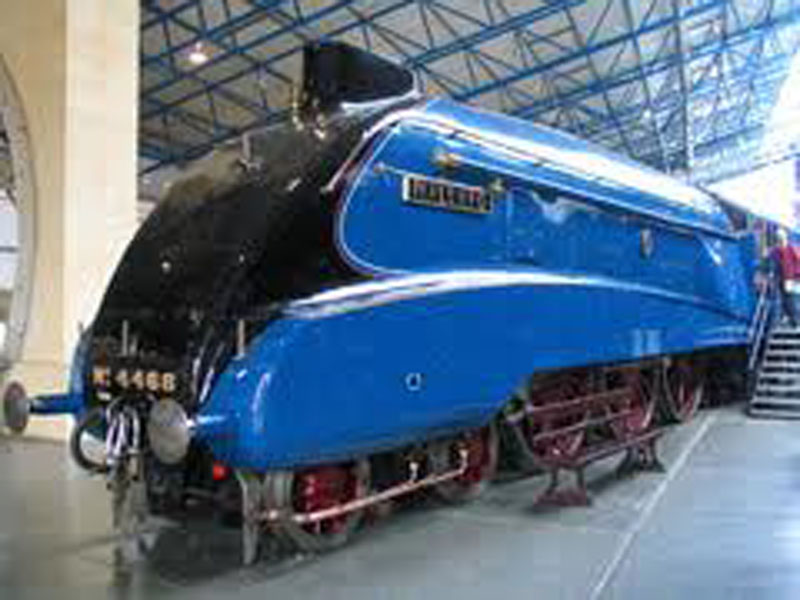
    I am sent on this sad line of enquiry by recent information that one of my favourite haunts, the National Railway Museum in York, will soon embark on a £25 million renovation. My mood fell through the floor when I heard. This museum doesn’t need revamping – it’s not that long ago for heaven’s sake that it was the European Museum of the Year – but a new generation of curators must leave its collective pawprint. The NRM is housed in buildings, both new and Victorian, around extensive sidings that were once home to York carriage and engineering works flanking the great arcing railway station that is the masterpiece of Thomas Prosser.  The NRM is part of the Science Museum and the mainstay of its massive collection is its hundred-plus steam, diesel and electric locomotives and many hundreds of other items of rolling stock. It also houses an astonishing Aladdin’s Cave of evocative memorabilia and models exhibited in that congested Victorian manner of ingeniously ordered chaos. The locomotives cover the period from before the opening of the first passenger railway in 1830 to recent abortive schemes such as our famous tilting train, which tilted at windmills but not much else. The collection is either working on heritage lines or loaned to sibling museums up and down the country, including at Shildon, the NRM’s informative annexe in rural County Durham.  The Main Hall in York, opened in 1975, is laid out like a steam-age roundhouse with a working turntable – the only one left of four originally on this site – which enables easy movement and storage of locomotives in radial bays. Parked in its spokes, it contains up to two dozen locomotives. Here is as comprehensive an introduction to the improving design of British engines, as form and shape were altered and streamlined to meet enhanced performance, as can be witnessed anywhere. To my mind this is as absorbing a display of sculpture and social history as any in the Tate.

    I have visited the NRM dozens of times and on each occasion found something unexpected to dwell on. To get beyond mere awe, which is the response of most who are suddenly confronted with Gresley’s Mallard or a Collett ‘King’, requires only a willing attention to detail. I honestly doubt if any visitor, ever, to this marvellous free museum has ever left disappointed or uneducated, or has ever uttered the request for “more thematic displays” and “greater contextualisation”, or whatever.

    If ever a museum did not need touching it’s this one, but they are intent on changing it and absolutely nothing is going to stop them.  They will get rid of the turntable and a large number of engines in order to get to grips with, oh yes, some ‘thematic displays’ and ‘contextualising’ which will doubtless reduce the fewer engines to illustrating whatever it is the marketers and schools- and ‘outreach’- programmers have told them they want. The thematic displays will bear the headings Moving People, Moving Goods, Building and Running Railways, Railway Nations and Cultural Concourse (don’t ask; no idea). They should forget about such trash, pack in as many locos as possible, some of them steaming up, and leave people to get on with it, work it out for themselves and take what they can from these gloriously aromatic objects. And leave that working turntable alone for it is the nucleus of the museum’s connection to an atmospheric past.

    Four million quid of the twenty five will be better spent returning Mallard and the Flying Scotsman to steam. The latter, the most famous engine and the most perfectly designed, has been scandalously scattered in bits across a workshop floor for years with scarcely a sign of progress in its restoration to full working order. Someone’s head should roll for that.

    We are broke. Let us have a moratorium for ten years on all unnecessary museum renovations, refurbishments and rebuildings, and leave exhibits where they are.

    Economics and statistics are not State Art’s strong suits. Only a month after the Tate discovered it will lose 15% of its Government grant over the next few years there was an announcement of an imminent £45 million renovation to Tate Britain. (So this is what the gallery’s sixteen directors have been up to. They must be exhausted.) This new development comes eight years after the last Millbank upgrade that gave us the architecturally undistinguished rear entrance complete with dangerous staircase. We are informed that £30 million has so far been raised which means work may commence in February. If no more money is forthcoming construction will presumably cease two thirds of the way through. Either that or the Ministry of Culture will be bounced into stumping up the rest in order to prevent an embarrassing hiatus in the work. We are advised that part of the reason for the need to upgrade is that over the last ten years there has been a 60% increase in the number of visitors. Putting it at its most charitable this is a deliberate misrepresentation of a sort increasingly typical of the Tate.  The last attendance figure available, that for 2009, is 1,595,000; the figure for 1999 is 1,822,427 – a decrease of 12.5%. If you compare the latest figure with 1994’s 2,226,399, the largest ever annual attendance at Millbank, the decrease is 28%! The Tate has deliberately made it seem as though the museum is more popular than ever by using the comparatively low figures after 2000 when, following the opening of Tate Modern in the Spring, attendance at Tate Britain instantly collapsed to half of what it had been in the 1990s. Casuistry with visitor numbers should not be used as an excuse to embark on a building programme.

    The economics of the extension to Tate Modern are even more baffling. Of the £215 million required “roughly half”, we are recently informed by the President-For-Life himself, has so far been raised – £50 million of it in a one-off gift from the Department of Culture. The latest donation, by the way, was from the Sultan of Oman who for his generous cheque was awarded a loan of six masterpieces by, among others, Turner, Constable, Gainsborough and Stubbs, for an exhibition in the Gulf. Work behind Bankside has been busily proceeding for six months and resulted in a massive hole in the ground. If no more cash is raised the building will, one assumes, grind to a stop half way up. Only in the quango sector could you get away during a recession with starting a building costing £215 million when you have only sufficient cash for the foundations.

    David Lee

    The Jackdaw Jan-Feb 2011

  • Moping Owl: Degas and garters

    Moping Owl: Degas and garters

    Nicholas McLeod: Drained


    … from yonder ivy­-mantled tow’r The moping owl does to the moon complain Of such as, wandering near her secret bower, Molest her ancient solitary reign.

    DEGAS & GARTERS

    I knew there’d be trouble, the minute I heard the Keepers were bringing Old Edgar back to the Zoo on Piccadilly. ‘Degas & The Ballet’ sounds good, and is good, because Degas is always good, one way or another, whatever he does, which is quite a lot. And that’s the trouble, because no-one seems satisfied with good anymore, for it’s own sake. It seems it must always be turned into something else, to give everyone something to talk about, rather than look. So this show is called ‘picturing movement’ as well, to give a theme and analytical ring to it, and perhaps stop everyone thinking of Degas as just another Dirty Old Backstage Johnny who did nothing but leer up young girls’ tutus. But of course it doesn’t.

    It certainly hasn’t stopped young Sookey, Old Mother Dorment’s number 2 Goose down at Telegraph Farm. Indeed he jumps right in, setting up the hare of doubt straight away supposedly to shoot it later – some hope. “Degas’s (sic) budding fascination with dance turned into lifelong obsession (you see)… [He] will always be remembered first and foremost as the painter of dancers (make sure we get the point). From the 1870s he haunted the Paris Opera, studying performances and scrutinising, yes fairly scrutinising the dancers’ rehearsals, warm-up exercises (oh my word yes) and gossipy antics backstage (there ought to be a law: there really should)…. Today it is tempting to write off Degas’s (sic again) pictures of ballerinas as overly pretty and effeminate visions of beribboned nymphets in tutus pirouetting across the stage.” Yes, yes: we know.

    ‘Effeminate visions’? I’m afraid he’s lost me there. “But (aha: the necessary ‘but’) nothing could be further from the reality (what a relief!) of his robust and vigorous studies of athletes sweating and straining their sinews (golly! those poor sinews: we hear them creak: we feel the pain). His ballerinas aren’t simpering, insipid creatures of fantasy, oh dear me no, but flesh-and-blood young women …” So that’s all right then, and let’s get this straight: why are these tempting effeminate visions of sweating, gossiping athletes so good? And, more to the point, why?

    “He sketched everything, and fashioned beautiful paintings from his meticulous observations (well done, Edgar: keep it up)… [the RA] presents many scintillating studies in a variety of scintillated media, including charcoal, chalk, pencil and pastel (that’s pretty well the lot, then), as well as a number of impressive oil paintings.” Impressive eh? I’m sure the old Boy would have appreciated the compliment, especially from you.

    But wait: there’s more: “watching him describe the trajectory of a limb in fluttering sweaty motion is compelling (the old eyes are riveted). He must surely have sketched from life (the penny drops at last) either backstage at the Opera or in his studio in Montmartre, or back home at his Mum’s perhaps, or down the pub with his mates.”

    “Often he tentatively traces the contour of an airborne limb (ah, those airborne limbs, I can see ’em now, fluttering sweatily away) several times before deciding on the best line, and articulating it more heavily (cunning old bird, that Edgar). Rather than erase his initial impressions, though, he left them intact – and these ghostly echoes offer a brilliant approximation of movement.”

    And that’s what passes for art criticism these days. But we mustn’t be too hard on the poor goose: I don’t know quite what they do for O Level (art crit.) these days down at the Poly, so perhaps Sookey hasn’t really been shown any decent drawings before, whether by Degas or anyone else. But I must say he seems to be getting the knack of the egregious image and superfluous adjective. The current champ, old Dicky Stork, still up there on one leg on the Academy chimney­pot, had better look out.

    SAIL AWAY

    We know the nights are drawing in and we’re in for another hard frost and several feet of snow when assorted gulls, boobies (I’ve mentioned them before) and the odd albatross and lost penguin, set off into the far North for a spot of winter warmth and sunshine, and rescuing the occasional polar bear to keep the feel-good quotient up. I blame global warming. But this time it’s hard to know where to begin.

    It seems that one fine warm Arctic summer’s day some years ago, wheeling away high in the sky and far from home in the Southern Ocean, a prize albatross, Hartley’s Albatross no less, than which no self-respecting twitcher would rather catch a glimpse, thought he’d found a little island never seen before, for it had been hidden hitherto beneath a dutifully shrinking glacier in Svarlbard, somewhere to the north of Greenland. So this year he’s gone back with a boatload of said gulls, boobies and lost penguins, including, I understand, “some of the UK’s leading thinkers, ie. experts in climate change, human migration, global governance, international law and environmentalism”, to see if it’s still there. And lo and behold it still is.

    So what Captain Albatross and his brainy-heavy shipmates have now done is load up their boat with some ‘island territory’ – which I can only suppose to mean a few bucket-loads of earth, some rocks and pebbles, a clod or two of turf and a bunch of flowers – and sail away with their booty into international waters. All done, I have to say, with the official blessing of Svarlbard’s Governor, good man, who we’re told managed to keep an admirably straight face throughout the proceedings.

    Anyway, and follow this closely, once on the high seas, Captain Arty put on his cocked hat and gold chain over his balaclava and declared his boat­load of ‘territory’ a New Nation, though we still wonder quite how a Nation can quite be a ‘Territory’. But we mustn’t quibble at this proud moment. Whatever it is, and do control yourselves at the back there – and do excuse me while I get this speck out of my eye – it is now called Nowhereisland, to which 2000 birds of all descriptions have already flocked in spirit and signed up as citizens.

    And it is sailing south as we speak, crew, tackle and trim, on its noble quest to “redefine what a nation can be, thereby inviting us to debate some of the key issues of our time, including migration (yeah!), nationhood (hurrah!), global responsibility (right on, man!), human rights (mustn’t forget them) and (wait for it) climate change.” Simon Anholt, its independent policy penguin and ‘Resident Thinker’ (who is advising the expedition remotely, in case you ask: wise bird) tells us we live “in an age of global threats and global challenges. Most of them are getting worse… Nowhereisland is a place where we can start thinking in a borderless way about borderless problems.” Well, I’ll have to sit down somewhere quiet for a bit of remote residing, and give that some thought, if you don’t mind.

    Need you be told Captain Alex the Albatross is an artist working primarily with photography, sculpture, installation and funding applications? Nowhereisland, need you be told, is funded by the Arts Council of England? Phil Gibby, Arts Council Chief Booby for the South West says “this is an exciting moment for our flagship arts project for the Cultural Olympiad.” It will reach England’s south­western shores during the Olympic Games. Don’t say you weren’t warned.

    LOSING THE THREAD

    Oh dear: I do enjoy a swoop over St James’s Park and down the Mall now and again, especially on a nice warm autumn evening when the leaves are on the turn, and, who knows, the odd vole or mouse might poke his nose out in the twilight to live a shade too dangerously. Keeps me going, that sort of thing. And on the way home I might even catch a glimpse of Her Majestic Self on the lawn behind the house, giving the corgis their Pedigree Chum – she always gives me a cheery wave, which is more than can be said for some.

    You see I do like to keep abreast, and see what’s going on, or not as the case would seem to be with the ICA these days, that nest of self-important, wonderfully creative and challenging stoats and weasels snug in their Arts Council House by the Duke of York’s Steps. I can’t remember the last time I saw a queue at the door, or even a poor soul going in to buy a ticket. How time flies. A bit like me really.

    But I have to say I still have a soft spot for the dear old FBA, and for that gaggle of birds of assorted colours it gathers to its bosom at the Mall Galleries just a bit farther along towards Admiralty Arch (another recommended perch, that arch, and the things I’ve seen and heard there: but later, later). As for those old birds, they are, I know, a bit foxed and mildewed and lacking a few feathers, but even so, sailing under their various flags of convenience as they do (the New English, the RBA, the RIP, you know the sort of thing) they’ve never had a penny of public subsidy and owe no-one a penny either. Indeed the only time they asked for help, for a few light bulbs some years ago, they were turned down by the Arts Council, who were very polite and tactful but told them they stood for ‘the wrong kind of art’. And, as I say, all they wanted were few light bulbs, and a box of matches and some candles just in case.

    Anyway, when I heard that some of those sharp-beaked financial types in the City – hawks, kites and buzzards the lot of them, who’d have you’re shirt off you, and much else besides, as soon as look at you – were interested in backing an open-submission exhibition at the Mall Galleries, along with a suitably lavish prize (25,000 smackeroonies since you ask) for good old figurative art, I thought: well, why not.

    So along came the Threadneedle Prize, and here we are four years down the line. It has had some hiccups along the way, I must say, but much to be encouraged by too. And now, as I say: oh dear. For this year, if it’s figurative art in any meaningful sense of the term you want, look away now. And what makes it worse, so my mole (an ordinary sort of chap, you’d never guess) tells me, is that it is not that such art, in all its variety of approach and practice, wasn’t sent in: indeed the submission was larger than ever. Nor was it not of acceptable quality (I know: these triple negatives confuse me too: but you get the drift). To put it simply, the problem was that the three distinguished judges chucked all such stuff out.

    And that is what judges of a certain stamp (one not hard to spot) are likely to do, unless they not only understand, but are prepared to accept the nature and intention of the exercise, and act accordingly, if necessary with their arms firmly twisted behind their backs. I’ve seen often enough how these things work, believe me, and how things can go seriously wrong if a firm line is not taken. A good crack of the whip early on certainly concentrates the mind, and a few rings and padlocks left lying around, and perhaps the odd transformer with some wires sticking out – but where was I?

    Oh yes: it was bad enough the first time, when our old friend Dicky Stork, and a Bird of Paradise with lots of locks called Hew Locke, were on board and would have ended up with a show of barely 20 works out of some 2000 if they’d had things entirely their own way. You see, anything with a bit of drawing or technique to it was just too dreary and old-fashioned for them. No message or concept to it, don’t you see. It didn’t challenge, interrogate or subvert accepted notions or perceptions. It was simply boring. Can’t have that. And then when it came to prize-day, Corky couldn’t even remember who had won.

    But the next two shows weren’t too bad, lessons learnt and all that. And then this. So who were appointed to the Judges’ Bench this time? Brace yourselves. Julie Lomax, London Head of Visual Arts for the Arts Council (aarggh); Lisa Milroy, artist and Head of Graduate Painting at the Slade (groan, groan and groan again); and Godfrey Worsdale, Director of Baltic Centre for Contemporary Art, Gateshead, and juror of the Turner Prize 2011 (we lose the will to live).

    In short, it is why, dear children, there are about four paintings in the entire show graced with any true painterly quality of attention and discrimination, anything of the observed, anything of true touch or sensibility. All else is gestural, narrative or conceptual posturing and self-indulgence. Mr Mole tells me it is Ms Lomax alone we must thank for those few mercies that won through. A surprise perhaps, but thank goodness for her.

    QUESTION: By the way, while I was near by, I looked into Trafalgar Square and had a breather for a moment on the fine bronze statue of Charles I, our sometime King and Martyr, that commands the long view down Whitehall to where the poor old boy lost his head all those years ago. Mind you, it was his horse’s head I sat on, not Charlie’s – you’ll get no ‘lese majeste’ from me. It is the work of a Frenchman, Hubert le Sueur, dating from 1633 in the days of the King’s glory. But the point is that it now stands on its own on a fine broad traffic island I’d not noticed before, which means that it can be properly admired and enjoyed without risk to life and wing.

    It is one of the two best sculptures in the whole of London on open public view: so which is the other?

    The Jackdaw Nov-Dec 2011

  • Moping Owl: Dropping a brick

    Moping Owl: Dropping a brick

    … from yonder ivy-mantled tow’r The moping owl does to the moon complain Of such as, wandering near her secret bower, Molest her ancient solitary reign.

    DROPPING A BRICK

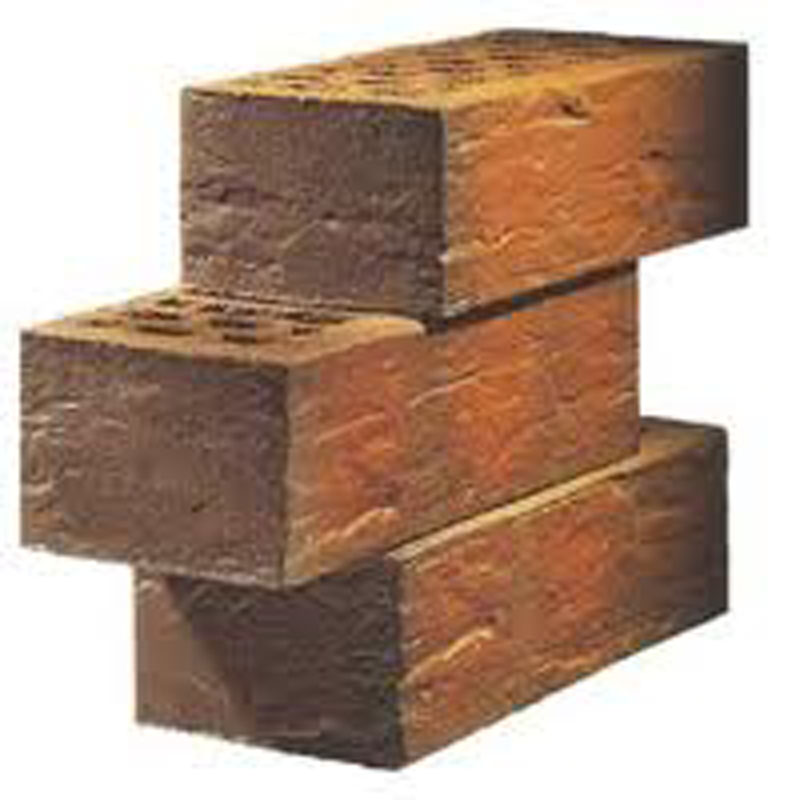
    My old friend, Sir Jack Daw, Bart, the last in a very long line of distinguished Daws – the first Sir Jack was Barted by one of King Charles’s spaniels some time after the Restoration, and very painful it was – looked in the other day for a drop of mulled elderberry and a peck at a spot of ripe vole I had hanging in the pantry, and among the gossip he’d picked up was a bit of news from Farmer Nick’s on Bankside. It seems they’re in a bit of a state in the state farmyard these days on account of a certain brickmaker (yes – a brickmaker) going bust far across the sea in America. So what, you might say, and so might I. Ahaa, but this is not just any old brickmaker, you understand, but a firebrickmaker no less, and the only one of his kind, so we’re told. Does that drop a brick, or ring a bell?

    Well, children, cast your minds back a little. Do you remember old Mr Andre and his famous Bricks, his ‘Firebricks’? Oh good: you do: for the trouble is that Farmer Nick has a rare and important pile of these very bricks in the back of the barn somewhere, which were bought when Farmer Norman, a crusty old Scotchman, you may remember, was running the place. And the worry now is that there will be nowhere to go to for spares, ever again, ever.

    It is quite a story, so if you are sitting comfortably, I’ll begin. Once upon a time, when the world was young and all, Mr Andre, who called himself a sculptor, scratched his beard one morning, and scratched it again, and then had a bright idea. He thought he’d make some sculptures for a change, and some very low and level ones at that, as he thought it was most important that they should be low and, most important, level. He’d been out in his boat on the local lake and was rather taken by the way the water was, sort of, level.

    So he went round to his local brickworks and ordered a load of ordinary bricks, which he divided into sets of 120, and laid them out on the floor of kind Mr de Nagy’s gallery in New York in 8 different rectilinear, two-layered arrangements. And, would you believe it, he didn’t sell one of them, so he took the bricks back to Long Island City Brickworks Inc., and got his money back.

    Anyway, some years later Mr Andre decided to have another go with these low and level bricks of his, so back he went for some more, only to find his friendly neighbourhood brickworks had by now closed down, so he had to get them somewhere else. But this time he couldn’t get any of the bluish-white sand-lime bricks he’d used before (sorry squire: no demand), but only yellowy-brown firebricks instead. But never mind, he said to himself, they’ll do just as well. And this time he sold the lot, and one of them moreover, number 8 in fact, to Farmer Norman. Only they didn’t arrive in a crate as he might have expected, but came through the letterbox in the form of an envelope (no: don’t laugh) containing a receipt and the instructions telling him how to figure his particular configuration out. It is after all the idea, or the concept as we say these days, that counts.

    So dear old Scotch Norman had to slope off to Travis Perkins, or whoever it was down the road, and buy the bricks himself, which he did, and proudly set them out on the floor of the gallery as instructed, to universal uproar and acclaim. But when the time came for his ‘Equivalent VIII’ to be taken down, what was Farmer Norman to do? He certainly didn’t do what Mr Andre had done, and even a sensible person like you would do – ie. take the bricks back to Mr Perkins for a refund and tuck the diagram back in its envelope in the drawer. No: the bricks were taken up carefully one by one, scrupulously registered so as to be put back in exactly the same way next time, and then tucked away each in its own foam­-lined box and shoved back in the cupboard. Where, when not on view, they rest to this day, totting up the storage.

    So much for the concept in conceptual art.

    JUST SINKING

    I don’t know about you, but whenever I hear of yet another ‘artist-in-residence’ taking up residence in some fondly trusting institution, my poor old heart does sink a bit – it must be near the bottom by now. I know these artist birds must roost somewhere, but don’t they have dustios of their own to go to? What’s so special anyway about having an artist mooning about the place, poking his beak into things that don’t concern him, leaving his paints all over the place, that’s if he uses them these days, and getting in the way? And now this scrap of news flutters by on the breeze from South Kensington; and, yes, there’s a bit of room left, so down it sinks again, lower still.

    “British artist, Conrad Shawcross”, we read, “will complete his residency at the Science Museum with ‘Protomodel’, a series of five small-scale artworks …” Oh dear oh dear: I must sit down for a minute. Artworks!! Good Grief, as the sainted Charlie Brown would say. I think I’ve told you about the ‘artwork’ word before, it being the sure sign and signal that Art will be the one thing nowhere to be found.

    But where was I? Oh yes: “… dispersed throughout the Mathematics Gallery.” And there this ‘Protomodel’ “opens up a playful, questioning dialogue exploring how model-making, natural processes, cultural practices and historical circumstances all play their part in mathematical thinking.” So you see what I mean. And that sound you heard was the old ticker hitting rock bottom.

    Play their part do they, these playful processes, practices and circs? Well I suppose they do, in a way, or at least they might, or then again, now you come to think about it, perhaps not. I have to say that when I was a young Owl, sitting in the front desk covered in ink and quailing under the beady eye of Mr Griffon Vulture MSc, the Maths Beak, the one-way dialogue was full of questions, certainly, most of them coming my way, but never particularly playful. Painful memories.

    “As part of his residency, young Crossbill has also developed a curatorial exhibition concept, which extends his personal investigations into the constructions of certainty and beliefs in science.” A ‘curatorial exhibition concept’ eh? That sprains the brain a bit, I must say. I rather think I shall have to sit down again, and give it a rest. Or perhaps I’ll just slip down to the National Gallery, and see how old Titian and Rembrandt got on with their personal investigations into constructions of certainty and beliefs, all those years ago.

    VISIONS OF VISIONS

    I do wonder sometimes whether I’m missing something important. I mean when I listen to music, I listen to music as it were, and when I go to the theatre, I buy a ticket and, well, go to the theatre to see the play. I sort of know where I am, and what I’m doing, if you get my drift. And I’ve always quite liked the flicks too, and the girls selling ice-cream at half­time, and a quiet smoke in the dark afterwards – those were the days. But the trouble is that I don’t think of the Hayward as being quite same thing as the Regal or the Granada, or even the Ritzy, and nor do those birds of paradise, with their funny hair and tight jeans, the film critics, who seem to spend all their working days shut up in darkened rooms in Soho or Leicester Square.

    So when I see that the fair and accomplished Little Pipit, Miss Pipilotti Rist all the way from the land of the cuckoo clock and cowbell, is soon to show her films at the Hayward Gallery, I can’t mug up on what said critical layabouts said about her offerings last time, for they have clearly never heard of her, nor would I look for help and guidance from them this time, for they couldn’t find their way to the Hayward even if you promised them the ice-cream girl herself in the interval.

    For the problem is that Miss Lottie Pipit is not just a film­maker but “one of the world’s leading contemporary artists” no less, “acclaimed for her innovative installations”, and show me a film critic who’s interested in what passes for Art these days. So what quite does Risty Poppet do? Well, “she creates (its that word again) films – playful, psychedelic, sensuous and often provocative – exploring themes and imagery of birth and death (here we go); family and love (I knew it); the body and the natural world (give me strength). By exploring size and scale, high and low technology, the natural world and the urban environment (is that all?), Poppy invites her audience to (no, please no) question ways of seeing and experiencing art (groan), and to constantly change their perspectives (groan groan).”

    It seems she will do all this by projecting images onto a chandelier made of underpants, and by hanging a television monitor in a suspended bathing suit. One film will show a woman strolling along the street smashing car windows with the stem of a flower. How lovely. And “ visitors will be able to peer down at a naked human being beseeching them from a tiny hole in the floor.” Do you know, I’ve rather changed my mind about those film critics – thorough-going sensible chaps and chapettes, every pretty finch of them.

    SOBORING THOUGHTS

    I do rather miss old Wally when he hasn’t been around for a bit, trundling into every passing bush or ditch while mugging up his GCSE Art History notes and not looking where he’s going. There’s a grim inevitability to it that is not grim at all. And it’s been so long this time I can’t help feeling something must have happened to him. But no such luck. Here he comes again, careering through the wood on his special-offer Sunday Times Mobility Trolley, still talking to himself when he should be keeping his eyes on the tree trunk ahead. What’s he on about this time? He’s certainly even more full of himself than usual, and very excited too.

    Oh I see: yes, that’s it: he’s going to be on the box, again, and this time he is going to be telling us all about his latest discovery, or perhaps it’s his latest rediscovery of a previous discovery he’d forgotten all about, and fears we’ve forgotten too. And his discovery this time is – go on: have a guess – Impressionism. Yes, Impressionism, on which he intends to expatiate (look it up) in some 23 interminable episodes, for our greater good and moral benefit. Lord Dodo? – it’s only a matter of time.

    His principal theme is what he feels to be the essential elusiveness of Impressionism – which by the way, leaving aside such trifles as Classicism and Romanticism, he tells us was “the first great –ism”. For Impressionism, so it seems to him, darts hither and thither, as it were, like a butterfly, so hard to pin down. “Whenever you chase after Impressionism”, he bleats (yes: Dodos do bleat), “it darts off somewhere else.” You see, he’s noticed what no one has ever noticed before, that “Monet was an Impressionist. But so was Degas. Monet painted out of doors. Degas painted indoors. Except when Monet painted indoors and Degas painted outdoors.” Goodness me: we must all have been looking the other way. Anyway, clearly our response to M&D & Co. needs gingering up, and he’ll do the gingering. “In some opinions,” he quacks (they also quack, you know) in his gravest Dodoese, “Impressionism has already committed the gravest sin a cultural phenomenon can commit in the modern world: it has become boring.” I say, do go easy with that ginger, Wally old thing.

    And no, Wally, I’m afraid you’ve slightly missed the point: leaving that ‘cultural phenomenon’ bit to one side for a moment, what is boring beyond tedium is yet another Dodo telling us that Impressionism isn’t what the Dodo before last told us it was, but something quite different if only we can bring ourselves to think of it another way. Forget looking at the paintings as paintings as we find them, some good, some not so good, some brilliant, and making up our own minds. Goodness me no. Far too obvious. What a waste of time and thought. Oh no, no, no.

    So on he quacks (or bleats) again. “The movement was not just about sunny river banks (and whoever said it was?), it was revolutionary (that really is boring) in more ways than one… I enjoy the achievements of Frederic Bazille, who had the original idea of forming a gang of painters who would show their work together.” Revolutionary, eh? A bit like the Royal Academy, you mean, or the RBA, or even the French Salon in its early days? “Bazille died young, and only just had time to invent outdoor figure painting …” Hmmm. Invent it, did he? One does rather think back to Giorgione, and Titian, Rubens, Rembrandt, Lely, Watteau, Fragonard, even Etty, but we mustn’t quibble. But the idea of flesh amongst the foliage was always there, at least, and do we really believe that until Bazille no artist ever took his latest bit of inspiration out into the nearest wood or field for a spot of nature study?

    “Impressionism was a revolution, not an art movement. Its ambition was to overthrow things, to replace them.” Oh no it wasn’t. Nor was it any active ‘cultural phenomenon’, whatever that might be, committing sin. If it is anything at all, the cultural phenomenon in question, Wally dear, is you. As you yourself have so perceptively quacked, all the artists concerned were doing different things, whether indoors or out. And all that they were trying to do, in their very different ways, was to paint a picture, and to paint it well, and, in their own terms, to get it right. And sometimes they succeeded, wonderfully well, and made a good few bob into the bargain. That is all we need to know. And all we need to do is to look at those pictures for ourselves.

    And Wally do look out: no, the other way. Oh dear, he’s hit that tree again, full on. Good job he was in reverse. I hope he’s all right. They also squawk, do you know, Dodos, when agitated or alarmed. That was quite a squawk, I must say. I shall drop a note about it to that nice blonde bird with long legs on Autumn Watch.

    The Jackdaw Sept-Oct 2011
  • Moping Owl: On yer trike

    Moping Owl: On yer trike

    … from yonder ivy-mantled tow’r The moping owl does to the moon complain Of such as, wandering near her secret bower, Molest her ancient solitary reign.

    ON YER TRIKE

    What joy it is to learn that the lucky folke of Folkestone have been given another Trike at last. Was it really three years ago since their last one was ridden over a cliff? Goodness how time flies. I expect their only regret is that the wait wasn’t a bit longer. So what’s on the menu this time? It’s been put together again by Andrea Schlieker, that Silvery Swan who not so long ago graced the Serpentine, but is now away with our chums the Gulls and Oyster Catchers. And what she promises is “one of the most ambitious public art projects ever to be presented in the UK”, and we all know what that means.

    This time she has invited 19 international artists whom we’ve never heard of (well just one or two ring a faint bell) “to develop new works (groan) for Folkestone’s streets, squares, beaches and historic buildings (groan groan) to create a cutting-edge (groan groan groan) contemporary (do stop: I’m not feeling very well) art exhibition in the public domain.” Well, there you have it, and don’t say you weren’t told.

    Don’t worry: I won’t go through the whole lot, but, if you can bear it, here are just a few of the treats in store. Someone called Tonico Lemos Auad (there, I told you so) is bringing along some figureheads “more usually found on riverboats in northeast Brazil”, and rather less usually, as one might say, scattered around Folkestone harbour. Tonic&Lemon is also showing “a silver ink covered wallpaper installation (installed on a wall no doubt) that acts as a giant scratch card. Visitors can draw their own messages (Oh I do hope they will) and reveal images of processions  (processions?!!) in Brazil and Folkestone (in Folkestone? Processions?)” I think I’d better have that G&Tonico after all, a large one.

    Charles Avery will create a 20 foot long sea monster … a hybrid of horse, snake, fish and wallaby – yes, a wallaby. The huge creature will rest on the floor of a large room in Folkestone library.” The rest of us will rest on that nice sofa downstairs by the paper rack. But then there’s CAMP, and we can’t miss that. This Mumbai-based collective, no less, “has collaborated with the National Coastwatch over the year, inviting the volunteers to keep their eyes on the coast to collect data, contributing to CAMP’s research into the shipping trade, tourism and fishing for their D.Phil at Dogger Bank University.  This information will form the basis of, yes, you’ve guessed it, a film script, which will be acted out by those skinned-eyed volunteers.” Can’t wait.

    Turner Prize-winning Martin Creed will create a something or other, which says it all, and quite enough. Hala Elkoussy “will create a ‘reading room’ filled with historical documents, photographs, maps, music as well as a specially made film (what else), all relating to Egypt’s colonial past (which was rather a long time ago, I must say) and highlighting the complex urban, political and historical entity that is Cairo.” How very kind of her to point all that out. I expect there’s a D.Phil in that too, from Goldsmith’s probably.

    Cornelia Parker, for it is she, “will create (fancy that) a Folkestone version of Copenhagen’s ‘Little Mermaid’ by creating  (the c word again) a bronze life cast of lovely local resident Georgina Baker (34.22.36).” And the bells, the bells: A K Dolven “will suspend (or hang) a 16th century tenor bell from two steel beams right on the edge of the sea. The bell can be rung by visitors using a rope (whatever next?), allowing it to contrast or interact (ie. clash) with the eight bell carillon of the nearby Parish Church.”

    Oh yes, and there is the Spencer Finch, who has been doing much valuable research observing “the ever-changing tone and colour of the English Channel over a number of weeks (looks like rain again), and so creating a palette of colours that have been used to dye a hundred flags and create a special colour wheel. Each day an observer will choose a colour (greeny blue) which most closely reflects the colour of the sea (bluey green), and then hoist a flag at midday in the centre of the town (silvery grey), before sloping off to the Fox & Whippet for a bacon sandwich and a pint of beer.” The Folkestone trike is ridden by something called The Creative Foundation, and, among other funders, receives financial support from the Arts Council.

    Oh I do like to be beside the seaside.

    VOCABULARY:

    create; develop cutting-edge historical documents; interact; create; colonial; create collective riverboats; complex urban; reflects;  colour wheel; highlighting; gin&tonic; relate; create.

    BARGAIN TIME

    I think I may have mentioned the Booby already, that innocent and friendly bird of the South Seas, whose trusting habit it was to land on any ship passing through those remote waters, only to be greeted by a sharp knock on the head and a quick plucking. The sailors, in short, saw it coming. Now the funny thing is that only the other day, out for an evening pass over Trafalgar Square and resting the old wings for a while on the roof of the National Portrait Gallery, I chanced to overhear Booby-in-Chief, dear old Sandy Nandy, being interviewed by an eager young chickabiddy whose name I didn’t quite catch, about its acquisition policy. And what he was going on about at quite some length was how pleased with himself he was to have acquired for the Collection a cast of that now not so Young British Duck or Diver, Marc Quinn’s Bloody Frozen Head, and at the knockdown, special-offer, don’t-miss-it price, mark you, of £300,000. Well done, I hear you gasp: quite a snip.

    Well yes, up to a point I suppose you might think it is, and anyone’s life’s blood is of course beyond price. But what is it quite that’s been bought on our behalf at such a price, other than a bucketful of body fluid, a refrigerated cabinet from Peter Jones (which don’t come cheap, I know), and a strict warning not to pull the plug out? For the thing to bear in mind is that this is not a self-portrait, or indeed a work of art at all in any meaningful sense of being modelled from a lump of clay in front of the mirror. It is, rather, a mere common-or-garden life-cast of Quinquam’s summit, and as such a thing for the curiosity cupboard, but nothing more.

    For it is made by a purely mechanical process, the principles of which can be mastered in half an hour: i.e. 1. Put a bit of cling-film over the hair to avoid an involuntary tonsure later on; 2. Liberally apply Vaseline to the face and other fleshy bits; 3. Generously slap on the plaster-of-Paris, having made sure all essential orifices remain open; 4. Wait a bit; 5. Call the fire brigade; 6. Pull off the hardened plaster, portion by portion, along with the odd eyelash and pimple; 8. Grease the inside of the mould and reassemble; 9. Pour in the required medium – plaster, blood, ice-cream, whatever; 10. Off comes the mould again, to be laid aside for later use. And Bob’s your Uncle, or your Aunt as the case may be in these dissolute times. There’s your cast.

    Nothing to it, as I say. The Victorians did it all the time, by which to remember the Dear Departed, or their latest baby’s feet and fingers. Blake’s death mask is somewhere, I seem to remember, and Cromwell’s somewhere else. OooM’Gormless does it to himself repeatedly, with a distant look in his eyes, but we won’t go into that. And an art master of my acquaintance once showed his Sixth Formers how to do it, who promptly turned it into a profitable if short-lived lunch hour cottage industry, at a quid a time.

    So what makes Quidsin’s life-cast head so special, other than the fact that it is cast in his own blood? It could just as well have been cast in cream cheese, or sherry trifle, which would at least have made it a shade more appetising. But it’s the thought that counts these days, I suppose, and a bloody expensive thought it is, is all I can say.

    It is not of course the original cast – we can’t have everything – nor even the second or third, but something like the 5th or 6th, I think Sandy Pandy said. He didn’t mention VAT. It seems young Quickscam does one every five years or so, so I suppose he’ll go on until the blood runs dry, and at 300,000 smackeroons a throw who can blame him. I only hope he doesn’t charge the Blood Transfusion lot quite as much. And like the sailors of old, he clearly knew a Booby when he saw one coming.

    INVOICE:

    Air-tight Glass Box – (P.Jones): £1,200

    Refrigeration unit – (Homebase): £500

    Electricity p/yr (estimate): £50

    Nurse Trixie – 5hrs @ £200 p/hr (private):  £1,000

    Materials – bucket; mop etc. (Lidl’s) £38.68

    8 pints of blood – (DIY): £297,321.32

    sum-total: £300,000.00

    VAT @ 17.5% £52,000.00

    Total: £352,000.00


    WALK ON BY

    I don’t seem to get down to the City as much as I used to, what with cranes everywhere, and those vast shiny glass walls to fly into if you’re not careful. And they’re so tall: too tall for my old wings to manage. My ancient tow’r is quite high enough at my age. Good job it’s listed, though, or it would have been pulled down long ago. I’m quite glad I didn’t after all – how shall I put it? – get rid of those rare dormice that had moved in under the floorboards, though I must say I was sorely tempted. They came in quite handy in winning the planning appeal.

    Where was I? Oh yes: the City: getting down to it not so often – and I must say that some things make me quite glad I don’t. Now you may not have heard of it, but there is, I should warn you, something called The Parasol unit foundation for contemporary art, every syllable and missing capital letter of which should put you on your guard. And what is more, this very summer, it brought to Exchange Square something called ‘Walk the Line’, a vibrant site-specific public art-work (see what I mean) that it promised would be “one of the most thrilling summer events in London.”

    Oh dear: I’m afraid I missed it. But, if you are sitting comfortably – and do keep quiet at the back, there – I’ll try to tell you just what it was I missed. It seems an American bird, a  ‘summer occasional or vagrant’ as any self-respecting twitcher would say, called Kate Gilmore, had flown in with a scheme, or project as we like to say, under one wing, and a grant application tucked under the other. She proposed the setting-up of a structure in the middle of said Square, the size of which – and do follow carefully here – was to be “in keeping with the measurements of typical office cubicles and corridors in the neighbouring modern office blocks where  (and here comes the important bit) countless  ‘perhaps’) without, poor dears, ever having noticed or reflected upon the effect their daily activities have upon their body and stamina.”

    Well yes, I suppose they don’t notice or reflect all that much, but then does anyone? I always thought the whole point of daily activities was to have some sort of an effect upon said b and s, so that we’d all then go home, put our feet up for a while with a restorative bottle of something or other, have a bite to eat, a slice of dormouse pie perhaps, and then get a good night’s sleep.

    Anyway, the lovely Gilly Moorhen clearly saw it as her chief aim in life, to make those fragrant City toilers sit up and jolly well take notice. So the scene was set for what came next, to wit (or to whoo if you like) a live performance in which, for five whole June days, “working teams of eight women in two shifts walked continuously on top of that bright red wooden structure for nine hours a day; from 8.30am to 5.30pm. Members of the public were able to walk both around the structure (goodness me) in order to experience the work visually (ie, look up at the birds above) and through the passageway beneath the platform to get a sensory experience of the women walking above (ie. tramp, tramp, plod, plod)… as they adamantly (?!) negotiate their personal space, weaving around each other.” And so the long day wore on.

    “With this art work”, we were told, “Kate Gillymot comments on the meaning of labour and life in everyday conditions, and skilfully (of course) turns a mundane phenomenon into a dramatic visual spectacle.” Hmmm: there’s not much more one can say really, though it would be mildly interesting to learn quite what those comments actually were. Much more to the point would be to hear what comments her little band of lovelies made as they trooped up and down and round and round: “oooh these heels ain’t ’arf killin’ me:  surely time for a smoke by now: I do believe that nice young man is looking up my skirt: oh I do feel dizzy: coo, what a waste of time.”

    The happy news is that this dramatically mundane phenomenon was ‘generously funded’ by The Arts Council. My own comment is, perhaps, best left unspoken.

    The Jackdaw Jul-Aug 2011

  • Moping Owl: Hoo ra ra

    Moping Owl: Hoo ra ra

    Gormley, Salisbury Cathedral
    Gormley: Flare II, Salisbury Cathedral


    … from yonder ivy-mantled tow’r The moping owl does to the moon complain Of such as, wandering near her secret bower, Molest her ancient solitary reign.

    HOO RA RA

    If I seem to be hooting on rather too much these days about that Zoo down in Piccadilly, I do apologise, but you know how it is when you get to my age, and it don’t get any better. First there’s Dicky Stork, stuck in his nest of twigs up on the chimney pot, still cawing away about whatever he’s told to caw away about this month – we know, Dicky: we know. Then there is that Sculpture Show that forgets about sculpture halfway through. And now this.

    Where did I put it? Oh yes: here it is. “Announcement from the Royal Academy of Arts: Perry Mason elected Royal Academician at a recent General Assembly.” Well well, or there you go, as they say these days. Now this Gerry Pacemaker creature, it seems, is quite rare, and therefore quite a catch, being some sort of Cassowary, which is a very large flightless bird, native to the tropical forests of New Guinea, north-east Australia and parts of Essex – I blame global warming. Anyway, the cassowary is a shy and solitary creature, apparently, except during the breeding season or when there’s lots of food about. And when it’s disturbed it is capable of inflicting serious injury to dogs and people with its sharp claws and powerful kick, so I’d better be careful what I say. How shall I put this, for it is quite important? Point 1: the behaviour of the cassowary is not yet well understood. 2: the female is bigger, and more brightly coloured.

    So it all fits in. Young Barry Grayson set out in life making large pots or jars, with lids of course, which he decorated, if that’s the word, with narrative cartoon-like graphic illustration, though no-one took much notice of it for quite a while. So, as any good cassowary would, and he quite a large lad too, he thought he’d make himself a bit more conspicuous, or brighter so to say, and the work too. So out of the old chest-of-drawers came the frock and ankle socks, and a bit of ribbon for his hair, and thus arrayed he began calling himself Doris – or was it Cynthia? Doesn’t really matter. And onto those same old pots or jars went images that were somewhat more ‘challenging’ and ‘interrogative’, along with crisp slogans suitable to subvert established notions of the meaning of life and all, such as ‘Frock me’, and  ‘Frock You’, and ‘Nice Ones Gloria’.

    And of course Charles Saatchi bought him up, lock and stock, for his private menagerie, since when there has been no looking back – though I have to say that while we’ve been seeing quite a lot of Cynthia on the telly lately, sorting out the world with his wit and wisdom on Question Time and Thought for the Day (must have missed that one), we haven’t seen too much of the Gerry Pots lately. Never mind: For it came to pass in these latter days, that a great clamour went out among the Academites, who dwelt in those parts, to anoint him as one of their own: And so he cast off his pots, for pots were not allowed to him in this sort amongst the Academites: And so contrariwise it was for the prints of his own handiwork that he put upon them that they sought him, if you get the drift. So he is Gerry Printmaker now. Nice one, Doris.

    FEELING FAINT

    There are times when I’m not sure I can go on. I don’t want to fall off my perch just yet, but then again, the old head’s not what it was. I can still get it round most things, even in these post-literate days, but sometimes it seems to get just in a twist too many. This, for example, has just blown by on the wind from Farmer Jobbin’s state-of-the-art milking shed and chicken coop down in Mason’s Yard. It’s left me with quite a crick. In fact the head is still spinning.

    It’s about a mixed show called ‘New Order’, which is a sort of warning in itself, so I should have known better. But here we go, building a New World, with an admiring quote from one Jacques Ranciere to set the scene. “The dream of a suitable political work of art is in fact the dream of disrupting the relationship between the visible, the sayable, and the thinkable without having to use the terms of a message as a vehicle.” All I would say to that is that Frere Jacques should have gone a bit easier on that ripe old Brie last night.

    But it gets better, which is to say worse. “The late 20th century saw an overt politicisation of critical discourse amidst collapsing colonial hegemonies, global wars and the emergence of civil rights movements across the world”. You could say that again, but please don’t. “A number of key figures (so they say) emerged on the international art scene, whose practice specifically dealt with power structures, injustice, race, gender and dissent.” So is there still hope for us all. “The works featured in ‘New Order’ share a focus (a bit tricky, that, I’d have thought) on the transformation of ideological structures that shape experience (even trickier), and in different ways they explore existing communal, political and physical constructs of the everyday. ”We get the drift: We are none the wiser: We want to go home.

    No, sorry, you can’t, not yet. Miroslaw Balka shows his ‘Kategorie’, “a 6 metre long,  2 metre high tunnel interrupted (??) by five fine coloured threads, suspended from rotating motors on the ceiling (as of course they would be). The work is rich (only to be expected) in associative historical and political references, such as the traumatic memory of wartime atrocities in his native Poland.”

    What more is there to say? But then Doris Salcedo shows “part of her ongoing series in which found domestic furniture is used as a vehicle to explore the traumatic political history of her native Columbia.” David Hammon’s practice “rooted in black urban experience, comments on the iniquities present within social, political and economic systems.” And I’m losing the will to live.

    Mark Bradford’s densely-collaged abstract paintings “reference alternative cartographies that burgeon within cities, such as the spread of an economic underclass, the movement of immigrant communities and race relations.” Julie Mehretu’s ‘Mumbo Jumbo’ (sic) “conveys the destructive power of uncontrollable nature within a stricken cityscape, mired in bureaucratic chaos.” Some people I know felt like that filling in the Census. And all the while our old friend Anselm Kiefer “revisits the iconography of his own art-history, as a means of investigating the resonance of totalitarian symbols across the passage of time.”

    I can’t help thinking they should all get out more, go for a nice long walk in the park, and, with a bit of luck, get lost. I need a drink.

    GOR BLIMEY

    Oh yes, I’m afraid so. It’s that man again, as my dear old Pa, the Rt Rev Dr R G H E Olw, DD. rtd., used to say long ago as he tuned in the old crystal set. In the event it’s the Oh M’Gooley Bird, that flies too low over bush and forest, and the occasional thorn or thistle, letting out the while its plangent cry of ‘ooomgooleyoohmgooleyoooh’, with tears in its eyes. There was some hope that it was by now on the endangered list for loss of habitat and gullible twitchers (I blame global warming), but clearly no such luck. And now, to cap it all, we have news that it is roosting safe and high in the soaring nave of Salisbury Cathedral, where even as we speak it is probably looking down to admire its reflection in the still waters of that genial old greenshank’s (ie. Bill Pipe: by appointment purveyor of water-features to the nobility and gentry), smart new font.

    A confection of stainless-steel wire, which M’Gooley calls ‘Flare II’ for some reason, is now hung from the ceiling of the South Transept, where it will stay “bathed in light celestial from the surrounding windows, providing an inspiring and illuminating experience for all who visit”, for a full 12 months. And here’s what Gor Blimey himself has to say about this latest expression of his ineffable creative and imaginative powers. But before we go on, it might be as well to have pen and paper handy, as you may need to make the odd note, just to keep up. People have been given Doctorates for less, you know, and by our Ancient Universities, steeped in time, for untangling stuff like this. “In order to express the human state of embodiment less as a thing or narrative than a state I have tried to make the space of the body open to light, to the gaze and to space at large. The act of sustained and materialized imagination of Salisbury Cathedral and the volume and transparency of the south transept is (tut tut) a wonderful context for this work.”  Deep stuff, eh? Well, stuff at least. What a treasure he is.

    ALL STEAMED UP

    Oh dear, do forgive me. I can’t help myself. Look, here comes Wally the Dodo again. Haven’t seen him for a bit: thought he might have hit the buffers once too often. No, he’s still the same, chuntering through the wood on his mobility trolley (S. Times special offer), and talking to himself. He once asked me why I keep having a go at him, and I said there there Wally old thing, I know you’re a nice chap really, but the trouble is you’re a Dodo. He blinked a bit, or at least I thought he did behind those specs. It’s all right for some, he muttered darkly, and dodoed slowly off into the ditch.

    So what’s he on about this time, with his glasses all steamed up again – watch out Wally, left hand down a bit, gosh, that was close. Talk about endangered species. Anyway, it seems he’s been at the vintage V&A again, strong stuff, and come all over, well, all over, with the Cult of Beauty. “Almost all the pictures feature beautiful women. Some are so shockingly irresistible that even your Dodo, who is usually immune to the machinations of Victorian exploiters (what a good Dodo he is), found himself twitching Swinburnishly at the lips.” The twitches, eh? Are sure it’s only the lips? Smelling salts might help.

    But on he goes regardless. “All the painters gathered here are male, and chiefly (oh that ‘chiefly’) heterosexual, so the fatal attractions they record are invariably feminine (funny that). Interestingly, none favours the proper woman, round of hip, buxom of bosom, curvaceously proportioned (I say, steady on old boy). Big hair aside, most of their Stunners are boyish and flat-chested (I’ve told him time and again to wipe those glasses of his). Something is emerging here you feel cannot be hidden.” Indeed it is, Wally, and I’d say it’s coming from your fevered imagination.

    The trouble is the poor old thing doesn’t know what he’s allowed to like. He’s always so anxious not to stray off message, and never takes his own line, ever. I blame that feminist harpy with the big tits and dungarees, down at the Community College beyond the railway sidings, where he took his O Level retakes in art-work and origami all those years ago. “Those of us who have previously had difficulty taking the aesthetic movement seriously – by which I am confident I count most people (oh yes, oh yes) – have been put off chiefly (again) by its decadence and its absurdity.”

    Hang on, Wally: I can’t for the life of me see what’s wrong with a spot of decadence, now and again, to keep the pecker up. We owls know a thing or two about decadence, I can tell you, and great-aunt Athena, who saw quite a bit of life in Greece in the good old days, and quite a goer herself by all accounts, told me things that would make your feathers quiver like quills upon the fretful pomegranate. As for absurdity, when was most of Art not absurd, and its fashionable enthusiasts most of all? Just wander down to Farmer Nick’s and take a look. I mean to say.

    But where was I? Oh yes. “The argument put forward here is that Britain in the 1860s was a ghastly place to be. Soul-destroying. Pleasure-crunching. Toxic. Capitalistic (here we go again). Socially rigid (yawn, yawn). Aestheticism is here presented as an enterprising mutiny mounted against repression. The aesthetic movement was not so much a challenge to Victorian values as a stamping down on them. There is something brutal about this showy nay-saying, something fierce.” Dearie me. As always, when in doubt, and just to make sure you’re on the right side of the orthodox view of things, the safest thing is to put the boot into the Victorians.

    As I say, Wally has very odd ideas. Now he’s got himself into quite a state over that interesting painter, Albert Moore, whom he doesn’t like to admit he likes, “who painted pretend Roman girls in diaphanous taffeta gowns.” Now Wally, which is it, diaphanous or taffeta? It can’t be both, you know. “The magnolia orange robes worn by the three Midsummer girls are murderously alluring.” He means the robes and the colour, you understand, not the girls: perish the thought. Can’t have that. But magnolia orange? He really should get those glasses seen to.

    Wally! Watch out Wally. No, not that way. Too late: he’s in the ditch again.

    The Jackdaw May-Jun 2011

  • Moping Owl: Eye spy

    … from yonder ivy-mantled tow’r The moping owl does to the moon complain Of such as, wandering near her secret bower, Molest her ancient solitary reign.

    EYE SPY

    Dear old Dicky Stork is still cawing away, if that’s what storks do, from his nest high on the chimney pots of Burlington House. I can hear him from here, and it’s even worse when the wind’s in the East. He seems to be quite a fixture there nowadays, but then if he caws what the Wildlife Managers in the Academy Zoo below want him to caw, he won’t get the chimney-sweep’s broom up the bottom for a while yet. He works as some sort of beady eye or look-out to give the ground-feeders early warning of what’s going on elsewhere. And what has just caught his eye is a foreign exotic or rare vagrant, blown in all the way from Mexico on all this Global Warming we’ve been having lately, and now come to roost at Tate Modern.

    It seems this particular bird, Gabriel’s Orozco, is so rare a sight as to make any twitcher twitch like fury, Storky included. So unpredictable is he, indeed, that no twitcher can “pin him down” – which I thought was only what one did to butterflies. I may be wrong. Even so, perhaps it’s just as well young Ostrich (one of the rare flying ones, I’m told) seems to be pretty quick on his feet, for he has always “moved restlessly around the world” and won, so Storkage tells us, an international reputation for moving restlessly around the world.

    But the main thing, in Sticky’s eyes, is that he has this wonderful gift for “employing a limitless range of found objects”. I sympathise: the world is such a big place, and just full of stuff – you should see the cellar of my old tow’r. I might ask this O’Roscoe round to take a look. Who knows, he might find just the thing. For what he does that is so special is that he ‘transforms’ these things, yes transforms them, ‘just like that’ as the Great Tom used to say, and does so, moreover, “so surprisingly that they catch us off balance.” I would have thought it more a case of looking where you’re going, Storky old thing, and laying off the Tate’s dodgy Sauvignon Blanc at the Press View.

    Now you can tell when Dicky’s really excited, for then he dips deep into the adjective bag he always keeps handy. How he loves his adjectives, and his adverbs too, come to that. Any one will do. “We are often invited to participate in the sculptural structures Orinoco displays.” Oh those structures: so sculptural, don’t you know, though quite how to participate in them I’m not altogether sure. “A bizarre (here we go) work, wittily (and again) entitled ‘Ping Pond Table’ (ho ho, my sides, my sides, oh, ha ha, do stop, please) sets two ping-pong tables, cut into four halves (I think I follow) in the form of a cross around a lily pond (now I’m lost). Although we can play with the bats and balls provided, the pond in the middle is strangely distracting.” Nothing strange about it, I’d have thought. Silly, perhaps. Cocky goes on to say that Orasbo  “delights in playing with vehicles”, just like most little boys, I suppose. He once sliced a Citroen DS into three and spliced the outside bits back together again, thus making it, transforming it I mean, into something rich and, yes, wait for it, “strangely thin and menacing.” DS, Dicky helpfully points out, “is a pun on déesse (goddess, you see: nudge nudge), so this work is a kind of double sacrifice – the cutting up of a legendary (there goes another one) car that is also a deity.”  How strange that is, Dicky. You can tell he’s flown down from Cambridge.

    “In ‘Four Bicycles’ Rockio jammed together four old Dutch bicycles in a tangled, thrusting mass.” Those Dutch bikes, I must say, are the best, especially with a bit of age on them.  Nothing like them for a bit of massive tangled thrust. “They take on an explosive dynamism  (I’ve lost count), but also appear futile – there is often a playful melancholy in his work.” I should say so: he once rolled a large playful ball of plasticine through the streets of New York, picking up, well, just imagine…. “His Tate show reveals just how much he relishes the artist’s life-affirming ability to transform everyday objects into sources of wonder.” Corky, you’ve said it all.

    HERITAGE CORNER

    It doesn’t do to brood too much, but sometimes it can’t be helped. And now a soggy scrap of paper I’d forgotten all about has fallen out of the ivy, to set me off again. It seems that wily old Farmer Nick has had a useful little purchase fund set up to the benefit of Tate Farm Holdings (Int.), to make sure that they never run out of stuff to fill their cellar shelves down by the river. This Outset/Frieze Fund can only be spent at the Village Church Bazaar & Bring & Buy Sale, held in the Park every autumn. It’s sole purpose is, groan groan, “to enable the Tate to acquire works by emerging and leading international artists”: in other words, any old charlatan, mountebank or flyby-night with a bright line in art-speak and a sharp dealer.

    So who does the spending on the Tate’s, which is to say our behalf, amounting this year to the tune of £120,000? Why: “prominent international curators, whom we’ve neverheard of, alongside Tate curators, ditto.” Whew: so that’s all right then. “We are grateful for the continuing support of the Fund, which has enabled the Farm to significantly (of course) extend its collection of work by new and emerging artists,” says Farmer Nick. “This is increasingly importantat a time when funding for new acquisitions is so limited.”

    So let’s see what he got for Christmas this time:

    1. ‘Five Day Forecast’ (1991) by Lorna Simpson, an American aged 51 – ie. 5 black & white silver gelatin prints, and 15 engraved plaques.

    2. ‘A long title in French all about native villages deep in the forests” (1993) by Jimmie Durham, another American, aged 71 – ie. A construction of cardboard, wood, bone, a Mexican (v. signif.) Coca Cola bottle, aluminium, steel, glass and text.

    3. ‘Question Mark b (Anti-Painting, Text Painting’1969) by Julius Kollar, a Slovakian who died in 2007, aged 68 – ie. latex on wood.

    4. ‘Universal Futurological Opening’ (1978), also by Mr Kollar – ie. toilet paper and felt-tip pen.

    5. ‘Conceptual’ (1972), again by Mr Kollar – ie. stamp on paper.


    Quite a bargain, I should say. And at least it will keep Chickens in the Conservation Coop in a job through these hard times.

    The Jackdaw Mar-Apr 2011