 … when branding and art formed a marriage of convenience, argues artist John Kelly.
1988 is the seminal year, the year that our concepts of art, money and values changed irredeemably.
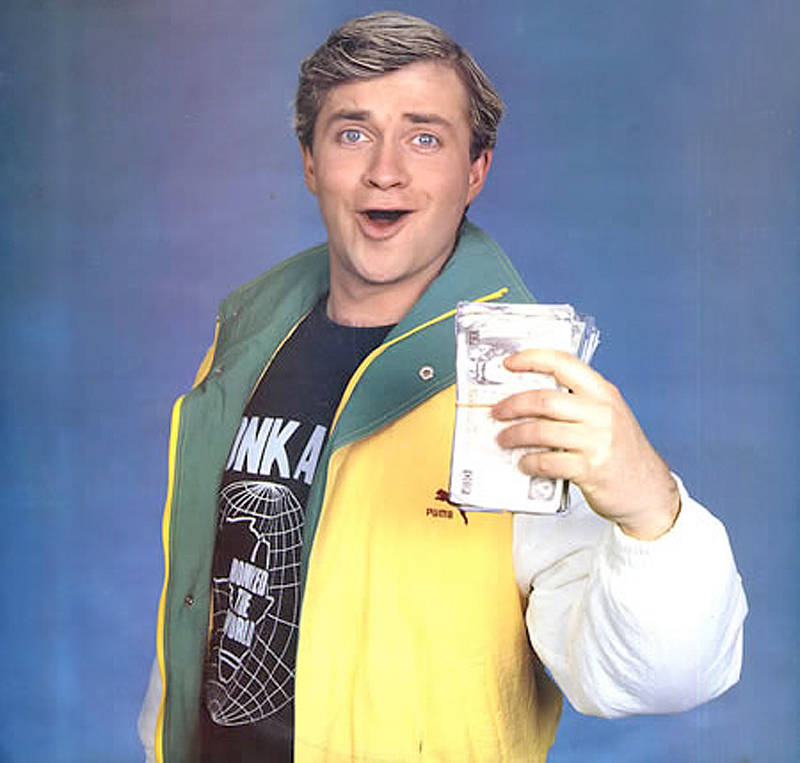
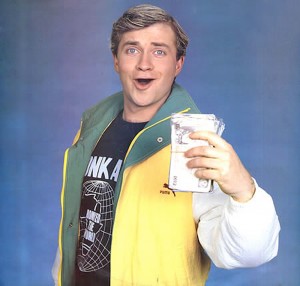
It was the year I came to London as a 23-year-old artist, having taken an opportunity to play league cricket in London. It was a chance for a young Melbourne man to explore his ancestry and the art and culture of Europe while enjoying the quintessential English game. I would set off in the morning, along the Boundary Road, then lunch in the pavilion at Lord’s, and finally off to the Tate Gallery, only interrupted by comedian Harry Enfield’s 1988 ‘Loadsa Money’ character. Enfield pointed up the greed and vulgarity of a changing society. Gordon Gekko was another;
“The point is, ladies and gentleman, that greed, for lack of a better word, is good. Greed is right, greed works. Greed clarifies, cuts through, and captures the essence of the evolutionary spirit. Greed, in all of its forms; greed for life, for money, for love, for knowledge has marked the upward surge of mankind.â€
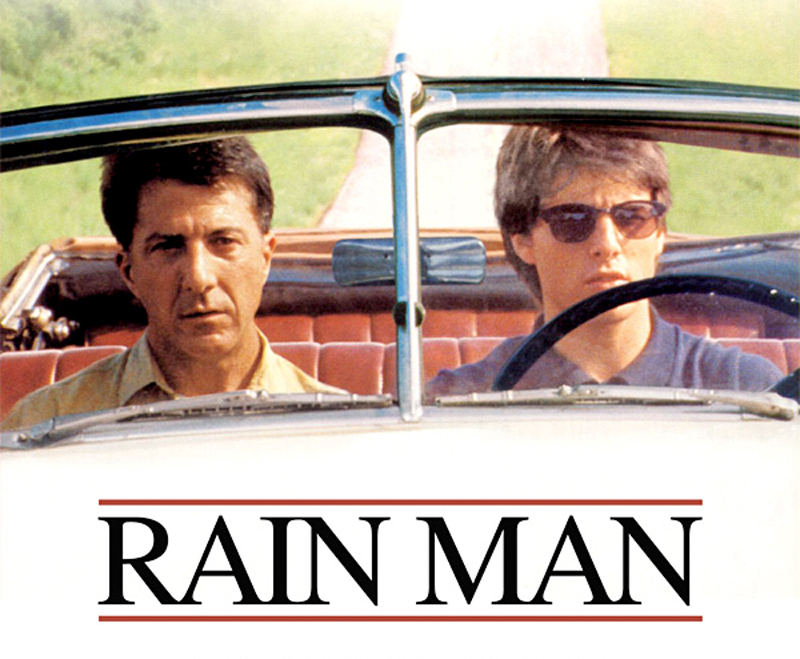
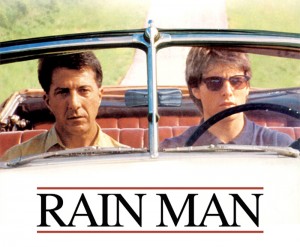 But the film that made ‘loadsa money’ in 1988 was not Wall Street; it was Rain Man, starring Tom Cruise and Dustin Hoffman. Rain Man is about a performance car salesman yuppie named Charlie (Cruise), who is furious when his estranged father’s estate, worth millions, is bequeathed to a mental institution. To his shock, he learns he has a brother in the care of that institution. The brother, Raymond (Hoffman), is an ‘autistic savant’ whose obsession with airline safety records results in a cancelled flight and a road trip across the United States.
Cruise personified the yuppie – the young upwardly mobile, urban professional who in the late 1980s began to inhabit all spheres of life, including sport and the arts. The rise of the yuppie was the result, to some extent, of the creep of managerialism, a business philosophy that spread across the globe through government and business. Master of Business Administration (MBA) programmes churned out thousands schooled in a scientific approach to management.
“Managerialism is the belief that organisations have more similarities than differences, and thus the performance of all organisations can be optimised by the application of generic management skills and theory. To a practitioner of managerialism, there is little difference in the skills required to run a college, an advertising agency or an oil rig. Experience and skills pertinent to an organisation’s core business are considered secondary.”(http://en.wikipedia.org/wiki/Managerialism)
1988 furnishes an interesting – albeit failed – example of managerialism: the attempted takeover of Britain’s fourth largest bank by an advertising agency, Saatchi and Saatchi. This agency was synonymous with the 1979 election of the Iron Lady, Margaret Thatcher herself, thanks to their ‘Labour isn’t working’ campaign poster and three successive Conservative victories. In 1988, Saatchi and Saatchi launched a takeover bid for the Midland. The agency, created and controlled by brothers Charles and Maurice, were at the forefront of corporate takeovers using financial mechanisms that often deferred payment until future profits arrived. Their targets were not just other advertising agencies; they also bought management companies such as The Hay Group (1984) and Cleveland Consulting (1987). Unfortunately in 1988 the idea of an advertising company running a bank did not sit comfortably with The City; it was described in fact as “insane hubris†by financial journalists. Its failure followed the stockmarket crash of 1987 and the resultant recession badly harmed the Saatchis’ reputation and would eventually see the two brothers depart from the company that bore their name.
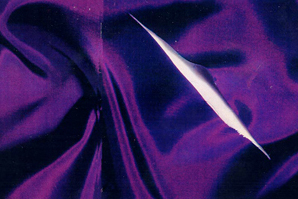 The late 1980s also saw advertising agency revenues hit by further restrictions on cigarette promotion. Advertisers were unable to refer directly to the product or show people smoking it. It created a paradigm shift in the ad business that in some circles was compared to art, for it relied heavily on aesthetics and concepts placed indirectly in the mind of the consumer. An example is purple silk juxtaposed against a pair of scissors or a gash; this was the code for Silk Cut cigarettes. Charles Saatchi had a long-standing interest in art; Saatchi and Saatchi had the Silk Cut account.
“Then, in 1988, Charles Saatchi left his wife [Doris Lockhart Saatchi]… Something of the nature of their divorce may be deduced from the fact that Charles Saatchi’s current entry in Who’s Who makes no reference to Doris Lockhart’s ever having even existed.†(Darwent, Charles. Pieces from a confessional, The Independent, 18/10/1998.)
Lockhart is described as:
“a sophisticated woman who spoke several languages, knew a great deal about art and wine… She became known during their marriage as an art and design journalist, with particular knowledge of minimalism.â€
1988 is also the year that the business philosophy of branding took hold. The influence of ‘brand equity mania’ would last decades. From footwear to footballers, everything could be branded, including art and artists. In business the defining moment
“…arrived in 1988, when Philip Morris purchased Kraft for $12.6 billion – six times what the company was worth on paper. The price difference, apparently, was the cost of the word ‘Kraft’. Of course Wall Street was aware that decades of marketing and brand bolstering added value to a company over and above its assets and total annual sales. But with the Kraft purchase, a huge dollar value had been assigned to something that had previously been abstract and unquantifiable – a brand name.†(Klein, Naomi. No Logo, Picador books, 1999.)
1988 is such a seminal year because of the changes not only in business practices but also in politics. After the cricket season had ended in England, I was wandering around the galleries of Europe while the Iron Lady made her Bruges speech on Britain’s relationship with Europe. This is widely seen as the birth of Conservative Euro-scepticism. As she travelled home, Margaret Thatcher read Sir Roy Griffiths’s report, commissioned by her government, on the National Health Service. It was titled Community Care: Agenda for Action. Griffiths’s business expertise lay in supermarkets: he was vice-chairman of Sainsbury’s. However as a champion of managerialism, this report was to mark a change of direction in the way in which Britain administered psychiatric care. Before Griffiths
“Mentally ill and mentally handicapped people were generally sent away to large forbidding institutions … many patients became worse rather than better and ‘institutionalised’.  However, there was, in a true sense, asylum for people who could be ‘strange’ in private.†(NHS History; see www.nhshistory.net/shorthistory.html)
 After Griffiths, asylums and psychiatric wards were closed and responsibility for this type of care was transferred to local authorities, where case managers were waiting. The philosophy soon spread throughout the western world and a battle for language ensued. Patients became ‘clients’ and ‘stakeholders’, while ‘benchmarking’ and ‘quantitative reports’ and ‘qualitative reports’ were stacked high.
Coincidentally it is around this time that the authorities began to increase the funding for contemporary art. Public galleries and artist studios began to proliferate. Is there a link between the way psychiatric care was handled in the community and the proliferation of contemporary arts? Â After all, art spaces allow people to act strangely in public, all under the eye of a dedicated management structure.
An example appears in 1988 with the opening of the Tate’s satellite branch in Liverpool, a precursor of the much bigger Tate Modern in 2000. However, in a sense  Tate Modern also begins in 1988, when its champion, Nicholas Serota, was appointed director of the Tate. In his application for the job, Serota clearly identified the changing management culture. His application
“…analysed the various areas of Tate work and proposed future stratagems to deal with the imminent crisis caused by restricted government financial support, changing public sector management expectations and increasing art market prices. He saw many areas of the Tate’s operations in need of overhaul…†(Taken from Wikepedia where it is referenced as being from Spalding, Frances (1998). The Tate: A History, pp. 245–252. Tate Gallery Publishing, London.)
Jay Jopling, Damian Hirst’s dealer takes up the story:
“After Nick Serota became Tate director [in 1988], he called a meeting because he was concerned about the media lampooning contemporary art. I was very flattered to be asked. Damien had just done a fish cabinet, I invited the tabloids, the Daily Star took a photograph with a bag of chips and ran the headline ‘The world’s most expensive fish and chips’. I thought it didn’t matter if the tabloids were negative – they’d force people to take a view, bring contemporary art to people’s attention. All that is redundant now – artists are household names, part of people’s lives. I certainly didn’t imagine when we started that it would be a business like this.â€
“Jay Jopling’s father, Michael, a landowner, was Margaret Thatcher’s first chief whip in the House of Commons…†(Wullschlager, Jackie. Lunch with the FT: Jay Jopling. See www.ft.com)
With the political landscape changing, Britain’s relationship with Europe cooling, branding and managerialism spreading, asylums closing and art spaces opening, Cool Britannia was on its way.
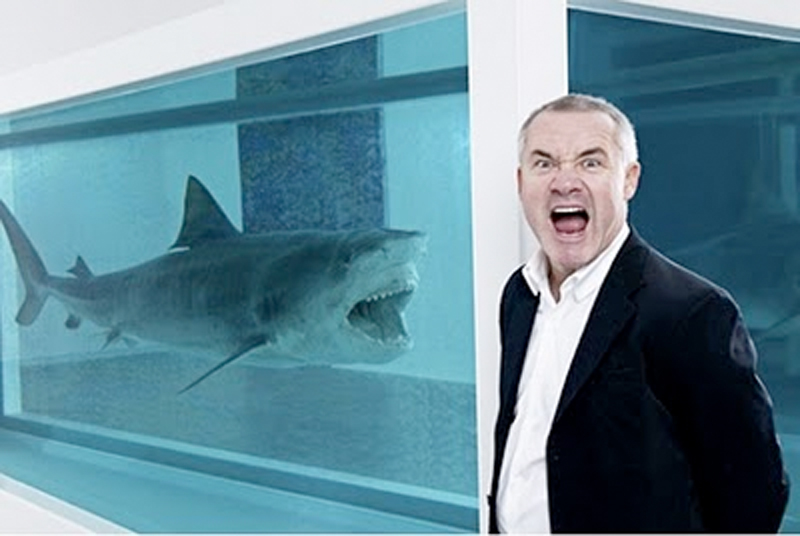 Because 1988 is such a seminal year, it is here we begin our discussion of Damien Hirst. In that year, he was a second-year art student managing his first exhibition, Freeze, a warehouse show of fellow Goldsmith students in London. Hirst organised the advertising and production and participated as an artist. One of his fellow students in the exhibition, Angus Fairhurst, wrote an essay afterwards: Some went mad and some ran away, the great majority stayed faithful until physical death. Hirst used an edited version of this title for a curatorial project at the Serpentine Gallery in the early 1990s. Both artists were branded Young British Artists (YBAs) and attracted support from Charles Saatchi, whose assistance led to fame and commercial success for Hirst and some other YBAs, though not Fairhurst. In March 2008, 20 years after he wrote his essay and on the last day of one of his few solo exhibitions, Fairhurst ran away to Scotland, where, in a wood, he hanged himself.
Ever since Irving Stone’s 1934 novel Lust for Life, art, money and psychosis have been closely related. Google the words ‘creativity’ and ‘mental illness’ and you will find a plethora of musicians, writers, painters and the odd comedian who all paid the price of their creativity. The list is not exhaustive. Currently on show at the Tate Modern are Damian Hirst and Yayoi Kusama. Hirst has said:
“There are so many different ideas it can often feel like the outpourings of an insane mind.†(www.damienhirst.com/texts/2009/feb–takashi-murakami)
And The Guardian newspaper reported:
“Kusama’s work cannot be disentangled from the mental health problems she has experienced. She admitted herself to a psychiatric hospital when she returned to Tokyo from the US in the early 1970s and from 1977 has lived voluntarily on an open ward, building a studio across the street and commuting back and forth on a daily basis.†(Brown, Mark. Yayoi Kusama arrives at Tate Modern with a polka at Damien Hirst. 7/2/2012: www.guardian.co.uk/artanddesign)
Kusama is in her eighties and has had a signature style – dots – since before Hirst was born. She was asked about Hirst’s dots. She replied:
“… I am very happy that the polka dots that I started using have become a symbol of love and peace around the world with everyone joining hands to use them together in this way.â€
When I see Hirst’s manufactured dot paintings, I do not think of peace and love, I think of Enfield’s Loadsa Money. I Googled the names to see if anybody else had made the connection and was surprised to find only one other person had.
“And did anyone else think Hirst resembled Harry Enfield’s Loadsa Money character in that embarrassing-for-all-concerned Noel Fielding doc? Walking around going, “That one’s worth a million. I got two million for that. Nah, I don’t care about money. Got seven hundred large [ones] for that one.†(See the comments to this Guardian article:) www.guardian.co.uk/environment/2012/apr/18/damien-hirst-butterflies-weirdly-uplifting)
Hirst spent years establishing his Loadsa Money character, using the media at every opportunity and staying closely linked to Charles Saatchi. In the mid-1990s it was hard to open a London paper without reading something about him. He was everywhere and for reasons not always connected to art. Diary columns discussed where he was eating and with whom, all the while associating him with money. It seemed orchestrated, pervasive, a type of covert or guerrilla advertising, a branding exercise. Somebody was making Hirst a household name or, at the very least, a minor celebrity (I even remember an interview with him in our antenatal newsletter in 2000).
Why would it be important to make one’s name so recognisable. We might find the answer in an interview with Hirst himself. Before going to Goldsmiths, the artist worked on a building site. As he tells it, the foreman ridiculed his name and called him Steve instead. For two years he was subjected to this identity abuse. Maybe this event instilled in Hirst a determination to have his real name recognised. He has succeeded. Damien Hirst is often called the most successful artist in the world.
To reinforce his image and to court publicity, Hirst was outrageous. He had a shark killed and encased in formaldehyde, and is reported to have once stuck a cigarette in his penis in front of journalists. [It was a chicken bone under the foreskin in a Dublin restaurant. Ed] He was daring, a showman, an artist of immense ambition, intelligent, savvy, prolific, but most importantly always associated with large amounts of money. Whether it be his bar bill at the Groucho or the sale of his latest work to Charles Saatchi, it was all in the media. As Kusama generously didn’t, he even threatened to sue British Airways for using coloured dots in its company advertising, which didn’t lead to the courts, but only to more publicity.
Having, since 1988, used the press to create name recognition – the brand – by the mid-1990s Hirst realised he needed someone from outside the art world to help him exploit his commercial potential. He found this person in Frank Dunphy, an Irish businessman who trained as an accountant. It is a perfect example of managerialism. Dunphy seemed to know little about art, but was expert at extracting favourable contracts for his showbiz clients. In a recent interview (My Life in a Spin, Tim Marlow in conversation with Frank Dunphy. Chichester Art lecture series 2011) he spelt out how he saw ‘Damien Hirst’ as a ‘brand’ he had helped create and commercialise. Dunphy instigated the Pharmacy and later the Sotheby’s auctions, and says his business acumen was instrumental in Hirst’s work becoming intrinsically linked to and defined by its ability to create ‘loadsa money’. For Hirst  this was important:
“…I had no money as a kid and so I was maybe a bit more motivated than the rest. I used to argue with Angus [Fairhurst] and Sarah [Lucas] about that all the time when we were starting out and struggling. They’d say: ‘You’re obsessed’ and I’d be like, ‘It’s important’.†(O’Hagan, Sean. Damien Hirst: ‘I still believe art is more powerful than money’. The Guardian, 11/3/2012)
He put it more succinctly when he said:
“Money is massive.”
Hirst is no longer a YBA: he is a middle-aged artist embraced by art institutions. If you look at Hirst through orange-tinted glasses, he resembles Alex Delarge in Anthony Burgess’s Clockwork Orange. The 1988 Freeze exhibition of young artists casts Hirst as the “…leader of a gang of Droogs: he is clearly the most intelligent and fearless, and the one who comes up with most of the ideas.â€
Hirst’s journey from punk artist to global brand is not unlike Delarge’s metamorphosis from dysfunctional youth to an instrument of government.
The Blair government’s experimental programme in the late 1990s was ‘Cool Britannia’, which was begat by ‘Creative Britain’, an earlier government strategy that saw the YBAs used, along with Britpop, to promote Britain.
Creative Britain was an explicit campaign to brand the UK a ‘cool’, creative place to be. The Culture Secretary of the day was quoted as trying to define the government’s relationship with creativity:
“What it can do is try to nurture it, encourage it, aid its expression, help it achieve maximum impact, and assist society at large in the understanding and appreciation of what is created.â€
These ideas went global. Australia picked up on this trend and in 2001 Prime Minister John Howard launched a report (prepared by Saatchi and Saatchi), Australians and the Arts. Howard declared that the arts needed to “better communicateâ€, but went further by saying he wanted the Australia Council and the report to “…mould the presentation of the arts, the content of what is produced, the way it is communicated…â€
Howard probably expressed a little too honestly the underlying agenda of what government was up to. The UK was a little slicker; however, the desired results were still the same: the Blair government had
“…a deep awareness of global shifts in economics and labour, the government was clear of the direction of the initiative and the reasons for launching a new cultural policy experiment. No government can stand idly by and ignore the potential this has to uplift people’s hearts and at the same time to draw in a major economic return to the country.â€
Fast forward to 2012: Damien Hirst is invited by the Tate and (now Sir) Nicholas Serota to undertake a retrospective as part of the Cultural Olympiad which would run alongside the London 2012 Olympic Games. For all it is a sporting event, the Olympics are also a branding vehicle for the host city. They are not the Olympic Games: they are the London Olympic Games and since the LA games in 1984 the Olympics have been overtly commercial. Hirst’s retrospective is the Tate’s showpiece, connecting the most famous artist in the world to an influx of international visitors, also an overtly commercial project. Just look in the gift shop: “for those who cannot stretch to the £36,800 skull, there is a set of 12 china plates for £10,500, a spotted skateboard for £480, a deckchair for £310 and a butterfly-print umbrella for £195. Butterfly-print wallpaper costs £700 a roll.†(Singh, Anita. Damien Hirst retrospective: Tate gift shop charges £36,800 for plastic skull, Daily Telegraph, 1/4/2012)
Some would question whether Hirst’s overly branded work should carry the label ‘art’ at all. But it is
“…because art is determined by institutions with a monopoly of taste, art is only art when it has passed through certain mechanisms. Since money is the accepted medium of exchange for the transfer of power, of which taste is one manifestation, art is only art when it has been exchanged for money. Transactions will, by definition, take place within the system. Art has by extension, therefore, latent art potential when it rests in a conduit before sale, and is therefore not art if it fails to appear in an art market conduit.†(Sigurjónsson, Njörður. The Language of Arts Management: Ontological, Theoretical and Methodological Reductions.)
Art reflects the culture in which it is made and culture is one of the three pillars of the Olympic movement, the others being (obviously) sport and environmental sustainability. Which in itself raises an interesting question, for Hirst is famous for having wild sharks killed and placed in formaldehyde. Is this meant to highlight the unsustainability of wildlife being indiscriminately killed for entertainment? Do Hirst’s cigarette installations reinforce some abstract health message? Perhaps his drug cabinet installations reflect the prevalence of drugs in sport, or his coloured dots echo the Olympic rings? Such irony is pressed flat by the PR. The Tate is putting this exhibition on because
“Hirst is widely regarded as one of the most important artists working today and has created some of the most iconic works in recent history.â€
The difference between ironic and iconic is only one letter. The Tate can make its own press release become fact, simply by stating it; it is that powerful. Therefore it is important to understand the underlying rationale of this institution.
“3.1: Tate’s mission is to increase public knowledge, understanding and appreciation of British art from the 16th century to the present day and of international modern and contemporary art.†(The Tate’s mission is drawn from the 1992 Museums and Galleries Act.)
We must acknowledge that the Tate is very successful at its mission. Its global influence is enormous and began back in the days of Empire (it opened in 1897) and is today next door to its financial equivalent, The City. In its own words, the Tate;
“… provides a platform from which you can speak to an audience of millions – opinion formers, industry leaders and consumers alike. Choose a Tate exhibition and together we can build a package to mirror your brand, ethos and style.†(Brand Building, Tate web site.)
We can take on board the notion that Kraft = cheese without too many qualms: however, a living artist as a brand does not sit so comfortably. Nor does it really tally with Hirst himself, who made his reputation as an anti-conformist while brands – by definition – conform. Damien Hirst is a set of irreconcilable ideas, a contradiction in terms.
Unless we think of him as a dead artist. Then it is much easier for us to accept him as a brand: his mission as an artist would be over and no work could come forth to contradict the established brand identity. So maybe, conceptually, Damien Hirst is dead. He did once say:
“‘No way. Museums are for dead artists. I’d never show my work in the Tate. You’d never get me in that place.’†(O’Hagan, Sean. Ibid..)
It is quite clear that Damien Hirst will continue to be a successful and internationally recognised artist. His retrospective at the Tate will ensure this, and will also make loadsa money. The figures will so impress the managerialists running institutions across the globe that they will buy it in. This will please the Cameron government, who will see it as exporting cultural product; within a short period of time, it will be as a blockbuster in other countries, including Australia. The Tate, the British government, the British Council will promote this work and Hirst will fly the flag of ‘Creative Britain’. But should we believe in this work when one of the main protagonists, Frank Dunphy, has stated that Hirst’s work is simply a brand, and therefore could also be anti-art?
“I don’t give a damn†might be the reaction of any artist to criticism. Hirst the artist is under no obligation to explain himself on why he does what he does. The question that needs to be asked is why our art institutions, in particular the Tate, are not asking and exploring the science of Hirst, and examining how that reflects the era we have recently lived through. After all, it is its mission to help us understand the work. But how can the Tate do this when it is intricately interlinked into the business of it?
Nobody can argue that Science Ltd, Damien Hirst’s company, working with Tate Enterprises, is not a fantastic business synergy and a powerful economic efficiency. From the box office to the shop, this co-production between two successful commercial companies is guaranteed to make money. However this synergy creates a strong suspicion that the visitor has been recast as a consumer, rather than as someone seeking greater knowledge and understanding of British art. The question is worth repeating; how can the Tate fulfil its stated mission when it is intrinsically involved in the commercial exploitation of that same work? Especially when considered in the light of its recent statements, viz:
“Our objective is to secure enough money to support our ambitions, aiming to increase the amount of self-generated income and to maximise grant-in-aid, combining entrepreneurial flair with strong financial management.†(2007-2008 Annual Report, Tate Gallery.)
But what are its ambitions? Recently it has wanted to expand physically and has created new spaces behind the Tate Modern by redeveloping old oil tanks connected to the former power station.
The oil tanks are the first phase of an expansion project that will eventually see another 10 floors built above them. After the Cultural Olympiad, they will be reopened periodically while work continues towards the planned overall opening date of 2016. Serota would not be drawn on fundraising.
These ambitions need money and one might ask at what point management’s need for money compromises the institution’s stated raison d’etre, or, as Eddy puts it, in Absolutely Fabulous when talking to an art gallery assistant: “You only work in a shop, you know. You can drop the attitude.â€
Maybe it is necessary to look at the psychology of what has happened to understand what has gone on. Could it be that the catalyst for Hirst’s career was Charles Saatchi separating from his wife, with her interest in minimalism? Was it Thatcher turning away from Europe and an advancement of a separate British identity? Was it the rise of brand culture, combined with shifts in advertising culture? Was it the introduction of managerialism? Was it the appointment of Nick Serota? Could it be that Harry Enfield created Damien Hirst out of his Loadsa Money character? Maybe I need a psychologist?
Leon Festinger is one of the 20th century’s great experimental psychologists. His groundbreaking work, A Theory of Cognitive Dissonance, explored the notion of irreconcilable ideas. Hirst and the Tate are a case in point. Hirst has been dismissed by esteemed critics across the globe, yet his success and fame simply keep on growing, with the assistance of art institutions such as the Tate, which, instead of interrogating the art, actually assist in exploiting it. Why? Self-interest is a powerful motive, as any evolutionary psychologist will tell you; management is first and foremost about survival, followed by expansion.
So how does Festinger’s theory help us explain why the Tate benignly contributes to the narrative that is ‘Damien Hirst’ the brand? Festinger developed his cognitive dissonance theory after he infiltrated a group of doomsday cultists who believed an alien – Sananda – had communicated the date and time of the end of the earth. Luckily for them she (the alien, that is) would swing by in her spaceship to save the true believers a few moments beforehand. They gathered together at the appointed time, having disposed of all their earthly goods.
Festinger’s initial question was simple: what would happen after the prophecy failed. Logically, the group should have disbanded in acrimony. However when the predicted time of doom passed, the group, which was led by an ordinary housewife, albeit one with a direct line to Sananda, did not break up: on the contrary, the cult solidified, explaining the failure on the basis that its prayers had saved the world (Sananda had informed them of this). Incredibly, the cult grew as a result.
Festinger explains it thus:
“The psychological opposition of irreconcilable ideas (cognitions) held simultaneously by one individual created a motivating force that would lead, under proper conditions, to the adjustment of one’s belief to fit with one’s behaviour – instead of changing one’s behaviour to fit one’s belief (the sequence conventionally assumed).†(Slater, Lauren. Opening Skinner’s Box. Quieting the mind; The experiments of Leon Festinger, Page 113)
The Tate managers seem to regard the public as members of a consumer cult who will not only flock to watch artists being strange in public, but will actually pay to see it – and then consume the merchandise. We can trace the progression of this thinking from Thatcherism, Saatchi and Saatchi, New Labour and its re-branding of ‘Cool Britannia’ through to the opening of Tate Modern in 2000. They have successfully commercialised and normalised activity that might have once had you ensconced in an institution. And what of all the players?
“Some went mad and some ran away, the great majority stayed faithful until physical death.â€
John Kelly
The Jackdaw September – October 2012
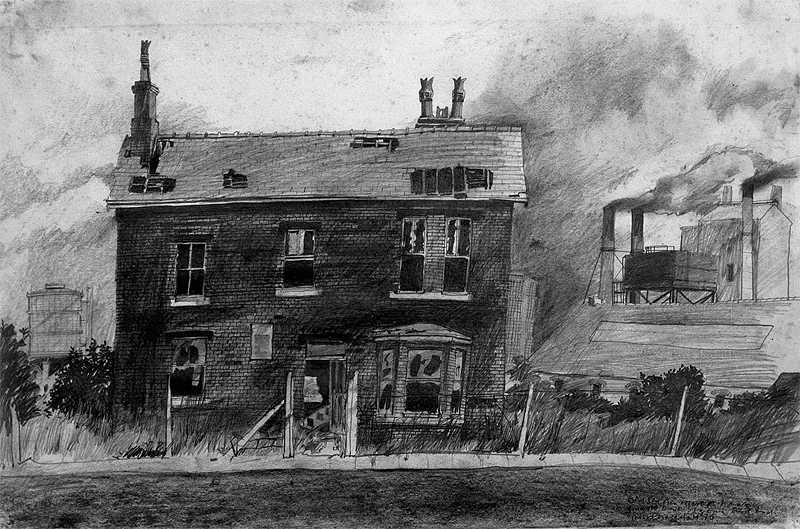
 Chances are you won’t have heard of David Mulholland (1946-2005), a painter of and from Middlesbrough. Until last year, when a group of friends devoted to the preservation of his memory sent me some of his pictures, neither had I. The work hit me immediately as authentic, born of intimate feeling for its subject. Most affecting were powerful graphite and wash drawings of blackened industrial places populated by persevering working people. Having edited a couple of art papers for over twenty years, I felt that if anyone had a right to have heard of David Mulholland then it was at the very least someone in my position.
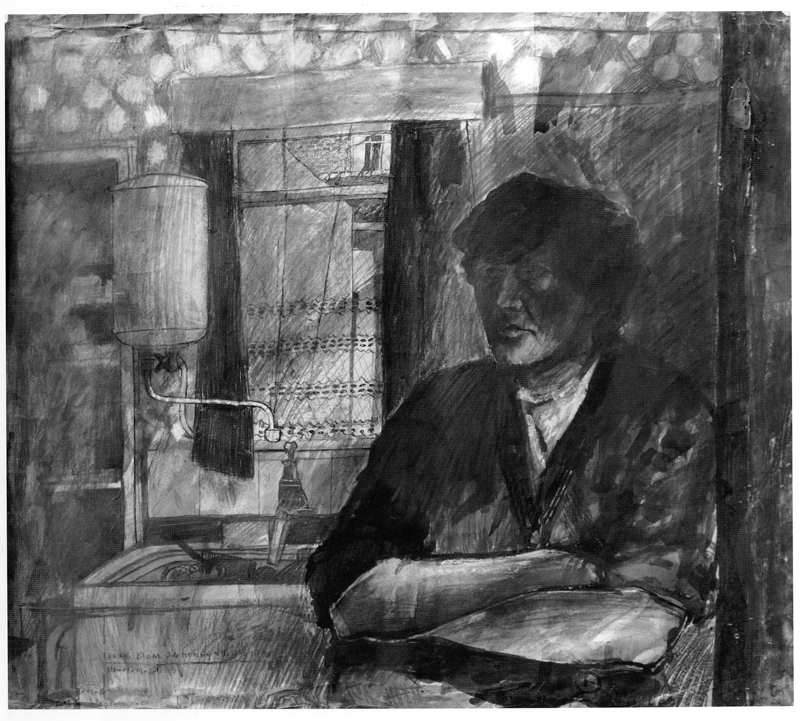 Mulholland was born in South Bank, a community on the Tees built around quaysides, three blast furnaces, steel rolling mills and fingers of cindery railway sidings. In photographs of the place in its heyday, and before the works closed, it looks smokily Soviet in its concentration of polluting ad hoc production. It’s the sort of place which, if you are born there, is in your blood forever. As landscape painter Len Tabner, another important local and friend of Mulholland, said at the recent opening of his memorial exhibition at the Dorman Museum in Middlesbrough, “Dave went all the way to Byam Shaw and to the Royal College of Art in London but only ever painted South Bank.†Apart from a brief foray as a young seaman, when he painted foreign scenes, it remained that way. He eventually returned home, taught art unconventionally in a secondary school, painted his life and friends, and sometimes the surrounding countryside. His work records a personal journey and history.
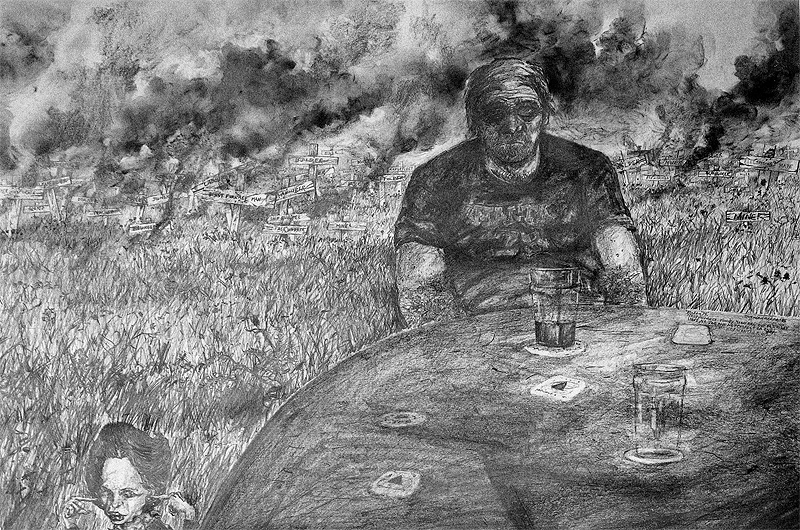 If you live in the north, as I do increasingly, you can find Anish Kapoor signing books in Middlesbrough – where his £2.5 million ‘regenerating’ fishing net was unveiled two years ago and still stands bleakly abandoned and pointless in wasteland – and at a retrospective in the Yorkshire Sculpture Park (see Moping Owl, p. 10). In London he is at Lisson Gallery, all over the Royal Academy, and even lording it over the Olympics’ site. No wonder he needs 25 assistants and three studios to churn out his coloured holes and facile shiny mirrors to meet demand. Such a monoculture as is represented by Kapoor doesn’t add to the diversity we deserve, because the rooms he and his ilk occupy with stupefying frequency are denied to others. Newspaper profiles of Kapoor last aired only three months ago when The Orbit was unveiled – having already appeared on dozens of occasions over the last twenty years – have again been warmed up and paraphrased by others for his new shows in London and Yorkshire. This insulting process of indoctrination goes unmentioned elsewhere, as though it’s taken for granted that only a handful of artists merit such relentless promotion. The only difference in these disgustingly fawning and uncritical pieces is the sentence where they state what Kapoor is currently worth – and it keeps getting bigger, the last number cited being £80 million. For the rest of us, it is impossible not to know Kapoor’s life story off by heart. If only it were interesting. If only all this approbation were the result of his having produced something truly outstanding and comparable with the best from the past… But all that emerges is more of the same branded deluxe ornaments for the grotesque mansions of the immodest rich. And please believe me when I say there is no point in visiting his exhibition at the Yorkshire Sculpture Park, because you’ve seen it many many times before. It takes seconds to walk around. And, do you know what, some of the holes are so dark you can’t be quite sure where the bottom is. How clever is that?