No one would have understood better than Macbeth the logic of the inexorable destruction by the art education establishment of artistic tradition, and thereby the value of practically all subsequent artistic production. The process must continue, or those who were and are responsible for it must admit their guilt and lose their jobs. Their livelihoods, if not their lives, are at stake. Therefore that establishment must continue to see worth in worthlessness and deep significance in the utterly trivial, and to persuade the public that if it does not do likewise the fault lies with its own lack of sophistication and powers of discrimination. The art education establishment draws aid and comfort from the following quasi-syllogism taken from art history, the kind of vulgate that is now, alas, familiar to every art student:
Van Gogh was not understood in his lifetime and sold not a single painting to the public. Van Gogh was a great painter. His story was typical of art history down the ages. Artists X, Y, and Z are not understood and the public neither appreciates nor buys their work. Therefore artists X, Y, and Z are great artists like Van Gogh.
The errors both empirical and logical in this syllogism hardly need pointing out; but it haunts the mind of many of those who teach art, and probably the minds of many critics too. To miss the next Van Gogh! To be quoted in the future only as the man or woman who saw nothing in Van Gogh! That fate does not await those who extol art in which subsequent generations take no interest and see no merit. Their vaticinations are merely forgotten rather than ridiculed; and it is better to be forgotten than held up to ridicule. They therefore take Pascal’s bet with regard to current artists, however worthless they may secretly think, or even know, their work to be.
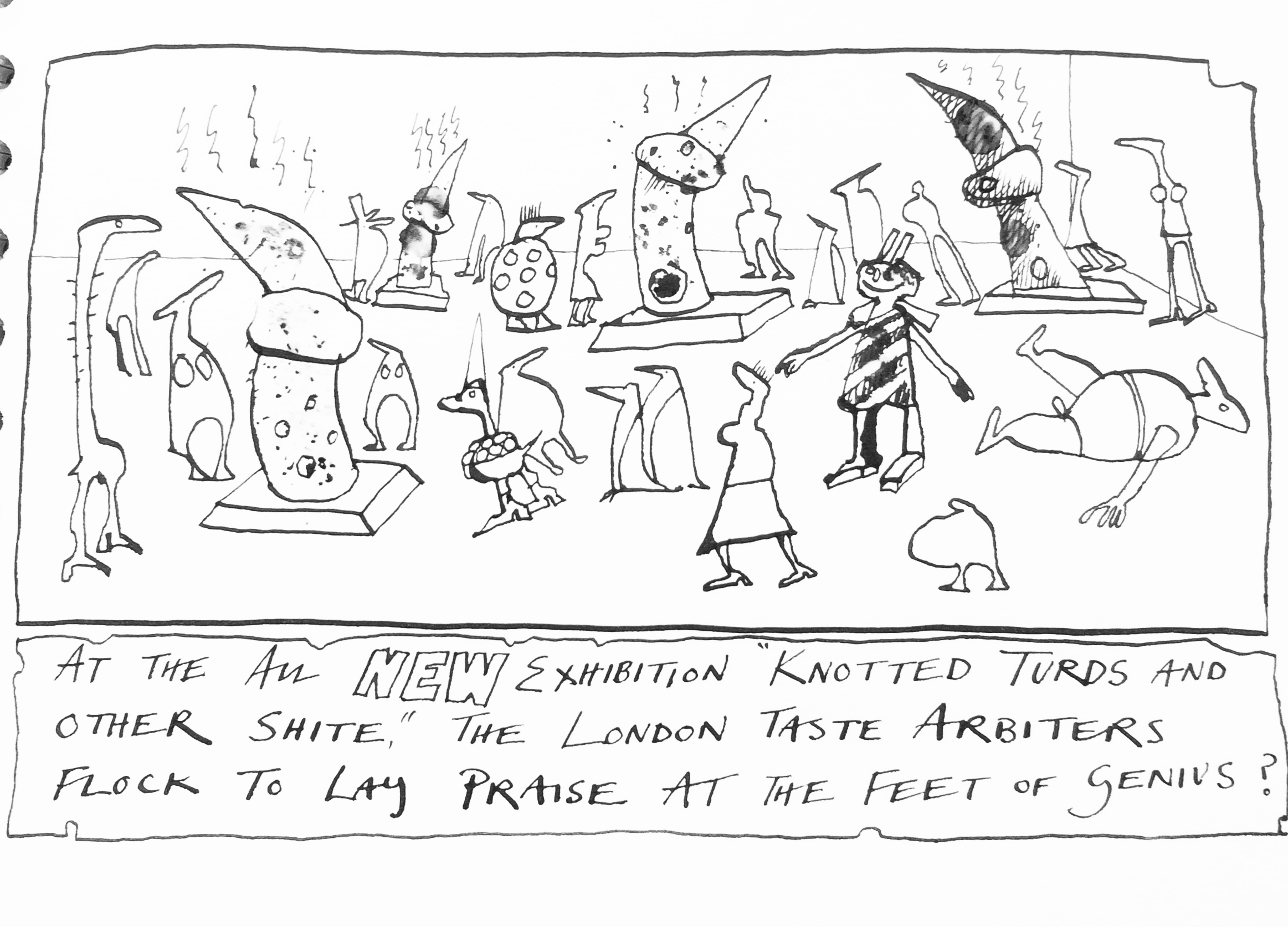
To describe the exhibits – the various scraps of rag, bits of wood, video clips, piles of various objects, bits of twisted metal, empty spaces, dirty polythene stretched out on three-dimensional frames, scraps of paper scribbled on and so forth, oh God how tedious! – would be to do them far too much honour. It still astonished me, though probably it should not have done, that these ‘projects’, as the young ‘artists’ insisted on calling their productions, were the fruit of five years’ ‘study’ after having left school, study in what the director of the École Nationale, in his introduction to the catalogue, called, apparently without irony and certainly without self-knowledge, ‘one of the last havens of the classical humanities’. The few paintings, in what no doubt the director would have called ‘the classical humanist tradition’, gave a clear indication of an inadequate technical mastery and therefore of training. Whether the students entered the École with any God-given talent, and therefore whether the director was a true corruptor of youth, it was impossible from these paintings to say; but their minds had been so filled with intellectual junk that the more they thought, the worse things got.
Not that the young artists are free of ideas, far from it, alas. Their brains are fairly buzzing with ideas, or rather with the simulacra of ideas. There are interviews with them in the catalogue that accompany the illustrations of their work, conducted by art critics who speak a kind of portentous hermetic language: ‘How does your approach fit in with the inheritance of the institutional critique of the 1960s and 70s, which aimed to critique the authority systems of contemporary art?’ or ‘The recurring problematic of these pieces is spatio-temporality and the notion of outer limits.’
Notwithstanding the ‘problematic of spatio-temporality,’ the cultural references of the artists seem rather restricted in time, the 1960s being almost prehistoric for them, of the same era, more or less, as the Lascaux cave paintings. And many of them seem to suffer from science-envy, as if art were of no real social, intellectual or cultural significance nowadays, the action, as it were, being nowadays all in science and technology. (It does not occur to them that their own activities help to make this self-fulfilling.) Hence they often refer to their studios as ‘laboratories’ and their activities as ‘experiments’, using the words in the true scientific sense and not as mere metaphors. They call their jottings about possible future work ‘research notebooks’. Several of them claim to be very interested in sciences such as geology, biology and astrophysics, as if charcoaling a big black circle on a map of the stars to represent a black hole was evidence of serious interest rather than of intellectual frivolity. Whenever one of these artists uses an expression such as ‘I am interested in…’ or ‘I am fascinated by…’ you know that something shallow or opaque is about to follow. Here is what an artist had to say about his ‘project’, which seemed to consist of cheap wooden trestles and frames with polythene stretched in them, all to the sound of a dreary voice recording:
The issue that haunted me as I conceived the project was how to position the recording instruments as well as objects stemming from the exploitation of an intimate space. The space that attracted me most at the Palais des Beaux-Arts was the second floor balcony. I’d like to set up two modified periscopes through which a few objects installed on the ceiling could be observed. I’d also like to build a small ambulatory space, 1.65 meter high – which is to say my own height – which could be used as a partition, an installation and a space where I could share with visitors.
Reading this, I felt almost sorry for the young artist so dishonestly congratulated by the jury, thereby cruelly giving him the impression that his work and his vapid reflections upon it (haunted, indeed!) were of value, and possibly setting him on a lifetime course of pointless and worthless endeavour. Better that he should be a street-sweeper – a useful and honourable occupation, after all – than waste his existence thus.
The problem, perhaps, is that the idea of being an artist still has romantic cachet, independent of the worth of any art actually produced. The problem with the young artists of the Beaux-Arts is that they are more attached to the idea of art than to art itself. They are not like the six characters of Pirandello is search of an author: they are would-be artists who want to express themselves and who are in search of a subject to express themselves about, as well as a career. Hence their professed interest in astrophysics and the like: the universe is a mere prop to their desire to express themselves and be noticed.
The contrast could not have been greater with an exhibition of Haitian art held at the same time in Paris at the Grand Palais. Haitian artists are not necessarily technically accomplished – though the self-taught sculptors of Port-au-Prince are infinitely more so than the sculptors taught at the Beaux-Arts – but it is obvious at a glance that their artistic expression comes from an inner compulsion to try to make sense of their world and their experiences, and is therefore often very moving as well as aesthetically pleasing.
Neither the director of the school, Nicolas Bourriaud, nor the chairman of the jury, Enrico Lunghi, wrote in their introductions to the catalogue as if the school were an educational establishment where such things as skill and technique should be taught. This, it seems, would be beneath the dignity both of the teachers and students. Instead, as Bourriaud puts it:
… if we are strengthening our ties with art centers, museums, foundations and other cultural institutions, it is in order fully to take on the role every school should play within its artistic ecosystem: that of a space for reflection.
It is clear that for Bourriaud, teaching is at the very best secondary, perhaps not even necessary at all: for Man is a born artist, and all he has to do to achieve his innate artistry is to ‘reflect’ on what is already within him.
It will come as no surprise, I should imagine, to readers to learn that the catalogue was published with a subvention of the French Ministry of Culture and Communication, without which it would certainly not have been published at all. As Enrico Lunghi, director of Luxembourg’s museum of modern art and chairman of the jury, puts it:
We could speak of an institution [the Beaux-Arts] among others, where, without seeming to, the foundations of dominant powers are reproduced and consolidated, inasmuch as the sociology of students prefigures the art world, which is not particularly open to social diversity.
In the dash to internationalism the national is trampled underfoot, argues Laura Gascoigne.
In November, Lund Humphries celebrated 75 years of publishing books on British art with an anniversary talk at the ICA titled ‘Is there such a thing as British art?’ It was chaired by Tim Marlow, now of the Royal Academy, and debated by a panel composed of Iwona Blazwick from the Whitechapel, Emma Dexter from the British Council and artists Nathan Coley and Yinka Shonibare. Don’t ask me what was said, as the event was so oversubscribed I couldn’t get a ticket.
British art is on a bit of a roll. True, no YBAs made it onto ArtReview’s Power 100 list last year, but Cameron’s gift to his new ‘bro’ Obama of a Henry Moore print of Stonehenge did seem to reflect a newfound confidence in our national art. It certainly upped the ante on the special gift-giving relationship after the boxed set of classic American film DVDs presented by Obama to Gordon Brown in 2009. But while national pride in the art of the past still seems permissible, it has started to look iffy when applied to the present. Patriotism has no place in a global art world. Hence the further questions raised by the Lund Humphries debate: “Is there an inherent, identifiable ‘Britishness’ in the art made in these islands today? Or is any notion of a culturally significant Britishness now redundant?â€
In his autumn pep talk to participants in the 56th Venice Biennale, President Paolo Baratta recalled the reaction against national pavilionism in 1999 that prompted the creation of the International Exhibition “to offer the world a global sounding boardâ€. The man in charge of this year’s sounding board is Nigerian Okwui Enwezor and his exhibition, inclusively titled All the World’s Futures, will invite visitors to “read the Giardini with its [sic] ramshackle assemblage of pavilions as the ultimate site of a disordered world, of national conflicts, as well as territorial and geopolitical explorations.â€
In a disordered world, blowing one’s national art trumpet is obviously out; the polite thing to do is to tootle on the trumpets of one’s fellow nations. And currently auditioning for the post of international trumpeter-in-chief is the director of our very own Tate Modern, which has been scrambling to diversify its collections in preparation for the post-pavilionist age. In November 2012 a special report on Tate’s International Activities announced the formation over the previous decade of a series of Acquisitions Committees supporting “Tate’s global reachâ€. Between them, the North American (2001), Latin American (2002), Asia-Pacific (2007), Middle East and North Africa (2009) and African (2011) committees have added over 100 works to the collection. Two more committees – South Asia and Russia & Eastern Europe – are in the pipeline.
It was Serota’s cultivation of a global powerbase, rather than his winning personality, that won him top spot in last year’s Power 100. “Tate Modern very aggressively internationalized quite quickly,†explained ArtReview’s editor Mark Rappolt. “It is not a national collection, it is an international collection that happens to be in London.†Like the British Museum, in other words, except that the nations from which the Tate is acquiring this stuff are unlikely to hire Mrs Clooney to get it back.
In our hyper-connected world, global art is a development as unavoidable as global terrorism. But whereas global terrorism has a clear idea what it’s about, global art is undecided. At the moment it’s professing anti-capitalism in a general, innocuous sort of way. Enwezor’s Venice exhibition will open with a live reading of all four volumes of Marx’s Das Kapital, “building into an epic display of oralityâ€. Groan if you will, but Enwezor is a global player with a bunch of biennials under his belt. He curated the Lagos section of Tate Modern’s Century City in 2001 and was responsible for fellow-Nigerian Meschac Gaba’s Museum of Contemporary African Art 1997-2002 – “challenging ideas of an authentic ‘African’ experience†– that took over several rooms of Tate Modern in 2013. I remember it as a pleasantly shambolic collection of brightly coloured ephemera with interleaved bank notes representing capital. When the rooms were cleared, the Museum was put into storage. It was an early purchase by the African Acquisitions Committee.
I’m wary of art acquisition by committee, believing that great collections are formed by individuals, but acquisition by foreign art committee – if you can still say ‘foreign’ – is far more worrying. On its leader page the Russian-owned London Evening Standard welcomed the Tate’s 2012 announcement of its international activities on the grounds that its ambition to “build itself up as an international brand… can only help to add to London’s image in the worldâ€. Hang on there, Lebedev. Tate & Lyle is an international brand. The Tate is, or was, a national art gallery. It is responsible to the nation for many images, but London’s isn’t one of them. It is also expected to maintain ethical standards a notch or two higher than your average multinational. Two more reasons given by ArtReview for Serota’s global domination of its Power 100 were the amount of income the Tate receives from foreign private sources and the number of collectors on its international acquisitions committees – collectors who are presumably honour bound to recommend the artists in their own collections.
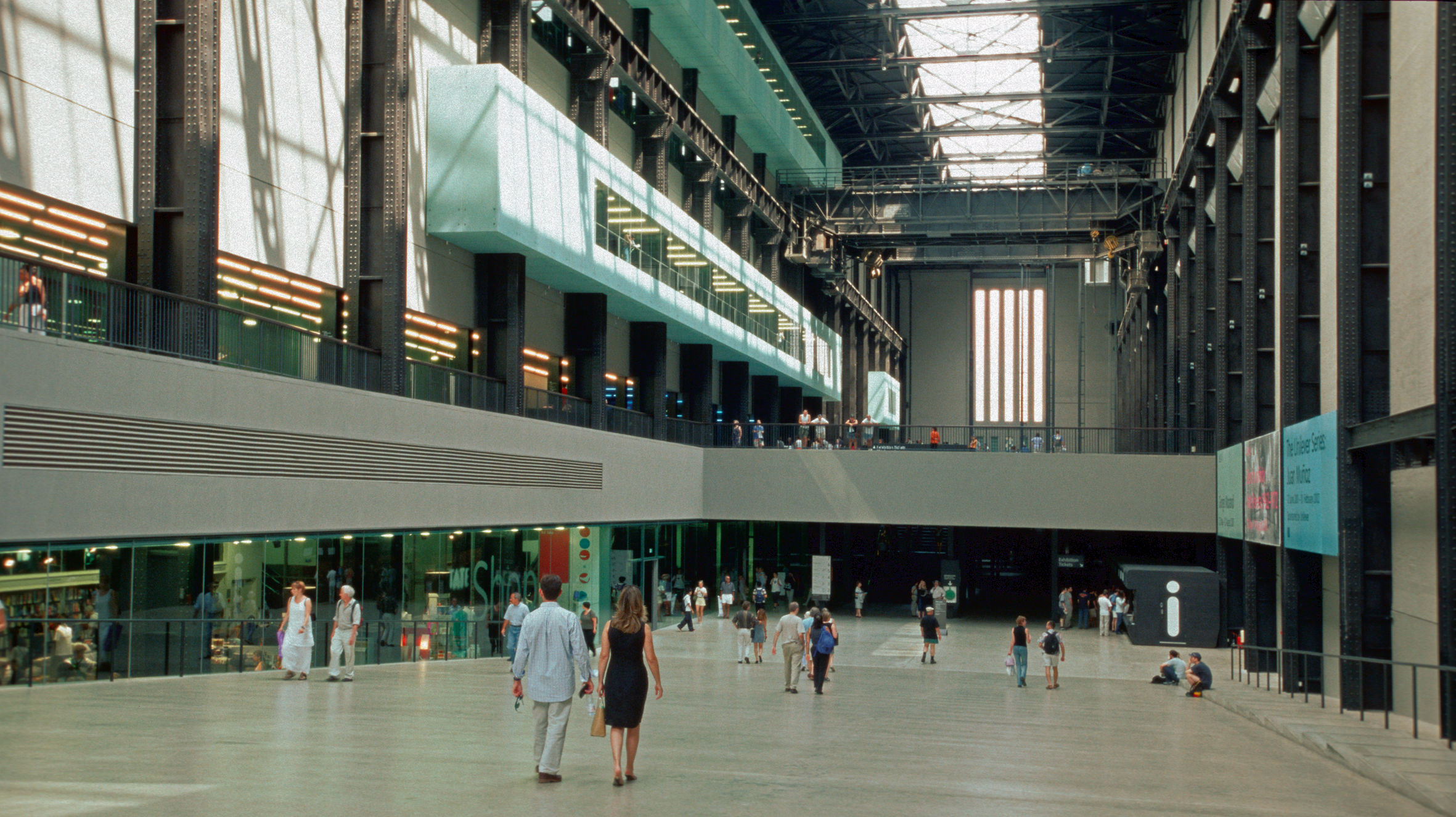
Are these acquisitions really necessary? If the object is to introduce audiences to art from around the world – and ‘ART FROM AROUND THE WORLD’ is what it is currently advertised on the builders’ hoardings outside Tate Modern – there are cheaper alternatives to acquisitions, known as loans. But as you will have noticed, this spurt of international collecting activity coincides with the tacking of Herzog & de Meuron’s multistorey starship park onto the back of Giles Gilbert Scott’s former power station. The Tate is looking to its international committees and foreign income sources to solve the problem of filling this vast unwanted space on the cheap by shopping in relatively undeveloped markets. But it could shop even more cheaply at home if it was prepared to look at national artists without international reputations.
“Real Art history is always part of national history,†wrote the Russian critic Boris Groys a few years ago. “There is a global art market, but there are no international institutions.†The Tate aims to change that. Assuming its extension is ever finished – and mothballing it would take a mountain of camphor – its internationalism may give it short-term novelty appeal. If it succeeds, other national galleries will follow and the world will be dotted with multinational outlets offering sameness rather than diversity in the name of universality. What will be lost in translation will be local dialects, the nuances of expression peculiar to art that is rooted in a shared culture in a particular place.
The test of universality in art is not its ubiquity but its ability to communicate on a human level across cultures. Here’s what the cosmopolitan Kitaj had to say on the subject: “I have a hunch that pictures only achieve universal interest by way of the muddle of obsessed attentions (the stuff that excites one in life) to which a very skilled painter exposes his or her picture… That attention might be variously Christian, African, Neurotic, Alien, Decorative, deeply English or any complex sensibility – you name it, but I wouldn’t trust an art too much if it was damn well determined to be universal like Esperanto, which a lot of art now looks like… because you are what you are and what can be more human than that?â€
David Lee thinks loans both ways should be considered.
We have rehearsed the pros and antis of retaining, loaning, handing back or exchanging the Elgin Marbles in the pages of the Jackdaw many times. The main arguments on both sides, few as they are, remain the same and recent reiteration of these familiar points would suggest nothing new will ever be proffered on either side. Certainly the case for the sculptures’ return will not be advanced by the Greeks enlisting a junior lawyer because she’s married to a famous actor. Any impetus given by that opportunistic stunt petered out once the press wearied of airport snaps of Mrs Clooney’s million-buck grin while offering nothing but the most fatuous of platitudes.
Greece claims the balance has recently tipped in their favour with the opening of a new museum below the Acropolis. But their chief arguments in favour of restitution remain predominantly emotional and sentimental ones which play to the home gallery.
The Acropolis marbles are handsomely exhibited free of charge in the British Museum and have been well cared for, in contrast to the way in which the Greeks have demonstrably failed to protect their own allegedly cherished carvings. Far more visitors will see the works in London than would be the case in Athens where, admittedly out of season, the Acropolis Museum – £12 to enter – can muster negligible trade bulked up (as indeed it is in London) by noisy parties of demob-happy schoolchildren – in the Greeks’ case a generation deemed ripe for the most shameless brainwashing.
The argument that these sculptures are by Greeks from a unique moment in Greek history and from which all modern Greeks are descended is so much jingoistic claptrap. Greeks claiming descendance from the Athenian Pericles is as preposterous as me citing the ancestry of King Caractacus; as if the Roman, Angle, Saxon, Viking, Pict, Celt, Visigoth, Dane and French invaders, commonwealthers, colonisers and asylum seekers had never come between us, and changed our make up beyond recognition. It’s just silly.
As someone who simply enjoys looking at classical sculpture, I recently visited Athens to see if workable alternatives about the future of the Elgin Marbles might be considered. Currently, the issue is clouded by irritating, point-scoring politicians intent on manipulating publics for their own ends. All those who love sculpture and art history should have an important say in any outcome because in the end we are the only ones who will actually take the trouble to look at them properly.
From the outside the new Acropolis museum is as inelegant as most new buildings, its one quirk being a penthouse floor twisted from true as if a Rubik’s cube had had its top layer half-turned. What was left of the Acropolis sculptures after the explosion of 1687 when the Parthenon blew up destroying most of its peristyle and interior, not to mention assorted subsequent lootings, defacings, quarryings and Elgin’s removals, is exhibited on the top floor with gaps left where the frieze and pediment sculptures from other museums, chiefly the BM, would fit in. Having been eroded smooth and rounded by the most poisonous atmosphere of any city in Europe, much of this material is of disappointing impact and quality. Snatches of detail and passages of beauty hint at what might have been, but little in the way of real art appreciation is possible. From looking here at what remains of the Parthenon sculptures you would never suspect them of forming part of an inimitable masterpiece.
A cynic might conclude that the Greeks need the BM sculptures because their own are largely unreadable wrecks. Unpalatable as it may be for the Greeks, an objective conclusion must be that if Elgin had not removed sculptures their survival may have been jeopardised. This cuts no ice in Greece because wherever you travel Elgin is presented as the Great Satan. The poor wee Scot is denounced in tube stations, museums, airports and on street placards, and even at remote archaeological sites across the country. Nowhere is there any acknowledgement that without Elgin’s intervention during a volatile period of foreign occupation, there might be little worth a second look.
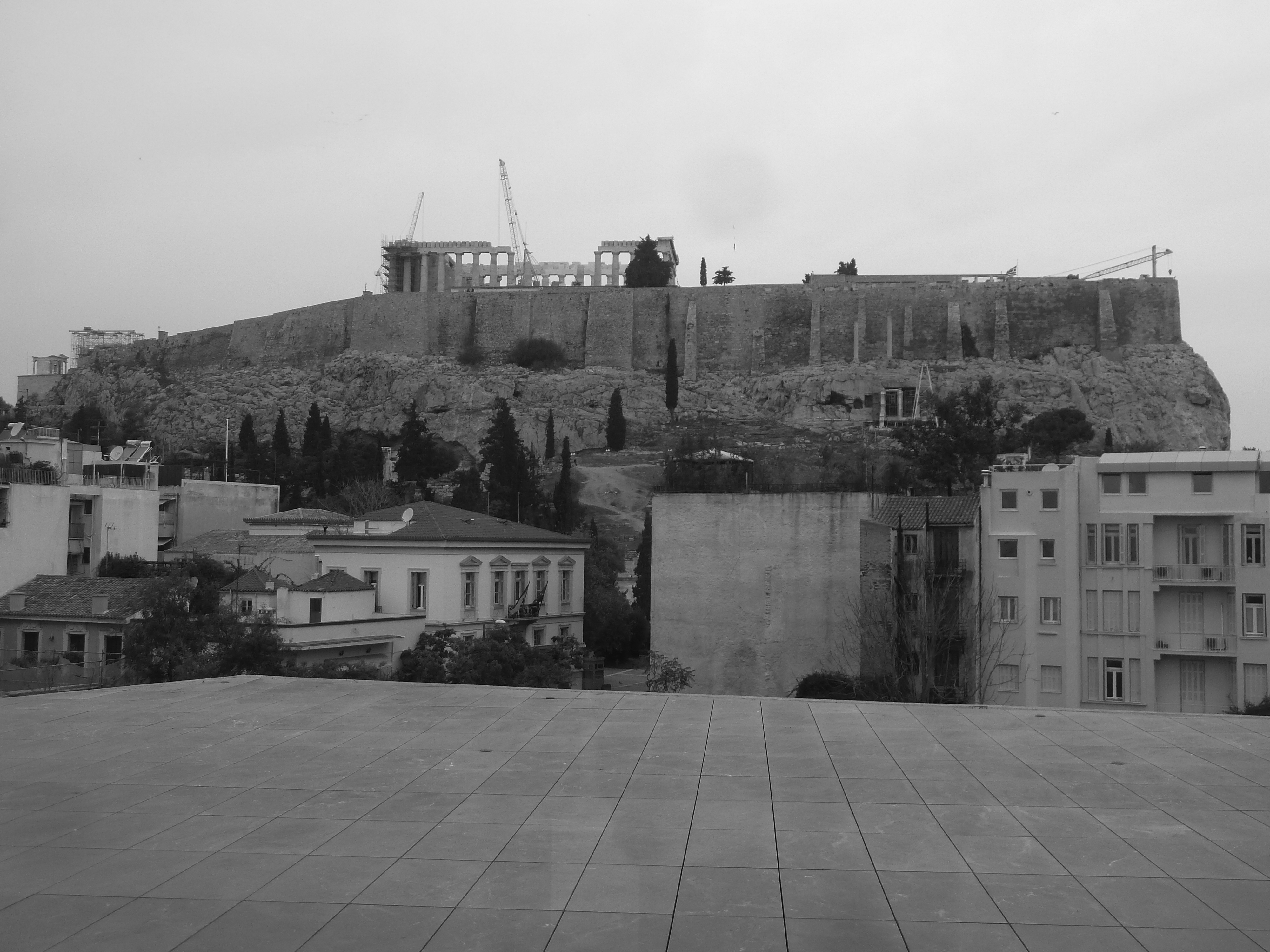
The argument that the nearly complete frieze would be exhibited within sight of its original location has some little merit. From one side of the new museum (see picture above) one can look up to the rear, less photogenic aspect of the Parthenon, though you can’t see where the frieze would originally have been placed because it was obliterated in the explosion and subsequent collapses, earthquakes and demolitions. It was in any case more or less invisibly located high behind the peristyle arcade.
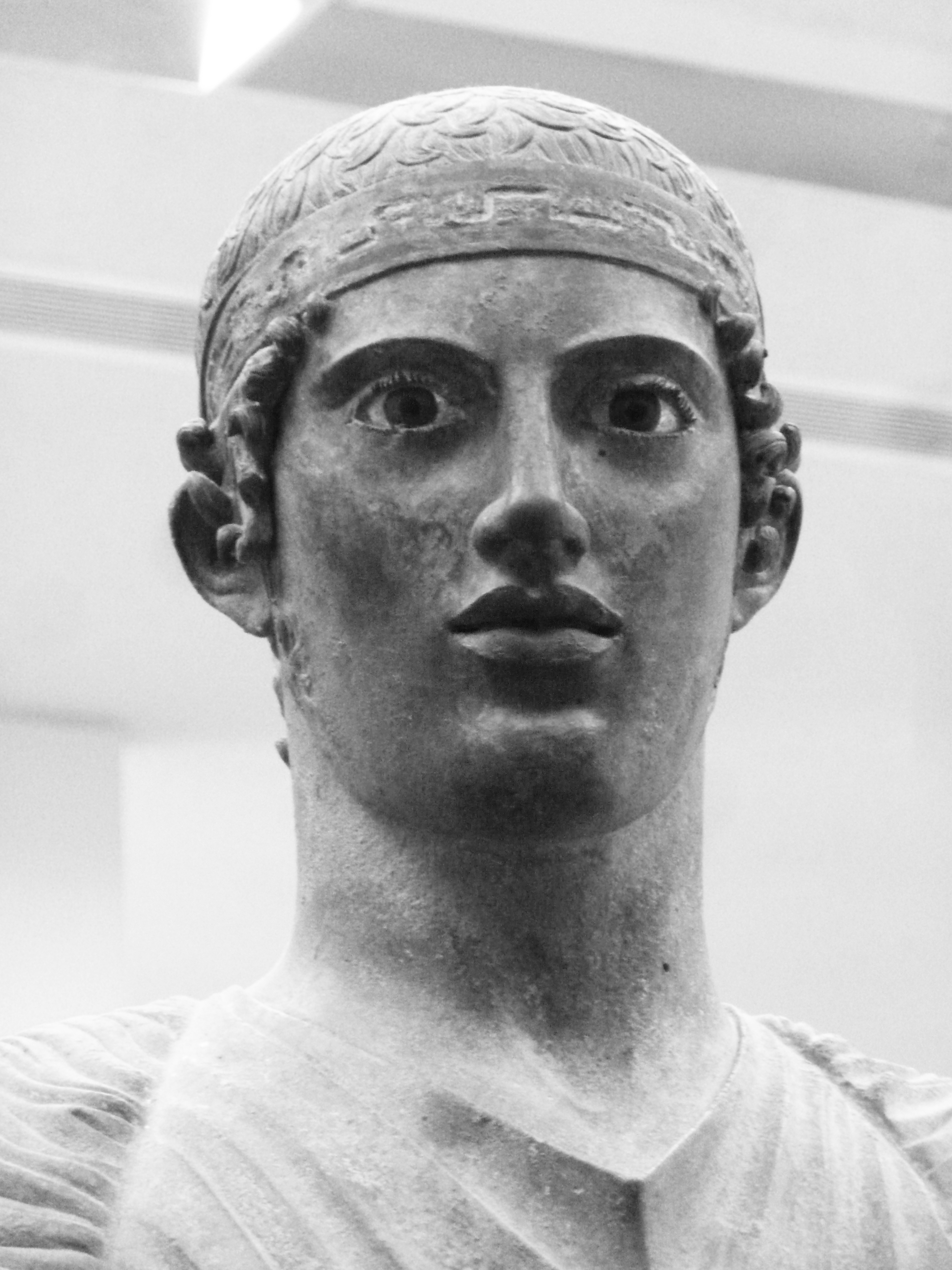
In its other galleries the Acropolis Museum is an unforgettable experience, spacious and with the most fabulous carvings and bronzes sensitively displayed. For devotees of sculpture and the classical world it is unforgettable, joyful even. The calibre of work, the gradual evolving understanding of form and surface pattern, especially in the archaic, pre-Periclean period, is staggering – the scholarly designation ‘primitive’ is laughably inadequate when dealing with such accomplishment. For students of Greek sculpture this museum, as well as the quality of the even more breathtaking collection at the National Archaeological Museum on the other side of the Acropolis (see cover), fills in stylistic gaps not even hinted at in the British Museum’s story of classical sculpture – it is revelatory.
Among the main arguments against restitution adduced by director MacGregor is that the BM’s Greek galleries tell the full story of classical sculpture. Familiarity with museums in Greece gives the lie to this fantasy. The British Museum doesn’t even get close to giving a complete account. To start with it is rare that any visitor to the BM experiences all its classical galleries open at the same time. Even after a lifetime of regular visiting I’ve rarely managed it. The architecture galleries in the basement are open only every Preston Guild, and the Halicarnassos galleries daily closed. Getting to see the marvellous Bassae Frieze in its bespoke attic is more of a lottery than El Gordo. MacGregor’s rhetoric gets a far better press than it deserves.
BM displays give a decent impression from, say, 450BC to 300BC but a visit to Greece soon exposes the threadbare nature of even that proposition. For all the beauty of some of its exhibits, the BM doesn’t present the full subtlety of what happened. Indeed, it will only be able to make such a claim when major loans are vouchsafed from Greece. This is why we should stop the war of bickering and insults and seriously consider a series of temporary swaps of material that would thrill aficionados in both countries.
Presently Greek arguments for complete restitution are too easy to skittle. Not least the one about how important they claim the Parthenon marbles are to them. I first visited the Acropolis in 1971 since when the site has changed indiscernibly. The cranes themselves must be antiques by now. My generation is likely to live its entire lifespan with the Parthenon obscured by scaffolding, sheeting, peremptory signage and heavy lift equipment. The hilltop is a chaos of rubble, building works, ugly police-style cordons and railway lines – small wonder so few of the visitors who trek up linger here for more than a couple of minutes, for this is not a pleasant place to be. The Greeks claim to care passionately about this important symbolic site, yet progress is glacial. So far it’s taken them three times longer to restore a few patches than it took Kallicrates, Iktinos and Pheidias to conceive, build and carve the lot from scratch. But the torpor and apparent indifference evident on the Acropolis is typical of that infecting the country’s other important archaeological sites. Wherever you venture, from Epidavros to Delphi to Knossos, there is little or no building at the one cool time of the year when work ought to be forging ahead. Any urgency to conserve is bewilderingly absent.
One problem to achieving any rapprochement is Greek resistance to negotiation and their attitude in general towards ‘loans’. One can’t blame the BM for a lack of engagement because the Greeks use the same definition of ‘negotiation’ as do the Argentinians when referring to the sovereignty of the Falkland Islands. In both cases ‘negotiation’ means only one possible outcome, total capitulation on our side. No wonder the British Museum is resistant to embarking on such a journey when the Greeks refuse even to acknowledge that it is the sculptures’ legal owner.
Definition of the word ‘loan’ presents a serious problem for the Greeks. It is perhaps impertinent to mention that the Athenians built the Parthenon with money stolen from neighbours and never repaid. Old habits apparently die hard… Can one have any real confidence that a ‘loan’ of Elgin material would be returned?
Despite all of this we should try putting aside childish disputes. The possibilities for exchanges of material between the BM and Athens are tantalising for sculpture lovers. Imagine, a swap of Elgin material for archaic kouroi and kore and bronze statuary of a quality unimaginable to regulars of the British Museum. What a mouthwatering prospect that would be, to see, for example, a large kouros, one of so many in Athens.
The Greeks should change tack. They should magnanimously offer loans to the BM of works of such greatness that those against any form of extended exchanges between the two countries would be disarmed by so generous a spirit and the genius of the work. The main argument Greeks should deploy is this prospect of the mesmerising works they could offer in return.
Laura Gascoigne investigates why what was once so very special is now common as muck and comprehensively commandeered by the fat controllers
In The Masque of Augurs, Ben Jonson introduces the comic figure of Vangoose, a “rare artist†and producer of masques with a reputation for the wildly fantastical. “Now we would bring in some dainty new thing, dat never was, nor never sal be, in de rebus nature… a mere ‘devisa’ of the brain,†the artist promises his Jacobean audience. “If it go from de nature of de ting, it is de more art; for dere is art, and dere is nature, you sall see.â€
Vangoose’s obvious difficulty with the English language is not due solely to his being Dutch. The 17th century had no word, in Dutch or English, for the quality of artistic creation he’s trying to describe. Astonishingly, the word ‘creativity’ only entered the English language in 1927 in a lecture by the philosopher Alfred North Whitehead. For more than two millennia before that, Plato’s philosophical verdict in The Republic that a painter “merely imitates†held sway, and the advent of Christianity didn’t shake it. If anything, it reinforced it. Leonardo could go so far as to claim that an artist uses “shapes that do not exist in nature†but he could go no further, since ‘creatio ex nihilo’ was the sole prerogative of the Creator. It wasn’t until the Enlightenment, when Joseph Addison dared to suggest that human imagination “has something in it like creationâ€, that the divine monopoly on creativity was broken. In the next century, Romanticism finished the job.
Today, creativity is as common as muck. We find the word ‘creative’ applied to everything from art and writing to psychology, philosophy, and technology, not to mention accounting. Like so much else, it has gone cross-disciplinary – it has even jumped lexical categories to become a noun referring to someone working in advertising. But the most significant change of the past 20 years has been not in its range of applications but in its meaning. As the American psychologist Michael Mumford noted in Creativity Research Journal a decade ago, “we seem to have reached a general agreement that creativity involves the production of novel, useful products [my italics].†Out of the Romantic cult of an economically useless imaginative faculty has grown the dreary McKinseyite concept of a mental ability to be cultivated for the purposes of productivity. So we have ‘creative industry professionals’ hot-desking in ‘creative hubs’ and ‘incubator spaces’ to speed the fermentation of moneymaking ‘devisas’ of the brain to boost the economy. One wonders what Ben Jonson would have made of it.
The ‘creative industries’, according to the CBI, now account for more than 6% of Britain’s GDP – just 3% behind the financial services sector – and represent an inflatable life-raft in a floundering economy. Scoff if you like at Meedja Studies and ‘Mickey Mouse’ courses, but there are number-crunchers at the Treasury who are seriously counting on Mickey and Minnie to save our island from disappearing off the global economic map. For a post-industrial nation that no longer makes things, creativity conjures the illusion of a deus ex machina materialising out blue skies thinking in a shower of gold. It’s no accident that the opening sentence of Alex Salmond’s Guide to an Independent Scotland hailed Caledonia as “an ancient nation, renowned for the ingenuity and creativity of its peopleâ€, or that Sir Sean Connery, in a New Statesman article hubristically headed ‘There is no more creative act than creating a nation’ [tell that to the Almighty, Mr Bond] argued that independence would present the Scots “with an unparalleled opportunity to promote our creative excellenceâ€. In these days of corporate-creep, Hollywood and Holyrood speak the same language.
Don’t get me wrong. I’m as relieved to have escaped a haggisectomy as the next Sassenach, but when I hear the word ‘creativity’ I reach for my revolver. Why? Because what was once a faculty free as the air we breathe has been thoroughly and comprehensively monetized. How did we let this happen? I date the start of the rot to the reign of John Birt, that Blairite Svengali of blue skies thinking and foggy speech who educated a generation of cultural administrators in the language of corporate creative bollocks. Take this example from Jana Bennett, former Head of Vision at the BBC, quoted in Private Eye’s ‘Birtspeak’ column in 2007: “Now that it’s clear the conversation genuinely can be a creative two-way process, and in many cases multi-way, we are witnessing the possibilities opened up when many ripples bump against one another and the patterns of interference, the ‘mash-ups’, they create. We have the opportunity more than ever before to willingly seed the clouds of creativity and see a creative rainfall.†Since Bennett’s speech, the c-word count has risen. She notched up a modest four mentions; the Tate, in the publicity for its new IK Prize for ‘digital creativity’ unveiled in August, managed six.
If you’re wondering how exactly a pivot starts, THECUBE’s engineers may be able to help. But let’s not nitpick. Around a “highly fuzzy concept†like creativity, an occasional lack of clarity is inevitable. There’s no such problem in Africa, however, where of the 28 languages currently spoken only one – Arabic – has a word for ‘creative’. It’s not that Africans are short on creativity, it’s just that in the matter of rainfall they prefer the wet kind that makes seeds grow into edible crops. Fuzzy concepts are luxuries for developed economies. In Taiwan, for example, they take their creative agronomy so seriously that last summer Taipei Contemporary Art Centre staged a Strategic Business Plan Public Stakeholders Consultation Focus Group Exhibition [snappy title] to show the products of three ‘creative game-based workshops’ that ‘looked at aspects of the business of contemporary art’. The workshops were run by visiting Senior Tutor in Curating Contemporary Art from the Royal College, Kit Hammonds, a specialist in “imaginations of the future found in science, business planning and speculative fictionâ€.
The line between art and business is now so fuzzy that an IBM Global CEO study of 2010 named creativity as the most crucial quality for leadership success (which could explain why so few CEOs are female, since women, as we know, are better at procreativity). How to reclaim creativity from business? By defending to the death our artistic right to exercise it in pursuit of the wildly irrational and unproductive. As Veronese, a champion of creativity avant la lettre, told the Inquisition: “We painters use the same licence as poets and madmen†– and he meant madmen, not ad men.
John Lessore and John Wonnacott wrote the following essays for the catalogue accompanying their joint exhibition, The Life Room and the City, at Norwich Castle Museum and Art Gallery
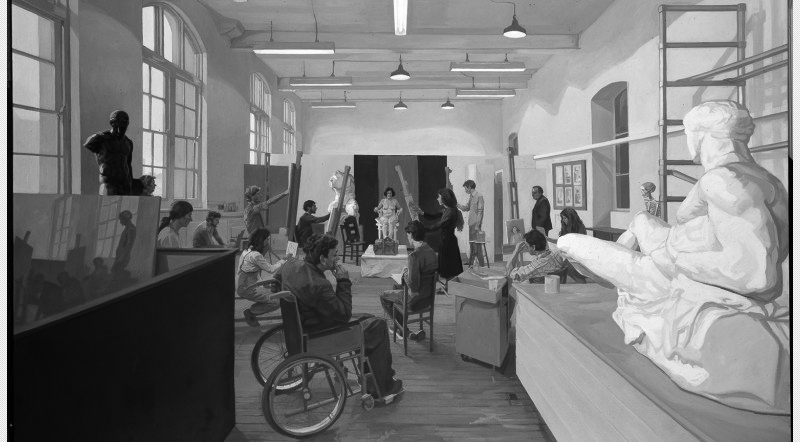
The Life Room, 1977-1980, by John Wonnacott with a ‘pensive’ John Lessore in the foreground
First, John Lessore discusses his attachment to drawing and his approaches to teaching it
As a student, I wanted to be taught, and the lack of serious teaching, even in the mid-fifties, was frustrating. Less is taught now. When talking about drawing, one has to distinguish between the skill of rendering and the art of making a living image, between the optic and the visual: these are fundamental definitions.
Although it is now recognized that the net is wider, one used to look to the Florentines as the great draughtsmen of our western tradition, at their best, both artisans and artists. The overlap fascinates. Artisans know what they are doing and can achieve a good product. Artists are blind: every time they work, they aim to surpass themselves; they take risks and can fail as well as succeed, and are surprised by unforeseen results. As opposed to a skill, an art brings little satisfaction because it is prone to self-doubt, even after realisation. While our forbears made sure they were both artisan and artist, most of us today only wish to be artists; I think this is a mistake and one of the reasons we are so much less than they.
Drawing is necessary to, and part of, all visual art; it’s not just something on paper, but, for the purposes of teaching, this is the most common medium. One tries to create a luminosity that gives back the purity of the original sheet before we assaulted it. Drawing without light is not drawing. Lights must be part of a drawing, as well as darks, and one must create light as well as space. Drawing is, of course, the basis of figuration and, as in literature, a descent into description or reporting will kill it. One navigates between statement and suggestion to create movement and life. At the Slade, few people spoke to me about much of this; all was post-Euston Road, measurement dominated. I found the resulting rigidity lifeless. Monnington alone talked about movement.
The basis of rendering is the picture plane, a so-called imaginary, usually vertical, transparent pane, as of glass, at the same distance from the eye as is the paper, through which one maps the subject. This invisible plane and the paper must both be perpendicular to the eye to avoid too much distortion. One draws on the paper as if one were tracing an image on the plane. This results in “sight size†images; so a figure only a few feet away should fit comfortably on an A4 sheet of paper. For many, it is natural to draw this size, and almost everybody did until larger drawings began to appear in the second half of the 19th century. It was used by the great Italian, Dutch and French painters and is natural to most of us. One might bear in mind that the great draughtsmen of the past always tried to make life easier for themselves and used any short cut available. It seems foolish not to do the same. But those dyslexics whose disability lies in a difficulty of remembering small shapes could be well advised to draw larger to side-step this problem. Drawing smaller than sight-size is incredibly difficult; when it appears to have been done it may indicate short-sightedness and be sight-size after all.
I do not measure. It is a skill, the difficulties of which increase with distance, that requires learning and discipline. By nature most of us are bad at it. The alternative is directional reference; we are better at this, using the same part of the brain and nervous system that we use to pick up, and drink from, an over full cup or glass without spilling a drop. Using a straight edge, real or imaginary, one can line up any two unrelated points on the subject, transfer this relationship to the drawing, repeat this to triangulate, and so on. One should not have difficulty keeping angles. It is not useful for very short intervals because these are easy to judge by eye. I teach this practice: but not measurement. A good sense of proportion helps but is not vital.
The above paragraph relates mainly to accuracy, the basis of rendering; it is not essential to art but its absence tends to be a nuisance. It should become a habit and not require much thought. It is like the notes on a page of music: playing the correct notes will not turn them back into music, but not doing so will make life even harder. I don’t think it matters if one’s drawing is “wrong†but I believe one needs to be aware of the fact. Great drawing usually breaks all sorts of established rules; alas, breaking rules does not create great drawing. Much beauty in art is due to human error; I imagine this is because it is not cerebral but the product of instinct, the greater part of all creativity. Vision and expression are instinctive; we all see differently and should all draw differently. It is skill that stylises and vision that differentiates. And art, as Proust wrote, is not a matter of intelligence.
One cannot really learn to draw; this miracle gift is, or isn’t, in us. One can learn to render; the rudiments are quickly acquired and the skill can support the art. But the alchemical magic of drawing is locked in individuals. Teaching can add much to one’s working practice, especially the use of ancillary facts, but I think the nearest it gets to a higher state is that one can teach people to see what they have and haven’t done and so appreciate their personal vision. And this is no small thing. We have great difficulties here but sometimes, say when looking at a work upside down, in a mirror or after a long interval, one sees with a bit of objectivity. But one never really knows; we are incapable of seeing our own poetry. I find it more difficult to teach people if I do not know their work.
Painting was always my home. I have had at least two immense privileges: I grew up in a family of good artists and I came to know a great many more. I didn’t really know what it was like not to live in art and, when as a child, I began to glimpse the way non-art people lived, I didn’t like it. I became a student because I thought I would be taught to draw but this was not attempted; it took me time to understand that drawing isn’t really learnt but its languages might in ways be understood. My ambition was to learn to paint from drawings so as to have a wider range of subject matter than I should from painting direct. It was this practice that made me aware of what I’d left out that I needed to know or put in that I didn’t, and that this was as near as I could get to learning to draw. I was very lucky in that, on leaving the Slade, I won a travelling scholarship and went to Italy. Seeing Italian paintings in situ astounded me. That one could see the hills in the background of a medieval fresco in a church and then step outside and see those same hills centuries later was like stepping from dream to dream. The frescoes did not seem ancient but held a timeless reality of now. Hitherto, I had only ever seen great Italian paintings divorced from their proper surroundings and I saw how much more beautiful and real they were, just as French paintings are in France. I believe it is immoral to transport paintings overseas and one should have only the most compelling reasons for doing so.
After Italy, came France, marriage and long years of domesticity during which I tried to realise my hopes of being a painter. I wanted to paint compositions with sufficient identity to be convincing, i.e. to have “probabilityâ€, and to be able to paint what I cannot see before me. I felt and feel subject matter is a repertory to choose from rather than report as a duty and I took myself into a practice of painting from drawings, memory and imagination, as I had always wanted. I have tried to feed this into my teaching. I have taught since 1965 but for a five-year gap in the 90s.
As a student, the only lectures I attended were Gombrich’s History of Art. I never went to Anatomy, understood my need of it later and taught myself from a Victorian book. The central presence in my subject matter being that of the spectacle of humanity, I find this study appropriate since all mammals share a basic musculature and skeleton, although most non-humans have tails and no fixed collarbones. A study of our surface form and kinetic abilities must be of use to some artists, as it was to me, and should therefore be offered in teaching. I used the Anatomist Philip Evans to introduce anatomy at Norwich, where I shared the teaching with John Wonnacott; it was appropriate to leave perspective to John. Again, this should be offered but is not relevant to every artist. John is more concerned with objective perception, less interested in anatomy. As I tend to reconstruct from memory or make things up, I value this knowledge as an adjunct.*
Love of the human form must be the cause of that peculiar concept, “The Life Roomâ€, a lovely title. In 1977, Ed Middleditch, decided he wanted to start one at Norwich School of Art, where he was Head of Fine Art, and asked John, himself a superb draughtsman, to do this. He, in turn, brought me in; and so we ran this strange enclave of students desperate to draw and paint from life. I certainly could never have imagined it would be so successful as to acquire national importance but it was to become a hub of serious endeavour before being disbanded by a change of regime. All things have their time and this episode worked well.
My passion is the spectacle of humanity; the world passing before my eyes is an endless delight; and, from time to time, I try to snatch a fragment. Art, having lost unity of tradition, has gone off in all directions; and this leaves us free to pick and choose anything we want to pursue and any way to pursue it. We live in the dubious paradise of the individual. However, in spite of this anarchy, certain values are constant and universal, for example characteristics of eyesight, and for me, the chief value outside ourselves is the consensus of acknowledged genius in the great European tradition. It is the beauty one sees in one’s surroundings and the love of great art that fire one to paint; it is dissatisfaction with much contemporary art and, initially, the need to earn one’s keep, that push one to teach. These two aspirations are those to which I have devoted my working life.
* Starting in autumn 1979, at fortnightly intervals over the term, there were five Anatomy lectures called Human Surface Form: The Trunk, The Head and Neck, the Upper Limb, the Lower Limb and the Ageing Process. Together, Philip Evans and I wrote accompanying texts for the students to take home as there was too much information to be remembered. I would take notes during every lecture and, over the years, update the texts so that, in the end, although the brains came from Philip, I had done much of the script. A gifted Norwich student of ours, Michael Croker, agreed to provide diagrammatic illustrations. These notes are appended to this catalogue.
LEARNING TO SEE
John Wonnacott recalls being a student and teacher of drawing
JW: I used to teach drawing, at Reading University and at Norwich School of Art. Always, when I started a class, I would stand up in front of them and I would say, ‘All of you know me as a figurative painter. If you’re anything like I was, you’ve probably come into art school with a head full of ideas, full of visions, and you are going to ask me to give you the techniques to realise these. You’re thinking in terms of techniques like modelling, like making a thing recede. I’m going to tell you I don’t know any of these techniques. I don’t know them, and I don’t believe in them. It’s not your brain looking at the world and you learning to model it; it’s your brain reading your retina which is already flat. Try to realise the flatness. It’s the brain that’s doing the job.’ How does that sound to you, as a philosopher?
ACG: It sounds almost exactly like the lecture I give when talking to students about perceptual knowledge. In perceiving we make assumptions, and our cognitive capacities make specific and detailed contributions in each act of sensory awareness; so that our brains are quite literally shaping and colouring what we experience and yet the detail of the perceived content is objective. What strikes me about your work is the power of observation and the detail in that observation: that is why it feels so true to the obdurate reality of things, because it represents the world in ways that we would not make up.
(Extract from a conversation with Professor A.C. Grayling in December 2010, published in John Wonnacott, A Tale of Two Houses, Agnew’s Gallery, 2011)
My own apprenticeship in drawing began in a large high-ceilinged basement Life Room at the Slade, where in our first year we joined students from throughout the school to work from the model in poses lasting no more than one day. A vivid memory of this room is of the unscheduled appearances of Professor Sir William Coldstream hovering above us on the balcony leading from his ground floor office. I don’t think Bill ever talked to us first years individually but we lived in awe of the perceptive dry wit and caustic analysis delivered through maestro performances in his open school crits that were great occasions in the Slade calendar. My A3 charcoal drawings from this period show his pervasive influence. The earlier A3 pencil drawings, the Standing Male Nude and the study from Rubens are more influenced by a fine Wyndham Lewis drawing that my contemporaries will remember passing in the Slade entrance on their way to work.
In our second year, the rigour of Patrick George’s two day-a-week course the previous year gave way to the intellectual aestheticism of the painter/writer Andrew Forge. In his Life Room a model held the pose for two weeks, which then seemed ages, and it was just great to draw at last with paint and colour. The White Nude, completed under this tutelage shows, I think, my then hero worship of Oscar Kokoschka, who later visited the Slade. In my final year Andrew announced at a school crit, before awarding me the Steer Medal, that “Wonnacott must learn not to knock in every nail but to leave space for the imagination of the viewer.†I disagreed then and I am ever more certain now that I believe in knocking in not just the large nails but through to every smallest brush stroke. It is in these last moments of drawing that shapes become invested with the resonance of memory.
In our third year, those of us who were still determined to work from the model could choose to paint in one of a series of small life rooms under the supervision of the finest life painters in the country. I queued from crack of dawn to secure my place in Frank Auerbach’s room where he would turn up twice a week armed with catalogues of Soutine, Rembrandt, Matisse, or whoever he was currently absorbed in. Frank made the act of painting the most important of human endeavours and expanded the possibilities of both looking and inventing. The Reclining Nude was one of three paintings I built in this room.
In the corridor outside our life room final year students worked on large paintings built in emulation of the Klines, Motherwells, De Koonings and other 50s American painters who were filling the new art magazines at that time. These acted as a source of visual refreshment as we emerged for breaks from concentrated study of the model.
Somewhere around the end of my fourth year, Helen Lessore, whose Beaux Art Gallery had become my second art school, put on a show of Mike Andrews paintings that included The Family in the Garden. This kick-started my own painting, The Family (1963-74), that occupied me through the 60s, gaining me a gallery contract some twenty years later and freedom from teaching. Just as I had been bowled over by Helen’s show of Frank Auerbach during the time he was teaching us, I knew that I must now learn from Mike how to slow down and rethink the whole painting process. The looking and the inventing were no less instinctive but now a part of me was forever on my shoulder, watching and analysing the relationship between the two processes, occasionally advised by a reticent and nervous Mike Andrews, offering, for example, his thoughts on the purpose of a particular brush stroke. Besides starting the seventeen-foot Family painting in my postgraduate year I finished four paintings in Mike’s life room.
Before the destructive effects of the Summerson Committee and the eventual takeover by Newcastle’s (later Goldsmith’s) media studies model of Art Education, there were hundreds of small art schools, all based loosely around drawing, to feed the National Colleges. Any young painter requiring only a single person’s living income could find enough part-time teaching to survive. In 1965 I was asked by Claude Rogers, a founder of the Euston Road School, to set up a life room for him at Reading University, where he was taking over the professorship. Claude also agreed to ask Ray Atkins, a painter for whom I had developed the greatest admiration whilst we were together at the Slade. From the start Ray and I determined to work alongside the students. I drew for my two days at the beginning of the week while Ray often worked on substantial paintings at his end, with one of his models posing for at least half a term. It was rewarding to be instructing students in measurement and objective analysis in a room dominated by Ray’s energy-packed images. I seem to have mislaid all my large life room drawings from this period but they laid the foundations for my painting of the Norwich Life room and also for my 1974 paintings and drawings of Anne.
A few years after Claude retired, Ed Middleditch asked me to build a similar life room at Norwich and we persuaded John Lessore to join us. While I feel that Claude Rogers was troubled by our life room wars – the departmental tensions that built up around our commitment to drawing – there was a mischief in Middleditch that relished the irritation we caused his other friends on the staff. If most of the student ‘pearls’ brought on by our irritant have struggled to build reputations in this drawing-averse art world then I hope that they will at least look back, as we do, on working in a great atmosphere of mutual criticism – of each other’s works and thoughts across the generations. It seems to me that this is something of how our great university departments used, and ought, to function.
The Life Room at Norwich lasted as long as it did because it was so well lit and beautiful a space, because we were fortunate in the intelligence and friendly cooperation of our models, and because we had the support of that great draughtsman Middleditch and of the historians Lynda Morris and Tim Wilcox. I think it also helped that John Lessore and I approached drawing from such different positions at our respective ends of the week. While we were both committed to drawing the figure from direct observation, John’s teaching concentrated more on the figure and mine on the observation.
John’s own drawing has always exhibited a natural grasp of the richness of flow and rhythm in the human figure that most students found both infectious and directly helpful. The brilliant Friday anatomy lessons that he organized at Norwich with Philip Evans were standing room only. Instruction in any area of visual knowledge as central as anatomy to the history of Western painting will be actively sought out by any seriously ambitious young painter. Like John’s students, I too in my youth attended Slade anatomy classes with enthusiasm. I was also taught, in formal perspective classes, the mathematics needed to construct graphic representations of complex objects – I particularly remember a circular staircase from a set distance, height and directional viewpoint. However, as I have subsequently found this of as little direct help to me in unravelling actual appearances as anatomy has been in my response to the figure or botany and geology to landscape painting, I did not, a little to my regret, ever help organize formal classes in linear perspective for my own students. Nevertheless, I have over the years learned to recognize how our programming with perspective geometry directs and informs all our looking. In the Life Room I would encourage students to decide, before a mark is made, on the direction of their central focus, the extent of the visual field that interested them and the angle to the vertical of the virtual picture plane on which they were measuring. This last is particularly important, though rarely explained, in the Life Room where the model is frequently lying on the floor at a few metres from the artists’ feet.
An attempt at objective measurement is for my own work all important as a way of cleaning appearances of banal association. I am again grateful to the Slade for their first-year drawing course, teaching us to think flat by drawing the shapes between objects and by measuring direction and proportion with a ruler held at arm’s length on a virtual picture plane – techniques I still offered in my own teaching. In retrospect, the only significant difference between my teaching at Norwich and the teaching I had received at the Slade is conceptual.
Slade exercises were understood as a means of visually translating a 3D world into 2D image; an idea that becomes redundant when it is fully accepted that appearances on the retina are already flat, no translation is needed. This change of perceptual model makes little difference to youthful exploring of graphic invention in the life room but seems to me fundamental for the further development of any painter who wants their formal decisions to be made in direct response to their excitement, and to the optical mechanics, involved in looking.
Even for a painter like me, concerned only with appearances not the objects that reflect them, drawing people (hence the life room tradition) is of special importance. Neuroscientists tell us that the appearance of people and particularly their faces requires separate, neuron-rich, areas of the brain to receive and decode them as we read complex emotional and psychological meaning into every nuanced change of shape and pattern. These shapes can only be assessed objectively by the most concentrated determination to override such insidious prompting pressures.
John Lessore and Ed Middleditch approached the activity of drawing more from sensibility than from analysis and Ray Atkins, at Reading, almost danced his way to the easel, the process was so physical. There are many others of our generation and much younger who could energize, and enjoy energizing, a life room from within their own understanding. But few of them would I think want to contribute a module of drawing offering skills of depiction for possible use in some as part of an unrelated course. There would seem little point. For the discipline of drawing to be approached at all, let alone to any degree mastered, it must be practiced all day and every day. Personal breakthroughs in invention and understanding are few and far between and must be nurtured and protected against the dissipation of art school noise.
After John and I left Norwich in 1985 the activity and purpose of the Life Room there seemed to change. Any shared understanding of drawing as an intellectual and aesthetic discipline underpinning the exploration of 20th century painting had become irrelevant to most art school staff and students. I no longer teach because I am too jealous of my time, but I firmly believe that within the sometimes stimulating cacophony of the contemporary art school, there should always be found one well-lit monastic space where those wanting to draw can face the hopeless limitations of their talent without distraction.
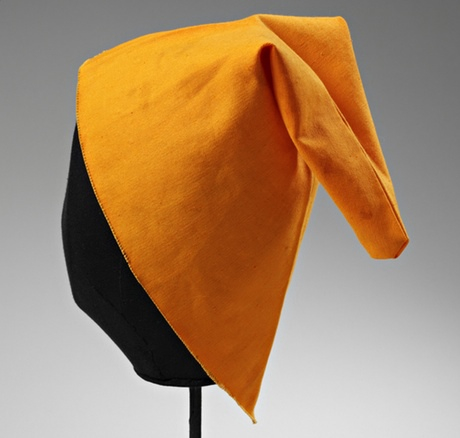
A dwarf’s hat, as worn by 10,000 protesters at a 1988 march against communism in Poland
It is understandable that, in current circumstances, major arts institutions should try to ally themselves with the more anarchic, contrarian elements in contemporary culture. Perhaps this is especially true of those dealing with the contemporary visual arts, committed as these still are to the myth of ‘avant-gardism’. One problem that immediately presents itself, of course, is that this myth is not itself contemporary – it is rooted in the very earliest years of the century before ours, and first blossomed before the outbreak of World War I. The myth has become so diversified in the course of more than a century of growth that what is indisputably avant garde today has become very difficult to define. One man’s ‘avant garde’ can easily be his neighbour’s idea of ho-hum, follow-my-leader conservatism.
Disobedient Objects at the V&A (until February 1st) shows that this uneasiness has not gone away. Housed in one of London’s most important museums, its organisers have gone to some lengths to emphasise its democratic status. It is free entry, like the rest of the permanent collection (but unlike the other special exhibitions the museum offers as part of its regular programme), and it has been given an unusually long run – six months in all.
What it offers is an anthology of objects connected will all sorts of anarchic projects, from the anti-nuclear protests at Greenham Common in England, to the Mothers of the Disappeared in Buenos Aires – all challenges to some kind of existing status quo, made in many different contemporary societies and national entities, democratic and non-democratic. Most of the objects concerned would not normally be classified as art, or even as craft or design. In fact, what one has here is a kind of religious treasury – the holy relics of a number of recent episodes of social agitation, some of which succeeded in their aims and some of which failed. If Christ had lived in our own times, it wouldn’t be surprising to find a relic of the True Cross as part of the display – always remembering that this now sacred item wasn’t, and was never intended to be, a work of art, despite the numberless times it has since been depicted in art. I say this in the full consciousness that, to anyone who reads the Gospels carefully, the texts do in fact seem to advocate a radical egalitarian revolution in society. This despite the famous verse that tells the convert to: “Render unto Cesar the things that are Cesar’s, and unto God the things that are God’s.â€Â [Matthew 22:21].
The introduction to the catalogue, by the two curators, Catherine Flood and Gavin Grindon, shows a queasy consciousness of this situation. On the one hand they say:
“The position of this project, both ‘within and against’ an institution, emerges principally from careful attention to these objects [included] and their own and their own instituent power.â€
On the other they declare:
“Exhibitions are moments of collective meaning-making. Bringing these objects and histories together, and presenting them to an audience that never encounters them outside the mass media, makes the museum a site for difficult questions and tests it claim to be a public space.â€
The phrase that betrays something here is “never encounters them outside the mass mediaâ€. The assumption seems to be that what is experienced within the sanctified space of the museum must necessarily be superior to the same thing experienced outside it. In other words, the official framework, just because it is official, offers a validation unobtainable in the non-official circumstances in which these ‘disobedient objects’ were first made. This paradox is a step too far. The objects concerned have, on the whole, no aesthetic value. They may have had force within the very specific contexts that provoked their production. But not here. They are dead fish on a slab. In an interview given in conjunction with the show, Catherine Flood claimed that the items displayed had not been ‘museumified’ – her word, not mine. I beg to differ. That is exactly what has happened.
One reason for this is the kind of public that great museums attract. They like to pretend that they are for ‘everyone’, and this is indeed why, in democratic Western European societies, they are given large sums of taxpayers’ money. Any observant person knows, however, that this ‘everyone’ is not completely universal. Museums attract the kind of citizens every democracy would like to have, perhaps to the exclusion of other, more difficult cases. They pull in the bien pensants – people who get a nice glow from the idea of going there. Certainly not the bulk of the truly disadvantaged, the real outsiders. They get a much higher proportion of middle-class visitors than working-class ones, though this distinction is slowly breaking down.
Where immediate, visceral access to the ideas being put forward in the show is concerned, the mass media win the contest, hands down. They know how to hit the public in the gut, and they operate in a fully public arena. You run up against them in your daily life, whether you want to or not.
What the museum does here is to try to organise the ‘disobedient’ material to make it palatable to the kind of visitors museums already get. Having heard about the show, you have to make the decision to go, even though you don’t have to pay a fee for the experience. Which means, in turn, that your mind is probably made up about the ideas it puts forward, long before you arrive.
As it happens, London has already seen a rather similar exhibition – Mark Wallinger’s Turner Prize-winning exhibit at Tate Britain in 2007. This, entitled State Britain, was a meticulous reconstruction of the ‘Peace Camp’ set up by the late activist Brian Haw in front of the Houses of Parliament, in protest against the Iraq War, and subsequently dismantled by the police because it contravened a hastily passed law against “unauthorised demonstrations within a one kilometre radius of Parliament Squareâ€. Much play was made with the fact that the site of the installation within the museum building also seemed to fall within the forbidden zone. However, as the critic Tim Teeman, writing in The Times, remarked, “moving Haw’s protest from the street to the hallowed hush of the Tate denudes it of rawness and energy. The riot of colour, the anarchy of words and images, are dimmed; the weatherbeaten plastic coverings aren’t flapping in the wind anymore, but listlessly reflecting gallery spotlights.†He concluded by asking: “Does it ask new questions or challenge our preconceptions?†And answered his own query: “No, it merely confirms the liberal consensus.†This is exactly what has happened at the V & A, the second time round.
In fact Disobedient Objects is a very good example of that hallowed middle-class liberal pastime – preaching to the converted. It claims to be radical and is in fact deeply conventional and self-congratulatory. It won’t change anyone’s mind.
Eric Coombes responds to an editorial about the art cash cow
Is a celebrity a person ‘famous for being famous’, or merely ‘someone in the media that one had never heard of’. Despite being obscure – in this paradoxical and mysterious mode of obscurity – celebrities, however ill-informed and stupid they might be, are entitled to have their ‘opinions’ widely disseminated, and heard, at least with respect, and quite possibly with hysterical enthusiasm – especially if they are ‘comedians’. This entitlement is now regularly exercised, on an almost weekly basis, in supposedly serious discussion programmes such as Question Time.
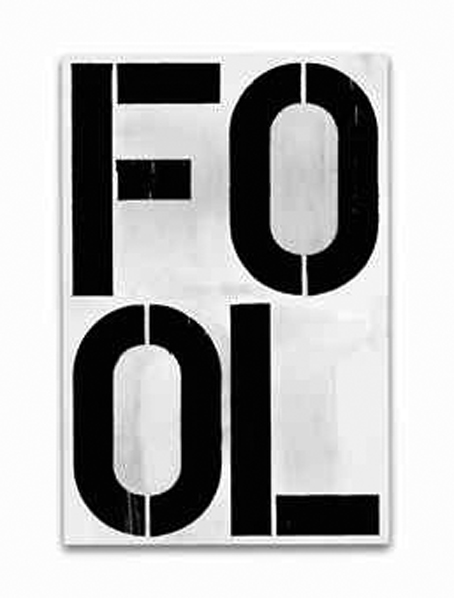
If we regard his ‘work’ as the equivalent of the celebrity’s ‘opinions’, then the status of Christopher Wool, who appears to have ‘risen without trace’, as described in the Nov/Dec editorial, is strikingly analogous to that of a celebrity with opinions as fatuous and ungrounded as Wool’s ‘art’. As our editor observes, the ‘value’ of a Wool ‘resides purely in its perceived status as a tradeable luxury’. There is nothing new in the craving for social status, and its pursuit through ostentatious display or ‘conspicuous consumption’, to use Thorstein Veblen’s term. But in the past, the ‘work of art’ – as tradeable luxury and vehicle of social display – however vulgar or spurious, at least had observable features that a rich undiscriminating fool could be duped into mistaking for the marks of aesthetic merit. What is new is the sublimation of social display to the point where the vehicle of display is purged of such features, and reduced to its essence as a counter in the game of social display itself.
The situation is cleverly described by the editor as one where a ‘work of art’ (improperly so-called, to adapt an expression of Collingwood’s) has value in the same sense in which a share certificate has value, and, moreover, appears to function in much the same way. But a share certificate does not pretend to have value merely in itself: it is evidence of a property right, namely part ownership of a company, and in certain circumstances the right of ownership might be upheld by the production of alternative evidence – if, for example, the certificate had been destroyed in a fire.
We might, therefore, want to take this analogy even further, to the interesting case of money itself. The real value of a banknote consists in nothing but the shared agreement to treat it as having value, by people who know perfectly well that this is the case, if they trouble to think about it at all. It appears that the monetary ‘value’ of some ‘works of art’, now consists in nothing but their ownership being evidence of the owner’s having the money to buy the ownership of the evidence of the ability to buy the ownership of the evidence … . Clearly, this sequence moves endlessly in a circle of self-sufficiency, which has no contact with any reality beyond itself.
The analogy with money need not be laboured. Here too we clearly have circularity – circularity of a kind which characterizes the logical structure of all human institutions. (See John Searle: The Construction of Social Reality. I am using the term ‘institution’ in the widest sense to include not just formal institutions, but all domains of human possibility established by agreements and understandings, very largely tacit.) Is this a vicious circle? Well, despite recent events, presumably not, since the institution of money has not yet collapsed. Vicious circles are small circles, engaging with nothing but the contents of the circle itself. But the institution of money involves a huge circle, and one which is not self-contained, but part of a wider system of mutually supporting institutions which constitute society itself. The entire edifice of culture is constructed out of this unimaginably complex system of interlocking institutions, all depending on agreements, ultimately tacit, of which we may not even be conscious.
The arts are no exception to this; and, in this respect like money, are connected with the institutions of the wider culture – in and through which people find meaning and satisfaction – by chains of tacit agreement. These chains can form virtuous circles because they are neither small nor self-contained. But traders in Wool and cognate commodities are confined to a small coterie of art-market plutocrats and their jackals, which excludes the wider culture. Tiny and self-contained, this coterie assembles itself into a vicious circle, which sustains a pretence destined eventually to collapse – not before doing much harm. It is parasitic on established institutions, which support it as the body supports lice. It is, however, no more harmful than the vicious circle of state art, which has also detached itself from the institutions of art (properly so-called), and usurped their authority. This true authority – when it exists at all – emerges tacitly in traditions of practice and criticism that are integrated into the wider culture, and belongs to institutions that are quite distinct from such officially constituted entities as the Tate Galleries, or the Arts Council.
Edward Lucie-Smith charts the decline of contemporary art from Modernism and the avant garde to being a mere epiphenomenon of the fashion industry
Ten days or so ago, before beginning to write this, I was idly browsing a slightly out-of-date copy of the Evening Standard Magazine. Anything to avoid the toil of having to write something myself. Faute de mieux, my eye fell on a piece that was ostensibly about the demise of the so-called ‘It-Bag’ – something about as far from my own usual range of interests as one can conveniently get.
This paragraph crystallized a thought that had been already hovering in my mind for some time. The fact is that there is no real visual arts avant-garde any more, despite all the strenuous efforts being made by those who see themselves as the guardians and prophets of contemporary culture to persuade us to the contrary.
Serendipity has it that The Museum of Modern Art in New York is currently celebrating the activity of a woman artist, previously unknown to me, who worked under the name of Sturtevant (American 1924-2014). The MOMA press release proclaims that this retrospective show “identifi[es] her as a pioneering and pivotal figure in the history of modern and post modern art.â€
What did Sturtevant do? Essentially she made versions of works by better-known artists who were her contemporaries – Johns, Warhol, Lichtenstein, Gonzalez-Torres, Keith Haring and Anselm Kiefer among others. MOMA celebrates this process as follows:
“Though her “repetitions†may appear to be simply mimetic exercises in proto-appropriation, Sturtevant is better understood as an artist who adopted style as her medium and took the art of her time as a loose score to be enacted and reinterpreted. Far more than mere copies, her versions of Johns’s flags, Warhol’s flowers, and Joseph Beuys’s fat chair are studies in the action of art that expose aspects of its making, reception, circulation, and canonization.â€
It would be hard to devise a more comprehensive and emphatic endorsement of today’s mandarin culture.
The fashonistas and the mandarins are allied. What they promote is a kind of art that assumes the trappings of ‘traditional avant-gardism’ (an oxymoron if ever there was one), but which in fact runs away from real innovation just as fast at its pattering little paws will carry it.
A process of this kind is not entirely new. If one looks at Chinese literati culture for example, one sees how Chinese ink painting ossified, after the fall of the Ming dynasty, into endless paraphrases of older masters. What counted was not the image actually created, but the nuances of style, the echoes of what had gone before.
What the MOMA statement quoted above assumes is that the ideal spectator will already be immersed in the previous history of ‘approved’ avant-garde art. He or she will be able to read, not only the actual text presented, but also the sub-text that lies beneath it. It is, for instance, noticeable that the numerous artists Sturtevant has chosen to paraphrase have no stylistic relationship. What they do have in common is, yes, their gender (Sturtevant is taking them on as the champion of her sex), but also, and perhaps more importantly, their celebrity – the fact that they are all famous and, what is more, famous in a characteristically contemporary way, certified by mechanisms of publicity that came into existence only recently.
The challenge offered to the lay person is not the one originally offered by the Modern Movement, as it existed during the first seven decades or so of the last century. That challenge was: “Allow your mind and your sensibility to be opened to something entirely new, unthought of in all the previous centuries of culture.†Now the lay person is asked a different question: “Are you one of us or one of them? Chav or non-chav? Elite or hoi-polloi? If you want to be on-message, you’d better step up quick and join us.â€
Responses to this challenge are further complicated by the degree to which what is supposedly avant-garde has become embedded in the mechanisms of today’s official culture.
This culture, in the western European democracies at least, and also (with certain nuances) in the United States, is determined to be popular. It is supported with large sums of public money, and must therefore reach out as directly as possible to as many people as possible. Hence much of the recent emphasis on what is both immediate and ephemeral, qualities encapsulated in performance art. The alliance between supposedly traditional forms of expression, such as painting and sculpture, and performance is in fact much older than enthusiasts for the radically contemporary are prepared to admit. One thinks of the Dance of Death performances held in churchyards during the Middle Ages, which only somewhat later found a more permanent form, as sequences of prints – a form which, of course, had to wait for the invention of the printing press.
Throughout the Middle Ages the more ambitious expressions of the visual arts were more usually than not addressed to a mass public, not simply to an elite, though they relied on elite patronage. The reason for this was their link to a universal faith. The bedrock was a common system of beliefs.
To a limited extent, one must admit, things have now come full circle. The supposedly avant-garde visual arts are placed before an audience of every taxpayer, just as the sacred art of the Middle Ages was made accessible to every worshipper. This offers a telling contrast to the private, conspiratorial rituals of the early years of the Modern Movement, when experimental art was in retreat, both voluntarily and involuntarily, from the glare of publicity offered by the official Salons of the same epoch. In fact, it was the brutally hostile Entartete Kunst exhibition organized by the Nazi regime in Munich in 1937 that finally brought Modernism in art to a wider public. One million people attended the show in the course of its first six weeks. It is safe to guess that the attendees represented a much wider social spread, in terms of both class and education, than any audience Modernist work had attracted previously.
What is different now, from the situation in the Christian Middle Ages, is the lack of a secure, firmly held belief system about what art is, and what it is supposed to do within the social context. We still, however, retain a curious, atavistic attachment to the idea that art is a charismatic product, with a mysterious impact on our psyches. Very often, we now transfer this belief from the object to the personality responsible for producing the object. This has been developed to the point where celebrated artists are regarded as the equivalents of primitive shamans – Joseph Beuys and, more recently, Marina Abramovic are cases in point.
It is notable, in this connection, that the one public image, here in Britain, that did quite recently move and energize a mass audience was the huge display of ceramic poppies, temporarily planted in the moat of the venerable Tower of London to commemorate the dead of World War I. The project was created by two relative unknowns – a ceramic artist working with a theatrical set designer. Part of its point was that it was intentionally ephemeral.
Now that Modernism has apparently run its course, and when the sequence of identifiable Modernist art movements has reached a full stop, we are confronted with a situation in which the art of our own times seems directionless. Attempts to define its salient qualities rely very largely on negative formulations. It is Post Modern. Or Post Post Modern. Or even (in desperation) Post Pop. It often relies heavily on Appropriation – self-consciously copying pre-existing art, stressing its own lack of original invention – in order to make its points.
The characteristic art of our time also tends to rely very heavily on context. If we encounter a particular object, group of objects or event in a place where we expect to see art, such as in a museum, a contemporary gallery, or at an art fair, then – sure enough, art it is: the context guarantees it. If the place where we encounter it isn’t defined as a space for art, our reactions are not triggered in the same fashion.
There is also the fact that the knee-jerk reactions that the pioneer Modernists relied on to make their points for them are harder and harder to evoke. The same buttons have been pushed too often.
Basically once art loosened its age-old ties with religion, and at the same time increasingly ceased to be credibly involved in the celebration of wealth and power, it relied increasingly on being contrarian – on telling its audience things it didn’t necessarily want to hear. Uproar, and frantic opposition to the message, were the first steps towards eventual acceptance and celebrity. If one looks at the development of the 20th century avant gardes (in the plural), one sees that this was largely cyclic. A tendency or style or set of aesthetic ideas established itself after a period of struggle. As soon as the sandcastle was fully built, however, a wave came racing up the beach to overthrow it. It is amusing in retrospect to note how furiously the reigning critics and theoreticians who established the dominance of Abstract Impressionism opposed the rise of Pop Art.
In crude terms, controversies about art, since the birth of the Modern Movement, have relied on four things. The two most fundamental were, first, the insistence that the world could be seen in new ways – that the established processes whereby what the artist saw could be translated to make an art work that other people were going to see could be radically re-jigged. Secondly, linked to this, but not entirely identified with it, there was the idea that art could be its own subject, entirely self-reflexive. Neither of those impulses seems to be in any way dominant in the art world we now have, though the fashion for Appropriation shows maybe some last, distorted traces of the doctrine of art for art’s sake.
The third and fourth impulses were cruder. Art threw itself into politics, and it became increasingly candid about sex.
Much the same things can be said about aggressive eroticism. The erotic impulse has been present in art ever since men began to make art. In the 20th century, erotic representations and brutally obvious erotic allusions became one of the ways through which artists tried to trademark their work as being ‘radical’ – something opposed to the social conventions of their time. This endured till comparatively recently. Remember those Chapman Brothers figures in the R.A.’s Sensation! show of 1997, with penises for noses? Remember – also from the 1990s – Jeff Koons’ sculptures of himself screwing his then-wife, the Italian porn-star La Cicciolina? You can still find one or two of them on the Web, if you care to look.
Edward Lucie-Smith considers the phenomenon of ‘The Late Style’ in relation to Rembrandt and Turner
The new Rembrandt show at the National Gallery in London (until January 18th) is clearly meant to challenge the enormous success the same institution enjoyed with its recent exhibition devoted to Leonardo da Vinci. It is a populist homage to one of the undoubted giants of Western European visual culture.
Instead of trying to embrace the whole man, or at any rate the whole artist, as the Leonardo exhibition did, it focuses on a very specific period of the artist’s life – his last decade and a half, roughly speaking from the time he went bankrupt in 1656 to his death in October 1669, aged 63 (his self-portrait at that age is illustrated here).
The show has a very particular context, perhaps the result of happenstance. London is currently playing host to another major exhibition devoted to a great master from the past – a painter as well known, and as much of a universal culture hero, as Rembrandt himself.
This, at Tate Britain, is devoted to the British landscape painter, J.M.W. Turner. Entitled ‘Late Turner – Painting Set Free’ (until January 25th) it focuses on the productions of Turner’s final years, from 1835, when the artist was 40, to his death in 1851, aged 76. Turner began his final phase at an earlier age than Rembrandt, and lasted somewhat longer.
The idea of the ‘late style’, as a very special, magical phase in the evolution of the work of a great artist, is a comparatively modern invention. To the credit of the organizers, the catalogue of the Rembrandt exhibition is careful to spell this out. As Jonathan Bikker and Gregor J.M. Weber write in an essay entitled ‘Explaining Late Rembrandt’: “At the beginning of the twentieth century the search for specific rules governing the evolution of styles gave rise to a mythology of the aged artistic genius, driven to produce outstanding works in the face of his approaching death.†They add to this: “The concept of ‘Alterstil’ (old age style) emerged to account for late-life creativity…According to the authors who coined the term, the characteristics that defined Alterstil… were a tendency towards abstraction and formal simplicity, combined with greater depth in the subjective and intellectual content. The assumption was that these characteristics can be identified in all art forms and eras.â€
With these two exhibitions, as also with the release in Britain of Mike Leigh’s much lauded new film Mr. Turner, one is therefore dealing with a new phase in the evolution of a myth not as yet formulated in either of the two artists’ own lifetimes. The myth, endorsed by the two museums concerned as instruments of official culture, inevitably affects our own reactions to what is shown.
One of its effects is to bring the works we are looking at closer to our own contemporary sensibilities. We are certainly not seeing them in the same way as that of the audiences to which they were originally addressed. We are, instead, being presented within a framework where that can confidently be regarded as the productions of genius. It must be immediately noted that the idea of the ‘genius’ – artistic, musical or literary – was itself not fully evolved until, at its earliest, the later years of the 18th century, the period of the Sturm und Drang. There is considerable evidence that Rembrandt’s contemporaries, were often puzzled, or made to feel uneasy, by the stylistic evolution that both artists underwent in the concluding phases of their respective careers.
The Rembrandt show, held in the cramped basement spaces of the National Gallery’s modern extension, suffers from curatorial overkill. A good selection of paintings from Rembrandt’s last fifteen years is on view, among them a number of acknowledged masterpieces, such as the Jewish Bride from the Rijksmuseum in Amsterdam, which may also be a marital double portrait, and the huge (though still cut down) Conspiracy of the Batavians under Claudius Civilis borrowed from Stockholm.
There is also an array of self-portraits, which do much to explain why Rembrandt is today regarded as an ‘honorary contemporary’, in a fashion denied to other major painters of the same epoch, such as Rubens. We seem to be offered direct access to the artist’s innermost thoughts and feelings.
The impact of the show is nevertheless diminished by the fact that the general effect is so cluttered. The paintings are accompanied by a mass of late period drawings and prints, impossible to examine in any detail in the thronging crowd of spectators. One longs to be able to stand back and take an unobstructed look at the major items.
The Late Turner show at Tate Britain occupies more spacious quarters and is much more logically hung. The artist’s magically vaporous late landscape paintings have long been revered as the very pinnacle of British achievement in the visual arts, and it is an enormous pleasure to see them so generously presented. The catalogue leaves one no doubt, however, about the negative reactions of many of the artist’s contemporaries. His two Venetian scenes dated 1846, Going to the Ball and Returning from the Ball, were exhibited more or less pre-sold at the Royal Academy – Turner was of course a member, an Academician in the strict sense of that term. Yet the buyers pulled out, after unfavourable reactions in the press. The paintings remained unsold, and formed part of the artist’s estate when he died.
Turner emerges not merely as a visionary, but as someone who had a sophisticated awareness of the processes of change in the Britain of the first half of the 19th century. The celebrated Rain, Steam and Speed – The Great Western Railway (1844) is a good example. The catalogue note on the painting appositely remarks that: “Nature’s sublimity is controlled and condensed by the new industrial paradigm, when water is transformed by heat to produce motive power.â€
Nevertheless, as the exhibition is at some pains to establish, Turner’s art also had deep roots in the classic landscape painting of the past, in particular in the work of Claude and Poussin. There are frequent references to mythological themes, and to be fully understood what he did often needs to be seen within the intellectual framework of an old-fashioned classical education. To force Turner into a totally different mould, as the forerunner of Abstract Expressionism – the prophet of splish, splosh and splash – doesn’t really make sense.
The fact is that both shows need to be examined with a degree of caution. They propagate an idea, that of the predestined superiority of the Alterstil, as this has been elaborated during the past hundred years or so, which would have been entirely unfamiliar to the two great artists concerned, and also to their contemporaries. The curators concerned offer warnings and qualifications, but the actual titles given to both exhibitions make it plain that the concept lives on. The invitation is to make Rembrandt and Turner over in our own present-day image. For me, that doesn’t work. We need to look at them on their own terms.
Patrick Cullen explains the enduring appeal of paintings requiring only to be looked at
I showed some paintings of flowers I had done recently to a friend. He said he quite liked them but they appeared to create a problem for him. He seemed to feel that flowers were no longer a subject for serious artists, more one for Sunday painters. Yes, he agreed, there had been wonderful art in this genre in the past, but surely art progresses, certain things cease to be part of the zeitgeist. Shouldn’t a contemporary artist address subjects relevant to the times we now live in?
This set me thinking. Two things: when and in what sense were flowers ever relevant? And what kind of pressure do we artists put on ourselves in order to live up to that title: a serious artist? What if I’d been a song writer or a poet and had shared something new I’d written, would the question of whether it was art or not have even crossed my friend’s mind?
There is a problem with the English use of the words “art†and “artist†which has different consequences for those working in the visual arts than for those artists who don’t, e.g. writers, musicians etc. A writer, novelist, playwright, poet etc., would usually define what they did by one of these terms. Musicians, composers, singers, instrumentalists (pianist, etc) similarly. Unless they have the massive ego of The Artist Formerly Known As Prince, they would probably not chose to call themselves an artist (or Prince for that matter). This leaves the judgement as to whether what they produce is art to others, and frees them of any responsibility to always aim that high. But painters, sculptors etc. are automatically enlisted as artists and what they do art, because of the two distinct uses of these terms in our language. Art is both a highly qualified description of work in any creative medium implying a level of importance or seriousness and possibly aesthetic beauty. It is also used as a value free description of everything painters and sculptors etc. make. The same anomaly applies to the word “artistâ€.
This linguistic quirk puts painters and the rest in a subtly different relationship to “Art with a capital A†than their writer or musician counterparts. This had something to do with how my friend related to my flower paintings. If, thereby, a bit more pressure is on painters to live up to the artist epithet at all times, another pressure must surely result if the way “serious art†is defined in our culture undergoes a shift as it has of late in the visual arts. If we judge what our society deems to be important art by the winners of our leading art prize, the Turner, then surely many painters, let alone a painter of flowers, must have wondered from time to time if what they do is still regarded as art at all. After all only two painters have won it in the last twenty seven years and only a handful have even made the short list, this for the prize named after Britain’s supreme painter.
Nobody was able to describe convincingly how these innocuous paintings achieved all this, but the message was clear: whatever Carnegie thought she was up to, her work was chosen because of all the challenging, conceptual talking, interrogating, investigating, unloading and reloading etc., it succeeded in doing. Putting aside the question of how much academic investigation a painting can really undertake on its own, there can be little doubt that without all that intellectual baggage, real or imagined, Carnegie would not have caught the judges’ eye. Implicitly, had she been reckoned to have painted flowers in a more straightforward way, celebrating their beauty and fragility in the manner of a Bonnard or a Manet, rather than at one and the same time challenging and subverting such notions, she wouldn’t have had a cat’s chance in hell of making that shortlist. Which should not really surprise us given the current dominance of all things conceptual; what is interesting is how much in the process is being dismissed as amateurish or as not serious art.
In the past many of the great painters turned at times to the subject of flowers. Each found their particular language but the spirit in which they did so was one of accepting the natural beauty of this subject and celebrating it in a way that brought pleasure. Great originality of approach marked out the best of these but the idea that they should interrogate why artists paint this subject in the first place would not have occurred to them. Van Gogh thought and wrote a lot about painting and waxed passionately about sunflowers, irises, almond blossom, indeed about most of his subjects, but the thought of him ruminating on the psycho-social constructs determining his aesthetic evaluation of flowers or their relevance to the socio-political matrix of his day is ludicrous. He was highly intelligent but not, fortunately for us, that sort of intellectual. He painted flowers because he loved them, intensely, with something approaching a religious fervor. He was so moved by their beauty that he felt compelled to try and distill something of his feelings in paintings. In the process he was doing something much more interesting than “following the conventions of representational paintingâ€. Nor did he confine himself to conventionally beautiful motifs. For clearly painting his feelings in relation to his subject he is sometimes called the first expressionist. Many artists and non artists still feel something like this, perhaps not as intensely as Van Gogh or possessing his genius, but they relate to his instinctive urge to paint in response to the things he saw around him. This is not sentimental twaddle but a profound human urge going back to the cave paintings. Even though expressionism as a term arrived late, all good painting includes a degree of expressionism, in the case of figurative art because it involves the expression of the artist’s response to a subject.
During the age of romanticism Keats feared that science’s explanation of the rainbow would rob it of its power to astonish us. Perhaps he was right and wrong; wrong because the beauty of the rainbow does not depend on our being ignorant of its causes. A child is amazed by the rainbow not because it hasn’t learnt the science behind it yet, but because it’s so stunning. But Keats was right in so far as a lot of knowledge and intellectual thought can come between us and the immediate sensation of seeing something freshly. Because we think we’ve understood it we forget that the miracle of the rainbow does not reside in an idea or a question (how did it get there?) but in its sheer visual impact. Our capacity to be moved by beauty is not really something science has a great deal to say about, yet for centuries it has been the mainstay of humanity’s interest in the visual arts. We tend to scoff at rainbows and flowers (along with sunsets), but these are just the most popular examples of a million natural phenomena, including the human face and figure, which can inspire wonder if our cynicism allows it, and provide subjects for artists. Nor, crucially, need they be beautiful. The best art achieves beauty where least expected. Like a poet an artist must fashion his raw material to create the visual equivalents of eloquence, rhythm and rhyme. Fortunately there’s also no shortage of desire for art that can revive jaded eyes with new ways of looking at the things we see but fail to notice all around us.
The problem with conceptual art is that although at its best it can make us question things by provoking thought in surprising ways, it also tends to divert us from this desire for a direct line to the way another person sees something, as opposed to an idea or concept they may have had. The latter is generally better served by the written word. At its worst conceptualism drags us into a whole lot of academic commentary about the philosophy and language of art. All the praise for Carnegie’s work cited above was invariably of this art about art persuasion. This is what academics do and it has its place, but when artists do it, it doesn’t make for good art. I hope Carnegie is much freer of all this theorizing when she paints than those judges and critics imagined. This is not a plea for art with no intellectual content, but a plea to redress the balance in favour of art that is primarily about looking. Looking intently without immediately interrogating is less easy than it sounds.
Turner himself was rather partial to sunsets. He must have painted hundreds if not thousands; not thank goodness because he wanted to conduct an academic enquiry into some artistic genre but because he wanted the world to see sunsets through his eyes, to see a greater drama, sunsets as heraldic conquerors, blooded tragedians, burning martyrs and pale ghosts. Like Van Gogh, but half a century earlier, he was also an expressionist. His sunsets though closely observed are never dry records of an actual event. His abiding popularity points to a continuing appetite for art that unashamedly celebrates the poetry in nature in a unique and original fashion. That this kind of painting should die is no more likely than the death of poetry itself.
If you paint and are capable on occasions of being amazed by flowers, I defy you not to paint them. They’re bloody hard. How to be original about something painted so often? Yet flowers offer a remarkably diverse motif offering every shape and colour and a whole world of flora “personalitiesâ€. They’ll certainly open up your palette. Of course they’re infuriatingly pretty, but if you can find a way through that they are and will always be a brilliant challenge for artists in any era. Let others decide if in doing so you’ve made art, you’re more likely to if you remember you’re first and foremost a painter.
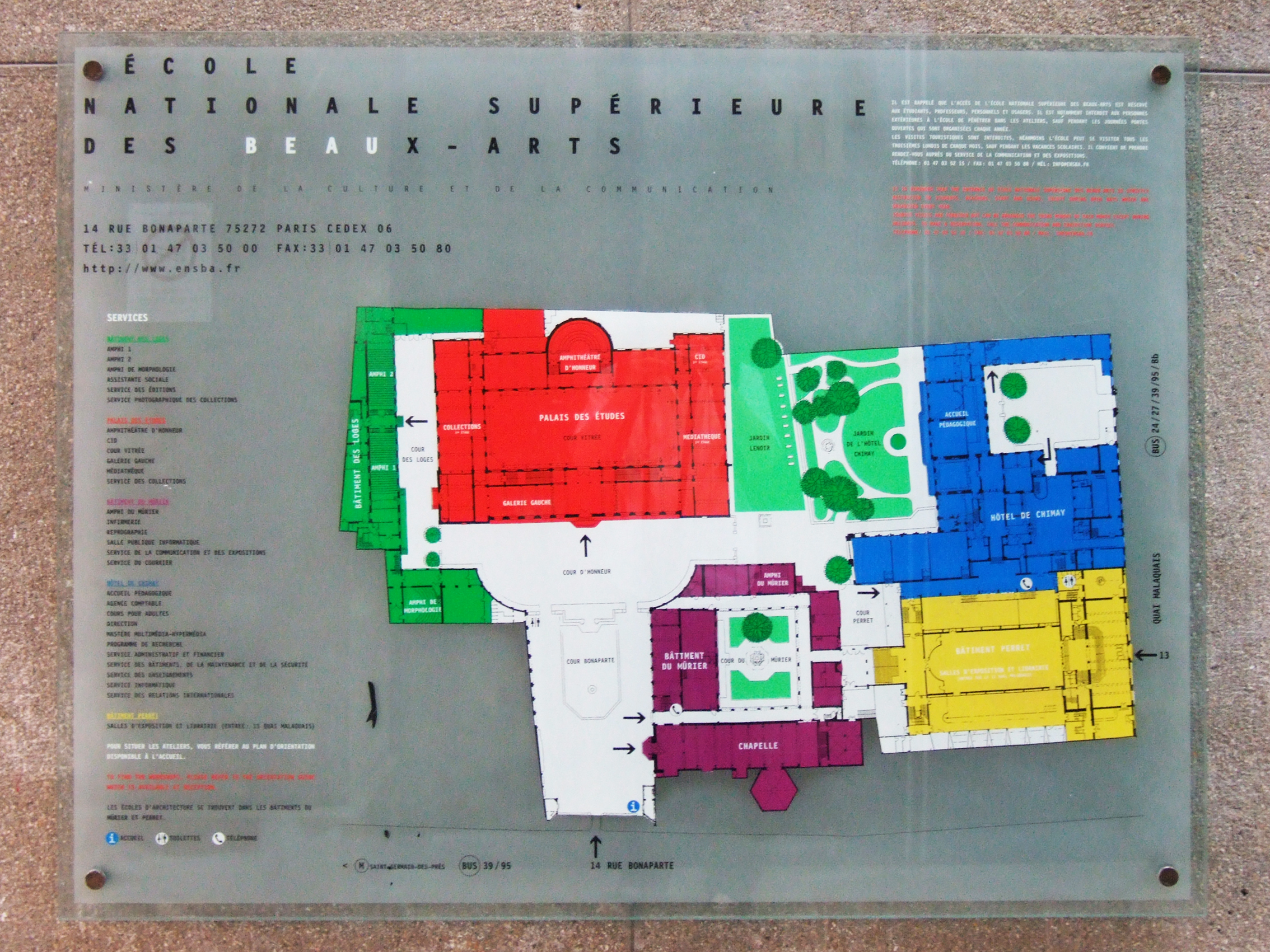
 Anthony Daniels visits a degree show at the École Nationale Supérieure des Beaux-Arts in Paris.