Recent Articles

  • Art under kleptocracy

    Art under kleptocracy

    Laura Gascoigne examines the paradox of why most artists’ earnings are below the poverty line while the art market is thriving as never before

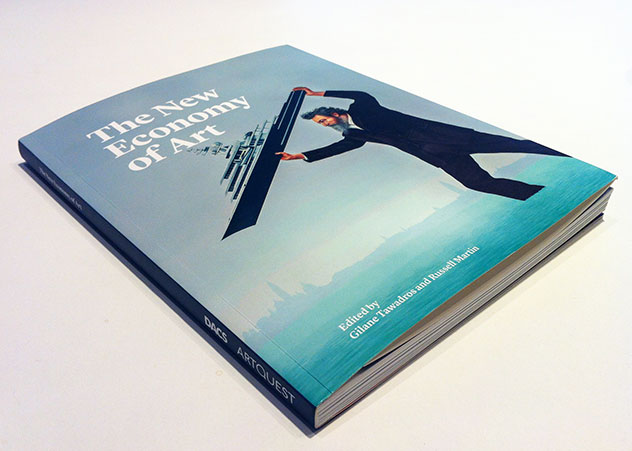
    Another month, another book on the contemporary art economy, this time from an overlooked perspective. The New Economy of Art, a joint publication by DACS and Artquest, looks at the art market from the POV of the average artist. Not surprisingly, it finds plenty to puzzle over.

    The conundrum it addresses is clearly set out in the preface by editors Gilane Tawadros and Russell Martin. “The art world is in crisis,” begins the first paragraph; “The art world is in the best shape it has ever been,” begins the second. The question of how these conflicting statements can both be true at the same time – “the disconnect between how artworks gain financial value even while their makers are poorly, or hardly, paid.” – is the mystery the authors of its six essays try to solve.

    Two weeks before the book came out, Christie’s New York achieved an all-time auction record for its November postwar and contemporary art sale, in which a Warhol Triple Elvis hit the jackpot – kerchung! – at £51.6m – and a row of Four Marlons paid out a further £43.9m. Both, appropriately, had previously hung in a casino in Aachen. The result was hailed by international head of post-war and contemporary art Brett Gorvy as confirmation of “a virtuous cycle of confidence in the art market”. Another season, another reason for making whoopee.

    On the other side of the art market, meanwhile, a more vicious cycle is in operation. The book’s authors quote the usual dismal statistics. It’s depressing enough to learn from the 2011 survey by the Centre for Intellectual Property, Policy and Management at Bournemouth University that UK artists earn a median wage of £10,000 – unchanged for 20 years – without discovering that the statistic includes designers, illustrators and photographers, and that the top 7% earn 40% of the total. Artists now officially rank as ‘marginalised makers’, a marginal constituency politicians aren’t fighting over. The economist Alan Freeman quotes figures showing our ‘creative economy’ growing faster than any other UK production industry, employing 2.5 million people and accounting for 5.2% of gross value added – but take out all the advertising, marketing, fashion, IT and other people he counts as ‘creative specialists’, and the fine artists are still scratching around on the margins.

    The book’s cover reminds us that there is nothing new in this. It reproduces Jeremy Deller’s mural from the 2013 Venice Biennale picturing William Morris as a Victorian Poseidon hurling Roman Abramovich’s superyacht into the Venetian Lagoon. The mural’s title ‘We sit starving amidst our gold’ encapsulates the argument at the heart of the book while reminding us that Morris said it all before, and better. Compare Freeman’s dewy vision of a creative utopia “in which shared values, achievements, hopes and aspirations replace brute greed to lay foundations on which the true individuals of the future can confidently build the new worlds of their choosing” with this trenchant passage from Morris’s lecture Art Under Plutocracy: “So long as the system of competition in the production and exchange of the means of life goes on, the degradation of the arts will go on; and if that system is to last for ever, then art is doomed, and will surely die”. Only the substitution of association for competition, believed Morris, could “give an opportunity for the new birth of art, which is now being crushed to death by the moneybags of competitive commerce.” In the war of words, Morris wins hands down.

    Still, the book contains material which, if not revolutionary, is astonishingly inflammatory for a publication part-funded by the Arts Council. Have they read it? It has a quiet way of dropping bombshells. One is the casual mention by management consultant Keir McGuinness of the apparently generally accepted practice whereby “the decision of whether a [public] gallery will take a show or not depends upon whether you [the artist’s dealer] will make a financial contribution and the person who makes the largest financial contribution gets the shows”. Another is a statistic cited from AN’s recent Paying Artists report that “71% of artists receive no fee for publicly funded exhibitions and nearly 60% do not even have their expenses covered”. This against the background of an international art industry which, arts consultant John Kieffer points out, has a turnover of just under £40bn, with the UK’s market share of 20% amounting to three times the combined budgets of the English, Welsh, Scottish and Northern Irish culture departments.

    But the real eye-opener is the essay by curator Lynda Morris. Born in 1947, Morris is old enough to remember the heady days of the 1960s when a newly international avant-garde was promoted by dealers who were themselves artists, lived like artists on air and were perceived as having ‘moral authority’. What an antiquated concept that now sounds. After reading Morris’s analysis of the process whereby the present nexus of curators, industrialists, bankers and property developers took control of the art world, it seems to belong to another era.

    Morris pinpoints Thatcher’s appointment of Richard Rogers as chair of Tate Trustees in the 1980s as the start of the cultural ascendancy of architecture over art. “It was the moment in late Thatcherism when the State no longer provided social housing and, instead, the national lottery, a new arm of the gambling industry, enabled museum directors and their trustees to start to plan Palaces of Culture.” A proposal to regenerate derelict buildings for low-cost studios, housing and artist-led galleries put forward by officers of the then Arts Council of Great Britain – in association with artists’ collectives ACME and SPACE – was kyboshed by property developer Peter Palumbo, who as chair of the ACGB from 1988-94 presided over the drafting of the rules for National Lottery funding, including the ‘subsidiarity’ clause ensuring that money is allocated only to new projects and thus funneled towards developers and architects rather than artists. Artists are wonderful at sprinkling the fairy dust that turns urban wastelands into developers’ goldmines, but once the gold has been extracted the fairies can piss off and take their dust elsewhere. Prices for a ‘premium apartment’ in Neo Bankside, the new residential development overlooking Tate Modern designed by Rogers Stirk Harbour – formerly Richard Rogers Partnership – start at £4.5m.

    “We seem to have drifted from a market economy to a market society,” comments John Kieffer. It’s a form of society Margaret Thatcher would have recognised, but not William Morris. “It is this superstition of commerce being an end in itself, of man made for commerce, not commerce for man, of which art has sickened,” he wrote in Art under Plutocracy. Art under kleptocracy has brought no improvement. It has been left to President Xi Jinping to uphold moral values, warning Chinese artists last October not to follow the “stench of money” or “lose themselves in the tide of market economy” which the rest of the People’s Republic is happily riding.

    Are artists and Gordon Brown now the only people on the planet still expected to possess a moral compass? That could explain the disconnect highlighted by this book. If our market society is wholly reliant on artists for moral orientation, it has good reason not to seduce them with the stench of money, ie pay them. You could almost call it a virtuous cycle.

    The New Economy of Art, edited by Gilane Tawadros and Russell Martin, published by DACS, £14.99

    http://www.dacs.org.uk/latest-news/order-your-copy-of-the-new-economy-of-art?category=For+Artists&title=N

  • Tottenham Caught Napping

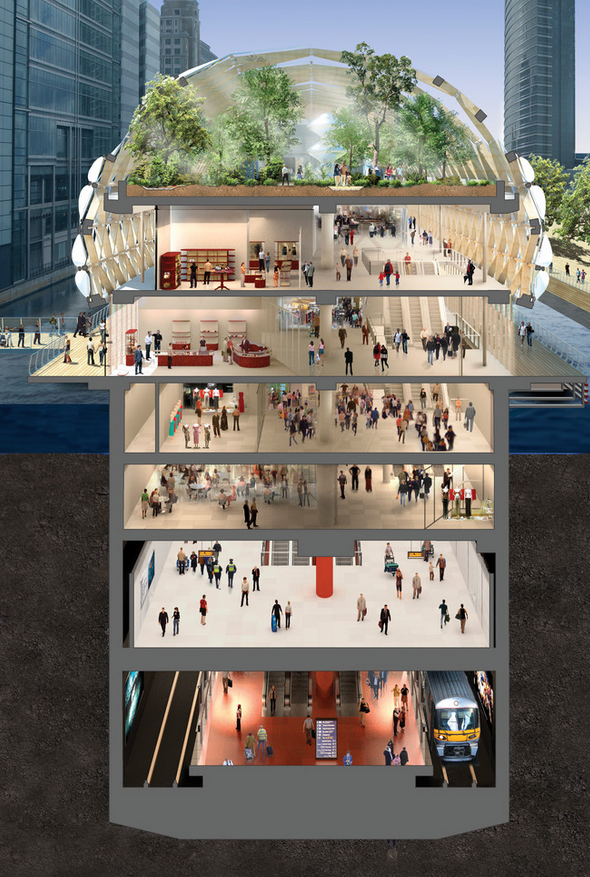
    Advised that as part of the Crossrail project (current budget £15 billion) each of five central London tube stations through which it passes had been allocated, for the purpose of decoration by their artists, to the five principal dealers associated with State Art, you might think a major public contract couldn’t possibly get away with such lazy commercial partiality. In fact, this is precisely what has happened. That such a deal could have been allowed to proceed without the merest peep of suspicion or opposition from any commentators indicates just how far it is now taken for granted that private, mercenary interests in art dovetail perfectly with those of supposedly ‘independent’ opinions and wider public policy. State Art has sold its soul. It has been bought.

    Each gallery will select its own artists for commissions worth up to a million quid apiece, which are then given the nod by a panel. This devolution of responsibility saves overseers the trouble of actually thinking about it for themselves.

    Recently trumpeted is the tarting up of Tottenham Court Road underground by two Turner Prize winners: Douglas Gordon, who makes tedious films of no recognisable artistic or cinematic merit; and Richard Wright, who does wall patterns of an appropriately ‘challenging’ persuasion. Needless to say, even before the artists have lifted a phone, their efforts have been declared ‘masterpieces’.

    The previous artist to ornament TCR tube was Eduardo Paolozzi in 1984. He covered tunnels with mosaics in that colourful wiring-diagram-cum-snakes-and-ladders idiom he was partial to for so long. According to The Twentieth Century Society, who are eager to preserve them, some of these are now under threat, although Transport for London has said “we’ll do our best to protect as much as we can” – which makes it sound as if the demolition ball is already swinging ominously nearby. Not that Paolozzi’s murals are that significant – let’s face it, they’re hardly the Stanza della Segnatura.

    The Crossrail art project, also now designated The Culture Line, describes its process as follows. “Artworks are being selected by an advisory Round Table of representatives from national and local arts organisations and commercial galleries. Among the galleries already identified to work in partnership with Crossrail are Lisson Gallery for Paddington station, Victoria Miro for Liverpool Street, Gagosian for Tottenham Court Road, White Cube for Bond Street station and Sadie Coles for Farringdon. Crossrail is in discussions with other renowned galleries for the remaining stations at Whitechapel and Canary Wharf.” Renowned, indeed… And thus it is that Gordon and Wright are represented by Gagosian, who looks after Christopher Wool (editorials passim) and eleven of the twenty bestselling artists at auction.

    When State Art is the very fabric of the establishment choosing committee candidates never results in a range of opinions. Thus, these “advisory round tables” are always euphemisms for the usual suspects. And here, as ever, the chosen few have not let us down, having dutifully selected as beneficiaries others from the top table of State Art. Some of these knights and damsels of the round table have been previously associated with high profile galleries and, who knows, might like to renew their trade connections in the future.

    Honestly though, how long must it take for a colloquium of State Art lickspittles to arrive at the names of the five most fashionable mongers in the West End? Three minutes? Two? A quick round of skinny lattes and jammy dodgers and Bob’s your uncle – then it’s off home for a well-earned tweet. Wouldn’t you just love to have eavesdropped ‘negotiations’ resulting in the richest galleries being allocated discreet chunks of Crossrail action? Without question the process will have been as pure and disinterested as the driven snow.

    It is further announced that at Paddington Lisson’s American conceptual artist, one Spencer Finch, is to adorn the glass canopy of the new station with a sort of taxonomy of skies. He said: “I am so excited to have this opportunity to get to know these English clouds and do something beautiful with them on a grand scale.” He should get Constable on fast dial.

    David Lee

    The Jackdaw March/April 2015

    http://www.crossrailart.co.uk/the-culture-line/


  • ‘Sculpture’ versus Sculpture

    ‘Sculpture’ versus Sculpture

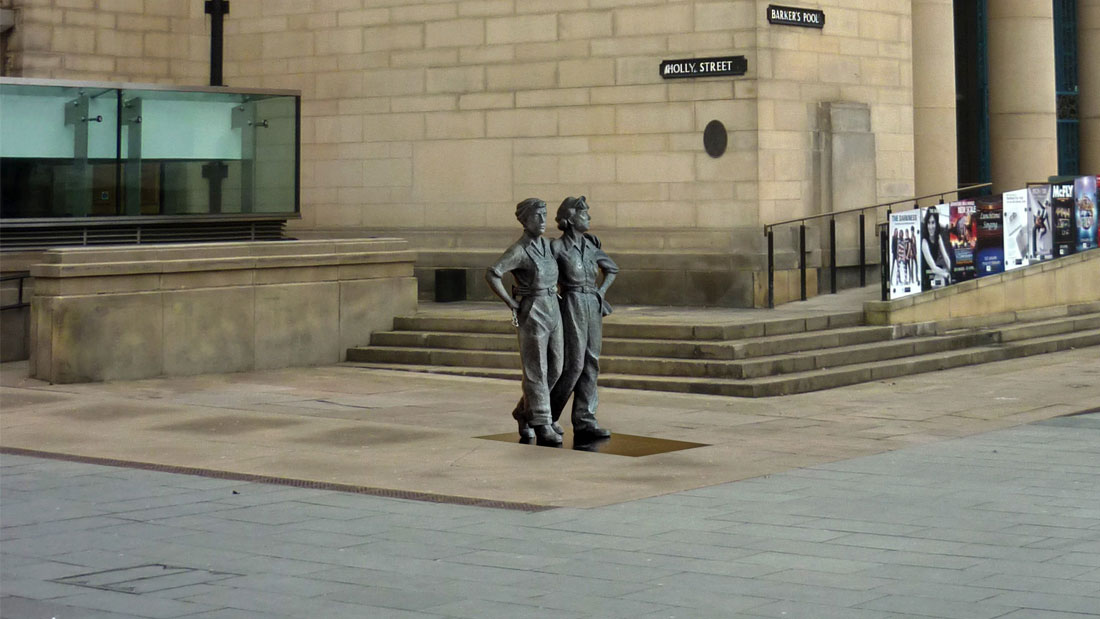
    Women of Steel by Martin Jennings

    Among the least impressive legacies of arts administrators’ obsession with Modernism and its aftermath is the impossibility of predicting a work’s status solely from its appearance. You might form your own view about it, but you can’t predict what State Art’s opinion will be because there are no published criteria or guidelines for making such a judgement. You can’t second guess a whim. The bottom line is that we have allowed a body of ‘experts’ to evolve who unashamedly make it up as they go along. This gullibility on our part for allowing it to happen, and the smug charlatanism of those in authority who are impervious to and ignoring of criticism, is the inevitable result of being for decades under the thumb of an establishment which – for all its daily protestations to the contrary – is not only awash with cash and therefore patronage, but has decided, god-like, that anything at all can be art if it says it is. In its way State Art’s is as extreme a form of capricious and intolerant dictatorship as any regime in North Korea.

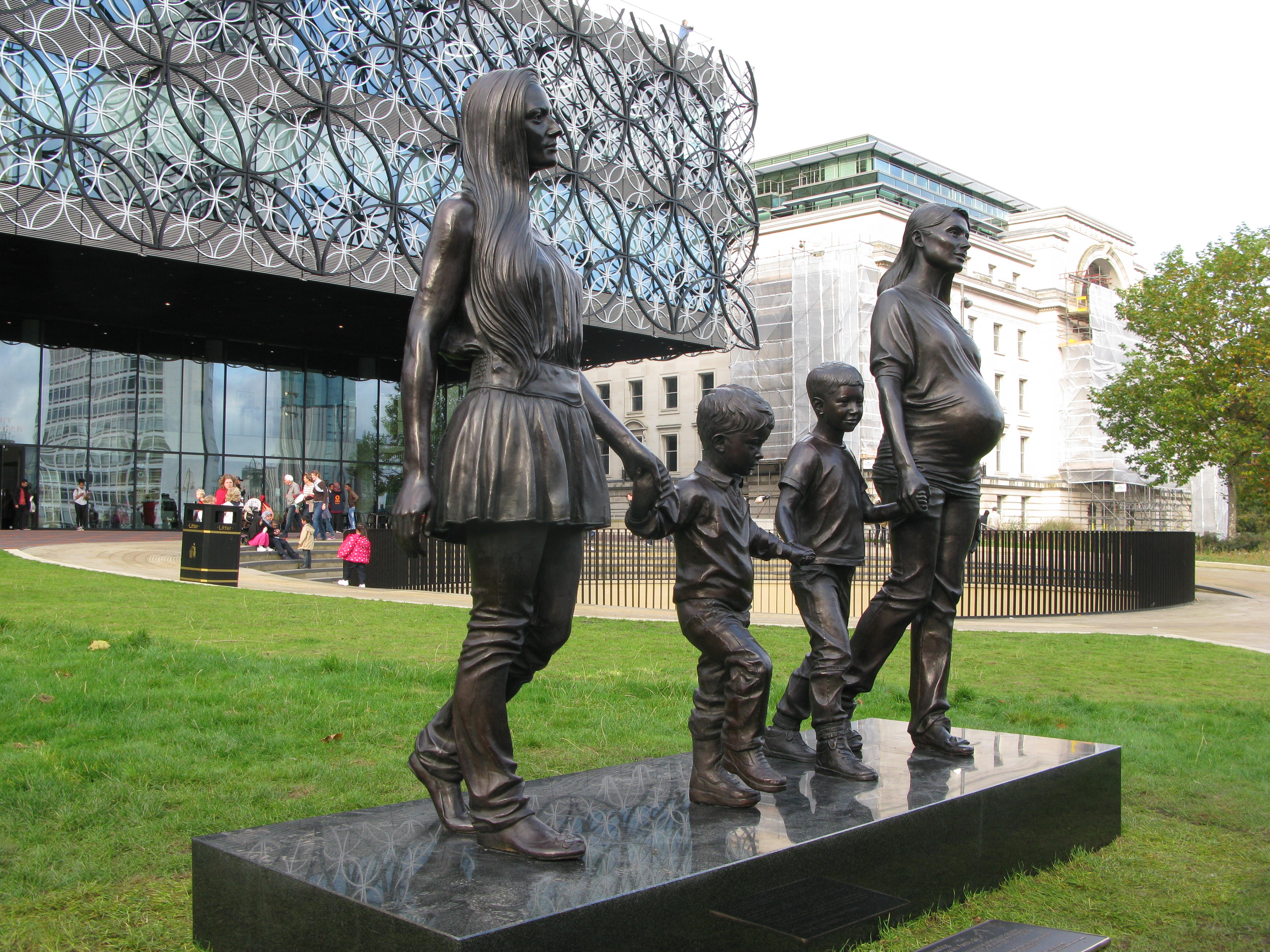
    There is a useful current example of how fossilised prejudice and arbitrariness inform establishment policy. It concerns two works of public art each designed for city locations. Both are, on the face of it, conventional figurative bronzes. Superficially similar though they may seem, to the Arts Council there is an enormous gulf in acceptability between the two, a difference invisible to you and I. One of these works, that recently unveiled outside the tacky new public library in Birmingham and called A Real Birmingham Family, is a ‘challenging’ piece presenting two local women and their children. The other, depicting women in overalls and commemorating the crucial contribution of female workers to the steel industry during the World Wars, will soon be unveiled in Sheffield.

    The Birmingham sculpture is by former Tate trustee Gillian Wearing. Obviously she didn’t make the sculpture herself, a skilful craftsman will have run it up from snaps. The result is a hideous, styleless simulacrum of real people, the point of it being to promote the view that nuclear families are not now the norm – how very trendy, how perfectly BBC. This sort of conceptual conceit must of necessity be a sculpture-free zone because the last thing Wearing wants is for the object to be gauged by its form rather than for its ‘idea’ – albeit one which, to the rest of us, would be so small as to be not worth the effort and expense of illustration. As sculpture it stinks, it’s stillborn.

    In contrast, the Sheffield piece is a work of imagination and looks like a sculpture because it was made, with his own hands, by Martin Jennings, a renowned specialist in this area of modelling and invention. To State Art this sort of traditional approach is vile anathema.

    But here’s the real rub. Conceptual art, even when it comes in the otherwise despised bronze figurative form, is funded by the Arts Council, to whom Wearing is well known. She has had two national touring shows and has exhibited in every ACE-funded gallery. ACE also bought in 1999, for £30,000, her Turner Prize winning film in which two dozen coppers stand silently still for an hour. Confirmation of her A-list status is supported by the fact that 31 of her works are in the Tate, Arts Council, British Council and Government collections: curiously, all four own an edition of the same print, unnecessary duplication of a kind that ought to have been outlawed years ago. Wearing’s family sculpture was administered by local Ikon Gallery, which itself receives over half a million a year from the public.

    In contrast, Sheffield had to find all the money through public donations because Martin Jennings is the wrong kind of artist.

    State Art always prefers ears to eyes and has never based funding decisions on the merit of what you actually see. Why artists nationwide are not campaigning about ACE’s continued unfair discrimination and casuistry is baffling.

    Here is yet another filthy, indefensible racket.

    David Lee

    The Jackdaw Jan/Feb 2015

    A Real Birmingham Family by Gillian Wearing


  • View from the summit

    Laura Gascoigne wades through managerial drivel to consider the plight of museums outside London.

    Searching for quirky museums for a series in The Oldie, I turned up the name of the Astley Cheetham Art Gallery in Stalybridge, Greater Manchester. A recce of the BBC Your Paintings website revealed that its Victorian collection, left to the town in 1932 by mill owner John Frederick Cheetham and his wife Beatrice Astley, contained – alongside later acquisitions of local scenes by the usual artists of the ‘Northern School’ – an astonishing cache of Italian devotional paintings by the likes, or circles, of Niccolò di Tommaso, Jacopo di Cione, Jacopo da Sellaio, Pier Francesco Fiorentino, Timoteo Viti, Bernardino Luini and Girolamo Siciolante da Sermoneta.

    Santa Madonna! I’d struck gold. In high excitement I called the local authority number, to be informed that due to funding cuts at Tameside Council the gallery on the first floor of Stalybridge Library was only open on Saturdays in August from 10am to 3pm, although it was hoped to extend opening times in the near future. But before that happened, the obliging young curator said I was welcome to visit and she’d show me round.

    I arrived to find a mixed hang of thirty works on the theme of Colour, ranging from a red Ship on Fire by James Francis Danby to a blue Heron by Cedric Morris (a gift of the Contemporary Art Society), but of the hoped-for hoard of Italian Renaissance paintings only a St Catherine of Alexander after Luini. When I expressed disappointment, the curator explained that displays had to be rotated and a previous hang on the theme of the collection’s history had included more of the early works I wanted to see. But if people were interested in particular paintings, personal viewings could be arranged. I ended my Oldie article with a warning to readers not to expect to find the Italian masters on view, and received a query from the magazine’s new editor, Alexander Chancellor, wanting “to know why this should be”.

    And very good question. How long had he got? The Museums Summit at the National Gallery organised by The Art Fund in July went on for three hours without getting round to answering it. There was gracious acknowledgement from Liz Forgan, former chair of ACE, that there are galleries outside London with collections of national standard – especially where “local authorities … take their responsibilities seriously like Aberdeen Art Gallery” (ie are lucky enough to be sloshing in oil) – and denial that a problem existed from John Kampfner, perma-tanned director of the newly formed Creative Industries Federation, or CIF (not a multi-purpose cream cleaning solution but a new independent voice for the cultural sector, apparently). “One word I dislike is ‘regional’,” he announced. “It’s not operational in the United States.” Well yes, but that is the United States. Kampfner is touchy on this subject, as he’s also Chair of Trustees of Turner Contemporary, Margate – or should that be Deckchair of Trustees? That would explain the perma-tan.

    I learned not to use the word ‘provincial’ years ago after narrowly avoiding a sock in the puss from the arts editor of the Birmingham Post, but I didn’t know ‘regional’ was now also off limits. What are Londoners to call museums out of London? Awayday museums? A visit takes the best part of a day plus the cost of the train fare, even if it’s free to get in. Which raises that other touchy subject, entry fees. On this point the Deck Chair collapsed into even more convoluted managerial jargon. Turner Contemporary, he admitted, had been under pressure to introduce charging but they’d done some ‘economic scoping’ and concluded that “the fall-off in footfall and civic financial engagement are more negative than the advantages we would get by charging.” In other words, they’re stuffed either way.

    The speaker best qualified to talk about civic financial engagement was Graham Beal, director of Detroit Institute of Arts, who explained in simple English how the DIA’s present problems originated in a civic-minded decision of 1919 to make the museum into a City Department. It was unfortunate that while he was speaking images of the masterpieces the museum is under pressure to sell were flashing up, auction-style, on a screen behind him. Detroit is a special case, but its situation isn’t radically different from that of local authority galleries in depressed areas of the UK. When Javier Pes of The Art Newspaper asked whether decisions by Southampton, Northampton or Croydon councils to sell works in their collections to fund cultural improvements might not be described as democracy in action, his question was passed over in embarrassed silence.

    Statistics were bandied about, though nobody mentioned data confirming that the overwhelming majority of British gallery-goers still belong to social classes A and B. When the DIA ran a poll asking the general population of Detroit what the museum meant to them, the answer came back that it was superfluous. In response, Beal “remade the museum” for the general public, beginning by burying the art history.

    Art history is almost always a casualty when museums are remade for the general public. It doesn’t seem to be high on the agenda of the remade Whitworth Gallery in Manchester which, director Maria Balshaw proudly informed us, will reopen in October with a neon sign by Nathan Coley over the entrance welcoming visitors to ‘A Gathering of Strangers’. Help! If electronic readouts in bus shelters reminded us we were gatherings of strangers, it would trigger murderous paranoia even in those of us not newly released from psychiatric care. But Balshaw believes that museums “should contribute to societal wellness as well as dealing with societal malaise” and that their “natural social work is to bring people together who wouldn’t otherwise meet”. At her use of the word ‘wellness’, I could feel Penelope Curtis in the seat next to me rolling her eyes. Since Curtis’s critically acclaimed historical rehang at Tate Britain visitor numbers have dropped by 10%, making the gallery less popular than Chester Zoo.

    “The intrinsic value and the instrumental value of the arts are not distinct,” Chris Smith insisted in his keynote speech, deputising for George Osborne who had better things to do. Osborne’s Treasury, meanwhile, is doing its best to drive a wedge between the two. The DCMS is currently engaged in trying to put a financial value on the benefit of an individual visiting museums, something both Smith and Munira Mirza, London’s deputy mayor for Education and Culture, agreed was unquantifiable. As Smith also pointed out, the instrumental value of ‘spend’ by cultural tourists only applies in the capital: “If you adopt it as a criterion it becomes a negative argument in the regions.” (He used the R-word.)

    It’s a negative argument regional galleries don’t need. What they need are flourishing economies that produce real revenue – not Creative Industry Federation fluff – so that local authorities can afford to keep them open without flogging off their treasures or turning them into societal wellness clinics. The BBC’s Will Gompertz wound up the summit with the question: “Is the National Gallery only successful when there are 10 million people in there and we can’t see a picture any more?” It’s not a problem for the Astley Cheetham Art Gallery, where people can’t see the pictures because it’s shut.

    Astley Cheetham Art Gallery is now open from 10am-3pm on the first and last Saturdays of every month.

    Laura Gascoigne

    The Jackdaw, 2014

  • Just think

    Laura Gascoigne wonders if the artists who purport to be thinkers are any good at thinking.

    “I think, therefore I am.”

    “I think differently, therefore I am an artist.”

    To traditionalists it may already seem that the entire art world has arrived at destination Hell in a handcart and there is nowhere further to go, but actually the journey isn’t over yet. While the general public remains unconvinced of Josef Beuys’s final solution that everyone is an artist, it still expects a reply to the following question: if it’s not the way artists draw, paint or sculpt that makes them artists, what qualifies them for the title? Here’s the latest answer: it’s the way they think.

    To qualify as a contemporary artist you have to walk the walk, talk the talk and think the thought, all at the same time. (Gum-chewing is an optional extra.) The theory goes, apparently, that by some creative providence artists’ brains are wired differently to everyone else’s, an accident of evolution that lends their thoughts aesthetic value in themselves. Any works that might result, if any do, are only of value as physical manifestations of this mental difference, byproducts of thought processes that may be exchanged as commodities for financial profit but could just as easily be dumped without detriment to the maker’s status as an artist. The kernel, the essence, the nub of art is thought, and the purer its expression, in principle, the better – no gunk, no junk, just the juice of undiluted creative thinking. But in our messy world of gunky realities, this ideal is difficult to achieve. How does the differently thinking artist break the ties that bind him to the world of objects? It’s a problem the Café Gallery, Southwark Park – always at the cutting-edge of creative cerebration and municipal lawn-mowing – has been trying to address.

    Its summer exhibition, which if you hop straight on a number 188 bus you might just catch before it closes on June 29th, is called Thinking Things, and concerns itself with this very problem of “exploring thinking’s ambivalent entanglement with sculptural and visual forms”. It takes its name from an essay by the literary theorist Steven Connor which, if you’ve missed the bus, you can read online. Connor’s thinking on thinking starts from this premise: “Thinking, which is properly nothing and nowhere, can only lay hold of itself in the form of a thing. But not just any thing will do, for it seems that it needs to be a special sort of thing, a thing apt to embody thought – a thinking thing.” That is, as I understand it, a thing with a thought bubble, but not just any old thing with a bubble – not a bar of soap.

    The exhibition, supported by something called Pro Helvetia – not a brand of probiotic yogurt but the Swiss Arts Council – considers the thinking problem in relation to the practices of a number of contemporary artists including Richard Serra (the only one I’d heard of) and to the work of the late French writer, filmmaker and educator Fernand Deligny. (There had to be a Frenchman in there somewhere. When Brits start spouting thought-bollocks, cherchez la grenouille.) And there’s more. “Complicating the dichotomy between ‘things’ (materials, objects) and ‘thoughts’ (ideas, concepts), the exhibition focuses on the contradictory alliances and uneasy codependencies of mind and matter, object and idea. It looks at how thinking often depends on material forms and becomes thing-like, and how objects can become abstract like thoughts.”

    I can’t see quite how you complicate a dichotomy, though I expect you get points in French philosophy class for trying. But concentrate now, because we’re going to another level: “A ‘thinking thing’ has all the qualities of thought, while no longer being a thought. It is an atmosphere, cloud, storm, gas, air, secretion, ooze, balloon and bubble [you see, I knew there’d be bubbles]: all things that in their puzzling incompleteness capture the drifts and vagaries of thought… At the heart of the exhibition is a concern with the fundamental processes of art’s conception: how thinking about form and forms of thinking in art come about.” In other words, it’s the thought that counts.

    Trend-spotters will have seen this idea coming as long ago as the 1998 Hayward touring exhibition Thinking Aloud curated by Richard Wentworth, the thinking man’s artist – or is that the arty man’s thinker? Whatever, let’s not complicate the dichotomy. Wentworth described his show as “an opportunity to see what happens when you fray the edges and actually provoke more open-ended ways of looking.” What happened was that Tate Britain took up the challenge and ushered in the Millennium with New British Art 2000: Intelligence, a show of 20 contemporary artists including Tacita Dean, Douglas Gordon, Bob and Roberta Smith and the crown prince of frayed-edge thinking, Martin Creed. The Tate gave the idea a more sinister spin by comparing contemporary artists to “intelligence agents at large in society, gathering, sifting and transforming the raw data of our life, critically examining our environment, the way we live and our relations with each other… They see art as a means for imagining the world differently, or ‘thinking otherwise’ as the French philosopher Foucault put it.”

    What did I just say about Frenchmen? It’s Foucault and his copains who are largely responsible for spawning a generation of British art school graduates who fondly imagine they have reinvented thinking. And the delusion is spreading. Last year Tate Modern teamed up with a German car manufacturer to launch a series of BMW Tate Live Thought Workshops (yes, really) to teach the general public to think like artists – rather than, presumably, Jeremy Clarkson.

    There’s nothing new about the idea of artistic intelligence. We’ve known all along that in art it’s the thought that counts, ever since Michelangelo explained that “an artist paints with his brain and not with his hands” – or his prick in the case of Renoir. But this obsession with the thought behind the art rather than the art itself is a phenomenon of the last 20 years. Every religion needs a creation myth, and I guess this is the creation myth of conceptual art. It allows conceptualism to be presented to the public as a cult of creativity vested in the artist rather than the work, compensating for the fact that the work leaves the public cold. Meanwhile it swells the heads of the not-so-bright who went into art because they fancied themselves as thinkers while lacking the intellectual cutting-edge to cut the mustard in the Mensa department.

    Artists aren’t stupid but neither, Leonardo excepted, are they intellectual giants. If they had the brainpower of philosophers they’d be philosophers, ditto mathematicians, microbiologists, astrophysicists and all the other professions their ‘thinking otherwise’ now licenses them to dabble in. But should they be wasting creative energy on thinking at all? Not according to Ensor. “Reason is the enemy of art,” said the Oracle of Ostend. “Artists dominated by reason lose all feeling, powerful instinct is enfeebled, inspiration becomes impoverished and the heart lacks its rapture.”

    Fortunately, help may be at hand. The first stirrings of a counterrevolutionary backlash were felt in February when the South London Gallery hosted an evening of talks and screenings titled Stupidious, which proposed “stupidity as both a subject and a strategy of artistic production.” Who would have thunk it? With a healthy injection of stupidiosity, the heart may yet recover its rapture.

    Laura Gascoigne

    The Jackdaw, 2014

  • Poor man’s guide to art investing – don’t

    Wisely, Laura Gascoigne is unconvinced by art as investment.

    Equestrian statues of one sort or another are becoming a regular fixture on the Fourth Plinth. In 2012 we had Elmgreen & Dragset’s paedophile’s delight of the boy on the gilded rocking horse; next up in 2015 will be Hans Haacke’s equine skeleton, inspired by Stubbs, with a live ticker of the London Stock Exchange clipped to its foreleg like a hospital bracelet. Too late for the horse hospital for this old nag, however, reduced to bones by the necrotising fasciitis of the financial market. Titled Gift Horse, Haacke’s monument seems surprisingly near the knuckle for a contemporary art world currently jockeying for position on the FTSE Alternative Investment Market index.

    On the same day in January, two invitations dropped into my mailbox. One invited me to spend $2,500 on a two-day Master Class in Art Finance run by TiasNimbas Business School at a château outside Maastricht, where I would “learn about the art market industry, gain knowledge on the history, development and ranges of alternative types of exotic and emotional assets” and acquire essential information to help me “understand the mirage [sic] of products currently on offer”. Now I may not be Lawrence of Arabia, but I know enough about deserts to understand that a ‘mirage currently on offer’ is by definition guaranteed to disappear before I reach it, along with my $2,500. So I plumped for invitation no. 2, to a free debate at the London Art Fair led by Melanie Gerlis, Art Market editor of The Art Newspaper and a former financial analyst, on the question: ‘Is Art Really a Good Investment?’

    The event, which coincided with the launch of Gerlis’s new book Art as an Investment? A Survey of Comparative Assets (Lund Humphries, £30), was ostensibly aimed at helping cub collectors make informed investment choices, except that it very quickly became apparent that Gerlis’s informed answer to the question under debate was ‘no’. She gave five pretty persuasive reasons why. 1. There is no real market. 2. Art has low liquidity – you can’t sell everything tomorrow. 3. It has no use, unlike property. 4. It generates no income. 5. There are secret rules – rules, she let slip, “which by any other name you would say are manipulation, but I’m not going to say that here.” She as good as said it, and she does it again even more convincingly in print.

    Gerlis’s book assesses art’s performance in the market by coolly comparing its risks and returns with those of other investments: public equities, real estate, private equity and the alternatives assets silver, wine and gold now bracketed with art under the collective acronym SWAG. In every statistical comparison, art comes off badly. It has the lowest returns (7-8%) and the highest volatility (20%) of any sort of SWAG. Twenty-five percent of the stuff consigned for auction doesn’t sell, although the public only gets to hear about the $105m Warhol Silver Car Crash or the $58m Koons Balloon Dog (Orange). Such is the polarization of the market that over the past 25 years 20% of works have generated 80% of sales values. And even the auction houses can’t always be sure which works will be in the winning 20% until the hammer falls, despite presiding over an asymmetrical market in which they have all the information and hold all the aces. “Most investment decisions are based on an asset’s worth in relation to its price,” is how Gerlis sums up the situation, “and neither can be pinned down in the elusive art market”.

    There are of course compensatory benefits to owning art, called ‘psychic returns’. Gerlis quotes the American journalist Malcolm Gladwell’s calculation that these are worth 28% of the value of a work: “If you pay $100m for a Van Gogh, $28m of that is for the joy of looking at it every morning”. Equally, every morning you leave the house without looking at it you’ve pissed away several thousand bucks. But for the ultra-high-net-worth individuals (with investible assets of over $30m) who can afford to piss it away, art also has a social ‘positional’ value, like luxury goods. In her final chapter Gerlis compares these two markets, which both rely on the same 1% of super-wealthy and appeal to the same herd mentality. “One of the most curious features of the contemporary art market boom that peaked in 2007,” she observes, “was that works which were the most commoditised (that is, they looked the same as each other)… were those that were commanding the highest prices and attention. In the age of conspicuous consumption, it became paramount that one’s art was recognisable – and recognisably expensive.” So if not rarity, what determines value in the contemporary art market? Basically, money. The super-rich buy art because it’s expensive, and the more it costs the more they want to buy it. Or as Gerlis puts it: “An artist is good because he sells for a lot.”

    I had a friend in the 1970s, a wit and bon viveur, who announced one day that if potatoes got any more expensive he’d start buying them. I didn’t know, until reading this book, that my friend’s remark illustrated the ‘Veblen effect’. It was the American economist Thorstein Veblen in his 1899 book The Theory of the Leisure Class who first identified the phenomenon of demand for certain goods rising with their cost. Given a choice of two spoons, one silver and flashy, the other aluminium and functional, the modern consumer preferred the silver one because it cost more: “The superior gratification derived from the use and contemplation of costly and supposedly beautiful products is, commonly, in great measure a gratification of our sense of costliness, masquerading under the name of beauty.”

    Laziness is another reason why the bottom line now dominates art news headlines. As New York alpha gallerist David Zwirner recently remarked: “One of the reasons there’s so much talk about money is that it’s so much easier to talk about than the art.” But using price as an index of quality has other consequences beyond the personal risk to UHNWIs when the market in an artist ‘softens’. The damaging perception that art which does not sell for eye-watering sums is intrinsically worth less – even worthless – causes depression, financial and psychological, lower down the market. Here’s another of Gerlis’s statistics: last year the average turnover of art dealers with sales under €500,000 fell by 17%, while those with turnovers of over €10m saw a rise of 55%.

    Gerlis doesn’t address the morality of the market – that’s not what her book’s about – but she does conclude on a wistful note with the observation that “in reality most of what is produced is in the middle to lower end of the market and where so-called real collectors (rather than the trophy-hunting elite) and people who simply consider themselves art buyers are operating… If the system that supports this is struggling… artists are going to find it even more difficult to make a living out of what they do and will increasingly… make work that is primarily market-pleasing. Supporting the development of a healthy, low-to-mid-market for art may be in the best interests of all who love it.”

    At the top end, art investment is a millionaire’s flutter; at the bottom end it’s a struggle for survival. My bon viveur friend made the mistake of opening a gallery, and during the 1980s recession he committed suicide. He was small potatoes.

    Laura Gascoigne

    The Jackdaw, 2014


  • Archive fever

    Artists have re-discovered the cabinet of curiosities, which is to their and our advantage, argues Laura Gascoigne.

    “There really is no such thing as art. There are only artists.” Easy enough to say at a time of rationing when there are few varieties of artist about. When Gombrich made his famous statement in 1950 there were only painters, sculptors, the odd avant-gardist and the usual sprinkling of con and piss artists. But now that artists come in more varieties than Heinz, with less flavour, his distinction no longer helps.

    Things were different then, when artists were still distinguished as a class by the whiff of romance that clung to them. Even piss artists gave off a whiff of something more than drink. But archival artists? They smell about as sexy as musty ledgers. And archival artists is what we’ve come down to, though in our zero hours culture few can stick to just one thing. So Akram Zaatari, who gave a lunchtime talk at the ICA in November, is a filmmaker, photographer and archival artist, as well as a curator.

    Where to draw the line between the last two isn’t clear. In recent years, as artists have watched curators steal more and more of their limelight, the enterprising ones have found ways of edging them out. Rather than merely producing art, they are collecting it, organising it, archiving it. In Zaatari’s case, ‘it’ is “a wide range of documents that testify to the cultural and political conditions of Lebanon’s postwar society… which he collects, examines and recontextualises”, but it could be anything. It could be an inventory of all the exhibitions held in Belfast between March 1968 and March 2001, or a list of everything the artist has put in her mouth for the previous eight months, hopefully minus the recontextualisation.

    Producing things, in a Boris economy, is for bottom-dwelling cornflakes. But sorting things into clever little piles and columns is white-collar work. It requires a system and a language to explain it, putting the artist on a level with curators and directors. If you speak their language, you’re one of them. You’re not some troglodytic creature blinking in the light whose presence needs explaining to the public. Speaking the interpreters’ language saves them the bother.

    In 2009 Tate Britain had a show called Classified that included a display of shells collected by Damien Hirst and a cabinet of ‘archeological’ finds retrieved from the Thames by Mark Dion. It drew attention to “the way artists use ordering systems in their work” and how they “often use these networks and relationships in ways that reveal the inherent instability of meaning.” The implication was that artists’ systems were more exciting because there was more madness in their method, but this wasn’t apparent from the installations. Hirst and Dion both used standard methods of display for objects that logically belonged together. Similarly, Dion’s new Maritime Artist installation for Porthmeor Studios in St Ives could belong in a local history museum.

    What drives our need for ordering systems? Derrida called it ‘archive fever’, but it’s basically fear. We want to find patterns in the world around us that will help us survive the present and predict the future. Fear has a good track record for motivating artists – it inspired the art of the Sublime – but that was fear of the unknown. Fear of the unknown stimulates the human imagination, whereas fear of the known – information overload – shuts it down. In the two centuries since Burke, art’s imaginative possibilities have been shrinking as the pool of unknowability drains. Contemporary artists are driven by a new sort of fear, the fear of the known – the terror of drowning under a tidal surge of facts or being buried under a mountain of knowledge. There is simply too much of it about. What is an artist to do? Grayson Perry in his Reith Lectures defined an artist as “someone who notices things”. But noticing everything is a contradiction in terms.

    The international exhibition at last year’s Venice Biennale, The Encyclopedic Palace, touched on this very problem, “the impossible desire of knowing and seeing everything” in the digital information age. While containing work by several archival artists the exhibition was not itself an archive, more of a mammoth walk-in cabinet of curiosities selected by its curator Massimiliano Gioni. It attracted record numbers and, for the first time, bigger crowds in its final weeks than at the preview. “After the opening five days of the exhibition, the yachts all departed and the following six months were characterized by the presence of the backpack crowd,” announced the Biennale president Paolo Baratta in the closing press release.

    Interesting, the wily old doge with his finger on the art world pulse publicly disassociating the Biennale from the superyachties and turning for validation to the backpack crowd, like an Aussie publican. Bashing the rich art crowd is the coming trend, to judge by coverage of last year’s Frieze Art Fair in The Guardian, previously fawning but now dismissing the event as “an elitist shopping mall”. Art defined by its price tag – “just a big lump of money on the wall”, as Perry described it – is losing its allure. It’s got the thumbs-down from the backpackers, who are buzzing like bees around exhibitions on the popular encyclopedic model also adopted by the Hayward touring show Curiosity: Art & the Pleasures of Knowing at Newlyn Art Gallery and Discoveries: Art, Science & Exploration from the University of Cambridge Museums at Two Temple Place, both opening in January.

    The wunderkammer is the new white cube. You don’t have to be an insider to enjoy these shows, you needn’t worry about whether it’s art or you’re being suckered, because it’s not so much about the art as the pleasure of knowledge administered in tasty bite-sized chunks. We live in interesting times. The continental drift between rich and poor is splitting the art world, leaving the private collectors of wall-mounted money on one side and the exhibition-going public on the other. The aspirational classes have lost interest in wall-mounted money since they gave up aspiring and switched off. The ‘handbag and hipster test’ of fashionable art proposed by Grayson Perry is being replaced by the backpack test, and the vulgar taste of the one percenters by the wisdom of crowds.

    It’s funny to think that just 10 years ago the other ICA – the International Council of Archives – felt the need to launch an Archive Awareness Campaign. It had little impact on the Tate and the V&A, both since accused of dumping picture archives – the Tate’s saved from the skip by the Mellon Centre, the V&A’s ending in an industrial shredder. A thematic archive “wasn’t a method of classification that was really necessary any longer,” said the V&A. Tell that to the archival artist and cabinet curator.

    Pluralism is a problem, as Perry pointed out, but here’s a suggestion. Why doesn’t everyone move up a place? The archival artist can occupy the seat of the museum curator, the museum curator can replace the museum director, and the museum director can shuffle off and become head of an Oxbridge college. That should leave a seat empty for an artist with a pad and pencil to perch on, noticing things – particular things – and jotting them down.

    Laura Gascoigne

    The Jackdaw, 2014

  • Building brands, ruining reputations – Laura Gascoigne on the Tate

    Nothing is too squalid for Brand Tate, argues Laura Gascoigne.

    ‘Change the name and not the letter, change for the worse and not the better,’ ran the old wives’ saw on choosing a husband. Nowadays, in the wider world of consumer choice, a change of name is almost always a change for the worse. Whenever a familiar product is rebranded, a deterioration in quality is guaranteed. And when a corporation renames itself, as sure as eggs is eggs (assuming one can still be sure of that) it’s up to no good.

    Last July, there was suppressed hilarity in media circles when multinational accounting firm Ernst & Young announced that henceforth it would be trading under the snappier acronym EY. Unhappily, some in the press pointed out that the initials adopted by the company to “demonstrate boldly and clearly who we are” were confusingly already in use by another entity, the junior beefcake magazine EY! – or Electric Youth!, to give it its full name – a publication equally unafraid to demonstrate boldly and clearly what it is. A typical cover on its website features teen model Sergio Carvajal lifting his Spain 2012/13 Confederations Cup football shirt with one hand while pulling down his pants with the other, alongside the cover line: ‘The beauty and joy of young boyhood’. What’s the male equivalent of nubile? Pubile? Anyway, you get the picture.

    Commentators remarked that it was odd that a firm like EY2 that employs 167,000 people hadn’t done its research before changing its name but not its letters. The reason is, it was in a hurry. The name change came just four months after the then E&Y was persuaded by US criminal prosecutors to reach a $123m settlement with the IRS for marketing tax avoidance schemes that cost the US economy $2bn in lost revenue between 1999-2004. The dodges, dreamed up by a unit called VIPER – Value Ideas Produce Extraordinary Results – included fake investments with names like COBRA – Currency Options Bring Reward Alternatives – for the creation of which four of the company’s magic bean-counters were sent down in 2010.

    A spokesman for E&Y quickly announced that it was “pleased to put this matter from a decade ago behind us”, but unfortunately matters didn’t end there. When top executives from Amazon and Google were hauled before our own Commons Public Accounts Committee last November for a grilling by the terrifying Margaret Hodge as to how they got away with paying almost no taxes, the schemes allowing them to do so, it transpired, had been hatched by er… the erstwhile Ernst & Young. Before people with long memories started to cast their minds back to the collapses of Anglo-Irish Bank and Lehman Bros and to recall the identity of their auditors, a nifty change of name was obviously in order.

    Where’s all this heading? In case you haven’t noticed, Tate Modern’s big autumn exhibition is being marketed under the title The EY Exhibition – Paul Klee: Making Visible. Why, oh EY? Because in July, within days of their name-change, EY signed a three-show sponsorship deal with Tate Modern, publicized in a wince-inducing press release picturing the Tate director and the EY chairman standing shoulder to shoulder with matching business suits and rictus grins, one without a tie (creative industries), one with (creative accountancy). “This collaboration between two internationally-recognised institutions,” the release announced, “has the potential to help build a better working world for their visitors and clients respectively and the communities in which they work.” Take your fingers out of your throat, because it gets worse. It ended with this assertion from the EY chairman: “The arts and services sector can make a significant contribution to building brand Britain.”

    Building brand Britain? I bet Paul Klee had no idea when helping to design a brave new world at the Bauhaus that his name would be posthumously linked with such a preposterous piece of corporate jingoism, and I don’t suppose he’d have been best pleased about it. It’s obnoxious. There may be a respectable tradition of calling lecture series after distinguished scholars, but there’s nothing respectable about flogging a dead artist’s arse to a dodgy firm of accountants and allowing them to brand their initials on it. The Tate would do better to get EY! to sponsor the gents toilets and at least encourage some active philanthropy while they’re at it.

    Fortunately for the survival of old familiar unbranded Britain, there are signs that a rebellion against brandalism is brewing. In September the felicitously named Russell Brand loosed a well-aimed volley at the GQ Men of the Year awards – where he was collecting an award as an ‘oracle’ – when he stood on a stage papered in the logos of the event’s sponsors Hugo Boss and pointed out the absurdity of the fact that German outfitters who supplied uniforms to the Nazis were still trading as a fashion house under the same name, “and the ludicrous necessity for an event such as this to banish such a lurid piece of information from our collective consciousness.” He may cultivate the appearance of Edmund Blackadder’s sexier younger brother, but Brand is more than just a pretty face. He earned his ‘oracle’ award, in spades.

    To the innocent observer, the shocking thing about these you-scratch-my-brand-and-I’ll-scratch-yours relationships is how openly they are conducted. When accepting sponsorship money stolen from the taxpayer, you’d think a public institution would want to keep it quiet. But the Tate is so intoxicated with its own brand that it seems to have lost all sense of propriety. At the risk of turning really green at the gills, visit the Corporate Support page of the Tate’s website and watch it flogging its own arse to prospective sponsors as “one of the best-loved brands in the world… central to the UK’s cultural vibrancy, an agenda-setting arts organisation internationally [which] regularly features in industry round-ups of ‘cool’ and ‘favourite’ brands. Choose a Tate exhibition,” it coos, “and together we can build a package to mirror your brand, ethos and style”. But if Tate is really such a favourite brand, shouldn’t it be in a position to set conditions and bury EY’s involvement in the usual small print? Now that it has rolled over and given EY top billing, every corporate sponsor will expect the same treatment. If anything, their demands will escalate.

    It doesn’t have to be this way. Four years ago the then director of the Fitzwilliam Museum, Timothy Potts, forfeited £80,000 of funding towards the acquisition of Marcantonio Bassetti’s The Dead Christ Supported by the Virgin and Mary Magdalen when he refused to display the Art Fund’s naff new pink heart logo on the label – a logo The Burlington Magazine thought more appropriate to “a mail-order firm for adult lingerie”. Potts agreed to a credit line, just not the logo. “Logos are the currency of marketing and commerce,” he said, “and this introduces a promotional element into galleries that we regard as an unnecessary and unacceptable distraction.” The museum lost the picture but kept its dignity. There were no hard feelings: the Art Fund helped the Fitzwilliam (with Potts still in post) to raise the £3.9m needed to acquire Poussin’s Extreme Unction last year.

    “Economics are the method; the object is to change the heart and soul,” said Margaret Thatcher. When an art institution accepts the currency of marketing and commerce, it risks losing its heart and soul along with its dignity.

     Laura Gascoigne

    The Jackdaw, 2014

  • Mind the funding gap – Laura Gascoigne on NEDs and philanthropy

    It may have been the heat, but in the lead-up to the summer recess accusations of conflict of interest were flying around Whitehall like frisbees. First the PM’s Aussie electioneer Lynton Crosby was outed as a lobbyist for Big Tobacco just as the government announced its decision that plain cigarette packaging represented a danger to public health until proved otherwise, then it was revealed that a trio of Neds advising the government sit on the boards of companies with interests in fracking.

    ‘Neds’, in case you didn’t know, are Non-Executive Board Members brought in to make government ministries more business-like (no, I didn’t know government ministries were glorified boards either). There are 60 of them advising the Coalition, and three of them have been giving off a whiff of shale gas. One of the three, Lord Browne of Madingley, sits within the Cabinet Office as Head Ned.

    Lord Browne has an interesting CV. A former Group Chief Executive of BP (1995-2007), he is now chairman of Cuadrilla, the fracking company whose hydraulic probing of Lancashire was blamed for earth tremors that toppled traffic lights in Blackpool in 2011. With the blessing of our ‘greenest government ever’, Cuadrilla has since shifted its drilling interests to West Sussex. Watch out for belisha beacons in Bognor.

    Browne is a cultivated individual. While at BP, where he developed the company’s arts sponsorship programme, he was a Trustee of the British Museum and he is currently Chairman of Tate Trustees. The perfect person, one might think, for the Art Fund to invite to address a July gathering of art world grandees at the Royal Society of Arts on the theme of A New Age of Philanthropy? in the wake of the Chancellor’s announcement in his Spending Review of a 5% funding cut for national museums in 2015.

    But as Head of the Whitehall Neds and chair of the Tate Trustees, Browne is himself a walking conflict of interest. Had he been sent in by Osborne with the anaesthetic trolley to desensitize the patient in advance of cuts? The nervous tension among the distinguished audience suggested that they had their suspicions, which Browne’s hints about “a new balance between state funding and philanthropy” and the need “to create the right space for private philanthropy” did nothing to dispel. The usual way of creating space being to remove things, Penelope Curtis – on a signal from Nicholas Serota – asked the direct question: “Are you advocating that public funding should be less?” and received the less than direct answer that “the state should be providing for things that are improvements to the state” such as free admission, education, cultural diplomacy and conservation. An attempt at a joke – “Imagine if we outsourced the care of collections to Serco!” – got a hollow laugh. Nor were nerves particularly calmed by Browne’s response to Neil MacGregor’s proposal that philanthropy be taken out of party politics – “How are you going to do that?” – with the free-market mantra: “The Government should probably get out of the way of making choices and let the so-called market get on with it.” Help.

    A stack of Art Fund booklets on the entrance desk explained the tax advantages of Acceptance in Lieu and the new Cultural Gifts Scheme to prospective donors, and Browne talked about the “right incentive structures” and “non-monetary recognition”, even proposing “a period of super-incentives” to ease British tightwads into the pledging habits of rich Americans. He held up the example of Andrew Carnegie, who invested 90% of his wealth in cultural causes during his lifetime, but neglected to mention that in his Gospel of Wealth Carnegie explicitly advised philanthropists against relinquishing control of their money to charities with no guarantee of how they would spend it. He would presumably have bristled at the small print in the Art Fund booklet advising those planning bequests of works that, in the event of the charity’s being unable to present them to appropriate institutions, they could be sold “and the net sale proceeds… used in or towards the purchase of another work of art for a museum or gallery”.

    Super-incentives would not have had no appeal to a man who praised the British system of high inheritance tax by which “the State marks its condemnation of the selfish millionaires’ unworthy life”. Ahem. Philanthropy, in Carnegie’s day, still meant love of your fellow man rather than tax-incentivised amour propre. Even in the 1940s, when the Armenian oil magnate Calouste Gulbenkian offered to leave his Old Masters to the National Gallery in return for tax breaks, he was considered a “slippery benefactor” and refused. Now slippery benefactors are actively courted. If the Israeli shipping magnate Eyal Ofer was prepared to pour another £10 million into Tate Modern’s overextension, who was going to dig up allegations that his late father Sammy sold an oil tanker to a blacklisted Iranian company? This was an Ofer the Tate couldn’t refuse. It has made its Great Bed of Ware, now it must lie in it and not be picky about its bedfellows.

    The trouble is that too many of today’s high-net-worth individuals see ‘non-monetary recognition’ as a way of reversing damage to their reputations. They are not always particularly knowledgeable about or interested in art. Those who are, meanwhile, are making their own arrangements. A new philanthropic phenomenon Browne omitted to mention is the sudden rise in private galleries opened by collectors: four in London in the past six years. Anita Zabludowicz, Alex Sainsbury, David Roberts and Frank Cohen are all philanthropists who slipped the state art net because, like Sainsbury (whose father funded the Sainsbury Wing) they find the public model of patronage “too passive” and want to control what they buy and show. Their galleries may not be quite the ‘spaces for philanthropy’ Lord Browne has in mind, but their motivation is undeniably philanthropic: “to single out contemporary artists who have been left by the wayside,” in Cohen’s words, and “to test art’s purpose outside the marketplace” in Sainsbury’s – something our public galleries can no longer be relied on to do. Plus they want their collections on show rather than in public gallery storage. “It’s not fair on young artists to have their work hidden away,” says Zabludowicz.

    It’s easy to mock DIY magnate Frank Cohen as the ‘Saatchi of the North’, but there’s no denying his artistic enthusiasm. Like the other three DIY galleries I visited, his unpretentiously converted space in the old Express Dairy near St Pancras is a heartening reminder of how things were before the state muscled in on contemporary art. On a Wednesday afternoon three months into the run of its inaugural John Armleder show, mine was the first name in the visitors’ book, but if the public doesn’t share Cohen’s taste in art it’s nobody’s business but his. By the same token Sainsbury can freely confess of his Raven Row Gallery in Spitalfields that “its cultural value is open to question”, since he doesn’t need to justify it to the taxpayer. In the week of my visit the four galleries’ programmes were refreshingly different, representing a free-market ideal of ‘choice’ no longer offered by most public galleries.

    No new age ever dawned by government diktat. If this is a glimmer of a new age of philanthropy, our Ned-led government should wake up to it.

    Laura Gascoigne

    The Jackdaw, 2014


  • David Jones – painter Desmond Sloane on an important British artist and poet

    Painter Desmond Sloane rehearses the career of an important British artist and poet who fought in the trenches and whose work is too often overlooked.

    ‘Part of me, the artist within me, has never left the trenches.’ So wrote the artist and poet David Jones about his service as a front line soldier in the First World War. Jones was never an official war artist, and yet his wartime experiences dominated his life and work, in a way which was not true of, say, Paul Nash, or any of the other artists who were. In this sense, Jones is the quintessential artist of the Great War, and the centenary of its outbreak seems a good moment to remember him.
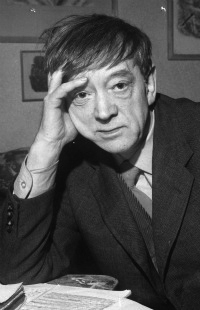
    David Jones belongs to the rich tradition of British artist/writers – Blake, Rossetti, Lear, Wyndham Lewis – but he is probably the least familiar of these today. Nor was he well known in his own lifetime (1895–1974), as either artist or writer, although he had influential supporters. Kenneth Clark was a fan of his paintings, and John Rothenstein bought them for the Tate. His work was shown intermittently by commercial dealers, and also at the Tate in 1954. The Royal Academy offered him membership, which he turned down (‘a loathsome institution’). W B Yeats admired his epic war poem In Parenthesis, as did T S Eliot, who called it ‘a work of genius’. W H Auden considered a later poem, The Anathemata, to be ‘probably the finest long poem written in English this century’. Official recognition came in the form of a CBE in 1954 and a CH in 1974. But although he achieved a succès d’estime, acclaim by a wider public eluded him, as did financial security – ‘Whatever I do’, he complained, ‘I can scarcely make ends meet and I work till 2 a.m. always.’

    However, interest in Jones has been picking up recently. A number of books about him have appeared, including a (not very good) biography in 2003. But as an artist he has not had the recognition he deserves. Attention has focussed on his writing rather than his art – his poems are dense, difficult, full of obscure references, the kind of thing that literary academics love to get their teeth into. Another problem is that much of his best visual work is in watercolour, a factor which has limited its public exposure. His paintings are delicate, evanescent works, difficult to display and, perhaps more importantly, to reproduce. Jones stated the problem himself: ‘the subtly differing colour-changes & barely visible smudges & bits of pencil line & accents of water-colour here & there which hold the whole thing together, if with some fragility, in the original, become just a pallid mess in ordinary reproduction.’

    In some ways his strengths as an artist have turned out to be weaknesses as far as his long-term reputation is concerned. Even apart from his literary output, the range of his work is extraordinarily wide – drawings, oil paintings, watercolours, wood engravings, copper engravings, drypoints, carvings, inscriptions. He never stood still, was always developing his work in new directions, and yet it remained distinctive and could never be mistaken for anyone else’s. Like all really interesting artists he went his own way, was a member of no school. All this makes him a fascinating figure, but one who is hard to categorise, and therefore uncongenial to the kind of curators and art historians who like to slot people into neat pigeonholes. Shortly after Jones’s death the critic John Russell said of him that he ‘fits nowhere in today’s canons, but it is a wonderful thing to have him.’

    His friend, the poet Kathleen Raine said of him that ‘he had a fragile hold on life and needed love and beauty’. There is a sense of his being a spectator of life, rather than a participant. He never married, never had a job (apart from his army service), never earned his living, never had a studio. For much of the time he depended on other people for  money and a roof over his head. When, at the age of 46, he moved into a rented bedsit in Kensington, it was the first time he’d had a home of his own. In 1914 Jones had already spent 5 years at art school (supported by his parents), and was uneasily aware that he would soon have to leave and make his way in the world. This was not something for which he was well suited by temperament, and enlistment in the army provided a welcome alternative. Horrible though his frontline experiences were (he was wounded in the Somme campaign), there were aspects of army life which suited him very well – the anonymity, the camaraderie, the lack of responsibility. He retained a penchant for army slang and military metaphors throughout his life, and the image of the soldier (20th century, Roman, medieval) appears repeatedly, in his writing and his painting.

    The end of the war saw Jones back at art school, but he began to feel that this would not give him the apprenticeship he wanted. He said later: ‘I thought and I still think that art schools are pretty hopeless’ (though he spent seven years in one). It was not until 1921 that he began to find a way forward. In that year he converted to Roman Catholicism and met the sculptor Eric Gill, who was then living among a guild of Catholic craftsmen at Ditchling in Sussex. Jones was impressed by Gill, and soon joined his group. The Ditchling community was ideal for Jones. It provided a refuge from the rough and tumble of the outside world, but also linked him to the London art scene via Gill’s connections with galleries and patrons.

    Much of his time at Ditchling was given to wood engraving, strongly influenced by Gill’s pseudo-medieval style. Then, in 1924, Gill upped sticks to Capel-y-ffin in the Welsh Borders, and Jones followed. It was here that Jones found himself as an artist. Though he grew up in suburban London, he always felt a special affinity for Wales through his Welsh father, and his Welsh heritage was crucial to his sense of history and the importance of the Celtic dimension in British culture. He had no interest in modern Wales – the Wales of coal mines, steel works and rugby clubs. The Wales he loved was a country of myth and not of fact, and it fed his imagination and his work for the rest of his life.

    After the move to Wales Jones began to free his style from the primitivist idiom borrowed from Gill. His early Welsh paintings still have something of the feel of wood engravings about them – they emphasise pattern and the decorative qualities of the design, with strong lines and carefully placed figures. But he soon evolved an idiosyncratic approach of his own, using pale colours applied discontinuously in dabs and strokes, giving an effect of vibrancy and movement. His work began to attract the attention of the art world. He was shown in West End galleries and, in 1928, joined The Seven and Five Society, at that time the most progressive group of artists in Britain – amongst others, the membership included Ben Nicholson, Barbara Hepworth, Henry Moore, Ivon Hitchens and John Piper.

    Although Gill’s influence on Jones’s work was short-lived, the sculptor’s ideas, and the ideas he transmitted from others, did have a lasting influence on his thought. Gill’s reputation has been damaged by lurid revelations about his sex life, but he is an important figure who deserves to be properly assessed. What Gill (and the Catholic Church) gave to Jones was a degree of certainty, an intellectual underpinning for his artistic instincts. Gill, like many Catholic artists, was captivated by the ideas expressed by the neo-Thomist philosopher Jacques Maritain in his book Art and Scholasticism, and he passed his enthusiasm on to Jones. Up to this time Jones had been, in his own words ‘completely muddle-headed as to the function of the arts in general.’ He now began to see how the developments in modern art that attracted him could be combined with his religious concerns. He later wrote that the aim of the Post-Impressionists was ‘to make a ‘thing’ – lets say a mountain … under the form of paint, and not an impression of a ‘mountain’ … this idea was … similar or analagous to what, I understood, the church held with regard to “the Mass”.’ In the Mass the priest re-presents Christ’s sacrifice under the form of bread and wine, just as a Post-Impressionist re-presents a mountain in paint, ‘as a made ‘thing’ a signum of a reality of some sort’. What is represented becomes a sign of something else, and if that something else is a sign of something divine, then the art can claim to have a sacred character or function. Maritain wrote that the impact made by a work of art is in proportion to its power of signification, the ‘more a work of art is laden with significance … the vaster and richer and the higher will be the possibility of joy and beauty.’ Maritain’s influence was not, however, entirely beneficent. His doctrine of signification was one source of the overloading of Jones’s later pictures with history and mythology.

    Jones’s mature works, the ones that he regarded as perhaps his best, were painted in the late 1920s and early 1930s (in 1932 he suffered a nervous breakdown which stopped him painting for several years). He said that what he wanted in his paintings was ‘a certain affection for the intimate creatureliness of things – a care for places, men, trees, animals, and yet withal a pervading sense of metamorphosis and mutability’, and this is what he achieved. He painted the world as he saw it, but it was a world in a state of flux. The usual spatial relationships are overturned – distant objects float into the foreground, while near objects are fused into the background. Some parts of a picture are detailed, some left vague. Jones said (echoing Maritain): ‘our business here below is to make the universal shine out from the particular’. This is why individual objects in his paintings – a razor, a toothbrush, a pair of scissors – seem to have a life of their own, animated by some mysterious force.

    Jones was surely right in thinking that these paintings were his most successful. Dancing colour is combined with intricate drawing, form is reconciled with content, unity is combined with movement. But this success was achieved at a cost. It is hard not to interpret a picture like Curtained Outlook, painted just before his breakdown in 1932, as a reflection of his troubled psyche – the world he depicts seems about to dissolve, inside and outside mingle, one plane merges into another, walls crack, curtains almost burst into flames. He never liked to repeat himself, was pushing himself in new directions all the time, was fiercely self-critical, and the strain was making itself felt. In 1928 he complained: ‘I’ve done so many utter duds – it’s so exhausting and depressing’. And in 1931: ‘[I’ve] been trying to paint but with no result save intolerable annoyance and rage’. Not only was he trying to paint, he was trying to write at the same time – in 1928 he had begun work on his war book In Parenthesis. He wrote in 1932: ‘I’ve done no painting – it’s awful – struggling with this beastly book and I really now think it’s awful rubbish.’

    In Parenthesis was finished in 1932 (though it was not published until 1937), and shortly afterwards Jones suffered the first of the nervous collapses which plagued him for the rest of his life. What caused it? His fight to express his vision in paint and the sense that he was falling short must have played a part. He wrote later: ‘the 1932 group [of paintings] got nearest to what I had in mind – but a very long way from the goal. (I suppose that may partly explain my complete crash – I was conscious for some time before it came that I was straining every nerve to do something more than I had power to do).’ His uneasy social and financial position may also have contributed. He had begun to move in a world of Catholic intellectuals and wealthy art patrons, where he often felt out of place and an ‘imposter’. Yet he no longer felt comfortable in the lower middle-class suburban world of his youth. The asocial context of the army and communities like Ditchling suited him better than this social no man’s land. His confused sexuality probably played a role – his later pictures are littered with sexual symbols, which suggests that there were all sorts of unresolved conflicts lurking beneath the surface. The delayed impact of the war must also have been a factor, perhaps the most important, in triggering his breakdown. A friend wrote: ‘every impressionable person who fought in the front line trenches did suffer some permanent damage which went under the generic name of shell-shock.’ It is significant that the crisis came just after Jones finished the book which recalled his wartime service. The year before, he had painted a view of the sea called, prophetically, Manawydan’s Glass Door. The title is from The Mabinogion, a collection of Welsh heroic tales. It refers to the door the Welsh warriors are warned not to open, lest they see again all the terrible things they have experienced.

    After the breakdown he lost his artistic momentum. Painting was difficult for him, as it tended to bring back his nervous trouble, something he found incredibly frustrating. ‘It seems so maddening that all I want to do and care about is paint and that is the one thing that makes me really ill. What a fate … it is absurd.’ He went to live in a hotel room in Sidmouth in Devon – while he stayed, as he put it, ‘in hiding’ at Sidmouth his nerves ‘were not so bad’ but they deteriorated as soon as he ventured ‘into the great world!’ Inevitably, he lost touch with the contemporary art scene. He wrote to a friend in 1936: ‘I have just received a communication from the Worshipful Company of 7 & 5 to the effect that I am not a member – having only registered 2 votes at the last election. What a pity I did not send in my dignified letter of resignation a year ago – but in a way it’s much nicer to be hoofed out.’

    Jones eventually returned to London, in 1940. There he started to paint his ‘subject’ pictures. These are no longer paintings from life of straightforward objects (however unstraightforward the treatment). They are complex, carefully constructed pictures, highly detailed, with multifarious undertones and overtones. Jones had a wide, though unsystematic, range of knowledge – classical, Welsh, archaeological, theological – and he poured it into these pictures. The painting process became much more laborious than in the past, when paintings were often completed in a day or two. They could now take years, endlessly revised and worked over. Jones himself regretted this, but couldn’t seem to do anything about it: ‘What I want to do is one full of the complications and allusions but executed with the freedom and directness that used to be in my still-life and landscapes – that’s what I want to do before I die.’ He was trying to work out a form which would embody his vision – his sense of the past, of the process of redemption, of our mixed Celtic/Classical inheritance – but this became ever more difficult as his perception of things became deeper. In 1961 he lamented: ‘it’s an intolerable labour to turn out anything… I don’t believe it’s just laziness, I think it’s more the consciousness of the complexity of the problems – when one is younger one seems to see with a curiously simple yet clear vision, the things one wants to do – I’ve lost that.’

    What he saw as the erosion of signs was a particular problem for him, as a follower of Maritain. He regarded 20th century Britain as a ‘late’ civilisation, which was no longer part of an enclosed common culture. The inheritance of image, idea, and myth from past centuries was no longer there for writers and artists to draw upon. ‘The artist deals wholly in signs. His signs must be valid … for him and … for the culture that has made him.’ Otherwise, it ‘sets up a strain … produces a neurosis.’ Perhaps this was one source of his nervous troubles, and to his sense that his work had lost the ‘nowness’ which had always been important to him. ‘I often feel old and terribly outmoded nowadays’, he said, and was dismayed by the lack of understanding he received.

    As the years went by he became increasingly detached from the art world, indeed from the world in general. In 1947 he moved from London to a room in a boarding house in Harrow, in the outlying suburbs. He retreated from the commercial art world, broke with his dealer and refused to sell his paintings. Not surprisingly, he was short of money and complained incessantly about it – he was ‘obsessed with poverty’ noted one friend. He was dependent on supporters who either gave him money or persuaded official bodies to help him. Jones was quite happy to let other people sort out his financial problems in this way – it was one aspect of the avoidance of responsibility which was so characteristic of him. Jones ‘was used to being totally spoilt’, observed one friend, and another remarked that Jones thought it ‘perfectly right and proper that people with more cash than artists should give their patronage by giving money.’

    Though he was painting less at this time he was writing more, though in Jones’s mind the two activities were complementary: ‘I try to write by the same process as I paint. The two acts seem to me to present just the same problems as to ‘matter’ and ‘form’.’ He said that he regarded writing In Parenthesis as a challenge to see if he could make ‘form’ and ‘content’ work ‘in writing as compared with the same problems in the visual arts’. Indeed, In Parenthesis is a book of scenes, conceived pictorially (it was originally intended as a set of illustrations with long captions). The text of In Parenthesis mixes the language of the trenches with images from Celtic legend, from Welsh sources, from Malory, Milton, the Song of Roland, and the Catholic liturgy. In other words it is a mingling of cultural sources and of past and present, just as Jones’s paintings are.

    The culmination of his work as a combined writer/painter came in the inscriptions he began to make from the 1940s onwards, and which he developed into a significant independent art form. They offered a solution to the conflict between complexity and clarity which presented such difficulties in his pictures and his poetry. The inscriptions of their nature provided a simplification, as words are both abstract form and conveyors of meaning. His attitude to lettering was different from Gill’s, who liked the beauty of letter forms as such. For Jones they were also the means of conveying his manifold layers of meaning in visual terms. The letter forms he employed complemented the texts he used and carried in themselves the implications he needed. Just as passages in his writings refer to works in Latin, Welsh, Old English and Middle English, so the lettering in his inscriptions has Greek, Roman, Early Christian and Anglo-Saxon characters. They offer a clue to the artist’s thought, but the essence of the work is in the shape of the letters and their juxtaposition. The old problem of reconciling form and content is triumphantly solved.

    But despite the late flowering of his art his mental health remained fragile. By the 1960s he was dependent on a regimen of sleeping pills and tranquillisers. The side-effects of lethargy and loss of focus contributed to his feeling of ageing. He said in 1965: ‘I feel about twice as old as I did a couple of years ago’. He referred to his room as his ‘dugout’ and rarely left it. ‘I never go much beyond the hallway out there’ he told a journalist. He saw only those who came to see him, though these were many. In 1963 he had a visit from the composer Igor Stravinsky, who commented afterwards that it had been ‘like visiting a holy man in his cell.’ Others had also been struck by the quasi-priestly character of Jones’s life in his later years. He was regarded by many friends as an ‘honorary celibate priest’. At the time of his Tate show in 1954 Helen Sutherland, the most important collector of his work, told him: ‘They [the pictures] did seem like an offering, a sacrifice – a broken spirit and a contrite heart … but broken like the bread is broken, to make a new wholeness – a holy communion after their kind.’

    On July 2nd, 1935 Jones wrote to his friend René Hague: ‘On this day nineteen years ago I heard read by the Officer Commanding B Coy a document, a rescript from G.H.Q. announcing the initial success of the first attack on his trenches on the Somme. We were permitted to cheer. I can’t tell you the gnawing thoughts as well up in your bosom at this memory.’ If a by-product of the barrage of  First World War commemoration which will be unleashed on us is a revival of interest in David Jones, then that will be one small thing we can cheer about.

     Desmond Sloane

    The Jackdaw, 2014