Tag: Venice Biennale

  • Laura Gascoigne: Tangled Web – September 2017

    “Why is there so much sewing?” demanded The Art Newspaper’s Christina Ruiz after visiting Christine Macel’s exhibition at this year’s Venice Biennale. “I get it: domestic work, women’s work, is important and undervalued. But is it in itself art? No it is not.”

    There was a time when so-called textile arts were prized above all others; when first unveiled in 1519, Raphael’s tapestries for the Sistine Chapel threatened to eclipse the fame of Michelangelo’s ceiling. But in the 18th century tapestry began to feel fusty as audiences warmed to the immediacy of paint. A work’s value no longer resided in the price of the wool, the skill of the weavers, the total hours spent in production and associated cost, but in the artist’s touch, the signature of authenticity that connected audiences with the creator of the work, usually male.

    In the 1980s, when Rozsika Parker wrote The Subversive Stitch, she pinpointed “the separation of the craft of embroidery from the fine arts” as “a major force in the marginalisation of women’s work”. But on the coattails of conceptualism, ‘women’s work’ has come back from the margins. Since the personal signature of the pen or brush fell under suspicion the needle has returned, not always in the hands of women. While the women are bent over their embroidery frames, the men are stealing the limelight, à la Raphael, with tapestries woven by others to their designs. Chris Ofili’s Weaving Magic has just been the focus of an exhibition at the National Gallery, and there are more tapestries than pots in Grayson Perry’s The Most Popular Art Exhibition Ever! at the Serpentine Gallery (until September 10th).

    If Hockney wants to keep his place as top national treasure, he’d better put down his iPad and pick up a needle. Tapestry, embroidery, knitting, crocheting are all back in the frame and proving highly popular with a public tired of the self-conscious cack-handedness of so much contemporary art. This is art like granny used to make, sweet as apple pie and absolved of the obligation to be serious. From Vidya Gastaldon & Jean-Michel Wicker’s knitted octopus, titled Sex Is Good (1999), shown in Tate St Ives 2013 exhibition Aquatopia to Shauna Richardson’s three 9m lions, crocheted from 36 miles of Swaledale wool and displayed in a glass cage at Twycross Zoo in 2012 as part of the Cultural Olympiad, it’s all a bit of folksy fun.

    Naturally, education departments love it. Imagine the jollity at The Exchange in Newlyn in 2010 when artist Jonty Lees donned a Montgolfier flying helmet and goggles to lead a sewing circle and basket-weaving group in the construction of a full-size hot air balloon. The following year the Science Museum went one better and got participants in its Stitched Science weekend to create an entire Solar System Art Installation from ‘various fibre arts’. True, the results looked a bit of a mess, but sew what? Fibre arts have therapeutic benefits. According to the organisers of the Crafts Council’s ‘cinema knit-along events’ in 2012, “knitting has been proven to enhance cognitive development in children, and well-being in both children and adults.” Sew there.

    It’s not all child’s play: serious issues can be addressed with needles. ‘Political statement knits’ by Lisa Anne Auerbach were a highlight of Wasteland, an exhibition of young Los Angelino artists at the Mona Bismarck American Centre in Paris last year. More ambitiously, at the Minories Gallery, Colchester in 2015 Clare Sams’s installation Knitting Fever recreated the devastation caused by the 2009 floods when a wool shop of that name in Cockermouth spilled its guts through the Cumbrian town. The gallery complimented the artist on using a process “stereotypically viewed as a feminine past-time [sic]” to represent “cataclysmic forces not normally associated with the practice”. Sams’ ‘total knitted environment’ looked a little twee for a cataclysm – acts of God produce more dramatic results than needlework – but she wasn’t going to let that stop her, having already knitted her way through the Hackney Riots and Guantanamo Bay. No knit-wit she.

    Other artist-knitters are not so outward-looking or gender-neutral in their choice of subjects. Given the vogue for ‘bedroom painting’, bedroom knitting was almost bound to follow and, sure enough, in 2012 the Polish-born New Yorker Agata Olek transformed Tony’s Gallery in Brick Lane into a crocheted replica of her boudoir, with walls and floor emblazoned with explicit texts from former lovers. “It is not just another apartment installation,” she assured Metro, “it is the reflection of life, love, trust and lust in current time.” Its tear-jerking title I do not expect to be a mother but I do expect to die alone was a quote from, you’ve guessed it, the queen of the misery stitchers, Tracey Emin. But no artist has taken intimate needlework quite so far as Casey Jenkins in her 2013 performance Casting Off My Womb, in which she knitted a menstrual cycle-length scarf from skeins of wool secreted in her fanny. The work, she told The Guardian, was “primarily about casting off the need for validation from external sources” and “forging a path of self-determination in the face of society’s expectations”.

    Maria Balshaw would say aye to that. Unlike Christina Ruiz, she congratulated Venice Biennale curator Christine Macel in The Art Newspaper on doing “a really good job in challenging some of the gender stereotypes around textiles,” singling out male artist David Medalla for praise for his participatory work A Stitch in Time, first shown in 1968. Medalla’s early lead in removing the sexual stigma from stitching may have laid the ground for the Crafts Council’s 2004 exhibition Boys Who Sew, at which Fernando Penteado established the butch credentials of needlework with a display of samplers embroidered by tattooed inmates of Wandsworth Prison. Since then the social enterprise Fine Cell Work has climbed on the prison wagon and trained 300 prisoners in 20 gaols to spend their lock-up time productively embroidering cushion covers. There’s precious little bunce in it for the lags, but more job satisfaction than stitching mailbags.

    It’s no discovery that men are nimble-fingered (not a lot of people know this, but the young Malevich upset his father with his unhealthy aptitude for Ukrainian cross-stitch). The danger for women of challenging gender stereotypes around textiles is that male artists will seize the initiative. Not content with getting tapestries woven to their designs, brothers are doing it for themselves. In Art Now at Tate Britain in 2010 Andy Holden showed The Pyramid Piece, a 10ft-high knitted replica of a chip off the Great Pyramid of Cheops that he had illegally smuggled home from a family holiday to Egypt at the age of 12. Along with its benefits for cognitive development, knitting is obviously a good way of assuaging guilt.

    The main drawback of needlework, for unreconstructed individualists, is its inflexibility as a means of expression, which is why most attempts to employ it as one, Tracey Emin’s included, have been sew-so. The notable exception is Mr and Mrs Pope, Knitted, Shrunk and Hung (2012), a truly heart-wringing piece of work that – sorry girls! – was created by a male sculptor, Nicholas Pope, with his own fair hands.

    Laura Gascoigne
    The Jackdaw Sept/Oct 2017
  • Laura Gascoigne: Do You Want Ice With That? – May 2017

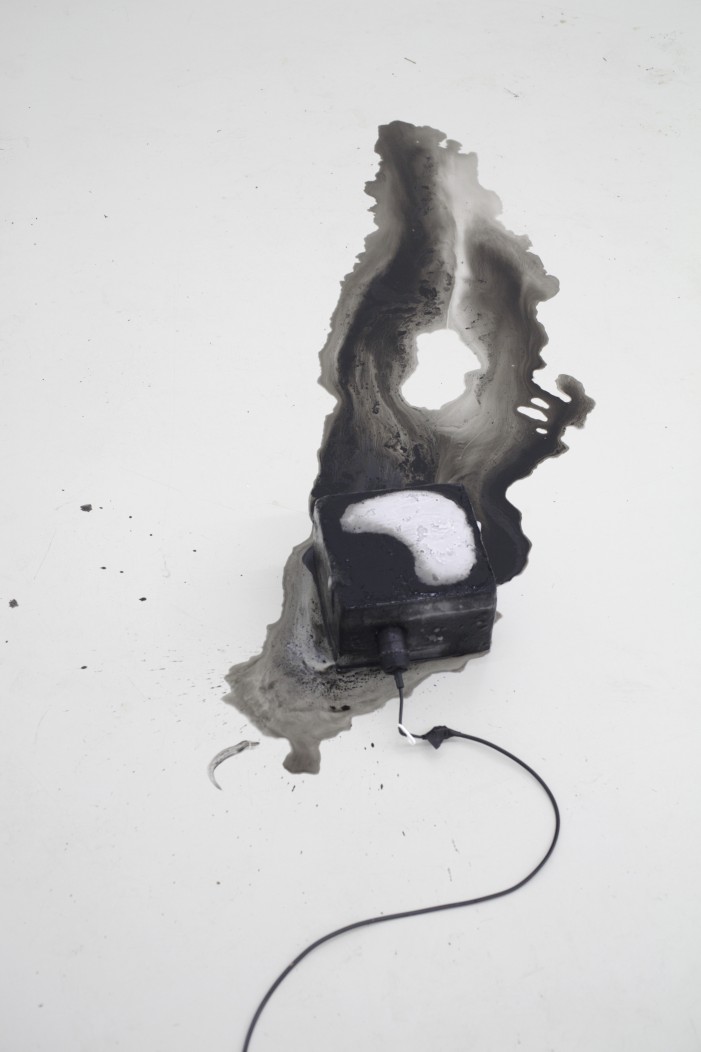
    Kitty Kraus – Untitled http://www.galerieneu.net/artist/kitty+kraus/1544

    Ever since Anya Gallaccio made her name by exhibiting an ice block called Intensities and Surfaces in an East London pumping station in 1996, I’ve been monitoring the advance of ice through the contemporary art world, where it seems resistant to climate trends prevailing elsewhere. While the polar ice caps recede, the phenomenon of ice art only grows.

    I wouldn’t mind if a) against the artists’ professed intentions, this didn’t actually contribute to global warming, and b) the ice wasn’t usually engaged in lecturing its audience in an uncool way. I remember grumbling at the time of Gallaccio’s exhibition that if I was going to hear from an ice cube, I’d rather it addressed me from a gin and tonic. Little did I suspect that over the next two decades I’d be on the receiving end of a chorus of sermons from ice cubes, not one of them accompanied by so much as a zest of lemon.

    The big attraction of ice to conceptual artists is that the medium is the message, and the message is obvious. Conceptual art simply adores the obvious, and so it has taken ice to its bosom where, as with climate change, a cool start has been followed by accelerated warming. Here is an easy-reference 20-year calendar to prove it.

    1997 – Francis Alÿs pushes an enormous ice block through Mexico City until it shrinks to a cube, then instead of popping it into a Tequila Ponche, like any normal hot and thirsty Mexican, he christens it Paradox Praxis and declares it “an allegory about failed modernisation strategies in the region”. Que?

    2009 – Andy Goldsworthy cuts a circle of ice in a frozen river with a rope compass and lets it float away. “The circle was locked and then, suddenly, it was joyously made free to move and rejoin the flow,” he declaims poetically, before skipping off like Fotherington-Thomas.

    2010 – Karl Lagerfeld, scenting frost on the fashion breeze, imports a giant iceberg as the centrepiece of his spring Paris catwalk show for Chanel.

    2011 – Kitty Kraus, in a group show of international artists “who explore ideas of flux and ephemerality” at Manchester Cornerhouse, shows a block of inky water with a light bulb at its centre. Titled Untitled, it melts onto the gallery floor creating “topographical patterns that viewers must navigate around”.

    2012 – Neha Choksi, an artist drawn to “scenarios of erasure, exhaustion, detachment and disappearance”, creates Iceboat, a film of herself rowing across a lake in a frozen boat until it melts.

    2013 – The Holy See climbs aboard the freezer truck, installing a refrigeration unit in its debut Pavilion at the Venice Biennale to keep a painting by Lawrence Carroll on ice.

    2014 – For the Liverpool Biennale Norma Jeane installs a solar-powered ice-making machine in the Old Blind School, which – for want of July sun in Liverpool – leaks. In October, coinciding with the publication of the IPCC’s Fifth Assessment Report on Climate Change, Olafur Eliasson arranges 12 blocks of ice in the form of an Ice Watch in Copehagen’s City Hall Square. Cut from the Nuup Kangerlua fjord in Greenland, the blocks’ total weight of 100 tonnes is equivalent to the amount of inland ice currently melting every hundredth of a second. “As an artist I am interested in how we give knowledge a body,” explains Eliasson. “What does a thought feel like and how can felt knowledge encourage action?”

    2016 – In Granary Square, King’s Cross Alex Chinneck erects a Christmas tree – complete with lights – contained in a 7m ice cube. Titled Fighting Fire with Ice Cream, it poses no risk to the station’s power supply as it is actually made of clear resin rather than water, and the pool that accumulates on the ground around it – which revellers presumably have to ‘navigate’ – is made of wax.

    While on the subject of melting ice caps, it may interest you to know that this year’s Venice Biennale will see the launch of an exhibition of highlights of something called the Antarctic Biennale which, under the patronage of UNESCO, advertises itself as ‘developing Antarctica’s cultural potential’. Tell that to the penguins. Its most prominent partner is Kaspersky Lab, a Russian global cyber security company based in Moscow. Smell fishy? It is. As it happens, Kaspersky Lab has just been named as one of the companies with ties to the Kremlin that paid Michael Flynn a sledload of cash for a speaking engagement in Washington. You want ice with that, or would you prefer oil and gas? Kaspersky is not the only greenwash merchant dealing in ice art. In 2015 Rolls Royce commissioned Isaac Julien’s glacial video installation Stones against Diamonds, set among the glistening ice caves of Vatnajökull in Iceland. No doubt BP is even now planning something. Ice art is not as transparent as you’d think.


    Gallaccio wasn’t the first to make art from ice; she trod in steps already dinted by 1960s masters Gyula Konkoly, Allan Kaprow, Ian Baxter, Rafael Ferrer and Paul Kos. More memorably, perhaps, in the 1970s naked cellist Charlotte Moorman performed avant-garde compositions by Jim McWilliams with a melting instrument between her legs and Serbian ice queen Marina Abramovic, in a performance titled The Lips of Thomas, cut her stomach with a razor before prostrating her naked body on a frozen cross – a display of sang froid that provoked a homage from Lady Gaga, who stripped off and wrapped herself around an ice block in 2013 in a fundraising drive for an institute of performance art.

    There is no new thing under the sun, quoth Ecclesiastes, and in the matter of ice art the hole in the Antarctic ozone layer doesn’t seem to be helping. Heather Phillipson has done her best to inject a bit of novelty with her knickerbocker glory sculpture, THE END, for the Fourth Plinth, intended as “a monument to hubris and impending collapse”. Unfortunately by the time of THE END’s unveiling in 2020 the collapse will probably have happened and a pool of sticky cream with a cherry and a dead fly floating in it will seem a more fitting monument to hubris – which, with the pace of modern life, is faster-acting than in Ozymandias’ day. When we’re frozen out by Europe and the rest of the world, Phillipson’s Mr Whippy vanitas will leave us cold.

    The fact is that while variations on vanitas painting are endless, the creative possibilities of ice and cream are limited and were long ago exhausted by the Italians. Often it takes the imagination of a non-artist to realise the transformative potential of a non-art medium. In the winter of 2012 in China’s north-eastern city of Jilin, Wen Hsu, a 58-year-old tenant dissatisfied with the compensation on offer for his vacation of a condemned apartment block that had been his home for 35 years, made his discontent visible by opening a window in his 7th floor flat, turning on the taps and leaving them running. The result was a spectacular icefall down the building’s façade that collected in a frozen wave on the pavement below. No mere artist ever produced such a thing of beauty from solid water or achieved such a practical result. Media coverage shamed the developers into improving their offer, an instance of felt knowledge encouraging action.

    Laura Gascoigne
    The Jackdaw May/Jun 2017

  • Art under kleptocracy


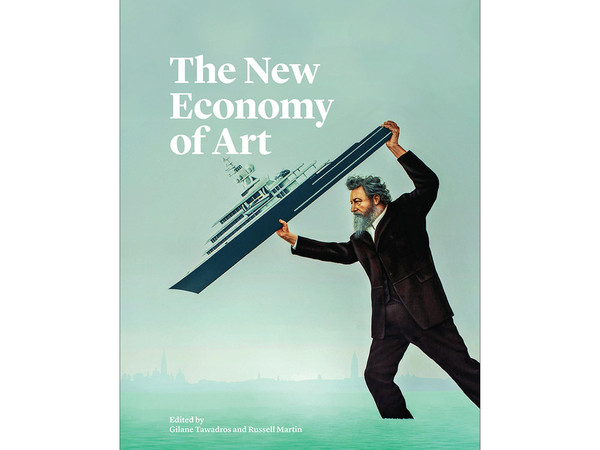
    Another month, another book on the contemporary art economy, this time from an overlooked perspective. The New Economy of Art, a joint publication by DACS and Artquest, looks at the art market from the POV of the average artist. Not surprisingly, it finds plenty to puzzle over.

    The conundrum it addresses is clearly set out in the preface by editors Gilane Tawadros and Russell Martin. “The art world is in crisis,” begins the first paragraph; “The art world is in the best shape it has ever been,” begins the second. The question of how these conflicting statements can both be true at the same time – “the disconnect between how artworks gain financial value even while their makers are poorly, or hardly, paid.” – is the mystery the authors of its six essays try to solve.

    Two weeks before the book came out, Christie’s New York achieved an all-time auction record for its November postwar and contemporary art sale, in which a Warhol Triple Elvis hit the jackpot – kerchung! – at £51.6m – and a row of Four Marlons paid out a further £43.9m. Both, appropriately, had previously hung in a casino in Aachen. The result was hailed by international head of post-war and contemporary art Brett Gorvy as confirmation of “a virtuous cycle of confidence in the art market”. Another season, another reason for making whoopee.

    On the other side of the art market, meanwhile, a more vicious cycle is in operation. The book’s authors quote the usual dismal statistics. It’s depressing enough to learn from the 2011 survey by the Centre for Intellectual Property, Policy and Management at Bournemouth University that UK artists earn a median wage of £10,000 – unchanged for 20 years – without discovering that the statistic includes designers, illustrators and photographers, and that the top 7% earn 40% of the total. Artists now officially rank as ‘marginalised makers’, a marginal constituency politicians aren’t fighting over. The economist Alan Freeman quotes figures showing our ‘creative economy’ growing faster than any other UK production industry, employing 2.5 million people and accounting for 5.2% of gross value added – but take out all the advertising, marketing, fashion, IT and other people he counts as ‘creative specialists’, and the fine artists are still scratching around on the margins.

    The book’s cover reminds us that there is nothing new in this. It reproduces Jeremy Deller’s mural from the 2013 Venice Biennale picturing William Morris as a Victorian Poseidon hurling Roman Abramovich’s superyacht into the Venetian Lagoon. The mural’s title ‘We sit starving amidst our gold’ encapsulates the argument at the heart of the book while reminding us that Morris said it all before, and better. Compare Freeman’s dewy vision of a creative utopia “in which shared values, achievements, hopes and aspirations replace brute greed to lay foundations on which the true individuals of the future can confidently build the new worlds of their choosing” with this trenchant passage from Morris’s lecture Art Under Plutocracy: “So long as the system of competition in the production and exchange of the means of life goes on, the degradation of the arts will go on; and if that system is to last for ever, then art is doomed, and will surely die”. Only the substitution of association for competition, believed Morris, could “give an opportunity for the new birth of art, which is now being crushed to death by the moneybags of competitive commerce.” In the war of words, Morris wins hands down.

    Still, the book contains material which, if not revolutionary, is astonishingly inflammatory for a publication part-funded by the Arts Council. Have they read it? It has a quiet way of dropping bombshells. One is the casual mention by management consultant Keir McGuinness of the apparently generally accepted practice whereby “the decision of whether a [public] gallery will take a show or not depends upon whether you [the artist’s dealer] will make a financial contribution and the person who makes the largest financial contribution gets the shows”. Another is a statistic cited from AN’s recent Paying Artists report that “71% of artists receive no fee for publicly funded exhibitions and nearly 60% do not even have their expenses covered”. This against the background of an international art industry which, arts consultant John Kieffer points out, has a turnover of just under £40bn, with the UK’s market share of 20% amounting to three times the combined budgets of the English, Welsh, Scottish and Northern Irish culture departments.

    But the real eye-opener is the essay by curator Lynda Morris. Born in 1947, Morris is old enough to remember the heady days of the 1960s when a newly international avant-garde was promoted by dealers who were themselves artists, lived like artists on air and were perceived as having ‘moral authority’. What an antiquated concept that now sounds. After reading Morris’s analysis of the process whereby the present nexus of curators, industrialists, bankers and property developers took control of the art world, it seems to belong to another era.

    Morris pinpoints Thatcher’s appointment of Richard Rogers as chair of Tate Trustees in the 1980s as the start of the cultural ascendancy of architecture over art. “It was the moment in late Thatcherism when the State no longer provided social housing and, instead, the national lottery, a new arm of the gambling industry, enabled museum directors and their trustees to start to plan Palaces of Culture.” A proposal to regenerate derelict buildings for low-cost studios, housing and artist-led galleries put forward by officers of the then Arts Council of Great Britain – in association with artists’ collectives ACME and SPACE – was kyboshed by property developer Peter Palumbo, who as chair of the ACGB from 1988-94 presided over the drafting of the rules for National Lottery funding, including the ‘subsidiarity’ clause ensuring that money is allocated only to new projects and thus funneled towards developers and architects rather than artists. Artists are wonderful at sprinkling the fairy dust that turns urban wastelands into developers’ goldmines, but once the gold has been extracted the fairies can piss off and take their dust elsewhere. Prices for a ‘premium apartment’ in Neo Bankside, the new residential development overlooking Tate Modern designed by Rogers Stirk Harbour – formerly Richard Rogers Partnership – start at £4.5m.

    “We seem to have drifted from a market economy to a market society,” comments John Kieffer. It’s a form of society Margaret Thatcher would have recognised, but not William Morris. “It is this superstition of commerce being an end in itself, of man made for commerce, not commerce for man, of which art has sickened,” he wrote in Art under Plutocracy. Art under kleptocracy has brought no improvement. It has been left to President Xi Jinping to uphold moral values, warning Chinese artists last October not to follow the “stench of money” or “lose themselves in the tide of market economy” which the rest of the People’s Republic is happily riding.

    Are artists and Gordon Brown now the only people on the planet still expected to possess a moral compass? That could explain the disconnect highlighted by this book. If our market society is wholly reliant on artists for moral orientation, it has good reason not to seduce them with the stench of money, ie pay them. You could almost call it a virtuous cycle.

    Laura Gascoigne  

    The New Economy of Art, edited by Gilane Tawadros and Russell Martin, published by DACS, £14.99


  • The way we are now – why ‘avant garde’ is now an obsolete term

    McQueen copyThe Times – God bless its little cotton socks – has just been celebrating the triumphal return of the 1990s as a creative force. “Suddenly contemporary art” it crows, “was part of popular culture. The Royal Academy’s landmark Sensation show in 1997 was a turning point.”

    It was so indeed, but not exactly in the terms the article intends. Here in Britain, Sensation marked perhaps the very last moment when it was possible to talk about an avant-garde in the visual arts with any appearance of authenticity. The show was widely hailed as the beginning of something – as the moment when the visual arts in Britain turned over a new leaf, as the moment indeed when British artists surged to the very forefront of innovation, displacing both the French and the Americans, who, each in turn, had carried forward the baton in the race to create what was entirely and indubitably new.

    Looking back now, the exhibition seems, on the contrary, to have marked the instant when the hands of the clock moved on, and the whole notion of avant-gardism ran out of steam. To quote the Times once again: “The beginning of the decade was all about exhibitions in abandoned warehouses and empty office blocks. By the end, thanks to Damien Hirst and his gang of barricade-storming rebels and Charles Saatchi, the ad-man-turned-art-dealer, it was more champagne and cocaine and exploding auction prices.” Only a little further on was the day when Tracey Emin RA, once high priestess of the YBA Movement, would celebrate her 50th at Annabel’s, London’s most establishment nightclub, in the company of Princess Eugenie, granddaughter of H.M. the Queen.

    The avant-garde came late to Britain, and imploded late. Long before 1997 there had been signs that the impetus to innovate was beginning to falter. It is, I think fair to say that most of its energy was already exhausted towards the end of the 1970s, when the terms Post Modern and Post Modernism came into vogue. Art was no longer defined by its urge towards novelty, by its eager embrace of some definition of the new. Instead, it was characterized by its relationship to what already existed in the recent past. This impulse has been further defined by the fashion for ‘appropriation’ – that is, for making exact copies of images that already exist as a paradoxically innovative act.

    It is possible to look at the present situation in the visual arts using several different perspectives. One is the immense expansion of the contemporary art world. The old avant-gardes were confined to Western Europe and the United States, with perhaps an acknowledgement of what happened in Russia in the first two decades of the 20th century, and a dim consciousness of certain developments in Latin America. This expansion owes much to modern communications – first to the fact that colour printing became radically cheaper, which led in turn to the birth of the musée imaginaire or museum without walls. Secondly, to the digital revolution and the birth and rapid growth of the Internet, which has made possible the immediate diffusion of images from a huge variety of different sources. Google, and ye shall find.

    This means that it is increasingly hard to see any clear direction in the general progression of art. If we are looking for the proverbial ‘shock of the new’, it often seems that the shock of the exotic (something unfamiliar, coming from a culture very different from our own) will do just as well instead. It is, of course, necessary to acknowledge, when saying this, that the original 20th century avant-garde made free use of certain exotic sources – look for example at the relationship between Cubism and what Picasso described as “l’art négre”.

    Of course there is yet another paradox here, which is that the appeal of African tribal art to Picasso and a group of his artistic contemporaries was precisely its (to them) hermeticism – the fact that they in fact knew little and cared less about what the tribal artists were trying to express. Now we not only see too much – we are also in a position to know too much. Just go to Google, and ask the right questions. It is impossible to resist asking, knowing that the answers are within such easy reach. Today there is really no such thing as an innocent eye.

    Another important factor here has been the influence of official institutions – in particular museums of modern and contemporary art. These offer one of the main channels through which contemporary art now reaches a mass public. One may argue that television and the Internet are in practical terms just as important, but the fact is that these institutions see themselves as being entitled to govern the agenda. Their priorities are set by two things. First, those in charge of them (though they may vigorously deny this) see themselves as the high priests of a cult. A lot of the more characteristic manifestations of contemporary art, as presented by official organizations, now quite openly call for the response, “Lord, I believe – help Thou mine unbelief.” Or, in more demotic form, “I believe you – thousands wouldn’t.” There are, notoriously, often no objective correlatives that can be used as measures of quality, or even of interest.

    Secondly, museums – not surprisingly – feel a strong sense of responsibility towards those who supply their funding. The problem here is that the givers of money often tend to measure success in brutally populist terms. How many people are coming through the doors? What is the demographic breakdown, in terms both of generation and of class. Are a full range of taxpayers getting their money’s worth?

    The result has been a rush towards supposedly populist forms, chief among them performance art and video. The problem here is that what museums deliver using these media, often in spaces not very suitable for the purpose, compares unfavourably with what the audience gets from better established forms of artistic expression that overlap – i.e. with theatrical performance (nowadays often very radical and imaginative, in addition to being a great deal more disciplined), and things seen in cinemas and on television. In addition to this, where film is concerned, the technical resources available outside the museum or fine-art context are often much richer and more sophisticated. Money talks ­– this is why the best television commercials often far outstrip, in terms of technical finesse, anything presented as ‘artist’s video’.  It is no wonder that a number of artists who made their reputations in that field have now made the transition to being career film directors. The recent career of Sam Taylor-Johnson offers a case in point.

    It is worth noting, in this context, that looking at painting or sculptures is, in general, a different kind of looking from looking at video or even at performance. Video demands that you look from a fixed point of view, and the same is true of many, though not absolutely all, examples of performance art. Video and performance both impose a fixed time span on the audience. With paintings and sculptures the situation is different. You look from the angle and distance you choose. You look for a moment, or for a much longer span. You are free to walk away, then look again from a different viewpoint. Both physically and psychologically it is a very different kind of experience.

    In this connection it is perhaps worth noting that Tate Modern’s current director, Chris Dercon, is due to leave the institution in 2017, to become director of the  experimental Volksbühne theatre in Berlin. In recent months, Tate Modern, having made a big deal about providing new spaces for performance art, has gone rather quiet on the subject. One wonders if its enthusiasm for this art-form will survive Mr Dercon’s departure?

    A conspicuous feature of the contemporary art world as we now have it is its close alliance to the fashion industry. To a large extent, this is something inherited from the earliest phases of the Modern Movement. One thinks in particular of the huge impact made by Diaghilev’s Ballets Russes on the Paris fashion industry. The impact of the Ballets Russes on the leading pre-World war couturier Paul Poiret is well known, but the influence was more general than this. Maison Paquin, for example, hired Leon Bakst, one of the chief Ballets Russes designers, to sketch ensembles for its collections. Chanel had a Russian phase, with outfits that echoed the shapes of Russian peasant tunics.

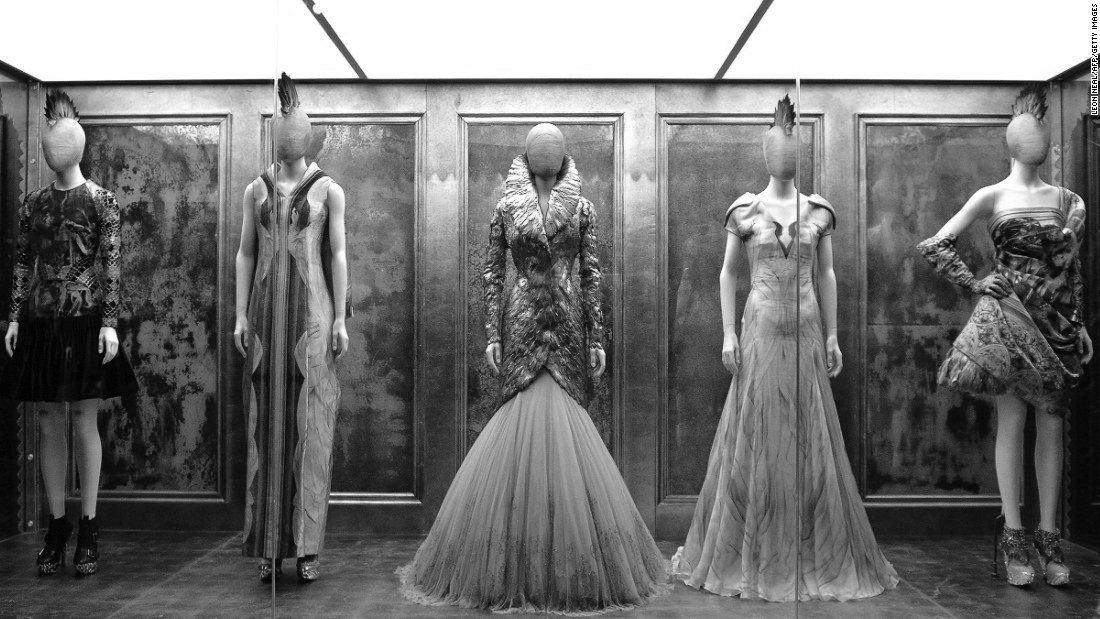
    During the past year, probably the most successful exhibition staged by any major London museum has been Savage Beauty (see illustration) at the V & A, a retrospective devoted to the work of the designer Alexander McQueen. More than 480,000 people saw it, and special late-night showings had to be laid on for the two weekends at the end of its run. Public enthusiasm for the event is, in current circumstances, not surprising. The fashion industry commands powerful PR. It is also much less bound by theories and intellectual constraints than the art world and it certainly has no inhibitions about luxury, and no shame about the money required to support luxury. Yet fashion is conservative in this sense – it gives you something to ‘see’. However ridiculous some of its visual inventions may be, fashion design never neglects the purely visual effect.

    Wear it if you can afford it. Wear it if you dare. And you can be damn sure that people are going to look at you and that they will probably remember what they saw.

    Fashion designers also, as it happens, have much less self-consciousness about ‘appropriation’ than today’s would-be avant-gardists. Fashion designers have always been magpies – they borrow without shame and recycle without inhibition. The point, for them, is to give what is borrowed a new twist. If the audience doesn’t recognise where a particular idea or effect originated, so much the better. With appropriation-art the opposite is the case. You have to know what is being so sedulously copied, otherwise you’re out of the loop.

    One refuge for avant-garde aspirationists, lacking visual inventiveness, has been to take refuge in supposedly radical politics. The visual arts have had an uneasy relationship with politics ever since the French Revolution. It was particularly strong in France during the first two-thirds of the 19th century, and reached a kind of climax in the days of the Paris Commune. This involvement, and the price that could be paid for it, is illustrated by the career of Gustave Courbet.

    There was certainly political involvement between some elements of the visual arts avant-garde and the political left during the first half of the 20th century, but the relationship was always uneasy, as the history of the Surrealist Movement amply illustrates. One still gets a great deal of talk on this subject today. The current Venice Biennale, due to finish on November 22nd, features continuous readings from the three volumes of Karl Marx’s Das Kapital. Whether anyone will pay attention to the words of this text – anymore than most of the traditionally religious pay attention to the actual words of the Mass when recited in Latin – must, I think, be seriously in doubt. In fact, left wing events, safely quarantined in museums, are now a familiar form of preaching to the converted. A good example, here in London, was Mark Wallinger’s installation, State Britain, which won the Turner Prize in 2007. This was a faithful reconstruction of the Peace Camp by the late Brian Haw, which existed for a while out in the open, directly in front of the Houses of Parliament. The Tate Britain web site rather smugly notes that: “Mark Wallinger’s work is noted for its succinct social commentary and political resonance.”

    Yes, indeed. And forgive my asking, but if this now almost-forgotten work ever had any real political impact, in which location would that have been more likely to happen?

    The avant-garde, as we once knew it, is as dead as the proverbial dodo. It is not going to rise again like Lazarus. It’s time we looked for something else, even if we don’t yet know what that is. London is now, for better or worse, a world metropolis. It is full of bright young artists from everywhere you can think of, all enthusiastically making work – much of which can be at least loosely described by the two nouns ‘painting’ and ‘sculpture’. Definitions can wait. Forget the museums. Go to the bustling galleries in Shoreditch and take a look.

    Edward Lucie-Smith

    September/October 2015

  • Multinational art

    Multinational art

    In the dash to internationalism the national is trampled underfoot, argues Laura Gascoigne.

    In November, Lund Humphries celebrated 75 years of publishing books on British art with an anniversary talk at the ICA titled ‘Is there such a thing as British art?’ It was chaired by Tim Marlow, now of the Royal Academy, and debated by a panel composed of Iwona Blazwick from the Whitechapel, Emma Dexter from the British Council and artists Nathan Coley and Yinka Shonibare. Don’t ask me what was said, as the event was so oversubscribed I couldn’t get a ticket.

    British art is on a bit of a roll. True, no YBAs made it onto ArtReview’s Power 100 list last year, but Cameron’s gift to his new ‘bro’ Obama of a Henry Moore print of Stonehenge did seem to reflect a newfound confidence in our national art. It certainly upped the ante on the special gift-giving relationship after the boxed set of classic American film DVDs presented by Obama to Gordon Brown in 2009. But while national pride in the art of the past still seems permissible, it has started to look iffy when applied to the present. Patriotism has no place in a global art world. Hence the further questions raised by the Lund Humphries debate: “Is there an inherent, identifiable ‘Britishness’ in the art made in these islands today? Or is any notion of a culturally significant Britishness now redundant?”

    In his autumn pep talk to participants in the 56th Venice Biennale, President Paolo Baratta recalled the reaction against national pavilionism in 1999 that prompted the creation of the International Exhibition “to offer the world a global sounding board”. The man in charge of this year’s sounding board is Nigerian Okwui Enwezor and his exhibition, inclusively titled All the World’s Futures, will invite visitors to “read the Giardini with its [sic] ramshackle assemblage of pavilions as the ultimate site of a disordered world, of national conflicts, as well as territorial and geopolitical explorations.”

    In a disordered world, blowing one’s national art trumpet is obviously out; the polite thing to do is to tootle on the trumpets of one’s fellow nations. And currently auditioning for the post of international trumpeter-in-chief is the director of our very own Tate Modern, which has been scrambling to diversify its collections in preparation for the post-pavilionist age. In November 2012 a special report on Tate’s International Activities announced the formation over the previous decade of a series of Acquisitions Committees supporting “Tate’s global reach”. Between them, the North American (2001), Latin American (2002), Asia-Pacific (2007), Middle East and North Africa (2009) and African (2011) committees have added over 100 works to the collection. Two more committees – South Asia and Russia & Eastern Europe – are in the pipeline.

    It was Serota’s cultivation of a global powerbase, rather than his winning personality, that won him top spot in last year’s Power 100. “Tate Modern very aggressively internationalized quite quickly,” explained ArtReview’s editor Mark Rappolt. “It is not a national collection, it is an international collection that happens to be in London.” Like the British Museum, in other words, except that the nations from which the Tate is acquiring this stuff are unlikely to hire Mrs Clooney to get it back.

    In our hyper-connected world, global art is a development as unavoidable as global terrorism. But whereas global terrorism has a clear idea what it’s about, global art is undecided. At the moment it’s professing anti-capitalism in a general, innocuous sort of way. Enwezor’s Venice exhibition will open with a live reading of all four volumes of Marx’s Das Kapital, “building into an epic display of orality”. Groan if you will, but Enwezor is a global player with a bunch of biennials under his belt. He curated the Lagos section of Tate Modern’s Century City in 2001 and was responsible for fellow-Nigerian Meschac Gaba’s Museum of Contemporary African Art 1997-2002 – “challenging ideas of an authentic ‘African’ experience” – that took over several rooms of Tate Modern in 2013. I remember it as a pleasantly shambolic collection of brightly coloured ephemera with interleaved bank notes representing capital. When the rooms were cleared, the Museum was put into storage. It was an early purchase by the African Acquisitions Committee.

    I’m wary of art acquisition by committee, believing that great collections are formed by individuals, but acquisition by foreign art committee – if you can still say ‘foreign’ – is far more worrying. On its leader page the Russian-owned London Evening Standard welcomed the Tate’s 2012 announcement of its international activities on the grounds that its ambition to “build itself up as an international brand… can only help to add to London’s image in the world”. Hang on there, Lebedev. Tate & Lyle is an international brand. The Tate is, or was, a national art gallery. It is responsible to the nation for many images, but London’s isn’t one of them. It is also expected to maintain ethical standards a notch or two higher than your average multinational. Two more reasons given by ArtReview for Serota’s global domination of its Power 100 were the amount of income the Tate receives from foreign private sources and the number of collectors on its international acquisitions committees – collectors who are presumably honour bound to recommend the artists in their own collections.

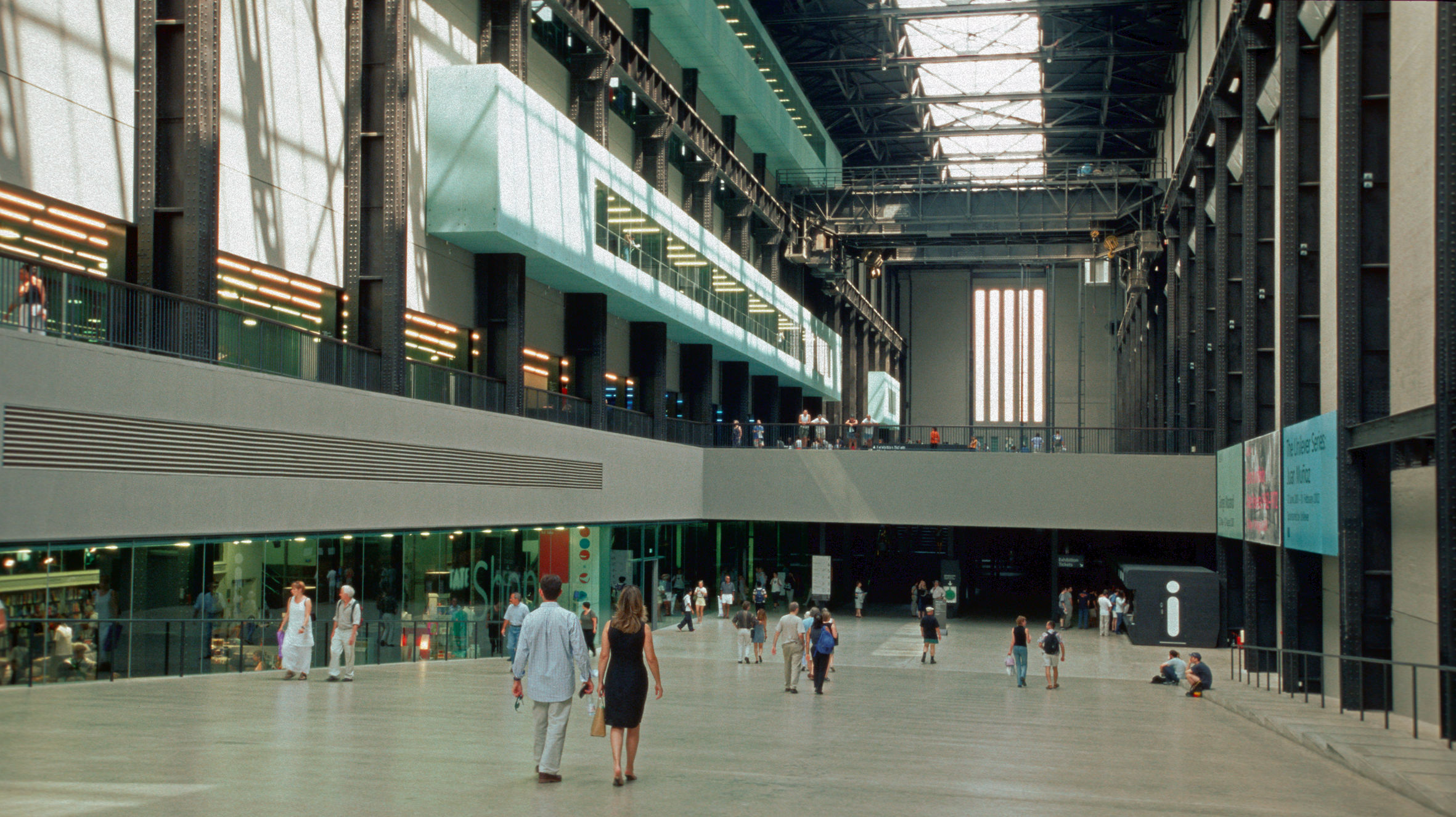
    Are these acquisitions really necessary? If the object is to introduce audiences to art from around the world – and ‘ART FROM AROUND THE WORLD’ is what it is currently advertised on the builders’ hoardings outside Tate Modern – there are cheaper alternatives to acquisitions, known as loans. But as you will have noticed, this spurt of international collecting activity coincides with the tacking of Herzog & de Meuron’s multistorey starship park onto the back of Giles Gilbert Scott’s former power station. The Tate is looking to its international committees and foreign income sources to solve the problem of filling this vast unwanted space on the cheap by shopping in relatively undeveloped markets. But it could shop even more cheaply at home if it was prepared to look at national artists without international reputations.

    “Real Art history is always part of national history,” wrote the Russian critic Boris Groys a few years ago. “There is a global art market, but there are no international institutions.” The Tate aims to change that. Assuming its extension is ever finished – and mothballing it would take a mountain of camphor – its internationalism may give it short-term novelty appeal. If it succeeds, other national galleries will follow and the world will be dotted with multinational outlets offering sameness rather than diversity in the name of universality. What will be lost in translation will be local dialects, the nuances of expression peculiar to art that is rooted in a shared culture in a particular place.

    The test of universality in art is not its ubiquity but its ability to communicate on a human level across cultures. Here’s what the cosmopolitan Kitaj had to say on the subject: “I have a hunch that pictures only achieve universal interest by way of the muddle of obsessed attentions (the stuff that excites one in life) to which a very skilled painter exposes his or her picture… That attention might be variously Christian, African, Neurotic, Alien, Decorative, deeply English or any complex sensibility – you name it, but I wouldn’t trust an art too much if it was damn well determined to be universal like Esperanto, which a lot of art now looks like… because you are what you are and what can be more human than that?”

  • The Art Fund subverted: they were only playing leapfrog

    The separate bodies contributing to State Art are now so interrelated, so cosily acquainted, their personnel so readily interchangeable and of identical mindset, that they might as well join forces. (… Liz Forgan is sacked from the Arts Council but remains a Trustee of the Art Fund; James Lingwood swallows his annual  million from the Arts Council and also sits as a Trustee of the Art Fund which has bought a work he commissioned, and so on – I could fill this column ten times over with similar complacent overlaps.) Imagine the savings on personnel and rent alone if the Contemporary Art Society (now funded and run by a former employee of the Arts Council), The Art Fund (headed by an ex-director of the Tate), the Arts and British Councils and the Tates (also directed by a former Arts Council employee) stopped pretending they pursued distinct objectives and pooled resources.

    The Art Fund is the latest to dump any semblance of independence. It is nominally a charity, if, that is, you count bankrolling the already well supplied as ‘charitable’. If the Salvation Army doled out caviare to nobs in Mayfair there would be a fuss. But the Art Fund regularly does the equivalent.

    It was founded by altruists in 1903 solely to help museums buy works of art. It gives £6.3 million a year in grants, spreading it thinly across scores of acquisitions, including some important ones. Its core activities are still nobly worthwhile and more than ever necessary.

    Recently, it announced it would fund two British tours: Jeremy Deller’s ‘immersive works’ (don’t ask) created for the British pavilion at this summer’s Venice Biennale, and Grayson Perry’s six large caricature tapestries on the subject of British life and taste. Why is a charity sponsoring the promotion of Perry and of a Tate trustee, Deller, who are among the most visible, wealthy and successful of recent British artists? And why aren’t their dealers paying for these tours from which they will all benefit? Deller’s exhibition in Venice, funded by the British Council (the tour of his inflatable Stonehenge is already, by the way, covered by the Arts Council), cost over half a million of public money to stage. Why is Deller worth even more from the limited resources of yet another much tinier charity? None of this makes sense. Unless of course there is a privately agreed national consensus between a raft of organisations, public and private, whose objectives – for whatever reason – are to promote the same few reputations.

    In their recent accounts the Fund crows its contribution of £200,000 towards Rachel Whiteread’s infantile defacement of a listed masterpiece, Charles Townsend’s Whitechapel Art Gallery. Again, here is lavish support of a successful, regularly exhibited artist represented by a leading world dealer. Charity? Really? Additionally, they funded the Tate’s purchase for £125,000 of five Whiteread ‘drawings’, or diagrams as they used to be known – they now have 30 of her works.

    The Fund also oversees the annual £100,000 Gulbenkian Museum of the Year whose judges are perennially lazy, predictable and uninspired. It is responsible too for administering ‘Artists’ Rooms’, an overpriced and dubious blunt instrument of State Art which ensures the circulation of work by top brands around regional museums, apparently ­– God help us – in perpetuity.

    The Fund’s magazine, Art Quarterly, formerly a purveyor of scholarly articles, is now a yappy promotional brochure for State Art. The current issue advertises three artist trustees of the Tate, each of whom receives the Fund’s cash. In the case of Wolfgang Tillmans, they contributed £95,000 towards buying 15 of his pictures for Glasgow Art Gallery having the previous year given £62,000 for the purchase of nine others of his works by the Arts Council, which has £450 million a year of its own to spend. The Tate already owns 62 works by Tillmans. Why this obsession with an indifferent German photographer?

    But all is not bleak. In 2011 when the Fund announced public purchase of Yinka Shonibare’s Fourth Plinth bottle the published cost was £362,500. As we demonstrated at the time this was a lie repeated in all newspapers. In their recent accounts the figure has now shot up to £650,000. They’re getting there, slowly.

    David Lee

    The Jackdaw, September/October 2013