Tag: Tate Modern

  • Charles Thomson: Lies, Damned Lies and Serota at the BBC

    Sir Nicholas Serota, director of the Tate Gallery, has used the platform of the BBC in a blatant attempt to deceive the nation. Either that or he is genuinely deluded himself. Both options render him unfit for major public office.

    He was confronted on Radio 4 programme The Reunion: Tate Modern on September 23rd by Sue MacGregor, regarding the Tate’s purchase in 2005 of its trustee Chris Ofili’s work The Upper Room. She observed with wry understatement, “The Charity Commission said you didn’t quite follow the rules here.”

    In 2006, as the BBC then reported, Charity Commission chief executive Andrew Hind said there were “serious shortcomings … In any charity we would be concerned that such basic matters were neglected, but in a charity of the size and stature of the Tate we are very disappointed.”

    The Guardian expounded, “The Tate has broken the law … By law, trustees cannot receive monetary benefit from their charity without express permission, usually from the commission. The Tate failed to seek permission … The Charity Commission’s full recommendations and criticisms, laid out in a lengthy document, also said the Tate failed to manage conflicts of interest … Failed to seek independent valuation of works by artist-trustees … Had no defined policy relating to purchases from artist-trustees … Had insufficiently clear acquisition policies … Kept insufficient records of trustee meetings.”

    The Daily Telegraph called this verdict “one of the most serious indictments of the running of one of the nation’s major cultural institutions in living memory”.

    “After an in-depth review lasting ten months by the Commission”, stated The Times, Serota “accepted the criticisms” and “was genuinely contrite”. The Evening Standard confirmed, “Sir Nicholas said today he accepted all the Charity Commission’s findings”.

    In stark contrast, his response to Sue Macgregor ten years later was an astonishing and shameless attempt to hoodwink the nation and evade blame with a trivialising revisionism that implied gross misconduct by the Charity Commission. To the supportive laughter of his entourage on the programme, Serota declared smoothly – as if it were established fact – the evasive nonsense, “The rules of course were invented after we had flouted them.”

    Serota has a history of obfuscation, whether lies, half-truths, delusions, evasions or omissions. In 2004, he applied for a grant from the Art Fund towards the purchase of The Upper Room. He signed a form saying that there had been no prior commitment to the purchase of the work (a condition of funding). Thanks to journalist Chris Hastings and the Freedom of Information Act, it was revealed that, eight months prior to the application, the Tate had paid a £250,000 deposit. Serota blamed it on “a failing in my head”.

    In 2005, I was quoted in The Observer: “Serota, as the director, chooses the trustees, and the trustees are then responsible for reappointing the director. The director then buys the trustees’ work.” In 2008, this was brought up in Varsity (the Cambridge Student Newspaper), where Serota defended himself with another flagrant falsehood: “I don’t have any part to play in their appointment.”

    The September 2005 Tate board minutes state: “The Director [Serota] reported that two strong candidates were to be interviewed for the position of Artist Trustee by a panel comprising himself, Paul Myners and the Independent Assessor.” In the May 2007 minutes, another trustee interview is on record with a panel of three trustees, the independent assessor and Serota.

    The Board of Trustees of the Tate Gallery Annual Accounts 2005-2006, 2006-2007, 2007-2008, and 2008-2009 all say in the section on trustees: “The key stages of the appointment are overseen by a panel, which will normally include the Director.”

    Also in Varsity, Serota said about the trustees, “Why would I want to win their support?” The simple answer to that is that he is their employee, as he explained in 1993 in the Independent on Sunday, when he hoped to be appointed for a second seven-year term as Tate Director: “Tate trustees fall in and out of love with their director and I’ll only discover whether they have fallen out of love with me in 1995 when they discuss my contract … The jury’s out.”

    On the Radio 4 programme, MacGregor confronted Serota about an event in October 2003 that became public the following year, namely “that Charles Saatchi offered you his entire collection … it was worth 200 million – for nothing.” Serota denied this: “I wish he had … he did have a great collection. Sadly he never did offer it to us.”

    This response is consistent with Serota’s version to the press in 2004, when he said that Saatchi’s offer was not for a gift but for a loan of work, which he (Serota) immediately rejected (none of which was mentioned to MacGregor).

    Surprisingly, Serota’s reply was immediately contradicted on the programme by former Tate trustee, Michael Craig-Martin, who admitted there had in fact been an offer of work: “Unfortunately what was offered to the Tate was not the great collection with the great things in it, most of which were already gone by that time. They had been sold by that time.”


    As it happens, that is incorrect. At the time of the offer in 2003, Saatchi still had in his collection iconic Brit art works, including Damien Hirst’s shark, Tracey Emin’s bed, Rachel Whiteread’s plaster cast of a room, Mark Quinn’s head made from frozen blood, Sarah Lucas’s table with two fried eggs and a kebab, Marcus Harvey’s Myra Hindley painting with children’s hand prints, Ron Mueck’s sculpture of his dead father, the Chapman’s penis-nosed mannequins and Chris Ofili’s Virgin Mary painting with elephant dung.

    Serota continued about Saatchi: “Michael [Craig-Martin] and I with Janet De Botton spent a great deal of time in the late nineties trying to persuade him to give, not his collection, but maybe ten works from his collection as a founding collection for Tate Modern. But I’m afraid he didn’t feel for one reason or another able to do that.”

    This is obviously another failing in Serota’s head. In 2004, the Evening Standard reported that in 1998, “Saatchi offered 86 works by 57 British artists – including Langlands & Bell, Turner Prize winner Martin Creed and Glenn Brown” (as well as Richard Billingham, Richard Wilson and Chantal Joffé). A Tate spokeswoman confirmed the offer of 86 works, which were rejected as “The trustees felt on this occasion the works would be better suited in a collection elsewhere.”

    Regarding The Upper Room scandal, Christopher McCall QC wrote to the press in 2005 condemning “expediency … which has an appeal to an overbearing executive”. The Times said of the Tate: “If it had been a company, the verdict would have sent shareholders into a panic.” No doubt if it had been a government, resignations or sackings would have followed the public outcry. Surely we have the right to expect the same standards across the board in public life, including the arts.

    Serota has not displayed a level of behaviour and integrity to remain a figurehead and step into another prime position as Chairman of the Arts Council. His record is tarnished and far from admitting to his mistakes, he has the blinkered arrogance to pretend they never happened.

    We need leaders who do not have recurrent failings in their head.

    Charles Thomson
    The Jackdaw
  • Selby Whittingham: Tate Modern or Tate Theatre

    A survey by the Office for National Statistics in May revealed that the British are changing their spending habits. Instead of filling our homes to the rafters with consumer durables and not-so-durables, we’re spending our spare cash on ‘experiences’, including recreation and, yes, culture. “People are interested in servicing a lifestyle rather than buying stuff,” one trend forecaster commented in The Guardian, while a senior executive from IKEA predicted gloomily: “In the west, we have probably hit peak stuff”.

    Does this mean fewer family trips to the mall and more museum visits? The contemporary museum sector certainly hopes so, and to bring the hope closer to reality it is doing it best to make the two experiences as similar as possible. This is an ambition not confined to Britain. Is it any coincidence that Rome’s two contemporary art museums, MACRO and MAXXI, have names like megastores? It wouldn’t surprise me if the Pompidou called its next outlet Géant Casino.

    The mallification of the contemporary art experience is international, but here in Britain, where entry is free, we lead the world. Last year Tate Modern logged 5.7 million visitors (don’t you love the precision of the decimal point?) and this year, with the added attraction and capacity of Herzog & de Meuron’s new Switch house extension, it’s hoping to swell attendance figures to over 6 million.

    Architecturally, malls and contemporary art galleries have much in common: both incorporate awesomely large atria designed to instill a sense of limitless possibility, and both feature fancy escalators and rubbish cafés run by stressed and underpaid staff. Ah yes, you say, but here your parallel hits the buffers: people go to shopping malls to shop. Not strictly true, is my reply: visiting malls is a leisure activity. People go to malls to look at stuff and at each other, especially when travelling up and down the escalators, much as the ancient Greeks did in the agora, though without the escalators. Window-shopping is a group activity, a sociable way of servicing a lifestyle. As an experience, the ONS might well put it in the same category as visiting Tate Modern.

    In the run-up to the Switch House’s opening we were forewarned that much of its 60% of extra space would be devoted to social interaction. Museums used to be about conservation. Now, with a minor anagrammatic rearrangement, they’re about conversation. Like shopping malls, contemporary galleries are places to hang out in, with the shop window or exhibition displays serving as talking points. As Jacques Herzog explained to The Observer about the design of the Switch House, “the stairs are wider than we need them; we want to invite people to have a different kind of experience than to rush from one gallery to another”.

    Lee Mawdsley

    All well and good, but you can’t get round a gallery this size without rushing, especially not if you linger on the stairs. I lost the ability to focus less than halfway through, and I call myself an art critic. The problem is not just one of scale; the trouble starts, ironically, with the gallery’s departure from the mall model. Art galleries, like shops, used to be full of covetable objects ordinary people could fantasise about owning – modest-sized works, originally made for private consumption, put on public display for the benefit of the general population. The Switch House galleries are mostly full of large-scale works created with public display in mind. Like public sculptures, they are made for rushing past.

    The mystery of this so-called gallery extension which has so far cost £58 million of public money is how relatively little art there is in it: only three of its ten floors are exhibition galleries, four if you count the Tanks. But this didn’t stop the panel assembled for the press launch – including poor little Sadiq, whistled up at short notice as a multicultural mascot – from harping on about how transformative it would all be. It’s unfortunate that the most conspicuous evidence of the economic transformation so far triggered by the old Tate Modern should be Richard Rogers’s Neo Bankside luxury apartments with their litter of posh nosh outlets underneath. Looking south from Switch House’s 10th floor viewing platform, it’s hard to imagine the Tate’s regenerative effect rippling out towards the North Downs without the swathes of intervening social housing being swept away and replaced with Tory nastytecture and overpriced cafés.

    Bilbao has a lot to answer for. If the Basque government hadn’t hit the community jackpot with Frank Gehry’s Guggenheim Museum none of this would have happened. As it is, any city council in need of an economic boost reaches for the starchitects. The only city manfully resisting the tide seems to be Helsinki, still refusing to give the go-ahead to its Guggenheim outlet more than a year after the Paris-based architects Moreau Kusunoki won the competition to design it.

    Bilbao claims to have recouped the Guggenheim’s construction costs within three years of opening. Even allowing for some prestidigitous book-balancing on Bilbao’s part, there’s precious hope of Tate Modern repeating this feat, with a £30 million funding hole that still needs filling. On the eve of the Switch House’s opening, Serota as good as admitted to The Art Newspaper that if the Tate didn’t seize the opportunity of “unwrapping the building” to hook some late donations it would be this year, next year, sometime, never before the debt was paid. Slim chance of our new tightwad PM delivering on Osborne’s previous promise of an extra £6.8 million of annual funding – and extra funding will be needed, not just to service the debt.


    As with any expanded operation, the elephant in the gallery extension is the payroll. Billionaire donors who will happily part with capital to get their names on a museum building don’t give a stuff about the extra numbers of staff needed to keep it open. They leave such practicalities to museum administrators and the public bodies that fund them. If it came to keeping museum staff in jobs and pensions, your average billionaire would hand straight over to Dominic Chapell.

    In America, where more than $5 billion has been spent on museum expansion in the past nine years, administrators are getting wise. The Met, which reported a $10 million deficit this year, has mothballed plans for a David Chipperfield-designed modern and contemporary wing and, along with MoMA and the Brooklyn Museum, has announced plans to cut staff. The Met’s 2,300 staff – who, unlike museum staff in Britain, are properly paid – cost $200 million in salaries and benefits in 2013. MoMA, which spent $87 million on its 800 employees in the same year, has scaled back plans for a new extension.

    Double your gallery space and you double your warding costs, at least in theory. One reason, I suspect, why Tate Modern’s Switch House galleries are almost entirely given over to large sculptural installations is that they require less security – the worst you can do is steal a Carl André brick. Meanwhile the more vulnerable paintings and nickable sculptures have been squeezed into a few crowded galleries in the old Boiler House to save on warders.

    The dawn of the artist’s statement was bad enough; the arrival of the statement building has made things worse. Combine the two, and you get a tower of babble. Is the new Tate Modern worth the £260 million investment? If it ever has to charge for entry, we’ll find out.

    Selby Whittingham
    The Jackdaw 

  • Laura Gascoigne: The Art Police – November 2017

    If you’re thinking of committing an art crime, now’s your moment. In June budgetary pressures forced the ‘temporary’ closure of the Met’s Art & Antiques Squad and the transfer of expert staff to the Grenfell Tower fire investigation, and there’s no knowing when, if ever, they’ll be back. So it’s bye-bye blue light, hello green light to thieves, fakers, fraudsters and traffickers of looted antiquities who fund the terrorism the rest of the Met is struggling to combat.

    But it’s not the end of art policing; while the official force has been disbanded, unofficial forces are taking over. Alexander Adams’ article New Order in the last issue was a cogent analysis of how the enforcers of the new identity politics are effectively policing public exhibitions. Since his report there have been further developments in the case of the Dakota Elders v Sam Durant, whose sculpture Scaffold was removed from Minneapolis Sculpture Garden after complaints that as a non-Native American he had no hereditary right to refer in his work to the hanging of 38 Dakota Indians by the US Army in 1862. Initially condemned to be burnt, the dismantled Scaffold will now be buried in a secret location. Meanwhile poor old Jimmie Durham, who has spent a lifetime trading on his Native American ancestry, has been denounced by a group of snooty Cherokees as a fake for not being a registered member of the Cherokee Nation. Once an art degree was qualification enough to practise art; now you need registration with your tribe or ‘subset’.

    On this basis, only pure-breed something-or-others should be allowed to make public statements, artistic or otherwise, on questions of race. As a half-Italian, quarter-white-West Indian, quarter-Northern-Irish crossbreed I would probably be wise to keep my trap shut but I’m congenitally incapable, so here goes. First off, I would like to point out to these purblind purists a perennial problem with questions of heredity. Who among us can actually prove our bloodlines? Which of us really knows who our fathers/grandfathers/great-grandfathers were? Only our mothers/grandmothers/great-grandmothers could tell us. Are we going to dig all our ancestors up and DNA-test them before presuming to make art about them?

    Racial purity is not the only thorny issue in a field where so many subsets disadvantaged in terms of gender, transgender, whatever – it can’t be long before the LGBT contingent have commandeered all the letters in the alphabet – have axes to grind. For the moment different factions are content to share the benefits of affirmative action with other ‘minorities’. (Don’t you love it when women get classed as a minority?) But believe me, they’ll soon be scrapping like ferrets in a sack over the dismembered body of White Male Art.

    Of course it’s true that WMAs have had it all their own way for far too long and, yes Guerilla Girls, if women don’t have to be naked to get into the Met, that’s progress. But can positive discrimination in the present reverse the injustices of the past? Nearly all the art preserved in our museums was painted, carved or moulded by men for men, a historical fact that retrospective action cannot change. Maria Balshaw has been making appropriate noises about adjusting the historical gender balance in the Tate Modern by acquiring a Frida Kahlo – an expensive price to pay for a minor tweak – while in Tate Modern’s contemporary displays Frances Morris has already established parity between the male and female artists represented. For the moment, the reach of the levellers has not extended beyond contemporary art, a few misbegotten historical statues excepted. That’s a can of worms I won’t open here, except to agree with Lionel Shriver’s recent observation in the Spectator: “Applying today’s demanding standards of rectitude to previous generations – requiring all past notables to have embraced racial equality, feminism, disability rights, anti-colonialism, non-smoking and gender-fluidity means pulling down virtually every statue standing.” (I would also like to plead that if male memorials are to be replaced with female ones, can they please not be ‘sculpted’ by Gillian Wearing.)

    What started me on this subject was being asked to write about two historical male artists who were lamentably far from meeting Shriver’s criteria. First Ernst Haeckel, the 19th century German biologist and illustrator whose breathtaking watercolours of marine invertebrates helped to launch Art Nouveau and are the subject of a new book from Taschen. Haeckel’s paintings were astonishingly beautiful but his views on race were shockingly objectionable. Should we allow this knowledge to cloud our appreciation of his art?

    Second Amedeo Modigliani, the subject of Tate Modern’s blockbuster winter exhibition. The problems the Guerrilla Girls may have with his nudes are the least of it. This was a man who threw one of his muses, Beatrice Hastings, through a window and dragged another, Jeanne Hébuterne, by her plaits (a fate avoided by the gamine Hastings, who had short hair). Think about it: a known abuser of women given star billing at an institution that claims to be levelling the gender field. Here we have ‘the most popular modern art museum in the world’ virtue-signalling with one hand while virtual pussy-grabbing with the other. Does its right hand not know what its left hand is doing? No, not while its left hand is counting the takings, because it’s blockbuster exhibitions like this that fund the virtue-signalling.

    How long before the identarian art police wise up to this fact and start picketing non-compliant exhibitions of historical art? True, they’d need armies of pickets because there are almost no historical WMAs in the top rank of crowd-pullers who are without sin, and some are offenders on multiple counts. Take Gauguin, the subject of Tate Modern’s moneymaking blockbuster of autumn 2010. Child abuse: check. Cultural appropriation: check. Passing on the clap to healthy young women: let’s not go there.

    The difficulty here is that art is funky. If the Tate examined its conscience it would have to confess that misbehaviour adds to an artist’s appeal. How else did the bad boys and girls of Britart awaken public interest in the Turner Prize? Since the subset-appeasers took over running the show, it’s become so boring it has had to be exiled to Hull. Sooner or later our publicly funded galleries are going to have to face up to this conflict of interest because, as night follows day, where positive discrimination leads negative follows.

    Art has a long and venerable tradition of pretending to serve morality while undermining it; our Victorian ancestors led the world in double standards and we should learn from them before it’s too late. Step one in confronting censorship is to separate the art maker from the art. To quote Liz Taylor, who had experience in these matters: “The problem with people who have no vices is that generally you can be pretty sure that they’re going to have some pretty annoying virtues.” Virtuous people need to be kept away from art, from its production and, ideally, from its management. With the exception of a few monochrome canvases, art has never been whiter than white. Should galleries be ‘safe spaces’? Hell no! Virtue-signalling holds up a false mirror to the messy reality art is supposed to reflect. In the immortal words of the love-struck millionaire to the gender-fluid Jack Lemmon in Some Like It Hot: “Nobody’s perfect”.

    Laura Gascoigne
    The Jackdaw Nov/Dec 2017

  • Laura Gascoigne: Photography, Wrong Sort Of – January 2017

    “And the Praemium Imperiale Award for Painting goes to… a photographer!” Yep, Cindy Sherman has won the Imperial Japanese gong for mastery of greasepaint for that interminable string of selfies in fancy dress we all wearied of circa 1980. If not for greasepaint, it would have to be for psychological insight – and despite her readiness to raid the dressing-up box and make her ageing self look ridiculous in the name of art, Rembrandt she ain’t.

    Sherman is the least qualified non-painter to win the award so far, but she’s not the first. Bill Viola won it in 2011 and Japan’s own Hiroshi Sugimoto in 2009 – both non-painters who piggyback on the history of painting. But no hard feelings; it’s all water under the interdisciplinary bridge. As Frances Morris established at the opening of Tate Modern’s Switch House: “We don’t any longer have a hierarchy where painting is at the top.”

    As if to settle the point beyond dispute, last year the Tate awarded its annual IK Prize for creative talent in the digital industry to a team from Treviso for an experimental project using artificial intelligence to compare news photographs with works in the collection. Titled Re][cognition – potty punctuation is de rigeur in the digi-world – it set out to answer the question: “Can a machine make us look afresh at great art through the lens of today’s world?”

    The way it worked was this. Every day, a crop of current news photos shot by Reuters’ photographers were shown to the machine, which then scanned the collection at the rate of thousands of images a minute and spat out matches based on object, facial, compositional and context recognition.

    Now this is an area I’ve long been interested in, so I went along to Tate Britain to have a look. For years I’ve been collecting news photographs that echo the compositions of old master paintings. Some subjects are naturally fertile territory – almost every refugee mother and baby is a Madonna and Child, every grieving mother a Mater Dolorosa – but the parallels go further. I was particularly pleased to find a photo of Mick Philpott and his wife Mairead at a press conference following the self-started house fire that killed their six children in 2014 doing a perfect impersonation of Adam and Eve in Masaccio’s Expulsion from Eden.

    Are these coincidences? I don’t think the borrowings are deliberate; it’s more that the educated eye of the photographer, making a snap decision in the heat of the moment, matches the scene with a meaningful image in the memory, and frames it. Photographers, being blessed with human brains – and emotional intelligence – can make split-second calculations machines can’t. (If they could, CCTV would produce prize-winning photographs of people breaking open cash points or mugging old ladies.)

    Of course the matches in Recognition were nonsensical. The machine was reliable enough (though not 100%) at identifying ‘a man wearing a white shirt’ or ‘a woman with dark hair’, but despite its programmers’ claims that it could determine “the age, gender and emotional state of each subject it finds”, it was defeated by the most basic of facial expressions. It saw smiles on the faces of Matteo Renzi at a press conference and Francis Bacon in a portrait by Lucian Freud because their mouths were slightly turned up at the corners. A month-old baby would not have made the same mistake; it would probably have cried. Nor, if consulted, would it have drawn a comparison between a photo of Brazilian President Michel Temer attending the launch of a banking initiative at the Planalto Palace with Anthony Caro’s 1980s sculpture Night Movements, on the basis of “prominent shapes and structures, visual layout, and colours”. If it had, its mother would have worried.

    So it was sensible to include an interactive section where visitors could tap a screen and make their own connections “to see if Recognition can learn from the many personal responses humans have when looking at images”. I had some fun matching a Black Friday photo of a frenzy of red and white shopping bags with Patrick Heron’s Azalea Garden. But I was disappointed to find that visitors’ choices were not recorded on the website, where they would have exposed the machine’s inadequacies. It seems that while a computer can be programmed to fudge a fair approximation of a Rembrandt portrait, left to itself it can’t tell one thing from another.

    If this experiment taught us anything, it was that however anti-hierarchical we may be, it’s too soon to open up the competition to artificial intelligence. Yet in the field of photography, that day may not be far off. I’m not talking about news photographers, who do a job no machine could possibly do and bring an acute visual intelligence to it. I’m talking about ‘fine art photographers’ as exemplified by Wolfgang Tillmans, the first photographer to be awarded the Turner Prize, who (having recently finished a stint as a Tate Trustee) has a solo show opening at Tate Modern in February. Tillmans takes egalitarianism to its logical conclusion, refusing to distinguish between motifs: if the geeks from Treviso programmed a computer to take photographs, they would look like his.

    While Tillmans is larging it at Tate Modern, the work of Roger Mayne will be showing at Graves Art Gallery, Sheffield in the exhibition Street View: Photographs of Urban Life (until March 11th). Mayne, a chemistry graduate of Balliol College Oxford, was egalitarian enough to want to devote five years of his life to photographing slum children on the streets of West London. The slums have long gone, but the photographs look as fresh as the day they were taken – which may be why one was chosen as the poster image for Tate Britain’s photographic survey How We Are. In Mayne’s case the past tense would have been more accurate. In 1956 he was given a one-man-show at the ICA. Today he might take photographs for Reuters, but he would never be given a show at Tate Modern because he is the wrong sort of photographer.

    Photography is now the ultimate democratic medium: anyone and everyone can click a shutter. But which images will last? In 60 years’ time, will people feel a jolt of recognition on seeing a photograph by Tillmans, or blank indifference? For a photographer who calls himself a fine artist, impartial records of reality aren’t enough: to lodge in the human mind, a photograph must mean more to a flesh-and-blood viewer than to a Recognition machine. Here painting still retains the emotional edge that the painter doesn’t have to wait for the ‘decisive moment’ to reveal meaning, since meaning is built into the composition. For what it’s worth, Sherman composes her portraits down to the last hair, which could, I suppose, be thought to bring them halfway towards meeting the criteria for a painting prize. But halfway isn’t far enough. There is still the small matter of artistic expression.

    “Photography doesn’t get nearer experience. Painting gets nearer to it because it can do far more,” said David Hockney in a 1984 interview, before quoting Man Ray: “I photograph what you can’t paint, and I paint what you can’t photograph.” A wise judgment, and one the imperial family would do well to consider when awarding the next Praemium Imperiale.

    Laura Gascoigne
    The Jackdaw Jan/Feb 2017

  • Laura Gascoigne: Reach for the Starchitects – The Switch House

    A survey by the Office for National Statistics in May revealed that the British are changing their spending habits. Instead of filling our homes to the rafters with consumer durables and not-so-durables, we’re spending our spare cash on ‘experiences’, including recreation and, yes, culture. “People are interested in servicing a lifestyle rather than buying stuff,” one trend forecaster commented in The Guardian, while a senior executive from IKEA predicted gloomily: “In the west, we have probably hit peak stuff”.

    Does this mean fewer family trips to the mall and more museum visits? The contemporary museum sector certainly hopes so, and to bring the hope closer to reality it is doing it best to make the two experiences as similar as possible. This is an ambition not confined to Britain. Is it any coincidence that Rome’s two contemporary art museums, MACRO and MAXXI, have names like megastores? It wouldn’t surprise me if the Pompidou called its next outlet Géant Casino.

    The mallification of the contemporary art experience is international, but here in Britain, where entry is free, we lead the world. Last year Tate Modern logged 5.7 million visitors (don’t you love the precision of the decimal point?) and this year, with the added attraction and capacity of Herzog & de Meuron’s new Switch house extension, it’s hoping to swell attendance figures to over 6 million.

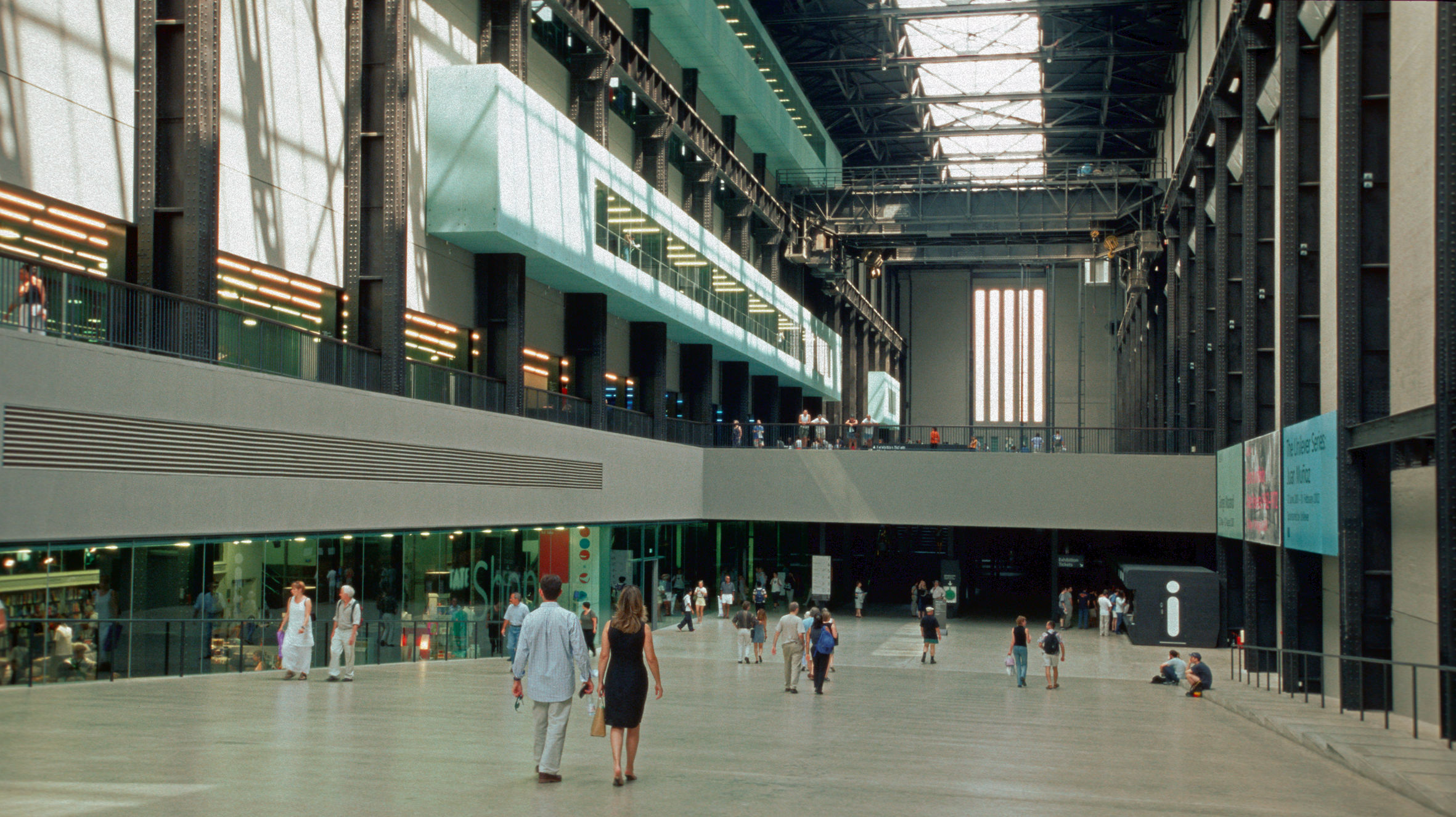
    Architecturally, malls and contemporary art galleries have much in common: both incorporate awesomely large atria designed to instill a sense of limitless possibility, and both feature fancy escalators and rubbish cafés run by stressed and underpaid staff. Ah yes, you say, but here your parallel hits the buffers: people go to shopping malls to shop. Not strictly true, is my reply: visiting malls is a leisure activity. People go to malls to look at stuff and at each other, especially when travelling up and down the escalators, much as the ancient Greeks did in the agora, though without the escalators. Window-shopping is a group activity, a sociable way of servicing a lifestyle. As an experience, the ONS might well put it in the same category as visiting Tate Modern.

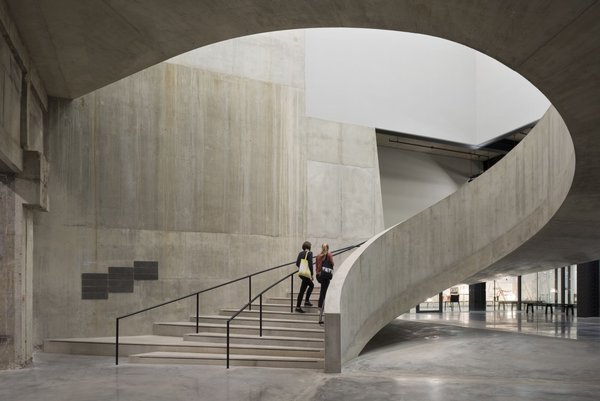
    In the run-up to the Switch House’s opening we were forewarned that much of its 60% of extra space would be devoted to social interaction. Museums used to be about conservation. Now, with a minor anagrammatic rearrangement, they’re about conversation. Like shopping malls, contemporary galleries are places to hang out in, with the shop window or exhibition displays serving as talking points. As Jacques Herzog explained to The Observer about the design of the Switch House, “the stairs are wider than we need them; we want to invite people to have a different kind of experience than to rush from one gallery to another”.

    All well and good, but you can’t get round a gallery this size without rushing, especially not if you linger on the stairs. I lost the ability to focus less than halfway through, and I call myself an art critic. The problem is not just one of scale; the trouble starts, ironically, with the gallery’s departure from the mall model. Art galleries, like shops, used to be full of covetable objects ordinary people could fantasise about owning – modest-sized works, originally made for private consumption, put on public display for the benefit of the general population. The Switch House galleries are mostly full of large-scale works created with public display in mind. Like public sculptures, they are made for rushing past.

    The mystery of this so-called gallery extension which has so far cost £58 million of public money is how relatively little art there is in it: only three of its ten floors are exhibition galleries, four if you count the Tanks. But this didn’t stop the panel assembled for the press launch – including poor little Sadiq, whistled up at short notice as a multicultural mascot – from harping on about how transformative it would all be. It’s unfortunate that the most conspicuous evidence of the economic transformation so far triggered by the old Tate Modern should be Richard Rogers’s Neo Bankside luxury apartments with their litter of posh nosh outlets underneath. Looking south from Switch House’s 10th floor viewing platform, it’s hard to imagine the Tate’s regenerative effect rippling out towards the North Downs without the swathes of intervening social housing being swept away and replaced with Tory nastytecture and overpriced cafés.

    Bilbao has a lot to answer for. If the Basque government hadn’t hit the community jackpot with Frank Gehry’s Guggenheim Museum none of this would have happened. As it is, any city council in need of an economic boost reaches for the starchitects. The only city manfully resisting the tide seems to be Helsinki, still refusing to give the go-ahead to its Guggenheim outlet more than a year after the Paris-based architects Moreau Kusunoki won the competition to design it.

    Bilbao claims to have recouped the Guggenheim’s construction costs within three years of opening. Even allowing for some prestidigitous book-balancing on Bilbao’s part, there’s precious hope of Tate Modern repeating this feat, with a £30 million funding hole that still needs filling. On the eve of the Switch House’s opening, Serota as good as admitted to The Art Newspaper that if the Tate didn’t seize the opportunity of “unwrapping the building” to hook some late donations it would be this year, next year, sometime, never before the debt was paid. Slim chance of our new tightwad PM delivering on Osborne’s previous promise of an extra £6.8 million of annual funding – and extra funding will be needed, not just to service the debt.

    As with any expanded operation, the elephant in the gallery extension is the payroll. Billionaire donors who will happily part with capital to get their names on a museum building don’t give a stuff about the extra numbers of staff needed to keep it open. They leave such practicalities to museum administrators and the public bodies that fund them. If it came to keeping museum staff in jobs and pensions, your average billionaire would hand straight over to Dominic Chapell.

    In America, where more than $5 billion has been spent on museum expansion in the past nine years, administrators are getting wise. The Met, which reported a $10 million deficit this year, has mothballed plans for a David Chipperfield-designed modern and contemporary wing and, along with MoMA and the Brooklyn Museum, has announced plans to cut staff. The Met’s 2,300 staff – who, unlike museum staff in Britain, are properly paid – cost $200 million in salaries and benefits in 2013. MoMA, which spent $87 million on its 800 employees in the same year, has scaled back plans for a new extension.

    Double your gallery space and you double your warding costs, at least in theory. One reason, I suspect, why Tate Modern’s Switch House galleries are almost entirely given over to large sculptural installations is that they require less security – the worst you can do is steal a Carl André brick. Meanwhile the more vulnerable paintings and nickable sculptures have been squeezed into a few crowded galleries in the old Boiler House to save on warders.

    The dawn of the artist’s statement was bad enough; the arrival of the statement building has made things worse. Combine the two, and you get a tower of babble. Is the new Tate Modern worth the £260 million investment? If it ever has to charge for entry, we’ll find out.

    Laura Gascoigne
    The Jackdaw

  • Editorial – July 2017

    WHOLESALE GRATIFICATION 

    In the last issue I noted the gradual but relentless erosion of space allocated to historical pictures in Tate Britain. This contraction will now accelerate because the collection is to be re-hung, yet again, on this occasion thematically – a policy undoubtedly designed to demonstrate the State Art Commandment that all roads shall lead to the Usual Suspects. Long gone are the reassuring days of my youth when a regular visitor to Millbank would know exactly where to find the enduring gems of British art. This trend of squeezing the historical is also inevitable because new art increases as a percentage of the collection. Hedging their bets, and in order not to miss something the future decides is important, the Tate now acquires anything by anyone. To them the idea of exhibiting discernment is as damningly reactionary as the idea of figurative art itself. The result is that Serota’s true legacy is not really all those expensive new buildings and extensions but his total surrender to mediocrity.

    A well-researched article on the Guardian website recently arrived at the startling, though not entirely surprising conclusion that during Serota’s recently concluded 28-year tenure the number of works in the Tate’s holding – excluding the Turner Bequest – doubled. Serota added over 30,000 new items, the majority of them box fresh. We’ve pointed out previously in these pages that the Tate’s stock has grown every two years by more works than the National Gallery has acquired in total in the 193 years of its existence. The irony here is that this massive growth, both of the collection and the galleries in which to house some of it, has taken place during a period when scarcely a month passed without warnings of dire consequences if more public subsidy wasn’t found. On the evidence of the collection alone, and for all Serota’s gloomy predictions to the contrary, the Tate has enjoyed a golden age of expansion during which it swallowed far more than its fair share of the national arts budget.

    Most of the work acquired during the Serota years is by a roll call of artists you’ve never heard of, many of whom are not only living but young, and whose efforts wouldn’t have merited preservation in what at least in theory, until Serota took over, had always been a repository for choice works of proven quality. Not any more. Today, the collection is home to the kind of instantly forgettable trivia we see in Tate Modern’s latest extension.

    Serota’s reign was also responsible for a serious reorientation in the way we must approach art. State-approved styles and mediums now require a different way of looking. Established criteria of judgement were replaced by a new ‘vision’ discouraging of knowledge and preconceptions. Dinosaurs, such as myself, who were trained in stylistic comparisons and the identification and explanation of minute visual subtleties, have been mystified by this, confounded by the obvious feebleness of what is relentlessly marketed as the acme of achievement. It took me longer than it ought to have done to realise that if you start with any assumptions at all about what the Arts Council dubs ‘Challenging Contemporary Art’ you are certain to be disappointed. Even the lowest demands will lead to bewilderment. Another of Serota’s legacies is, therefore, that in looking at contemporary art we must all start with no expectations whatsoever, and, what is more, from the furthest extremity of ignorance and credulity. Only then might we not be disappointed, for in these Year-Zero days even the equivalent of a baby spluttering to communicate can be sold as progress.

    As Alexander Adams points out in his thoughtful review concerning the material poverty of many artists (see page 8), the probability of low incomes has not, as one might have predicted, caused a reduction in numbers. Far from it. Students have been sold the pup that anyone can do it with the result that a massive surplus is being produced, too little is worth the time spent looking at it, and too much that is self-evidently stillborn is speculatively hoarded by national institutions.

    Generally, Serota’s legacy is a beautifully polished reflection of his age, in so far as it was one of unsustainable, undiscriminating acquisitiveness. Our population was addicted – a serious sickness – to shopping, fashion, momentary gratification and the instantly obsolete, and so was Serota. And just as ‘Austerity Chancellor’ Osborne borrowed more money than all his predecessors since Robert Walpole combined, so Serota acquired more stuff than all the previous seven Tate directors put together.

    David Lee
    The Jackdaw Jul/Aug 2017

  • Editorial – May 2017

    TATE BRITAIN NEEDS ITS IDENTITY BACK

    In recent issues I’ve described how since 1945 the education, bureaucracy and exponentially increasing cash for the visual arts have been usurped and dominated by an evolving one-track mindset which, in these pages, is called State Art. This sinister subversion of the institutions, predicted before and after the last war by Eliot, Wyndham Lewis and Orwell among others, is complete with the recent appointment of Doctor Balshaw as overall Director of the Tate (see last editorial). She understands nothing but that which is ‘Contemporary’, a qualification (if that is an appropriate description) which makes her uniquely unsuitable for running three galleries with what should be historical and scholarly functions.

    The sad truth now is that the Tate has become a gallery of contemporary art with a marginalised historical concession on the side, whereas its original function was the reverse of this. The revolution that has taken place for this to happen over the last half century is an object lesson in change by incremental stealth. It is the perfect demonstration of what Rudi Dutschke meant when, confronted with the fact that a successful immediate proletarian revolution was impossible in western Europe, he referred to the necessity to operate clandestinely from inside, a process he famously dubbed “the long march through the institutions”. This would, he predicted, lead to the eventual substitution of one establishment by another independent of any popular support. And in the case of the contemporary visual arts this means a far more repressive, hidebound and authoritarian regime than the one it replaced.

    Writing in 1971 political scientist Leonard Schapiro observed: “[T]he true object of propaganda is neither to convince nor even to persuade. But to produce a uniform pattern of public utterances in which the first trace of unorthodox thought reveals itself as a jarring dissonance.” He was referring to Stalinism but he might just as easily have said it about an equally dictatorial State Art. Such is the blind faith in the New Scripture for Contemporary Art, and the impossibility of apostasy from it (like membership of the Euro the only exit from State Art is a door marked Disaster), that any attempt to question the evolving orthodoxy and monopoly has condemned any would-be non-conformist to immediate ostracism. The predictable chorus of positive opinion at the appointment of Dr Quack is evidence of this common fear of being targeted as a “jarring dissonant” and the career disaster it portends. Her inadequacies are blindingly obvious but who in the arts commentariat actually mentioned them? There is now a terror in the visual arts of telling even a fraction of the truth. Thus has State Art been allowed to prosper in a parallel universe impenetrable to public interest and criticism which renders its functionaries untouchable and self-perpetuating, and – like Moonies – eternally pleased with themselves.

    With Dr Q’s appointment, and the earlier elevation of a contemporary art specialist to head Tate Britain, the takeover of the institutions is complete. We have arrived at Dutschke’s Year Zero. The art of Now has become its own justification, as if nothing before matters. This is the curious process by which an uncoupled past has become an irrelevance. If it goes in any direction at all the story of art now travels backwards, and not very far back at that. State Art-approved galleries have become locked in the bubble of a continuous present inside which nearly all recent ‘masterpieces’ and ‘challenges’, ‘subversions’ and ‘explorations’ are almost instantly forgotten because really they were meritless to start with and their importance routinely overstated. Yesterday’s work is replaced swiftly by today’s and accompanied by the now familiar hyperbole, for in the visual arts we are trapped on the treadmill of perpetual mediocrity.

    Consider this. In 1946 there were two curators and one director at the Tate. There are now 17 directors alone. On the Tate’s website they don’t publish a full staff organisation chart, most probably because that would give away the scale of empire-building that has recently gone on there (despite its predictable annual cries of poverty). Instead 46 staff are listed as examples of what they call “the broad range of academic and professional expertise in the organisation”. In fact, the ‘range’ it describes is the narrowest of bottlenecks. Over two thirds of the staff on this list are modern and contemporary curators, mainly the latter; a fifth relate to art before 1920; and the rest are dedicated to conservation and managerial wonks with mystifying job titles.

    Such a bias in favour of the contemporary is justified at Tate Modern but it isn’t a prejudice appropriate at Tate Britain or the two satellites reliant on its historical collection. These galleries should show and research what is established and not that which is either speculative, market driven or the current whim of a dominant, highly prejudiced clique of curators and their favourite dealers.


    And so it is urgently necessary to split off Tate Modern from the rest of the franchise. A different ethos must apply at Tate Britain, a gallery whose historical works should be its justification not its embarrassment. Not all the Tate’s galleries should have to pay the necessary lip service to Schapiro’s “uniform pattern” demanded by State Art, as is currently the case.

    This dismantling of Serota’s unwieldy empire has been mooted before but now he’s gone for good it’s an urgent necessity, especially when we have a scholarly nobody in charge of the world’s most important collection of historical British art. It is a serious crime of negligence to abandon the organisation to the leadership it has. Having someone in charge of Tate Britain who has no credibility in the history of British Art might be fine in a gallery of contemporary art – even then it’s not exactly desirable – but it is perverse in an institution which began life in 1897 as the National Gallery of British Art ­– which was, incidentally, run until 1954 by the National Gallery.

    Tate Britain today is heading relentlessly in the direction of becoming a museum of Modern and Contemporary British art with some history attached. If you have a person in charge whose knowledge stretches back only to the week before last this continued drift is inevitable.

    The space for work before 1920 is constantly being squeezed. Currently the building is split into three parts. The vast middle strip, the Duveen Galleries, is customarily wasted promoting an over-rated contemporary. At the moment it is White Cuber Cerith Wyn Evans with sprawling, incoherent patterns of white neon tubing signifying only he knows what. A ‘Senior Curator of Contemporary Art’ writes of this piece on an ‘information’ board: “In this commission CWE has responded to the space of the Duveen Galleries by creating a neon installation which focuses on ideas around the folds and flows of energy via material and immaterial conduits.” Only the author knows what that means. So the gallery’s middle third is wasted.

    The eastern third is modern British art since roughly 1920, much of it minor and nearly all of it illustrative of the Modernist Creed. At the far end Hockney currently occupies galleries which usually act as a graveyard for the latest Turner Prize. In the front corner is the Turner annexe, now also used to house Constables which used to live in what is a new ‘installation’ space.

    The western third used to be all history and is the most popular section. Visited but not crowded it is a perfect place to study those pictures which are hung well enough for the purpose; that is, low enough and not skied as many paintings are here. A shop has intruded at the south end to make way for an ‘Art Now’ gallery on the ‘modern’ side where the shop used to be. Large installation spaces and a photography gallery have also cut sizeable chunks out of this wing. The impression is of a distant history tolerated by being piled high in a restricted space, but which is far from celebrated.

    Tate Britain urgently needs it own identity. The current regime will not deliver this because all they are capable of understanding is “material and immaterial conduits”.

    David Lee
    The Jackdaw May/Jun 2017

  • The way we are now – why ‘avant garde’ is now an obsolete term

    McQueen copyThe Times – God bless its little cotton socks – has just been celebrating the triumphal return of the 1990s as a creative force. “Suddenly contemporary art” it crows, “was part of popular culture. The Royal Academy’s landmark Sensation show in 1997 was a turning point.”

    It was so indeed, but not exactly in the terms the article intends. Here in Britain, Sensation marked perhaps the very last moment when it was possible to talk about an avant-garde in the visual arts with any appearance of authenticity. The show was widely hailed as the beginning of something – as the moment when the visual arts in Britain turned over a new leaf, as the moment indeed when British artists surged to the very forefront of innovation, displacing both the French and the Americans, who, each in turn, had carried forward the baton in the race to create what was entirely and indubitably new.

    Looking back now, the exhibition seems, on the contrary, to have marked the instant when the hands of the clock moved on, and the whole notion of avant-gardism ran out of steam. To quote the Times once again: “The beginning of the decade was all about exhibitions in abandoned warehouses and empty office blocks. By the end, thanks to Damien Hirst and his gang of barricade-storming rebels and Charles Saatchi, the ad-man-turned-art-dealer, it was more champagne and cocaine and exploding auction prices.” Only a little further on was the day when Tracey Emin RA, once high priestess of the YBA Movement, would celebrate her 50th at Annabel’s, London’s most establishment nightclub, in the company of Princess Eugenie, granddaughter of H.M. the Queen.

    The avant-garde came late to Britain, and imploded late. Long before 1997 there had been signs that the impetus to innovate was beginning to falter. It is, I think fair to say that most of its energy was already exhausted towards the end of the 1970s, when the terms Post Modern and Post Modernism came into vogue. Art was no longer defined by its urge towards novelty, by its eager embrace of some definition of the new. Instead, it was characterized by its relationship to what already existed in the recent past. This impulse has been further defined by the fashion for ‘appropriation’ – that is, for making exact copies of images that already exist as a paradoxically innovative act.

    It is possible to look at the present situation in the visual arts using several different perspectives. One is the immense expansion of the contemporary art world. The old avant-gardes were confined to Western Europe and the United States, with perhaps an acknowledgement of what happened in Russia in the first two decades of the 20th century, and a dim consciousness of certain developments in Latin America. This expansion owes much to modern communications – first to the fact that colour printing became radically cheaper, which led in turn to the birth of the musée imaginaire or museum without walls. Secondly, to the digital revolution and the birth and rapid growth of the Internet, which has made possible the immediate diffusion of images from a huge variety of different sources. Google, and ye shall find.

    This means that it is increasingly hard to see any clear direction in the general progression of art. If we are looking for the proverbial ‘shock of the new’, it often seems that the shock of the exotic (something unfamiliar, coming from a culture very different from our own) will do just as well instead. It is, of course, necessary to acknowledge, when saying this, that the original 20th century avant-garde made free use of certain exotic sources – look for example at the relationship between Cubism and what Picasso described as “l’art négre”.

    Of course there is yet another paradox here, which is that the appeal of African tribal art to Picasso and a group of his artistic contemporaries was precisely its (to them) hermeticism – the fact that they in fact knew little and cared less about what the tribal artists were trying to express. Now we not only see too much – we are also in a position to know too much. Just go to Google, and ask the right questions. It is impossible to resist asking, knowing that the answers are within such easy reach. Today there is really no such thing as an innocent eye.

    Another important factor here has been the influence of official institutions – in particular museums of modern and contemporary art. These offer one of the main channels through which contemporary art now reaches a mass public. One may argue that television and the Internet are in practical terms just as important, but the fact is that these institutions see themselves as being entitled to govern the agenda. Their priorities are set by two things. First, those in charge of them (though they may vigorously deny this) see themselves as the high priests of a cult. A lot of the more characteristic manifestations of contemporary art, as presented by official organizations, now quite openly call for the response, “Lord, I believe – help Thou mine unbelief.” Or, in more demotic form, “I believe you – thousands wouldn’t.” There are, notoriously, often no objective correlatives that can be used as measures of quality, or even of interest.

    Secondly, museums – not surprisingly – feel a strong sense of responsibility towards those who supply their funding. The problem here is that the givers of money often tend to measure success in brutally populist terms. How many people are coming through the doors? What is the demographic breakdown, in terms both of generation and of class. Are a full range of taxpayers getting their money’s worth?

    The result has been a rush towards supposedly populist forms, chief among them performance art and video. The problem here is that what museums deliver using these media, often in spaces not very suitable for the purpose, compares unfavourably with what the audience gets from better established forms of artistic expression that overlap – i.e. with theatrical performance (nowadays often very radical and imaginative, in addition to being a great deal more disciplined), and things seen in cinemas and on television. In addition to this, where film is concerned, the technical resources available outside the museum or fine-art context are often much richer and more sophisticated. Money talks ­– this is why the best television commercials often far outstrip, in terms of technical finesse, anything presented as ‘artist’s video’.  It is no wonder that a number of artists who made their reputations in that field have now made the transition to being career film directors. The recent career of Sam Taylor-Johnson offers a case in point.

    It is worth noting, in this context, that looking at painting or sculptures is, in general, a different kind of looking from looking at video or even at performance. Video demands that you look from a fixed point of view, and the same is true of many, though not absolutely all, examples of performance art. Video and performance both impose a fixed time span on the audience. With paintings and sculptures the situation is different. You look from the angle and distance you choose. You look for a moment, or for a much longer span. You are free to walk away, then look again from a different viewpoint. Both physically and psychologically it is a very different kind of experience.

    In this connection it is perhaps worth noting that Tate Modern’s current director, Chris Dercon, is due to leave the institution in 2017, to become director of the  experimental Volksbühne theatre in Berlin. In recent months, Tate Modern, having made a big deal about providing new spaces for performance art, has gone rather quiet on the subject. One wonders if its enthusiasm for this art-form will survive Mr Dercon’s departure?

    A conspicuous feature of the contemporary art world as we now have it is its close alliance to the fashion industry. To a large extent, this is something inherited from the earliest phases of the Modern Movement. One thinks in particular of the huge impact made by Diaghilev’s Ballets Russes on the Paris fashion industry. The impact of the Ballets Russes on the leading pre-World war couturier Paul Poiret is well known, but the influence was more general than this. Maison Paquin, for example, hired Leon Bakst, one of the chief Ballets Russes designers, to sketch ensembles for its collections. Chanel had a Russian phase, with outfits that echoed the shapes of Russian peasant tunics.

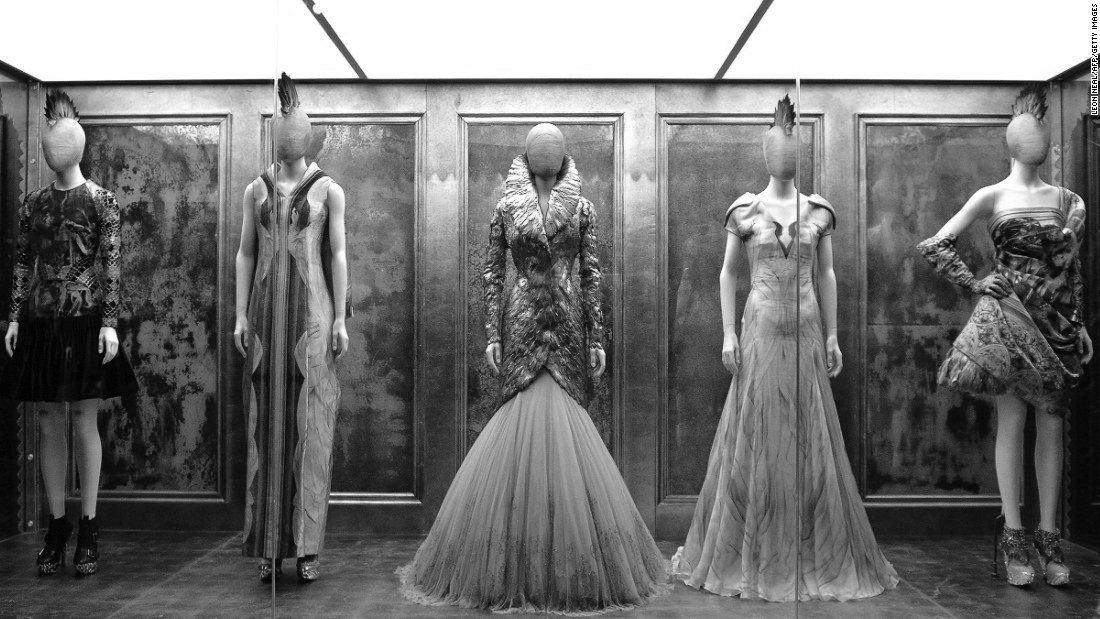
    During the past year, probably the most successful exhibition staged by any major London museum has been Savage Beauty (see illustration) at the V & A, a retrospective devoted to the work of the designer Alexander McQueen. More than 480,000 people saw it, and special late-night showings had to be laid on for the two weekends at the end of its run. Public enthusiasm for the event is, in current circumstances, not surprising. The fashion industry commands powerful PR. It is also much less bound by theories and intellectual constraints than the art world and it certainly has no inhibitions about luxury, and no shame about the money required to support luxury. Yet fashion is conservative in this sense – it gives you something to ‘see’. However ridiculous some of its visual inventions may be, fashion design never neglects the purely visual effect.

    Wear it if you can afford it. Wear it if you dare. And you can be damn sure that people are going to look at you and that they will probably remember what they saw.

    Fashion designers also, as it happens, have much less self-consciousness about ‘appropriation’ than today’s would-be avant-gardists. Fashion designers have always been magpies – they borrow without shame and recycle without inhibition. The point, for them, is to give what is borrowed a new twist. If the audience doesn’t recognise where a particular idea or effect originated, so much the better. With appropriation-art the opposite is the case. You have to know what is being so sedulously copied, otherwise you’re out of the loop.

    One refuge for avant-garde aspirationists, lacking visual inventiveness, has been to take refuge in supposedly radical politics. The visual arts have had an uneasy relationship with politics ever since the French Revolution. It was particularly strong in France during the first two-thirds of the 19th century, and reached a kind of climax in the days of the Paris Commune. This involvement, and the price that could be paid for it, is illustrated by the career of Gustave Courbet.

    There was certainly political involvement between some elements of the visual arts avant-garde and the political left during the first half of the 20th century, but the relationship was always uneasy, as the history of the Surrealist Movement amply illustrates. One still gets a great deal of talk on this subject today. The current Venice Biennale, due to finish on November 22nd, features continuous readings from the three volumes of Karl Marx’s Das Kapital. Whether anyone will pay attention to the words of this text – anymore than most of the traditionally religious pay attention to the actual words of the Mass when recited in Latin – must, I think, be seriously in doubt. In fact, left wing events, safely quarantined in museums, are now a familiar form of preaching to the converted. A good example, here in London, was Mark Wallinger’s installation, State Britain, which won the Turner Prize in 2007. This was a faithful reconstruction of the Peace Camp by the late Brian Haw, which existed for a while out in the open, directly in front of the Houses of Parliament. The Tate Britain web site rather smugly notes that: “Mark Wallinger’s work is noted for its succinct social commentary and political resonance.”

    Yes, indeed. And forgive my asking, but if this now almost-forgotten work ever had any real political impact, in which location would that have been more likely to happen?

    The avant-garde, as we once knew it, is as dead as the proverbial dodo. It is not going to rise again like Lazarus. It’s time we looked for something else, even if we don’t yet know what that is. London is now, for better or worse, a world metropolis. It is full of bright young artists from everywhere you can think of, all enthusiastically making work – much of which can be at least loosely described by the two nouns ‘painting’ and ‘sculpture’. Definitions can wait. Forget the museums. Go to the bustling galleries in Shoreditch and take a look.

    Edward Lucie-Smith

    September/October 2015

  • Multinational art

    Multinational art

    In the dash to internationalism the national is trampled underfoot, argues Laura Gascoigne.

    In November, Lund Humphries celebrated 75 years of publishing books on British art with an anniversary talk at the ICA titled ‘Is there such a thing as British art?’ It was chaired by Tim Marlow, now of the Royal Academy, and debated by a panel composed of Iwona Blazwick from the Whitechapel, Emma Dexter from the British Council and artists Nathan Coley and Yinka Shonibare. Don’t ask me what was said, as the event was so oversubscribed I couldn’t get a ticket.

    British art is on a bit of a roll. True, no YBAs made it onto ArtReview’s Power 100 list last year, but Cameron’s gift to his new ‘bro’ Obama of a Henry Moore print of Stonehenge did seem to reflect a newfound confidence in our national art. It certainly upped the ante on the special gift-giving relationship after the boxed set of classic American film DVDs presented by Obama to Gordon Brown in 2009. But while national pride in the art of the past still seems permissible, it has started to look iffy when applied to the present. Patriotism has no place in a global art world. Hence the further questions raised by the Lund Humphries debate: “Is there an inherent, identifiable ‘Britishness’ in the art made in these islands today? Or is any notion of a culturally significant Britishness now redundant?”

    In his autumn pep talk to participants in the 56th Venice Biennale, President Paolo Baratta recalled the reaction against national pavilionism in 1999 that prompted the creation of the International Exhibition “to offer the world a global sounding board”. The man in charge of this year’s sounding board is Nigerian Okwui Enwezor and his exhibition, inclusively titled All the World’s Futures, will invite visitors to “read the Giardini with its [sic] ramshackle assemblage of pavilions as the ultimate site of a disordered world, of national conflicts, as well as territorial and geopolitical explorations.”

    In a disordered world, blowing one’s national art trumpet is obviously out; the polite thing to do is to tootle on the trumpets of one’s fellow nations. And currently auditioning for the post of international trumpeter-in-chief is the director of our very own Tate Modern, which has been scrambling to diversify its collections in preparation for the post-pavilionist age. In November 2012 a special report on Tate’s International Activities announced the formation over the previous decade of a series of Acquisitions Committees supporting “Tate’s global reach”. Between them, the North American (2001), Latin American (2002), Asia-Pacific (2007), Middle East and North Africa (2009) and African (2011) committees have added over 100 works to the collection. Two more committees – South Asia and Russia & Eastern Europe – are in the pipeline.

    It was Serota’s cultivation of a global powerbase, rather than his winning personality, that won him top spot in last year’s Power 100. “Tate Modern very aggressively internationalized quite quickly,” explained ArtReview’s editor Mark Rappolt. “It is not a national collection, it is an international collection that happens to be in London.” Like the British Museum, in other words, except that the nations from which the Tate is acquiring this stuff are unlikely to hire Mrs Clooney to get it back.

    In our hyper-connected world, global art is a development as unavoidable as global terrorism. But whereas global terrorism has a clear idea what it’s about, global art is undecided. At the moment it’s professing anti-capitalism in a general, innocuous sort of way. Enwezor’s Venice exhibition will open with a live reading of all four volumes of Marx’s Das Kapital, “building into an epic display of orality”. Groan if you will, but Enwezor is a global player with a bunch of biennials under his belt. He curated the Lagos section of Tate Modern’s Century City in 2001 and was responsible for fellow-Nigerian Meschac Gaba’s Museum of Contemporary African Art 1997-2002 – “challenging ideas of an authentic ‘African’ experience” – that took over several rooms of Tate Modern in 2013. I remember it as a pleasantly shambolic collection of brightly coloured ephemera with interleaved bank notes representing capital. When the rooms were cleared, the Museum was put into storage. It was an early purchase by the African Acquisitions Committee.

    I’m wary of art acquisition by committee, believing that great collections are formed by individuals, but acquisition by foreign art committee – if you can still say ‘foreign’ – is far more worrying. On its leader page the Russian-owned London Evening Standard welcomed the Tate’s 2012 announcement of its international activities on the grounds that its ambition to “build itself up as an international brand… can only help to add to London’s image in the world”. Hang on there, Lebedev. Tate & Lyle is an international brand. The Tate is, or was, a national art gallery. It is responsible to the nation for many images, but London’s isn’t one of them. It is also expected to maintain ethical standards a notch or two higher than your average multinational. Two more reasons given by ArtReview for Serota’s global domination of its Power 100 were the amount of income the Tate receives from foreign private sources and the number of collectors on its international acquisitions committees – collectors who are presumably honour bound to recommend the artists in their own collections.

    Are these acquisitions really necessary? If the object is to introduce audiences to art from around the world – and ‘ART FROM AROUND THE WORLD’ is what it is currently advertised on the builders’ hoardings outside Tate Modern – there are cheaper alternatives to acquisitions, known as loans. But as you will have noticed, this spurt of international collecting activity coincides with the tacking of Herzog & de Meuron’s multistorey starship park onto the back of Giles Gilbert Scott’s former power station. The Tate is looking to its international committees and foreign income sources to solve the problem of filling this vast unwanted space on the cheap by shopping in relatively undeveloped markets. But it could shop even more cheaply at home if it was prepared to look at national artists without international reputations.

    “Real Art history is always part of national history,” wrote the Russian critic Boris Groys a few years ago. “There is a global art market, but there are no international institutions.” The Tate aims to change that. Assuming its extension is ever finished – and mothballing it would take a mountain of camphor – its internationalism may give it short-term novelty appeal. If it succeeds, other national galleries will follow and the world will be dotted with multinational outlets offering sameness rather than diversity in the name of universality. What will be lost in translation will be local dialects, the nuances of expression peculiar to art that is rooted in a shared culture in a particular place.

    The test of universality in art is not its ubiquity but its ability to communicate on a human level across cultures. Here’s what the cosmopolitan Kitaj had to say on the subject: “I have a hunch that pictures only achieve universal interest by way of the muddle of obsessed attentions (the stuff that excites one in life) to which a very skilled painter exposes his or her picture… That attention might be variously Christian, African, Neurotic, Alien, Decorative, deeply English or any complex sensibility – you name it, but I wouldn’t trust an art too much if it was damn well determined to be universal like Esperanto, which a lot of art now looks like… because you are what you are and what can be more human than that?”

  • Tanks on the lawn

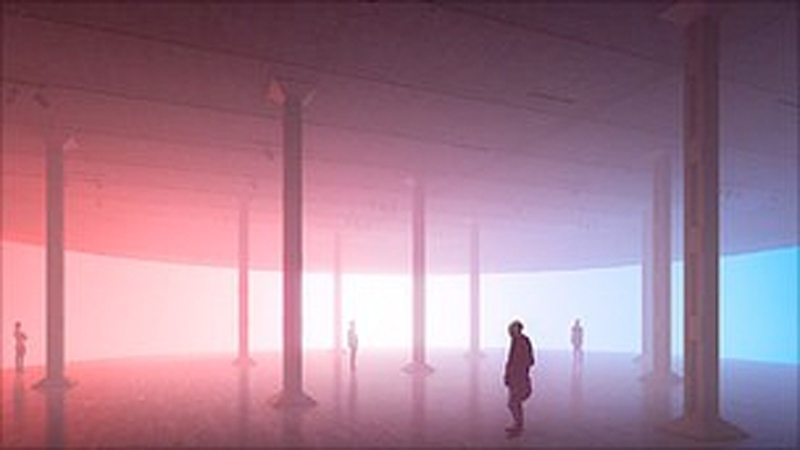
    The tanks are opening at the Tate on July 18th. These are the very same tanks that stored oil in the days when Bankside served the function of generating electricity by burning Arabia’s finest. And if the ignoramuses in the Tate’s PR department start cooing, and they will – they will – about said tanks being the first of their kind to be used for exhibition purposes then, as is their custom, they will be talking bollocks. There is a marvellous military museum on the Hoy banks of Scapa Flow in which a massive tank used to service the wartime fleet with fuel oil has been turned into an informative and atmospheric film and sound display. Exemplary of its modest type, it is run by a knowledgeable, approachable skeleton staff.

    The Tate’s tanks will be used to show film and performance, and other nonsense watchable only by those with a boredom threshold of hours learned at the knee of State Art’s robots. It opens with a 15-week ‘festival’ “celebrating performance and installation art and the historical works that have shaped it”. This will feature 40 artists from around the world of whom you’ve never heard of for the very good reason that they make ballbreakingly tedious films no one sentient could possibly watch for longer than it takes to fall unconscious under strong anaesthetic. ITV 3 suddenly seems appealing.

    ‘Highlights’ of the ‘festival’? “Aldo Tambellini will re-envision his seminal 1960s electromedia environments, examining space, light and sound through immersive projections and live musical and spoken word performances”. And if that isn’t tempting enough what about this: “Eddie Peake, an emerging artist who in a previous work choreographed a football game for nude players, will create a new commission for Tate Modern that explores sexuality and voyeurism.” And you can’t beat a bit of ‘exploring’.

    The record-breaking attendance figures for The Tanks have already been leaked to the press and disclose that in 2015 more people attended said Rommels than watched Premiership football throughout the previous season when, coincidentally, Manchester City won the title for the third year running. The President-For-Life commented: “This proves definitively that Contemporary Art has an audience second to none. Far from tanking, The Tanks prove that Britain is leading the way in its adoration of Contemporary Art. And the part played in this triumph by me has recently been recognised by my elevation to the peerage as Lord of the Challenger Tanks.”

    The rest of the Tate expansion will not be open until 2016, at which point it will surpass attendance figures even for The Rommels. It is conservatively predicted that by 2021 two-thirds of the world’s population will visit the Tate every fortnight. Visitors will all be shown collapsing ecstatically in devotion to the conceptual cause, like a crowd of North Korean midgets swooning over the mummified corpse of their leader.

    David Lee

    The Jackdaw June 2012