Tag: Serpentine Gallery

  • Laura Gascoigne: Tangled Web – September 2017

    “Why is there so much sewing?” demanded The Art Newspaper’s Christina Ruiz after visiting Christine Macel’s exhibition at this year’s Venice Biennale. “I get it: domestic work, women’s work, is important and undervalued. But is it in itself art? No it is not.”

    There was a time when so-called textile arts were prized above all others; when first unveiled in 1519, Raphael’s tapestries for the Sistine Chapel threatened to eclipse the fame of Michelangelo’s ceiling. But in the 18th century tapestry began to feel fusty as audiences warmed to the immediacy of paint. A work’s value no longer resided in the price of the wool, the skill of the weavers, the total hours spent in production and associated cost, but in the artist’s touch, the signature of authenticity that connected audiences with the creator of the work, usually male.

    In the 1980s, when Rozsika Parker wrote The Subversive Stitch, she pinpointed “the separation of the craft of embroidery from the fine arts” as “a major force in the marginalisation of women’s work”. But on the coattails of conceptualism, ‘women’s work’ has come back from the margins. Since the personal signature of the pen or brush fell under suspicion the needle has returned, not always in the hands of women. While the women are bent over their embroidery frames, the men are stealing the limelight, à la Raphael, with tapestries woven by others to their designs. Chris Ofili’s Weaving Magic has just been the focus of an exhibition at the National Gallery, and there are more tapestries than pots in Grayson Perry’s The Most Popular Art Exhibition Ever! at the Serpentine Gallery (until September 10th).

    If Hockney wants to keep his place as top national treasure, he’d better put down his iPad and pick up a needle. Tapestry, embroidery, knitting, crocheting are all back in the frame and proving highly popular with a public tired of the self-conscious cack-handedness of so much contemporary art. This is art like granny used to make, sweet as apple pie and absolved of the obligation to be serious. From Vidya Gastaldon & Jean-Michel Wicker’s knitted octopus, titled Sex Is Good (1999), shown in Tate St Ives 2013 exhibition Aquatopia to Shauna Richardson’s three 9m lions, crocheted from 36 miles of Swaledale wool and displayed in a glass cage at Twycross Zoo in 2012 as part of the Cultural Olympiad, it’s all a bit of folksy fun.

    Naturally, education departments love it. Imagine the jollity at The Exchange in Newlyn in 2010 when artist Jonty Lees donned a Montgolfier flying helmet and goggles to lead a sewing circle and basket-weaving group in the construction of a full-size hot air balloon. The following year the Science Museum went one better and got participants in its Stitched Science weekend to create an entire Solar System Art Installation from ‘various fibre arts’. True, the results looked a bit of a mess, but sew what? Fibre arts have therapeutic benefits. According to the organisers of the Crafts Council’s ‘cinema knit-along events’ in 2012, “knitting has been proven to enhance cognitive development in children, and well-being in both children and adults.” Sew there.

    It’s not all child’s play: serious issues can be addressed with needles. ‘Political statement knits’ by Lisa Anne Auerbach were a highlight of Wasteland, an exhibition of young Los Angelino artists at the Mona Bismarck American Centre in Paris last year. More ambitiously, at the Minories Gallery, Colchester in 2015 Clare Sams’s installation Knitting Fever recreated the devastation caused by the 2009 floods when a wool shop of that name in Cockermouth spilled its guts through the Cumbrian town. The gallery complimented the artist on using a process “stereotypically viewed as a feminine past-time [sic]” to represent “cataclysmic forces not normally associated with the practice”. Sams’ ‘total knitted environment’ looked a little twee for a cataclysm – acts of God produce more dramatic results than needlework – but she wasn’t going to let that stop her, having already knitted her way through the Hackney Riots and Guantanamo Bay. No knit-wit she.

    Other artist-knitters are not so outward-looking or gender-neutral in their choice of subjects. Given the vogue for ‘bedroom painting’, bedroom knitting was almost bound to follow and, sure enough, in 2012 the Polish-born New Yorker Agata Olek transformed Tony’s Gallery in Brick Lane into a crocheted replica of her boudoir, with walls and floor emblazoned with explicit texts from former lovers. “It is not just another apartment installation,” she assured Metro, “it is the reflection of life, love, trust and lust in current time.” Its tear-jerking title I do not expect to be a mother but I do expect to die alone was a quote from, you’ve guessed it, the queen of the misery stitchers, Tracey Emin. But no artist has taken intimate needlework quite so far as Casey Jenkins in her 2013 performance Casting Off My Womb, in which she knitted a menstrual cycle-length scarf from skeins of wool secreted in her fanny. The work, she told The Guardian, was “primarily about casting off the need for validation from external sources” and “forging a path of self-determination in the face of society’s expectations”.

    Maria Balshaw would say aye to that. Unlike Christina Ruiz, she congratulated Venice Biennale curator Christine Macel in The Art Newspaper on doing “a really good job in challenging some of the gender stereotypes around textiles,” singling out male artist David Medalla for praise for his participatory work A Stitch in Time, first shown in 1968. Medalla’s early lead in removing the sexual stigma from stitching may have laid the ground for the Crafts Council’s 2004 exhibition Boys Who Sew, at which Fernando Penteado established the butch credentials of needlework with a display of samplers embroidered by tattooed inmates of Wandsworth Prison. Since then the social enterprise Fine Cell Work has climbed on the prison wagon and trained 300 prisoners in 20 gaols to spend their lock-up time productively embroidering cushion covers. There’s precious little bunce in it for the lags, but more job satisfaction than stitching mailbags.

    It’s no discovery that men are nimble-fingered (not a lot of people know this, but the young Malevich upset his father with his unhealthy aptitude for Ukrainian cross-stitch). The danger for women of challenging gender stereotypes around textiles is that male artists will seize the initiative. Not content with getting tapestries woven to their designs, brothers are doing it for themselves. In Art Now at Tate Britain in 2010 Andy Holden showed The Pyramid Piece, a 10ft-high knitted replica of a chip off the Great Pyramid of Cheops that he had illegally smuggled home from a family holiday to Egypt at the age of 12. Along with its benefits for cognitive development, knitting is obviously a good way of assuaging guilt.

    The main drawback of needlework, for unreconstructed individualists, is its inflexibility as a means of expression, which is why most attempts to employ it as one, Tracey Emin’s included, have been sew-so. The notable exception is Mr and Mrs Pope, Knitted, Shrunk and Hung (2012), a truly heart-wringing piece of work that – sorry girls! – was created by a male sculptor, Nicholas Pope, with his own fair hands.

    Laura Gascoigne
    The Jackdaw Sept/Oct 2017

  • Editorial – January 2017

    Has The Arts Council Betrayed Its Origins?

    Serota takes over at the Arts Council this month, 47 years after first being employed by the same body as a regional arts officer in what was his first job after university. In the interval the Council has developed into a blunt instrument by which State Art, an ethos it co-authored with Serota during his 27-year dictatorship at the Tate, has been forcibly imposed throughout the contemporary art field. Assisted by less important bodies (including a number of charities who ought to know better), half a dozen influential dealers and a legion of devoted apostles and brand-obsessed superrich collectors, the Arts Council and Serota’s Tate evolved a common purpose. It now feels almost pre-ordained that these Yin and Yangs of a disreputable system should be united under the President-For-Life to inflict upon us more of the same.

    By concisely rehearsing the Arts Council’s genesis I want to examine how a body, which didn’t start life with an exclusively extremist agenda, became the principal funding agent for what they themselves call a ‘challenging’, ‘innovative’ art; an art from which hardly anyone else but those professionally involved in it benefits, and in which the wider public – who pay for it – express no interest save indifference or derision.

    So what happened to produce the monster we have today, with its Westminster HQ, exaggerated sense of entitlement, uniforms, swanky websites, overmanning, pretentious drivel, gender and ethnic obsessions, and self-promoting literature concerned only with the decaying rump of the avant garde?

    The Arts Council (I’ll persist with this name though it has changed regularly) evolved out of the Committee (later Council) for the Encouragement of Music and the Arts formed in December 1939. The first general Treasury grant ever for the arts, £25,000, was offered in April 1940 for classical music, drama and art. This matched £25,000 given by The Pilgrim Trust for touring concerts and exhibitions, seven-eighths of the money going on music. Government subsidy was increased to £85,000 in 1942 when the Pilgrim Trust pulled out and when opera and ballet were added to the roll-call of recipients; it was £175,000 a year by the war’s end.

    Before CEMA was established arguments had reverberated for 20 years as to whether art should be publicly funded. A more compelling case for subsidy arrived with the war. The first awards were considered shrewd commercial investments by Exchequer mandarins. For the tiny sums cited above the morale boosting potential of art and music (especially sing-songs) for an undernourished and overworked civilian population of mainly women was considered more than compensation. The impact of these touring plays, concerts and exhibitions was so overwhelming, the public reaction so vocally grateful, that the continuation of Government support in peace time seemed a no-brainer. Additionally, throughout the war, and especially from 1942 when he took over CEMA, Maynard Keynes lobbied tirelessly for the post-war continuation of subsidy.

    And things undoubtedly had to change. As William Coldstream explained in the mid-’30s, artists didn’t expect to sell work except occasionally to their friends or, if they were lucky enough to have one, to a patron. Recession had destroyed any impulse for art sales. In the wake of the 1930s Depression and then the second great war, the market for modern work being dead, the need to help painters and sculptors survive had become an imperative. Even well-known artists struggled to live. Most scraped a subsistence by teaching and from occasional sales to a few wealthy supporters. A process of rigorous, almost cruel natural selection by quality was in place. In 1939 writer Raymond Mortimer pleaded that artists “need saving”. Soon after the war critic Cyril Connolly described the practice of private art collecting as “extinct”. In proposing State subsidy Keynes suggested that “We must learn by trial and error. But anything [that is, any policy of State assistance for the visual arts] would be better than the present system. The position of artists today is disastrous”. Unless you happen to be one of those The Jackdaw calls ‘the usual suspects’, those magnificent few of State Art, a cynic might shout ‘No change there then!’.

    The end of the war, with its promise of a better place for the exhausted and beaten down, provided the impetus for the creation of a supportive organization which would circulate the arts widely and thereby – crucially – stimulate over time a desire to collect artists’ work among a much broader population.

    The Arts Council was founded in August 1946 and given £235,000 to spend (the equivalent of £29 million today), the bulk of which went (as before) on classical music, opera, ballet and drama with art a distant fifth – touring exhibitions and artists’ materials were altogether cheaper than the backing required by travelling orchestras, bands, troupes and reps. By the mid-’50s classical music alone received six times the subsidy spent on the visual arts. In 2015/16, the last published report available, the Arts Council spent £463 million of which a small fraction (it’s a difficult figure even to guess but it settled at between 5% and 10% in the ’70s) is spent on the visual arts. In addition, the Council is also responsible for disbursing their slice of lottery cash, £268 million a year, a sizeable portion of which throughout its 20-year history has been spent on capital visual arts projects and also, more recently, on revenue grants to favoured ‘core’ clients (the Serpentine Gallery, for example, has received no fewer than twelve lottery awards).

    In the 70 years of the Council’s existence the State has effectively assumed complete control of visual art, whereas prior to 1939, and with the exception of funding for the national museums, the creation of the National Theatre and a one-off grant for the creating an orchestra in Birmingham, the influence of Government was non-existent: painting and sculpture had in those days been left to the market, then understood to be the best arbiter. Some, of course, argue that it still is.

    On the founding of the Arts Council, early commentators (Orwell among them) expressed serious concerns that state patronage would quickly come to imply censorship and a dictatorship of taste – obviously bad things. With hindsight how perceptive were their fears.

    A lengthy discussion of precisely this potential problem took place in March 1944 when a letter appeared in The Times signed by MPs and artists, condemning what they perceived as an obvious ‘Modernistic’ bias in the selection of CEMA’s exhibitions. Signatories included printmakers D Y Cameron and Frank Short, painters Alfred Munnings (soon to be elected PRA) and Frank Salisbury and sculptor Richard Garbe. They berated the poor quality of exhibitions circulated by CEMA as being “devised to carry on the baleful influence of what is known as ‘Modernistic’ art” at the expense of “traditional glories”. Keynes’s reply to this charge is highly revealing. He lists the 25 exhibitions circulated to date, only six of which had been mixed shows of modern artists – the only two one-man shows featured Sickert and Wilson Steer, neither of whom would have considered themselves remotely ‘Modernistic’. The list also included historical surveys from national collections and selections from Royal Academy Summer Exhibitions. Among the “mixed bunch of fogeys” (this is Keynes in self-deprecating mode) selecting the exhibitions were artists Tom Monnington, Duncan Grant and Henry Moore. Keynes could not have stated CEMA’s policy more clearly when he wrote in conclusion: “Our own practice and deliberate policy is to allow every form of serious endeavour its opportunity.” Supporting Keynes, other correspondents praised the “wide and catholic” choices from “modernistic to academic”. The most enthusiastic and moving letter of commendation for the touring shows came ironically from the Ashington Art Group of miner painters in Northumberland, who testified that in their community they had received three exhibitions which elicited “golden opinions” from schoolchildren, youth groups, women’s organisations and church parties. They especially enjoyed seeing original work of a kind only previously known through bad reproductions.

    There is no evidence here ­­– not a scrap ­– to suggest that the precursors and founders of the Arts Council had any intention of showing only ‘Modernistic’ art, or of favouring vanguard styles at the expense of others. The reverse is demonstrably true. Their intention was to show everything of merit and the positive response of the Ashington Group is testimony of their success.

    Throughout the Arts Council’s existence, and especially in its later maturity, it has undoubtedly taken to an extreme the private views and preferences of those who willed it into existence. Today the Arts Council does precisely what Fry, Bell, Keynes, Clark, Read and others wanted it to do in encouraging appreciation of the avant garde, except that it now does it to the exclusion of everything else. The Arts Council’s founding principles, written by Keynes almost word for word, were, however, pragmatic for having been argued over. In the Royal Charter for the Arts Council of August 9th 1946 (three months after Keynes’s death), this is what it says should be developed: “a greater knowledge, understanding and practice of the fine arts exclusively and in particular to increase the accessibility of the fine arts to the public throughout Our Realm, to improve the standard of execution of the fine arts and to advise and co-operate with Our Government Departments, local authorities and other bodies on any matters concerned directly or indirectly with those objects.”

    Such slippery bureaucratic flannel is now irrelevant and has anyway long since been superseded by tinkerings and other vague ‘forms of words’, through which calculating fixers could drive their carriage and fours. The fact is the Council now exhibits, encourages and buys for its collection only what it describes as “innovative” and “challenging” work. Naturally, the Council itself decides what these words mean and to what and to whom they can be applied. The effect is that everything else has had to fight its own battle for survival. The Council no longer represents the visual arts as a naturally divers entity, as Keynes intended, but only a corner of this potentially rich tapestry. And the Council is comfortable with this. It no longer makes any show of even-handedness where style is concerned, to the extent that it has become the censoring organization Orwell feared it might. Whereas in the beginning it may have paid lip service to balanced provision of styles and techniques, it now tells us to accept what we’re given whether we like it or not. Additionally, there are now also the Council’s sinister and prurient obsessions with ‘diversity’, ‘accessibility’ and gender/minority quotas. If only in place of this puerile stab at social engineering they were as interested in exhibiting a representative ‘diversity’ of approaches and mediums instead of so relentlessly monotonous a diet of conceptualism.

    With the creation of the Arts Council, for the first time the State took on responsibility for funding Contemporary Art, a phrase in which ‘Contemporary’ would come to mean ‘Extreme’.

    One other inheritance from CEMA requiring acknowledgement is the collecting of art. In 1942, in an attempt to increase the number of exhibitions they were capable of preparing quickly, CEMA allocated £750 for the purchase of works by living British artists. Some of this cash was spent commissioning limited edition prints from the most famous artists in order that they might circulate the same collection to different venues simultaneously. All these works (including numerous items inherited from the The Pilgrim Trust bought for the same purpose) were passed on to the Arts Council who continued with the policy of buying works from a gamut of painters and sculptors. The early collections are online in full. Look at them, their range is faultless. Selection was omnivorous and over the collection’s history it became an important means of assisting young artists at the fragile incipient phase of their careers. In 1975 when the Council was driving headlong towards greater control of its clients, and when it was still claiming that its job was to “maintain and improve the traditional arts” (already then a barefaced lie), the Council’s budget for purchases was increased by 300%. As with other aspects of Arts Council policies in the visual arts the works bought today are only those considered, yes, ‘innovative’, ‘cutting edge’ and ‘challenging’. To ensure compliance purchasing is now done by six officials who are most often either directly or indirectly employed by the Council itself. Naturally, they don’t buy modern figurative painting, except in rare cases where it ticks ethnic or other minority boxes.

    Equally important, in the touring exhibitions of CEMA and those of the British Institute of Adult Education in the 1930s, was the need to decentralise and to circulate modern art to regions where it was unknown. It was always the intention of the Council’s founders to use the shows as a vehicle to encourage greater public participation in the visual arts, especially with more difficult recent work for which exhibition selectors themselves were important advocates and patrons. Despite the misguided concerns of bias raised in 1944 mentioned above, when the Arts Council appeared selection continued to be even-handed. The varied list of exhibitions the Arts Council supported initially and throughout the 1950s and ’60 are testimony to this. Even from as late as the founding in 1968 of the Hayward Gallery (Arts Council created and funded) the diversity of work was exemplary in providing something for everyone. Indeed, until this century the Hayward was an indispensable part of my own education, until, that is, it shut the door on the past and other aspects of the present with which its hierarchy exhibited no sympathy. At this point the Hayward started showing the same international conceptualism by a seemingly limitless supply of foreign unknowns as the Serpentine, South London Art Gallery, the Whitechapel, Camden Arts Centre and the godfather of them all, the Institute of Contemporary Art, more about which below.

    This desire to engineer a new audience for art has also been a headline aim of the Arts Council. Initially they were still idealistic enough to believe their own laudably democratic rhetoric: at that stage they couldn’t have known any better. The fact that this ‘widening of access’ mantra is still, 70 years later, burning brightly throughout their self-promotional literature is an indication of the Council’s lack of success in establishing an audience for the work it wishes to show. Over the lifetime of the Arts Council the demographic of those interested in art, and especially in extreme art, is unchanged. Art remains the preserve of the well-educated and those professionally involved with culture industries. However impossible it is to engender participation in the otherwise uninterested, and despite knowing by now that such efforts are anyway perennially doomed to failure, the Government like to hear this often repeated ambition – and so it is destined forever to remain a stalwart of the Council’s principles in order to please political masters who then allow them ‘arms-length’ freedom to spend taxpayer cash on their own fascinations. We have seen sufficient evidence over recent decades to know that attempts at implementing deterministic policies are doomed to failure if they are – without wholesale populist debasement of content – to preserve what makes museums and galleries worth visiting in the first place.

    The first time that what the Arts Council stood for in the visual arts had been written down in detail was in Labour’s document called A Policy for the Arts published by the first Minister for the Arts, Jennie Lee, in 1965. This is the matrix for any art policy statements published since. All the old boilerplate favourites are here Brassoed to a high shine: “the arts being made more widely available” especially in “drabber industrial areas”; the financial difficulties of artists must be immediately addressed; to follow universal education and universal national health there must be universal art provision; the removal of “the cheerless, unwelcoming air” of galleries; new art centres for all; grants to help young artists get started; “a new social climate … is essential”; everyone deserves the best … and so on. We’ve heard this litany myriad times since – they are now the default phrases programmed into the computer of every Arts Council drone.

    Also in A Policy for the Arts, indeed in its very first paragraph, it states: “No one would wish State patronage to dictate taste…”  Oh no definitely not. God forbid. Perish the thought. Unfortunately, in subsequent literature, and despite it being echoed by Arts Council chief Lord Goodman in 1970, this estimable sentiment was soon toed under the settee while no one was looking. It never re-appeared.

    In the immediate aftermath of Jennie Lee’s aspirational document a significant development took place in the Council’s relationship to the visual arts. Policies which until this time had concentrated on touring exhibitions, artists’ bursaries and purchases for the collection were expanded to include the gallery domain itself. From now on the Council would try to control not only what was exhibited but the venues themselves, including their programmes. Even better they would start their own galleries. This was a crucial strategy in furtherance of revised objectives to control every aspect of visual art provision. It was the tactic by which taste dictatorship specifically disqualified as anathema by the Labour policy document emerged as a clear though unstated aim. This change did not result from any single decision (not that we should ever have known because Arts Council meetings have scandalously never been minuted). Instead, it evolved gradually as the number of new galleries increased. These were created specifically to give outlets for those making Modern Art. Indeed, new galleries would eventually be designed so that no other kind of work except conceptualism and installations could be shown properly. Significant increases in Government funds to the Arts Council promised in Lee’s document allowed them to effect this important change.

    The original outlet of this franchise system was the ICA, the first “rallying ground” for extremism as Wyndham Lewis called it, which had been helped before (since its foundation in 1948) but which from 1968 received an annual subvention. This has continued to date and currently runs at £1.5 million a year with the add-ons of bail-outs (due to maladministration) and Lottery funds. What started only as ad hoc assistance in the case of the Institute of Contemporary Art moved into top gear with the founding of the Hayward Gallery (also 1968), the Serpentine (1970), the Whitechapel (from the mid-’70s), Camden Arts Centre, Matt’s Gallery (1971), Chisenhale Studios (1983) and, later, South London Art Gallery. Other galleries opened in the provinces, Ikon in Birmingham for example as early as 1965, though state subsidy came later. By 1975 the Council was keeping afloat three London galleries, the ICA, the Hayward and the Serpentine, and six regional ones. Additionally, a national network of Council-funded photography galleries followed the founding of The Photographers’ Gallery in London in 1971. The Council also soon began subsidising new art magazines whose purpose was to write about what was shown in its own galleries. And so the Council’s approach to visual art quickly evolved into a neat self-contained operation which outsiders might easily have believed was independent.

    This process of opening franchise galleries quickened after the introduction of the National Lottery in 1994, that jackpot for the arts whose funds led to a rash of arts centres around the country with similar agendas dictated by the Council. Some of these were notorious white elephants and led to the wasting of tens of millions. (Like the bankers in 2008, Arts Council/Lottery functionaries never get sacked even for the most egregious mismanagement.) It is an irony that the appalling wastes of money of which the Council has been guilty have coincided with their predictable annual complaints about Government parsimony. If you were starting from scratch a process of public funding for the visual arts you’d look at the Arts Council as a risible demonstration of how not to do it.

    The Council was now also susceptible to the growing and irresistible current of Modernistic novelties, that selling out to ‘progress’ for its own sake described in the last issue (What Happened to Art Education?, The Jackdaw, 130), which affected all national institutions after the war. In The Demon of Progress in the Arts Wyndham Lewis identified this current as early as 1954 and had described it as “a contagion that hurries an artist to zero and to the death of talent” and “a mad bug which has entered into the body of the arts”. He said the relentless drift was towards “infantile extremist sensationalism”. Considered a crank by many, Wyndham Lewis’s views were in hindsight astutely prophetic.

    Official zeal for more avant-garde approaches to making art expressed by the early godfathers of the Arts Council would find its apogee in the exhibition policies of these new Arts Council franchises. The previously feared prescriptiveness and censorship would blossom here. For the first time the Arts Council could exercise complete control over who and what was shown, and where, by placing these financially dependant clients under the directorship of their own staff. This was key. Of course they continued paying lip service to the politically expedient phrases listed above, whilst ignoring them completely. An early example of how Arts Council philosophy could be maintained within house is the fact that the next Chairman of the Arts Council, Serota, who, as has been stated above, from 1970 had been groomed in the Council’s offices, started his gallery career in 1973 as the director of one of these new outlets, the Museum of Modern Art (as it was then called) in Oxford, which had opened the year after Jennie’s Lee’s document and had been created by the Arts Council to promote its own policies. Three years later Serota moved up to another burgeoning Arts Council client, Whitechapel Art Gallery, which though it had existed since the 19th century had been gradually repositioned as a gallery of the avant garde. Having one of its own in charge meant that the right kind of work by the right kinds of artists would be shown, Serota having already proved himself reliably on message.

    Accompanying Arts Council cheques came the inevitable coercion. For the Council, paying the piper now meant calling the tune and by the early ’80s strings had become blackmail with menaces. I had personal knowledge of this now ubiquitous practice. During the ’80s I contributed to a photography magazine whose existence relied exclusively on Arts Council subsidy. This money, a pittance, was not awarded because this was a seriously edited publication with an international reputation commanding tremendous devotion among informed devotees. It was given in order to further the Council’s own ends in what might crudely be termed its snowballing social engineering agenda. The editor of Creative Camera, who was a friend and a person of considerably greater knowledge and accomplishments than anyone then working in the Council’s visual art and photography departments, was told that continuation of his grant depended on demonstrable conformity to what would later become known as Political Correctness. He once casually confided to me that he had been asked by his paymasters to supply immediately the names of black photographers whose works had appeared on the cover. As he explained to me, he didn’t know the answer because it had never occurred to him to ask. Flippant non-compliance, he was told, would seriously affect his next annual application. The Council also demanded representation on the magazine’s governing board. This now insidious and common  tactic is employed by the Council as a first step to takeover. A short time afterwards my friend quit in disgust, the magazine becoming a shadow of what it had been, forced as it now was into chasing approval from its paymasters. The Council’s determinism was now shameless.

    Also during the Thatcher years Arts Council policy in the visual arts overlapped exactly with activist leftism. As a common enemy  Thatcher unified in animosity everybody of other political persuasions. In the visual arts the Arts Council became nakedly left wing. It said it wasn’t, but you didn’t need to look further than the revolutionary agendas of some of their revenue clients, especially in the photographic field, for evidence of the contrary.

    This politicising bias wasn’t the only area for which the Arts Council began to attract regular mockery. They were now prepared to support anything at all Progressive, especially if it endorsed the Council’s anti-bourgeois credentials. Increasingly public subsidy became associated with stunts that offered nothing remotely interesting to the public. From the ’80s onwards newspapers were weekly exposing the ridiculous antics the taxpayer was funding. The fact that there were scores of these enormities, all of which were claimed as significant by their protagonists, and which now are forgotten, is indicative of the shocking waste of scarce resources they represented. Nothing has remained of them. The most infamous incident, and the harbinger of what was to come, was the award in 1975 given to three men to walk around the countryside with poles on their heads. The Council later admitted its mistake. Unfortunately, having nailed their colours to the mast of novelty for its own sake, it was an error their regional outposts couldn’t resist repeating in pursuit of vanguard credibility.

    From the early ’80s onwards newspaper and magazine readers were treated to regular exposés of the Council’s perverse modus operandi in the visual arts. In a series of articles in Art Monthly Michael Daley demonstrated the relationships between recipients of funds and those who were on the Council’s committees; too often, he discovered by meticulous research, they were the same person. Membership of the Council’s visual arts committee had also been engineered to be doctrinally compliant. They comprised directors of Council-created and -funded galleries who were now among the major recipients of Council funds. Not surprisingly they awarded themselves more and more money. Exposed by a Sunday newspaper as corrupt conflicts of interest these committees were quietly disbanded.

    When Serota, the Council’s own man, went to the Tate in 1989 and institutionalised Contemporary Art in a new version of the Turner Prize, publicity about which would monopolise visual art coverage throughout the year, the emergence of State Art was complete. Its disconnection from anything wider society might recognise as art was achieved. From now on it would be four legs good. We entered the New Age of the Modern Art Evangelist, the robot who floats about in black trying to look and sound like ‘one of us’ and whose career depends on saying and writing the right things. There was no longer any pretence in Arts Council galleries that they would show all contemporary art or even acknowledge that any recent art history other than their own had ever existed. We had entered the Year Zero age when Contemporary Art fixers believed art history had begun the previous week. They no longer wanted or needed to know anything that had happened prior to that. Another small matter was the language they invented in order to explain their preferences to the rest of us: unfortunately it wasn’t English.

    And this is the condition we find ourselves in now. Fuelled by the taxpayer and the working class gambler here is the finished article of State Art, whose functionaries operate with impunity and who are knighted and medalled, and whose policies both main political parties cravenly support.

    The crucial position of the Arts Council in dictating what we see in the visual arts is not likely to be relaxed whilst absolutist Serota is in charge, for he is State Art. More likely, under him power will be centralised even further. As local authority funding is squeezed to a drip, help from the Arts Council will become even more essential and, therefore, the potential for coercion and dictatorship proportionately increased.

    If ever there was an intended attempt to socially engineer a new constituency for visual art it has failed miserably. In order to achieve this an audience is needed and this is precisely what the State Art exhibited by the Arts Council doesn’t have. Indeed, it is even more exclusive than the allegedly old fashioned, class-exclusive work it replaced. There is no audience for the style of Contemporary Art the Arts Council favours and this is the reason why its galleries, especially those in the provinces, are eerily empty.

    The Arts Council was started with brave aims. It now bears no resemblance either to what it was or what its fathers intended it to be.

    For 70 years the State has poured money into visual arts in order to produce mountains of what is stillborn and instantly forgettable: the Switch House, State Art’s new Parnassus, is an expensive monument to the indifferent. The effect has been first to encourage and then to institutionalise a truly epic quantity of local, national and international mediocrity hardly anyone cares about but which costs a small fortune to store, conserve and transport and wouldn’t exist without public subsidy. Serota will make a perfect figurehead for such a flabby, wasteful, complacent and self-important system.

    And finally, when it comes to prescience in anticipating the failure of publicly funded extremism, the gold medal with laurel cluster must go to T. S. Eliot. In the 1930s he expressed anxiety that public funding of the arts would too easily lead to state control and a proliferation of mediocrity in place of the prospering of what was then a genuinely unpredictable avant garde. Some crystal ball!

    David Lee
    The Jackdaw Jan/Feb 2017
  • Serpentine Gallery: charity begins at home


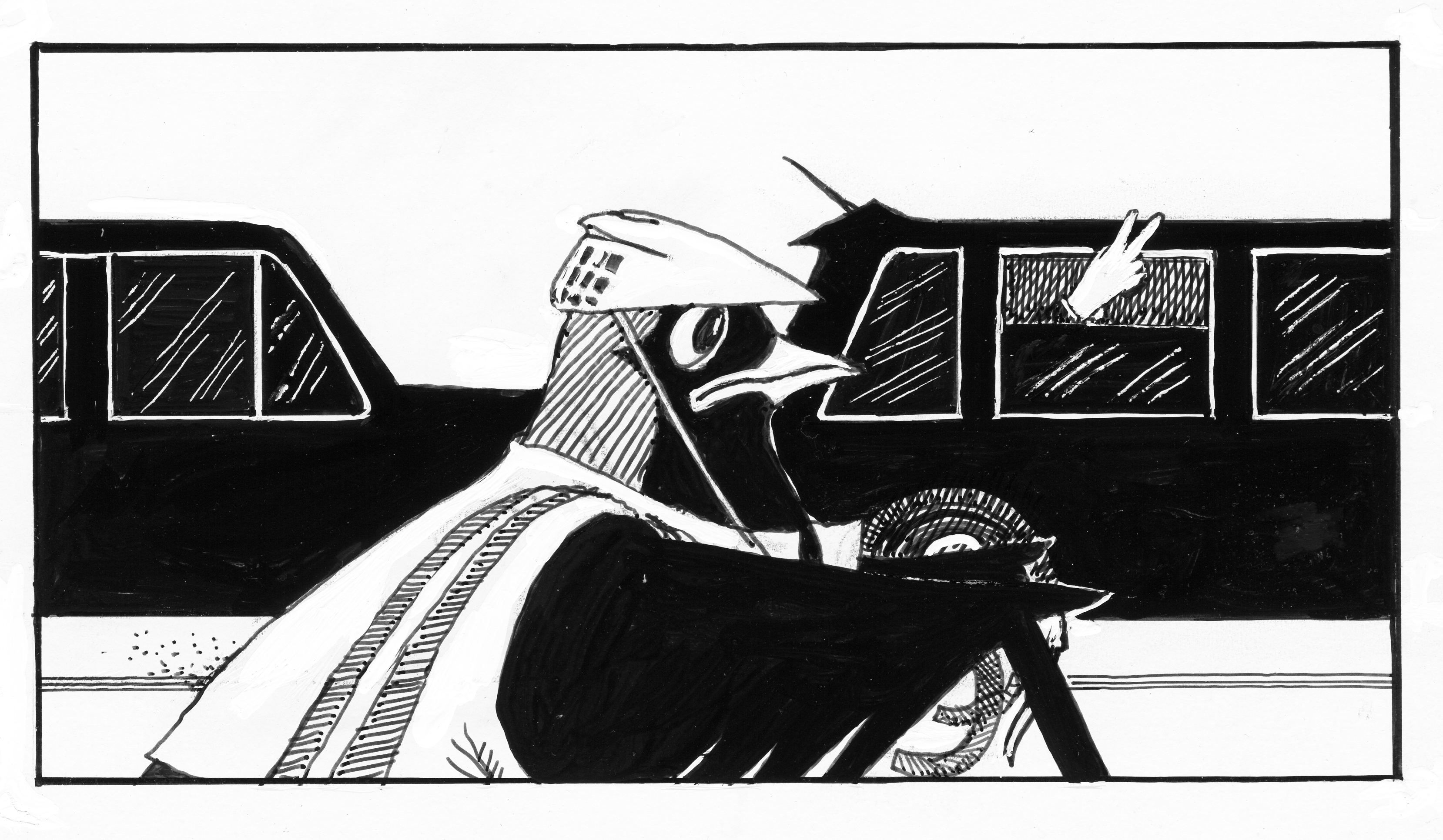
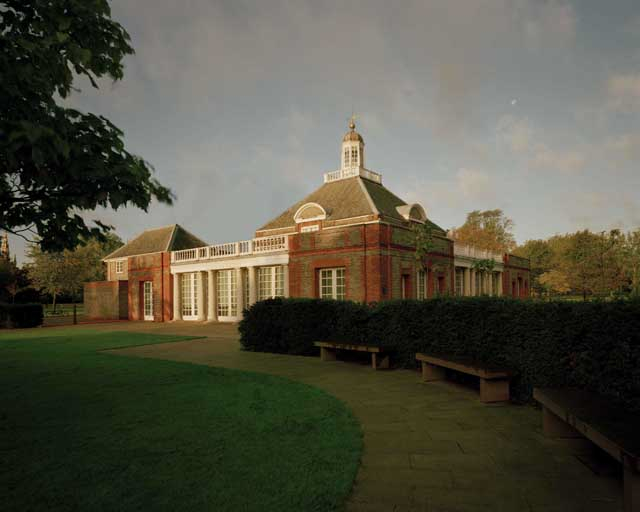
    The ever so charitable Serpentine, which gives the public indigestible quantities of what it can’t stomach, held an annual summer bash for all its rich mates, and, blow me down, guess who deigned to show up. He’s probably not been at the gallery since last year’s hooley, but he broke into a heavy work schedule abroad – very heavy don’t yer know – in order to attend. After someone had reminded him where his desk was and the location of his private lavatory since the new building work, he had his picture taken (above) with co-director Dorelia Lipstick-Cleavage and some dwarf Bolivian gatecrasher caught panhandling the stars for change. We’re referring, of course, to Hans-Uber Obrist, who gets paid more than the director of Tate Britain to do fuck all except write unreadable books and curate exhibitions for continental galleries. You can tell by his specs he thinks he’s clever but someone really ought to teach the Swiss slob to eat without splattering food all over his suit – Sir Les Patterson finds his gob more easily.

    Typical, isn’t it, that the lazy bastard should finally turn up only to sup fizz in what, given the stick insects in attendance, must have looked like a very challengingly immersive conceptual art stunt about eating disorders. (They didn’t bother organising nibbles this time as last year cleaners were finding cocktail sausages behind the radiators for months afterwards.) And we have it on the best authority that the Obrist phaeton was waiting to rush him back to Heathrow for a red-eye special to Zurich, although he had trouble locating it among the cavalcade of other limos. What an exemplary giving enterprise the Serpentine has become.

    All of the above is, you know well enough, grossly unfair as the gallery’s summer party is a well-known fundraiser … for charity. It raises funds to, well, to put on exhibitions by the world’s wealthiest artists and dealers who couldn’t possibly afford to pay for the exhibitions themselves. And when directors are awarded 50% pay increases in a recession you need to devise ingenious methods to raise funds. And how better to do this than by rattling cans in front of celebrities so desperate to have their photos taken they’d turn up to the opening of a manhole. So let’s hear it for the philanthropic ethos of the Serpentine.

    See you next year Hans, if you’re not too busy.

    David Lee


  • Serpentine Gallery: working at home

    The last three editorials have dealt with a charity called the Serpentine Gallery. We’ve observed limousines lined up outside signifying whose interests the gallery really serves. We have identified overmanning and fat cat pay increases for two directors. And, last time, we highlighted an outside PR agency working between press and gallery in order to disarm justified criticism.

    Apologies for boring you further, but there’s more. I’m not satisfied we’ve got to the bottom of Hans Ulrich Obrist’s presence at the Serpentine. He is, after all, a second highly overpaid director in a publicly funded gallery whose peer organisations employ only one director for a quarter of the cost of Obrist and Peyton-Jones combined. I question the need for the supernumerary Obrist.

    When I asked the gallery how many days Obrist spent there in 2013 they answered, ambiguously to my mind: “He works full-time at the Serpentine gallery.” Well, yes. But hang on a minute: “He travels a great deal, usually at the weekends, and works remotely at these times.” Why does organising an exhibition programme for the Serpentine involve such “a great deal” of travel?

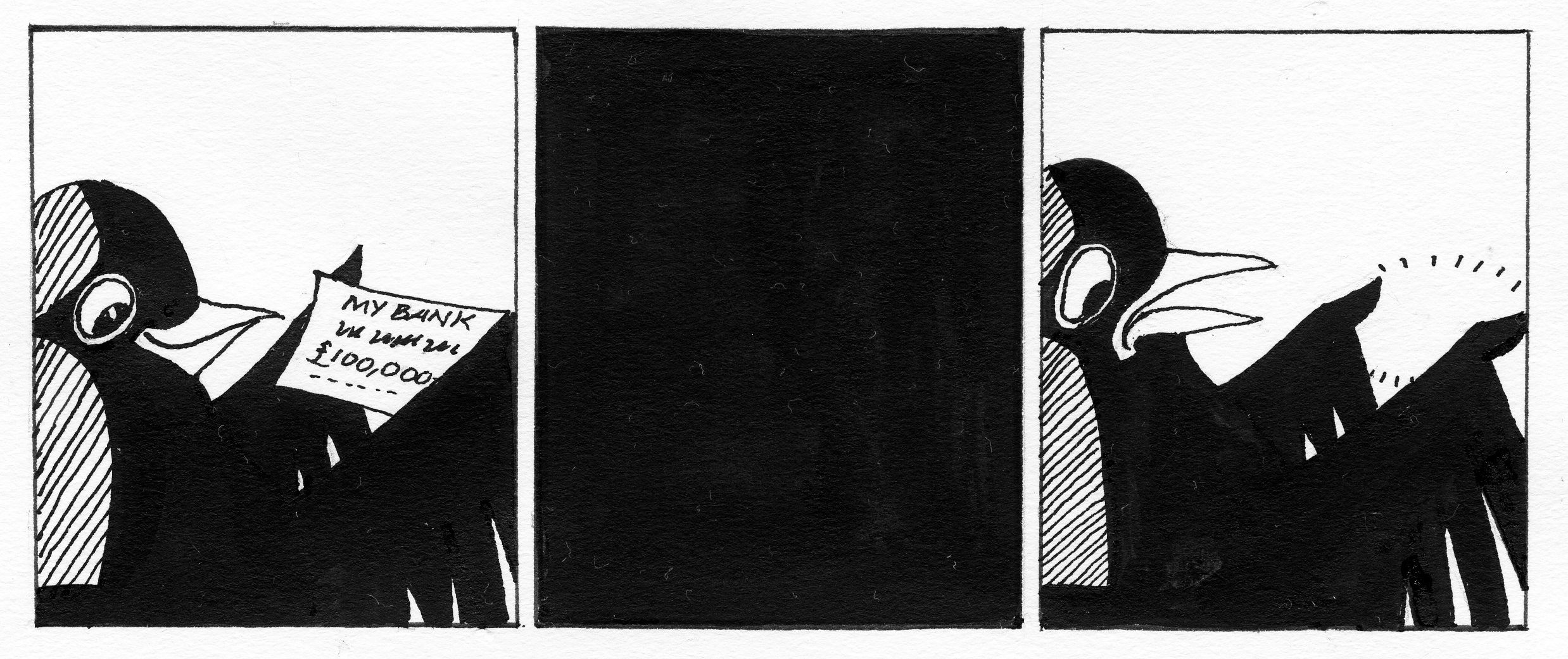
    You may recall from a recent editorial that Obrist enjoyed an almost 50% pay increase to between £130,000 and £140,000 a year, putting him on a par with major museum directors worldwide. For example, he earns considerably more than the director of Tate Britain who is responsible for a gallery many times larger and immeasurably more significant than the Serpentine, not least because it has responsibility for the most important collection of British art.

    The long inventory of ‘foreigners’ Obrist has done during his eight years at the gallery suggests the Serpentine plays at best second fiddle. He has recently curated exhibitions in Essen, Berlin, Zurich and Sao Paolo and published books about Chinese Art, Ai Weiwei, several volumes of interviews and the self-aggrandising The Art of Curation (Allen Lane) published this March. Hot on the heels of this lot, he will co-curate the Swiss pavilion at this year’s Venice Architecture Biennale along with the architects of Tate Modern. In the two most prominent announcements of Obrist’s new job nowhere was it stated that he is co-director of the Serpentine Gallery – as though this is just another sideline.

    This spring he is also curating Luma Arles, a huge enterprise lasting seven months; but this is nothing unusual because he appears to have done it every year since 2008. The Luma Foundation, to which Obrist seems closely attached – both are based in Zurich – also supports the Serpentine. (Luma was founded by Maja Hoffman, a pharmaceuticals heiress, who also serves as a trustee of the Tate, whose film programme, among other things, she pays for.) If Obrist can curate all these major events at the weekend how come it takes him so much time to curate so few exhibitions at the Serpentine? It defies belief that Obrist is anywhere near full time in London. He can’t be. So why is he earning twice the going rate even for a full-timer?

    Could it be that what many of us have suspected for years is true; that there isn’t actually that much involved in curating. It’s just a fancy title signifying not much more than blethering in tongues, writing atrociously and poncing about in black trying to look intelligent.

    The latest accounts for the Serpentine have been posted. They show that since last year the two directors have had their pay cut back (to £120,000 and £110,000 respectively) but nevertheless to a level which still constitutes a 33% and 37% pay increase in two years. Additionally the Serpentine now has three people earning more than the director of Tate Britain and while the Tate, with its vast and complex organisation and collections, has only three staff earning over £100,000, the Serpentine has two.

    The Serpentine Gallery has become a gravy train and if the Arts Council had any balls it would investigate immediately whether its £1.3 million a year subsidy is money well spent.

    David Lee

  • Serpentine Gallery: the black art of hushing it up

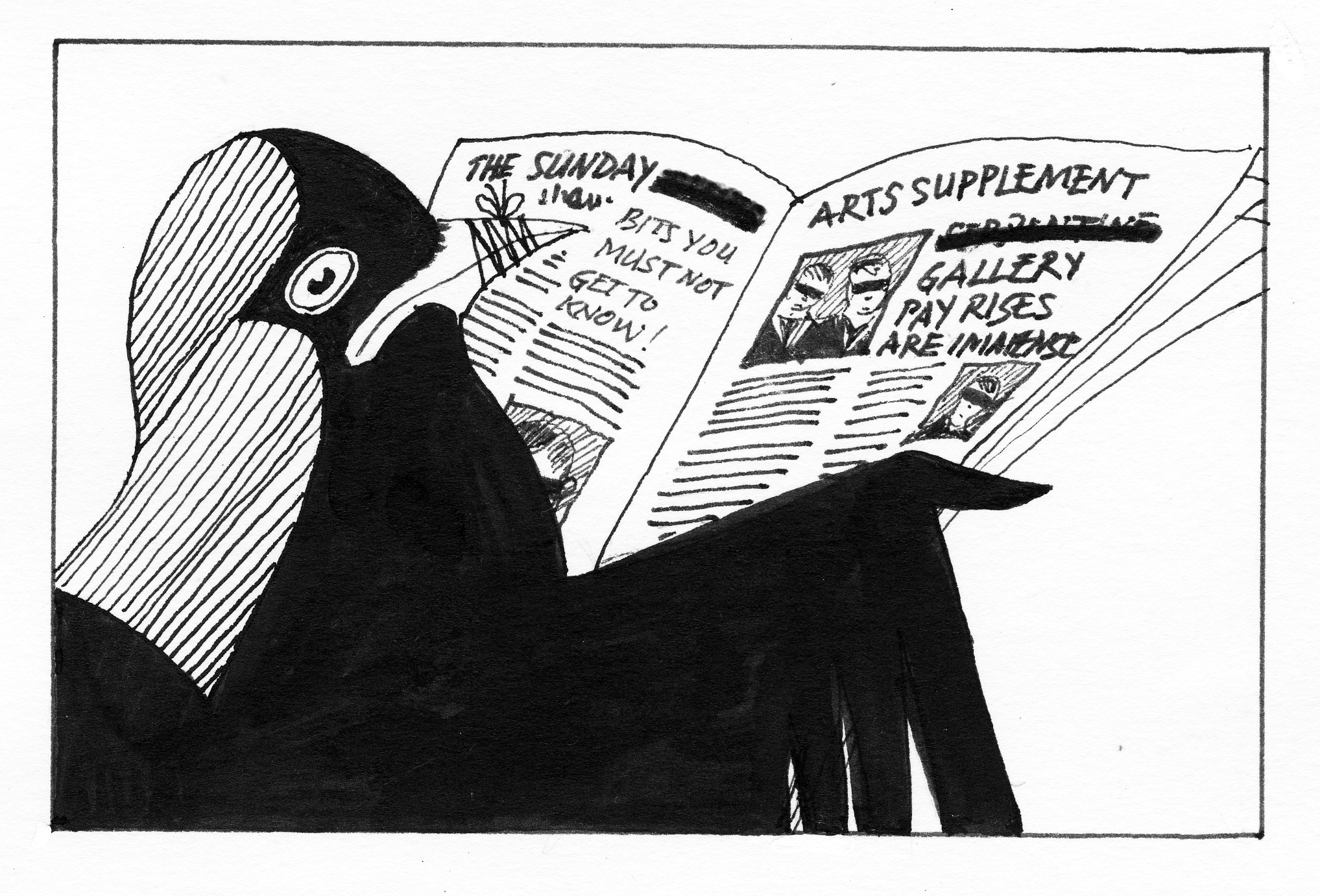
    Most readers will be unfamiliar with Bolton and Quinn Ltd, a company which is the subject here. Invisible to the public at large, they operate in a murky hinterland between major galleries and the media encouraging positive coverage of State-approved art. One definition of State Art might simply cite a list of B&Q’s clients, for all the major promoters of Contemporary Art use them as lobbyists, from the Tate to the Arts Council to the Art Fund … and the Serpentine.

    I’ve always wondered what service this company provides for the galleries who pay them, because all the bodies they represent also employ extensive in-house PR departments. If the Tate’s press office (currently comprising twelve members) is so pisspoor that they have to call on additional expertise then surely they should employ people of a higher calibre in the first place. All the organisations prominent in pleading poverty wastefully employ two press offices.

    So what extra-special purchase does contracting B&Q give to those who pay them? I can now call on personal experience to answer this. The last two editorials of The Jackdaw concerned the publicly funded Serpentine Gallery and its two directors who are overpaid by 100% compared to staff in equivalent positions elsewhere. Before Christmas a newspaper was about to trail the Jackdaw’s last editorial and expose the ‘charitable’ 67% and 47% pay increases awarded to the Serpentine’s two co-directors. A reply to these charges from the gallery was considered beyond the capacity of their own media team (all five of them, including a Head of Communications and a Head of Media Relations), whom one can only conclude must be muttonheads. Instead, they called in the household cavalry to charge the cannon. B&Q put their expensive hair-dos together and came up with a riposte so feeble it made me laugh out loud. A teenager on the minimum wage could have concocted something more convincing. So self-evidently accurate were The Jackdaw’s main charges against the Serpentine B&Q didn’t even attempt to answer them, instead resorting in desperation to mutterings about ‘bonuses’. Bonuses for public museum directors? Someone ought to be looking into that! In the end the paper pulled the story at the last minute saying there was no room for it. They still had space, however, for the vital disclosure that Tracey Emin is buying a flat in Manhattan. White Cube, Emin’s shopkeeper, is represented in media matters by … Hello!

    The story of the Serpentine pay increases was run soon afterwards in The Independent, from which many others picked it up. But not before B&Q had approached the paper. It was when I was informed of this that it finally dawned after so many years of bewilderment what precisely the function of B&Q is. They use their extensive contacts to firefight for and lobby on behalf of State Art. Quite how much they get paid for doing this is not revealed in their accounts at Companies House, which effectively tell us nothing.

    What this means is that, when circumstances demand, publicly funded organisations can pay a third party with our cash to assist in preventing us knowing the full story of what these organisations get up to. Thus are the public kept in the dark by use of their own money. If you are a closed monopoly, as State Art is, the advantage of keeping the public as ignorant as possible is an obvious benefit. On their website B&Q refer to this dubious activity as “producing opinion”.

    How might such a relationship work in practice? B&Q are in a strong position to subtly bribe journalists. They can offer trips, home and abroad, and invitations to fancy parties and soirées with all the gubbins of free catalogues, fancy bags and other sweeteners beloved of Fourth Estate liggers. More importantly, they can feed news exclusives about galleries and artists they represent to trusted journalists whose independence of opinion is surely compromised by the relationship.

    The virtual monopoly of favourable comment enjoyed by State Art in newspapers now makes perfect sense to me. David Lee

  • Fat cats in the park

    Arts administrators cleaning up in the name of charity

    In 2011, the Arts Council screamed daily that it was losing over 30% of its annual taxpayer subsidy. “Difficult decisions” and “hard choices” resulted in it cutting completely annual grants to 206 organisations, making many redundant. The Serpentine, meanwhile, was awarded the special status of “a regularly funded organization” – i.e. a reserved Pullman seat aboard the gravy train for life, and no questions asked.

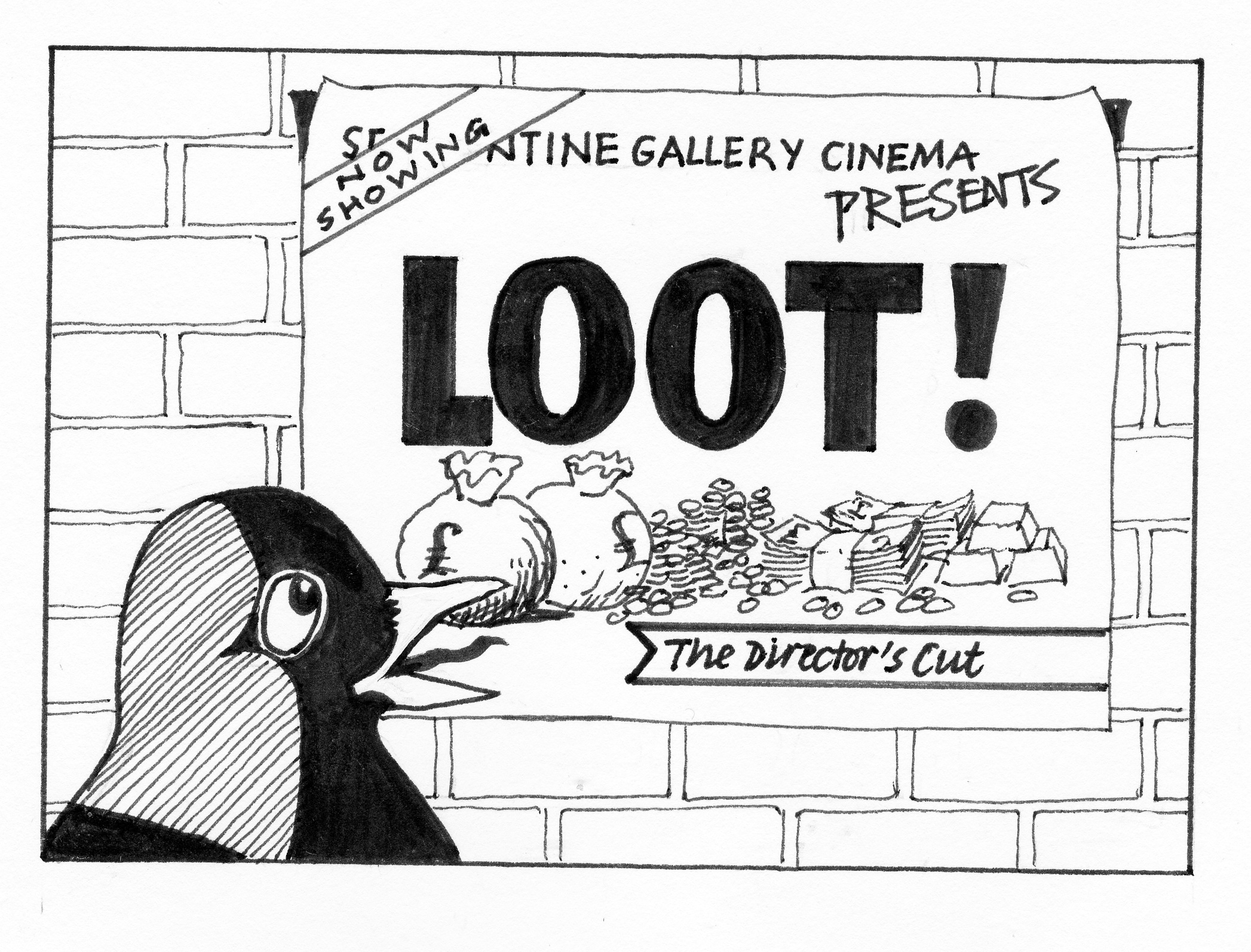
    At a time when fat cats in the City were being daily excoriated for awarding themselves huge pay increases and bonuses during a period of austerity for everyone else they had themselves caused, the two co-directors of the Serpentine (Julia Peyton-Jones since 1991 and Hans-Ulrich Obrist from 2006) were awarded wage increases of 67% and 47% respectively. This inflated their pay to £150,000 and £130,000 a year respectively, a hike which brought both of them within range of what the director of the Tate receives (£161,000); indeed Peyton-Jones earns more than the Prime Minister (£142,500). A quarter of the Serpentine’s basic annual grant from the Arts Council goes on two salaries. Both earn more than the director of Tate Modern (£120,000) and the director of Tate Britain (£89,000). Together they make twice what even the director of the National Gallery earns; £140,000. Heading a small gallery, formerly a tearoom in a park, is costing 74% more a year than Serota himself receives for running an organization with 60 times the turnover, 100s of times the size, and 15 times the number of visitors. Charity definitely begins at home at the Serpentine.

    And why does the Serpentine need two directors anyway? No other minor public gallery needs more than one. On the contrary, they run their often bigger operations for the cost of half of one director at the Serpentine. Neither can Obrist claim to be anywhere near a full-time employee, given the impressive number of outside commissions he has undertaken during his tenure in the park. The Charity Commission, recently taken to task by the Audit Commission for complacency and incompetence, should urgently investigate this profligacy.

    Neither do the directors deserve anywhere near what they receive, for their performance is lamentably below average. It’s not even as though they have a difficult job. Over the last few years half of their main exhibitions have dealt with either Tate trustees or Turner Prize winners or nominees. How difficult is it to draw up a list of those kinds of candidates for exhibition? Dawdling, one could pencil in a year’s exhibitions of that kind over coffee. Their programme is unimaginative and otherwise overly concerned with foreign artists many of us have never heard of and the standard of whose work is on the face of it unexceptional. They have staged no retrospectives of deserving British artists of the kind which were regularly organised by previous regimes, and which made the place unavoidably important. In those days it could at least argue that some public service was being performed. Nowadays, it succours only dealers and rich collectors.

    The current exhibition (until February 9th) features Jake and Dinos Chapman. The brothers have shown recently at the Royal Academy, Tates Britain and Liverpool, the ICA and the British Museum. So why do they need another exhibition at the subsidised Serpentine when their own commercial dealer, White Cube, runs two big premises in central London? Apparently, it requires support from a charity to showcase works by artists already widely exhibited and who are among the wealthiest and most exhibited in contemporary art. This is not ‘Charity’ by any currently known definition of the term.

    For all its millions in public subsidy (and don’t forget it has also collected no fewer than twelve National Lottery awards) the Serpentine fails conspicuously in two respects: for a charity it costs too much to run, is overmanned and pays its top staff double the going rate; secondly, it doesn’t show enough work by British artists of the kind who are deserving but rarely exhibited.

    The Serpentine does no service to the wider community of British artists and its public subsidy should be immediately suspended.

    David Lee

  • The Serpentine as fat cat

    Why should the interests of those in limousines be subsidised by the rest of us?

    What is the difference between a line of black limousines at a Mob funeral in Brooklyn and an identical cavalcade at the opening party of the new Serpentine Gallery annexe in Hyde Park? Well, not as much as you’d think. Although Cosa Nostra are undoubtedly the subtler of the two coteries represented, both have a common interest in protection rackets. In the case of the Serpentine this means inflating the reputation and value of the deluxe ‘branded’ art which will be shown there and will have originated, or will end up, in the collections of the limousines’ occupants.

    Unaware that a shindig was in progress I cycled past the Serpentine while the limos were chrome-to-chrome outside. At first this didn’t register as unusual: another evening, another hoolie for the vain and vulgar at the Serpentine… One has got used to it. But the image of those black limousines, just that few inches too long, that shade too opaque, that chauffeur-wipe too shiny, lingered until it formed an indelible symbol for everything that stinks about State Art. What is passed off as ‘public interest’ and ‘the public appetite for contemporary art’ (the latter is the often repeated favourite lie of President-For-Life Serota himself) is yet another means by which the wealthy protect their interests. The public has no say in what is shown in the Serpentine despite the fact we have always paid for it. And if we don’t like it we can eat cake.

    Here is a publicly funded art gallery which specializes in showing recent art of negligible visible quality, that the public couldn’t care a toss about, which is hawked by the world’s wealthiest and most powerful shopkeepers, has its value maintained by salerooms who rig prices during glamorous soirées, is traded in by billionaire collectors who purport to like it but treat it merely as a secure commodity of exchange, and is endorsed using a new language written by “international curators” no literate outsider can fathom. You couldn’t invent a more perfectly rounded system of self-interest and exclusion.

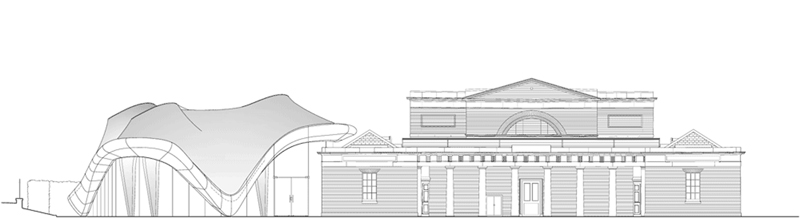
    The limos were celebrating the Serpentine’s latest expansion. A listed neo-classical building of agreeable proportions by Decimus Burton, formerly an arsenal close to the main gallery, has had a café and restaurant designed by Zaha Hadid attached to it. Enjoying limitless freedoms of manoeuvre as it does, State Art never has any problem acquiring permission for one of its chosen architects to tamper with the historically important and therefore supposedly protected. In this case what resembles the roots of a gigantic wisdom tooth have been impacted on the side of a Doric portico. It couldn’t be less sympathetic and like everything gratuitously eye-catching it is unnecessary. New gallery spaces are poky and the café charges £3.38 for a small cup of waiter-delivered coffee. How very charitable – come to think of it just like those other exemplary, public-spirited ‘charities’, the Royal Academy and The Art Fund.

    Between them the limousines paid the £14 million cost for the expansion, as well they might as many of them will be its main beneficiaries. Running costs and an exhibition programme have been underwritten with a £3 million endowment from the Lottery. This comes on top of the minimum £1.3 million a year the gallery has always received from the Arts Council. In fact, in the 19-year history of the National Lottery, the Serpentine has received no fewer than twelve awards totalling £6.8 million. Thus is the Serpentine the means by which money from the poorest, those who buy lotto tickets and scratch cards, is laundered to assist the wealthiest (non-doms many of them) in the appreciation of their investment portfolios. This revolting system is defended by the all-purpose State Art lie that the likes of the Serpentine “provide a public service”. Up to a point, but the real winners are behind all that dark glass.

    The Serpentine is run by a pair perfectly suited to their task: one is a dim socialite who does as she’s told, while the other is a Swiss “international curator” who speaks six languages and has neither penned nor spoken a clear sentence in any one of them.

    So who pays for the Serpentine? You do. Who is it for? Definitely not you. What is its purpose? Mind your own business.

    David Lee

  • Serpentine Gallery extension: limousines are good causes

    Serpentine Gallery extension: limousines are good causes

    What is the difference between a line of black limousines at a Mob funeral in Brooklyn and an identical cavalcade at the opening party of the new Serpentine Gallery annexe in Hyde Park? Well, not as much as you’d think. Although Cosa Nostra are undoubtedly the subtler of the two coteries represented, both have a common interest in protection rackets. In the case of the Serpentine this means inflating the reputation and value of the deluxe ‘branded’ art which will be shown there and will have originated, or will end up, in the collections of the limousines’ occupants.

    Unaware that a shindig was in progress I cycled past the Serpentine while the limos were chrome-to-chrome outside. At first this didn’t register as unusual: another evening, another hoolie for the vain and vulgar at the Serpentine… One has got used to it. But the image of those black limousines, just that few inches too long, that shade too opaque, that chauffeur-wipe too shiny, lingered until it formed an indelible symbol for everything that stinks about State Art. What is passed off as ‘public interest’ and ‘the public appetite for contemporary art’ (the latter is the often repeated favourite lie of President-For-Life Serota himself) is yet another means by which the wealthy protect their interests. The public has no say in what is shown in the Serpentine despite the fact we have always paid for it. And if we don’t like it we can eat cake.

    Here is a publicly funded art gallery which specializes in showing recent art of negligible visible quality, that the public couldn’t care a toss about, which is hawked by the world’s wealthiest and most powerful shopkeepers, has its value maintained by salerooms who rig prices during glamorous soirées, is traded in by billionaire collectors who purport to like it but treat it merely as a secure commodity of exchange, and is endorsed using a new language written by “international curators” no literate outsider can fathom. You couldn’t invent a more perfectly rounded system of self-interest and exclusion.

    The limos were celebrating the Serpentine’s latest expansion. A listed neo-classical building of agreeable proportions by Decimus Burton, formerly an arsenal close to the main gallery, has had a café and restaurant designed by Zaha Hadid attached to it. Enjoying limitless freedoms of manoeuvre as it does, State Art never has any problem acquiring permission for one of its chosen architects to tamper with the historically important and therefore supposedly protected. In this case what resembles the roots of a gigantic wisdom tooth have been impacted on the side of a Doric portico. It couldn’t be less sympathetic and like everything gratuitously eye-catching it is unnecessary. New gallery spaces are poky and the café charges £3.38 for a small cup of waiter-delivered coffee. How very charitable – come to think of it just like those other exemplary, public-spirited ‘charities’, the Royal Academy and The Art Fund.

    Between them the limousines paid the £14 million cost for the expansion, as well they might as many of them will be its main beneficiaries. Running costs and an exhibition programme have been underwritten with a £3 million endowment from the Lottery. This comes on top of the minimum £1.3 million a year the gallery has always received from the Arts Council. In fact, in the 19-year history of the National Lottery, the Serpentine has received no fewer than twelve awards totalling £6.8 million. Thus is the Serpentine the means by which money from the poorest, those who buy lotto tickets and scratch cards, is laundered to assist the wealthiest (non-doms many of them) in the appreciation of their investment portfolios. This revolting system is defended by the all-purpose State Art lie that the likes of the Serpentine “provide a public service”. Up to a point, but the real winners are behind all that dark glass.

    The Serpentine is run by a pair perfectly suited to their task: one is a dim socialite who does as she’s told, while the other is a Swiss “international curator” who speaks six languages and has neither penned nor spoken a clear sentence in any one of them.

    So who pays for the Serpentine? You do. Who is it for? Definitely not you. What is its purpose? Mind your own business.

    David Lee

    The Jackdaw, November 2013