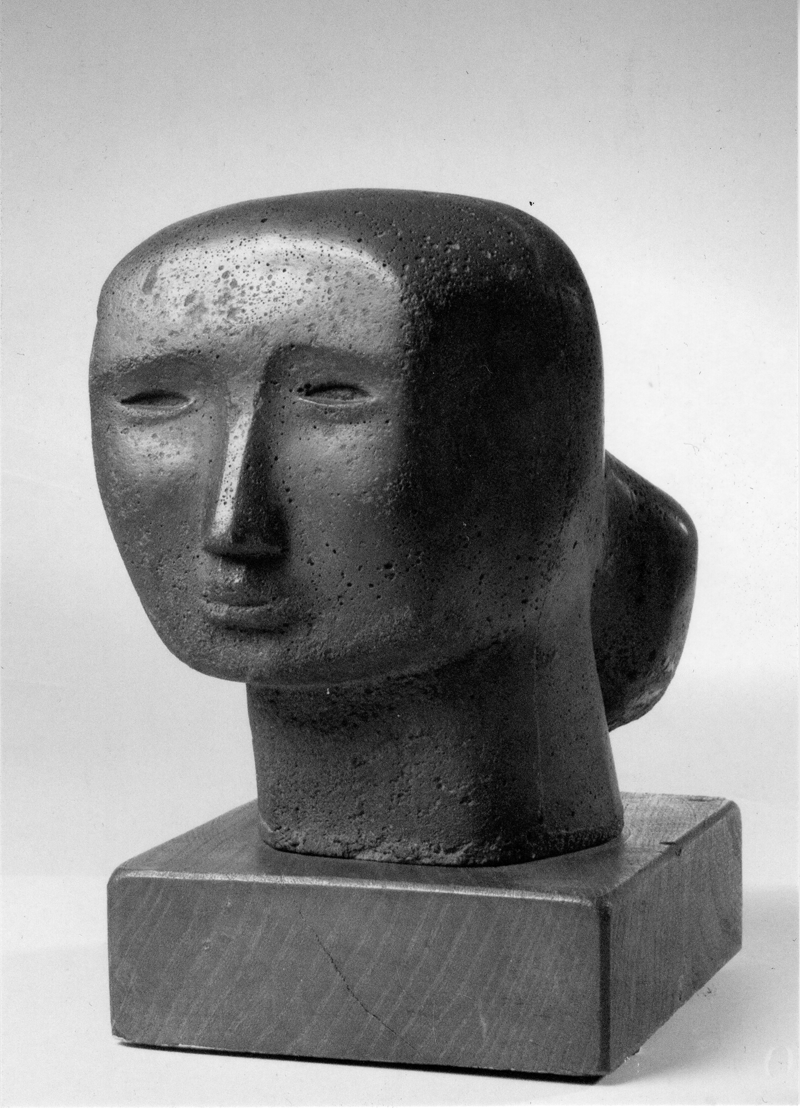
Tag: Scottish National Gallery of Modern Art

  • Martin Creed: new definitions for ‘gift’

    Regular readers may recall from a recent editorial that when ‘we’ bought Yinka Shonibare’s Trafalgar Square bottle to stand outside the National Maritime Museum ten times more was paid for it than had ever been paid for a work by this artist at auction.

    That story of casual profligacy is now repeated in respect of inarticulate chancer Martin Creed, whose entire career is the creation of State Art. Without the life support machine of public patronage the likes of Creed would be stacking shelves.
    In September 2013 the Tate bought Creed’s work no. 227, the lights going on and off, for £122,000, to add to the twelve other works it already owns by him. In passing, one of these is an editioned sheet of paper with ‘fuck off’ typed on it, a masterpiece considered so significant the British Council also owns it; indeed, four of the five Creed works in the British Council’s collection are duplicated in at least one other of the Tate’s, the Government’s or the Arts Council’s holdings. The Art Fund contributed £40,000 of their charitable donors’ money to the acquisition of no. 227. The fact that the Fund had already contributed to seven other Creed ‘gifts’ to the Tate via the Artist Rooms Endowment and to another work for the Scottish National Gallery of Modern Art indicates the now symbiotic relationship existing between The Art Fund and State Art – the Fund’s head is, of course, a former director of Tate Britain. To call this network an incestuous racket is to compliment it.

    Ownership of work no. 227 is in the form of a certificate bearing a terse description of the piece, which comes officially in an edition of two plus one artist’s proof. The idea of an ‘artist’s proof’ existing for a sheet of typed paper is, of course, ridiculous, a misuse of an otherwise important distinction. Sadly, this is the sort of mercenary scam we have come to expect from fashionable contemporary art. Work no. 227 is actually in an edition of 3. One of the other two pages was bought in 2005 by the Museum of Modern Art in New York, one of seven Creeds in their collection. MoMA won’t say how much they paid for no. 227 as they don’t “share information about the acquisition of objects”.

    £122,000 is a sum significantly greater than has ever been paid for any other work by Creed. It should have cost much less. A more financially savvy Tate could have bought at auction a similar work in July for a quarter of this sum.

    In 2001 Creed won the £20,000 Turner Prize. He was nominated for a touring retrospective – he was the grand old age of 32. His Turner exhibition party piece was, famously, work no. 227, which was ‘made’, typed presumably, the year before. It caused the kind of concerted debate which instantly projects a merely notorious work to the status of modern classic. Creed became famous overnight. Before the Turner parade, the Tate could have bought no. 227 for well under £10,000.

    When tracking sales of such works the process is confused because there are at least two durations of lights, of five seconds (work no. 227) and thirty seconds (work no. 127), which are sold as different pieces. Then there are other works in which lamps go on and off and buildings in which all the lights are turned on and off at the same time. It is symptomatic of State Art that once a line of merchandise becomes established in the canon, its secure infamy can be milked for profit: perhaps the best example of this is that there are now no fewer than nine pickled sharks.

    In 2010 Creed gave an interview to The Independent in which he stated that he had given the lights going on and off (in its Turner Prize manifestation of five seconds duration), worth, he claimed, £110,000, to the Tate. This was among seven other works, also ‘gifts’, which he claimed were worth £162,000. At this time he refers to the lights being in an edition of three with the other two being in “private collections”. ‘Private collection’ is a curious way – is it not? – of describing MoMA New York.

    In fact, this was all my eye and Peggy Martin, the on-off light was not included in any ‘gift’ otherwise the Tate wouldn’t have had to pay over the odds for it in 2013. And of the seven other works in the Tate’s collection which are said to have been gifts, all are stated on the Gallery’s website as having been contributed to by the Artists’ Rooms Endowment, the Henry Moore Foundation and Tate Patrons. When this group were exhibited at Tate Liverpool in 2012 they were described in publicity material as ‘gifts’. Demonstrably this is nonsense. I have been unable to ascertain – not least because none of the parties will tell me – what proportion of this group acquisition was a genuine gift. We should all be interested to know, if only because the value of these works stated by Creed – £162,000 – is a colossal misrepresentation of their real market potential. Of the seven works ‘gifted’ four are watercolours – crude ziggurats painted in diminishing horizontal blocks of different colours – from a series which until recently fetched between £350 and £1,700 each at auction. For some reason these scraps are very popular with State Art; the British Council and the Government Art Collection also have one each. The other three works ‘gifted’ might have fetched fifty grand on a good day. £162,000 for this stuff is daylight robbery.

    On July 1st in Christie’s evening sale – i.e. a sale usually reserved for blue chip material – Creed’s no. 127 was offered. It was No. 2 in an edition of 2 (also actually 3!). This work had sold first in 1995, then in 1996 for £3,000, and in 2006 at a Kentucky auction for £22,000. The estimate this time (based no doubt on the common knowledge of what the Tate had forked out for their five-second version) was pitched at £50,000 to £70,000, doubtless in the hope that with some fancy footwork an auctioneer might edge the hammer price towards the magical six figures. Christie’s pulled out all the stops, praising its “minimal elegance and formal drama”. They went on: “By redefining the parameters of the viewer’s experience and rupturing perceptual norms, Creed forces us to engage with our surroundings in new and provocative ways.” Naturally, they didn’t bother explaining how our ‘perceptual norm’, whatever that is, had been ‘ruptured’ and what exactly ‘provocative’ might mean in the context of a light being switched on and off. Even had it sold for its high estimate, no. 127 would have been the cheapest work in the auction by four times. On the big night bidding never got beyond £32,000 and it didn’t sell. Not even the artist’s dealer, Hauser and Wirth, was prepared to underwrite the low estimate price, which is unusual in an evening sale where a conspicuous failure can fatally wound a reputation. This showed a distinct lack of faith all round in Creed’s market viability. Christie’s won’t answer questions on this fiasco and mention of it was left out of post-sale results. And as far as the auctioneer’s website is concerned no. 127 has ceased to exist. Rest assured we won’t be seeing a work by Creed feature in a flagship auction any time soon.

    At Christie’s the day after no. 127 failed, another Creed, a watercolour ziggurat from the same series as four of the seven works ‘gifted’ to the Tate said to be worth £162,000, sold for £2,500 – the lowest sum achieved in the auction. The day before at Sotheby’s a large neon work, also akin to one in the £162,000 ‘gift’ sold for £10,000, which was 25% below its low estimate.

    In the context of this embarrassing rejection, the Tate’s acquisition of no. 227 for £122,000 looks like a reckless waste not only of their own money but of The Art Fund’s and the work’s other donor, a dodgy Ukrainian oligarch. They were all taken for a ride.

    If they must buy fashionable trash like no. 227, the Tate should be instructed to do so at auction instead of buying expensively elsewhere. We should also be told what is their working definition of a ‘gift’. And I’ve mentioned many times before the wastefulness of State Art’s main collections buying the same stuff.

    David Lee
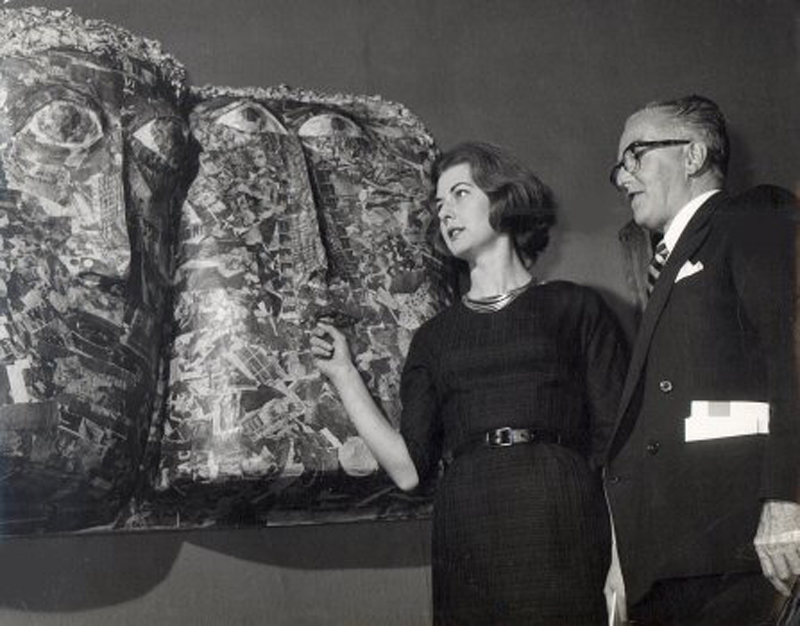
  • Evelyn Williams, and another case of the public denied

    Evelyn Williams, and another case of the public denied

    In the last issue I considered the case of a single-minded good artist,  David Mulholland from Middlesbrough, whose memory, in the absence of any official recognition or support, has to be kindled for posterity’s sake by friends and family. By The Jackdaw’s usual standard of eliciting no comment whatsoever, this caused a considerable mailbag from many mentioning other artists who deserved better than the obscurity and indifference they receive. Owing to the recent death of a special artist, there is cause for reiterating this line of criticism of an art establishment hopelessly out of touch with anything but ‘The Contemporary’, such as they choose to see it.

    Grief felt at the death of a memorable artist is mitigated always by the fact that their work – if it is properly accomplished and not merely the species that is famous for fifteen minutes – will live forever. Giotto didn’t need an ‘artist’s statement’ or incomprehensible catalogue introductions for his work to last, because his paintings speak for themselves in a universal language understood across the centuries. His work will continue to communicate clearly its observations of character and stories just as long as human beings are prepared to see,  feel and respond. This is the case also with the art of Evelyn Williams who died aged 83 on November 14th. Her work will endure in spite of the neglect she received from officialdom during a long and productive career. In the same Tate Collection which stores 274 works by Andy Warhol no space can be found for a single piece by Evelyn Williams, who is a far more interesting artist if not so much of a business-minded celebrity phenomenon whose market is carefully rigged. Even in the last two years alone, when 516 works were acquired by the Tate, there was no room for a single one by this important woman artist. There are even ten works in our national collection by American minimalist Robert Ryman, all of them white and doubtless extremely challenging to those of a devoutly all-whiteist fanaticism; but nothing by Evelyn Williams. Here is further evidence that at the nucleus of State Art breeds a deeply entrenched prejudice against anything but pseudo-intellectual nonsense.

    It is an appalling truth that the Tate has ceased to be a collection of British art preserving the very best of what is being done. Instead, it has been stealthily subverted under Serota to become a private collecting fief promoting a narrow orthodoxy related to a handful of dealers and auctioneers. Why is it that so much about today’s Tate stinks? Evelyn Williams is in a long line of single-minded British artists who refuse to run along the pre-ordained tramlines of conceptualism and modernism. She was a thoughtful, modest, intelligent and vulnerable person alive in a world – as she perceived and experienced it – of imminent dangers. Her paintings, sculptures and reliefs are about the fear and anxiety, the affections and frictions, of what it is to have lived the life of an anxious woman and mother. Hers is first and last a woman’s art, an uncompromising take on post-war relationships, intimacy, cares, depression, failure and even alienation. Her subjects take you inside the realm of senses and feelings, probing the unspoken secrecies behind the masks of propriety we all wear. In the way that art has of redeeming the awful, these are beautiful explorations of states of mind most try to avoid. Her work can be relentlessly intense, no question about that, but it is pure in spirit and purpose.

    Three of the more serious newspapers, the Times, the Telegraph and the Guardian, were eventually persuaded to publish obituaries of Williams. As with so many significant but neglected artists who are nevertheless considered worthy of an obituary, her exhibitions were scarcely even acknowledged let alone reviewed in the arts pages of these same papers. Critically, it was as if her work didn’t exist. She is, of course, among the many accomplished artists whose work is ignored for being conventional in appearance and technique and declamatory about emotions. To today’s State Art tyrants such characteristics are considered embarrassing drawbacks.

    Williams was, however, appreciated in the past. As a youngish artist in 1961 she won the sculpture prize (for Two Heads) at the John Moores in Liverpool, when other winners were Peter Blake, David Hockney and Ron Kitaj. These were the days when the Moores was worth winning, well before it was subverted to the cause of State Art where daubs of no merit are greeted by fools with preposterous superlatives. A retrospective exhibition was held in 1972 at Whitechapel Art Gallery; once again well before that gallery’s prostration before the winds of Biennale bluster. Williams continued her brave exploration of inner places that made her work then so widely admired. She worked every day of her life and although her commercial exhibitions continued, sometimes at long intervals owing to the complexity of ideas and their necessarily prolix gestation, a retrospective was never offered in her lifetime. Approached by friends in the last decade of her life, the Walker Art Gallery turned her down for such an honour. She couldn’t exert the pulling power of a Rolf Harris or Paul McCartney.

    Will Williams now receive the lifetime retrospective her work deserves, and which a wide audience should see? It isn’t likely.

    But why should this be, when there are more galleries nationwide which are more spacious than ever before? The answer is that as the public gallery network expands the same orthodoxy is spread across even more outlets. More galleries does not mean a wider selection of work on display; it means the same work by the same few artists spread across even more galleries even more frequently.

    What are called ‘Artists’ Rooms’ are a symbolic example of what is wrong with this rotten system. These ‘Rooms’ are organised by the Tate, the Scottish National Gallery of Modern Art and the Art Fund (how long will it be before the Art Fund can only be contacted via the Tate switchboard?), and they resulted from a bulk purchase, jointly by the Tate and the SNGMA in 2008. We bought for £42 million (£27 million in cash – the figure varies in different reports; we’ve never been told the exact sum – and £15 million in waived tax) retiring art dealer Anthony d’Offay’s gallery stock, which he called his private collection.  A cynic might say that Artists’ Rooms is the process by which the personal collection of one commercially motivated individual now dictates what a large proportion of the art-seeking population is allowed to see in the name of recent art. The same cynic might further add that Artists’ Rooms is the opportunity by which established reputations – such as Warhol’s – are constantly hammered home, and for the smaller ‘Room’ names, it is the instrument by which a more significant brand name can be nurtured.

    Under the auspices of the Art Fund, an organisation which luckily is headed by a former director of Tate Britain, 30 rooms featuring 760 works by 26 artists have been touring the country for four years, mostly as small one-man retrospectives. Some of these are marvellous, not least the extensive collection of photographs by August Sander. There are 232 works by Warhol alone, who gets two rooms to himself travelling at the same time. At the moment they are in Sheffield and Hull, and then Birmingham for four months. That is apart from relatively recent major exhibitions for the same artist at the Tate, the Hayward and other Arts Council galleries.  Warhol is showing somewhere all the time. We will not be allowed to ignore him.

    One of the Artists’ Rooms deals, inevitably, with Damien Hirst. This is currently on show in Walsall Art Gallery. It has been there for two months already and will remain in place for another year. What is happening when a fifty-year-old artist, already over-exhibited at a time when so many unexposed artists can’t get their work shown, is having a thirteen-month long exhibition? What is the reason for such indoctrination? Too often the Artists’ Rooms represent those who are already widely exhibited and who are bastions of the art market.

    Artists Rooms are a blunt instrument whereby approved taste is circulated (inflicted) from the centre. They constitute cheap exhibitions for Arts Council venues up and down the country, whose curators don’t have to originate their own programme. The laziness and ready compliance of these jobsworths is a godsend to State Art.  They can merely exhibit the same few approved brand names for ever. And make no mistake their career will depend upon them favouring these “right” kinds of artists for no individual prospers in State Art by demonstrating initiative or investigating the unorthodox.

    Visit the Hepworth Gallery in Wakefield and you will discover the other reason, besides the dreaded Artists’ Rooms, why thought and broad knowledge among curators is unnecessary. There is a new species of art collectors who caught the disease of wholesale, apparently random acquisition from Saatchi. These people fuel the market for State Art which they buy in quite staggering quantities. Their houses, full of wince-inducing tat bought for eye-watering sums, feature frequently in glossy magazines. Usually they are rewarded for their commitment to the State Art cause with the accolade of a position on a Tate committee, of which there are now dozens. At Serota’s Tate money not knowledge is the essential qualification for co-option.

    One such überbuyer – who has not yet been brought on to any Tate committee – is one David Roberts, a property developer, who has accumulated so much clutter he’s opened his own ‘space’ and has begun feeding pieces to regional galleries, Wakefield being the first venue. Works selected are linked as follows: “This exhibition examines ways in which modern and contemporary artists represent the human

    body in various media to explore psychological and emotional life.” What a perfect criterion that is for the inclusion of a major work by Evelyn Williams. Unfortunately, the trouble is that among Roberts’s 3,000 plus works there is nothing by Williams. But have a guess whose work he does own and whose efforts are on show in Wakefield: enter Warhol and Hirst.

    David Lee

    The Jackdaw January-February 2013

    http://www.evelynwilliams.com/index.htm

  • Gruel for the masses

    Gruel for the masses

    The State should be more circumspect than to behave like a private collector. Unfortunately, collecting and exhibiting in national collections according to narrow personal tastes and loyalties is established practice. Those employed to run Contemporary Art are selected because they have been carefully programmed in the tenets of State Art and if they have doubts keep quiet about them. But functionaries of State Art are not spending their own money and therefore in the policies governing collection and exhibition they should reflect the best from the full range that is being produced and not just follow those few desperately eking out the fag end of Opportunism. A damaging aspect of State Art has always been that it refuses to acknowledge anything outside its own narrow prejudices, which stop dead at those artists represented only by major art dealers and sold expensively in rigged markets by auction houses. Healthy dividing lines between museum curators and directors, auction houses and the most fashionable art dealers no longer exist. The system stinks worse than an open sewer, but many love the smell and wish to waft it over the rest of us so we might come to like it too.

    State Art apostles all help one another in pursuance of their little ambitions. They are a happy club who play hard. Their governing Synod, which comprises all of those contributors to the unhealthy smell noted above, swarm off one week to Margate aboard the same train, the next week to Wakefield aboard the same train, days later they commune aboard the same flight to Venice, and the week after that they chink glasses again at the Basel Art Fair – it’s a hard life is State Art. Decisions made among themselves during these junkets will be imposed everywhere. What results from this process is the repeated exhibition of the same few artists. This keeps the rest of us in ignorance of so much that might otherwise have been stimulating. Most of my generation will never know what we have missed because we have lived our entire professional lives under a State Art regime administered by curators terrified to jeopardise their careers by thinking for themselves. Predictability being the worst of State Art’s crimes, we are never surprised.

    Also like many of my generation, I suspect, I no longer feel the urge to see everything, having already viewed so much so often that hasn’t justified its hysterical praise by those with mysterious interests in promoting it. I’m sure Miro was a fascinating old cove but I’ve visited his studio in Palma and, to be honest, provided with a large enough mop and baths of black and the primaries, a toddler could produce in an afternoon most of the work on display there. Miro at the Tate? No thanks. Likewise Emin at the Hayward. Seen them before, and life is too short to indulge further the solipsism of an idiot. The problem for those of us with decades of exhibitions behind us is that this sort of material, the kind of thin work we are constantly exhorted to idolise,  has become unavoidable. It gets everywhere. Nowhere is safe from it.

    I recently visited the Orkneys for its birds and stones. Knowing that the Pier Arts Centre in Stromness held a donated collection of carefully selected minor works by important 20th century British artists, this was an early port of call. The permanent collection is the generous gift of Margaret Gardiner, who wrote an acclaimed biography of Barbara Hepworth and had an eye for quality which probably exceeded her modest purse. Nevertheless, she accumulated covetable, domestic-sized pieces by Hepworth, Moore, Nicholson, Piper, Heron, Frost, Lanyon and others, all of which will spark memories in knowledgeable viewers while touching those nerves and recesses where appreciation resides. The original gallery, at the heart of a busy harbour, has been done up courtesy of the Arts Council Lottery (£4 million) and there is now room for temporary displays and craftsy souvenirs. I was hoping to see here work by artists from north of Inverness and Aberdeen – the likes of Frances Walker for example – those whom one is unlikely to encounter elsewhere. No such luck.  What they had on display were some scribbles and unsavoury looking skidmarks by Cy Twombly, of the ‘highly significant’ sort which cause State Art fanatics to collapse in a religious swoon, and a collection of inept portraits and even worse ‘landscapes’ by another fashionable and ludicrously expensive American artist, Alex Katz. (Twombly is represented by Larry Gagosian; Katz by Pace Wildenstein.) Both are described as ‘influential’. God help us, who with?

    Katz’s portraits were trendily wooden, flat and unmodelled, the sitters characterless, boneless in some cases, and tediously stylised. Anyone whose eye has been nurtured by rich historical portraiture from Al Fayum and the Roman republic to Ravenna, Moroni, Rembrandt, Lawrence and Spencer couldn’t possibly see anything other than low-fat insipidity in Katz’s daubs. And his small landscapes, truly awful pictures, were so awkward and incompetent they were unworthy of hanging in a Women’s Institute. But no, they had been air-freighted 700 miles north of London for the benefit of Orcadians and those, like me, doggedly twitching for whimbrel and black guillemot. (Incidentally, en passant, the former you can more often hear than see and the latter, considerable rarities elsewhere on northern coasts, bobble about common as muck in Scapa Flow. Youalso ought to know about the corsair ravages of great skuas marauding in press gangs on Hoy – more engaging than either Twombly or Katz could ever be – but that’s for a different and probably a better magazine.) The presence of Katz in the northern isles wouldn’t have been quite so annoying had I not seen the same shallow gimmickry only a few months before, by accident note, in the National Portrait Gallery. I’d been bewildered then by what was officially considered to give this stuff precedence over works by effortlessly superior British portrait painters. Both Twombly and Katz are part of the Artists’ Rooms series which are enjoying a permanent tour of the country. This is the “generous gift”, by the way, for which we paid Anthony d’Offay £42 million. Artists’ Rooms, organised by the Tate, are the process, it would seem, by which nobody in the country will be safe from the tradenames of State Art. They are coming to a place near you whether you like it or not.

    On the way south I didn’t stop for Jeff Koons at the Scottish National Gallery of Modern Art in Edinburgh (another Artist’s Room) having seen the trash he has to offer too many times before. I stopped instead at Wakefield where a £35 million museum (Arts Council Lottery: £5.5 million) designed by David Chipperfield has opened in honour of local artist Barbara Hepworth (1903-1975).  This shed of grey slate, forbiddingly windowless for the most part,  replaces the old Wakefield Art Gallery which was housed in the municipal Edwardian pile up the hill. Despite the beauty of a small number of masterpieces it contained, that was a gloomy, unloved place where, not surprisingly, few ventured. Despite its off-putting appearance, the new grey gallery is an improvement and stands beside an attractive weir (grey heron, grey wagtail) on the Calder 25 minutes walk from the railway station. Inevitably, the building has been overpraised by architecture scribblers. It is nothing at all remarkable, but is agreeable enough inside. Apart from the foyer, which is coloured in regulation Serota mud, the rest is white and spacious, the light a mixture of rationed natural and mains. The whole place is blighted by that self-inflicted virus of modern galleries and museums, patrolling attendants armed with squawking radios which destroy all attempts at uninterrupted concentration.

    The historic Wakefield collection, mainly mid-century Modernism which is representative more than notable, is scarcely worth writing home about for anyone well acquainted with the field, but is augmented by apposite loans from elsewhere, mainly the Tate – a sensible use of their hidden reserves. From a loyalty point of view the display does Hepworth no favours. Gabo was more inventive in three dimensions with form, materials and especially string, while Moore, represented by two fine early sculptures, a reclining figure carved in writhing elm and the modelled cement head, render the nearby Hepworths stodgy and a bit simple. Her drawing of a surgical operation – these are usually her best things when seen reproduced small in books – looked vague next to one of Moore’s best shelter drawings. In this company Hepworth might be second rate but she’s still world famous in Wakefield.

    Given that Arts Council money has gone in, they and their lieutenants, and particularly the dead hand of their State Art doctrine, are already calling the shots in the exhibition programme. The opening show is throwaway stuff. Doubtless during the selection process political correctness intervened something like this: we need a young female sculptor with impeccable State Art credentials, phone Serota.  The chosen candidate was one Eva Rothschild, who is Irish. Fresh from the ponderous, overblown constructivism she served up last year at Tate Britain, she arrives here with playground materials and colours, inarticulate tangles of stuff on stands signifying heaven only knows what.  Beside the humanist Hepworth this skip-fodder insults her memory.

    Apart from Hepworth and Moore, think of the important contribution of Yorkshire to British sculpture in the last century – national figures like Kenneth Armitage, George Fullard, Austin Wright, Ralph Brown, Hubert Dalwood and all those gifted tutors and Gregory Fellowships at Leeds. The new museum had years to plan a retrospective of an important local sculptor, or a mixed show of work ripe for reassessment, but instead they present scraps by yet another over-exhibited fashionable novice with no discernible sculptural ability. As usual with the Arts Council, their programming is a lazy failure.

    Needless to say the Council’s finest snake oil salesmen have been scratching their heads over Rothschild. Following months of screwed up paper they cobbled together this salvo of lucidity: “This exploration of the intrinsic power and meanings carried by objects produced a transformational encounter between the animal forms and the symbolic and narrative potential of Rothschild’s work.” One of these days, soon I hope, they will realise they are communicating with fellow humans.  But the Arts Council don’t do editing or clarity, and neither is conciseness in their lexicon: “There is a playful defiance of gravity and materiality in many of these sculptures that probe, test and occupy the gallery space.” Probe, test, occupy the gallery space … No, you’ve got me there. Perhaps the good folk of Cleckheaton and Goole are fluent in this guff, but I doubt it.

    David Lee

    The Jackdaw Jul-Aug 2011