Tag: Picasso

  • Martin Lang: Against life drawing

    Advocating life drawing at art school is a deeply conservative and reactionary position. Arguments in favour of life drawing usually fall into one of two camps (or sometimes both). I am utterly unconvinced by both.

    The first, and weaker, argument contends that it is necessary to learn the rules before you can break them. This is an authoritarian position where you must learn to draw “properly” before you can make other kinds of art. We can almost dismiss this argument out of hand. Imagine discovering a great artist, falling in love with her work, telling others how wonderful it is, but then finding out that her life drawing wasn’t up to much. Would you re-assess your judgement and decide that the art you once loved must be substandard? You probably wouldn’t dismiss your favourite musician if you discovered that he couldn’t read music: this is irrelevant if the music is good. Perhaps cinema might be a better comparison, since artists also work in film. Most people wouldn’t rubbish their favourite director upon finding out that he couldn’t draw very well. So why would you apply this criterion to an artist film maker? In both cases it is irrelevant if the films are good.

    This first argument shifts the focus away from the artwork and onto the artist’s training. To accept the argument is to accept that you are unable to judge the quality of the artwork without knowing something about the artist’s education. This is a useful argument if you do not like Modern or contemporary art, where such training is not discernible. Under this perspective, Mondrian’s grid paintings or Rothko’s colour fields are acceptable only if they can first prove that they are able to make more conservative kinds of art. This is the concession to Modern and contemporary art that the conservative authoritarian makes, reminding us that Picasso was an excellent draftsman before he dedicated his life to learning to draw like a child. If you value any kind of non-representational art (such as abstraction), any kind of de-skilled art, performance or relational art, then the argument that the prior mastery of life drawing is necessary falls short.

    The second, and more sophisticated, argument claims that mastery of life drawing is not necessary, but that it should be learnt anyway. Even if, after hours of classes, the art student is useless at drawing the figure, and even if she has no intention of making any kind of figurative drawing, painting or sculpture, there are still fundamental benefits to studying life drawing. These benefits include discipline (turning up on time, prepared with the necessary equipment), concentration (the ability to work on one thing for extended periods) and looking (training the eye). Proponents of this argument contend that these skills are just as useful for making non-representational and deskilled practices, because they provide the student with a greater sense of aesthetic awareness and a robust work ethic. But I have never once heard anyone who has made this argument call for the reintroduction of still life classes. Imagine bragging that your fine art degree programme obliges students to spend one day a week drawing fruit to enhance their concentration and observational ability. Why not also teach geometry, perspective and colour theory on a weekly, compulsory basis? You could do this, but you would have a deeply reactionary course that would churn out conservative artists. Readers might note that this second argument is also an authoritarian one, since it assumes that all art students learn in the same way. Whatever the student’s learning style, background (religious sensibilities come to the fore here) and whatever their artistic aims, their training must be grounded in observation of the nude human figure.

    Another strand to the second argument maintains that life drawing can be taught in an experimental manner to produce more cutting-edge artists. Examples include where life drawing concentrates on experiential drawing or experimentation with materials, methods and techniques (there are other examples). But this is no longer life drawing, for to teach these things there is no need for a model. Terming it as such only reinforces the assumption that the underlying tradition of life drawing is something that must be preserved, even when it is irrelevant to the tutor’s pedagogic aims and the student’s artistic ambitions.

    Life drawing was developed as a pedagogical tool to train Western artists to make figurative painting and sculpture. The reason that it still exists in some art schools is mostly down to tradition. While life drawing may be useful for some types of artist, it is not applicable to all. I am not saying that its teaching necessarily prohibits the development of good, exciting and relevant artists. My argument is that it is not necessary and does more to hinder the development of such artists than it does to encourage them. To teach it is to enforce a hierarchy: representation over abstraction, traditional forms of art over more avant-garde kinds. It is also to deny art’s radical potential: must art activists first learn such conservative lessons? Embedded within this hierarchical and authoritarian position lies a reactionary and conservative politics. Nostalgia and fascism have always walked hand in hand. Think of Mussolini harking back to the Roman Empire, or Hitler’s love of classical art and architecture. Today we might think of Trump’s slogan “make America great again” and Brexit talk of “taking back control”. We urgently need free thinking artists able to critique contemporary nostalgia, populism and even outright racism and sexism. For that we need a pedagogical approach that is progressive, inclusive, and libertarian. This will allow for more progressive forms of art to develop and emerge – including non-Western kinds. For these reasons, I am against the teaching of life drawing.

    Martin Lang is a lecturer in Fine Art at the University of Lincoln.
    E-mail: mlang@lincoln.ac.uk

  • Laura Gascoigne: Crime Without Punishment

    In May, policemen with shovels moved in again on 79-year-old mobster Robert Gentile’s Connecticut ranch. It’s the third time they’ve searched the property and the second time they’ve dug it up in the hope of finding the 13 masterpieces, including Rembrandt’s Storm on the Sea of Galilee, stolen from the Isabella Stewart Gardner Museum in Boston in 1990. A few years ago Gentile boasted in jail that he knew the whereabouts of the loot, a mistake the old Mafioso – and his missus, if he still has one – is presumably regretting.

    With the $5 million reward still unclaimed after 26 years, expectations of the works’ survival are vanishingly slim. According to the Art Loss Register’s reckoning, 15% of missing masterpieces never reappear, but the fact that some do keeps hope alive. Vermeer’s Lady Writing a Letter to Her Maid, stolen from Russborough House in 1986 by Dublin underworld ‘General’ Martin Cahill in 1986, was tracked down seven years later by Scotland Yard Art and Antiques Squad sleuth Charles Hill, and of course the Tate got back its two Turners nicked from the Schirn Kunsthalle in Frankfurt in 1994 after eight years of dodgy negotiations with Serbian gangsters and the payment of a £3 million ransom, ahem, reward for information.

    If museum heists seem to have passed their heyday, it’s because WikiArt-educated criminals have come to realise that world-famous paintings can’t be shifted. There is still idiocy among thieves, however. The works by Monet, Matisse and Picasso stolen by Romanian gangsters from the Kunsthal Rotterdam in 2012 were eventually incinerated by one of their mothers, on the principle that ovens are the best place for hot potatoes. Some mobsters do ’ave ’em. But museum thieves with half a brain today make sure of their market (black if possible) in advance. Hong Kong was the destination of the Chinese antiquities nicked from English regional museums in 2012 in a spate of burglaries by the romantically named Rathkeale Rovers. Limerick tinkers they may be, but the Rovers twigged that profit margins are wider on intact jade carvings than on melted down Henry Moore bronzes, and there’s less heavy lifting involved.

    Like the hoary ‘Diamond Wheezers’ who tunnelled into Hatton Garden last year, the Rovers were good old-fashioned breakers-and-enterers – the last of their three incursions, into Durham’s Oriental Museum, was through a brick wall. In the digi-crime era, the public has a special affection for analogue thieves. We relish the effrontery, ingenuity and occasional battiness of the stubbornly unmodernised criminal enterprise. We have a particular soft spot for the crackpot with a social conscience like John Bunton, who lifted Goya’s portrait of the Duke of Wellington though an open toilet window at the National Gallery in 1961 in aid of his unemployed bus driver father’s protest against the imposition of the BBC licence fee on the poor. And it pleases us to think of art-loving thieves enjoying quiet possession of their booty, as Vincenzo Peruggia did for two years with the Mona Lisa after liberating her from the Louvre in 1911 with the aim of repatriating her to Italy. Peruggia’s mistake was to expect a reward for his patriotism – a thief has to live – but became a national hero on his arrest.

    Sadly, the ‘gentleman thief’ and the ‘cachet crime’ are becoming history – one reason why Lund Humphries’ new publication Crime and the Art Market by Riah Pryor is not the page-turner you might expect. A former art crime researcher at Scotland Yard and assistant art market editor at The Art Newspaper, Pryor promises in the preface to address the issue of “whether the art market, with its opaque structures and secretive ways of doing business, is fundamentally facilitating criminal activity.” She looks at different categories of crime – forgery, theft and trade in looted antiquities – and different attempts, official and unofficial, to deal with them.

    In the case of looted antiquities, the book is a depressing catalogue of international declarations, conventions and protocols endlessly wriggled out of by rich ‘market’ countries to the continued despoliation of poor ‘source’ ones. We British are expert at deferring ratification: it took us until 2002 to ratify the 1970 UNESCO Convention on the Means of Prohibiting and Preventing the Illicit Import, Export, and Transfer of Ownership of Cultural Property, and last year, when finally ready to ratify the 1999 protocol to the 1954 Hague Convention for the Protection of Cultural Property, we ran out of parliamentary time. On the domestic front, an equally dismal picture emerges of a police force that is underfunded, sclerotic and generally indifferent to a crime it (and the mass of the public) considers low priority. The recovery of stolen art is now mainly left to private consultants with police backgrounds – money attracts cops as well as robbers – and justice is more quickly (though expensively) achieved through the civil courts.

    It’s hard to know who this book is for. It won’t teach professionals anything they don’t know and amateurs will find it disappointing. After challenging the view “that criminals involved in art (particularly forgers) are deserving of an admiration not offered to criminals targeting other markets”, Pryor can hardly regale us with tales of their exploits. She seems equally loath to investigate the shady financial practices that have turned the art market into a global ‘marché ouvert’ for anyone rich enough to retain the services of Mossack Fonseca. The chapter headed When is a Problem a Problem? would be better titled When Is a Crime a Crime? The answer, she suggests, is when the money says so: laws are enforced “where patterns of criminal activity threaten the market’s profit margins.” On page 147 comes the understatement of the century: “Secrecy around the identities of those involved in a transaction, combined with the highly subjective and dynamic value of cultural property, can lead to fears of market manipulation.” Well I never.

    You can’t escape the feeling throughout this book that its author is covering her back in case she never works in the art world again. Her conclusion, when she reaches it, is no conclusion at all: “With no quantifiable means by which to determine how many professionals are tempted into criminal activity and how this compares to other markets, any sweeping conclusion of art market behaviour only ever seems to be based on a foundation of snapshots, gut feeling and anecdotes.” In other words, the exercise is pointless. Still, a few more anecdotes would have leavened the loaf, and some observations from the horse’s mouth might have raised the philosophical tone. Take this pearl of wisdom from the late lamented Peter Scott, cat burglar to the stars and author of Gentleman Thief: “The people I burgled got rich by greed and skullduggery. They indulged in the mechanics of ostentation – they deserved me and I deserved them. If I rob Ivana Trump, it is just a meeting of two different kinds of degeneracy on a dark rooftop.”

    Now that Ivana Trump’s ex-husband is running for President of the United States, will anything change? I’ll give the last word to Charles Hill, who told a Guardian interviewer in 2006: “The amount of beauty matched by moral turpitude in the art world generally, but specifically in the world of art crime, is fascinating. There’s a great fluctuating moral tide and people just bob along on it.”

    Ten years on, the fascination is becoming morbid as the tide of turpitude keeps rising with no sign of any flood barriers going up.  

    Laura Gascoigne
    The Jackdaw

  • The way we are now – why ‘avant garde’ is now an obsolete term

    McQueen copyThe Times – God bless its little cotton socks – has just been celebrating the triumphal return of the 1990s as a creative force. “Suddenly contemporary art” it crows, “was part of popular culture. The Royal Academy’s landmark Sensation show in 1997 was a turning point.”

    It was so indeed, but not exactly in the terms the article intends. Here in Britain, Sensation marked perhaps the very last moment when it was possible to talk about an avant-garde in the visual arts with any appearance of authenticity. The show was widely hailed as the beginning of something – as the moment when the visual arts in Britain turned over a new leaf, as the moment indeed when British artists surged to the very forefront of innovation, displacing both the French and the Americans, who, each in turn, had carried forward the baton in the race to create what was entirely and indubitably new.

    Looking back now, the exhibition seems, on the contrary, to have marked the instant when the hands of the clock moved on, and the whole notion of avant-gardism ran out of steam. To quote the Times once again: “The beginning of the decade was all about exhibitions in abandoned warehouses and empty office blocks. By the end, thanks to Damien Hirst and his gang of barricade-storming rebels and Charles Saatchi, the ad-man-turned-art-dealer, it was more champagne and cocaine and exploding auction prices.” Only a little further on was the day when Tracey Emin RA, once high priestess of the YBA Movement, would celebrate her 50th at Annabel’s, London’s most establishment nightclub, in the company of Princess Eugenie, granddaughter of H.M. the Queen.

    The avant-garde came late to Britain, and imploded late. Long before 1997 there had been signs that the impetus to innovate was beginning to falter. It is, I think fair to say that most of its energy was already exhausted towards the end of the 1970s, when the terms Post Modern and Post Modernism came into vogue. Art was no longer defined by its urge towards novelty, by its eager embrace of some definition of the new. Instead, it was characterized by its relationship to what already existed in the recent past. This impulse has been further defined by the fashion for ‘appropriation’ – that is, for making exact copies of images that already exist as a paradoxically innovative act.

    It is possible to look at the present situation in the visual arts using several different perspectives. One is the immense expansion of the contemporary art world. The old avant-gardes were confined to Western Europe and the United States, with perhaps an acknowledgement of what happened in Russia in the first two decades of the 20th century, and a dim consciousness of certain developments in Latin America. This expansion owes much to modern communications – first to the fact that colour printing became radically cheaper, which led in turn to the birth of the musée imaginaire or museum without walls. Secondly, to the digital revolution and the birth and rapid growth of the Internet, which has made possible the immediate diffusion of images from a huge variety of different sources. Google, and ye shall find.

    This means that it is increasingly hard to see any clear direction in the general progression of art. If we are looking for the proverbial ‘shock of the new’, it often seems that the shock of the exotic (something unfamiliar, coming from a culture very different from our own) will do just as well instead. It is, of course, necessary to acknowledge, when saying this, that the original 20th century avant-garde made free use of certain exotic sources – look for example at the relationship between Cubism and what Picasso described as “l’art négre”.

    Of course there is yet another paradox here, which is that the appeal of African tribal art to Picasso and a group of his artistic contemporaries was precisely its (to them) hermeticism – the fact that they in fact knew little and cared less about what the tribal artists were trying to express. Now we not only see too much – we are also in a position to know too much. Just go to Google, and ask the right questions. It is impossible to resist asking, knowing that the answers are within such easy reach. Today there is really no such thing as an innocent eye.

    Another important factor here has been the influence of official institutions – in particular museums of modern and contemporary art. These offer one of the main channels through which contemporary art now reaches a mass public. One may argue that television and the Internet are in practical terms just as important, but the fact is that these institutions see themselves as being entitled to govern the agenda. Their priorities are set by two things. First, those in charge of them (though they may vigorously deny this) see themselves as the high priests of a cult. A lot of the more characteristic manifestations of contemporary art, as presented by official organizations, now quite openly call for the response, “Lord, I believe – help Thou mine unbelief.” Or, in more demotic form, “I believe you – thousands wouldn’t.” There are, notoriously, often no objective correlatives that can be used as measures of quality, or even of interest.

    Secondly, museums – not surprisingly – feel a strong sense of responsibility towards those who supply their funding. The problem here is that the givers of money often tend to measure success in brutally populist terms. How many people are coming through the doors? What is the demographic breakdown, in terms both of generation and of class. Are a full range of taxpayers getting their money’s worth?

    The result has been a rush towards supposedly populist forms, chief among them performance art and video. The problem here is that what museums deliver using these media, often in spaces not very suitable for the purpose, compares unfavourably with what the audience gets from better established forms of artistic expression that overlap – i.e. with theatrical performance (nowadays often very radical and imaginative, in addition to being a great deal more disciplined), and things seen in cinemas and on television. In addition to this, where film is concerned, the technical resources available outside the museum or fine-art context are often much richer and more sophisticated. Money talks ­– this is why the best television commercials often far outstrip, in terms of technical finesse, anything presented as ‘artist’s video’.  It is no wonder that a number of artists who made their reputations in that field have now made the transition to being career film directors. The recent career of Sam Taylor-Johnson offers a case in point.

    It is worth noting, in this context, that looking at painting or sculptures is, in general, a different kind of looking from looking at video or even at performance. Video demands that you look from a fixed point of view, and the same is true of many, though not absolutely all, examples of performance art. Video and performance both impose a fixed time span on the audience. With paintings and sculptures the situation is different. You look from the angle and distance you choose. You look for a moment, or for a much longer span. You are free to walk away, then look again from a different viewpoint. Both physically and psychologically it is a very different kind of experience.

    In this connection it is perhaps worth noting that Tate Modern’s current director, Chris Dercon, is due to leave the institution in 2017, to become director of the  experimental Volksbühne theatre in Berlin. In recent months, Tate Modern, having made a big deal about providing new spaces for performance art, has gone rather quiet on the subject. One wonders if its enthusiasm for this art-form will survive Mr Dercon’s departure?

    A conspicuous feature of the contemporary art world as we now have it is its close alliance to the fashion industry. To a large extent, this is something inherited from the earliest phases of the Modern Movement. One thinks in particular of the huge impact made by Diaghilev’s Ballets Russes on the Paris fashion industry. The impact of the Ballets Russes on the leading pre-World war couturier Paul Poiret is well known, but the influence was more general than this. Maison Paquin, for example, hired Leon Bakst, one of the chief Ballets Russes designers, to sketch ensembles for its collections. Chanel had a Russian phase, with outfits that echoed the shapes of Russian peasant tunics.

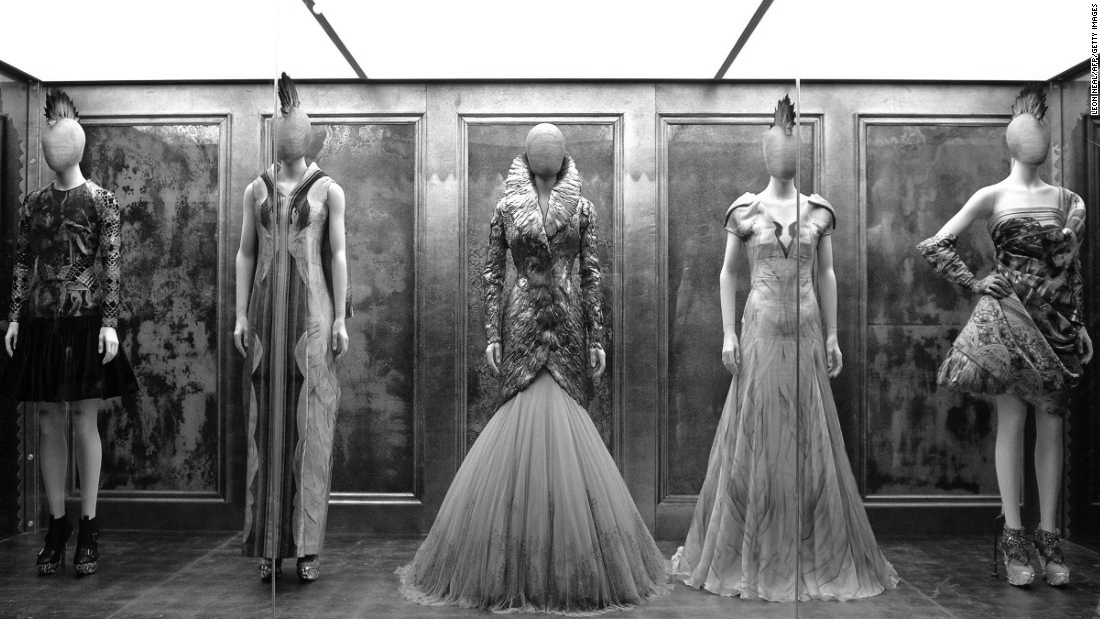
    During the past year, probably the most successful exhibition staged by any major London museum has been Savage Beauty (see illustration) at the V & A, a retrospective devoted to the work of the designer Alexander McQueen. More than 480,000 people saw it, and special late-night showings had to be laid on for the two weekends at the end of its run. Public enthusiasm for the event is, in current circumstances, not surprising. The fashion industry commands powerful PR. It is also much less bound by theories and intellectual constraints than the art world and it certainly has no inhibitions about luxury, and no shame about the money required to support luxury. Yet fashion is conservative in this sense – it gives you something to ‘see’. However ridiculous some of its visual inventions may be, fashion design never neglects the purely visual effect.

    Wear it if you can afford it. Wear it if you dare. And you can be damn sure that people are going to look at you and that they will probably remember what they saw.

    Fashion designers also, as it happens, have much less self-consciousness about ‘appropriation’ than today’s would-be avant-gardists. Fashion designers have always been magpies – they borrow without shame and recycle without inhibition. The point, for them, is to give what is borrowed a new twist. If the audience doesn’t recognise where a particular idea or effect originated, so much the better. With appropriation-art the opposite is the case. You have to know what is being so sedulously copied, otherwise you’re out of the loop.

    One refuge for avant-garde aspirationists, lacking visual inventiveness, has been to take refuge in supposedly radical politics. The visual arts have had an uneasy relationship with politics ever since the French Revolution. It was particularly strong in France during the first two-thirds of the 19th century, and reached a kind of climax in the days of the Paris Commune. This involvement, and the price that could be paid for it, is illustrated by the career of Gustave Courbet.

    There was certainly political involvement between some elements of the visual arts avant-garde and the political left during the first half of the 20th century, but the relationship was always uneasy, as the history of the Surrealist Movement amply illustrates. One still gets a great deal of talk on this subject today. The current Venice Biennale, due to finish on November 22nd, features continuous readings from the three volumes of Karl Marx’s Das Kapital. Whether anyone will pay attention to the words of this text – anymore than most of the traditionally religious pay attention to the actual words of the Mass when recited in Latin – must, I think, be seriously in doubt. In fact, left wing events, safely quarantined in museums, are now a familiar form of preaching to the converted. A good example, here in London, was Mark Wallinger’s installation, State Britain, which won the Turner Prize in 2007. This was a faithful reconstruction of the Peace Camp by the late Brian Haw, which existed for a while out in the open, directly in front of the Houses of Parliament. The Tate Britain web site rather smugly notes that: “Mark Wallinger’s work is noted for its succinct social commentary and political resonance.”

    Yes, indeed. And forgive my asking, but if this now almost-forgotten work ever had any real political impact, in which location would that have been more likely to happen?

    The avant-garde, as we once knew it, is as dead as the proverbial dodo. It is not going to rise again like Lazarus. It’s time we looked for something else, even if we don’t yet know what that is. London is now, for better or worse, a world metropolis. It is full of bright young artists from everywhere you can think of, all enthusiastically making work – much of which can be at least loosely described by the two nouns ‘painting’ and ‘sculpture’. Definitions can wait. Forget the museums. Go to the bustling galleries in Shoreditch and take a look.

    Edward Lucie-Smith

    September/October 2015
  • Selling England by the pound

    Selling England by the pound

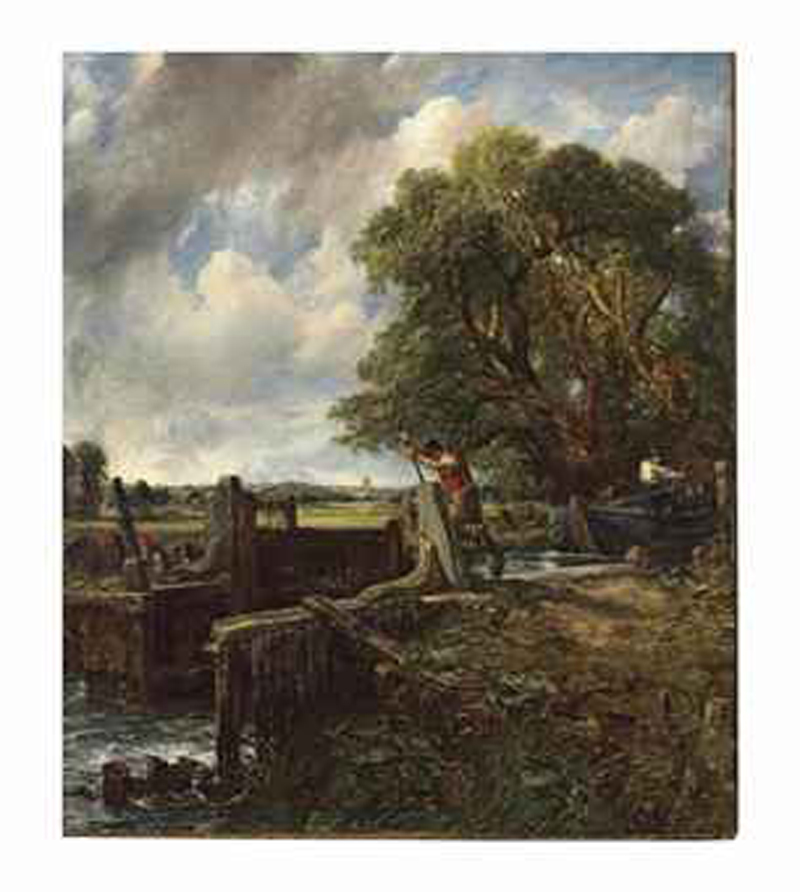
    Today John Constable’s The Lock, painted in 1824, sold at Christie’s for £22.4 million. In the current art market of silly prices some lucky person got the bargain of their lives. Let us hope the picture will be placed in a museum, where people might enjoy it, instead of disappearing into a Swiss warehouse as the investment bauble of some gold-tap billionaire vulgarian. It is the same price as that commanded by ordinary works by the top price sellers in British painting, Turner and Bacon, both of whom have sold work for significantly higher amounts than this. It is the same price a collector might pay for an off-the-peg Monet one wouldn’t inflict even on an enemy. The Lock, being one of the six major works deliberately painted by the artist between 1819 and 1825 for the Royal Academy exhibition in order to cement his reputation, presented the last opportunity for a collector to own one of the major works by the artist of the quintessential English landscape. All the other major pictures are already off the market in museums.

    Why so low a price? Of the top 50 most expensive paintings ever sold either privately or at auction only five are Old Masters, and of the remaining 45 ten are by Picasso, seven by Van Gogh and four by Warhol. The new billionaires, who are not old fashioned men of discernment and discrimination but those who buy conspicuously in order to impress friends, are uninterested in works not instantly recognisable for their “wall power”. Even the most knuckle-dragging mate of a Russian oligarch can recognize Warhol or Picasso but they wouldn’t know a Constable from a concertina and couldn’t recognise anything before 1850, all brown paintings looking alike to them.

    Who bought it? Assuming that The Lock is too sophisticated a picture for nouveau squillionaires, the only two museums in the market at this kind of price are the Getty in California, which two years ago paid £29 million for a Turner view of Rome, and the museum being built from scratch by the Qatari royal family, who are hotly rumoured to have bought the record-breaking The Scream by Munch a couple of months ago. No British gallery could afford a square centimetre of such a work, not that our museums actually need any more examples from Constable’s brush. For example, on the day of The Lock’s sale the Tate, which owns 261 works by the Suffolk miller’s boy, had 13 works on display. It always likes to keep plenty in reserve. There were more works by Constable on show at the Victoria and Albert Museum than at the Tate – the V&A owns 802 items relating to the artist including the full-size oil sketch for the Hay Wain. The National Gallery has nine works by Constable, all of them on display every day of the week free of charge.

    “Painting,” wrote Constable, “is but another word for feeling.”

    David Lee

    The Jackdaw, 3 July 2012

    http://www.bbc.co.uk/news/entertainment-arts-18702667