Tag: Patrick Cullen

  • Do real artists still paint flowers?

    Patrick Cullen explains the enduring appeal of paintings requiring only to be looked at
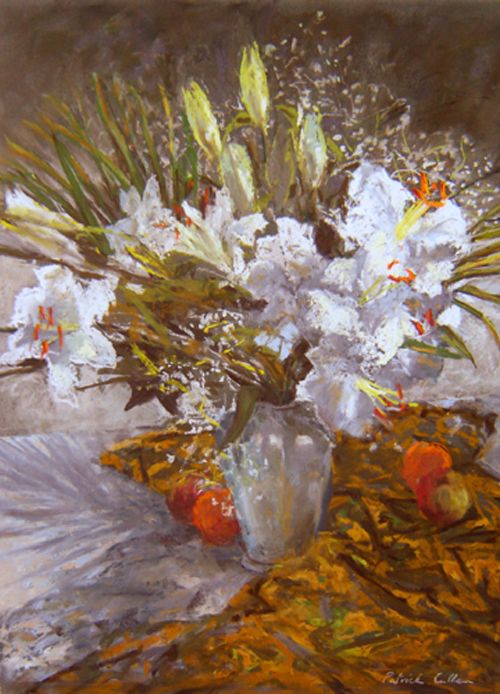
    I showed some paintings of flowers I had done recently to a friend. He said he quite liked them but they appeared to create a problem for him. He seemed to feel that flowers were no longer a subject for serious artists, more one for Sunday painters. Yes, he agreed, there had been wonderful art in this genre in the past, but surely art progresses, certain things cease to be part of the zeitgeist. Shouldn’t a contemporary artist address subjects relevant to the times we now live in?

    This set me thinking. Two things: when and in what sense were flowers ever relevant? And what kind of pressure do we artists put on ourselves in order to live up to that title: a serious artist? What if I’d been a song writer or a poet and had shared something new I’d written, would the question of whether it was art or not have even crossed my friend’s mind?

    There is a problem with the English use of the words “art” and “artist” which has different consequences for those working in the visual arts than for those artists who don’t, e.g. writers, musicians etc. A writer, novelist, playwright, poet etc., would usually define what they did by one of these terms. Musicians, composers, singers, instrumentalists (pianist, etc) similarly. Unless they have the massive ego of The Artist Formerly Known As Prince, they would probably not chose to call themselves an artist (or Prince for that matter). This leaves the judgement as to whether what they produce is art to others, and frees them of any responsibility to always aim that high. But painters, sculptors etc. are automatically enlisted as artists and what they do art, because of the two distinct uses of these terms in our language. Art is both a highly qualified description of work in any creative medium implying a level of importance or seriousness and possibly aesthetic beauty. It is also used as a value free description of everything painters and sculptors etc. make. The same anomaly applies to the word “artist”.

    This linguistic quirk puts painters and the rest in a subtly different relationship to “Art with a capital A” than their writer or musician counterparts. This had something to do with how my friend related to my flower paintings. If, thereby, a bit more pressure is on painters to live up to the artist epithet at all times, another pressure must surely result if the way “serious art” is defined in our culture undergoes a shift as it has of late in the visual arts. If we judge what our society deems to be important art by the winners of our leading art prize, the Turner, then surely many painters, let alone a painter of flowers, must have wondered from time to time if what they do is still regarded as art at all. After all only two painters have won it in the last twenty seven years and only a handful have even made the short list, this for the prize named after Britain’s supreme painter.

    But wait a minute. In 2005 the Turner Prize did actually short list Gillian Carnegie, someone who not only applies paint to canvas but works in a broadly realistic manner. If that wasn’t enough she even paints flowers and rather beautifully too. Somebody was surely having a laugh. Given the Turner’s knack for controversy perhaps it was done with half an eye for the publicity that it provoked. But why should it have created such a stir? Because contemporary artists are assumed to be in the business of challenging such things, “deconstructing” or subverting the idea of painting anything that presents such an obvious, clichéd idea of beauty as flowers. And of course, as it turned out, according to the judges this is exactly what Carnegie had been doing all along even whilst painting them rather reverentially. To quote one of them, Louisa Buck: “What looks like conventional paintings are anything but. They are actually conceptually rich; they interrogate painting; they make us think about how and why we look at it”. And in the Tate catalogue for that year’s prize: “Carnegie works within traditional categories of painting … yet while apparently following the conventions of representational painting (she) challenges its established languages and unsettles its assumptions.” The critics agreed. Marcus Field in the Independent: “Her flowers are not to be confused with straightforward representations of the amateur kind, but are academic investigations of a much higher intellectual order.” Or Karen Wright, sometime editor of Modern Painters: “She’s a painter who talks conceptually … she works in traditional genres but what she does is unload and reload them.” (Only Charles Darwent was scathing, announcing it as further proof that painting is dead.)

    Nobody was able to describe convincingly how these innocuous paintings achieved all this, but the message was clear: whatever Carnegie thought she was up to, her work was chosen because of all the challenging, conceptual talking, interrogating, investigating, unloading and reloading etc., it succeeded in doing. Putting aside the question of how much academic investigation a painting can really undertake on its own, there can be little doubt that without all that intellectual baggage, real or imagined, Carnegie would not have caught the judges’ eye. Implicitly, had she been reckoned to have painted flowers in a more straightforward way, celebrating their beauty and fragility in the manner of a Bonnard or a Manet, rather than at one and the same time challenging and subverting such notions, she wouldn’t have had a cat’s chance in hell of making that shortlist. Which should not really surprise us given the current dominance of all things conceptual; what is interesting is how much in the process is being dismissed as amateurish or as not serious art.
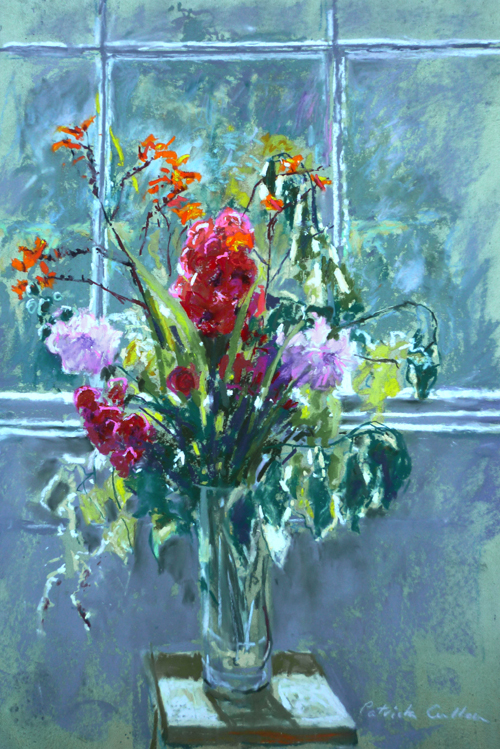
    In the past many of the great painters turned at times to the subject of flowers. Each found their particular language but the spirit in which they did so was one of accepting the natural beauty of this subject and celebrating it in a way that brought pleasure. Great originality of approach marked out the best of these but the idea that they should interrogate why artists paint this subject in the first place would not have occurred to them. Van Gogh thought and wrote a lot about painting and waxed passionately about sunflowers, irises, almond blossom, indeed about most of his subjects, but the thought of him ruminating on the psycho-social constructs determining his aesthetic evaluation of flowers or their relevance to the socio-political matrix of his day is ludicrous. He was highly intelligent but not, fortunately for us, that sort of intellectual. He painted flowers because he loved them, intensely, with something approaching a religious fervor. He was so moved by their beauty that he felt compelled to try and distill something of his feelings in paintings. In the process he was doing something much more interesting than “following the conventions of representational painting”. Nor did he confine himself to conventionally beautiful motifs. For clearly painting his feelings in relation to his subject he is sometimes called the first expressionist. Many artists and non artists still feel something like this, perhaps not as intensely as Van Gogh or possessing his genius, but they relate to his instinctive urge to paint in response to the things he saw around him. This is not sentimental twaddle but a profound human urge going back to the cave paintings. Even though expressionism as a term arrived late, all good painting includes a degree of expressionism, in the case of figurative art because it involves the expression of the artist’s response to a subject.

    During the age of romanticism Keats feared that science’s explanation of the rainbow would rob it of its power to astonish us. Perhaps he was right and wrong; wrong because the beauty of the rainbow does not depend on our being ignorant of its causes. A child is amazed by the rainbow not because it hasn’t learnt the science behind it yet, but because it’s so stunning. But Keats was right in so far as a lot of knowledge and intellectual thought can come between us and the immediate sensation of seeing something freshly. Because we think we’ve understood it we forget that the miracle of the rainbow does not reside in an idea or a question (how did it get there?) but in its sheer visual impact. Our capacity to be moved by beauty is not really something science has a great deal to say about, yet for centuries it has been the mainstay of humanity’s interest in the visual arts. We tend to scoff at rainbows and flowers (along with sunsets), but these are just the most popular examples of a million natural phenomena, including the human face and figure, which can inspire wonder if our cynicism allows it, and provide subjects for artists. Nor, crucially, need they be beautiful. The best art achieves beauty where least expected. Like a poet an artist must fashion his raw material to create the visual equivalents of eloquence, rhythm and rhyme. Fortunately there’s also no shortage of desire for art that can revive jaded eyes with new ways of looking at the things we see but fail to notice all around us.

    The problem with conceptual art is that although at its best it can make us question things by provoking thought in surprising ways, it also tends to divert us from this desire for a direct line to the way another person sees something, as opposed to an idea or concept they may have had. The latter is generally better served by the written word. At its worst conceptualism drags us into a whole lot of academic commentary about the philosophy and language of art. All the praise for Carnegie’s work cited above was invariably of this art about art persuasion. This is what academics do and it has its place, but when artists do it, it doesn’t make for good art. I hope Carnegie is much freer of all this theorizing when she paints than those judges and critics imagined. This is not a plea for art with no intellectual content, but a plea to redress the balance in favour of art that is primarily about looking. Looking intently without immediately interrogating is less easy than it sounds.

    Prior to the 20th century most artists, highly intelligent though many have been, did not tend, with one or two notable exceptions, to be overly intellectual in their approach to painting and there is a reason for this. It’s not unrelated to the fact that even as late as fifty years ago you didn’t need A levels to go to art school and there was no written element to the course. The teaching for your diploma in art and design was mainly done in the life room and what was taught there was largely craft based: you learnt how to draw and paint through learning how to look and observe. The reasons for all these things lay in the preeminence of looking over intellectualizing in how people then considered art. Duchamp changed all that of course, but despite the current dominance of conceptualism, it is not typical of the visual art that people throughout history and in different civilizations have tended to value. The beautiful images, icons, paintings, sculptures, precious objects, stained glass and so on that have been treasured through the ages speak not so much to the intellect but directly through the eyes  to the emotions and to the instinctive response of the mind to an aesthetic experience. This kind of art, much older and with a broader appeal than conceptual art will ever have, concerns itself with people’s desire to have a direct and intense communion with an object of beauty in which for a moment the chatter of the intellect is suspended. We have little difficulty recognizing this when we want to listen to great music with total attention, but it’s something as a culture we find harder with the visual. The art that can achieve this may well at times turn to traditional subjects, flowers even, but is not likely to be amateur or conservative, still less clichéd or unoriginal. Rather the reverse. Given our resistance to being astonished by anything, reheated recipes will not do.

    Turner himself was rather partial to sunsets. He must have painted hundreds if not thousands; not thank goodness because he wanted to conduct an academic enquiry into some artistic genre but because he wanted the world to see sunsets through his eyes, to see a greater drama, sunsets as heraldic conquerors, blooded tragedians, burning martyrs and pale ghosts. Like Van Gogh, but half a century earlier, he was also an expressionist. His sunsets though closely observed are never dry records of an actual event. His abiding popularity points to a continuing appetite for art that unashamedly celebrates the poetry in nature in a unique and original fashion. That this kind of painting should die is no more likely than the death of poetry itself.

    If you paint and are capable on occasions of being amazed by flowers, I defy you not to paint them. They’re bloody hard. How to be original about something painted so often? Yet flowers offer a remarkably diverse motif offering every shape and colour and a whole world of flora “personalities”. They’ll certainly open up your palette. Of course they’re infuriatingly pretty, but if you can find a way through that they are and will always be a brilliant challenge for artists in any era. Let others decide if in doing so you’ve made art, you’re more likely to if you remember you’re first and foremost a painter.



  • Grayson Perry’s 2014 Reith Lectures – a missed opportunity

    Patrick Cullen explains why Grayson Perry missed an opportunity by avoiding the important issues he claimed to be addressing.

    Grayson Perry was a surprising choice to deliver the Reith Lectures given the list of senior academics, elder statesmen and those at the top of their profession preceding him in the job. One wondered why, when it came to contemporary art it was decided to break with tradition and hand the spotlight to one of its middle ranking practitioners with no track record as an intellectual heavyweight. But many enjoyed the change. Think of the Reith lectures and people tend to think dry, dull and probably pompous to boot. With his pantomime outfit and, in the second talk, brandishing a whip, Perry was anything but boring. The jokes came thick and fast, the lectures were even called “Playing to the Gallery”. Perry may be no John Berger but he’s a lot smarter and more articulate than all those YBAs he is keen to distance himself from. What we lost was any sustained argument about the nature of contemporary art, what justifies it as art and why. More than anything Perry reminded me of a court jester, clever enough to make his audience laugh and to tease the powers that be with the odd dig, yet never forgetting that he is part of this modern day art circus which has been very good to him. He acknowledged this at several points, in a humorous self– deprecating way, encouraging others to join this world that even allowed him, a transvestite potter, into its ranks. A classic court jester moment came in the second lecture (he was even wearing what Sue Lawley described as a jester’s hat). He teased Nicholas Serota (who was in the audience) about the often expressed criticism that Serota’s personal tastes are determining to an excessive degree the nation’s purchases of contemporary art. “Impossible” said the Fool leaping to his King’s defence, he had been to Serota’s home and admired his extensive collection of Cliff Richard memorabilia. It was a swipe but a pretty gentle one.

    Lecture 2 was supposed to be the one where Perry really addressed what art is and what it isn’t and especially the boundary lines between the two. Introducing it Sue Lawley said “Today’s lecture will explore what the boundaries of art are. Can it really be anything we like from a pile of sweets to a soundscape?” This is difficult territory for any contemporary artist wanting to be seen as contemporary. Ever since Duchamp and his urinal the idea of trying to define art by putting boundaries round it has seemed increasingly old fashioned. Perry began by admitting that if you asked people in the art world to define art “there’d be a lot of eye rolling and sort of like – Oh God! – you know – Not that question again. Like it’s been answered … You know there’s a kind of complacent idea in the art world that anything can be art now… We’re in a state now where anything goes… But the thing is I think there are boundaries still about what can and cannot be art…”  I was beginning to warm to his theme. If the art world complacently thinks anything can be art, but Grayson doesn’t agree, perhaps he was going to tell us what those essential qualities are that distinguish art from the merely banal and common place. He informed us that he wanted to establish the boundaries of art a bit like in mediaeval times people marked the territory of their parishes by a primitive process called “beating the bounds” (the title of this 2nd Reith Lecture). Hence the whip.

    Just prior to listing what he saw as the boundaries beyond which things ceased to be art, he paused to imagine how “his friends in the art world” would laugh at him for wanting to establish the limits of art. “But,” parried Grayson rather pathetically, “I want to know when to put my art goggles on. I want to know when – you know – when I’m going to look at something as if it’s art”. This was quite a confession. Only by knowing when to put his art goggles on would he be able to start looking at something “as if it’s art”. The idea that real art might just possibly have the power to announce itself as art because it moved you, took your breath away, was amazingly beautiful or wonderfully thought provoking was not considered. No, Grayson needs to know when to put on his art goggles or he’ll be unaware of what’s in front of him, rather like all those museum sheep who have no idea how to judge a painting unless someone is distracting them via headphones with a lot of facts to reassure them that what they are looking at is indeed important art. I don’t believe for a moment that Grayson Perry is so insecure about his responses to art, so perhaps it was just a cleverly timed piece of humility to allow the audience to identify with him, for in all probability many of them would have been part of “ the headphones brigade”. Now, brandishing that whip, he would tell them how to recognize this thing called art, which even he has difficulty spotting without some special goggles. “Afterwards,” he assured them to much laughter, “you might know when you’re looking at a work of art and not just at some old rubbish”. There would be nine boundary markers or tests to help them in this task.

    Test number one: “Is it in a gallery or an art context?” LAUGHTER. Well, you had to laugh. It’s the equivalent of saying, a few decades ago perhaps, “if you’re not sure if it’s art, has it got a big gilt frame round it?” Or try this one: How do you know if someone is a criminal? Helpful test: are they in a prison? It might just have been an initial bit of farce before the more serious stuff, if so many of his other tests hadn’t turned out to be in a similar vein. Yes, statistically, pieces of visual art are quite likely to be found in art galleries – surprise, surprise – but this tells you nothing about what makes them art, or how to distinguish them from the things in art galleries that aren’t art.

    Test number two: started off as “Is it a boring version of something else?” This might have led into whether art has to be original which would have been a serious line of inquiry, but he left off before he’d started on this one and it morphed into…

    … Test number three: “Is it entertaining? If so it may not be art because art is a serious business.” Perry immediately mocks this test, telling us that it reminds him how the worst thing you can call an artwork is decorative – a bit of a leap that, but no doubt this is a jibe he must at some time have had to contend with himself, unfairly in my view. Then he says: “I think it’s a very noble thing to be decorative”. So we got a glimpse of Perry’s differences of opinion from the dominant art world views on what is proper art. Prejudices he has encountered as a mere potter being another one he touched upon. But these differences featured very little in this light-hearted tour of the contemporary art world’s boundaries. He pursued the idea that a sense of dullness and lack of pleasure, (he cites all those video installations with uncomfortable benches to sit on), might be a sign that we are looking at art. This clearly struck a humorous chord with his audience, but it was beginning to feel like a very unenlightening way of teaching us how to know if a piece of contemporary art merits that appellation. Was it all going to be jokes?

    Test number four: “Is it made by an artist?” This is clearly of no use either since it begs the question of what an artist is. If an artist is defined as someone who makes art but we haven’t yet establish what art is, looking for artists means we’re just going round in circles. Perry offers no new definition of an artist to help us out. Reading between his lines it looks like artists are people that this cosy art world he delights in belonging to, recognizes as artists. These boundaries, far from revealing anything, were beginning to sound like the already established parish boundaries of the self same art world whose judgements about art we wanted Grayson to explain. But there were no explanations, just a series of markers (e.g. – it’s in the Serpentine Gallery, it’s rather dull and it’s by Cornelia Parker, a known artist, ergo it’s probably art).

    Test number five: this boundary marker concerns the question: “Is  photography art?” If Perry had made a stab at a definition of art in the first place he might have been able to say whether a photograph could fit within it. But without ever nailing his colours to any mast he could only make more jokes; e.g. a photo might be art if the people in the photo aren’t smiling. Or: it might be art if it’s bigger than two metres and priced higher than five figures. Plenty of laughs but zero insight.

    Test number six: “The limited edition test.” Another crack of Perry’s whip to indicate another boundary to this thing called art. He points out, as if we didn’t know, that if something is part of an endless edition, it loses some of its monetary value by virtue of the laws of supply and demand, and then goes on to declare that therefore “it’s giving away part of its qualification as art”. He draws this conclusion as if it were obvious and says no more on the subject. Actually it’s not at all clear why, because there is more than one of it, an object should be deemed any less a work of art. Less expensive probably, but why less a work of art? This could have been an interesting discussion and one which would have touched upon many things: the importance of uniqueness for the art world, the problem of multiples, the conflation of artistic and financial worth and the ways by which the latter is protected. The criteria lying behind Perry’s tests were turning out to be uncannily in tune with the vested interests of the contemporary art world. Since Duchamp the notion that anything can be art may well have won the day in theory, but limits and boundaries there must be in order to protect art’s monetary value. Duchamp himself, authorised a limited edition of his urinal (which was originally a standard mass produced one – and an important point about it, being that it was just that). Nearly five decades after the first urinal had been destroyed and when it had become a legendary (but, alas, unmarketable) landmark in the history of the avant-garde, Duchamp, agreed, in total contradiction to the spirit of the original, that ceramicists (i.e. potters Perry reminded us) should hand make an edition of “his” urinal, each of which he personally “validated” as art, whilst excluding all similar extant urinals. There are eleven “genuine” “Duchamp urinals”, each worth somewhere around a million quid, essentially because Duchamp waved his wand at them. (Think about the magical powers invoked here. How gullible the world to fall for such brazen sophistry!). The artificial limit placed on an edition of an art work is a classic case of how the art world establishes its “parish” boundaries for good old financial reasons. Perry probed this not one bit.

    Test number seven: “Who’s looking at it and is there a queue?” More jokes about the kind of people who go to galleries and look at art. If there are a lot of people with beards and glasses and single speed bikes……etc. If so, and if there’s a queue (contemporary art being so popular) there might be some art involved. I laughed along with the audience for I’d long since given up gaining any insight into what the intrinsic qualities are that make something art.

    Test number eight: “The rubbish dump test” Perry explains: “Throw it on a rubbish dump and if people walking by notice that it’s there and say “oh what’s that artwork doing on that rubbish dump?” it’s passed.” For a moment I thought he was on to something. May be, just may be, one defining quality of an artwork is its capacity to arrest you, make you stop in your tracks and gaze in wonder or surprise or even just puzzlement. But no, once again Perry undercut this possible signifier by another joke which got a big laugh: many good artworks would fail this test because the rubbish dump itself might be the art work.

    This time I realised I wasn’t laughing too. It was too near the truth. Yes, it was now official, from no less an authority than the giver of the Reith Lectures: there is no way of distinguishing between art and rubbish, the very thing he had promised to enable us to do. So Perry in effect told us to forget the rubbish dump test, the only one so far I thought of any use. The really sad thing about all this was that so many people – in relation to any other field of enquiry, perfectly intelligent people – thought Perry’s lectures not just funny (they were that), but thought provoking and insightful too. Also sad was the fact that Perry can express views at odds with State Art orthodoxy, but apart from his words in praise of the decorative in art, he kept them to himself.

    Test number nine: “The Computer Art Test” Grayson cracked his whip for the last time. As if knowing he’d really dodged the question with his suggestion that we drew a venn diagram of all his tests and where they met in the middle is pretty well guaranteed to be art, Grayson finally threw in a just about plausible definition of art from a friend of his called Charlie Gere. Gere says that you might be able to distinguish between a piece of web art and just an interesting website as follows: “You know it might be art when it has the grip of porn without the possibility of consummation or a happy ending” Perry then expanded on this: “In other words it’s all about frustrating our urgent need to double click our way to satisfaction whether in the form of a joke, an opinion, a fact, a sale, or indeed an onanistic experience, and to detain and suspend us in a state of frustration and ambivalence and to make us pause and think rather than simply react.”

    Well, well! Here at last, in the final gasps of his lecture, was an attempt at a definition. It begs as many questions as it answers, but at least it’s a start. Had he begun any one of his four lectures with this provocative definition he might have moved on into an inquiry about the true nature of art and why, although quite a lot of things may be art (when manipulated creatively) most things, like urinals, are probably not. At least I’ve never met one that had the grip of pornography but which suspended me in a state of frustration and ambivalence. On the contrary they tend to facilitate double clicking one’s way to instant relief in the form of a much needed bladder evacuation. Perhaps that’s why they’re not art. And perhaps that’s why all those people who claim not to know much about art but who know what they like, would at least recognise when a guy like Duchamp was taking the piss.

    Patrick Cullen

    The Jackdaw, 2014

  • Why shit can never be art – painter Patrick Cullen contests the commonly held view that a relic of an idea is a work of art

    If any Jackdaw readers were still in doubt about just how rigged the contemporary art market is after numerous articles on the subject, many from the editor, then Phil Redman’s piece “The Crap Art Market” (The Jackdaw, no 108) should have put the matter beyond doubt. So I take all that as read. Less obvious is why the domination of that market by a cartel of a few large players means the only kind of art that benefits from their attentions will be crap. All art, from the least worthy, through to the mediocre and moderately good, and on to the truly excellent is capable of being hyped and having its value ramped up in a rigged market. It is by no means clear why such investors would only be interested in inflating the value of crap art.

    We need to look at the supply side of this market. If the contemporary art scene has more than its share of rubbish art, why are so many so-called artists supplying it? The obvious answer is easy money: the corrupted market, with its over-emphasis on novelty and sensationalism, has opened the doors to all kinds of chancers and charlatans who are simply seizing the opportunity to make a quick buck. I think this is too glib and the reality more complex.

    Deep down in the psyche of every artist is the desire to create something valuable – not initially in monetary terms though this may later serve as confirmation of the achievement of this desire – but intrinsically valuable, and to create it, like the spider’s silken web, out of nothing but him or herself. Freud saw very early signs of artistic ambition in the over-evaluation that the infant playing with its faeces makes of its precious productions. It is a deeply narcissistic and omnipotent yearning and probably accounts for a certain unworldly and childlike quality that has become part of the artist stereotype. If however such ambitions remain at this level they are doomed, since to succeed artists must reach out to the world and draw inspiration from things other than themselves. Only in this way will they have something of value to reflect back to the world, which in the end will be the measure of their success. (Tracey Emin with her almost entirely self-referential oeuvre must be living proof that this uncontroversial statement no longer applies at the lunatic top end of the contemporary art world). Yet the desire to be an alchemist, creating something highly treasured – be it art or gold – out of mere paints or base metals remains at the core of the artistic endeavour. And the same is true for writers and composers: mere words and notes replacing the painter’s pigments. Artist, writer and composer all soon learn that alchemy doesn’t happen by magic and that hard work, fine tuning of skills and an engagement with the world will all be necessary for colours to enthral, notes to sing and words to tell a story. But what happens if the market doesn’t demand art that enthrals? What if the market’s over-riding requirement is novelty and surprise and being different at all costs? If nobody is demanding excellence, there will be a race to the bottom in both senses of the word.

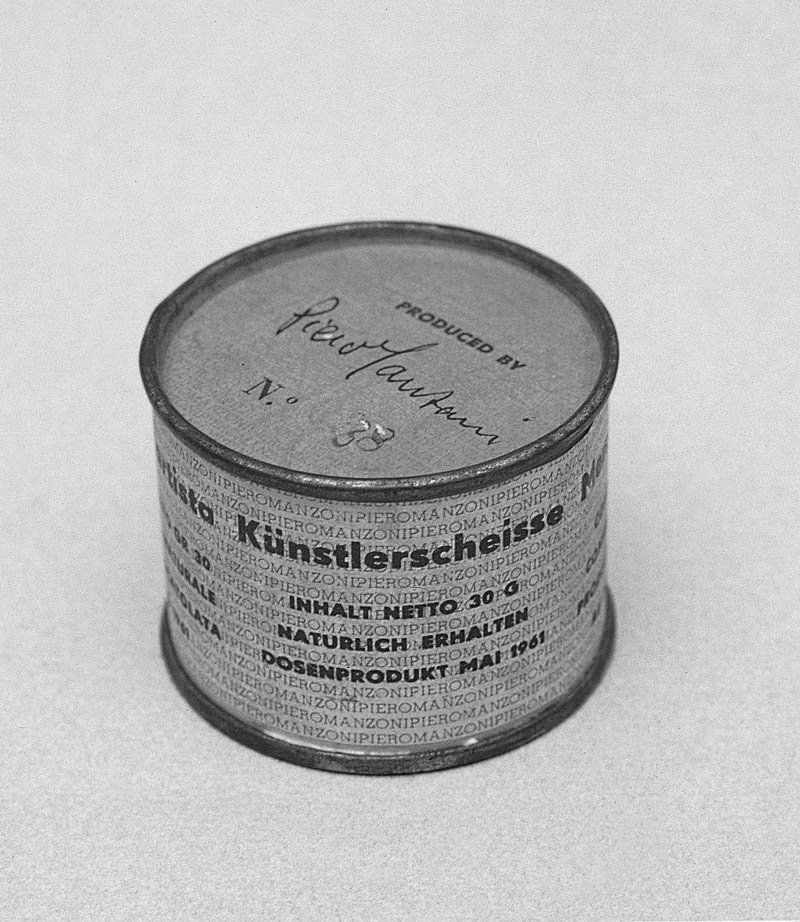
    In 1961 the Italian artist Piero Manzoni famously exhibited a tin of his own faeces entitled Merda d’artista, translated on the tin in English lest the cadences of the Italian language left anyone in doubt about the bluntness of his intentions: Artist’s shit. He priced his faeces according to their equivalent weight in gold. Had he simply evacuated his bowels on a gallery floor he would almost certainly (in 1961 at least) have been thrown out as a mere exhibitionist and public nuisance. But by canning his shit he created just enough distance from the vulgarity of his conceit and, even more importantly, created an object which could be traded as a work of art. Untreated human ordure might have stumped even the most Duchampian of curators and dealers, but a can of shit, especially when produced in an edition of 90 – smart that, even with its weight in gold, one motion would hardly have made Manzoni wealthy – gave the critics plenty else to write about other than whether shit can really be art. Otherwise, back then at least, the answer might just have been a resounding “No”. On the other hand, mass production, irony, contextualization, valuation, the gold standard, alchemy and so forth all became legitimate talking points which could imbue the cans and their contents with artistic significance. Yet the original impulse behind the “work” remains the same: Manzoni was challenging the world to accept his excrement as a work of art, the very thing which Freud suggested lay at the root of many artists’ earliest motivations to pursue a career in art. Freud would have enjoyed too the Oedipal overlaying to this story. Manzoni claimed that what had prompted him to create the piece was his father’s taunt that his work was shit. Recently one of Manzoni’s tins sold at Sotheby’s for £97,250, seventy times its weight in gold. They have become collectors’ items and are held by many national museums, including the Tate (which bought its tin for £22,300 in 2002).

    One has to hand it to Manzoni. With one simple gesture he became a far more renowned artist than before, made himself well off, and by that success produced a strong rebuttal of his father’s insult. But crucially it was a gesture. To some a witty and succinct gesture, to others an infantile one, but a gesture none the less. If it is deemed a clever and profound enough gesture to be regarded as a work of art, then its status as an artwork has more in common with a performance piece, a stunt or a comic sketch. The context is all. A can of shit unmitigated by some action can only ever be shit. Placing it in a gallery and linking its price to its equivalent weight in gold is the meaningful, possibly artistic element. This action, this gesture is no more and it should be stressed no less a work of art than many stunts or comic sketches which leave no marketable art object behind. It is also less a piece of visual art than a comic sketch because one does not have to have seen either what Manzoni did, or the can of shit itself, to “get it”. The art work, if we concede it to be one, is a purely conceptual work, entirely dependent on the profundity of the artist’s gesture for any evaluation of its merit. A blind person could equally appreciate the wit and significance of Merda d’artista as a sighted person. Since the art lies in the gesture, the can of shit itself is not the art work but merely a relic or prop reminding us of it. To treat it as otherwise, to exhibit it in a museum for people to look at as an artwork and to value it at many times its weight in gold is to collude with a kind of fetishism.

    We may be fascinated by the original scores of Mozart or Beethoven’s music but we go to a concert to hear what they wrote because their art resides in sound. Looking at the original manuscripts does not, any more than looking at a newly printed copy of the score, give us that experience. The manuscripts, like Manzoni’s cans, are art relics albeit of much greater artistic achievements. We go to a museum to look at a great modern masterpiece like Picasso’s Guernica because only by looking at it have we any chance of “getting it”. But a conceptual work that functions on the level of a gesture can be fully appreciated (or despised) without being seen at all. To exhibit the ghost of that gesture in a museum alongside artworks that are truly visual experiences is to confuse two entirely different animals. Giving them equal status as works of art is to further confuse the public, already largely persuaded that art can be anything that an artist chooses to call art. The tautologous absurdity of this idea ought to be enough to prevent its rise and rise, but it continues to make headway and is close to becoming accepted by vast swathes of the populous. Grayson Perry’s Reith lectures, well received by Radio 4 listeners it would seem, takes this nonsense as a given. Saying that art is anything an artist calls art simply shifts the problem of definition on to what is an artist. Since an artist is someone who makes art (but art can be anything the artist says it is), we’re no further on. We arrive at the nonsense of everything being art and everyone an artist, at which point both words become quite meaningless.

    I’m not arguing that a good case cannot be made for regarding what Manzoni did as art. It strikes me as being a wittier and cleverer piece of conceptual art than many. My point is that the art happened in 1961 and the can of shit is but a relic of that event, and relics should not be confused with living art works. A great Rembrandt self portrait is as potent today as the day it was painted. It isn’t the relic of an idea Rembrandt had three and a half centuries ago. It is that idea, an entirely visual one, and one that can only be appreciated by looking at it. Whereas the exact appearance of Manzoni’s can matters hardly one jot to the strength or weakness of his idea. Yet it is in the interests of the market, and the artist, to fetishize the object in order to make money out of it. In this sense it is a con and its artistic status spurious.

    The same applies to Duchamp’s bog-standard mass produced urinal. If there was art involved, it was in what Duchamp did with it. The art, if any, lay in the audacity of Duchamp’s submitting it for an art exhibition, turning it upside down, calling it Fountain and signing it R. Mutt. If this series of actions are felt by enough people to be profound, thought provoking and witty enough, then for them at least Duchamp’s stunt is a piece of art. The urinal remains just that: a urinal. It cannot itself be magically turned into an art work because an artist points at it and says it is. This is omnipotent and magical thinking of the most primitive kind.

    It is rather remarkable how much conceptual art, and likewise its fore-runner “found art”, as well as much other contemporary art, mirrors the alchemist’s dream of magically turning the basest of materials into gold. Often, as with Manzoni, this involves crap itself. Many others reference faeces and urine more obliquely. Since Duchamps urinal we’ve had Warhol’s “Oxidization Series” (involving urination), Gilbert and George’s “Naked Shit Paintings”, Helen Chadwick’s “Piss Flowers”, Andrea’s Serrano’s “Piss Christ”, Paul McCarthy’s “Shit Face Painting”, Chris Ofili’s use of elephant dung and Martin Creed’s “Body Docs” – videos of people defecating and vomiting – to name but a very few. Fortunately we have been spared Damien Hirst’s plan to cast an enormous turd in bronze, (why not gold, Damien?). But may be we’ve still got it coming to us. Even more common is the use of rubbish to make art, giving rise to a whole genre of art known as trash or junk art. A great many other contemporary artworks include rubbish or detritus. Tracey Emin’s unmade bed with its used tissues, condoms and discarded underwear is a good example as well as being a classic case of “it’s art because I say it is and I’m an artist”. We’ve moved from the realm of the nursery and any special pleading for the value of poo-poo, to that of adolescence. A cartoon at the time had an exasperated parent yelling at his teenage daughter and her unmade bed “I don’t care if it’s art, make it!” Which goes right to the point: Emin wants us to accept her messy adolescent life (represented by her bed) as art without her having to make anything.

    As with Manzoni’s Merda d’artista the use of faeces or rubbish does not preclude a work from being art. This must in the end depend on the skill with which such materials are employed and the depth of feeling and intellectual rigour that informs the finished art work. What I am suggesting is that the unconscious motivation that underlies the artist’s preference for such materials with their potential to generate quick publicity, as well as the penchant for found objects or “ready mades” is likely to be a wish to magically transform shit into art. The clues are in the puerile feebleness of so many of the ideas behind such art and the childish need for instant attention they so often betray. If Freud was right that at the deepest level of motivation artists were once infants playing with their poo and imagining it to be precious, none of this should surprise us. If the art market colludes with these primitive omnipotent fantasies by overvaluing infantile impulses and stunts, artists will surely supply it with crap.

    Patrick Cullen

    The Jackdaw, 2014

  • Can the RA summer exhibition still be considered an open submission show?

    … Painter Patrick Cullen supplies damning evidence that the answer is ‘No!’

    A detailed survey of 2011’s Royal Academy Summer Exhibition reveals that the non-members’ work now represents only 29% of the total exhibition if measured by the amount of wall space it commands. This is in contrast to a figure of 78% estimated for the same show exactly one hundred years ago.

    In 1911 the basic format of the exhibition was the same as now: the RAs could choose to have up to six works hung (still the case), and the public could submit three for consideration (this also remained the case right up to 2008 when the Academy decided to limit to two the number of works eligible for non members to submit). But in 1911 it was seen very much as an exhibition for those non-members. At that time many of the RAs chose not to submit at all and on average they put in 2.6 works apiece as compared with 4 today. (In 1911 just six RAs put in their full quota of 6 paintings, in 2011 44 of the current RAs did so.) Consequently in 1911 87% of the paintings hung in the exhibition were by non-members. We also know from photographs of the time that, although the RAs had the privilege of having their work shown  “on the line” (at eye level), the show was otherwise much less hierarchical and more democratic than today. All exhibitors were treated alike with regard to the amount of space around their pictures  (not much!) and the range spanning the biggest and smallest paintings was much less than is now the case. The bigger paintings were certainly not all by members. Even if we assume that on average the Academicians’ paintings were twice as large as the public’s and given that the RAs had only 13% of the total number of paintings, we end up with a figure of 22% for their share of the wall-space.

    How different today! Not only has the number of paintings by the RAs increased to 40% of the show but they now occupy 71% of the wall-space. The chart summarizes these changes. The figures for 1961 suggest they have been part of a steady development over the past 100 years.

    For ease of comparison this survey is restricted to paintings, prints,  drawings and all two dimensional works hung on the gallery walls  (referred to below as “paintings” for short). Sculpture, all 3D works and all architectural plans and models have not been included.  ‘Hon members’ include all affiliated Fellows, Members and Academicians, plus recently deceased members shown in the exhibition of that year.

    What the chart shows is that the Summer Show has gradually over this period become much more of a showcase for the RAs themselves than it is for those submitting work from the general public (or the  “send-ins”). This is connected to four other changes:

    1. The number of RAs has increased from 70 in 1911 to 80 in 1961 and to 116 today. There are also a lot more honorary and affiliated members exhibiting now as well as invited international artists. Plus the exhibition space has slightly decreased, gallery 11 making way for the RA shop, and the sculpture gallery also lost to redevelopment.

    2. The RAs, whether out of hubris or sheer creative confidence, are submitting much larger works year on year, culminating in the biggest artwork ever displayed at the Academy, David Hockney’s “Bigger Trees”– oil on 50 canvases – in 2007. It is hard to see any reason, other than pure vanity, why Hockney, one of the biggest international stars in the Academy’s firmament with plenty of other arenas to strut his stuff, should choose to crowd out 49 other canvasses at an open submission exhibition.

    3. The RAs are also hanging themselves a lot more generously in terms of space than that which they accord the “send-ins”. An extreme example of this trend is this year’s Lecture Room hang by Michael Craig-Martin often regarded as the Godfather of the YBAs. He has made this a no-go area for non members and though it’s a large room,  the walls are sparingly hung with just 16 works (and two against-the wall sculptures). It is worrying that this trend is being forged by the younger generation of RAs, Tracey Emin pulling off the same trick the year after she was elected when she hung Gallery 8 in similar style entirely with her friends’ work. The result may well be a more  “consistent hang” with each art work benefitting hugely from all the space around it, but it has nothing to do with the spirit of the Summer Exhibition, simply turning it instead into any other mixed show of successful artists that can be seen in galleries, public and private, all the year round. By contrast Gallery 1 (small prints) and the Small Weston Room (small oils) are hung in the salon style with hundreds of little works cheek by jowl. Needless to say 80% of these are nonmembers works. These two crowded rooms account for just 11% of the total exhibition wall space but for over 50% of the works accepted from the general public.

    4. The other side of this coin: the RAs are accepting fewer and smaller paintings from the public send-in. They recently reduced the maximum number of works the public could submit from 3 to 2. This was justified on the grounds that the send-in was getting too large to cope with. In fact it would be truer to say that they wanted to select fewer works and had been doing so for some time in order to allow for the expanded number of RAs, their even more expanded canvases and their desire to be hung more flatteringly. Why, it might be asked, did they not reduce the number of paintings they allow themselves? Either that, or put a limit on the square acreage of canvas allowed to each member.

    It boils down to a question of what the Summer Show is for. The RA likes to boast that it’s the biggest open exhibition in the world, but can it really claim this when over 70% of the walls are occupied by the club members who do not have to submit their work for selection at all? If they gave the show back to the public as it was in 1911, all the indications are that it would be more popular not less.  Sales in the Small Weston Room are, as always, over 85%; in the rest of the show they are more like 21%. Of course the critics would return to lambasting it (apart from Craig-Martin’s room the show still got little praise anyway this year). An open exhibition like this must always be a mish-mash and can never be cutting edge or cool, unless of course it abandons all pretence at being open. The trouble is that the new in-take of RAs who are now in the driving seat (40 of the old guard are now Senior Academicians – 75 or older – and as such lose all voting and selection rights), want the show to become more like Craig-Martin’s Lecture Room not less. The Small Weston Room and the kind of art it represents – conservative, unpretentious, small scale, mostly observational painting – is something whose disappearance they would not shed any tears over.

    The Jackdaw Sept-Oct 2011

  • The RA is not a charity

    The RA is not a charity

    Inspired by landscape painter Patrick Cullen, The Jackdaw Sept-Oct 2011 reprinted pieces about the Royal Academy that have appeared in The Jackdaw over the last eleven years. All deal with the genuine fears of artists that the Summer Exhibition is progressively a closed shop whilst being marketed as an ‘Open’. Patrick’s research succinctly reinforces previous claims made by artists that the chances of an outsider featuring in the Summer Exhibition are now so seriously diminished that no gambling man would ever accept such long odds. Justifiably over the years this has become a common lament because, as Patrick demonstrates, an inverse logic now seems to apply: as the cost of having a work considered increases (currently £25 per item) so the chance of successful selection is reduced. Even a less cynical person than myself must conclude that the Summer Exhibition has become a calculated ploy to fleece lesser-known artists, many of whom can ill-afford the submission fees in the first place. This is done in order to shore up the finances of a membership-only club many of whose beneficiaries are already well-to-do artists; indeed some are among the world’s wealthiest. This Robin-Hood-in-reverse ploy is surely a perverse betrayal for an organisation purporting to be a charity. Where the Royal Academy is concerned, it would seem that charity not only begins at home but ends there as well.

    The Academy is a registered charity whose annual accounts may be examined on the Charity Commission’s website. (Did you know, for example, that the President of the RA trousers sixty grand a year? And there I was thinking he gave his time selflessly for God, the Coalition and the dog’s bollocks of gold chains.) Notwithstanding our frequent claims in these pages that it is no longer an ‘Academy’ using any accepted definition of that term – and how can it be when a downright charlatan like Gary Hume is Professor of Painting? – I have arrived at the conclusion that it is no longer a charity either, if, that is, it ever was one. My purpose here is to demonstrate that the Royal Academy is a business, pure and simple, and bears negligible resemblance to a charity. It does less and less for artists in general and more and more for its Academicians in particular.

    My understanding of charity is doubtless an old-fashioned one. She stands among Giotto’s virtues in the Arena Chapel, the junoesque rustic dispensing grain, veg and manna to the needy. A modern equivalent is The Salvation Army, an organisation for which I have personal fondness. Somewhat of a laughing stock these days with their Victorian uniforms, simple principles and enthusiastic (if not exactly euphonious) brass bands at Christmas time, they look after the poor, lonely and deserted. They perform visible good works and they do it without living high on the hog by siphoning off donations to pay for posh offices, flamboyant places of worship or overpaid officials. They cared for two of my relatives, one of whom, a vagrant grandfather persecuted with imprisonment by those unsympathetic to his irrepressible free spirit, lived and died in a Salvation Army hostel, the last of many with which he had over 40 years of wandering become acquainted. The Army’s charitable works are conspicuous and basic – hot soup, shelter, a bunk, a bath and a kind word for the homeless.

    Using the Sally’s criterion of free giving the Royal Academy scarcely looks anything like a charity. It is a strange charity indeed whose main beneficiaries are the organisation’s own members; namely, the 116 Royal Academicians, many of the most celebrated artists of the day, for whom its Mayfair stately home functions as a gentlemans’ club.

    Exactly what services does the Academy supply to the public to deserve its charitable status? It runs an art school in its basement, much like any other for which students pay fees. It puts on exhibitions for which it extorts stiff admission charges effectively excluding all but the better off who don’t need charity anyway. It is a business which mounts exhibitions, flogs unnecessary souvenirs and feeds and waters the well-heeled. On the face of it the Royal Academy gives nothing away to anyone sufficiently disadvantaged to merit the description ‘charitable institution’.

    In its defence it doesn’t receive a farthing from the Arts Council, although there’s no reason why it shouldn’t qualify. Another ‘charity’, the Whitechapel Art Gallery, which receives £1.5 million per year in public subsidy as well as regular infusions from the National Lottery in fulfilment of seemingly permanent lebensraum ambitions, is charging a steep admission of £9.50 for its current Thomas Struth retrospective (and if you book in advance they’ll throw in lunch for thirty of forty quid apiece). What does the Whitechapel give in return for its charitable status if not free admission to the shows it mounts? I’ve sang this song before, and it’s always been received with deafening indifference, but what is a charity doing subsidising the promotion of a famous German photographer whose works are now selling at auction for over a million dollars apiece and who is represented by two of the world’s wealthiest dealers? I don’t get it. How does any of this constitute ‘charity’? The dealers themselves should be paying for the privilege of promoting their artist in this public arena in order that the Whitechapel can show the work free of charge and therefore make at least some stab at fulfilling its charitable educational responsibilities. For the duration of the Struth exhibition at least, the Whitechapel is not a charity at all, it is, like the RA, a business.

    Defenders of the Academy are ever eager to announce as loudly as they can shout it, that it receives no public subsidy, a statement that has become accepted wisdom. This is the kind of half truth many of us expect nowadays from arts organisations eager to parade their thrift, enterprise and cost-effectiveness. Needless to say, it isn’t true. There is the small matter of its premises, Burlington House, for which the Academy holds a 999-year lease (850 years of which remain) vouchsafed at a peppercorn rent by the Secretary of State for Employment, Transport and the Regions. A massive building, a palace indeed, with a suite of arguably the finest rooms in Britain, a furlong from Piccadilly Circus … What, I wonder, might the Candy brothers extract for this peach? No public subsidy? Pull the other one.

    Leaving aside its objective “to engage with the widest possible public”, which it doesn’t and never has done, in its declaration of charitable objectives the Academy states a purpose “to represent the professional interests of all artists and architects to the public and to government.” Its only real connection with “all artists” is the annual Summer Exhibition, the first of which was staged in 1769 and hung 136 works by the 34 founding members. Helping artists, whose average income incidentally is below the Government’s poverty line, is an aim worthy of a charity. But the Academy is gradually reneging even on this, for the small charitable purpose it performs in showing the work of those who have little opportunity to exhibit elsewhere is now badly eroded. The impression any outsider might form is that the Academy would, if it might get away with burying such bad news, rid itself completely of outside submissions to the Summer Exhibition, but it can’t because of the money this contributes to a precarious balance sheet.

    Details of the Summer Exhibition’s finances are omitted from the accounts so I’ve had to work them out for myself. I visited the exhibition a fortnight before it finished in order to make a record of sales. My rough figures are probably only as good as the doubtless desultory information provided.

    There were over 12,000 entries to this year’s exhibition, 1,117 of which were displayed. A thousand will have been the work of the RAs themselves. So 11,000 entries at £25 each is £275,000. Assuming that half of the average annual 150,000 attendance pay the exhibition entrance charge as non­members at £10 apiece, this delivers another £750,000. With a fortnight still to go, although one suspects the overwhelming majority of sales were long completed, the number of works sold was 3,812, of which 3,436 were editioned prints. The number of works sold by RAs was 1,004 (26%) and by outsiders 2,808 (74%). The total value of works sold was £3,199,975, of which £1,648,499 (52%) was generated by RAs. In terms of their value to the Academy, Academicians, though they sell half the number of works, are worth more than outsiders: the average cost of a sold work by an RA being £1,642 against the equivalent figure for an outsider of £553. But this doesn’t take into account the fact that the work of non-members, as Patrick Cullen demonstrates below, occupies only 29% of the overall space. (Interestingly, only 7% of the works sold are paintings and sculpture, the other 93% are editions – comprising 90% prints and 3% photographs).

    The Academy takes a 30% commission on all sales, including those of RAs – which generates another £960,000. The prima facie revenue of the Summer Exhibition, therefore, comes to ca. £1,985,000; a figure that might easily be doubled when you consider – and this may surprise you as it did me – that its shops and restaurants contribute more revenue (£9 million) than exhibition takings (£8.5 million) throughout the year. When costs are taken into account I assume the profitability of the Summer Exhibition is in the region of £3 million. To understand something of the importance of the milch cow that is the Summer Exhibition to the overall financial health of the Royal Academy, in the last published accounts the annual surplus was as low (on a turnover of £31 million) as £600,000.

    Far from reducing the number of outsiders exhibiting, the Academy should be encouraging more participation from non-members because not only would they be conforming better to their charitable purpose of representing “all artists”, but they would also make more money. With this in mind they should make more room for outsiders by ejecting the works of Honorary RAs like Jeff Koons. He and his ilk don’t need to exhibit at the Royal Academy, State Art being more than generous to them already. To have hidden in the corner of the courtyard the major work of an RA sculptor, James Butler, whilst giving prominence to the already over­-exhibited gaudy tat of Koons was an insulting mistake. Is promoting Koons, or Ruscha, or Kiefer, really consistent with the Academy’s charitable status? No it isn’t, indeed it is completely unjustified and inconsistent with it. Likewise, the now accepted practice of inviting artists, usually the friends of RAs, should also be stopped for it is a naked scam. The space released should be given to more of those from the open submission.

    Furthermore, in order to rectify the system by which poorer artists have their pockets rifled in order to keep the RAs in the club to which they have become accustomed, the Academy should charge RAs 40% or even 50% commission on sales. This is the least of what they would pay an art dealer. An increased figure for RAs would allow a reduction to the existing 30% for those not fortunate to be members. This would enable the Academy to fulfil one function of any charity, this being the voluntary redistribution of wealth from those who are prosperous to those who struggle.

    If the Royal Academy doesn’t wish to help more artists by showing and selling their work, and thereby allowing them a better than basic living, its bogus charitable status should be removed and it should be re­classified as the business it is and taxed as such. At the moment it serves no obvious charitable function.

    http://www.patrickcullen.co.uk/

    http://www.royalacademy.org.uk/exhibitions/summer-exhibition-2012/

    David Lee

    The Jackdaw Sept-Oct 2011