Tag: National Portrait Gallery

  • Dick French: On The Town – September 2016

    There’s a room in my flat that I rather grandly refer to as ‘The Library’. About 20 years ago I had it fitted out with shelves up to the ceiling with nicely boxed-in corners. It’s painted deep red. For a few years it looked splendid, then it gradually started filling up with junk. Now it’s waist-deep in motorcycle parts, leather trousers, helmets, exhaust pipes and tins of oil. I’ve been trying to excavate it recently as my son has gone off to work in New York, and now the whole flat resembles a junk yard. The book I’m trying to find is the collected writings of Sir Thomas Lawrence. So far I’ve had no luck. I remember it was dark green with faded gold lettering and quite thick. The reason I’m keen to find it is the exhibition Painters’ Paintings at the National Gallery. The great treat of this show is a preparatory drawing by Carracci for The Loves of the Gods, A Woman Being Carried Off by a Sea Monster, which used to belong to Lawrence. It’s such a fantastic piece that I’m sure he must have written about it at some length. What condition was it in before he bought it? Was it rolled up or crumpled? Where did he get it from? How much did he pay for it?

    When I find the book I’m going to be like Lieutenant Columbo when he started to whistle ‘This old man…’, but until then I’ll just consider the exhibition, which is interesting but puzzling.

    How could such a great draughtsman as Degas have lived with Cézanne’s cack-handed Bather with Outstretched Arms? The universal veneration offered up to Cézanne has always been a mystery to me. He did some lovely still lives, but get him away from the fruit and veg and the wonky bottle and jug and he’s just dreadful. Matisse owned a horrible small Cézanne of three bathers, quite ill drawn and formless – viridian, yellow ochre and navy blue. Lucien Freud also lived with a nasty little number by Cézanne, L’Après midi à Naples. Freud’s own self-portrait in this show was dismal. Thick paint, once it is dry should never be painted over. It made me itch. Lord Leighton had a dubious small Tintoretto and Van Dyck had a wonderful Titian.

    Well, so much for art.

    I wandered up to the National Portrait Gallery to see ‘The Beep’. It’s worse than ever this year. The most revolting thing of all was a photo-realist job of Andrew Motion. Motion is an unfortunate name for a poet but it’s a good description of his portrait, and from the little I’ve read of them, his verses as well. Oh, and I nearly forgot. After the Painters’ Paintings show I popped upstairs to see the Humbrol bloke from Coventry and his woodscapes. To paraphrase Richard Dawkins: “This exhibition fills a much-needed gap.”

    After another search of the library I’ve accepted that Sir Thomas Lawrence is no longer there. It’s funny how books go missing. It can be of hardly any interest to anybody but in the process of looking I’ve discovered a few old favourites: The Biggles Omnibus and a fat book of Maigret stories (illustration: Jean Gabin as the sleuth). I’m looking forward to reading these again. A few years ago Penguin started re-publishing some of the early Maigret stories and I didn’t find them all that interesting. In those early pieces Simenon had yet to discover the importance of digression which is one of the great pleasures of his later stories. I’m really interested in what Maigret had for breakfast, whether he has a demi-blanc with his croissants, and I love the way he is always sending down to the Brasserie Dauphine on the Quai des Orfèvres for beer and sandwiches when he’s in the middle of a long interrogation.

    Back to the Humbrol Man. At no point during his rather complicated tree pictures does he take advantage of a slip of the brush. Nothing is allowed to enliven his initial intention. You will search in vain for the “free gift”, and they would have looked much better on wood. The interesting piece among his life drawings was one of Aphrodite at the Waterhole, Tony Hancocks’ great sculpture from The Rebel.

    A large, shell-off crustacean with a head-mounted penis emerges from Barry Humphries’ left sleeve. It’s heading for the Dame’s face with her mismatched eyes. I am of course attending the new exhibition of David Hockney’s portraits at the Royal Academy. Hockney should be congratulated for making a little go a long way. I suppose it’s his Yorkshire thrift. Squeeze out the shrimp paste and mix it here and there with a bit of white. It should be called The Prawn Show. He has an electric motor to make his easel go up and down and employs a “studio manager”. Maybe I should get one ­– that must be where I’ve been going wrong. He even has someone to squeeze his tubes – and that’s not intended as a double entendre. He’s quite good at shoes. I think these portraits are meant to be seen as an ‘installation’ and not individually ‘interrogated’. It’s just as well. Hockney is another painter who has never let a happy accident enliven his pictures. What a plodder.

    But who am I to slag off a national treasure. Well, I suppose it’s because I’m so bitter and twisted I recommend a good slagging off. It’s much more fun.

    A few years ago an artist and good friend of mine, Whingeing Loser in fact, wrote a critical piece about some aspects of the art business, which he showed to someone connected with his local arts council. “You do realise,” this worthy said, “that if you publish this your career will be over.” To which my friend replied, “What career?”.

    Thus was born The Dreadnoughts, we who will slag off anyone. Fear us, we are the future.

    Now, some notes on my recent beauty panels…

    I like to have things unfinished and go back to them later, sometimes years later, and then I know exactly what to do with them. It’s a good way of avoiding the demon of preciosity which can creep up on you and has a paralysing effect.

    Every 20 minutes or so I like to take a break, wander into the front room, see what’s going on in the street. Check how the sukebind is coming on. It’s slow to flower this year but the beans are doing well.

    I do a lot of work from the video screen these days. You have to work fast because if your equipment is anything like mine it jumps after about ten minutes. It’s just like working from life without the chalk. I get a lot of films from my friend Kenny, who runs an exotic shop on Goodge Street, and I’ve done a fair bit of ‘Gonzo’ stuff but I find it rather formulaic. I prefer the transitional movements when the figures are moving between partners and may be a bit off-balance. It would be hard to capture any other way except through photographs but that means you are using someone else’s choice – by stopping the films the choice becomes your own.

    I’ve been working on my men recently ever since Laura Gascoigne described mine as ‘cyphers’. I think she was right but they’re much better now. I got into this way of working because I like to draw the nude, but my nudes have to be doing something. I can’t stand pictures of some poor woman shivering by a radiator.

    In the past the use of nude models served to illustrate mythological themes but those times are long gone. So what, I ask you, do people do with their clothes off? I recommend that you pop along to Kenny’s and discover some rare and wonderful things.

    Dick French
    The Jackdaw Sept/Oct 2016
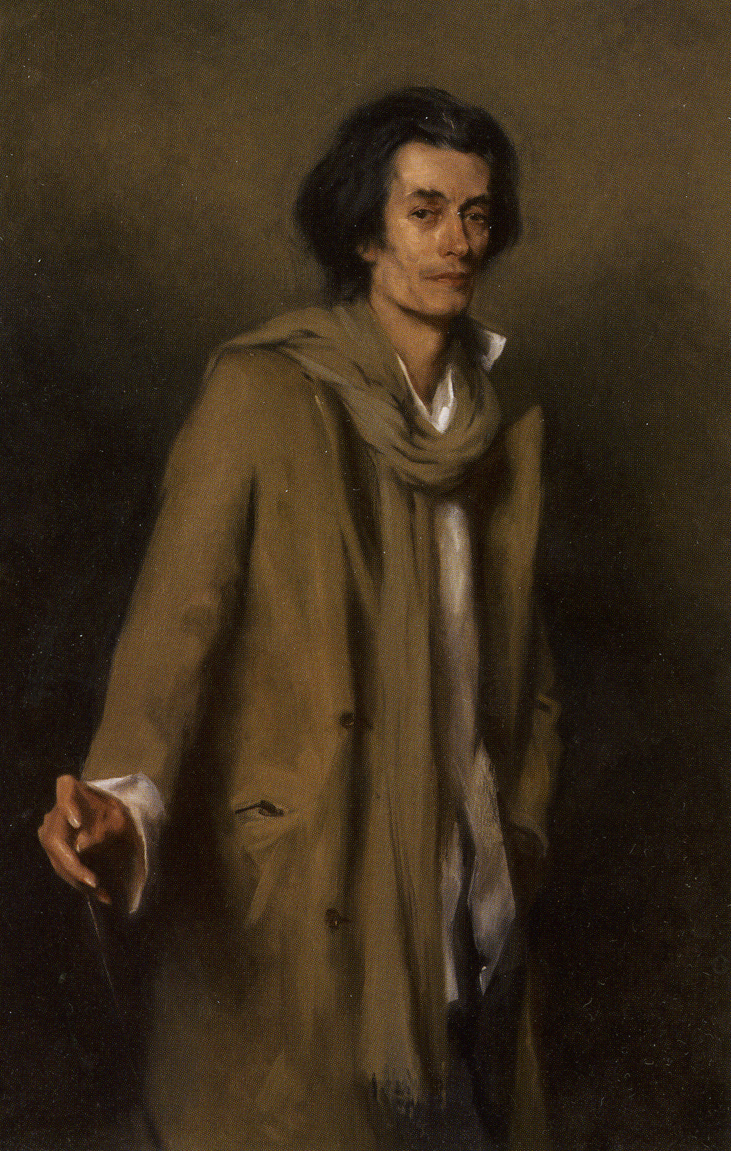
  • Van Dyck self portrait: do we really want to pay £12 million for this?

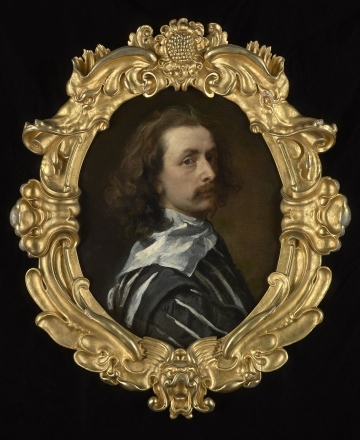
    The self-portrait by Van Dyck is the subject of a deferred export licence in order to give British museums an opportunity to find the £12.5 million required to stop it going abroad.

    The NPG, where the picture is currently on show drumming up donations, has started a campaign to raise £12.5 million to acquire the picture. They have raised £1.2 million so far – only 90% to find then in the remaining eight weeks. The Tate turned down the offer of a joint campaign and joint ownership pleading depleted reserves, and the Sunday Times has had the impertinence to reveal that the NPG had previously turned down an offer to buy the picture for a quarter less than they are now apparently desperate to pay.

    The picture was bought at auction by London dealer Philip Mould in league with an American backer for £8.3 million in 2009, and it has now, they say, been sold to an American collector for £12.5 million.

    As is customary on these occasions the hyperbolometer has been yanked over to Full Steam Ahead – “Give us as much smokescreen as you’ve got Mr Stoker”. “Aye aye Skipper”. Everyone suddenly believes this is a masterpiece that must be “saved” at all costs.

    And yes it is an agreeable enough picture, a trifle tartily got up in its period frame, but it’s not worth the money and neither are we short of Van Dycks. Experts claim that the artist is depicting himself in the act of painting. Maybe so, but if he really is seeing himself in the act of execution, in order to get this view in a mirror he would have to be a left-hander and as his drawings demonstrate Van Dyck was no south paw.

    The head is precisely what we expect of a living, alert character study by Van Dyck. The silk doublet is not quite so convincing. Its attempted bravura handling falls short for an artist we know to be a master of the deft, silky flourish. Did Van Dyck perhaps complete the head and then pass it down the studio line? It is after all dated to the last year of his life. It could be that the only part completed on the artist’s death was the head, and someone else, not quite as classy, finished it off. When they sold it in 2009 Sotheby’s described it as a work painted “with the utmost bravado and confidence; each sweep of the paint brush breathtakingly effective despite its deceptive simplicity.” They also cite numerous ‘probablys’ and ‘possiblys’ in its provenance.

    The fact is we’ve been told very little about this picture: did it, for example, begin life as an oval? And where are the Tate and NPG 17th century experts with their considered analyses of this picture?

    David Lee

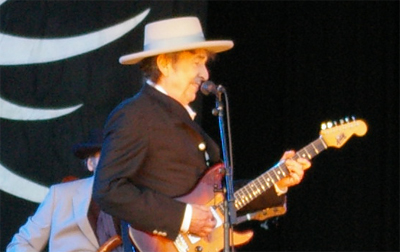
  • Bob Dylan at the National Portrait Gallery

    Bob Dylan at the National Portrait Gallery

    THE LINE IT IS DRAWN … BADLY
    The now routine phenomenon of paintings by celebrities shown in serious galleries defies belief. You’d think they’d be sniffy about this sort of populist stunt; and you’d be wrong. However bad the work is people swarm to see it, hexed by the name. Photos and paintings by pop stars and television personalities attract record crowds of worshipers. The best attendance at the 170-year-old Walker Art Gallery in Liverpool, for example, is paintings by Rolf (“do you know what it is yet?”… “nope”) Harris.

    Thus in straitened times are museum principles sacrificed in order to sell coffee and muffins. Celebrity daubing is the one area of museum policy where any semblance of honesty flies out the window. Critics and curators lose all sense of propriety and become blinking rabbits trapped in headlights. The thrill of brushing with fame is addictive. Just maybe if we heap on the praise with a bulldozer we’ll get the personal call. Perhaps we’ll become friends. What other reason could there be for this adolescent fawning over the incompetent and conceited?

    So Sarah Howgate, a curator at the National Portrait Gallery appears on the television – a clip is on the BBC news website and will embarrass all concerned for as long as it remains in the archive – either talking gibberish or praising qualities in works brazenly lacking anything resembling accomplishment. Why? Because they are by Bob Dylan. Well Bob, you of all publicity avoiders should know better than to play ball with this demeaning exploitation of your fame. The person who persuaded you into this lapse of judgement and propriety is possibly the same one who talked you into the wince-inducing train crash of that Christmas song album four years ago. Here comes Santa ho ho ho, indeed.

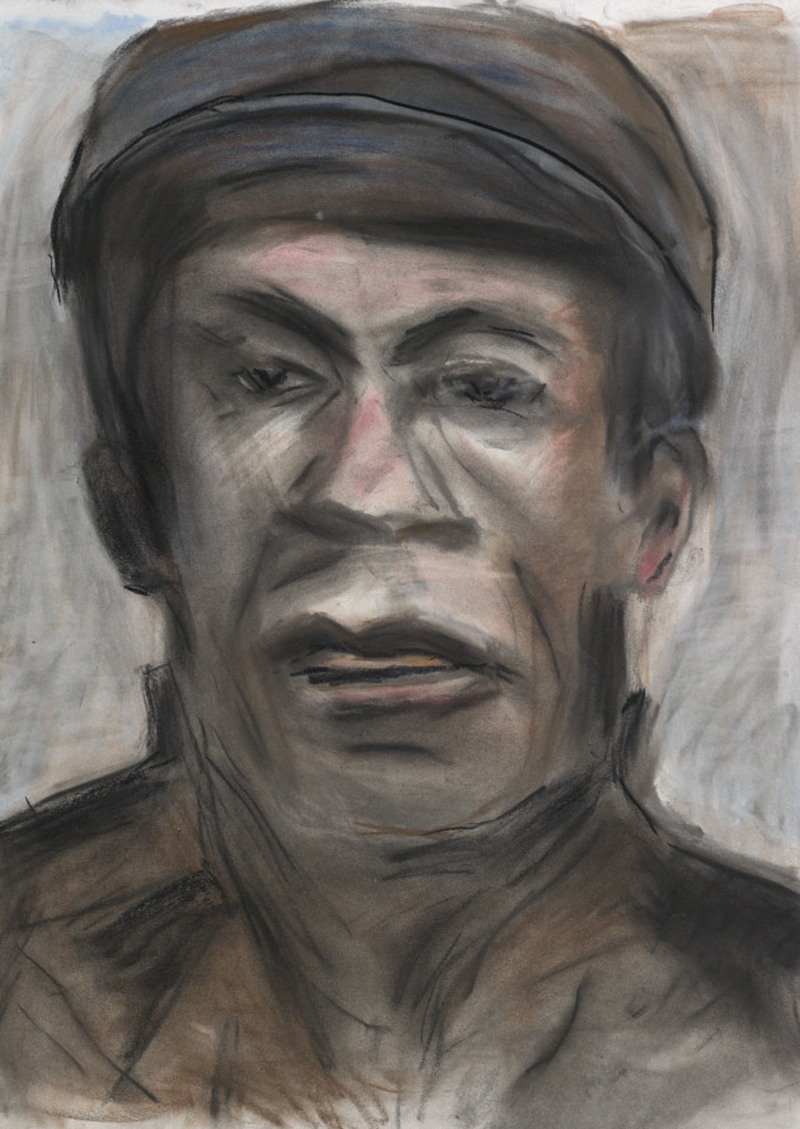
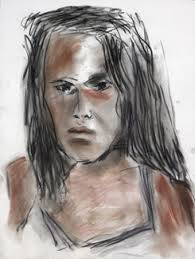
    When not rolling thunder from continent to continent or writing songs of genius (and no one comes near him as the greatest artist of my lifetime), Bob relaxes with a spot of drawing, don’t yer know, and in the last year has done a dozen imaginary pastel ‘portraits’ – one of which, captioned Ivan Steinbeck, is clearly based on his own face. All the same size, they are as crude as Wild West ‘Dead or Alive’ posters – though poor old ‘Red Flanagan’ already looks like a decomposing stiff. The works are so obviously those of an amateur that they might, if entered for an art contest in a scout hut, elicit praise and encouragement if only out of sympathy for the effort made. The only thing missing is the untidy grittiness of pastel, the textural scuffs and drawing-pin holes in the corners. These sheets look suspiciously perfect, as though made by a machine, and the pastel is applied more like make-up or lipstick – it’s horrible. Either Howgate was deliberately lying when she praised this rubbish or she doesn’t have a clue what she’s talking about: neither is an advertisement for her career prospects. The probability is that she was lying having been, as they say in American films, hung out to dry by superiors.

    Then along trots art critic Jonathan Jones of the Guardian, who blogs for England with instant opinions on everything. He told us that “Dylan draws well, with feeling and hard-won accuracy”. He doesn’t. He doesn’t draw any better than literally millions of others. GCSE teenagers have better portfolios of drawings than this. And as for ‘accuracy’? What does that mean in the context of the imagined? That he got the number of eyes and ears right? Why did Jones write this? It’s hard to explain.

    Dylan draws with all the mistakes which are second nature to untutored dabblers, faults too many to enumerate. Typically at this level, errors are duplicated like incurable tics. No improvement occurs from one drawing to the next, nothing having been learned by self-criticism or devoted practice. And because Dylan isn’t in full expressive control of what he does, anything readable into these faces has to be accidental.

    Apart from their status as curiosities no point is served exhibiting this stuff. They would not be shown anywhere, least of all the National Portrait Gallery, were they not by Bob Dylan. If a would-be artist showed Sarah Howgate a portfolio of scribbles like these he’d be on the pavement faster than Usain Bolt.

    Bob, my dear hero, these are intriguing ephemera, but they are without art and best kept to yourself as a little secret between you and your family. And may I humbly suggest that next time you should know your song a little better before you start singing.

    Bob Dylan is at the National Portrait Gallery until January 5th

    David Lee

    The Jackdaw September 2013


  • Carl Randall – easel words

    Carl Randall – easel words

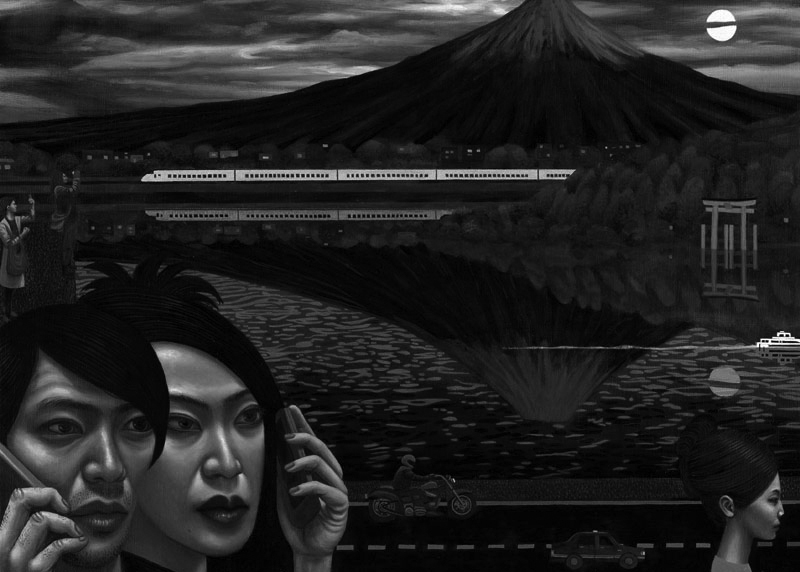
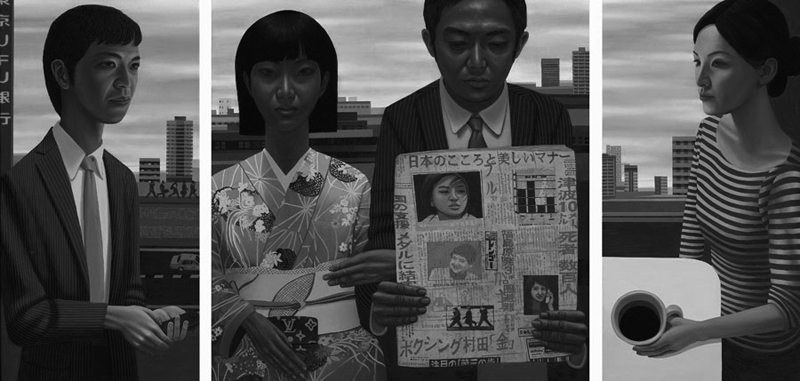
    Recent paintings made in Japan will be showing at my exhibition ‘In The Footsteps of Hiroshige: The Tokaido Highway and Portraits of Modern Japan’, at the National Portrait Gallery from June 20th to September 15th (then touring the UK until May 2014). The exhibition is the result of being awarded the 2012 BP Portrait Award.

    My proposal for the award was to travel in the footsteps of the Japanese woodblock print artist Ando Hiroshige (1797–1858), who in 1832 travelled along the Tokaido Highway, an old trading route that ran from Tokyo to Kyoto, producing a series of woodblock prints showing the people he met and the landscapes he experienced along the path. The prints now serve as a valuable artistic document of life in Japan at that time. I was interested in producing contemporary equivalents, documenting the people and places of modern Japan, 180 years after Hiroshige made the same journey.

    The journey started in the bustling capital city of Tokyo, and, drawn to its densely crowded streets, I painted hundreds of residents one by one, directly from life. Visiting other major cities along the route, I painted other features of modern Japan such as salary men, sushi restaurants and department stores. As the highway moves out of cities and into rural areas, elderly rice farmers work their fields, their backs permanently bowed, skin leathery and wrinkled from a lifetime of farming. While visiting these areas, I also had the opportunity to experience aspects of traditional Japanese scenes such as hot springs, fireflies and red autumn leaves.

    Finding the modern and urban ever present in the rural, I included elements of the industrial within images of nature: bullet trains cut through mountains, telegraph poles dot the landscape, tetrapods line the coastline. These, and other motifs, such as the mobile phone, are used to place the images in the contemporary world, while also helping to avoid nostalgic depictions of historical Japan. I would hope that my portrayal of familiar Japanese icons such as Mount Fuji, Geisha, Kabuki, Zen gardens and Sumo wrestlers have been presented in a fresh light.

    Combining a sense of the real and unreal in these paintings was important to me, with realistically painted figures set against flattening space and illogical scale. I painted some works in monotone, to imbue them with a feeling of solitude and silence, which relates to my interest in urban alienation – the idea of people sharing the same close physical space, but mentally existing in separate worlds.

    This exciting opportunity allowed me to develop my interest in portraiture and create personal interpretations of Japan, while following in the footsteps of a great artist. I felt privileged to be the first portrait painter to respond to this subject matter, and I would hope that this exhibition generates further public interest in this fascinating country.

    Japan Portraits, a 120-page colour hardback catalogue of work made in Japan, is available at The National Portrait Gallery – foreword by Desmond Morris with an introduction by Donald Richie. A documentary about the artist painting in Japan is at www.vimeo.com/carlrandall/japanportraits.

    Artist’s website: www.carlrandall.com

  • Bargain basement royal portraiture

    Bargain basement royal portraiture

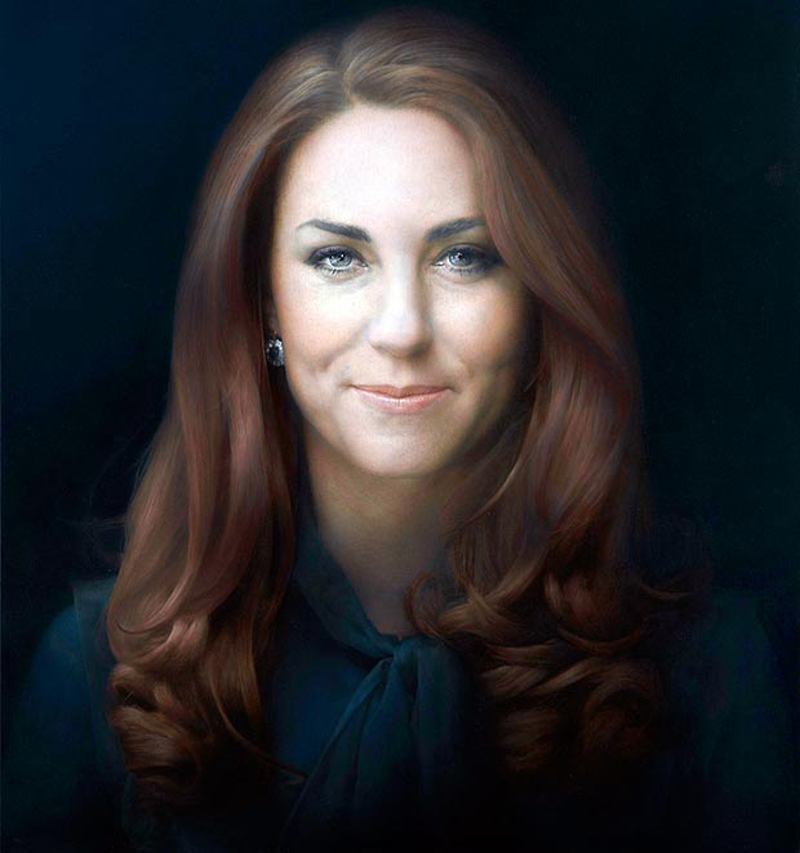
    This is the portrait of an intelligent, thoughtful and educated sitter with no less than a degree in art history. It is perfectly adequate for the boardroom of a supermarket but entirely inadequate for a national collection. Kate deserves better. We deserve better too, and so does the future.

    This commission – Kate’s first official portrait – demanded an artist, not a slavish and banal illustrator and certainly not the bargain basement of royal portraiture. It is an artless mistake that should have been foreseeable by those who commissioned it. Emsley was the wrong painter. He is essentially a wildlife artist used to painting every hair on a gorilla. We have fine portrait painters in this country – Ben Sullivan, Phil Hale, Stuart Pearson Wright and Paul Benney among them. Any of these artists would have produced something more taxing, deeper, and interesting than this. We could have been surprised by an artist with something to say.

    We are not asking for any surreal or bizarre interpretation but merely for something beyond a bog-standard likeness. This is the most bland and predictable royal portrait in living memory. It is the sort of safe, uncomplicated, pedestrian image one might expect to see in a high street photographer’s window. It looks as if the painter asked the subject to “Say cheese!” and then told her to scram and buy some clothes while he painted the photograph.

    It would have been cheaper and more honest to exhibit a photograph; indeed this portrait adds nothing that we didn’t already know from a million photographs. Even her smile is half-hearted.  There is neither character nor personality here beyond the obvious. Neither is there gravitas, profundity or any sense of narrative. Instead it is the image we see repeated daily in our newspapers and magazines.

    Saving grace? It is not by Rolf Harris.

    David Lee

    The Jackdaw January 2013

  • Another portrait of the Queen

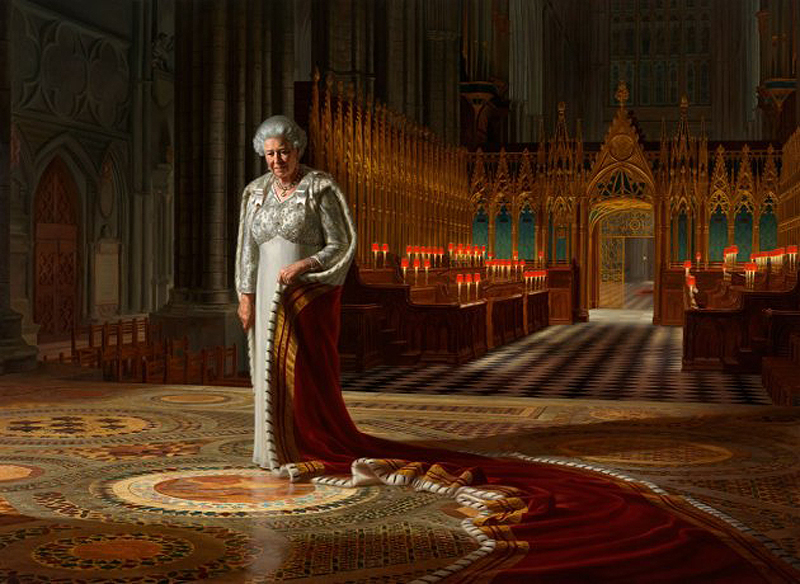
    A portrait of the Queen by Australian artist Ralph Heimans has gone on show at the National Portrait Gallery in Canberra. It shows the monarch at night in Westminster Abbey standing on the spot where she was crowned 60 years ago. She looks like a giant genie has suddenly appeared from the train of a dress and she has succumbed to suspended animation. One gathers she is meant to appear pensive, as though wondering why she didn’t buy Frankel when she had the chance – she might even be pondering the fate of the Liverpool Empire. A typically Australian effort; massive (it is eleven feet by nine feet), ambitious, unsubtle and a little heavy, don’t you think, on the melodrama and narrative?

    Many confuse a photographic appearance with a picture being well painted. This is an easy but fundamental mistake. Here, every detail is painted, the only omissions being real life not theatre and vigour in the execution. In close up the sitter wears the leathery look of a souvenir sailor.

    David Lee

    The Jackdaw October 2012

  • Hitting the right tone (or tits first)

    Hitting the right tone (or tits first)

    Almost part of The Season now, the only surprise these days about the annual BP Portrait Award is that the Queen doesn’t cut the ribbon and hand out the rosettes. As ever, this year is as popular with the public as any art exhibition, with large numbers jostling and genuinely engaging with the work eagerly discussing merits and demerits of more conspicuous pieces.

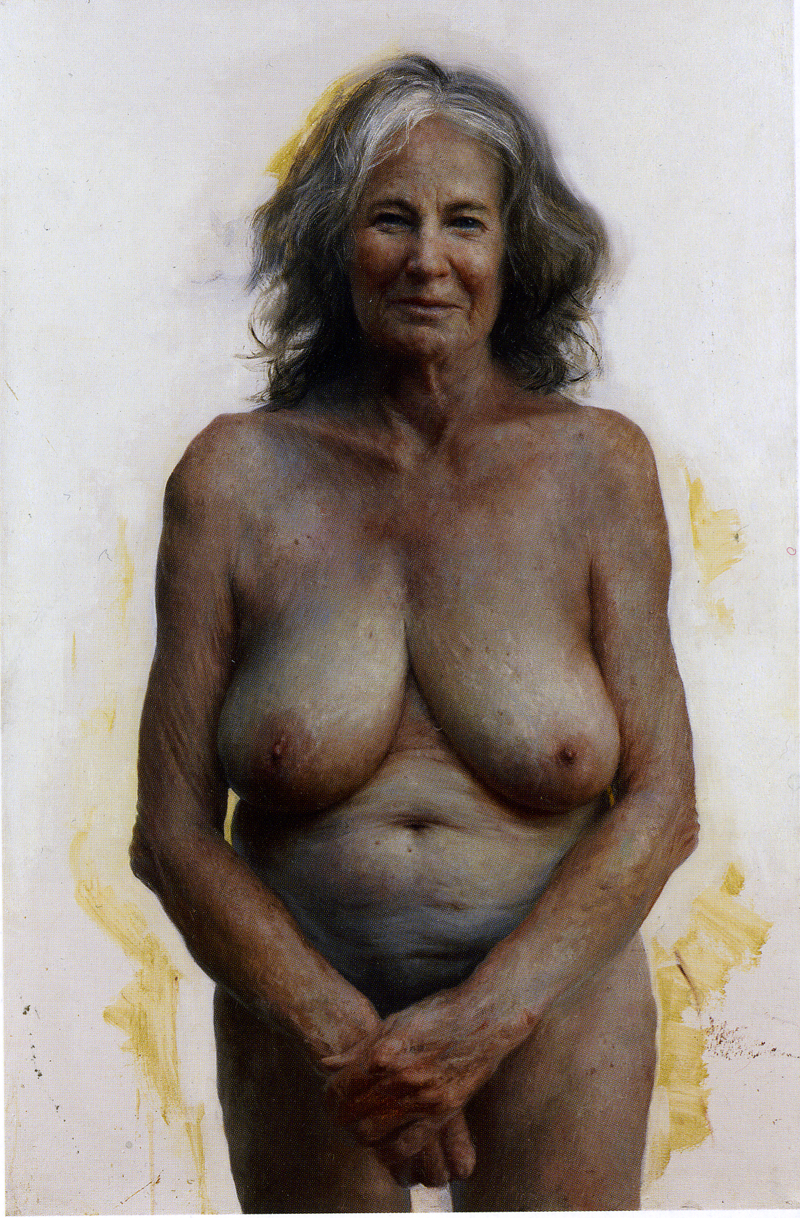
    As usual the winning picture, Auntie by 26-year-old American Aleah Chapin, is not the most refined effort though it deserves commendation –­ if only because the sitter has comfortably the noisiest breasts in the show. One subject of the picture is perhaps what the ageing process does to flesh and muscle, although the painter has presented it in an original and not necessarily unflattering way, suggesting that while the run in to death might be sad it is not always unsightly.

    Somewhat off sharp focus and pinned specimen-like to an unfinished background to which the figure’s outline is here and there uncomfortably cut, the sitter confronts us very slightly as if from the past, as though the painter has approached her subject wistfully. Auntie seems not to be fully in the present and invites thoughts of how in old age personalities, histories, gradually dissolve. It is a nicely judged picture, and there’s love in it.

    Isabella Watling presents The Importance of Being Glenn. Less conspicuous and subtler than the winner, it is duller but arguably more artfully painted. Watling is the more impressive painter for having been classically trained at the Charles H Cecil Academy in Florence, where she is still a student. Indeed, the winner of the Young Artist’s prize, Jamie Routley, is also a graduate of this school, as is another potentially successful young artist Tim Gatenby, for a portrait of his grandmother. Any of these three might win the prize in the future. The work of the Cecil Academy’s graduates – the impressive Frances Bell is another – stands out in the context of those paintings which use overbearing narratives, a cornucopia of details, sloppy painting and overblown heads copied from photographs or projections. Look out for this quartet, their pictures sit back and wait for the discerning passer-by.

    There were also convincing efforts by Antonio Barahona, Roni Taharlev, Benjamin Sullivan and Ben Ashton, all of whom rely on expression through observation rather than deliberate sloppiness and vulgar gimmicks.

    An intriguing oddity is a stylised scene in a Japanese sushi restaurant, painted by Carl Randall (who won the Travel Award), which is not strictly speaking a portrait so much as a novel documentary. Seen almost from above, assorted diners are trapped in their own worlds and silhouettes while troughing busily with chopsticks.

    One welcome addition this year is the judges’ statements – albeit too brief – as to why they selected the prizewinners. This should be done as a matter of routine in all competitions of this sort. If organisers are to continue with such elaboration it must be better done next year. Third-prize winner, Alan Coulson, is praised as follows: “The modulation of tone and attention to detail successfully brought the style and subject together.” ‘Modulation of tone’ is a cliché, doubly unhelpful in this instance because Coulson’s isn’t a tonal painting. Perhaps what is really meant here is the even gradation from light to dark, which is indeed carefully modulated in the sitter’s white T-shirt, but nowhere else. Looking at the list of judges, it occurs that there isn’t a painter present, an accomplished sculptor yes, but not a painter. A painter as a judge in a painting prize may be too obvious a step for the State Art establishment but it would have saved them making such a ham-fisted mistake.

    The second prizewinner, meanwhile, was chosen because it was “intensely atmospheric, thoughtful and focused” – “murky” seems more appropriate. If you’re desperately trying to find something to say this is the kind of adaptable phrase applicable to most paintings. When justifying a choice, it must be done more convincingly than this by avoiding such flannel, so that we viewers enjoy the benefit of the judge’s greater expertise – then we are able to say “Oh yes, well spotted, so it is”, and not respond with a bewildered “Eh?”. As it stands with this year’s explanatory efforts one can have no confidence that the judges have a clue why those selected for honour are outstanding in the company.

    For all its usual failings – not least the fact that a good twenty pictures don’t deserve to be hung at all – this is a moderately diverting exhibition in which to dodge the showers.

    The BP Portrait Award is at the National Portrait Gallery until September 23rd; the Scottish National Portrait Gallery, Edinburgh from November 3rd to January 27th; and the Royal Albert Memorial Museum in Exeter from February 9th to May 19th, 2013.

    David Lee

    The Jackdaw, June 2012

  • The RA summer show in record time

    The RA summer show in record time

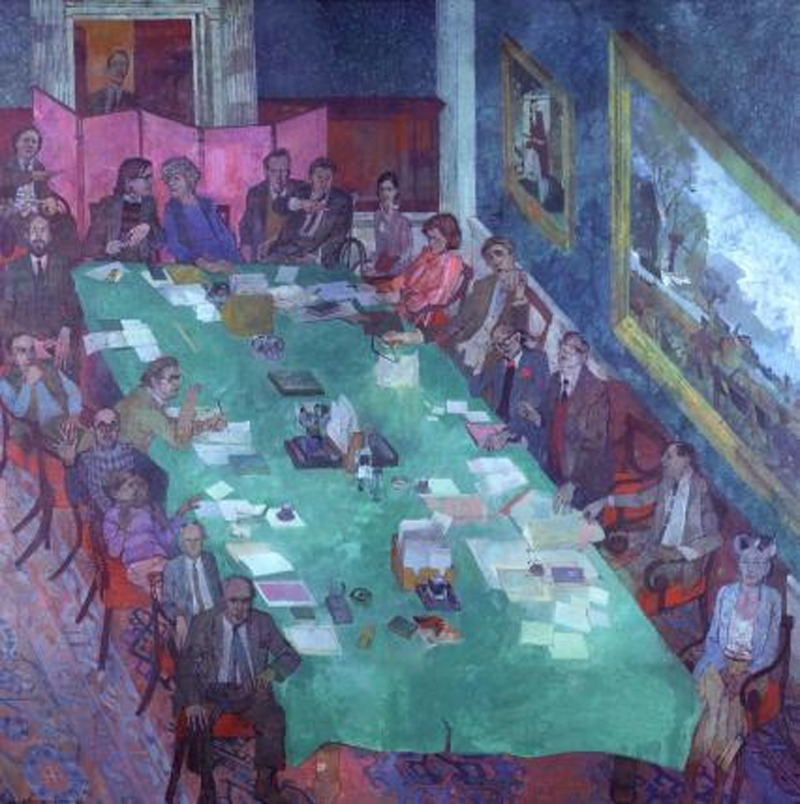
    The Meeting, Royal Academy of Arts by Leonard Rosoman

    Out of respect for one of its recently deceased Academicians, Leonard Rosomon (1913– 2012), the Royal Academy skied one of his best works in the corner of an obscure gallery at this year’s Summer Exhibition (until August 12th). His Committee Meeting, Royal Academy (above), 1979-1984, was on loan from the National Portrait Gallery, where it has probably never been on display. We have in England scores of public galleries and yet is there one with a curator who has the wit to stage a retrospective exhibition of a senior artist like Rosomon? Probably not. For those with an eye on State Art advancement there is no career mileage in such a show, in fact it would probably end any hope of serious preferment. Yet in the last two years alone Tracey Emin, represented in this exhibition by childish scribbles unworthy of even the fridge door, has had three major exhibitions in public galleries. State Art needs a clear-out and re-staffing with individual thinkers.

    Everything in Burlington House this year seemed even more dense and off-putting on the wall than usual, so The Jackdaw’s representative allocated one second on average to each of the 1,474 works before heading off elsewhere in search of art which looked as though it was loved by someone enough to hang it sensitively.

    Highlights spotted at speed were a bold Kiefer and a powerful portrait maquette of footballer Stan Cullis by James Butler, the quality of whose modelling always stands out even when exhibited in sculpture galleries more akin to a jumble sale than an exhibition of serious art. One sculptor phoned the Jackdaw to remonstrate at this shocking treatment and said he would not have allowed his work to be exhibited so contemptuously. Another wrote a despairing unsigned letter saying that the atrocious hanging of the sculpture was no better than most of the trash selected deserved. Everyone else was represented by the stuff they are usually represented by. There will undoubtedly have been other good work hidden away but life’s too short to search it out among such mountains of amateurish material.

    Ah, one interesting development was the removal of the small pictures from the far end into the largest gallery. The irony in this was that the vacated gallery was then used to show one work instead of 250. It was a video of someone scraping out “a modern piece for cello”, of the sort one walks straight past in the Tate. Played this crap by torturers you’d be singing like Placido Domingo inside three seconds, telling them your grandmother was Osama bin Laden’s loyal lieutenant in Eccles.

    Robert Graves
    Epitaph on an Unfortunate Artist

    He found a formula for drawing comic rabbits:
    This formula for drawing comic rabbits paid,
    So in the end he could not change the tragic habits
    This formula for drawing comic rabbits made.

    David Lee

    The Jackdaw June 2012