Tag: David Lee

  • The Art Fund subverted: they were only playing leapfrog

    The separate bodies contributing to State Art are now so interrelated, so cosily acquainted, their personnel so readily interchangeable and of identical mindset, that they might as well join forces. (… Liz Forgan is sacked from the Arts Council but remains a Trustee of the Art Fund; James Lingwood swallows his annual  million from the Arts Council and also sits as a Trustee of the Art Fund which has bought a work he commissioned, and so on – I could fill this column ten times over with similar complacent overlaps.) Imagine the savings on personnel and rent alone if the Contemporary Art Society (now funded and run by a former employee of the Arts Council), The Art Fund (headed by an ex-director of the Tate), the Arts and British Councils and the Tates (also directed by a former Arts Council employee) stopped pretending they pursued distinct objectives and pooled resources.

    The Art Fund is the latest to dump any semblance of independence. It is nominally a charity, if, that is, you count bankrolling the already well supplied as ‘charitable’. If the Salvation Army doled out caviare to nobs in Mayfair there would be a fuss. But the Art Fund regularly does the equivalent.

    It was founded by altruists in 1903 solely to help museums buy works of art. It gives £6.3 million a year in grants, spreading it thinly across scores of acquisitions, including some important ones. Its core activities are still nobly worthwhile and more than ever necessary.

    Recently, it announced it would fund two British tours: Jeremy Deller’s ‘immersive works’ (don’t ask) created for the British pavilion at this summer’s Venice Biennale, and Grayson Perry’s six large caricature tapestries on the subject of British life and taste. Why is a charity sponsoring the promotion of Perry and of a Tate trustee, Deller, who are among the most visible, wealthy and successful of recent British artists? And why aren’t their dealers paying for these tours from which they will all benefit? Deller’s exhibition in Venice, funded by the British Council (the tour of his inflatable Stonehenge is already, by the way, covered by the Arts Council), cost over half a million of public money to stage. Why is Deller worth even more from the limited resources of yet another much tinier charity? None of this makes sense. Unless of course there is a privately agreed national consensus between a raft of organisations, public and private, whose objectives – for whatever reason – are to promote the same few reputations.

    In their recent accounts the Fund crows its contribution of £200,000 towards Rachel Whiteread’s infantile defacement of a listed masterpiece, Charles Townsend’s Whitechapel Art Gallery. Again, here is lavish support of a successful, regularly exhibited artist represented by a leading world dealer. Charity? Really? Additionally, they funded the Tate’s purchase for £125,000 of five Whiteread ‘drawings’, or diagrams as they used to be known – they now have 30 of her works.

    The Fund also oversees the annual £100,000 Gulbenkian Museum of the Year whose judges are perennially lazy, predictable and uninspired. It is responsible too for administering ‘Artists’ Rooms’, an overpriced and dubious blunt instrument of State Art which ensures the circulation of work by top brands around regional museums, apparently ­– God help us – in perpetuity.

    The Fund’s magazine, Art Quarterly, formerly a purveyor of scholarly articles, is now a yappy promotional brochure for State Art. The current issue advertises three artist trustees of the Tate, each of whom receives the Fund’s cash. In the case of Wolfgang Tillmans, they contributed £95,000 towards buying 15 of his pictures for Glasgow Art Gallery having the previous year given £62,000 for the purchase of nine others of his works by the Arts Council, which has £450 million a year of its own to spend. The Tate already owns 62 works by Tillmans. Why this obsession with an indifferent German photographer?

    But all is not bleak. In 2011 when the Fund announced public purchase of Yinka Shonibare’s Fourth Plinth bottle the published cost was £362,500. As we demonstrated at the time this was a lie repeated in all newspapers. In their recent accounts the figure has now shot up to £650,000. They’re getting there, slowly.

    David Lee

    The Jackdaw, September/October 2013

  • Serpentine Gallery extension: limousines are good causes

    Serpentine Gallery extension: limousines are good causes

    What is the difference between a line of black limousines at a Mob funeral in Brooklyn and an identical cavalcade at the opening party of the new Serpentine Gallery annexe in Hyde Park? Well, not as much as you’d think. Although Cosa Nostra are undoubtedly the subtler of the two coteries represented, both have a common interest in protection rackets. In the case of the Serpentine this means inflating the reputation and value of the deluxe ‘branded’ art which will be shown there and will have originated, or will end up, in the collections of the limousines’ occupants.

    Unaware that a shindig was in progress I cycled past the Serpentine while the limos were chrome-to-chrome outside. At first this didn’t register as unusual: another evening, another hoolie for the vain and vulgar at the Serpentine… One has got used to it. But the image of those black limousines, just that few inches too long, that shade too opaque, that chauffeur-wipe too shiny, lingered until it formed an indelible symbol for everything that stinks about State Art. What is passed off as ‘public interest’ and ‘the public appetite for contemporary art’ (the latter is the often repeated favourite lie of President-For-Life Serota himself) is yet another means by which the wealthy protect their interests. The public has no say in what is shown in the Serpentine despite the fact we have always paid for it. And if we don’t like it we can eat cake.

    Here is a publicly funded art gallery which specializes in showing recent art of negligible visible quality, that the public couldn’t care a toss about, which is hawked by the world’s wealthiest and most powerful shopkeepers, has its value maintained by salerooms who rig prices during glamorous soirées, is traded in by billionaire collectors who purport to like it but treat it merely as a secure commodity of exchange, and is endorsed using a new language written by “international curators” no literate outsider can fathom. You couldn’t invent a more perfectly rounded system of self-interest and exclusion.

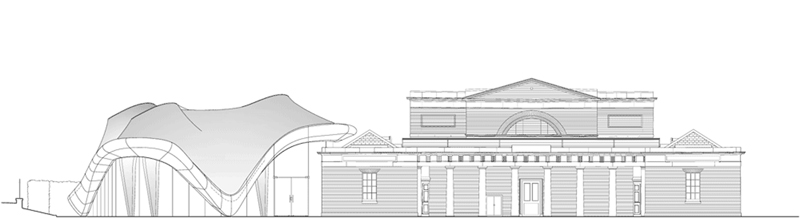
    The limos were celebrating the Serpentine’s latest expansion. A listed neo-classical building of agreeable proportions by Decimus Burton, formerly an arsenal close to the main gallery, has had a café and restaurant designed by Zaha Hadid attached to it. Enjoying limitless freedoms of manoeuvre as it does, State Art never has any problem acquiring permission for one of its chosen architects to tamper with the historically important and therefore supposedly protected. In this case what resembles the roots of a gigantic wisdom tooth have been impacted on the side of a Doric portico. It couldn’t be less sympathetic and like everything gratuitously eye-catching it is unnecessary. New gallery spaces are poky and the café charges £3.38 for a small cup of waiter-delivered coffee. How very charitable – come to think of it just like those other exemplary, public-spirited ‘charities’, the Royal Academy and The Art Fund.

    Between them the limousines paid the £14 million cost for the expansion, as well they might as many of them will be its main beneficiaries. Running costs and an exhibition programme have been underwritten with a £3 million endowment from the Lottery. This comes on top of the minimum £1.3 million a year the gallery has always received from the Arts Council. In fact, in the 19-year history of the National Lottery, the Serpentine has received no fewer than twelve awards totalling £6.8 million. Thus is the Serpentine the means by which money from the poorest, those who buy lotto tickets and scratch cards, is laundered to assist the wealthiest (non-doms many of them) in the appreciation of their investment portfolios. This revolting system is defended by the all-purpose State Art lie that the likes of the Serpentine “provide a public service”. Up to a point, but the real winners are behind all that dark glass.

    The Serpentine is run by a pair perfectly suited to their task: one is a dim socialite who does as she’s told, while the other is a Swiss “international curator” who speaks six languages and has neither penned nor spoken a clear sentence in any one of them.

    So who pays for the Serpentine? You do. Who is it for? Definitely not you. What is its purpose? Mind your own business.

    David Lee

    The Jackdaw, November 2013


  • Olympic legacy: money for nothing

    Olympic legacy: money for nothing

    I am not happy again. We have become used to hearing weekly wails of distress from the Arts Council about how broke they are followed by melodramatic predictions of the cultural desert awaiting as punishment for state parsimony. It is their belief they should be exempted from the austerity allegedly endured elsewhere. Their moans receive sympathetic hearings from a press many of whose specialist commentators are reliant on the Council for an assortment of free trips, home and abroad, and other thinly veiled junketry and blackmail.

    Last month the Council announced quietly that one of their long-delayed projects for the Olympics – a jet of air fired up over the Mersey estuary off Birkenhead – was not going to happen after all, despite having already spent £535,000; that is, £35,000 more than the original budget intended for the finished, installed work. This sum included £40,000 as a personal fee plus £15,000 expenses for the artist, one Anthony McCall. He promised something he couldn’t deliver but won’t be sued or expected to repay any of the money. Apart from low-key reporting of the failure, papers omitted to comment on its wider significance. And it goes without saying that no one at the Arts Council will carry the can for this entirely avoidable fiasco.

    In fact, this was only part of a story concerning the disgraceful waste of £5.4 million which the Council allocated for commissioning special works during Olympic year. Now, a year on from the Olympics, we can evaluate more clearly what we received – the ‘legacy’ if you insist – for a sum approaching the Council’s entire annual visual arts budget. The short answer is nothing; nothing memorable or of any enduring artistic merit, for it was frittered away on ‘community’ trivia. Not a single painting, print, sculpture or ceramic in any gallery or museum. Not a single mural or stained glass window in any civic building. No public sculpture of genuine worth. No, not even a sprawling installation or a soporific video destined for the gallery warehouse. Where anything at all concrete remains from this project it is entirely frivolous. The sum total is three crocheted lions at Twycroft Zoo and a boat made from 1,200 donated wooden objects currently moored … well you tell me.

    In January 2010 the Arts Council announced that as its contribution to the Cultural Olympics it would earmark £5.4 million for 12 works, one each in nine regions of England (£500,000 each) and one each for Scotland (£460,000), Wales (£230,000) and Northern Ireland (£190,000). The object of these commissions, which were collectively dubbed ‘Artists Taking the Lead’ (the Piss, more like), was “to surprise and delight the world with their extraordinary artistic vision”.

    Scotland’s wedge bought them a temporary football pitch in the middle of a forest near Selkirk, on which were played two matches in kits designed by local children – a site now overgrown. (God only knows how they managed to get through half a million on that.) Wales got the fuselage of a DC9 which was towed to four locations; present whereabouts unknown. Northern Ireland got Nest, a warehouse full of donated objects labelled with personal reminiscences. Eastern England got a community event called Home. In Yorkshire they bent the regulations so that those choosing the winner were themselves the recipients of the cash. Their excuse? “It would have been impossible to appoint regional arts experts that did not have these relationships.” You didn’t try hard enough you corrupt bastards! The result was some sort of street happening in Leeds. The north west got its half-million’s-worth of nowt, not even the promised hot air. The south west got Nowhereisland, some soil from the arctic circle towed by boat around the West Country. The West Midlands marched a big puppet of Godiva (now clothed owing to political correctness) down to London. The south east got the wooden boat. The East Midlands is now the proud owner of some knitted lions. The north east got the best piece, ‘Flow’ by Ed Carter, a pontoon on the Tyne complete with original electronic music.

    There is not an atom of visual art in any of this rubbish. It is money which should have been better spent on permanent serious commissions. Why are the Arts Council allowed continually to get away with such shocking waste whilst constantly pleading poverty?

    David Lee

    The Jackdaw, July/Aug 2013

  • Bob Dylan at the National Portrait Gallery

    Bob Dylan at the National Portrait Gallery

    THE LINE IT IS DRAWN … BADLY
    The now routine phenomenon of paintings by celebrities shown in serious galleries defies belief. You’d think they’d be sniffy about this sort of populist stunt; and you’d be wrong. However bad the work is people swarm to see it, hexed by the name. Photos and paintings by pop stars and television personalities attract record crowds of worshipers. The best attendance at the 170-year-old Walker Art Gallery in Liverpool, for example, is paintings by Rolf (“do you know what it is yet?”… “nope”) Harris.

    Thus in straitened times are museum principles sacrificed in order to sell coffee and muffins. Celebrity daubing is the one area of museum policy where any semblance of honesty flies out the window. Critics and curators lose all sense of propriety and become blinking rabbits trapped in headlights. The thrill of brushing with fame is addictive. Just maybe if we heap on the praise with a bulldozer we’ll get the personal call. Perhaps we’ll become friends. What other reason could there be for this adolescent fawning over the incompetent and conceited?

    So Sarah Howgate, a curator at the National Portrait Gallery appears on the television – a clip is on the BBC news website and will embarrass all concerned for as long as it remains in the archive – either talking gibberish or praising qualities in works brazenly lacking anything resembling accomplishment. Why? Because they are by Bob Dylan. Well Bob, you of all publicity avoiders should know better than to play ball with this demeaning exploitation of your fame. The person who persuaded you into this lapse of judgement and propriety is possibly the same one who talked you into the wince-inducing train crash of that Christmas song album four years ago. Here comes Santa ho ho ho, indeed.

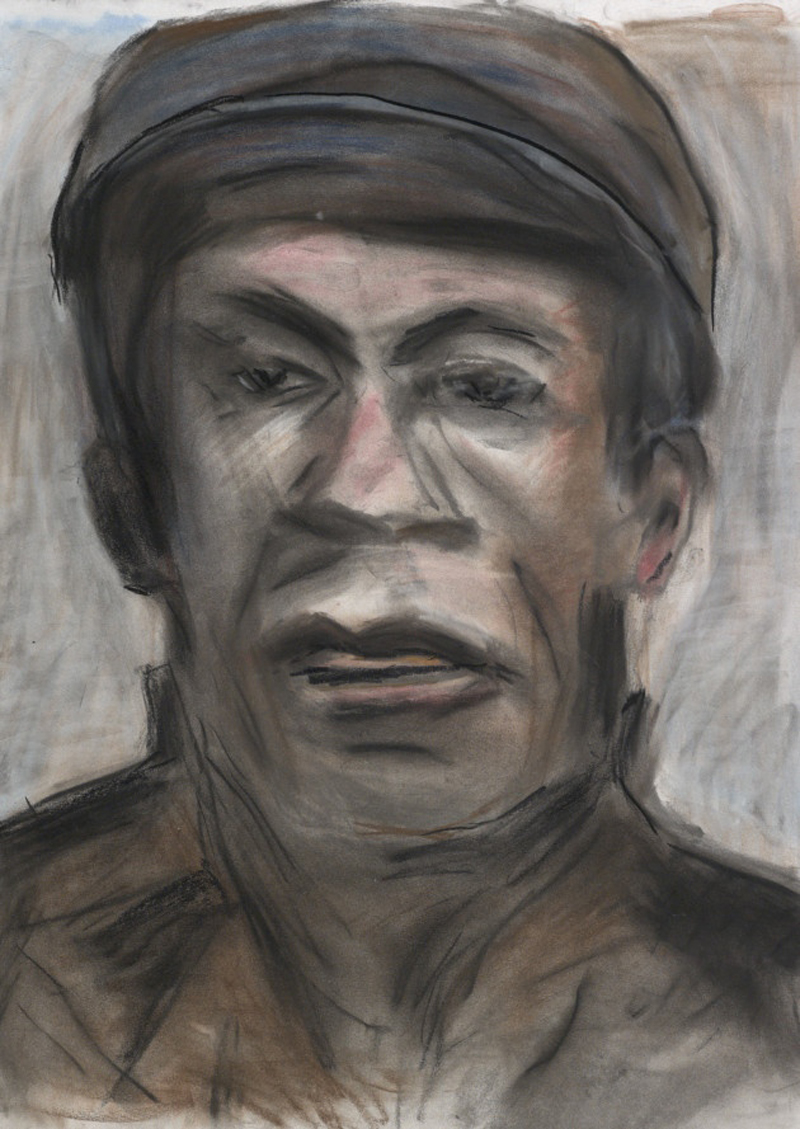
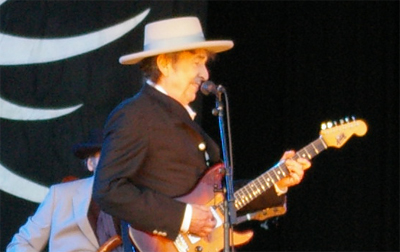
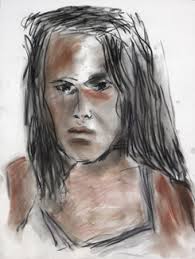
    When not rolling thunder from continent to continent or writing songs of genius (and no one comes near him as the greatest artist of my lifetime), Bob relaxes with a spot of drawing, don’t yer know, and in the last year has done a dozen imaginary pastel ‘portraits’ – one of which, captioned Ivan Steinbeck, is clearly based on his own face. All the same size, they are as crude as Wild West ‘Dead or Alive’ posters – though poor old ‘Red Flanagan’ already looks like a decomposing stiff. The works are so obviously those of an amateur that they might, if entered for an art contest in a scout hut, elicit praise and encouragement if only out of sympathy for the effort made. The only thing missing is the untidy grittiness of pastel, the textural scuffs and drawing-pin holes in the corners. These sheets look suspiciously perfect, as though made by a machine, and the pastel is applied more like make-up or lipstick – it’s horrible. Either Howgate was deliberately lying when she praised this rubbish or she doesn’t have a clue what she’s talking about: neither is an advertisement for her career prospects. The probability is that she was lying having been, as they say in American films, hung out to dry by superiors.

    Then along trots art critic Jonathan Jones of the Guardian, who blogs for England with instant opinions on everything. He told us that “Dylan draws well, with feeling and hard-won accuracy”. He doesn’t. He doesn’t draw any better than literally millions of others. GCSE teenagers have better portfolios of drawings than this. And as for ‘accuracy’? What does that mean in the context of the imagined? That he got the number of eyes and ears right? Why did Jones write this? It’s hard to explain.

    Dylan draws with all the mistakes which are second nature to untutored dabblers, faults too many to enumerate. Typically at this level, errors are duplicated like incurable tics. No improvement occurs from one drawing to the next, nothing having been learned by self-criticism or devoted practice. And because Dylan isn’t in full expressive control of what he does, anything readable into these faces has to be accidental.

    Apart from their status as curiosities no point is served exhibiting this stuff. They would not be shown anywhere, least of all the National Portrait Gallery, were they not by Bob Dylan. If a would-be artist showed Sarah Howgate a portfolio of scribbles like these he’d be on the pavement faster than Usain Bolt.

    Bob, my dear hero, these are intriguing ephemera, but they are without art and best kept to yourself as a little secret between you and your family. And may I humbly suggest that next time you should know your song a little better before you start singing.

    Bob Dylan is at the National Portrait Gallery until January 5th

    David Lee

    The Jackdaw September 2013


  • Another great artist ignored

    Another great artist ignored

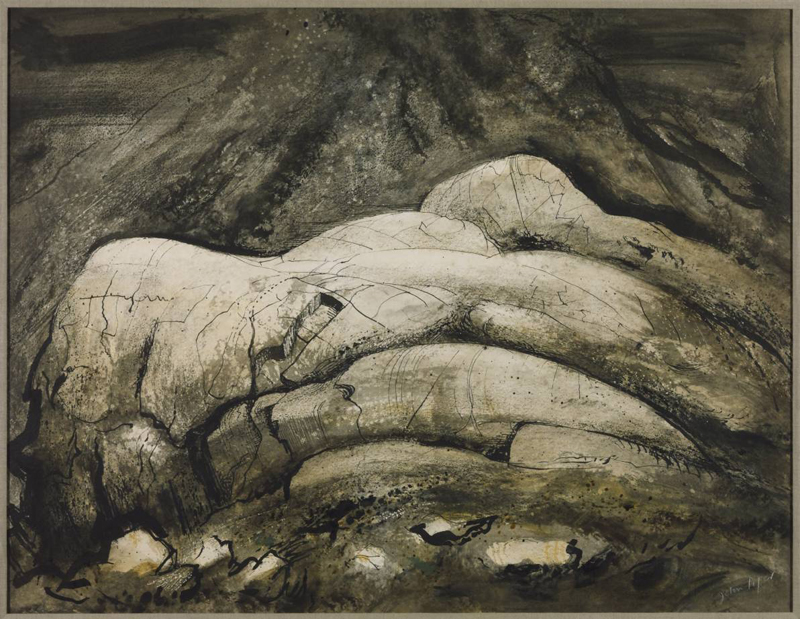
    Of the 183 works by John Piper in the Tate’s collection none is currently on display. One of the major British artists of early Modernism does not have a single item of his work on show in the national collection of British art, of which, incidentally, he was once considered sufficiently eminent to serve as a trustee. How could such an aberration occur?

    As an apostate Modernist, Piper has been marginalised as a glib illustrator of churches and grand houses in a vaguely modish idiom. He is perhaps a victim of his divers interests and abilities; he was writer, typographer, photographer, textile and stage designer, stained glass maker, muralist, printmaker, painter, but ­– especially – a lover of England, its idiosyncracies of belief, custom and culture, and especially of its history, in which he was thoroughly well-read. As a forgotten man he is perhaps the first example of an important artist who, by deviating from the consensus of an official taste which would later emerge as State Art, spoke out and stuck to his convictions. Thus, he managed to get himself on the wrong, ‘Betjeman’ side of the debate when Modernism began to rule the critical roost in English art and commenced its relentless infiltration and systematic cleansing of institutions. There was no schism with his former vanguard friends, Piper simply moved in his own direction rather than following trends and styles he considered useful and intellectually stimulating but limiting as far as his own ambitions were concerned. He inclined towards the deadly sin of Romanticism, being spellbound by land, its natural evolution and the alterations that Man’s brief occupancy had so far wrought upon it. Crucially, he wished to convey his affections to as many as possible, whereas his youthful espousal of Surrealism and Abstraction, though fascinating, were ultimately exclusive, remote and too dismissive of past art. Art, he felt, had become in danger of isolating itself, of communicating only to its few devotees rather than to a wider audience. Most of all Piper relished observation. His concentration was informed by a probing intelligence typical of the genuinely curious.

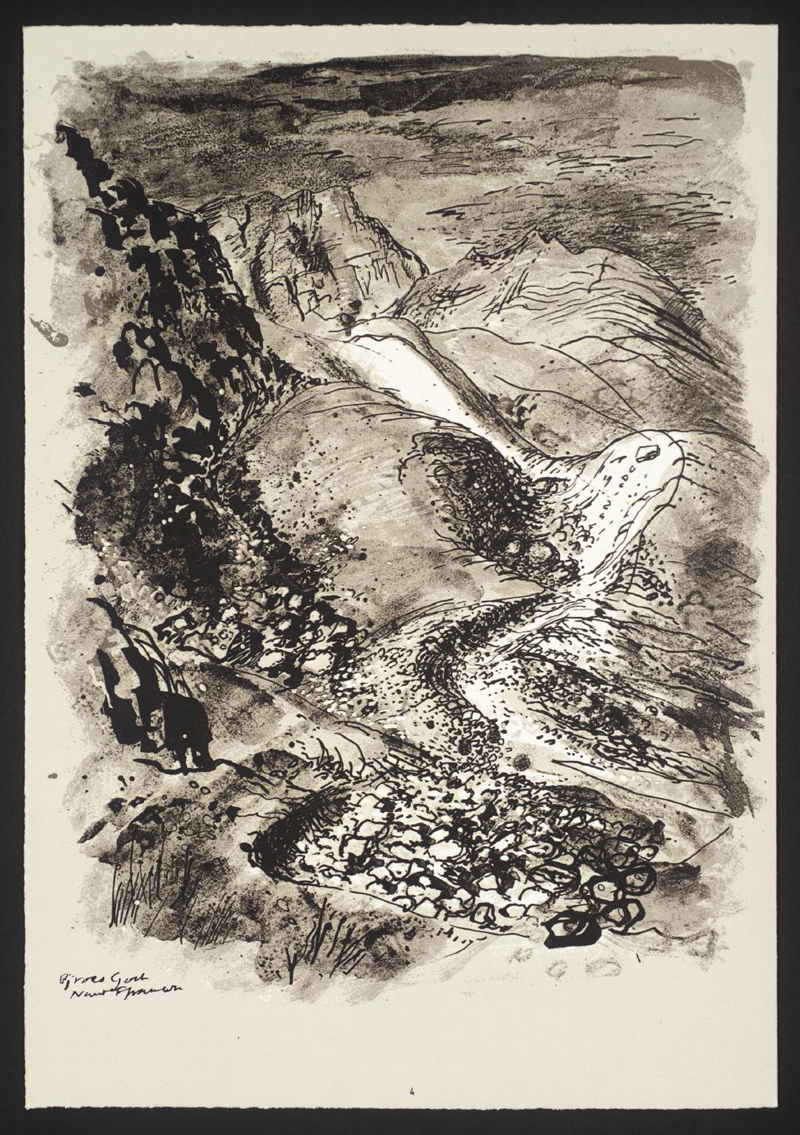
    A small exhibition at Whitworth Art Gallery in Manchester (9 February to 16 June) displayed Piper’s paintings done during the artist’s visits to Snowdonia in the 1940s. It reminds us of what a powerful and original artist he was. Of several outstanding pictures, which are as good as anything by other British artists from this time, one in particular seemed to encapsulate everything Piper sought and stood for. It depicts the Nant Ffrancon valley as a living, dramatic place whose appearance is dictated by its slow forming by glaciation. In such places Piper’s imagination and speculation ran riot. Rock is alive, work in progress. The experience of such a picture encourages even seasoned lookers to see and appreciate more intensely any genius loci. http://www.whitworth.manchester.ac.uk/whatson/exhibitions/johnpiper/

    This astonishing picture was sold two years ago for £17,000 – that is, under half what Hirst was charging at his recent Tate Mart for a signed poster exhibiting no discernible artistic merit. Good luck to the perceptive individual who acquired this modest treasure. But why is it so obviously a silly question to ask if a single British gallery or museum had noticed this profound painting and bothered to bid for it. There is a similar though inferior example from the same series depicting a nearby motif in the Tate’s collection, which needless to say is not on show. £17,000 for a masterpiece when signature decorative froth by Picasso sells for over a hundred million…

    We have the wrong brainwashed curators frightened to acknowledge diversity and following the wrong narrow trends; the wrong art market rigged solely for investment and profit; the wrong craven museum directors too willing to toe the establishment line; and we are constantly force-fed the wrong art which boasts so much yet delivers so little. Piper should be on show and permanently celebrated. He died in 1992, and there has been mounted no retrospective of his work since 1982.

    If your interest in the history of British art extends beyond the fashionable and you haven’t yet read Frances Spalding’s beautifully written joint biography of John and Myfanwy Piper (Oxford University Press, £16.99 pb, a tenner on Amazon) then it’s about time you did: you’re in for a most edifying journey.

    David Lee

    May/June 2013


  • Bone idleness at the Tate

    Bone idleness at the Tate

    For the last meeting of Tate trustees of which minutes have been posted on line (i.e. September 2012), only six of fourteen members bothered to show up. Perhaps it was raining. Trustees, you won’t need reminding, are there to oversee the vigilant running of quangos to ensure public interest is looked after. This is important when the Tate costs taxpayers at least £33 million a year in subsidy. You may be forgiven for believing that the trustees report to the Tate director. In fact, it’s the other war round; the director is – in theory – employed by the trustees and is responsible for implementing their sanctions.

    Trustees were in such short supply at the September confab they were outnumbered by Tate directors, eight of whom attended – incredibly, the Tate now has more directors than trustees, seventeen in total. Two of the three artist trustees failed to attend; in fact, at only one meeting in the previous year have all three artist trustees managed to be present at the same time, which is not surprising given that two of them, for reasons doubtless very convenient to Serota, are German. Magazine snapper Wolfgang Tillmans’s record is especially woeful: on average he attends every other meeting.

    Such lack of commitment is unacceptable in a body that effectively runs contemporary art. Trustees should take their jobs more seriously. Attendance ought to be obligatory not voluntary. After all, an afternoon every two months isn’t so arduous. If MPs have to be rolled in half dead on gurneys to vote, so should Tate trustees. This is an important public duty which many might consider a privilege, so if a candidate under nomination can’t give an assurance of attendance then others should be appointed who are prepared to commit themselves enthusiastically to the unpaid effort involved.

    Poor attendance by artist trustees, especially the Germans, highlights the error of appointing foreigners in the first place. Why weren’t British artists appointed? No, seriously, why weren’t they? Surely some can be found who are subservient enough to the President-For-Life not to preclude their consideration. Germans generally are more inventive, harder working, less squalidly materialistic and better educated than we are, but how can they be expected to feel and understand the historical significance of the Tate in British art life? Foreign artists should not be made Tate trustees because we have sufficient intelligent and independently minded candidates of our own. Naturally, it is very handy for the PFL to have a board of indifferent lackeys who will rubber stamp whatever he wants. After all, the process by which they were all vetted in the first place is controlled from his office. Officially, trustees are appointed by the Prime Minister but unofficially we all know they are chosen by him; his mucky fingerprints can be found over the whole process. (See The Jackdaw’s former investigation of Tate trustees on our website).

    No wonder the trustees have lost control of the Tate when they can’t even be bothered to show up to their infrequent meetings. For example, how could they have allowed building work to start on a Tate Modern extension when such a small percentage – under a quarter – of the required funds had been raised? This was surely irresponsible, with the result that this annexe is squaring up to be the longest building project in British construction history. They could have built five Shards in the time it’s so far taken to erect the shanty arrangement of concrete slabs behind the Turbine Hall – currently being augmented, on visual evidence, at the industrious rate of one breezeblock a week. As it is,  trustees have had to loot endowments given to the Tate for other purposes in order to maintain even this pathetic semblance of progress on the site.

    And finally, a snippet of late news to please trustee Herr Tillmans. Glasgow Art Gallery has just purchased two bog standard snaps by him. This adds to the 63 Tillmans held by the Tate, 9 by the Arts Council and 11 by the British Council. Of these 82 only two are currently on display, at Tate Britain. Why didn’t Glasgow save themselves scarce cash and borrow the 80 pictures expensively stored by the other three public collections?

    David Lee

    The Jackdaw, March-April 2012


  • Of cabbages and queens

    Of cabbages and queens

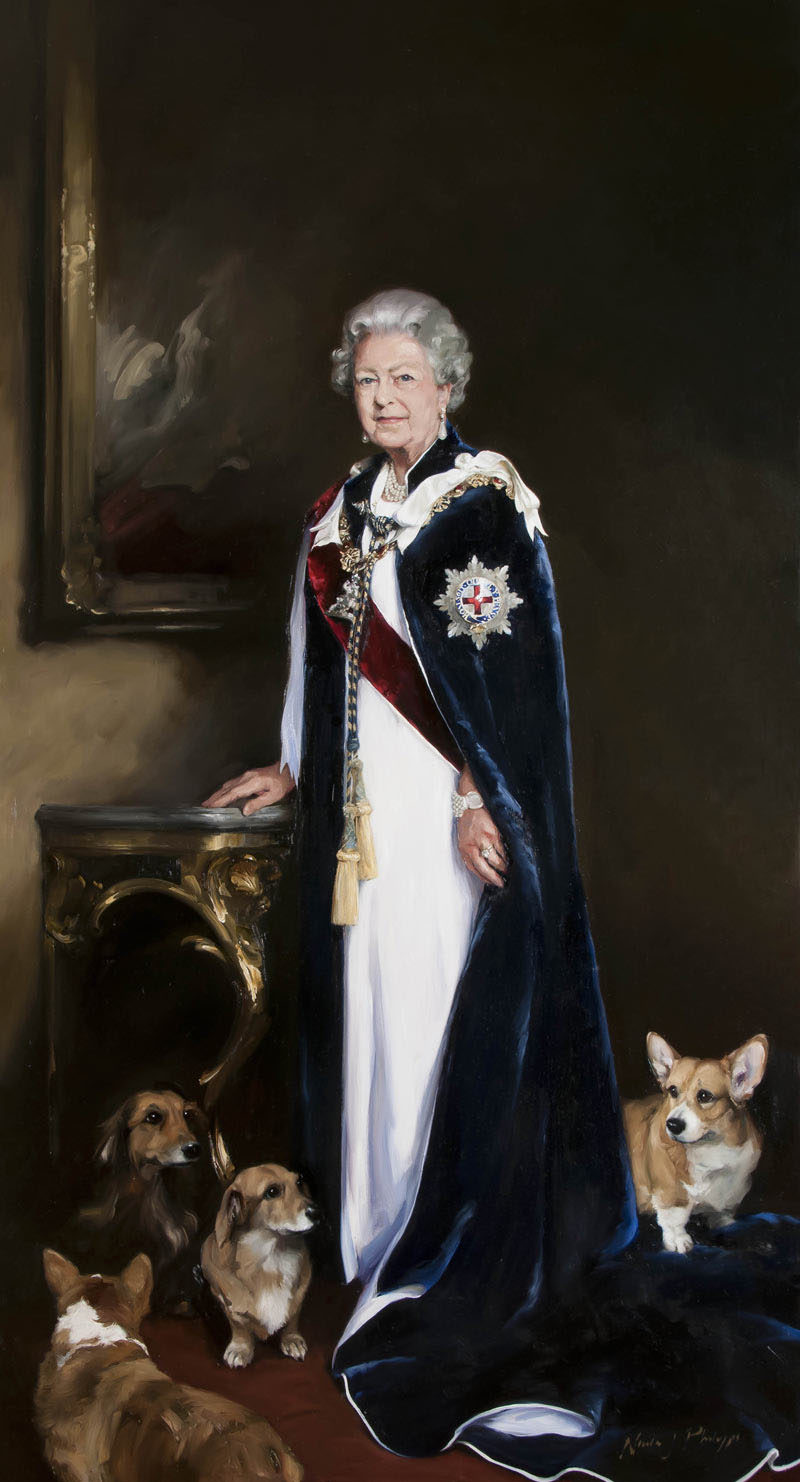
    This is the third portrait of the Queen unveiled in London in the last month … and the third dud. A dull formal portrait, it follows the standard, now threadbare iconography for a picture of standing royalty. Indeed, it seems every monarch since George III has been portrayed with a hand on that table. Like the ghosts of Banquo you can see the other pictures emerging from the mist behind. Do you know, equipped with some ingenious software, I’d be surprised if there wasn’t a computer that might more convincingly paint one of these from now on.

    Background, robes and dogs are as slickly painted as you’d expect from a graduate of the Chocolate Box School. But as usual the real problem lies with the likeness. We know intimately the appearance of this sitter who is daily featured on television and in newspapers. Such familiarity means that, unlike painters of the pre-photographic past, today’s artist must get the likeness spot on. In Nicky Phillips’s effort, we recognise the sitter well enough, not least because the Queen’s hairdo and clothes are unique, but the facial features aren’t accurate. She doesn’t actually look like this, and never has; a distant foreign relative of the Queen perhaps, but not the Queen herself. The sad truth is that the basics of portrait painting aren’t taught in art colleges. We no longer train painters to have the drawing skills to catch a likeness with effortless precision every single time. The result is that our artists look as though they are labouring like slaves to get right even the basics.

    Earlier this month a newly unveiled portrait of the Queen looked more like comedian Stanley Baxter impersonating her. This one more resembles a bloke wearing a wig and earrings with a hint of Churchill. Isolate the face so you see only the features and it is unrecognisable as the Queen.

    David Lee

    The Jackdaw, June 2013

  • Manet at the Royal Academy

    Manet at the Royal Academy

    Seven years ago the Courtauld Institute mounted a thrilling exhibition by showing only two works by Manet. Admittedly they were both undoubted masterpieces, the Barmaid at the Folies Bergere of 1883 and The Luncheon from Munich of 1868. It demonstrated that an absorbing experience could be staged with the import of only one picture. We all know what a brilliant, enigmatic piece the Barmaid is, but the earlier scene of post-prandial insouciance was equally dazzling and also ambiguous, even mysterious, in subject. Of both pictures one asks in genuine bewilderment: ‘What is going on here?’ And the answer is up to you to make of them what you will by considering every last detail.

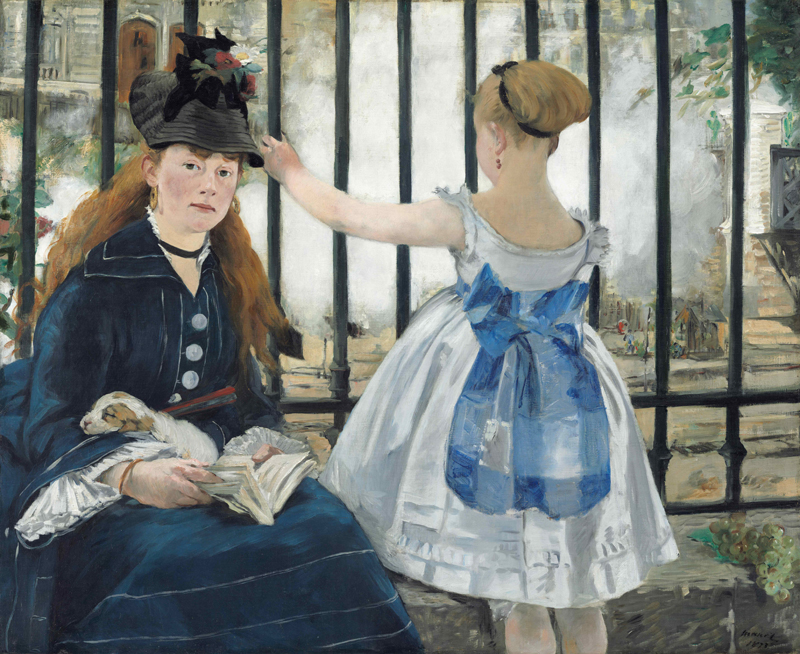
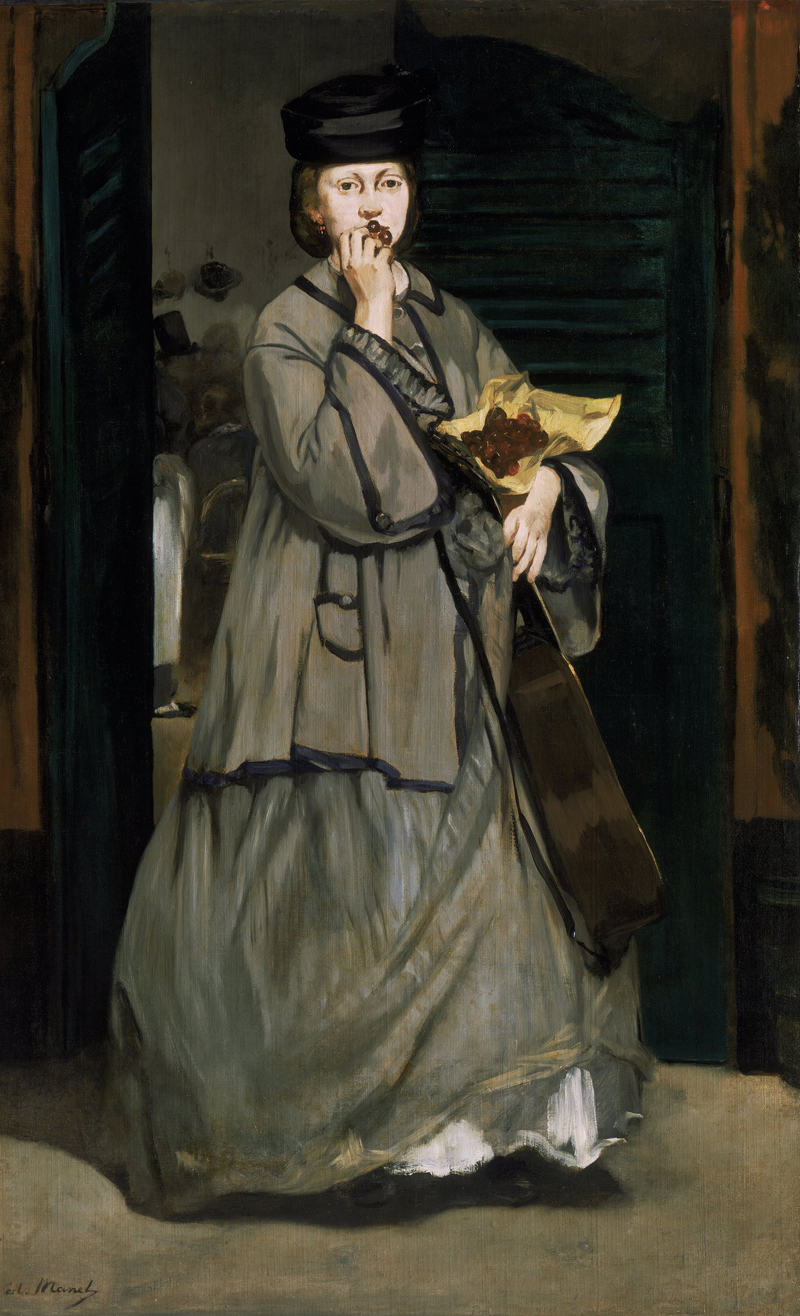
    Manet’s best paintings rarely fall easily into any genre; an ulterior motive, even in what might appear to be a straightforward portrait, is never far away. For example, what is this interrupted reader in The Railway doing beside the track with a bunch of grapes on the parapet, a puppy dog, a hissing loco and an apparently bored daughter? Whatever it is, there is clearly more than meets the eye in the painter’s relationship with his favourite model Victorine Meurent, for it is she who appears in many of the better works, including The Street Singer.

    The Luncheon features again in the Manet exhibition at the Royal Academy (until April 14th) and by itself is worth the £15 admission fee. The right hand vertical quarter of the painting showing an unknown man still wearing a hat and smoking a cigar beside the wreckage of lunch, itself a still life so brilliant it’s hard to recall anything anywhere comparably so fine, has got to be among the most amazing passages of painting on show in London.

    The exhibition as a collection is a mixed bag. Besides The Luncheon there are half a dozen masterpieces – the aforementioned Street Singer (from Boston), which knocks spots off anything even roughly equivalent by Whistler; The Railway (from Washington), which looks to have been disadvantageously cleaned to a jarring sheen; and four portraits depicting Zola, Astruc, Mallarmé (no larger than A4, this picture is breathtaking, and a brilliant character study) and Duret are all you really want to trouble yourself with. The rest are varying degrees of stocking filler. The poor old RA, struggling desperately on its uppers and fending off poverty, had to fill up the rooms somehow and this is what the dears could get. Most of it isn’t much to write home about but it will be perfectly sufficient to get the nuke-proof knicker brigade of Adelstrop reaching for their rail passes and lorgnettes and gagging to fork out fifteen quid.

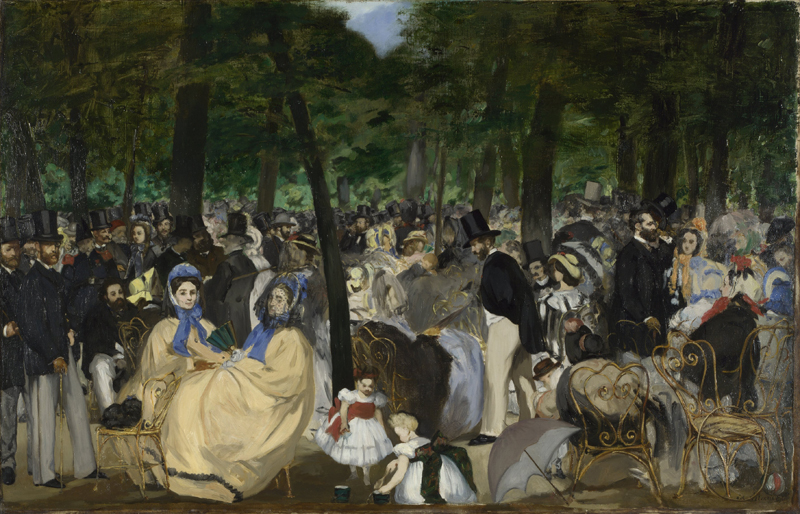
    The best Manet in London, the Barmaid, is not here, though familiar items from the National Gallery are; the uniformed Tuileries consortium of stuffed shirts for some reason receiving a room to itself. An invented gathering of Manet’s friends from every sphere of progressive cultural life (and what an anal bunch they look) in the familiar setting of ornamental gardens in central Paris, this must be some sort of assertion of class or caste pride, for there’s no sense here of bohemianism or the avant-garde at play. Looking at this bunch, with their underpants full of thistles, it’s hard to think of them getting up the Establishment’s nose.

    Most intriguing is the lack of finish evident in many pictures, some of which  were not exhibited during Manet’s lifetime; perhaps he was fearful of the inevitable opprobrious response. As early as Degas came to the same conclusion, Manet also discovered that a painting might reach fruition well before it appeared complete in conventional terms. Thus begins here with genius the reductiveness which soon descended into absurdity.

    Ever respectful of its charitable obligations, the Academy is offering a chance for a few to view the exhibition on a Sunday evening throughout the run in a less crowded gathering conducive to actually seeing the work on display. For thirty quid the ever-giving institution will even chuck in a glass of wine, doubtless from its own cave.

    David Lee

    The Jackdaw January 2013

    http://www.royalacademy.org.uk/exhibitions/manet/


  • Tate trustees and the public interest

    Tate trustees and the public interest

    In 2011 the Tate named two new trustees, one of whom is painter Tomma Abts. She is a 44-year-old German, recently appointed Professor of Painting at the Kunstakademie in Düsseldorf, who won the Turner Prize in 2006. As an artist trustee, she replaced Jeremy Deller, who won the Turner Prize in 2004. Abts’s paintings are all the same small size (48 x 38 cms) – it is claimed this tic is conceptually crucial for a reason never convincingly explained – and consist of polite abstract designs which might have looked original on curtains at the 1954 Ideal Home Exhibition. So much for the Cutting Edge. The Tate claims her pictures “possess a formal definition and coherence that suggests that they could never have existed any other way … [and] seem to achieve what only painting can, inhabiting both this reality as an object or ‘thing’, and a parallel world with its own set of rules and relationships that demand to be judged on their own terms.” As per with their interpretive literature, all helpful stuff. Am I being cynical? Yes. Why? Because using any sensible criteria Abts doesn’t deserve to be a trustee of an important British museum.

    The job of Tate trustees is to oversee the efficient running of the gallery “as guardians of the public interest” – and please note that it says ‘the public interest’ not ‘State Art’s interest’, for as you will discover these two mutually exclusive agendas tend to become blurred in the minds of certain individuals. Improbable as it sounds, guidelines for the functions of trustees are drawn up by the Tate itself, not by  independent arbiters. Such complacency hardly reassures an outsider that the public interest, rather than the Tate’s, is being looked after. Indeed, such self-scrutiny is hardly better than the continuing disgrace of policemen investigating their own mistakes.

    In 2008 the number of trustees was increased from 12 to 14 and as required by the Museums and Galleries Act 1992 “at least three” of these must be artists. Thirteen are appointed by the Prime Minister and the last is nominated by the trustees of the National Gallery from among their own membership. Unlike their fellow trustees, who are mainly those with business expertise, and who can serve up to two terms of four years (a period of office trimmed recently from five), artist trustees currently serve only one term of four years. You may find it odd – I certainly do – that while there are three contemporary artists with gilt-edged State Art credentials on the Tate’s board of trustees there is no place for a single art historian. I’m obviously old-fashioned because a museum of historical art with no art historians sitting on its governing board seems verging on the perverse.

    When an artist trusteeship becomes vacant it is widely advertised in the papers, giving the impression that any capable, knowledgeable, articulate artist of repute might apply. Nothing could be further from the truth, for there is a codicil written in invisible ink along the bottom of these ads, which reads: “If you have not won or at the very least been nominated for the Turner Prize, kindly fuck off and don’t waste our time.” The Tate squanders scarce cash paying for these advertisements which are nothing short of a calculated deception. Artist trustees are in fact a self-appointed clique comprising only winners of the Turner Prize with a couple of reliable also-rans chucked in. Since new regulations were imposed in 1992 the only exceptions to this rule have been Julian Opie, who famously refused his nomination for the Turner on the grounds that the prize “had become a frivolous publicity stunt”, and Bob and Roberta Smith, the sobriquet of a dimwit called Patrick Brill, who is otherwise a regular purveyor of infantile stunts at Millbank – you may recall his Tate Christmas tree whose lights visitors were asked to illuminate by peddling a generator. He’s very concerned about the environment apparently.

    Being a trustee involves attending six meetings a year and is said to require a day a month in reading and preparation. I must point out that the Tate’s artist trustees are easily the worst attenders at these meetings, and are frequently absent. In the case of Anish Kapoor (Turner Prize winner, 1991) his absenteeism, which included missing half the meetings in two consecutive years and scarpering early from others, would have surely seen him sacked from the board of any efficiently run private enterprise.

    Of currently serving artist trustees two are Germans – besides Abts the other is magazine photographer Wolfgang Tillmans (Turner Prize winner, 2000). Could they really not find a British photographer, or even a British abstract painter, worthy of these positions? Admittedly, Germans do most things better than we do but surely this is insulting to British artists. And how can a professor at a German art school, which presumably requires her to actually attend some of the week, perform the duties of a trustee required to be resident here?

    The process by which artist trustees are selected ­– laughably characterised as “an open competition” or “an open competitive process” – is indicative of what happens when a clique achieves a complacent monopoly and is allowed by servile arts commentators to get away with it. Minutes of meetings make it clear that artist trustees are encouraged to invite applications from those they consider suitable as their own replacements, especially when candidates who have responded to the ads are not considered worthy, which one may reasonably surmise is always. Indeed, I wonder if there was ever a case of a successful artist trustee having responded to the ads rather than having been – that weasel word – ‘invited’ to apply… And so Turner Prize winners beget other Turner Prize winners, or at the very least other near-misses of that persuasion.

    Candidates for artist trusteeships are interviewed by a panel comprising trustees, including the artists, plus an “independent assessor” who is present to ensure that legal niceties, “best practice” etc., are observed and everything looks above board. But how can it be above board when only Turner Prize winners are appointed? Perhaps this independent assessor ought to be involved from the start of the process in order that more than Turner Prize nominees might be seriously considered, if for no other reason than to keep up appearances of openness. Eyebrows would be raised at such a narrowness of potential candidates in any other sphere of public life: imagine, for example, the Commander-in-Chief of the armed forces always being selected from the same regiment.

    You may ask why is it so important for the convenient running of the Tate that its artist trustees are always winners of the Turner Prize. The answer is for the obvious reason that having been awarded a career-changing gong by the institution of which they are now overseers, they will never rock the boat by asking too many tricky questions about the Tate’s direction in its dealings with contemporary art. This is one of many ways by which State Art has become institutionalised: no one but the reliably subservient is ever allowed on the inside to question Tate, or indeed Arts Council, policies.

    On the other hand these parti pris trustees can be useful when outside criticism of the Tate becomes noisy. For example, in July 2004 Trustees discussed newspaper coverage of a Tate work, Rodin’s The Kiss, which Cornelia Parker (who was nominated for the Turner in 1997, the year it was won by Gillian Wearing, inevitably herself a recent artist trustee), had the previous year controversially wrapped up with a mile of string. This stunt was claimed by the artist to be “challenging the claustrophobic nature of relationships”. Artist trustees present in the meeting (which included the aforementioned Wearing) were able to defend their fellow artist for the benefit of other sceptical trustees. They pointed out that it was the job of the Tate to provoke controversy and discussion, which this work did.

    It is in the interests of these artist trustees to support the Director. They know they will be serving only for a brief period following which they might reasonably look forward to the reward of a Tate retrospective or other continued patronage, purchases etc..

    Serota has stated a preference for such younger trustees. Referring to the trusteeship of Anthony Caro many years before, he remarked in 1998 to the Sunday Times: “Tony was well over 60 when he became a trustee. He was a very effective trustee, actually. He cared passionately about certain things and was a powerful force … but it just seems to work better when you have artists who are a new generation, or indeed erring on the younger side, really.” And we know why he thinks it “seems to work better”, because older artists of a more independent, more knowledgeable, more experienced character might argue cogently for a policy or direction other than the one being pursued by the Director. They have nothing to lose by disagreeing with him. Let’s face it, the current crop of artist trustees is in Serota’s pocket. They owe him and he knows it. He can rely on their support without a second thought.

    In a 2008 interview Serota said of his trustees: “I don’t have any part to play in their appointment”. Remember this, it’s important and we’ll return to it in a second.

    Many years ago Serota said that public nominations for the Turner Prize (perhaps you don’t remember that ridiculous charade whereby we all wasted our stamps and faxes) were seriously considered by the judges. We discovered in 2006 what we already knew, courtesy of an indiscreet Turner Prize judge, that this was in fact a lie and they were binned with risible disregard. We also discovered at the same time, and from the same source, that Turner Prize judges were given a list of appropriate artists and exhibitions – just to help them along you know, point them in the right direction. And there we were thinking in the innocence of our ignorance that they might nominate anyone…

    Serota also stated in 2005 that the Tate only rarely acquired work by serving trustees. The Jackdaw checked up on that and discovered (see the editorial for Dec/Jan 2006 on our website) that he wasn’t telling the truth. Indeed, this whopper cost him a bollocking from the Charity Commission. There were also a number of other flagrant economies with the truth concerning the Tate’s acquisition of work by serving trustee Chris Ofili, who was naturally a Turner Prize winner (1998), which also resulted in another six of the best from the CC. (I almost mentioned here the fact that in the last editorial – also on our website – we indicated how the Tate recently misled us over their attendance figures, but you must be getting fed up with that one.)

    So, bearing in mind Serota’s far from perfect form, when he remarks “I don’t have any part to play in their appointment” I need to ask myself: ‘Do I give him the benefit of the doubt and believe him this time?’ Well, as it happens, no I don’t. Even cursory familiarity with the Trustees’ minutes betrays this one as untrue. On the contrary he is frequently involved in their appointment; indeed, the process of Trustee appointment is administered by his own office. He even attends candidate interviews “in an advisory capacity”. Presumably he offers ‘advice’ which plays no material part in the process, so why is he there in the first place? Indeed, we read on: “The key stages of the appointment are overseen by a panel which will normally include the Director.” (Who, presumably, doesn’t play any part.) On one recent occasion he encourages artist trustees to nominate likely candidates for their replacement knowing only too well the sort of artists they are likely to suggest. No part?

    Let’s have this one straight: Serota is ‘advising’ on the appointment of someone, a trustee, who will function as his own employer. This is a wretched abuse of the supposed ‘independence’ of process and would be considered as much in any other public body. It is, as usual, as blatant a conflict of interest (not to mention a betrayal of ‘the public interest’ about which the process purports to be so concerned) as you would expect to find at the Tate, whose management of conflicts of interest, incidentally, was declared woefully inadequate by none other than the Charities Commission.

    The Tate should not be involved with either the compiling of its own trustees’ duties, or in the nomination or selection of Trustees themselves. How can ‘the public interest’ be considered served when the organisation under scrutiny is writing the job description of its own scrutineers. If we are to have artist trustees let’s have them from a cross-section of the artist community and not just those representing the Turner Prize. And let’s have some eminent art historians in there too.

    David Lee

    The Jackdaw May-June 2011
  • In the course of justice

    In the course of justice

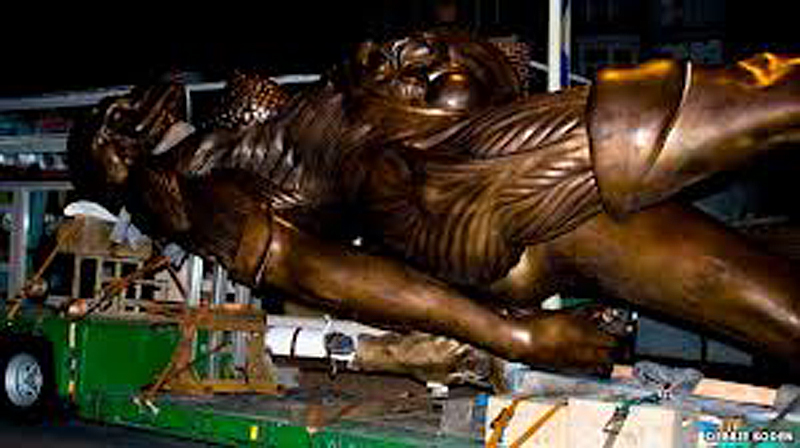
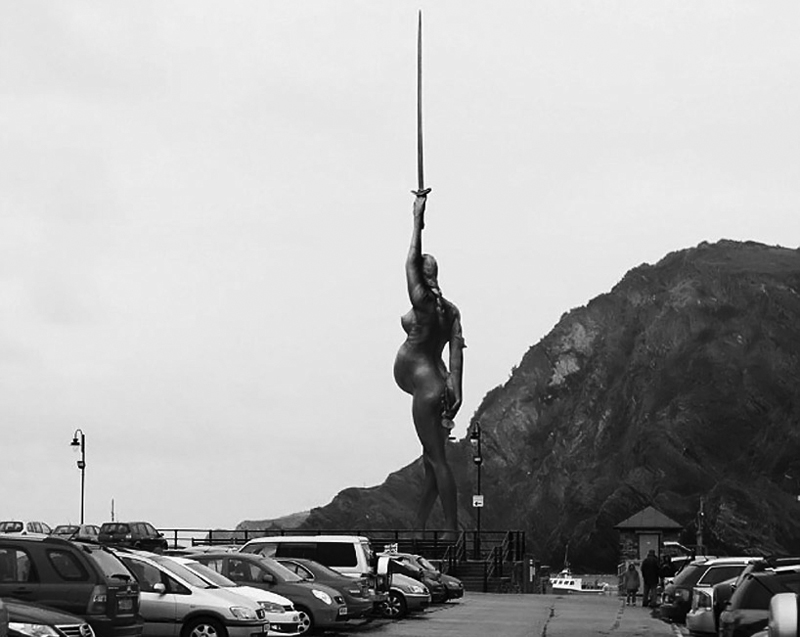
    Damien Hirst has loaned for 20 years to the north Devon seaside resort of Ilfracombe – in which he has one of his many residences – a 20-metre high sculpture of a pregnant woman wielding a sword and scales, called Verity. Made of glass fibre with a bronze effect finish (which is a bit tacky-Essex even by Hirst’s usual vulgar standards), it now stands overlooking the harbour deterring all-comers, especially Welsh privateers heading across the Bristol Channel intent on rape, pillage and illegal benefit claiming.

    We must stop building public art work for the wrong reasons of regeneration, “community cohesion”, “putting Ilfracombe on the map”, and other egregious bollocks. We need far fewer public art pieces of all sizes, and far better ones; those that are built because they are accomplished art and will stop and perhaps inspire people with the beauty and originality of their form. Art is art, not a tactic.

    Conveniently, it is a matter of yards from an expensive fish restaurant, proprietor: D Hirst.

    Hirst’s figure stands on a bronze plinth of legal books. Justice … legal books … clever stuff. Is it of any artistic merit? It can’t be as he’s not a sculptor. All we’ve seen so far are “artist’s impressions”, presumably by an “artist” other than Hirst himself, who can neither model nor draw. Inventing such a figure might defeat a Michelangelo or a Bernini, so what chance has a stunter like Hirst got? Like everything concerned with him, this project reeks of self-promotion and deriving maximum personal gain. Nowhere in any of the blanket publicity about this has there been a single word about the artistic merit or about the form or deeper meaning of the work.

    It is intended to be “a modern allegory of truth and justice” and locals hope it will stimulate tourist activity – that old bogus regeneration chestnut. Realistically, how many are likely to visit Ilfracombe to see this? Four? We repeat: there is no connection between large sculptures and the regeneration of a locality. Newcastle has the Angel of the North and Middlesbrough Gibbereesh Kapoor’s gigantic string underpants. Both were claimed to be important instruments of regeneration yet, years on, both places are top of any indices of social deprivation, unemployment and poverty. Bombastic works like these, and Hirst’s, are only ever about the sculptor’s vanity, bank balance and visibility in the papers. They are not about art or sculpture. In Verity’s case she is out of scale, inappropriate and irrelevant to Ilfracombe.

    And, naturally, like all the large sculptures of Hirst it won’t be the only one. There will be an edition of them (plus any number of artist’s proofs) appropriately priced according to what some thuggish tosser billionaire from Uzbekistan is prepared to pay to have it mounted on the roof of his gold palace.

    David Lee

    The Jackdaw, October 2012