Tag: David Lee

  • ‘Sculpture’ versus Sculpture

    ‘Sculpture’ versus Sculpture

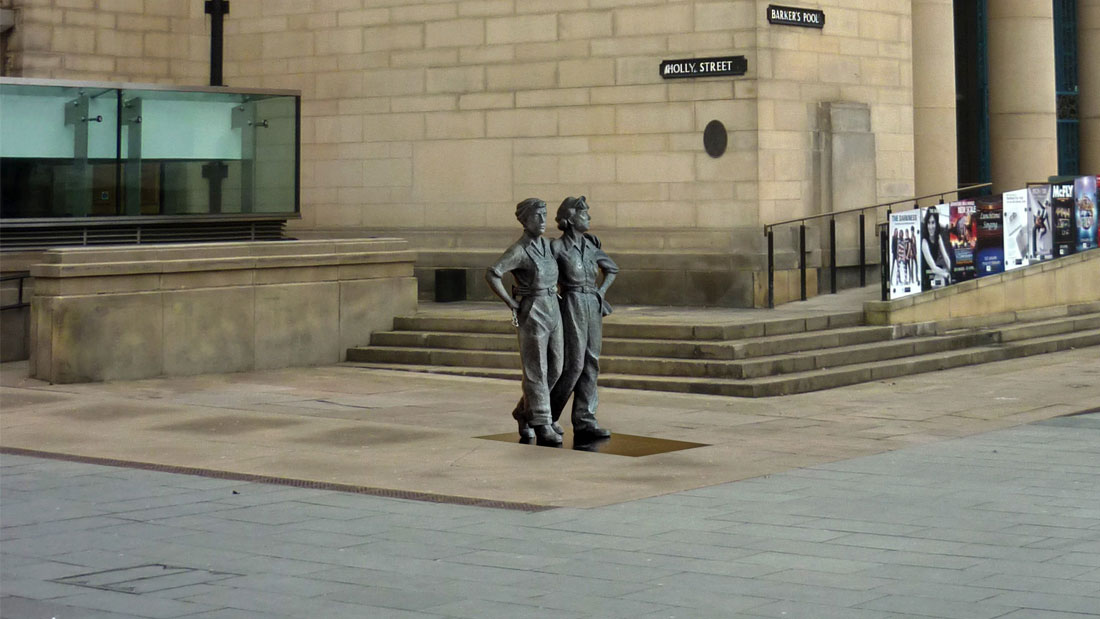
    Women of Steel by Martin Jennings

    Among the least impressive legacies of arts administrators’ obsession with Modernism and its aftermath is the impossibility of predicting a work’s status solely from its appearance. You might form your own view about it, but you can’t predict what State Art’s opinion will be because there are no published criteria or guidelines for making such a judgement. You can’t second guess a whim. The bottom line is that we have allowed a body of ‘experts’ to evolve who unashamedly make it up as they go along. This gullibility on our part for allowing it to happen, and the smug charlatanism of those in authority who are impervious to and ignoring of criticism, is the inevitable result of being for decades under the thumb of an establishment which – for all its daily protestations to the contrary – is not only awash with cash and therefore patronage, but has decided, god-like, that anything at all can be art if it says it is. In its way State Art’s is as extreme a form of capricious and intolerant dictatorship as any regime in North Korea.

    There is a useful current example of how fossilised prejudice and arbitrariness inform establishment policy. It concerns two works of public art each designed for city locations. Both are, on the face of it, conventional figurative bronzes. Superficially similar though they may seem, to the Arts Council there is an enormous gulf in acceptability between the two, a difference invisible to you and I. One of these works, that recently unveiled outside the tacky new public library in Birmingham and called A Real Birmingham Family, is a ‘challenging’ piece presenting two local women and their children. The other, depicting women in overalls and commemorating the crucial contribution of female workers to the steel industry during the World Wars, will soon be unveiled in Sheffield.

    The Birmingham sculpture is by former Tate trustee Gillian Wearing. Obviously she didn’t make the sculpture herself, a skilful craftsman will have run it up from snaps. The result is a hideous, styleless simulacrum of real people, the point of it being to promote the view that nuclear families are not now the norm – how very trendy, how perfectly BBC. This sort of conceptual conceit must of necessity be a sculpture-free zone because the last thing Wearing wants is for the object to be gauged by its form rather than for its ‘idea’ – albeit one which, to the rest of us, would be so small as to be not worth the effort and expense of illustration. As sculpture it stinks, it’s stillborn.

    In contrast, the Sheffield piece is a work of imagination and looks like a sculpture because it was made, with his own hands, by Martin Jennings, a renowned specialist in this area of modelling and invention. To State Art this sort of traditional approach is vile anathema.

    But here’s the real rub. Conceptual art, even when it comes in the otherwise despised bronze figurative form, is funded by the Arts Council, to whom Wearing is well known. She has had two national touring shows and has exhibited in every ACE-funded gallery. ACE also bought in 1999, for £30,000, her Turner Prize winning film in which two dozen coppers stand silently still for an hour. Confirmation of her A-list status is supported by the fact that 31 of her works are in the Tate, Arts Council, British Council and Government collections: curiously, all four own an edition of the same print, unnecessary duplication of a kind that ought to have been outlawed years ago. Wearing’s family sculpture was administered by local Ikon Gallery, which itself receives over half a million a year from the public.

    In contrast, Sheffield had to find all the money through public donations because Martin Jennings is the wrong kind of artist.

    State Art always prefers ears to eyes and has never based funding decisions on the merit of what you actually see. Why artists nationwide are not campaigning about ACE’s continued unfair discrimination and casuistry is baffling.

    Here is yet another filthy, indefensible racket.

    David Lee

    The Jackdaw Jan/Feb 2015
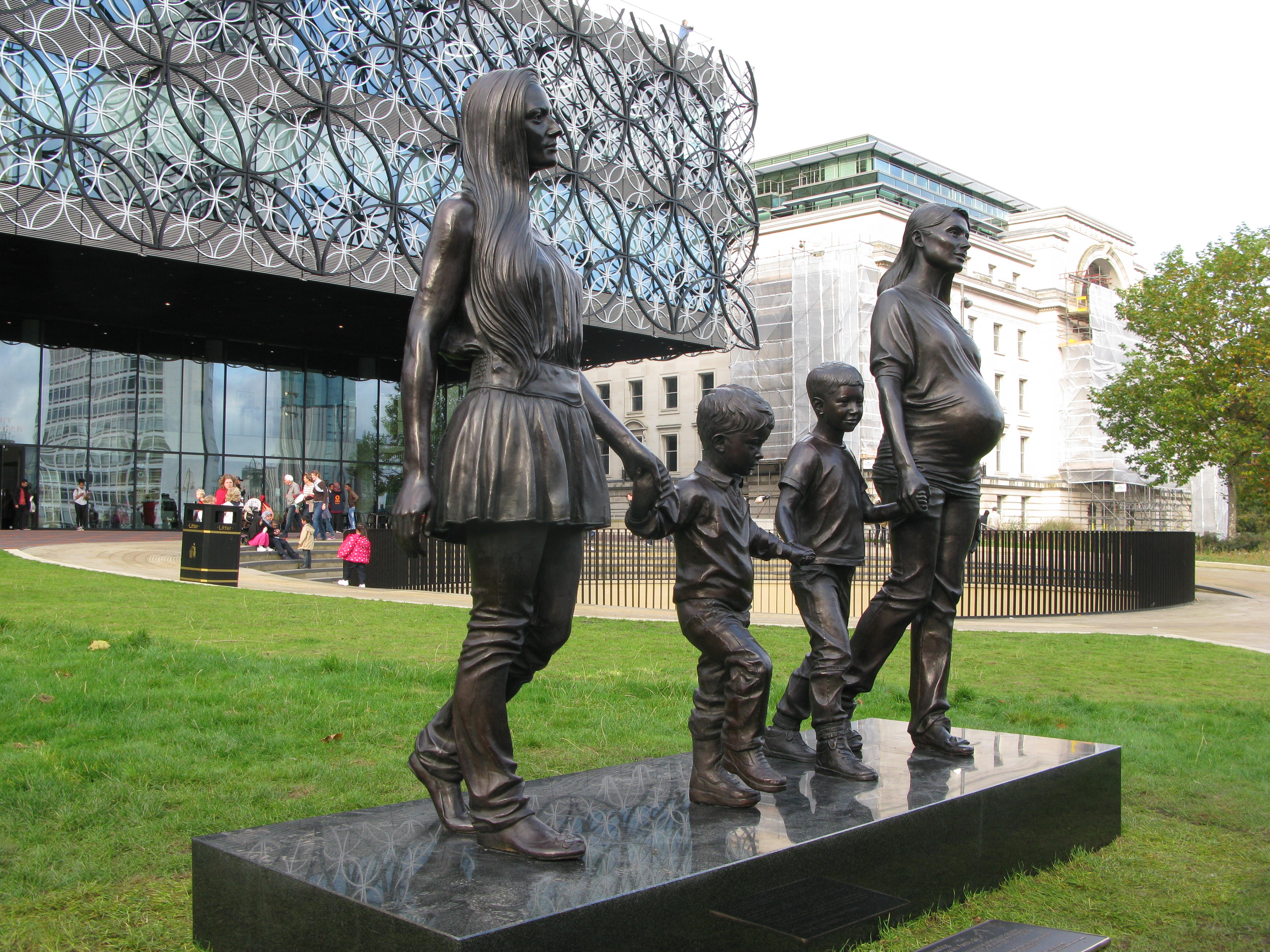
    A Real Birmingham Family by Gillian Wearing


  • Christopher Wool and the art market: selling the soul

    Christopher Wool and the art market: selling the soul

    American painter Christopher Wool (b. 1955) has been described by the New Yorker as “perhaps the most important painter of his generation”. Christie’s are in less doubt, describing him as “one of the last century’s most influential artists”. Even by the risible standards of bullshit spouted by auction houses and art dealers this is ridiculous. I’ve never heard anyone, artist or otherwise, ever say they were influenced by Wool. Have you? Well have you? Indeed, I’d never heard of him at all until about a year ago.

    Wool joined Gagosian in 2006, since when the noughts increased and the words got longer. In 2009, courtesy of an organisation called The American Fund for the Tate Gallery, the first of two Wools entered our national collection – the second, acquired in 2012, was also secured in part courtesy of this same influential body. No institution in the UK has ever staged an exhibition of Wool’s work, but let’s face it such a ‘celebration’ can’t now be far off. His backers will surely procure one soon. I wonder which gallery will be first to follow the money.

    To investigate how the art market operates I’ll concentrate on the sale of one of his pictures for two irreconcilable reasons: first, like Polaris blasting from under the ice cap, his reputation has been suddenly, suspiciously meteoric; second, I can’t discover an atom of merit or originality in anything he does. He is, therefore, a revealing example of how the art market, which is so disproportionately influential in dictating what we see in public galleries, is run for the investment benefit of rich people. (One of the most important dealers in contemporary art said recently of his collectors: “They have no interest whatsoever in art; they look at paintings as a diversification of their investments.”)

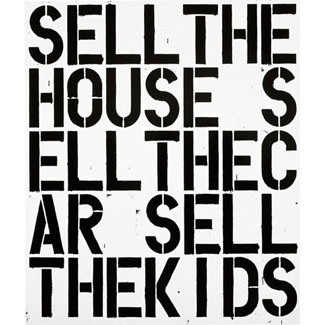
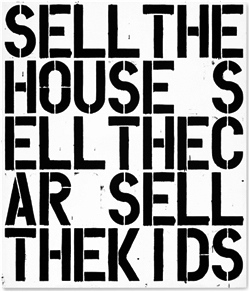
    Illustrated opposite is Apocalypse Now. This 1988, 7’ x 6’ work, painted in polyester enamel on aluminium, was sold by Christie’s last year for $26.4 million, over three times the previous artist’s record. Manifesting more than a trace of evangelical fervour, the person who bought it gushed: “I wanted the absolute best work by that artist and this is the best of the best. It’s in another league. There is Apocalypse Now and then everything else.” Why it should be ‘better’ and more valuable than similarly fabricated Wools reading SEX LUV, FOOL, BAD DOG and IF YOU CANT TAKE A JOKE YOU CAN GET THE FUCK OUT, one can only speculate.

    The technique is stencil, in mimicry of the graffiti legends and adverts which are supposedly its inspiration. And before you commend the concise nihilism of the message, these words are not the artist’s own. They are the looney Kurtz’s exhortation to his abandoned wife in Coppola’s Apocalypse Now: “Sell the house. Sell the car. Sell the kids. Find someone else. Forget it. I’m never coming back. Forget it.”

    Nothing about this piece, either in its handling or conception, might make you think it is of remarkable value. Indeed, objectively there is no good reason why it might not be worth 25 bob instead of 25 million. What establishes its value is something you can neither see nor understand without being indoctrinated as to what it is … usually by someone with an interest in flogging it for as much as possible. Its value resides purely in its perceived status as a tradeable luxury. It has, curiously, no more intrinsic value than any other share certificate.

    In its short life Apocalypse Now has passed through ten billionaire collectors. All were Americans except one, Frenchman François Pinault, five back, who is the proprietor of Christie’s, the firm who sold it this time. Incidentally, the owner before Pinault was Donald Bryant, until recently a trustee of MoMA New York who is also on the aforementioned ‘American Fund’ committee of the Tate, which was instrumental in the Gallery acquiring both its Wools. Californian winemaker Bryant obviously likes Wool, but not sufficiently, it seems, to hang on to what is allegedly his pièce de résistance. You will have noticed that the world of posh art is a very small and incestuous one.

    The speed of turnover in Apocalypse Now – 30 months on average – tells us something about the motivation of modern collectors, for whom genuine discernment would appear to be the last thing on their mind. The very idea of connoisseurship or discernment in collecting contemporary art is an absurd notion when the relative value of a work can be made up so it flies in the face of the little you can actually see. Art is now a fund manager’s hobby, a gamble or a pitch from which, as with any other investment, profit is periodically milked.

    The last seller of the picture, hedge-funder David Ganek, is also a trustee of the Guggenheim Museum in New York where Wool just happened to be enjoying a retrospective coincident with the auction of Apocalypse Now. In 2010, Ganek’s business partner was convicted for insider trading. Though himself deemed a co-conspirator Ganek was never charged. He left his company and paid $25 million in fines. There is a book to be written about the connection between contemporary art and insider trading. Everyone has now forgotten that the first sponsor of the Turner Prize, Michael Milken, the inventor of junk bonds, got four years for related offences. No more telling indictment of the contemporary art market exists than that it appeals to high-risk investors, hedgers and generally shifty operators to whose activities the cachet of art ownership is used to lend a patination of social respectability.

    Was the sale of Apocalypse Now a straightforward auction? No it wasn’t. It was sold before the sale because a guarantor had underwritten the low estimate price of $15 million. A third of the works in the same auction were also the subject of pre-sale guarantees.

    Christie’s threw their all behind this lot claiming that Apocalypse Now “is the emblem of a generation” – an obvious lie. They continued: “Christopher Wool’s Apocalypse Now is the essential image of our times… It’s much anticipated appearance at auction, firmly places Wool amongst the pantheon of great masters of the 20th century.” There you have it: “the essential image of our times”. Not the twin towers, or Obama being sworn in, or Neil Armstrong, or Mandela striding victorious from jail, or tanks in Prague or Tianenmen Square, or even Sergio Aguero scoring in extra time, but this second-hand slogan.

    And what of the artist himself? He has said: “With the painting the inspiration comes from the process of the work itself. Like music making the work is an emotional experience. It’s a visual language and it’s almost impossible to put words to it.” Not half.

    What conclusions might we draw from all this perversion of genuine standards:

    1. Monetary value is unrelated to aesthetic worth. By looking at contemporary art you can’t even guess to within three noughts what it might cost.

    2. Once a powerful cocktail of mutually interested dealers and speculators get behind an artist their rise is unstoppable. The auction market in contemporary art is a game played by six of the world’s biggest dealers, two salesrooms, 40 artists, about 30 billionaires and a clique of subservient museum directors and careerist curator-clones. No one else matters. In 2012 11 of the top 20 artists sold at auction were represented by Wool’s dealer Gagosian.

    3. Most commentary on the art market is disgraceful advertisement.

    4. At the top end, the art market encourages a sort of religious cult participation by hobbyist fat cats eager to cash in on safe bets.

    5. When the auction market has nothing to do with liking art or actual visible qualities, the dealer is happy, the artist is happy, the seller is happy, the other collectors of the same artists’ works are happy, and the auctioneer is deliriously, pants-wetting happy.

    6. The cowardly complicity of State Art before this squalid system is a shocking betrayal of what they really ought to be standing up for.

    The whole thing is a filthy racket.

    David Lee

    The Jackdaw, Nov-Dec 2014


  • The art market – selling the soul

    The art market – selling the soul

    American painter Christopher Wool (b. 1955) has been described by the New Yorker as “perhaps the most important painter of his generation”. Christie’s are in less doubt, describing him as “one of the last century’s most influential artists”. Even by the risible standards of bullshit spouted by auction houses and art dealers this is ridiculous. I’ve never heard anyone, artist or otherwise, ever say they were influenced by Wool. Have you? Well have you? Indeed, I’d never heard of him at all until about a year ago.

    Wool joined Gagosian in 2006, since when the noughts increased and the words got longer. In 2009, courtesy of an organisation called The American Fund for the Tate Gallery, the first of two Wools entered our national collection – the second, acquired in 2012, was also secured in part courtesy of this same influential body. No institution in the UK has ever staged an exhibition of Wool’s work, but let’s face it such a ‘celebration’ can’t now be far off. His backers will surely procure one soon. I wonder which gallery will be first to follow the money.

    To investigate how the art market operates I’ll concentrate on the sale of one of his pictures for two irreconcilable reasons: first, like Polaris blasting from under the ice cap, his reputation has been suddenly, suspiciously meteoric; second, I can’t discover an atom of merit or originality in anything he does. He is, therefore, a revealing example of how the art market, which is so disproportionately influential in dictating what we see in public galleries, is run for the investment benefit of rich people. (One of the most important dealers in contemporary art said recently of his collectors: “They have no interest whatsoever in art; they look at paintings as a diversification of their investments.”)

    Illustrated opposite is Apocalypse Now. This 1988, 7’ x 6’ work, painted in polyester enamel on aluminium, was sold by Christie’s last year for $26.4 million, over three times the previous artist’s record. Manifesting more than a trace of evangelical fervour, the person who bought it gushed: “I wanted the absolute best work by that artist and this is the best of the best. It’s in another league. There is Apocalypse Now and then everything else.” Why it should be ‘better’ and more valuable than similarly fabricated Wools reading SEX LUV, FOOL, BAD DOG and IF YOU CANT TAKE A JOKE YOU CAN GET THE FUCK OUT, one can only speculate.

    The technique is stencil, in mimicry of the graffiti legends and adverts which are supposedly its inspiration. And before you commend the concise nihilism of the message, these words are not the artist’s own. They are the looney Kurtz’s exhortation to his abandoned wife in Coppola’s Apocalypse Now: “Sell the house. Sell the car. Sell the kids. Find someone else. Forget it. I’m never coming back. Forget it.”

    Nothing about this piece, either in its handling or conception, might make you think it is of remarkable value. Indeed, objectively there is no good reason why it might not be worth 25 bob instead of 25 million. What establishes its value is something you can neither see nor understand without being indoctrinated as to what it is … usually by someone with an interest in flogging it for as much as possible. Its value resides purely in its perceived status as a tradeable luxury. It has, curiously, no more intrinsic value than any other share certificate.

    In its short life Apocalypse Now has passed through ten billionaire collectors. All were Americans except one, Frenchman François Pinault, five back, who is the proprietor of Christie’s, the firm who sold it this time. Incidentally, the owner before Pinault was Donald Bryant, until recently a trustee of MoMA New York who is also on the aforementioned ‘American Fund’ committee of the Tate, which was instrumental in the Gallery acquiring both its Wools. Californian winemaker Bryant obviously likes Wool, but not sufficiently, it seems, to hang on to what is allegedly his pièce de résistance. You will have noticed that the world of posh art is a very small and incestuous one.

    The speed of turnover in Apocalypse Now – 30 months on average – tells us something about the motivation of modern collectors, for whom genuine discernment would appear to be the last thing on their mind. The very idea of connoisseurship or discernment in collecting contemporary art is an absurd notion when the relative value of a work can be made up so it flies in the face of the little you can actually see. Art is now a fund manager’s hobby, a gamble or a pitch from which, as with any other investment, profit is periodically milked.

    The last seller of the picture, hedge-funder David Ganek, is also a trustee of the Guggenheim Museum in New York where Wool just happened to be enjoying a retrospective coincident with the auction of Apocalypse Now. In 2010, Ganek’s business partner was convicted for insider trading. Though himself deemed a co-conspirator Ganek was never charged. He left his company and paid $25 million in fines. There is a book to be written about the connection between contemporary art and insider trading. Everyone has now forgotten that the first sponsor of the Turner Prize, Michael Milken, the inventor of junk bonds, got four years for related offences. No more telling indictment of the contemporary art market exists than that it appeals to high-risk investors, hedgers and generally shifty operators to whose activities the cachet of art ownership is used to lend a patination of social respectability.

    Was the sale of Apocalypse Now a straightforward auction? No it wasn’t. It was sold before the sale because a guarantor had underwritten the low estimate price of $15 million. A third of the works in the same auction were also the subject of pre-sale guarantees.

    Christie’s threw their all behind this lot claiming that Apocalypse Now “is the emblem of a generation” – an obvious lie. They continued: “Christopher Wool’s Apocalypse Now is the essential image of our times… It’s much anticipated appearance at auction, firmly places Wool amongst the pantheon of great masters of the 20th century.” There you have it: “the essential image of our times”. Not the twin towers, or Obama being sworn in, or Neil Armstrong, or Mandela striding victorious from jail, or tanks in Prague or Tianenmen Square, or even Sergio Aguero scoring in extra time, but this second-hand slogan.

    And what of the artist himself? He has said: “With the painting the inspiration comes from the process of the work itself. Like music making the work is an emotional experience. It’s a visual language and it’s almost impossible to put words to it.” Not half.

    What conclusions might we draw from all this perversion of genuine standards:

    1. Monetary value is unrelated to aesthetic worth. By looking at contemporary art you can’t even guess to within three noughts what it might cost.

    2. Once a powerful cocktail of mutually interested dealers and speculators get behind an artist their rise is unstoppable. The auction market in contemporary art is a game played by six of the world’s biggest dealers, two salesrooms, 40 artists, about 30 billionaires and a clique of subservient museum directors and careerist curator-clones. No one else matters. In 2012 11 of the top 20 artists sold at auction were represented by Wool’s dealer Gagosian.

    3. Most commentary on the art market is disgraceful advertisement.

    4. At the top end, the art market encourages a sort of religious cult participation by hobbyist fat cats eager to cash in on safe bets.

    5. When the auction market has nothing to do with liking art or actual visible qualities, the dealer is happy, the artist is happy, the seller is happy, the other collectors of the same artists’ works are happy, and the auctioneer is deliriously, pants-wetting happy.

    6. The cowardly complicity of State Art before this squalid system is a shocking betrayal of what they really ought to be standing up for.

    The whole thing is a filthy racket.

    David Lee

    The Jackdaw Nov/Dec 2014


  • Ai Weiwei at Yorkshire Sculpture Park

    Such is Ai Weiwei’s predictable status as a heroic dissident, that he could select an object blindfold and if he then exhibited it under his name it would automatically be said to be ‘about’ oppression or, as is more frequent these days, the individual’s place in the collective.

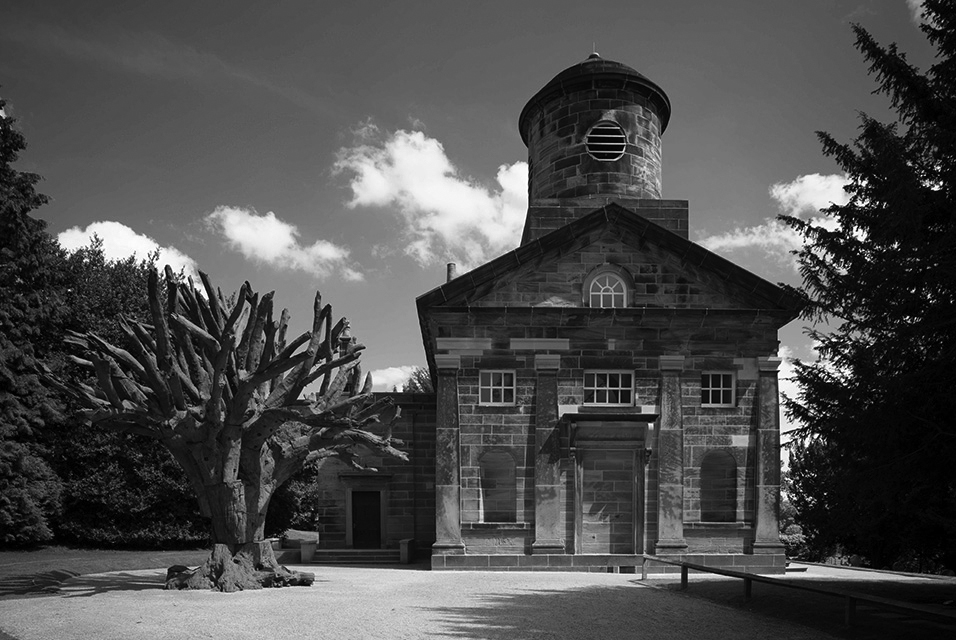
    The recently refurbished chapel in the grounds of the park (see illustration), which seems to be breeding new roads and pathways through what used to be naturally and pleasurably wild countryside, has been renovated to make an agreeable new exhibition room lit from one end by a grand Palladian window. Inside, filling the main chapel area, are 40 wooden chairs of charming rustic design, each of which has occupied, one imagines, pride of place in some Chinese home of the 18th or 19th century. The seats and armrests are worn smooth with age and use. Though similar each is different. We are here trawling the same territory as Bernd and Hilla Becher, the German photographers who also identified variance in similarity. It is a lovely collection of chairs, make no mistake, although one suspects any two of them would have served the job well enough. This is a typical ploy of the conceptual artist where the objects breed to fill the space available with no addition to the profundity of the work. Outside the chapel is an ugly iron tree (above) made of cast sections from different trees bolted together in what, we are informed, is a traditional Chinese manner – again disparate bits making up a whole. The chairs are prettier and offer more to look at.

    Also showing in the Park, dotted throughout the grounds, are even uglier lumps of material by “important international sculpture” Ursula von Rydingsgard who wouldn’t recognise an ‘important’ sculpture, or a beautiful one, if she surprised herself by opening her eyes. Christ only knows how much it cost to ship this substantial tonnage of crap from New York but it wasn’t worth the effort. She was born in Germany under the Nazis, so that’s alright then.

    In the large hangar on the other side of the vale beyond the lake are works from the Arts Council collection housed in a shed next door – no transport costs here. Called Uncommon Ground it is a conspectus of fashionable Land Art from the 1960s onwards. If you’ve seen the documentation of Richard Long’s and Hamish Fulton’s assorted walks and rock-shiftings you’ll have the measure of this lot. Plenty of prose, not even a phrase of poetry. Only Mark Boyle’s and David Nash’s work were alive in this mausoleum. Long’s work is an epiphenomenon of its age, a mere curiosity without the form or visual thrill to make it timeless.

    David Lee

  • Public art: Richard Wilson’s slipstream

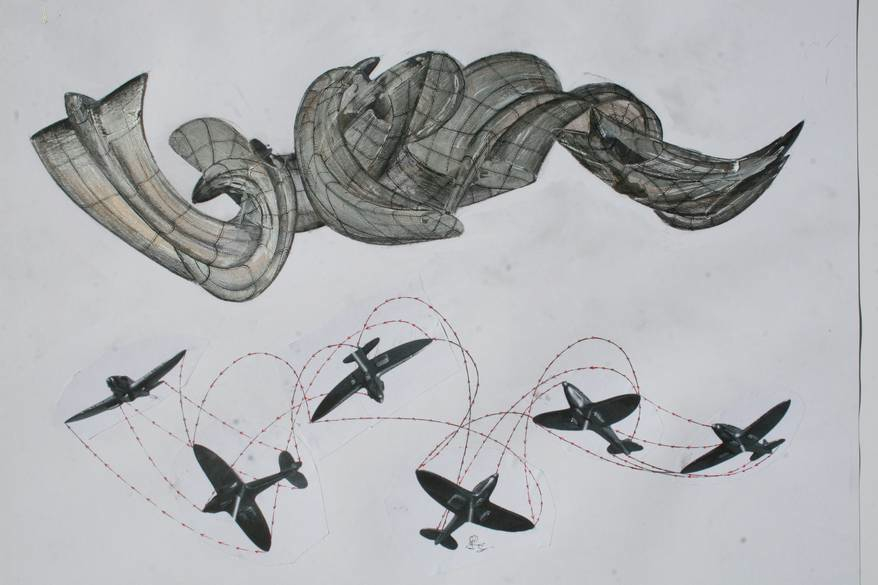
    Richard Wilson’s 77-tonne, £2.5 million sculpture Slipstream in Terminal 2 at Heathrow looks better in small, professionally taken photographs. In the flesh it disappoints. Looking more like a plane crash or an imploded barrage balloon than the rolling Spitfire which is claimed to have inspired it, it is so huge and so easily disappears into the building that many passengers walk past it without noticing, which defeats its stated purpose to stop passengers in their tracks. Nobody breaks step to look at it not least because a busy airport is an inappropriate space for sculpture requiring not just attention but a walk around it. And if you spotted it, short of identifying a connection with aircraft construction, you would have to be told what it was there for and what it signified, for no way might you work it out from observation. Indeed it is too large for its space, and there is no one vantage point from which it can be understood clearly. At the blunt end its shapes seem unresolved even coarse. Like many new buildings, the Lowry Centre in Salford Quays comes to mind, the flimsy aluminium panels covering it are bent and rippled from being badly riveted together lending it an amateurish appearance. If nothing else it makes you realize how well-made aircraft are; the boilersuits of Seattle and Hawarden would laugh out loud if shown this effort. Formally it makes no sense and progresses randomly, on and on, from one passage to another.

    Like many oversized sculptures it implies the nasty decadence of an age impressed by scale in which demands for something more than the merely superficial are derided for their lack of brash ambition. This is an unpleasant object suspended in an atrium which would be more agreeable without it. With this work the elephant in the room is meaningless public art.

    Richard Wilson is a surprising artist, but this baggy mess defeated him. It landed stillborn and perhaps of all his works it is, unfortunately, the one which will last the longest.

    David Lee

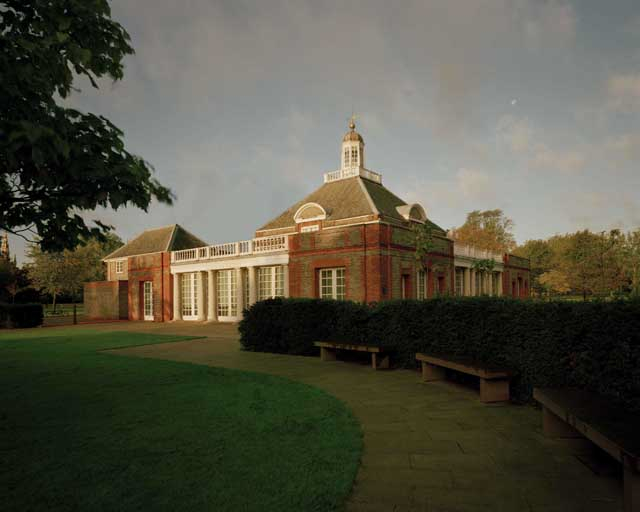
  • Serpentine Gallery: charity begins at home


    The ever so charitable Serpentine, which gives the public indigestible quantities of what it can’t stomach, held an annual summer bash for all its rich mates, and, blow me down, guess who deigned to show up. He’s probably not been at the gallery since last year’s hooley, but he broke into a heavy work schedule abroad – very heavy don’t yer know – in order to attend. After someone had reminded him where his desk was and the location of his private lavatory since the new building work, he had his picture taken (above) with co-director Dorelia Lipstick-Cleavage and some dwarf Bolivian gatecrasher caught panhandling the stars for change. We’re referring, of course, to Hans-Uber Obrist, who gets paid more than the director of Tate Britain to do fuck all except write unreadable books and curate exhibitions for continental galleries. You can tell by his specs he thinks he’s clever but someone really ought to teach the Swiss slob to eat without splattering food all over his suit – Sir Les Patterson finds his gob more easily.

    Typical, isn’t it, that the lazy bastard should finally turn up only to sup fizz in what, given the stick insects in attendance, must have looked like a very challengingly immersive conceptual art stunt about eating disorders. (They didn’t bother organising nibbles this time as last year cleaners were finding cocktail sausages behind the radiators for months afterwards.) And we have it on the best authority that the Obrist phaeton was waiting to rush him back to Heathrow for a red-eye special to Zurich, although he had trouble locating it among the cavalcade of other limos. What an exemplary giving enterprise the Serpentine has become.

    All of the above is, you know well enough, grossly unfair as the gallery’s summer party is a well-known fundraiser … for charity. It raises funds to, well, to put on exhibitions by the world’s wealthiest artists and dealers who couldn’t possibly afford to pay for the exhibitions themselves. And when directors are awarded 50% pay increases in a recession you need to devise ingenious methods to raise funds. And how better to do this than by rattling cans in front of celebrities so desperate to have their photos taken they’d turn up to the opening of a manhole. So let’s hear it for the philanthropic ethos of the Serpentine.

    See you next year Hans, if you’re not too busy.

    David Lee


  • BBC arts coverage (part 34)

    Two months ago, having been criticised for their useless visual arts coverage, which tends to be levelled at children and others of grotesque collective ignorance, the BBC promised us a raft of excellent arts programmes. Perhaps things were looking up.

    One of these has now hit the screen … with a splat. The organisation has clearly learned nothing from the criticism levelled against them. It’s more of the same; windmill-gesturing commentators mouthing repetitive mantras who emphasise their earnestness by raising the volume and begging to be believed.

    The programme – and the Jackdaw only watched the first episode (life being literally too short in his case for the following instalments) rehearses the now familiar territory of the women artists in art history who, women claim, have been neglected and overlooked because of some terrible male subterfuge refusing to admit their quality. Seemingly, there is now an annual television programme dealing with this ‘travesty’. We know the names of the women artists before they are mentioned, for they are always the same ones. The source manual for all these series is Germaine Greer’s original book, The Obstacle Race, published decades ago. Greer ought to receive a royalty from programmes like this. Honestly, based on the title you could have written down the shooting schedule for this series in under five minutes.

    The programme was presented by social historian Professor Amanda Vickery who repeated herself throughout in order to get across her four soundbytes whilst falling foul of the criticism she meted out to others. Instead of showing work which would convince us that this neglected artist was unfairly overlooked we saw the Prof’s decent little arse disappearing around corners, up aisles, down passages, climbing staircases. In many instances it was probably more of a work of art than most of the stuff we were prevented from seeing because of the director’s obsession with it.

    In the case of Properzia de Rossi (1490-1530), a Bolognese sculptor, we were shown a couple of crudely carved cherry stones and a relief carving of Joseph and Potiphar’s Wife (left). By the standards of Renaissance sculpture this is a so-so carving of the quality you might find in a side corridor at the back of the V&A, and I think Professor Vickery would have admitted as much if she had been any kind of expert on the subject. Arms revolving uncontrollably like a compass at the north pole, she indicated a crudely carved arm (marked on the illustration) and claimed it had the power of a Michelangelo carving. Even small on the screen this was embarrassing bollocks.

    The programme fell foul of the BBC’s usual problem of showing too much of an over-enthusiastic presenter forced to behave like a second-hand car salesman. In one instance the crew went to the Prado to show us a Sofonisba Anguissola portrait but focused on the presenter stood next to it. We didn’t get an opportunity to take in properly the whole picture. By all means have the presenter talking over the visuals but for heaven’s sake let us see the picture so we can make a judgement.

    One assumes the series went on to discuss Artemisia Gentileschi, truly an accomplished painter and a fascinating individual, but most  interested viewers would not have stayed around to find out.

    Art, not presenters, is important.

    It is essential when claiming neglect for certain artists that we are shown work of a standard disabusing us of unfair preconceptions. Some women artists deserve better than this annually served up nonsense.

    David Lee

  • Imperial War Museum North: the pitfalls of novelty

    In the first few years of the National Lottery, museums were built employing architects who had no interest in museums per se but instead limitlessly indulged their own vanity. Those who drew attention to the blatant unsuitability of resulting buildings were dissed as old-fashioned, traditional and behind the architectural times. The result of this defended process was that buildings materialised which were uniquely unsuitable. This building-for-appearances sake continues but, following numerous notable failures, sensible scepticism is growing.

    One might reasonably ask why museum trustees went along with this philosophy in the first place. Surely they should have realised at the time the unsuitability of structures such as the Imperial War Museum North. One supposes the commissioners of such a pisspoor building wanted to be seen as ambitious, forward looking, and willing to embrace the new even if it was fundamentally crass. They did not want to appear cautious or conservative: indeed, it’s a certainty they wouldn’t have been appointed as trustees if they were. And you can bet your pension that the Lottery, with its hand-picked State Art assessors, wouldn’t consider supporting any plan without the cutting-edge novelty added by one of its approved architects. During this process the basic intellectual challenge in any building, that originality of design should be matched to suitability of purpose, was waived.

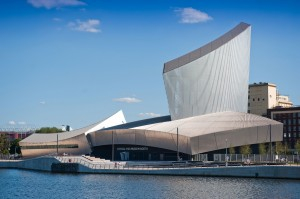
    The Imperial War Museum North is a horrible failure. Twelve years after opening it is already dilapidated and its inadequacies depressingly apparent. Even in warm weather the attendant showing people to a concealed concrete entrance has to be dressed for the Pole because a vortex of cold wind rushes through an ugly, skeletal and empty tower. And so much of this building is also empty. Like many such developments it looks huge and unusual from a distance and cheap, jerry-built and cramped on arrival.

    The exhibition space is an asymmetrical, gloomy shed, high roofed and echoing, where it is hard to find bearings. Corridors are poky, meandering and seemingly ad hoc and there are no galleries for showing the pictures of the best collection of 20th century British art outside the Tate.

    Gilbert Rogers’s Ypres, 1915 (above), 11 by 15 feet, is being exhibited for the first time in a century. It shows the work of the RAMC and the British Red Cross tending wounded at a dressing station during the first battle of Ypres in 1914. You might have thought they would have exhibited this picture prominently, but instead it is stuck behind a staircase because they can just about wedge it in there, but nowhere else. You can’t see it comfortably. It was worth pulling out of store but they had nowhere to show it properly in a museum they had themselves commissioned. The fact that the IWMN displays, as currently organised, constitute an unordered, noisy ‘Visitor Experience’ of conflicting flashing projections in which every surface is ripe for films and animations is another serious problem. The place has more in common with a multiplex than a museum.

    With the IWM’s London headquarters unluckily closed for the first half of this WW1 centenary year, how easy it ought to have been to truck up to this outpost some of the great First World War pictures currently not on show. But there isn’t anywhere to put them. Indeed, the exhibition area is tiny compared to the overall dimensions of the site and the outer bluster of the structure.

    How did the trustees fall for this turkey of a stunt without asking obvious questions about its unsuitability? Doubtless they were intimidated by architect Daniel Liebeskind spinning them a line about the globe being shattered and the pieces being reconstructed in a way which would “emotionally move the soul of the visitor toward a sometimes unexpected realization”. That’s the sort of bollocks mouthed by the desperate in all professions. The fact is the trustees were sold a pup by a silvertongue. Thus was a worthwhile project sacrificed to the whim of an architect whose one London building on Holloway Road is the capital’s tackiest eyesore.

    We inhabit an age when it is impossible to expect a new museum capable of showing exhibits well. Why has it become impertinent to demand a building fitted to its purpose?

    David Lee

  • House of Commons art collection: hard bargains and money well spent

    What a kerfuffle occurred recently concerning how much the House of Commons has spent – £250,000 in 20 years no less – on portraits of its more distinguished and long-serving members. How shocking and self-indulgent was the general tenor of the response. Well, no actually. To get two dozen paintings for 250 grand suggests someone is driving a hard bargain on our behalf for once. What we have received for our money is generally accomplished if predictable, and dirt cheap. Don’t forget that the Tate recently paid half this total sum for a certificate which allows them to have a light being switched on and off in an empty gallery.

    To get a portrait by Stuart Pearson Wright for ten grand is a good investment, if nothing else. His account of ship-of-state Diane Abbott (above) is at least a painting not a photograph by an original artist. Likewise Phil Hale’s version of Blair (top right). These two painters are among our most interesting oddities in painting. Eschewing the obvious, they surprise and are of quirky, unpredictable intelligence. Look at Hale’s account of that slippery wretch Blair. As a character study of failure it’s as good as you’ll get. This is a picture of weakness, of a person cringing inside with pain and wrestling with an appalling legacy of foreign crimes, not to mention his fiddling in No 10 while his neighbour-from-hell bankrupted the country. Which picture would you prefer to be in the National Portrait Gallery, Hales’ or Adams’ (see opposite)?

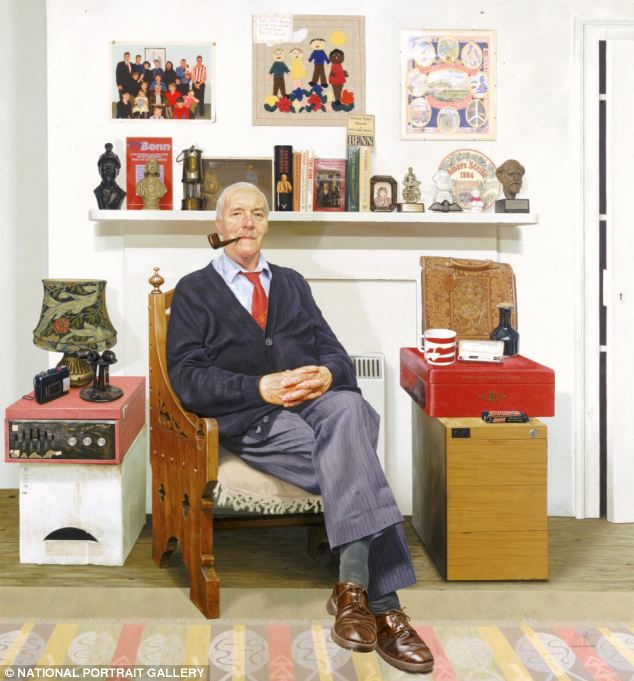
    The Arts Council gets away with wasting tens of millions on white elephant buildings and no newspaper bats an eyelid, while this collection of portraits for a mere quarter of a million is slaughtered. Andrew Tiff’s photorealistic portrait of Tony Benn, which has long been on display in the NPG, cost a mere £2,000. What do these jerks in the dailies expect to pay for an oil painting? If anyone is worthy of a portrait it’s Benn, and to get a painting for the price of a photograph is deft business. The commissioners should in all honesty have offered Tiff more. We should all be celebrating the fact that skilful artists have been prepared to work for not very much.

    David Lee

  • Van Dyck self portrait: do we really want to pay £12 million for this?

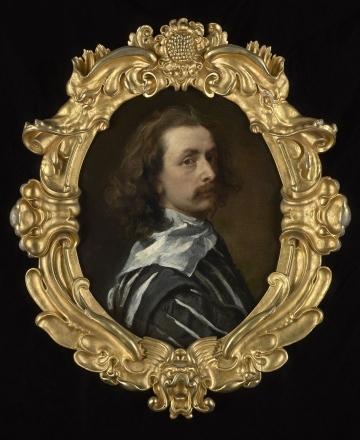
    The self-portrait by Van Dyck is the subject of a deferred export licence in order to give British museums an opportunity to find the £12.5 million required to stop it going abroad.

    The NPG, where the picture is currently on show drumming up donations, has started a campaign to raise £12.5 million to acquire the picture. They have raised £1.2 million so far – only 90% to find then in the remaining eight weeks. The Tate turned down the offer of a joint campaign and joint ownership pleading depleted reserves, and the Sunday Times has had the impertinence to reveal that the NPG had previously turned down an offer to buy the picture for a quarter less than they are now apparently desperate to pay.

    The picture was bought at auction by London dealer Philip Mould in league with an American backer for £8.3 million in 2009, and it has now, they say, been sold to an American collector for £12.5 million.

    As is customary on these occasions the hyperbolometer has been yanked over to Full Steam Ahead – “Give us as much smokescreen as you’ve got Mr Stoker”. “Aye aye Skipper”. Everyone suddenly believes this is a masterpiece that must be “saved” at all costs.

    And yes it is an agreeable enough picture, a trifle tartily got up in its period frame, but it’s not worth the money and neither are we short of Van Dycks. Experts claim that the artist is depicting himself in the act of painting. Maybe so, but if he really is seeing himself in the act of execution, in order to get this view in a mirror he would have to be a left-hander and as his drawings demonstrate Van Dyck was no south paw.

    The head is precisely what we expect of a living, alert character study by Van Dyck. The silk doublet is not quite so convincing. Its attempted bravura handling falls short for an artist we know to be a master of the deft, silky flourish. Did Van Dyck perhaps complete the head and then pass it down the studio line? It is after all dated to the last year of his life. It could be that the only part completed on the artist’s death was the head, and someone else, not quite as classy, finished it off. When they sold it in 2009 Sotheby’s described it as a work painted “with the utmost bravado and confidence; each sweep of the paint brush breathtakingly effective despite its deceptive simplicity.” They also cite numerous ‘probablys’ and ‘possiblys’ in its provenance.

    The fact is we’ve been told very little about this picture: did it, for example, begin life as an oval? And where are the Tate and NPG 17th century experts with their considered analyses of this picture?

    David Lee