The new Culture Minister is Maria Miller. Her background is in marketing (Texaco and an ad agency) which means she’ll be in heaven when blather is required. She was born in Wolverhampton and is MP for Basingstoke, both places whose connections to Culture are so obvious they don’t need repeating here. She joined the Conservative Party aged 21 when Mrs Thatcher was PM – the year after the miner’s strike. Not surprisingly, therefore, nothing in her constituency notes suggests even the remotest interest in art, though she is instrumental in the Campaign for a Phosphate Free Basingstoke. We recommend she begins her job by inserting a hand grenade firmly up Ed Vaizey’s arse and watching closely for signs of life.
Peter Bazalgette, the television auteur who brought you Big Brother, has been appointed Chairman of the Arts Council. He will probably do nothing at all and replaces the previous person who did nothing at all next January. A monkey could be an effective Chairman of the Arts Council. Let’s face it, how difficult is it to give money to the same recipients every year?
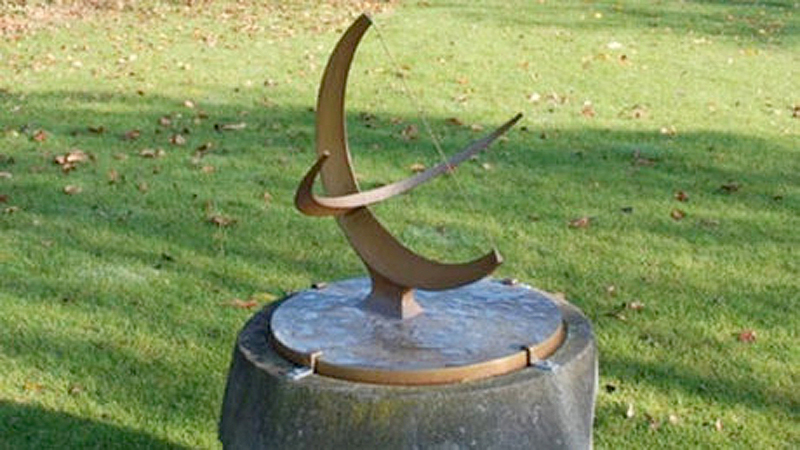
After a large sculpture was stolen from the Henry Moore Foundation in Hertfordshire in 2005 security was tightened up. They have obviously enjoyed some success, if only because the works now getting stolen are a little smaller. The latest to disappear is a bronze sundial from the Yorkshire sculptor’s garden. Melted down, the 1965 piece will net the marvellous, highly cultural folk who nicked it several pounds. After the theft of the first work it was discovered that the £3 million sculpture had been melted down into three grand’s worth of raw metal.
Despite the return last year of a Moore stolen in 2001, the chances of the sundial being found are negligible. It’s probably already on the shelves of souvenir shops in the form of London buses and Olympic fridge magnets. The theft of outdoor bronze plaques and sculpture is now an epidemic precisely because it is so easy and, doubtless, because the penalties for conviction a mere rap on the knuckles. There are no easy solutions to the problem. Meanwhile, we can have confidence in Hertfordshire’s finest Clouseaus who are hot on the present case: “It could have been stolen to be melted down,†said the top man using both his brain cells. “We take our care of Henry Moore’s sculptures very seriously,†announced a sober director of the Foundation. Well then Mr Calvocoressi, instead of giving the Foundation’s money in grants to those who are already among the richest sculptors in the world you could try investing in a nightwatchman.
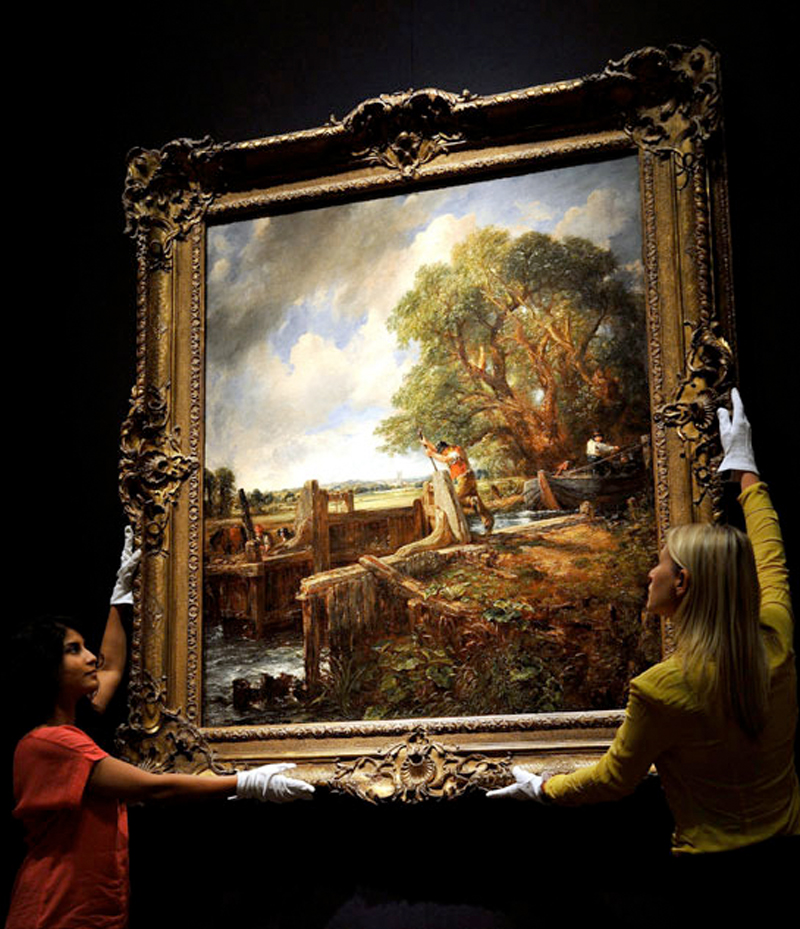
It won’t have escaped the eagle eyes of either of The Jackdaw’s readers that our favourite bit of raven-tressed gallery fluff, Griselda van Bonkhorst, resurfaced pretending to hold up Constable’s The Lock. She was last found swooning over a Rembrandt and before that upstaging a Stubbs with her impeccable embonpoint. What with her fashionably unironed T-shirt and sexy rubber gloves she was looking quite the oil painting you’d expect. Knowing his daughter’s childhood dream of running her own little farm shop in the Cotswolds, her father’s plan to buy her into an auctioneers in order to see GvB married off to a quality suit has not yet paid dividends: she still awaits Mr Right.
She is assisted here by fellow ornament Moondance van Dongen, a distant relative of the atrocious Dutch Modernist. Employed for her looks and Low Country subtleties and savoir faire, Moondance actually has to work for a living, her daddy having lost all his money speculating in Spanish property – currently she is heir to three miles of weed-cracked concrete the wrong side of Almeria.
Griselda is not too chuffed about this competition for the eligibles of the Square Mile and is hatching secret plans to cause Moondance a nasty accident with a priceless ceramic. Meanwhile, dear old Grizzy looks dreamily up the Stour valley and sees her Range Rover splashing mud over the strawsuckers as she races to open her emporium where, don’t ya know, today’s special bargain is muddy carrots at ten guineas a pound. You can’t hold back a nice bit of skirt.
COME ON LADS WHAT’S IT WORTH?
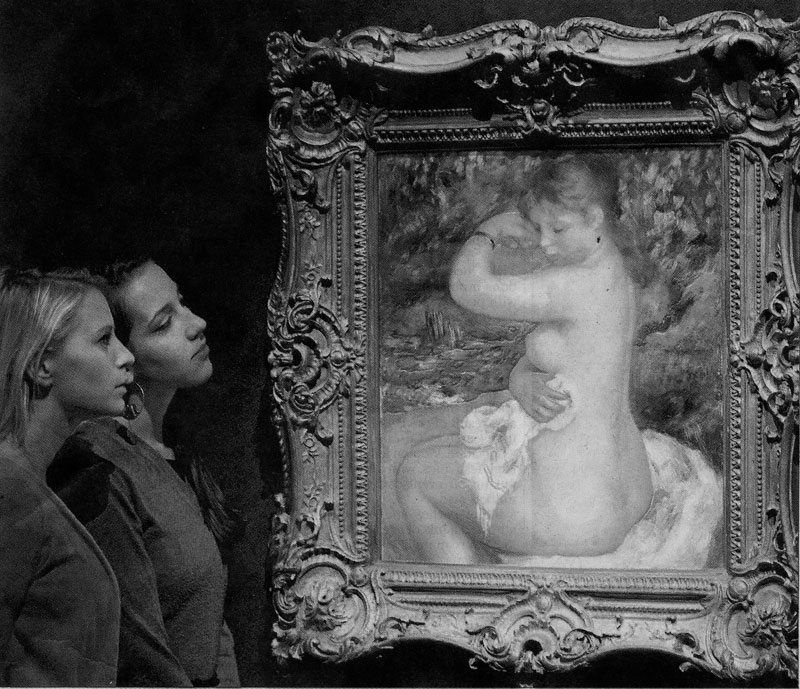
Having so far failed to attract their beaux, Griselda and Moondance agreed with the publicity stills man that for the Renoir they would be shot close up to expose their aristocratic profiles in contrast to that of the undressed plebeian model. They might then make the society pages of Country Life or The Lady or any of the other publications in which fillies of the van Bonkhorst and van Dongen pedigree can offer themselves for gentleman suitors of comfortable means.
Griselda looks disapprovingly at the pie-eating Impressionist hussy and can only wonder if the artist set up his mistress with a little shop in Normandy selling calvados and cider produced locally (in Bulgaria). Moondance, meanwhile, peers quizzically at individual brushstrokes having just been informed by mischievous porter Bentley (himself in search of a rich old suit) that Renoir was famous for having said that he painted with his dick. Poor old Moondance, never the brightest penny in the till, will eventually get the meaning but at the moment she is stuck imagining the blisters on poor old Pierre’s peashooter.
Glyn Thompson, the pickler’s first teacher, sets the artist’s early record straight…
Hirst scholars will have noted a change in the authorised chronology in the Tate Modern Hirst retrospective catalogue to a venerable biographical item, the entry for March 2002 (The Reliance, Leeds). In the corrected Tate chronology the former title, Damien Hirst’s Art Education, now reads as Fountain Footnotes (The Kominski Suite), the result of due diligence carried out by Loren Hansi Momodu. However, neither titles are strictly correct, since that on the invitation to the private view, delivered to the White Cube in Hoxton Square in late February 2002, read Fountain Footnotes (The Kominski Suite) some drawings, from a private collection, from the archaeology of Damien Hirst’s art education. The exhibition entitled ‘Damien Hirst’s Art Education – Reprised’, opening this month, thus consolidates the position of The Reliance in the authorised Hirst chronology.
As a consequence of this more comprehensive due diligence, the reinstatement of Jacob Kramer to Hirst’s chronology allows new light to be cast on a significant moment in his art education hitherto obscured by the mis-identification of his alma mater as ‘Leeds College of Art’. To his credit, Hirst has corrected this mistake – in On The Way to Work (2001) and in the interview with Nicholas Serota in the Tate Retrospective catalogue – but this has had little effect on either authorised and unauthorized biographies. His own website, and that of his dealer/gallery, White Cube, and Debrett’s, have no entry at all for the years 1983/4, which Hirst spent at Jacob Kramer, and wherever one finds his art education discussed, it is at the fictitious ‘Leeds College of Art’ that he is imagined to have studied.
This omission of Jacob Kramer from the record has focussed attention on Hirst’s post-Goldsmith’s years, encouraging the creation myth of Hirst as self-invented, a construction he appears keen to embrace.
A further consequence of the belated re-instatement of Jacob Kramer to the record is the exhumation of a strand of Hirst’s privileged lineage which blazons the achievement of Harry Thubron, who had worked at Leeds School of Art before moving to Goldsmith’s, where Hirst was to encounter his shade. But Hirst has failed to fully acknowledge his earlier exposure – at Jacob Kramer; contradicting his claim that there he learnt his art history from books and magazines, in History of Art lectures delivered by myself, Hirst witnessed rare images of Thubron’s own work, both in and absent from the record, work by his students, and exemplars from the history of art. The breadth and range of thematic and visual references the art history lectures provided offers a rare window onto Hirst’s early art education, and it is fortunate for scholarship that the notes, and slides, for every lecture, remain in my personal archive.
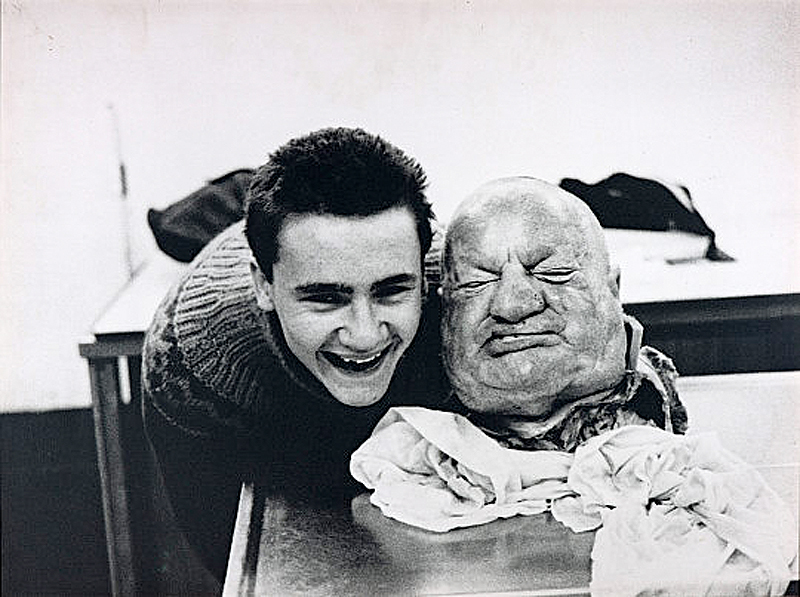
Such lack of historical accuracy may of course be due as much to memory lapse as myth-making; after all, in speaking to Nicholas Serota in 2011, Hirst was casting his mind back almost thirty event-filled  years. But in recounting that “I never looked beyond Leeds – it was where I lived. I’d been unemployed for a year or so … I thought I’d go to art school. I did a one-year Foundation course at Leeds…†Hirst misleads since, born in 1965 and enrolling at Kramer at the age of 18, he could not have been unemployed for a year or so before leaving Jacob Kramer in 1984. Perhaps the reprise, in 1991, one year after he began the Natural History series, of the 1981 self-portrait photograph of himself at the Leeds University medical school morgue, entitled With Dead Head, is itself an expression of this sui generis creation myth, since it would seem to have been produced in order to establish a provenance for a subject also seemingly springing fully formed out of nowhere, augmented with Hirst’s citation of the anatomical drawings he produced at the morgue, whose apparent significance surely demanded display at the Tate, or reproduction in the catalogue.
Hirst first addressed in 1990, in public, the subject which subsequently became his motif-Ã -clef, the topos of Vanitas, the subject addressed by the drawings exhibited at Reliance in 2002.
The third element of his Leeds experience neglected in the record is the core component of the programme he followed at Jacob Kramer, an academic drawing class which all students undertook, under my direction, in the natural history and ethnography sections of the city museum, Hirst’s familiarity with which is confirmed by his description of the very route by which he reached the back-rooms students were privileged to access. The work was required to address not merely aspects of the form and appearance of the objects but also the taxonomic, moral and teleological implications arising from curatorial traditions ideologically circumscribing the display of ‘Nature’, whose epistemological grounding lay in the cabinet of curiosities. This of course imposes an obligation to consider what Hirst is specifically contributing to the subject of Vanitas.
Arising from the above is the question as to what extent the Damien Hirst who attended Jacob Kramer was in possession, albeit only in microcosm, of the aesthetic which was to propel his entire oeuvre, the institutionalized aesthetic of Appropriationism. That the production of the drawings under discussion was institutionalised is not at issue, since all the work submitted for assessment at Jacob Kramer was executed solely as a consequence of the students’ enrolment; only by satisfying the regulations of the institution could their work acquire validation via the imprimatur of the institution – which is why people go to art school. That institutional endorsement is crucial to Hirst’s identity, as his view that “If it’s in the Tate, it must be Art†confirms, is underlined by Ann Gallagher in her introduction to the catalogue; on page 14 she refers to “… Hirst’s early institutional endorsement, his 1991 show at the I.C.A. in London…â€
Hirst was introduced to the history of appropriationism as a legitimate strategy in the philosophy and practice of modern art at the very latest at Jacob Kramer, during the history and theory of art lectures delivered, by myself, to all students attending the Foundation course.
Once inscribed within the corpus, in providing a bridge from Hirst’s youthful fascination with the eternal verities to his first mature expressions, the content of the drawings takes on the character of a missing link – as if in attending Jacob Kramer Hirst’s intuitions were for the first time self-consciously critically contextualised by art history and theory. And when so inscribed, the content of the drawings confirms a thematic continuity between Hirst’s deep seated, long-held preoccupations and his mature expressions.
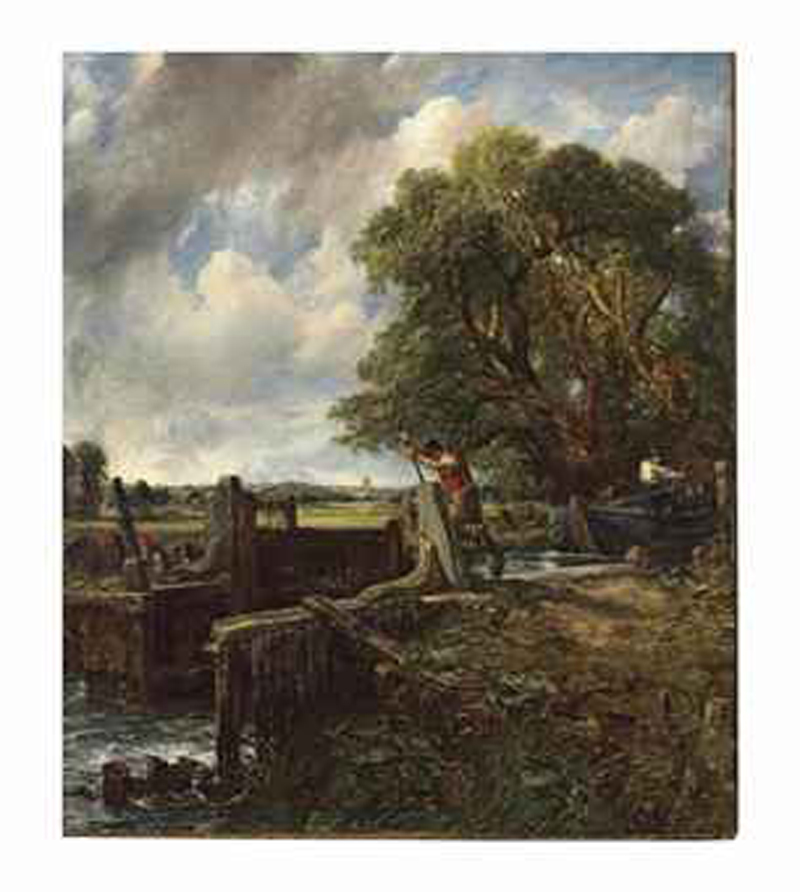
Today John Constable’s The Lock, painted in 1824, sold at Christie’s for £22.4 million. In the current art market of silly prices some lucky person got the bargain of their lives. Let us hope the picture will be placed in a museum, where people might enjoy it, instead of disappearing into a Swiss warehouse as the investment bauble of some gold-tap billionaire vulgarian. It is the same price as that commanded by ordinary works by the top price sellers in British painting, Turner and Bacon, both of whom have sold work for significantly higher amounts than this. It is the same price a collector might pay for an off-the-peg Monet one wouldn’t inflict even on an enemy. The Lock, being one of the six major works deliberately painted by the artist between 1819 and 1825 for the Royal Academy exhibition in order to cement his reputation, presented the last opportunity for a collector to own one of the major works by the artist of the quintessential English landscape. All the other major pictures are already off the market in museums.
Why so low a price? Of the top 50 most expensive paintings ever sold either privately or at auction only five are Old Masters, and of the remaining 45 ten are by Picasso, seven by Van Gogh and four by Warhol. The new billionaires, who are not old fashioned men of discernment and discrimination but those who buy conspicuously in order to impress friends, are uninterested in works not instantly recognisable for their “wall powerâ€. Even the most knuckle-dragging mate of a Russian oligarch can recognize Warhol or Picasso but they wouldn’t know a Constable from a concertina and couldn’t recognise anything before 1850, all brown paintings looking alike to them.
Who bought it? Assuming that The Lock is too sophisticated a picture for nouveau squillionaires, the only two museums in the market at this kind of price are the Getty in California, which two years ago paid £29 million for a Turner view of Rome, and the museum being built from scratch by the Qatari royal family, who are hotly rumoured to have bought the record-breaking The Scream by Munch a couple of months ago. No British gallery could afford a square centimetre of such a work, not that our museums actually need any more examples from Constable’s brush. For example, on the day of The Lock’s sale the Tate, which owns 261 works by the Suffolk miller’s boy, had 13 works on display. It always likes to keep plenty in reserve. There were more works by Constable on show at the Victoria and Albert Museum than at the Tate – the V&A owns 802 items relating to the artist including the full-size oil sketch for the Hay Wain. The National Gallery has nine works by Constable, all of them on display every day of the week free of charge.
“Painting,†wrote Constable, “is but another word for feeling.â€
The Weiwei soap opera continues with more plots than Highgate Cemetery. He has now been refused permission to attend his own tax hearing. He is, of course, contesting the imposition of a fine made by the Chinese Government for alleged tax evasion and other financial exoticisms. In his turn Weiwei has issued a writ against the state for violating the rights of witnesses and of evidence, and of preventing him consulting his own accounts in order to prepare properly his defence.
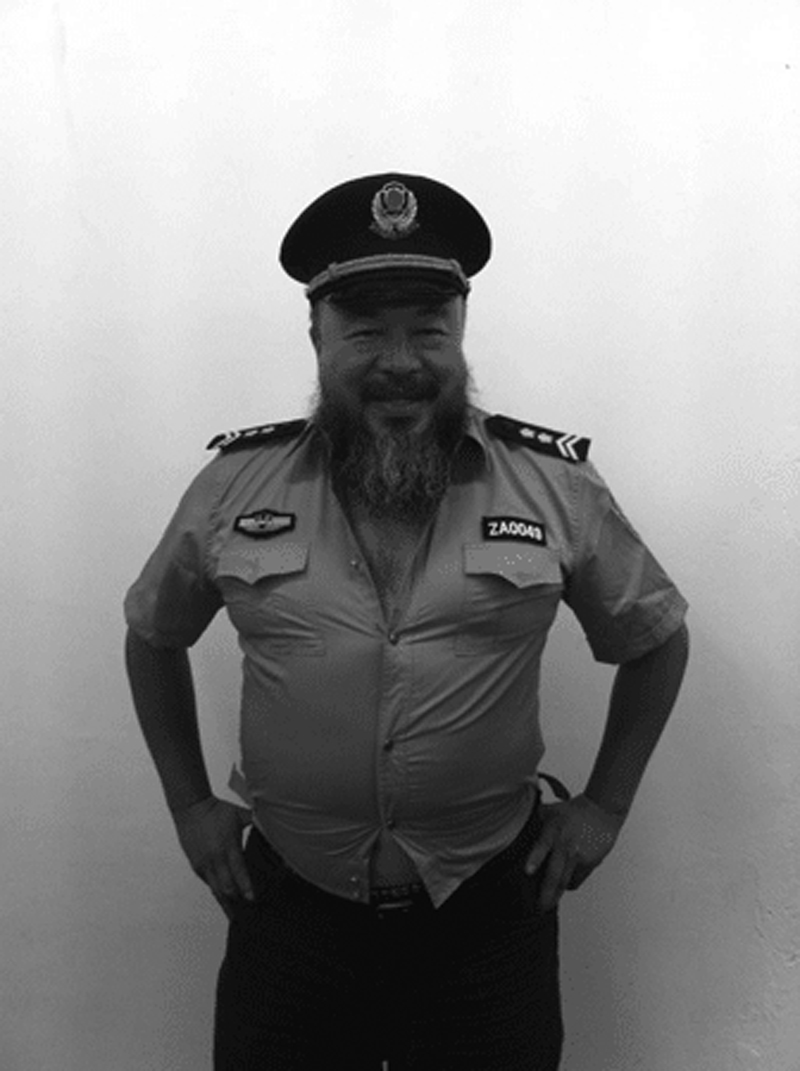
To mock those limiting his movements and spying on him 24 hours a day he donned a police uniform – several sizes too large for his trim six pack – and posed for foreign news correspondents. Freedom from last year’s incarceration appears to have emboldened him. But one of his legal team has already ‘disappeared’. We fear he won’t be laughing when he starts a life sentence of mopping lavatories in Mongolia.
62 pictures, the most ever in its 60-year history, have been selected for this year’s John Moores Prize, the winner of which is announced on September 13th. The Jackdaw had heard of five of the 62. 40 years ago we would have heard of all fifty artists, and each represented by one of their better efforts. The exhibition at the Walker Art Gallery runs from September 15th to January 6th and, as we have pointed out in the recent past, it has been subverted to the cause of State Art such that it’s now in all but name a Turner Prize for painting.
Curiously for a painting prize there is no gifted painter on the selection panel: this includes Yentob, who doesn’t know the first thing about painting; Blazwick, the Whitechapel director and State Art board member who will doubtless be referring all decisions to the top; George Shaw, who paints council estates by numbers in enamel; Angela de la Cruz, a sculptor-cum-assembler; and Fiona Banner, who writes stories in longhand on canvases. The three artists on the panel have all been nominated for that passe-partout State Art membership card, the Turner Prize.
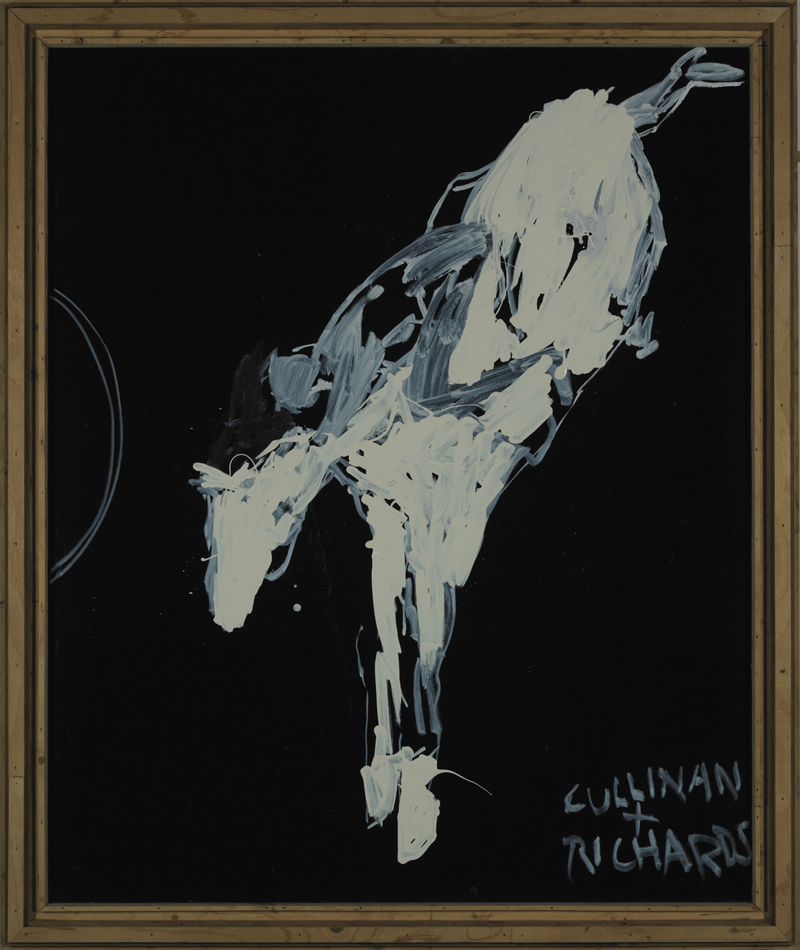
Illustrated here is Cullinan Richards’ Collapse into Abstract (Black), which with a title like that will surely be a challenging investigation into the nature of painting qua painting. Over 3,000 artists entered a work for consideration, which means that 47 other pictures were rejected for each of those chosen. Were all 47 really worse than Richards’s collapsing abstract?
No question this will be – like the last one – a bloody awful collection of wince-inducing daubs but one will have to attend in order to enjoy a hearty laugh at the artbollocks written about each entry, always a highlight of the exhibition. And there’s always the permanent collection of the Walker, which is easily the best in England outside London.
Brian Lewis, Pontefract’s poet laureate and a painter to boot, bravely exposed the neglect of local artists when the visiting functionaries of State Art arrived for the opening of the Hepworth Gallery in Wakefield
In the cultural war which challenges the dominance of the London art world we are the first shock troops of a new guerilla army which urges artists to get out onto the streets and protest by using art to confront art.
What follows is an account of what happened when we attacked the Hepworth in Wakefield using a 6,000-word didactic leaflet, 21 paintings and a small piece of sculpture called Don’t Have Any More Mrs Moore. We called our guerrilla attack Operation Good Morning Mr Courbet.
We had been led to believe that Prince Charles was coming to open David Chipperfield’s £35 million gallery in Wakefield and that for security reasons the police were likely to clear the nearby Chantry Bridge prior to his arrival. Arguing that they would find it more difficult to evacuate us if our two advertisement boards and framed pieces were already in position, we tied 8ft x 3ft horizontal boards to roadside railings and bollards. Both faced the Hepworth’s entrance and read ‘Alternative Exhibition – Free University of Chantry Bridge, Wakefield’.
The Free University reference was understood in parts of the district. We had recently held an exhibition six miles away in the Heritage gallery in the ex-mining town of Castleford. At its Bridge Arts Gallery we had workshops, a rolling exhibition programme, and were also offering writing, publishing events and a UK premiere of a piece of music composed by the Professor of Creative Technology at Leeds Met University based on an ex-miner’s poem. In Castleford we were called the Free University of Castleford on Aire. The new name, The Free University of Chantry Bridge, Wakefield was chosen because it suggested that our rabid arts collective had seen the Hepworth, been shocked by its appearance, and pupped.
Good Morning Mr Courbet
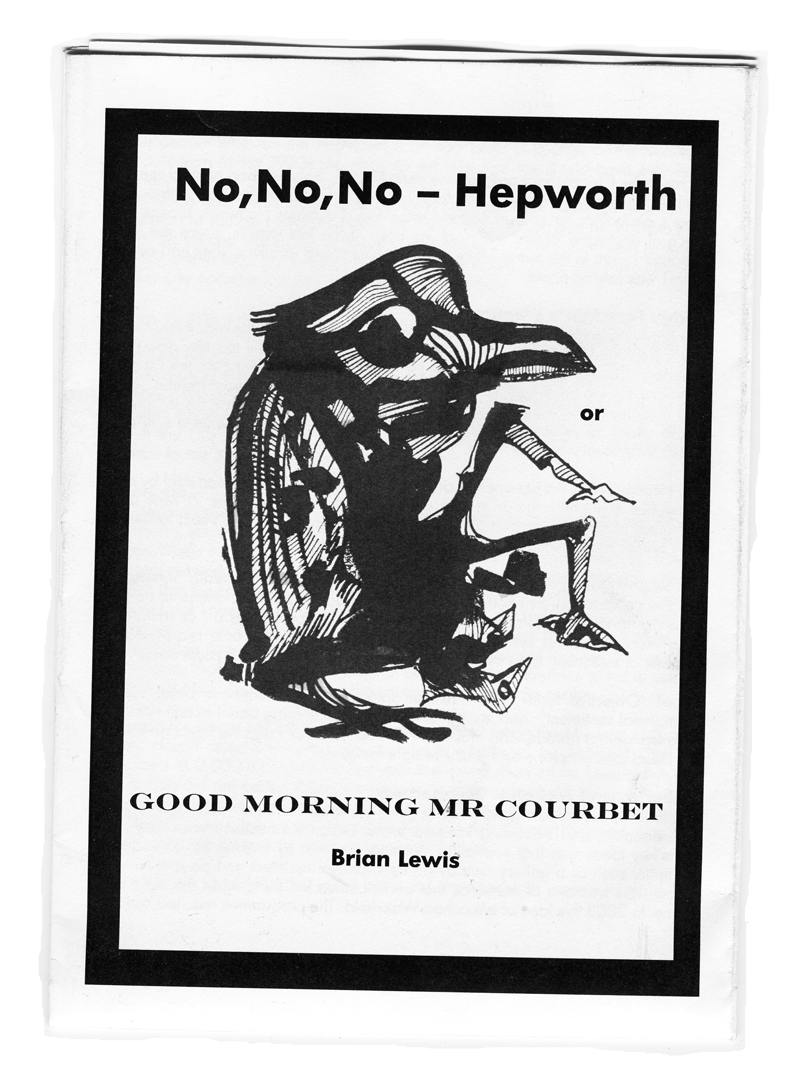
Our pamphlet was called No, No. No – Hepworth because it is direct, but the sub-heading was chosen because it is the title of a painting which shows a local patron doing honour to a local journeyman artist. Courbet is also appropriate for another reason. When he was refused hanging space at the 1855 Paris Exposition Universelle he erected his own temporary structure next door to the main pavilion and showed 40 of his own pictures, including Burial at Ornans and The Artist’s Studio, which now hold pride of place among the Grands Machines of the Louvre.
The Chantry Bridge exhibition was mobile and although this was not explained to anyone the west end of the bridge area was its holding bay. The plan was to draw attention to our leaflets and pictures by shifting some of the 21 framed images close to the grass by the pedestrian bridge which every visitor would pass over that night on their way to the opening at 6.00pm. Using this location we would hand visitors the No, No, No – Hepworth or Good Morning Mr Courbet 6,000-word essay-cum-tract. We had planned a pincer movement attack: paintings to look at and a tract to read.
This had been printed in an edition of 250 by a local printer (localism is always a good greasy slice of halal to slap across the chops of a prestigious gallery) and consisted of 16 numbered pages which came folded from a piece of A3 paper. It cost £75 to print. We did the design ourselves.
In all ways it was massively non-PC and went against all the rules of modern advertising. It was not in colour, recognized no sponsors and took little regard for people who had dodgy eyesight. It was knocked up by a couple of blokes in a basement in Pontefract who had combined ages of 136 years.
We knew that most people wouldn’t read it, but a few might. Online petitions bother no one and make it seem that you are doing something when you’re not.  Those in authority might read on and our leaflet was aimed to get up their nose and along with the paintings make us visible. The size of the tract was very important. Mail goes from the hall floor into the recycling box with scarce a glance. This went directly into the pocket or shoulder bag.
Drums and trumpets sounding outside a critical arts board meeting has a similar immediacy. Both loud music and tract publishing are in the tradition. Action precedes argument. Move your feet and your arse will follow, or put with more finesse by existentialist philosopher Jean-Paul Sartre (he whispered little else in Simone De Beauvoir’s ear): “In the absence of certainty action must take the place of speculative thought.â€
At first very little happened (we discovered there was to be no Royal Visit). A few locals stopped to talk although most were on their way to work.
I had been having an email and a ‘letters to the local newspaper’ correspondence with the leader of Wakefield MDC, Peter Box. The dialogue had been going on for about a month. From my side it concerned the need to watch the promotional data supplied by their consultants, the questioning of why we should be promoting a ‘mausoleum artist’ and the proposed programme of retrospectives by what are inevitably described as ‘eminent international artists’. I considered that even when the running of the gallery was passed onto the Hepworth Trust it would still have a call on the public purse through Arts Council England or through English Heritage. I forecast that the wider agenda of regenerating a derelict area might have a bearing on the level of financial commitment by the council.
In the middle of the night, 4.30 am to be precise, I’d emailed him and told him that two days before I’d received a telephone message. The speaker told me that the Hepworth knew there would be a demonstration on the Bridge and had offered to be some sort of broker. She said that although the Hepworth Gallery was happy with the demonstration the Council was ‘likely to take strong action’.
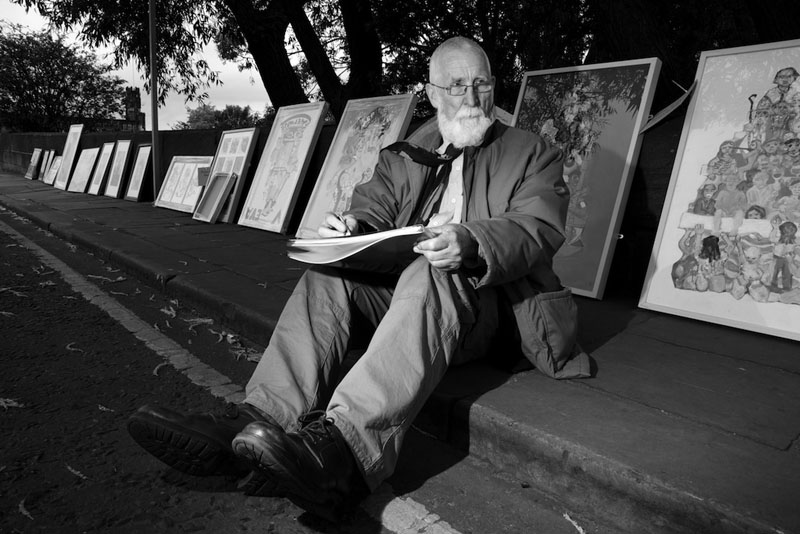
My email said that I had a perfect right to demonstrate. I pointed out that having done National Service, bullying or imprisonment held no fears for me. I have a big white beard and, therefore, I said, I relished the thought of police involvement and that having photographs of a Santa look-alike handcuffed would suit me fine, for at the very least a photograph would cause industrial disputes in Lapland.
The first call I received that morning came from the Constituency Manager of my MP, Yvette Cooper. Yvette had asked her to find out if Peter knew what I was doing. Presumably Peter had phoned her. I said I would phone Ms Cooper a bit later.
At nine I was joined by one of my sons carrying tea in a paper cup. He is a man who could be relied upon to argue forcibly if needed. Porl, a professional photographer, came a little later. The witnesses and two cameras could be useful.
I knew an emissary would come from the council and at 11 am, just after they had started the initial party for ‘100 very special guests’, he rolled up. Wakefield’s Deputy Chief Executive was someone I’d known for years and liked. He made the obvious point that I had a right to protest, to which I replied ‘You’re right there’. Then he said: ‘Peter says that are you aware that the Hepworth family are gathering this lunch time and today is the anniversary of her death.’
There they had me. Sentiment took hold. Â As soon as he said it I knew that I was not going to upset a family gathering, any family gathering, by speaking ill of granny.
I thought quickly. ‘I will not give the leaflet out today, even though the main arts gathering is on tonight, but I will not remove the paintings. On your part I want you to say that you will read the leaflet and pass copies down the appropriate line of management. This printing has cost me a good slice of this week’s pension. I will do that but only for tonight, tomorrow is another day.’
Compromise brought conciliation. ‘What exactly is your target?’ he asked. I took out the leaflet and read the back page. ‘This pamphlet’s targets are the London art world and the type of art they promote; arts consultants, their data and the withdrawal of funding from other local arts organisations. It chronicles overspending on fine arts and the consequent neglect of local artists, writers, publishers, theatre companies and museums.  Hopefully it will become the start of a debate about why and how we fund the arts in the UK and how it differs from how they are funded elsewhere.’
Ten minutes later I was talking with both the newly appointed Chief Executive and Wakefield’s senior arts officer. I was blunt and they were amiable but they listened carefully and promised to read the leaflet. I assured them that we would meet again.
They were followed by a procession of friends who knew about the ‘exhibition demonstration’ and Wakefield officers, mostly people I knew because of my work on regeneration. They told me bits and bobs about plans for the rest of the weekend and how they intended doing up the area. There were other hard-handed men and the occasional hard-hatted woman who knew about art and what they liked.
Then the police arrived. They had been sent by someone – exactly who I’m not sure – but they were fine. They informed me that I was committing the technical offence of obstructing a public highway but agreed that since I had avoided putting up a price list I wasn’t trading. They exercised their right of discretion and the right of demonstrating seemed to overrule everything.  Then the last-but-one visitor came. He was ‘a Hepworth’, the only member of the family to bear the name. He was followed by torrential downpour so we turned the pictures to the wall and five of us retreated under a convenient medieval bridge extension and talked about his cousin Barbara and why our demonstration was called ‘Good morning Mr Courbet’. His views about her work were close to mine. When we emerged from under the bridge we saw a wet cyclist on a lightweight bike. I was about to meet for the first time the publisher of a scurrilous journal.
Was the tiring day on the bridge worth the effort? And what had we learnt?
1. Paintings need to be small enough to fit into bin liners and have robust frames. It is best to have a number of solid frames in three sizes. Uniformity makes the exhibition look more professional.
2. John, our market frame-maker, showed that by using handwrap (a sort of clear film) on a handle you protect the frames, have something to attach titles to, but more important you could attach painting and display boards to bollards and railings.
3. You need someone close at hand with a car big enough to carry away the paintings.
4. Make sure that some of your pictures are explicit and targeted. If you’re hitting out at someone, have a hand-out which explains what you’re doing. The quality of the work is important. The majority must be able to sit happily in a public gallery. Avoid anything that is called ‘abstract’.
5. Take on big subjects such as Arts Council policy.
6. Don’t sloganise. Contrary to received wisdom people really enjoy reading a developed argument.
Brian Lewis, poet and painter of Pontefract and champion of regional arts, reflects upon the Hepworth Museum in Wakefield, home town of the eponymous sculptor
“Inside it is beautifulâ€
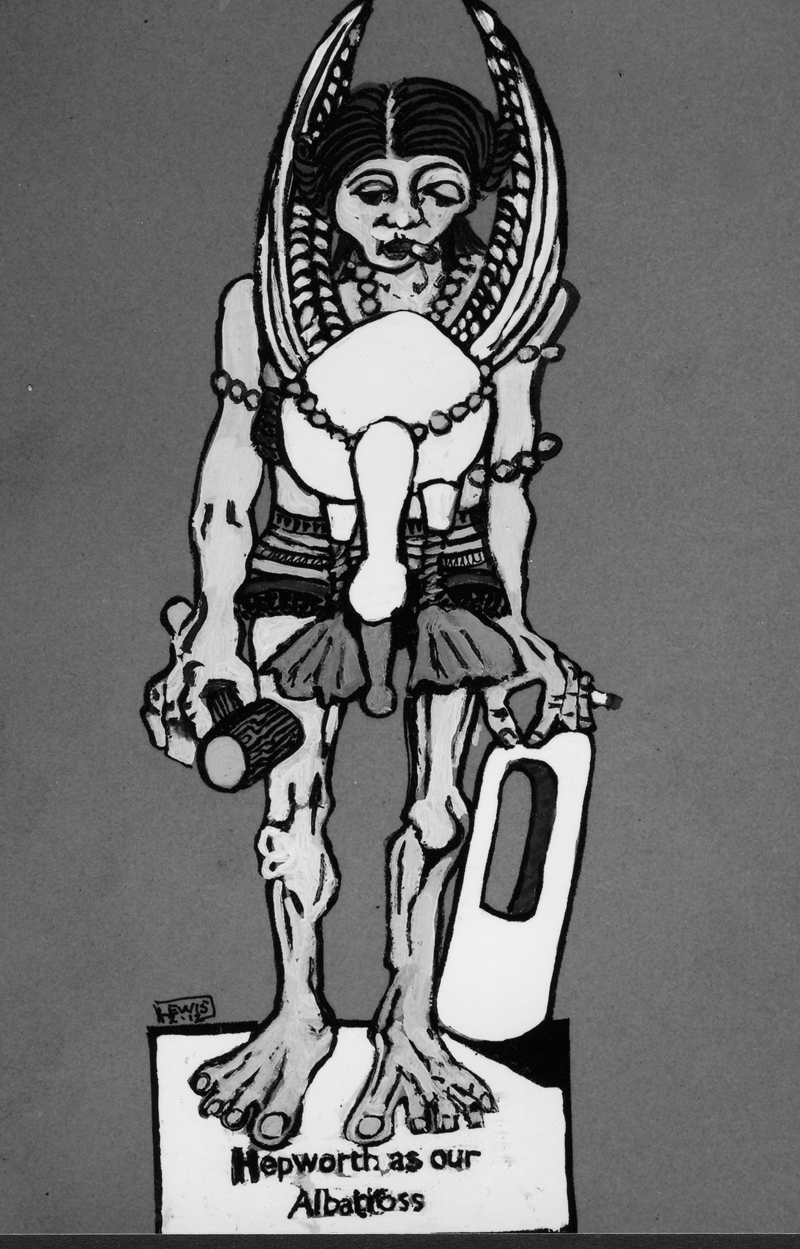
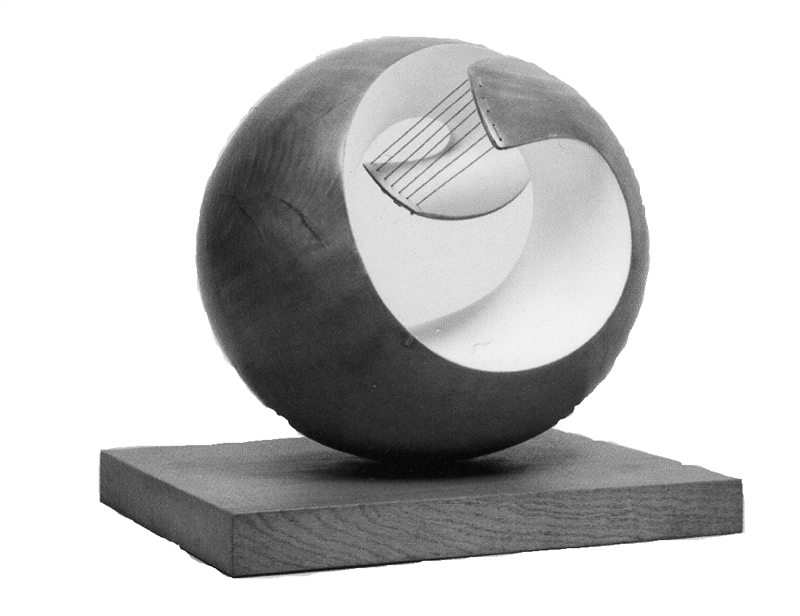
The PR company who is responsible for naming the new Wakefield Art Gallery which is rising on land between the canal and the River Calder has decided to call it ‘Hepworth’ as distinct from ‘The’ Hepworth or ‘A’ Hepworth. If I was choosing from the three alternatives I would take the third – because there is at least another museum of that ilk in St Ives. Babs, or Barbarella Heptonstall, as I prefer to call her, is ‘World Famous’ in Wakefield. Shirley, an erstwhile next door neighbour who followed her through Wakefield Girls’ High School once said to me, ‘You had her rammed down your throat. It was as if no one else in the school had ever done anything. Mind having triplets was quite an achievement.’
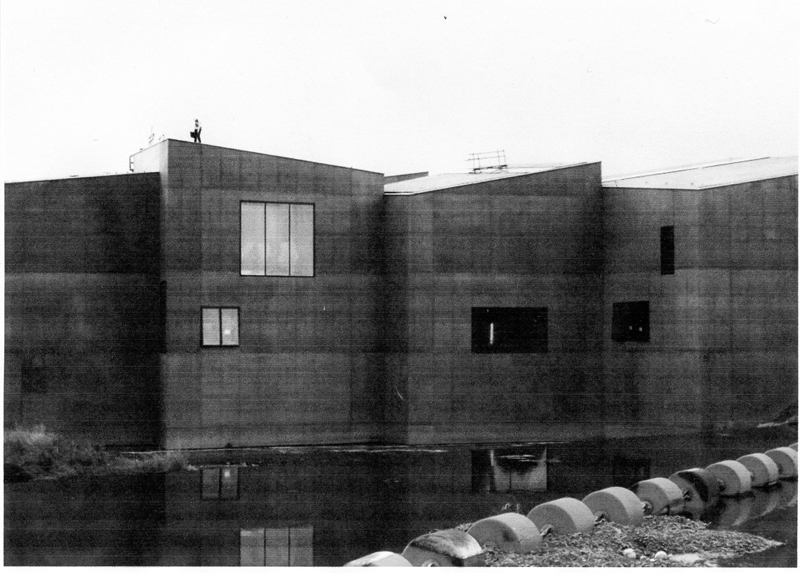
When local ne’er-do-wells kidnapped a lesser member of ‘The Family’ and sold it to a scrap merchant in Leeds I drew a cartoon for the Yorkshire Arts Magazine. In those days the Arts Council was regionalised and capable of laughing rather than twittering. The statue was found almost immediately. The drawing showed a couple of hippies in conversation. ‘Pretty crap as villains but what critics’. The Chief Executive of the Bretton Sculpture Park was not amused. Shirley is 78, Geoffrey 88 and I have my bus pass, so it may be that we are out of touch with the times, but I don’t think so. I have asked the men and women on top of the Upton omnibus – people of all ages – and they do not know what Hepworth is, was or might become. I did not have a 100% nil response. One said, ‘I know it is that sort of grey warehouse just down from the Private Shop. The one where the blind needs fixing.’ Of course you would not think that it was so unpopular if you read the puffs and farts which the sponsors of the package create as we precede to delivery in May 2011 and come to believe that this gallery was needed and that it was popular. And that Wakefield had the hotels, businesses, general infrastructure to sustain and encourage growth. As a decade ago the Guggenheim was to Bilbao so would be the Hepworth to Wakefield. Tourists would flock and the economy would revive.
The reality is that the railway which will deliver the customers and lies close to the Hepworth is virtually derelict, the riverside uncared for, the promised regeneration of the area on hold, Labour is in opposition and the Regional Development Agency is finished.
Then why is it being built? The cynic in me suggests that it could be to do with the ownership of the works of art. What better investment-publicity than to have national exposure in the papers of a name on a plinth of a statue you own. On the other hand it may be that an outmoded fascination with iconic buildings and international architects has led funding agencies to believe that this stylish building has enough merit to persuade people to flock to Wakefield. I love the thought that early next year a woman in upstate New York will wake, tap her beau on the shoulder and say, ‘Fancy going to Yorkshire to see David Chippingfield’s Hepworth’ … but I don’t think it will happen. What is more likely to take place is that the New Yorkers, and indeed anyone south of Sheffield, will stay away and that the people like me who live in the surrounding towns will be given an unwanted building and associated revenue costs because of a narrow attitude to aesthetics which is mixed with influence and power. This troubles me.
This is the story of what happens when a government finds itself part of a tangled knot of silly ideas and promises but, even in a recession when ‘moments have to be seized’, lacks the confidence to cut it with a sword. As the Jackdaw points out with a regularity which after eight years of reading I still find convincing we are in the hands of a band of mandarins which that wise bird defines as the purveyors of State Art. I wont go there. Most people will know the story. ‘Old Nick’ Serota – he’s 62 – Hampstead-born to a mother who was the Ombudsman. After Cambridge got a job at the Arts Council and was subsequently director of two of their galleries, MOMA Oxford and the Whitechapel, and then he met Anthony Gormley who made a sculpture out of sliced loaves. From then on Serota managed to appoint his people into positions of power and influence. Today he is on more money than the Prime Minister (£165,000 as against £142,500) and at present has a Tate Modern gallery dominated by 100,000,000 hand-painted porcelain seeds upon which we should have been able to go walkabout; that is, if it hadn’t been deemed a health and safety risk.
It’s not been all plain sailing. In Leeds the burghers said that they did not want Gormley’s Big Brick Man. It was a distraction and clashed with the eloquence of some neo-renaissance mill chimneys though it did confirm their views on State Art modernism, for you climbed stairs having entered up its arse and then looked out of its ears. However, most of Old Nick’s time has not been wasted so it was not to read that he considered that the new Hepworth gallery was ‘One of the most exciting and beautiful galleries in the United Kingdom’.
Of course, much of this would be too daft to laugh at – a squabble of opinions – if it wasn’t for the fact that the emphasis on the Hepworth costs money.  Exactly how much is difficult to tell. A recent letter in the local paper put the cost of building at £35 million – not denied by the Wakefield MDC ‘culture secretariat’ who usually jump in to rectify misinformation contained in ‘Letters to the Editor’. New staff are also required and revenue to run the place.
As someone who was on the Board of the Regional Arts Association (now Arts Council England, Yorkshire) and has written about its impact on community development in Sheffield when the consultancy-led Museum for Popular Music went under, I have been there before. Built with £15 million Lottery money and Arts Council revenue support it opened on May 1st, 1999 and closed on June 20th, 2000. This was not before small arts clients across the region had grants cut as an abortive salvaging operation clicked into place.
I have been there before, bought the tee shirt – but this time it has an elegant hole in it.
… from yonder ivyÂ-mantled tow’r The moping owl does to the moon complain Of such as, wandering near her secret bower, Molest her ancient solitary reign.
DEGAS & GARTERS
I knew there’d be trouble, the minute I heard the Keepers were bringing Old Edgar back to the Zoo on Piccadilly. ‘Degas & The Ballet’ sounds good, and is good, because Degas is always good, one way or another, whatever he does, which is quite a lot. And that’s the trouble, because no-one seems satisfied with good anymore, for it’s own sake. It seems it must always be turned into something else, to give everyone something to talk about, rather than look. So this show is called ‘picturing movement’ as well, to give a theme and analytical ring to it, and perhaps stop everyone thinking of Degas as just another Dirty Old Backstage Johnny who did nothing but leer up young girls’ tutus. But of course it doesn’t.
It certainly hasn’t stopped young Sookey, Old Mother Dorment’s number 2 Goose down at Telegraph Farm. Indeed he jumps right in, setting up the hare of doubt straight away supposedly to shoot it later – some hope. “Degas’s (sic) budding fascination with dance turned into lifelong obsession (you see)… [He] will always be remembered first and foremost as the painter of dancers (make sure we get the point). From the 1870s he haunted the Paris Opera, studying performances and scrutinising, yes fairly scrutinising the dancers’ rehearsals, warm-up exercises (oh my word yes) and gossipy antics backstage (there ought to be a law: there really should)…. Today it is tempting to write off Degas’s (sic again) pictures of ballerinas as overly pretty and effeminate visions of beribboned nymphets in tutus pirouetting across the stage.†Yes, yes: we know.
‘Effeminate visions’? I’m afraid he’s lost me there. “But (aha: the necessary ‘but’) nothing could be further from the reality (what a relief!) of his robust and vigorous studies of athletes sweating and straining their sinews (golly! those poor sinews: we hear them creak: we feel the pain). His ballerinas aren’t simpering, insipid creatures of fantasy, oh dear me no, but flesh-and-blood young women …†So that’s all right then, and let’s get this straight: why are these tempting effeminate visions of sweating, gossiping athletes so good? And, more to the point, why?
“He sketched everything, and fashioned beautiful paintings from his meticulous observations (well done, Edgar: keep it up)… [the RA] presents many scintillating studies in a variety of scintillated media, including charcoal, chalk, pencil and pastel (that’s pretty well the lot, then), as well as a number of impressive oil paintings.†Impressive eh? I’m sure the old Boy would have appreciated the compliment, especially from you.
But wait: there’s more: “watching him describe the trajectory of a limb in fluttering sweaty motion is compelling (the old eyes are riveted). He must surely have sketched from life (the penny drops at last) either backstage at the Opera or in his studio in Montmartre, or back home at his Mum’s perhaps, or down the pub with his mates.â€
“Often he tentatively traces the contour of an airborne limb (ah, those airborne limbs, I can see ’em now, fluttering sweatily away) several times before deciding on the best line, and articulating it more heavily (cunning old bird, that Edgar). Rather than erase his initial impressions, though, he left them intact – and these ghostly echoes offer a brilliant approximation of movement.â€
And that’s what passes for art criticism these days. But we mustn’t be too hard on the poor goose: I don’t know quite what they do for O Level (art crit.) these days down at the Poly, so perhaps Sookey hasn’t really been shown any decent drawings before, whether by Degas or anyone else. But I must say he seems to be getting the knack of the egregious image and superfluous adjective. The current champ, old Dicky Stork, still up there on one leg on the Academy chimneyÂpot, had better look out.
SAIL AWAY
We know the nights are drawing in and we’re in for another hard frost and several feet of snow when assorted gulls, boobies (I’ve mentioned them before) and the odd albatross and lost penguin, set off into the far North for a spot of winter warmth and sunshine, and rescuing the occasional polar bear to keep the feel-good quotient up. I blame global warming. But this time it’s hard to know where to begin.
It seems that one fine warm Arctic summer’s day some years ago, wheeling away high in the sky and far from home in the Southern Ocean, a prize albatross, Hartley’s Albatross no less, than which no self-respecting twitcher would rather catch a glimpse, thought he’d found a little island never seen before, for it had been hidden hitherto beneath a dutifully shrinking glacier in Svarlbard, somewhere to the north of Greenland. So this year he’s gone back with a boatload of said gulls, boobies and lost penguins, including, I understand, “some of the UK’s leading thinkers, ie. experts in climate change, human migration, global governance, international law and environmentalismâ€, to see if it’s still there. And lo and behold it still is.
So what Captain Albatross and his brainy-heavy shipmates have now done is load up their boat with some ‘island territory’ – which I can only suppose to mean a few bucket-loads of earth, some rocks and pebbles, a clod or two of turf and a bunch of flowers – and sail away with their booty into international waters. All done, I have to say, with the official blessing of Svarlbard’s Governor, good man, who we’re told managed to keep an admirably straight face throughout the proceedings.
Anyway, and follow this closely, once on the high seas, Captain Arty put on his cocked hat and gold chain over his balaclava and declared his boatÂload of ‘territory’ a New Nation, though we still wonder quite how a Nation can quite be a ‘Territory’. But we mustn’t quibble at this proud moment. Whatever it is, and do control yourselves at the back there – and do excuse me while I get this speck out of my eye – it is now called Nowhereisland, to which 2000 birds of all descriptions have already flocked in spirit and signed up as citizens.
And it is sailing south as we speak, crew, tackle and trim, on its noble quest to “redefine what a nation can be, thereby inviting us to debate some of the key issues of our time, including migration (yeah!), nationhood (hurrah!), global responsibility (right on, man!), human rights (mustn’t forget them) and (wait for it) climate change.†Simon Anholt, its independent policy penguin and ‘Resident Thinker’ (who is advising the expedition remotely, in case you ask: wise bird) tells us we live “in an age of global threats and global challenges. Most of them are getting worse… Nowhereisland is a place where we can start thinking in a borderless way about borderless problems.†Well, I’ll have to sit down somewhere quiet for a bit of remote residing, and give that some thought, if you don’t mind.
Need you be told Captain Alex the Albatross is an artist working primarily with photography, sculpture, installation and funding applications? Nowhereisland, need you be told, is funded by the Arts Council of England? Phil Gibby, Arts Council Chief Booby for the South West says “this is an exciting moment for our flagship arts project for the Cultural Olympiad.†It will reach England’s southÂwestern shores during the Olympic Games. Don’t say you weren’t warned.
LOSING THE THREAD
Oh dear: I do enjoy a swoop over St James’s Park and down the Mall now and again, especially on a nice warm autumn evening when the leaves are on the turn, and, who knows, the odd vole or mouse might poke his nose out in the twilight to live a shade too dangerously. Keeps me going, that sort of thing. And on the way home I might even catch a glimpse of Her Majestic Self on the lawn behind the house, giving the corgis their Pedigree Chum – she always gives me a cheery wave, which is more than can be said for some.
You see I do like to keep abreast, and see what’s going on, or not as the case would seem to be with the ICA these days, that nest of self-important, wonderfully creative and challenging stoats and weasels snug in their Arts Council House by the Duke of York’s Steps. I can’t remember the last time I saw a queue at the door, or even a poor soul going in to buy a ticket. How time flies. A bit like me really.
But I have to say I still have a soft spot for the dear old FBA, and for that gaggle of birds of assorted colours it gathers to its bosom at the Mall Galleries just a bit farther along towards Admiralty Arch (another recommended perch, that arch, and the things I’ve seen and heard there: but later, later). As for those old birds, they are, I know, a bit foxed and mildewed and lacking a few feathers, but even so, sailing under their various flags of convenience as they do (the New English, the RBA, the RIP, you know the sort of thing) they’ve never had a penny of public subsidy and owe no-one a penny either. Indeed the only time they asked for help, for a few light bulbs some years ago, they were turned down by the Arts Council, who were very polite and tactful but told them they stood for ‘the wrong kind of art’. And, as I say, all they wanted were few light bulbs, and a box of matches and some candles just in case.
Anyway, when I heard that some of those sharp-beaked financial types in the City – hawks, kites and buzzards the lot of them, who’d have you’re shirt off you, and much else besides, as soon as look at you – were interested in backing an open-submission exhibition at the Mall Galleries, along with a suitably lavish prize (25,000 smackeroonies since you ask) for good old figurative art, I thought: well, why not.
So along came the Threadneedle Prize, and here we are four years down the line. It has had some hiccups along the way, I must say, but much to be encouraged by too. And now, as I say: oh dear. For this year, if it’s figurative art in any meaningful sense of the term you want, look away now. And what makes it worse, so my mole (an ordinary sort of chap, you’d never guess) tells me, is that it is not that such art, in all its variety of approach and practice, wasn’t sent in: indeed the submission was larger than ever. Nor was it not of acceptable quality (I know: these triple negatives confuse me too: but you get the drift). To put it simply, the problem was that the three distinguished judges chucked all such stuff out.
And that is what judges of a certain stamp (one not hard to spot) are likely to do, unless they not only understand, but are prepared to accept the nature and intention of the exercise, and act accordingly, if necessary with their arms firmly twisted behind their backs. I’ve seen often enough how these things work, believe me, and how things can go seriously wrong if a firm line is not taken. A good crack of the whip early on certainly concentrates the mind, and a few rings and padlocks left lying around, and perhaps the odd transformer with some wires sticking out – but where was I?
Oh yes: it was bad enough the first time, when our old friend Dicky Stork, and a Bird of Paradise with lots of locks called Hew Locke, were on board and would have ended up with a show of barely 20 works out of some 2000 if they’d had things entirely their own way. You see, anything with a bit of drawing or technique to it was just too dreary and old-fashioned for them. No message or concept to it, don’t you see. It didn’t challenge, interrogate or subvert accepted notions or perceptions. It was simply boring. Can’t have that. And then when it came to prize-day, Corky couldn’t even remember who had won.
But the next two shows weren’t too bad, lessons learnt and all that. And then this. So who were appointed to the Judges’ Bench this time? Brace yourselves. Julie Lomax, London Head of Visual Arts for the Arts Council (aarggh); Lisa Milroy, artist and Head of Graduate Painting at the Slade (groan, groan and groan again); and Godfrey Worsdale, Director of Baltic Centre for Contemporary Art, Gateshead, and juror of the Turner Prize 2011 (we lose the will to live).
In short, it is why, dear children, there are about four paintings in the entire show graced with any true painterly quality of attention and discrimination, anything of the observed, anything of true touch or sensibility. All else is gestural, narrative or conceptual posturing and self-indulgence. Mr Mole tells me it is Ms Lomax alone we must thank for those few mercies that won through. A surprise perhaps, but thank goodness for her.
QUESTION: By the way, while I was near by, I looked into Trafalgar Square and had a breather for a moment on the fine bronze statue of Charles I, our sometime King and Martyr, that commands the long view down Whitehall to where the poor old boy lost his head all those years ago. Mind you, it was his horse’s head I sat on, not Charlie’s – you’ll get no ‘lese majeste’ from me. It is the work of a Frenchman, Hubert le Sueur, dating from 1633 in the days of the King’s glory. But the point is that it now stands on its own on a fine broad traffic island I’d not noticed before, which means that it can be properly admired and enjoyed without risk to life and wing.
It is one of the two best sculptures in the whole of London on open public view: so which is the other?

 The new Culture Minister is Maria Miller. Her background is in marketing (Texaco and an ad agency) which means she’ll be in heaven when blather is required. She was born in Wolverhampton and is MP for Basingstoke, both places whose connections to Culture are so obvious they don’t need repeating here. She joined the Conservative Party aged 21 when Mrs Thatcher was PM – the year after the miner’s strike. Not surprisingly, therefore, nothing in her constituency notes suggests even the remotest interest in art, though she is instrumental in the Campaign for a Phosphate Free Basingstoke. We recommend she begins her job by inserting a hand grenade firmly up Ed Vaizey’s arse and watching closely for signs of life.
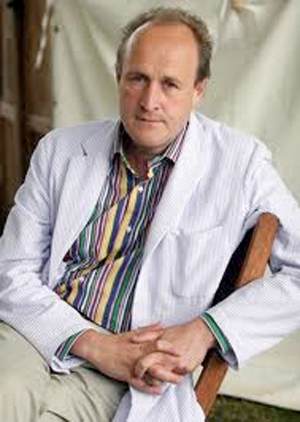 Peter Bazalgette, the television auteur who brought you Big Brother, has been appointed Chairman of the Arts Council. He will probably do nothing at all and replaces the previous person who did nothing at all next January. A monkey could be an effective Chairman of the Arts Council. Let’s face it, how difficult is it to give money to the same recipients every year?