Category: Editorials

  • Tottenham Caught Napping

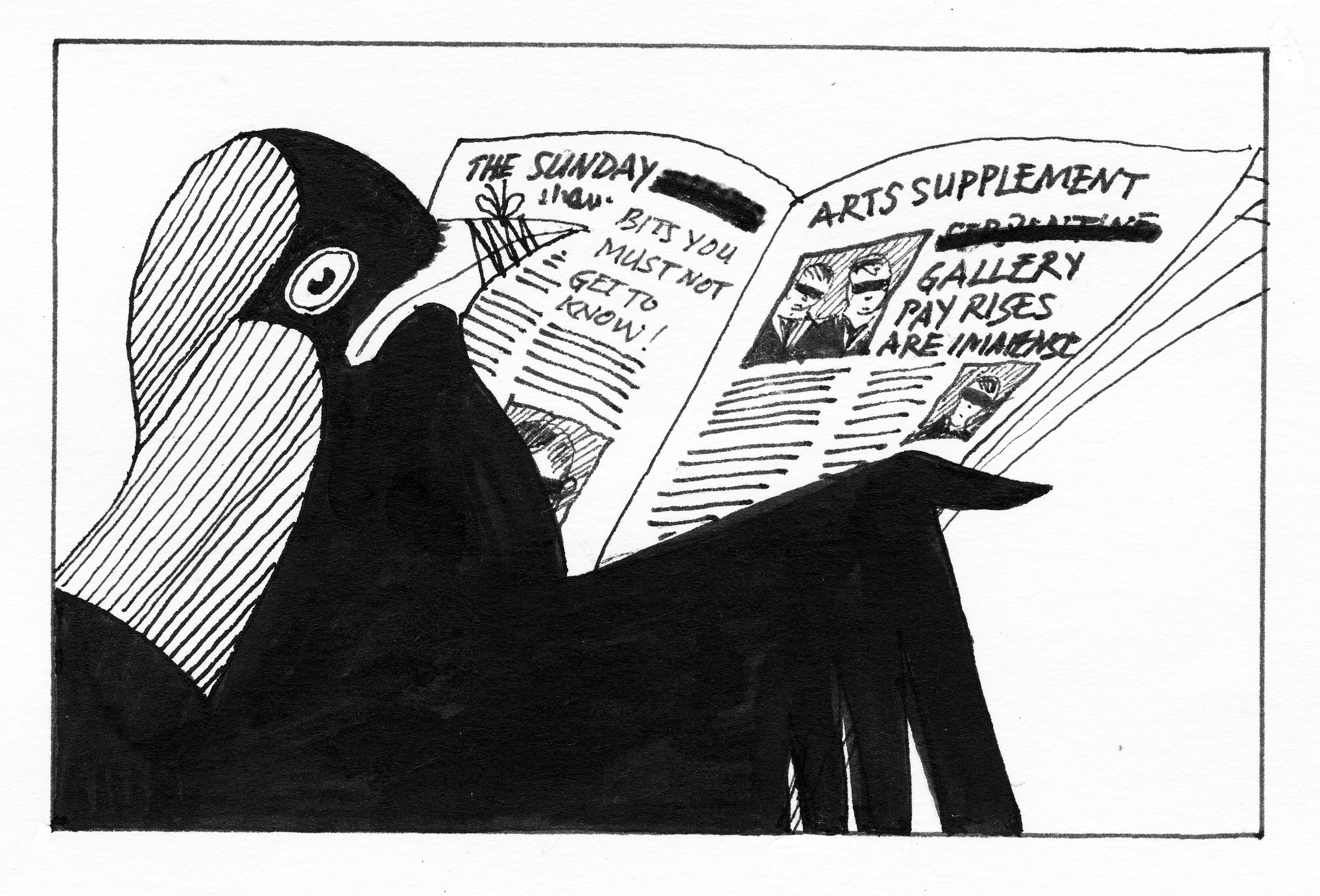
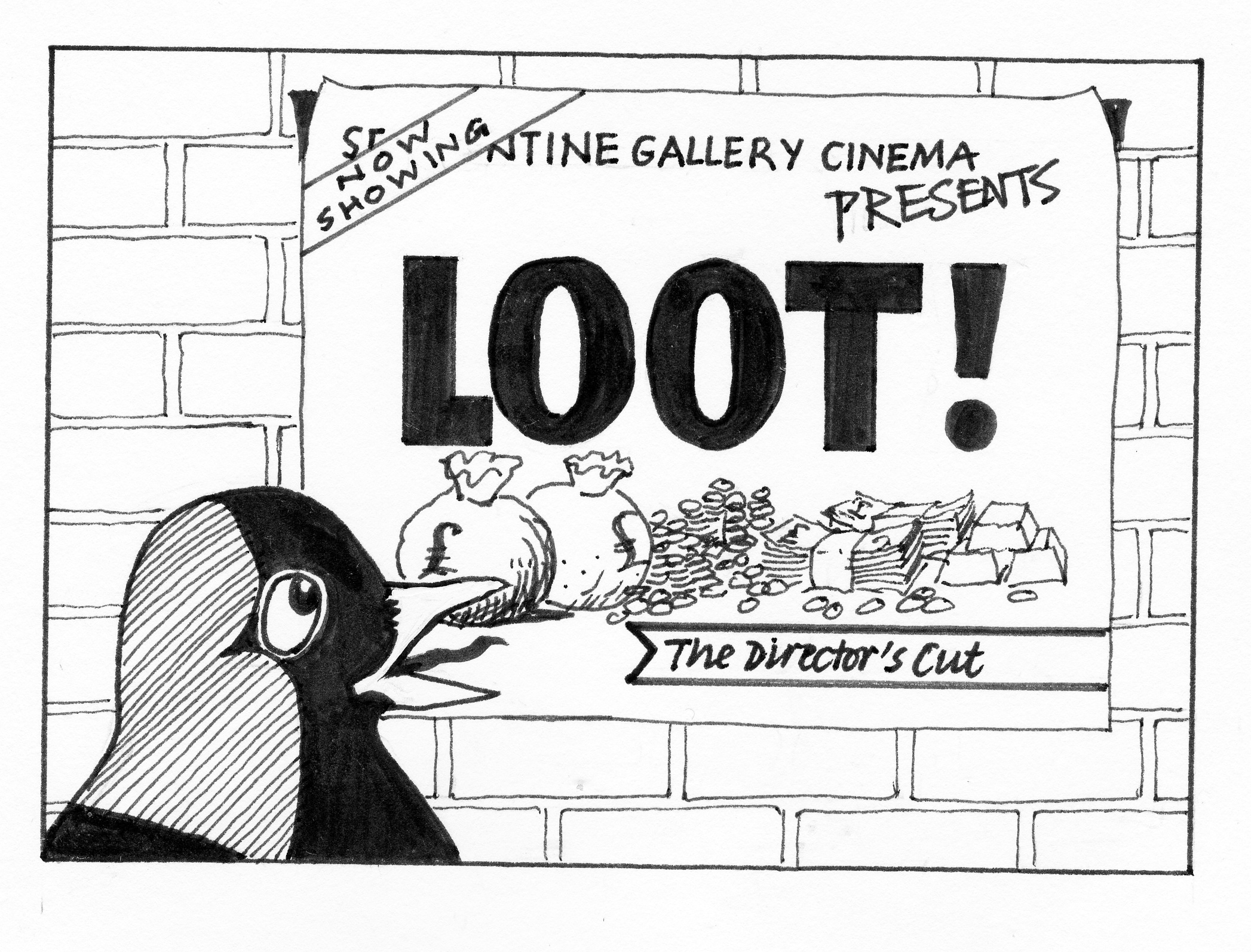
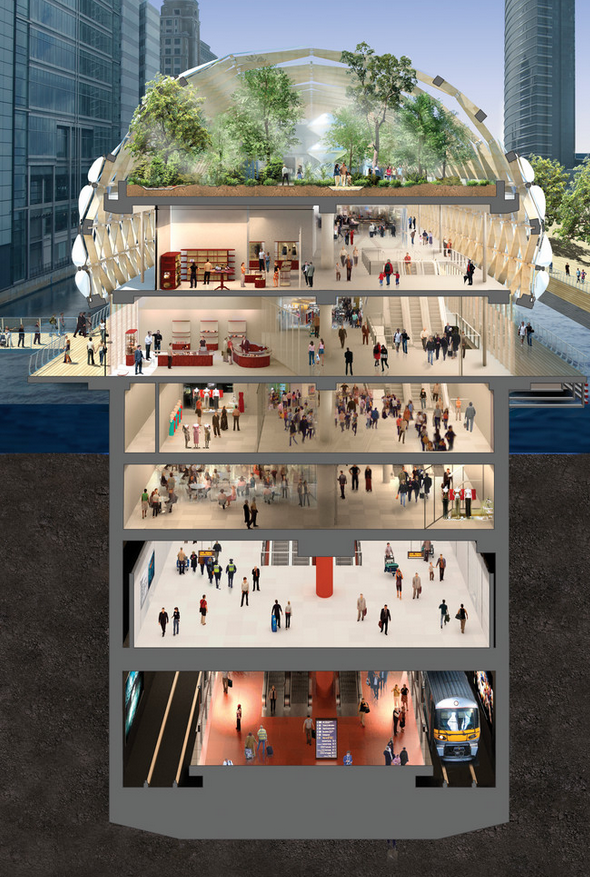
    Advised that as part of the Crossrail project (current budget £15 billion) each of five central London tube stations through which it passes had been allocated, for the purpose of decoration by their artists, to the five principal dealers associated with State Art, you might think a major public contract couldn’t possibly get away with such lazy commercial partiality. In fact, this is precisely what has happened. That such a deal could have been allowed to proceed without the merest peep of suspicion or opposition from any commentators indicates just how far it is now taken for granted that private, mercenary interests in art dovetail perfectly with those of supposedly ‘independent’ opinions and wider public policy. State Art has sold its soul. It has been bought.

    Each gallery will select its own artists for commissions worth up to a million quid apiece, which are then given the nod by a panel. This devolution of responsibility saves overseers the trouble of actually thinking about it for themselves.

    Recently trumpeted is the tarting up of Tottenham Court Road underground by two Turner Prize winners: Douglas Gordon, who makes tedious films of no recognisable artistic or cinematic merit; and Richard Wright, who does wall patterns of an appropriately ‘challenging’ persuasion. Needless to say, even before the artists have lifted a phone, their efforts have been declared ‘masterpieces’.

    The previous artist to ornament TCR tube was Eduardo Paolozzi in 1984. He covered tunnels with mosaics in that colourful wiring-diagram-cum-snakes-and-ladders idiom he was partial to for so long. According to The Twentieth Century Society, who are eager to preserve them, some of these are now under threat, although Transport for London has said “we’ll do our best to protect as much as we can” – which makes it sound as if the demolition ball is already swinging ominously nearby. Not that Paolozzi’s murals are that significant – let’s face it, they’re hardly the Stanza della Segnatura.

    The Crossrail art project, also now designated The Culture Line, describes its process as follows. “Artworks are being selected by an advisory Round Table of representatives from national and local arts organisations and commercial galleries. Among the galleries already identified to work in partnership with Crossrail are Lisson Gallery for Paddington station, Victoria Miro for Liverpool Street, Gagosian for Tottenham Court Road, White Cube for Bond Street station and Sadie Coles for Farringdon. Crossrail is in discussions with other renowned galleries for the remaining stations at Whitechapel and Canary Wharf.” Renowned, indeed… And thus it is that Gordon and Wright are represented by Gagosian, who looks after Christopher Wool (editorials passim) and eleven of the twenty bestselling artists at auction.

    When State Art is the very fabric of the establishment choosing committee candidates never results in a range of opinions. Thus, these “advisory round tables” are always euphemisms for the usual suspects. And here, as ever, the chosen few have not let us down, having dutifully selected as beneficiaries others from the top table of State Art. Some of these knights and damsels of the round table have been previously associated with high profile galleries and, who knows, might like to renew their trade connections in the future.

    Honestly though, how long must it take for a colloquium of State Art lickspittles to arrive at the names of the five most fashionable mongers in the West End? Three minutes? Two? A quick round of skinny lattes and jammy dodgers and Bob’s your uncle – then it’s off home for a well-earned tweet. Wouldn’t you just love to have eavesdropped ‘negotiations’ resulting in the richest galleries being allocated discreet chunks of Crossrail action? Without question the process will have been as pure and disinterested as the driven snow.

    It is further announced that at Paddington Lisson’s American conceptual artist, one Spencer Finch, is to adorn the glass canopy of the new station with a sort of taxonomy of skies. He said: “I am so excited to have this opportunity to get to know these English clouds and do something beautiful with them on a grand scale.” He should get Constable on fast dial.

    David Lee

    The Jackdaw March/April 2015

    http://www.crossrailart.co.uk/the-culture-line/
     

  • ‘Sculpture’ versus Sculpture

    ‘Sculpture’ versus Sculpture

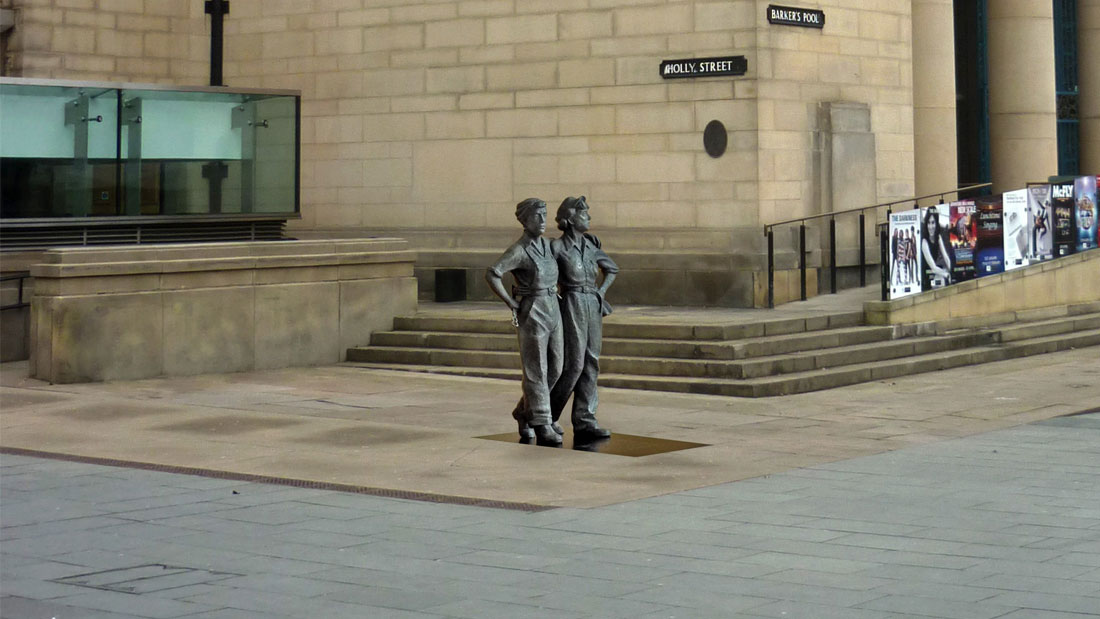
    Women of Steel by Martin Jennings

    Among the least impressive legacies of arts administrators’ obsession with Modernism and its aftermath is the impossibility of predicting a work’s status solely from its appearance. You might form your own view about it, but you can’t predict what State Art’s opinion will be because there are no published criteria or guidelines for making such a judgement. You can’t second guess a whim. The bottom line is that we have allowed a body of ‘experts’ to evolve who unashamedly make it up as they go along. This gullibility on our part for allowing it to happen, and the smug charlatanism of those in authority who are impervious to and ignoring of criticism, is the inevitable result of being for decades under the thumb of an establishment which – for all its daily protestations to the contrary – is not only awash with cash and therefore patronage, but has decided, god-like, that anything at all can be art if it says it is. In its way State Art’s is as extreme a form of capricious and intolerant dictatorship as any regime in North Korea.

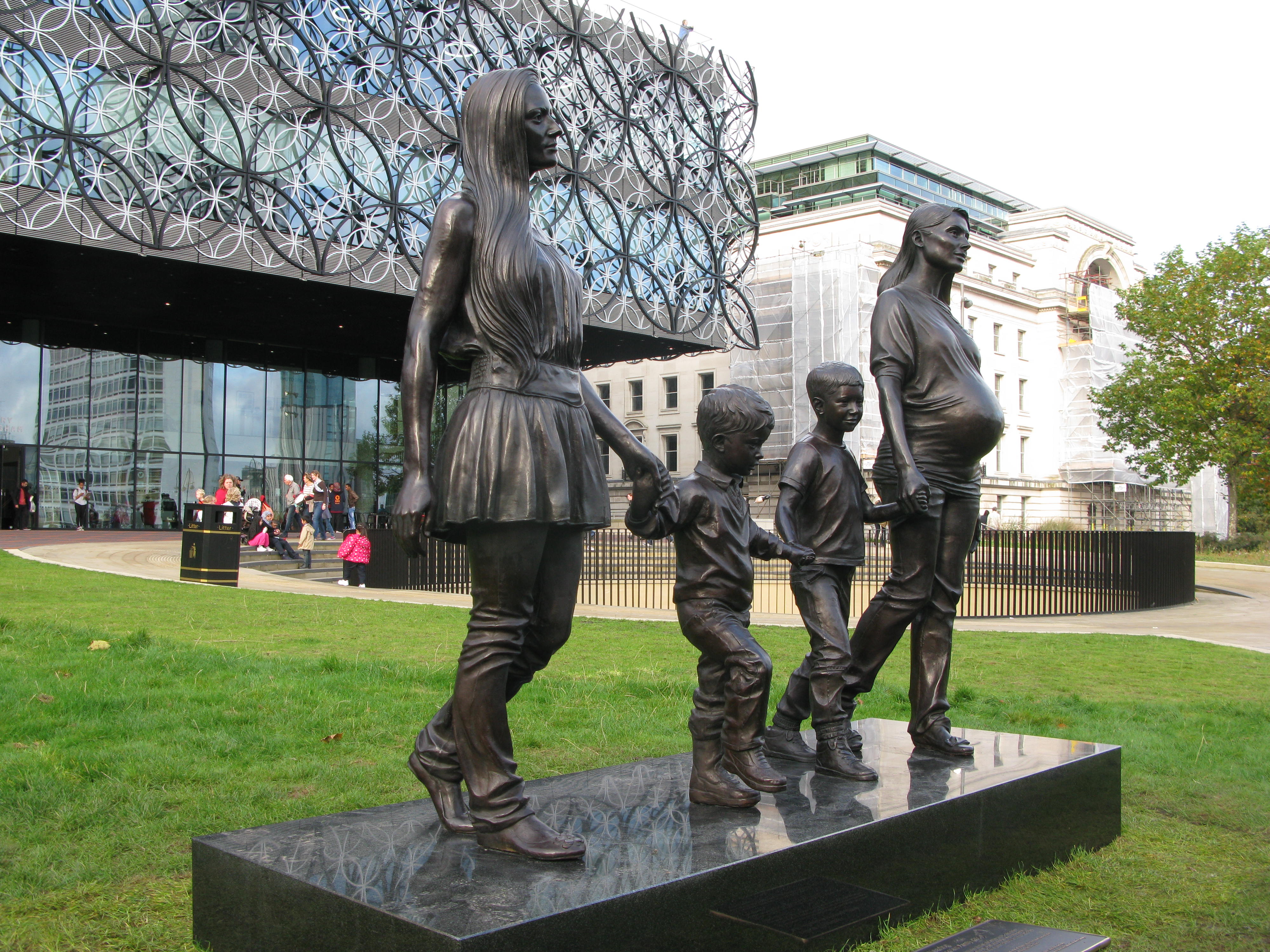
    There is a useful current example of how fossilised prejudice and arbitrariness inform establishment policy. It concerns two works of public art each designed for city locations. Both are, on the face of it, conventional figurative bronzes. Superficially similar though they may seem, to the Arts Council there is an enormous gulf in acceptability between the two, a difference invisible to you and I. One of these works, that recently unveiled outside the tacky new public library in Birmingham and called A Real Birmingham Family, is a ‘challenging’ piece presenting two local women and their children. The other, depicting women in overalls and commemorating the crucial contribution of female workers to the steel industry during the World Wars, will soon be unveiled in Sheffield.

    The Birmingham sculpture is by former Tate trustee Gillian Wearing. Obviously she didn’t make the sculpture herself, a skilful craftsman will have run it up from snaps. The result is a hideous, styleless simulacrum of real people, the point of it being to promote the view that nuclear families are not now the norm – how very trendy, how perfectly BBC. This sort of conceptual conceit must of necessity be a sculpture-free zone because the last thing Wearing wants is for the object to be gauged by its form rather than for its ‘idea’ – albeit one which, to the rest of us, would be so small as to be not worth the effort and expense of illustration. As sculpture it stinks, it’s stillborn.

    In contrast, the Sheffield piece is a work of imagination and looks like a sculpture because it was made, with his own hands, by Martin Jennings, a renowned specialist in this area of modelling and invention. To State Art this sort of traditional approach is vile anathema.

    But here’s the real rub. Conceptual art, even when it comes in the otherwise despised bronze figurative form, is funded by the Arts Council, to whom Wearing is well known. She has had two national touring shows and has exhibited in every ACE-funded gallery. ACE also bought in 1999, for £30,000, her Turner Prize winning film in which two dozen coppers stand silently still for an hour. Confirmation of her A-list status is supported by the fact that 31 of her works are in the Tate, Arts Council, British Council and Government collections: curiously, all four own an edition of the same print, unnecessary duplication of a kind that ought to have been outlawed years ago. Wearing’s family sculpture was administered by local Ikon Gallery, which itself receives over half a million a year from the public.

    In contrast, Sheffield had to find all the money through public donations because Martin Jennings is the wrong kind of artist.

    State Art always prefers ears to eyes and has never based funding decisions on the merit of what you actually see. Why artists nationwide are not campaigning about ACE’s continued unfair discrimination and casuistry is baffling.

    Here is yet another filthy, indefensible racket.

    David Lee

    The Jackdaw Jan/Feb 2015

    A Real Birmingham Family by Gillian Wearing


  • Christopher Wool and the art market: selling the soul

    Christopher Wool and the art market: selling the soul

    American painter Christopher Wool (b. 1955) has been described by the New Yorker as “perhaps the most important painter of his generation”. Christie’s are in less doubt, describing him as “one of the last century’s most influential artists”. Even by the risible standards of bullshit spouted by auction houses and art dealers this is ridiculous. I’ve never heard anyone, artist or otherwise, ever say they were influenced by Wool. Have you? Well have you? Indeed, I’d never heard of him at all until about a year ago.

    Wool joined Gagosian in 2006, since when the noughts increased and the words got longer. In 2009, courtesy of an organisation called The American Fund for the Tate Gallery, the first of two Wools entered our national collection – the second, acquired in 2012, was also secured in part courtesy of this same influential body. No institution in the UK has ever staged an exhibition of Wool’s work, but let’s face it such a ‘celebration’ can’t now be far off. His backers will surely procure one soon. I wonder which gallery will be first to follow the money.

    To investigate how the art market operates I’ll concentrate on the sale of one of his pictures for two irreconcilable reasons: first, like Polaris blasting from under the ice cap, his reputation has been suddenly, suspiciously meteoric; second, I can’t discover an atom of merit or originality in anything he does. He is, therefore, a revealing example of how the art market, which is so disproportionately influential in dictating what we see in public galleries, is run for the investment benefit of rich people. (One of the most important dealers in contemporary art said recently of his collectors: “They have no interest whatsoever in art; they look at paintings as a diversification of their investments.”)

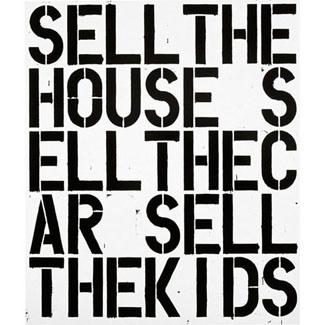
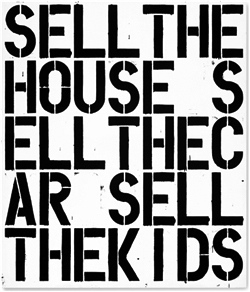
    Illustrated opposite is Apocalypse Now. This 1988, 7’ x 6’ work, painted in polyester enamel on aluminium, was sold by Christie’s last year for $26.4 million, over three times the previous artist’s record. Manifesting more than a trace of evangelical fervour, the person who bought it gushed: “I wanted the absolute best work by that artist and this is the best of the best. It’s in another league. There is Apocalypse Now and then everything else.” Why it should be ‘better’ and more valuable than similarly fabricated Wools reading SEX LUV, FOOL, BAD DOG and IF YOU CANT TAKE A JOKE YOU CAN GET THE FUCK OUT, one can only speculate.

    The technique is stencil, in mimicry of the graffiti legends and adverts which are supposedly its inspiration. And before you commend the concise nihilism of the message, these words are not the artist’s own. They are the looney Kurtz’s exhortation to his abandoned wife in Coppola’s Apocalypse Now: “Sell the house. Sell the car. Sell the kids. Find someone else. Forget it. I’m never coming back. Forget it.”

    Nothing about this piece, either in its handling or conception, might make you think it is of remarkable value. Indeed, objectively there is no good reason why it might not be worth 25 bob instead of 25 million. What establishes its value is something you can neither see nor understand without being indoctrinated as to what it is … usually by someone with an interest in flogging it for as much as possible. Its value resides purely in its perceived status as a tradeable luxury. It has, curiously, no more intrinsic value than any other share certificate.

    In its short life Apocalypse Now has passed through ten billionaire collectors. All were Americans except one, Frenchman François Pinault, five back, who is the proprietor of Christie’s, the firm who sold it this time. Incidentally, the owner before Pinault was Donald Bryant, until recently a trustee of MoMA New York who is also on the aforementioned ‘American Fund’ committee of the Tate, which was instrumental in the Gallery acquiring both its Wools. Californian winemaker Bryant obviously likes Wool, but not sufficiently, it seems, to hang on to what is allegedly his pièce de résistance. You will have noticed that the world of posh art is a very small and incestuous one.

    The speed of turnover in Apocalypse Now – 30 months on average – tells us something about the motivation of modern collectors, for whom genuine discernment would appear to be the last thing on their mind. The very idea of connoisseurship or discernment in collecting contemporary art is an absurd notion when the relative value of a work can be made up so it flies in the face of the little you can actually see. Art is now a fund manager’s hobby, a gamble or a pitch from which, as with any other investment, profit is periodically milked.

    The last seller of the picture, hedge-funder David Ganek, is also a trustee of the Guggenheim Museum in New York where Wool just happened to be enjoying a retrospective coincident with the auction of Apocalypse Now. In 2010, Ganek’s business partner was convicted for insider trading. Though himself deemed a co-conspirator Ganek was never charged. He left his company and paid $25 million in fines. There is a book to be written about the connection between contemporary art and insider trading. Everyone has now forgotten that the first sponsor of the Turner Prize, Michael Milken, the inventor of junk bonds, got four years for related offences. No more telling indictment of the contemporary art market exists than that it appeals to high-risk investors, hedgers and generally shifty operators to whose activities the cachet of art ownership is used to lend a patination of social respectability.

    Was the sale of Apocalypse Now a straightforward auction? No it wasn’t. It was sold before the sale because a guarantor had underwritten the low estimate price of $15 million. A third of the works in the same auction were also the subject of pre-sale guarantees.

    Christie’s threw their all behind this lot claiming that Apocalypse Now “is the emblem of a generation” – an obvious lie. They continued: “Christopher Wool’s Apocalypse Now is the essential image of our times… It’s much anticipated appearance at auction, firmly places Wool amongst the pantheon of great masters of the 20th century.” There you have it: “the essential image of our times”. Not the twin towers, or Obama being sworn in, or Neil Armstrong, or Mandela striding victorious from jail, or tanks in Prague or Tianenmen Square, or even Sergio Aguero scoring in extra time, but this second-hand slogan.

    And what of the artist himself? He has said: “With the painting the inspiration comes from the process of the work itself. Like music making the work is an emotional experience. It’s a visual language and it’s almost impossible to put words to it.” Not half.

    What conclusions might we draw from all this perversion of genuine standards:

    1. Monetary value is unrelated to aesthetic worth. By looking at contemporary art you can’t even guess to within three noughts what it might cost.

    2. Once a powerful cocktail of mutually interested dealers and speculators get behind an artist their rise is unstoppable. The auction market in contemporary art is a game played by six of the world’s biggest dealers, two salesrooms, 40 artists, about 30 billionaires and a clique of subservient museum directors and careerist curator-clones. No one else matters. In 2012 11 of the top 20 artists sold at auction were represented by Wool’s dealer Gagosian.

    3. Most commentary on the art market is disgraceful advertisement.

    4. At the top end, the art market encourages a sort of religious cult participation by hobbyist fat cats eager to cash in on safe bets.

    5. When the auction market has nothing to do with liking art or actual visible qualities, the dealer is happy, the artist is happy, the seller is happy, the other collectors of the same artists’ works are happy, and the auctioneer is deliriously, pants-wetting happy.

    6. The cowardly complicity of State Art before this squalid system is a shocking betrayal of what they really ought to be standing up for.

    The whole thing is a filthy racket.

    David Lee

    The Jackdaw, Nov-Dec 2014


  • The art market – selling the soul

    The art market – selling the soul

    American painter Christopher Wool (b. 1955) has been described by the New Yorker as “perhaps the most important painter of his generation”. Christie’s are in less doubt, describing him as “one of the last century’s most influential artists”. Even by the risible standards of bullshit spouted by auction houses and art dealers this is ridiculous. I’ve never heard anyone, artist or otherwise, ever say they were influenced by Wool. Have you? Well have you? Indeed, I’d never heard of him at all until about a year ago.

    Wool joined Gagosian in 2006, since when the noughts increased and the words got longer. In 2009, courtesy of an organisation called The American Fund for the Tate Gallery, the first of two Wools entered our national collection – the second, acquired in 2012, was also secured in part courtesy of this same influential body. No institution in the UK has ever staged an exhibition of Wool’s work, but let’s face it such a ‘celebration’ can’t now be far off. His backers will surely procure one soon. I wonder which gallery will be first to follow the money.

    To investigate how the art market operates I’ll concentrate on the sale of one of his pictures for two irreconcilable reasons: first, like Polaris blasting from under the ice cap, his reputation has been suddenly, suspiciously meteoric; second, I can’t discover an atom of merit or originality in anything he does. He is, therefore, a revealing example of how the art market, which is so disproportionately influential in dictating what we see in public galleries, is run for the investment benefit of rich people. (One of the most important dealers in contemporary art said recently of his collectors: “They have no interest whatsoever in art; they look at paintings as a diversification of their investments.”)

    Illustrated opposite is Apocalypse Now. This 1988, 7’ x 6’ work, painted in polyester enamel on aluminium, was sold by Christie’s last year for $26.4 million, over three times the previous artist’s record. Manifesting more than a trace of evangelical fervour, the person who bought it gushed: “I wanted the absolute best work by that artist and this is the best of the best. It’s in another league. There is Apocalypse Now and then everything else.” Why it should be ‘better’ and more valuable than similarly fabricated Wools reading SEX LUV, FOOL, BAD DOG and IF YOU CANT TAKE A JOKE YOU CAN GET THE FUCK OUT, one can only speculate.

    The technique is stencil, in mimicry of the graffiti legends and adverts which are supposedly its inspiration. And before you commend the concise nihilism of the message, these words are not the artist’s own. They are the looney Kurtz’s exhortation to his abandoned wife in Coppola’s Apocalypse Now: “Sell the house. Sell the car. Sell the kids. Find someone else. Forget it. I’m never coming back. Forget it.”

    Nothing about this piece, either in its handling or conception, might make you think it is of remarkable value. Indeed, objectively there is no good reason why it might not be worth 25 bob instead of 25 million. What establishes its value is something you can neither see nor understand without being indoctrinated as to what it is … usually by someone with an interest in flogging it for as much as possible. Its value resides purely in its perceived status as a tradeable luxury. It has, curiously, no more intrinsic value than any other share certificate.

    In its short life Apocalypse Now has passed through ten billionaire collectors. All were Americans except one, Frenchman François Pinault, five back, who is the proprietor of Christie’s, the firm who sold it this time. Incidentally, the owner before Pinault was Donald Bryant, until recently a trustee of MoMA New York who is also on the aforementioned ‘American Fund’ committee of the Tate, which was instrumental in the Gallery acquiring both its Wools. Californian winemaker Bryant obviously likes Wool, but not sufficiently, it seems, to hang on to what is allegedly his pièce de résistance. You will have noticed that the world of posh art is a very small and incestuous one.

    The speed of turnover in Apocalypse Now – 30 months on average – tells us something about the motivation of modern collectors, for whom genuine discernment would appear to be the last thing on their mind. The very idea of connoisseurship or discernment in collecting contemporary art is an absurd notion when the relative value of a work can be made up so it flies in the face of the little you can actually see. Art is now a fund manager’s hobby, a gamble or a pitch from which, as with any other investment, profit is periodically milked.

    The last seller of the picture, hedge-funder David Ganek, is also a trustee of the Guggenheim Museum in New York where Wool just happened to be enjoying a retrospective coincident with the auction of Apocalypse Now. In 2010, Ganek’s business partner was convicted for insider trading. Though himself deemed a co-conspirator Ganek was never charged. He left his company and paid $25 million in fines. There is a book to be written about the connection between contemporary art and insider trading. Everyone has now forgotten that the first sponsor of the Turner Prize, Michael Milken, the inventor of junk bonds, got four years for related offences. No more telling indictment of the contemporary art market exists than that it appeals to high-risk investors, hedgers and generally shifty operators to whose activities the cachet of art ownership is used to lend a patination of social respectability.

    Was the sale of Apocalypse Now a straightforward auction? No it wasn’t. It was sold before the sale because a guarantor had underwritten the low estimate price of $15 million. A third of the works in the same auction were also the subject of pre-sale guarantees.

    Christie’s threw their all behind this lot claiming that Apocalypse Now “is the emblem of a generation” – an obvious lie. They continued: “Christopher Wool’s Apocalypse Now is the essential image of our times… It’s much anticipated appearance at auction, firmly places Wool amongst the pantheon of great masters of the 20th century.” There you have it: “the essential image of our times”. Not the twin towers, or Obama being sworn in, or Neil Armstrong, or Mandela striding victorious from jail, or tanks in Prague or Tianenmen Square, or even Sergio Aguero scoring in extra time, but this second-hand slogan.

    And what of the artist himself? He has said: “With the painting the inspiration comes from the process of the work itself. Like music making the work is an emotional experience. It’s a visual language and it’s almost impossible to put words to it.” Not half.

    What conclusions might we draw from all this perversion of genuine standards:

    1. Monetary value is unrelated to aesthetic worth. By looking at contemporary art you can’t even guess to within three noughts what it might cost.

    2. Once a powerful cocktail of mutually interested dealers and speculators get behind an artist their rise is unstoppable. The auction market in contemporary art is a game played by six of the world’s biggest dealers, two salesrooms, 40 artists, about 30 billionaires and a clique of subservient museum directors and careerist curator-clones. No one else matters. In 2012 11 of the top 20 artists sold at auction were represented by Wool’s dealer Gagosian.

    3. Most commentary on the art market is disgraceful advertisement.

    4. At the top end, the art market encourages a sort of religious cult participation by hobbyist fat cats eager to cash in on safe bets.

    5. When the auction market has nothing to do with liking art or actual visible qualities, the dealer is happy, the artist is happy, the seller is happy, the other collectors of the same artists’ works are happy, and the auctioneer is deliriously, pants-wetting happy.

    6. The cowardly complicity of State Art before this squalid system is a shocking betrayal of what they really ought to be standing up for.

    The whole thing is a filthy racket.

    David Lee

    The Jackdaw Nov/Dec 2014


  • Arts Council – time for action

    A submission to the House of Commons’ Select Committee for Culture concerning their short enquiry into the commissioning criteria used by the Arts Council of England.

    From the editor of The Jackdaw

    Your interest in the artistic criteria underpinning ACE’s funding decisions is a subject which has long exercised me. I wish to demonstrate here that where they are not clouded in the secrecy of woolly definitions, the artistic criteria used by ACE in the visual arts are partial and excluding of most artists in Britain whose interests the Council should be representing.

    During the 35 years I have been writing about art, the last 20 spent editing two magazines, Art Review and The Jackdaw, I have watched the Arts Council become an oppressive dictatorship of narrow taste. No other phrase adequately describes the stranglehold they exercise over the visual arts.

    The Council does not respond objectively to what is being made by artists. Far from it. Instead, it prescribes the kind of work it wishes to support. This partiality has been allowed to develop because politicians hide behind the ‘arms–length principle’ by which they distance themselves from artistic decision making. ACE has used this convenient indifference to promote its beliefs unhindered. It is long overdue that this ‘arm’ was cut off.

    So entrenched has this system now become that if you were devising a means of dispensing public money to visual arts you would look at the way we do it today as a demonstration of what to avoid. The Arts Council has encouraged an unhealthy ‘us’ and ‘them’ mentality.

    In a perfect world a body spending enormous sums of public cash would at least attempt to make a show of even-handedness. It would recognise the diversity of excellence existing in visual art styles across the whole of the fine art spectrum; that is, from those at the more traditional end to the innovators at the other. Both ends, and all those markers in between, have their place in a healthy system appealing to audiences of different expectations and with different tastes.

    For a generation after its foundation in 1946, the Arts Council did precisely this. It recognised the full range of possible styles. But not any longer. Now it is willing to support only what it calls in its literature “challenging” or “cutting edge” work.  In a booklet published five years ago, supposedly to define its objectives in visual art, it used the word “challenging” over 50 times in 80 pages but failed to say precisely what “challenging” actually means when they use it. In my view they leave it sufficiently vague so they might conveniently make it up as they go along.

    By experience we know that “challenging” to them means the kind of work loosely dubbed ‘Conceptual’. This means the type of art which, since 1984, is nominated for the Turner Prize. What we get from the Arts Council through its gallery network is the visual equivalent of being fed porridge for every meal. You only have to examine the programmes of the nine major art galleries in London funded by the Council to see the truth of this policy in operation. Only very rarely do they show anything else but conceptual work. This is the reason why so many artists whose efforts are not deemed sufficiently “challenging” feel that the Arts Council does not represent them; indeed, I know from received correspondence that many feel it has failed them utterly.

    The ACE in its visual arts policy has become an Academy representing what it claims is the avant-garde. And like all orthodoxies it is intolerant of anything else.

    A topical example of their policy in practice is the case of First Sight, a £40 million art centre opened two years ago in Colchester. It is revenue-funded by the Arts Council. Attendance at the gallery dropped dramatically in the last year because the programme of work that the Arts Council makes contingent on their continued funding is limited to what most locals do not want to see all the time – correspondence columns in local newspapers are clear on this. As far as I can recall, for the first time in the history of an ACE funded gallery, the director of First Sight has admitted that as far as the exhibition programme is concerned his hands are tied. If he varies the diet to include what some locals might wish to see the Arts Council will discontinue support. Such autocratic behaviour is threatening the very survival of the gallery. First Sight is beginning to smell like a re-run of The Public in West Bromwich, that ghastly Arts Council mistake which closed recently having swallowed close on £50 million. It seems that the Arts Council never learns.

    Not only is the ACE selection criterion dictatorial it is also unnecessarily duplicating. I draw your attention to the current exhibition of work by the Chapman Brothers at the Serpentine Gallery, which is funded by the Arts Council. These artists, who are among the more original in the conceptual fold, have shown recently in many public art galleries, from the Tate to the British Museum. The brothers are represented by a commercial dealer, White Cube, which is among the wealthiest contemporary art businesses in the world; indeed, they run two large galleries in London. Why is it necessary to show the work of these artists in a publicly funded space when they are already widely exhibited and their own dealer has larger nearby premises of its own than the Serpentine can offer? When so many other artists go unexhibited this obsession with the same few names is indefensible.

    The process by which public galleries promote and further endorse a few successful brand names is one which should be investigated at the earliest opportunity. It stinks.

    As stated above, in the distant past ACE galleries staged mixed programmes in which innovation found its place alongside historical surveys and retrospectives of artists of all descriptions and ages. This is no longer the case. ACE has inflicted upon us a virtual tyranny of youth and has ensured that the generations of British artists over 50 have been betrayed and abandoned by the Council.

    I wish you to consider the following:

    1. No publicly funded body should ever be allowed to state, as has the Arts Council, that there are “the wrong kinds of artists” and, therefore, by implication “the right kind”. This is an insult. Yes there are ‘good’ and ‘bad’ artists but there are no ‘right’ and ‘wrong’ ones.

    2. A publicly funded Arts Council should not be a blunt instrument for promoting brand name stars represented by a handful of wealthy commercial dealerships.

    3. ACE should not be allowed to blackmail or dictate selection policy to galleries they help support. Directors should be free to show whatever they deem worthy in order to attract diverse audiences to their venues. Indeed, directors should be encouraged to surprise us by showing the rich wealth of work being produced in the country, as well as in their locality. The prevailing attitude, adopted by the Council, that ‘You will have to like what we give you’ must stop.

    4. The programmes of ACE galleries should reflect the diversity of what is being produced by artists and equally encourage proposals from outsiders for historical exhibitions and retrospectives and surveys of older British artists.

    David Lee

  • Serpentine Gallery: working at home

    The last three editorials have dealt with a charity called the Serpentine Gallery. We’ve observed limousines lined up outside signifying whose interests the gallery really serves. We have identified overmanning and fat cat pay increases for two directors. And, last time, we highlighted an outside PR agency working between press and gallery in order to disarm justified criticism.

    Apologies for boring you further, but there’s more. I’m not satisfied we’ve got to the bottom of Hans Ulrich Obrist’s presence at the Serpentine. He is, after all, a second highly overpaid director in a publicly funded gallery whose peer organisations employ only one director for a quarter of the cost of Obrist and Peyton-Jones combined. I question the need for the supernumerary Obrist.

    When I asked the gallery how many days Obrist spent there in 2013 they answered, ambiguously to my mind: “He works full-time at the Serpentine gallery.” Well, yes. But hang on a minute: “He travels a great deal, usually at the weekends, and works remotely at these times.” Why does organising an exhibition programme for the Serpentine involve such “a great deal” of travel?

    You may recall from a recent editorial that Obrist enjoyed an almost 50% pay increase to between £130,000 and £140,000 a year, putting him on a par with major museum directors worldwide. For example, he earns considerably more than the director of Tate Britain who is responsible for a gallery many times larger and immeasurably more significant than the Serpentine, not least because it has responsibility for the most important collection of British art.

    The long inventory of ‘foreigners’ Obrist has done during his eight years at the gallery suggests the Serpentine plays at best second fiddle. He has recently curated exhibitions in Essen, Berlin, Zurich and Sao Paolo and published books about Chinese Art, Ai Weiwei, several volumes of interviews and the self-aggrandising The Art of Curation (Allen Lane) published this March. Hot on the heels of this lot, he will co-curate the Swiss pavilion at this year’s Venice Architecture Biennale along with the architects of Tate Modern. In the two most prominent announcements of Obrist’s new job nowhere was it stated that he is co-director of the Serpentine Gallery – as though this is just another sideline.

    This spring he is also curating Luma Arles, a huge enterprise lasting seven months; but this is nothing unusual because he appears to have done it every year since 2008. The Luma Foundation, to which Obrist seems closely attached – both are based in Zurich – also supports the Serpentine. (Luma was founded by Maja Hoffman, a pharmaceuticals heiress, who also serves as a trustee of the Tate, whose film programme, among other things, she pays for.) If Obrist can curate all these major events at the weekend how come it takes him so much time to curate so few exhibitions at the Serpentine? It defies belief that Obrist is anywhere near full time in London. He can’t be. So why is he earning twice the going rate even for a full-timer?

    Could it be that what many of us have suspected for years is true; that there isn’t actually that much involved in curating. It’s just a fancy title signifying not much more than blethering in tongues, writing atrociously and poncing about in black trying to look intelligent.

    The latest accounts for the Serpentine have been posted. They show that since last year the two directors have had their pay cut back (to £120,000 and £110,000 respectively) but nevertheless to a level which still constitutes a 33% and 37% pay increase in two years. Additionally the Serpentine now has three people earning more than the director of Tate Britain and while the Tate, with its vast and complex organisation and collections, has only three staff earning over £100,000, the Serpentine has two.

    The Serpentine Gallery has become a gravy train and if the Arts Council had any balls it would investigate immediately whether its £1.3 million a year subsidy is money well spent.

    David Lee

  • Serpentine Gallery: the black art of hushing it up

    Most readers will be unfamiliar with Bolton and Quinn Ltd, a company which is the subject here. Invisible to the public at large, they operate in a murky hinterland between major galleries and the media encouraging positive coverage of State-approved art. One definition of State Art might simply cite a list of B&Q’s clients, for all the major promoters of Contemporary Art use them as lobbyists, from the Tate to the Arts Council to the Art Fund … and the Serpentine.

    I’ve always wondered what service this company provides for the galleries who pay them, because all the bodies they represent also employ extensive in-house PR departments. If the Tate’s press office (currently comprising twelve members) is so pisspoor that they have to call on additional expertise then surely they should employ people of a higher calibre in the first place. All the organisations prominent in pleading poverty wastefully employ two press offices.

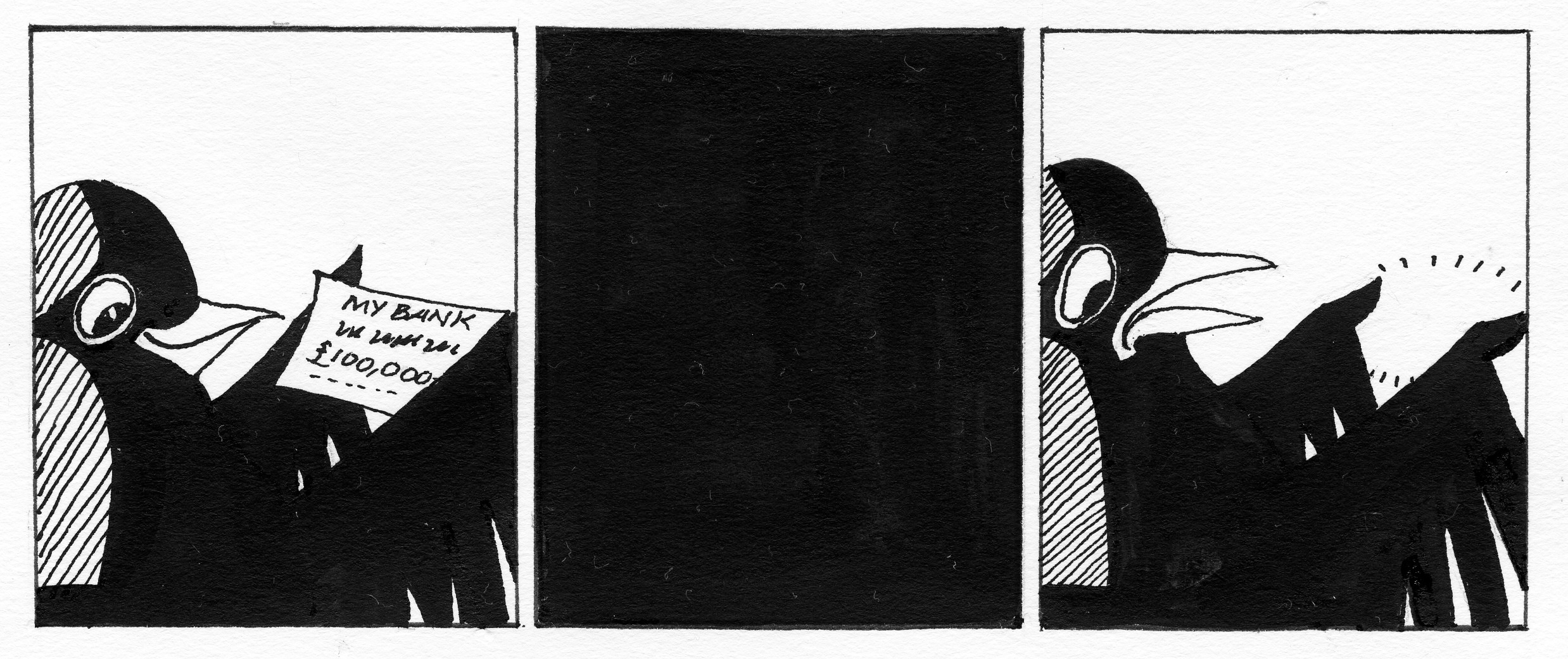
    So what extra-special purchase does contracting B&Q give to those who pay them? I can now call on personal experience to answer this. The last two editorials of The Jackdaw concerned the publicly funded Serpentine Gallery and its two directors who are overpaid by 100% compared to staff in equivalent positions elsewhere. Before Christmas a newspaper was about to trail the Jackdaw’s last editorial and expose the ‘charitable’ 67% and 47% pay increases awarded to the Serpentine’s two co-directors. A reply to these charges from the gallery was considered beyond the capacity of their own media team (all five of them, including a Head of Communications and a Head of Media Relations), whom one can only conclude must be muttonheads. Instead, they called in the household cavalry to charge the cannon. B&Q put their expensive hair-dos together and came up with a riposte so feeble it made me laugh out loud. A teenager on the minimum wage could have concocted something more convincing. So self-evidently accurate were The Jackdaw’s main charges against the Serpentine B&Q didn’t even attempt to answer them, instead resorting in desperation to mutterings about ‘bonuses’. Bonuses for public museum directors? Someone ought to be looking into that! In the end the paper pulled the story at the last minute saying there was no room for it. They still had space, however, for the vital disclosure that Tracey Emin is buying a flat in Manhattan. White Cube, Emin’s shopkeeper, is represented in media matters by … Hello!

    The story of the Serpentine pay increases was run soon afterwards in The Independent, from which many others picked it up. But not before B&Q had approached the paper. It was when I was informed of this that it finally dawned after so many years of bewilderment what precisely the function of B&Q is. They use their extensive contacts to firefight for and lobby on behalf of State Art. Quite how much they get paid for doing this is not revealed in their accounts at Companies House, which effectively tell us nothing.

    What this means is that, when circumstances demand, publicly funded organisations can pay a third party with our cash to assist in preventing us knowing the full story of what these organisations get up to. Thus are the public kept in the dark by use of their own money. If you are a closed monopoly, as State Art is, the advantage of keeping the public as ignorant as possible is an obvious benefit. On their website B&Q refer to this dubious activity as “producing opinion”.

    How might such a relationship work in practice? B&Q are in a strong position to subtly bribe journalists. They can offer trips, home and abroad, and invitations to fancy parties and soirées with all the gubbins of free catalogues, fancy bags and other sweeteners beloved of Fourth Estate liggers. More importantly, they can feed news exclusives about galleries and artists they represent to trusted journalists whose independence of opinion is surely compromised by the relationship.

    The virtual monopoly of favourable comment enjoyed by State Art in newspapers now makes perfect sense to me. David Lee

  • Fat cats in the park

    Arts administrators cleaning up in the name of charity

    In 2011, the Arts Council screamed daily that it was losing over 30% of its annual taxpayer subsidy. “Difficult decisions” and “hard choices” resulted in it cutting completely annual grants to 206 organisations, making many redundant. The Serpentine, meanwhile, was awarded the special status of “a regularly funded organization” – i.e. a reserved Pullman seat aboard the gravy train for life, and no questions asked.

    At a time when fat cats in the City were being daily excoriated for awarding themselves huge pay increases and bonuses during a period of austerity for everyone else they had themselves caused, the two co-directors of the Serpentine (Julia Peyton-Jones since 1991 and Hans-Ulrich Obrist from 2006) were awarded wage increases of 67% and 47% respectively. This inflated their pay to £150,000 and £130,000 a year respectively, a hike which brought both of them within range of what the director of the Tate receives (£161,000); indeed Peyton-Jones earns more than the Prime Minister (£142,500). A quarter of the Serpentine’s basic annual grant from the Arts Council goes on two salaries. Both earn more than the director of Tate Modern (£120,000) and the director of Tate Britain (£89,000). Together they make twice what even the director of the National Gallery earns; £140,000. Heading a small gallery, formerly a tearoom in a park, is costing 74% more a year than Serota himself receives for running an organization with 60 times the turnover, 100s of times the size, and 15 times the number of visitors. Charity definitely begins at home at the Serpentine.

    And why does the Serpentine need two directors anyway? No other minor public gallery needs more than one. On the contrary, they run their often bigger operations for the cost of half of one director at the Serpentine. Neither can Obrist claim to be anywhere near a full-time employee, given the impressive number of outside commissions he has undertaken during his tenure in the park. The Charity Commission, recently taken to task by the Audit Commission for complacency and incompetence, should urgently investigate this profligacy.

    Neither do the directors deserve anywhere near what they receive, for their performance is lamentably below average. It’s not even as though they have a difficult job. Over the last few years half of their main exhibitions have dealt with either Tate trustees or Turner Prize winners or nominees. How difficult is it to draw up a list of those kinds of candidates for exhibition? Dawdling, one could pencil in a year’s exhibitions of that kind over coffee. Their programme is unimaginative and otherwise overly concerned with foreign artists many of us have never heard of and the standard of whose work is on the face of it unexceptional. They have staged no retrospectives of deserving British artists of the kind which were regularly organised by previous regimes, and which made the place unavoidably important. In those days it could at least argue that some public service was being performed. Nowadays, it succours only dealers and rich collectors.

    The current exhibition (until February 9th) features Jake and Dinos Chapman. The brothers have shown recently at the Royal Academy, Tates Britain and Liverpool, the ICA and the British Museum. So why do they need another exhibition at the subsidised Serpentine when their own commercial dealer, White Cube, runs two big premises in central London? Apparently, it requires support from a charity to showcase works by artists already widely exhibited and who are among the wealthiest and most exhibited in contemporary art. This is not ‘Charity’ by any currently known definition of the term.

    For all its millions in public subsidy (and don’t forget it has also collected no fewer than twelve National Lottery awards) the Serpentine fails conspicuously in two respects: for a charity it costs too much to run, is overmanned and pays its top staff double the going rate; secondly, it doesn’t show enough work by British artists of the kind who are deserving but rarely exhibited.

    The Serpentine does no service to the wider community of British artists and its public subsidy should be immediately suspended.

    David Lee

  • The Serpentine as fat cat

    Why should the interests of those in limousines be subsidised by the rest of us?

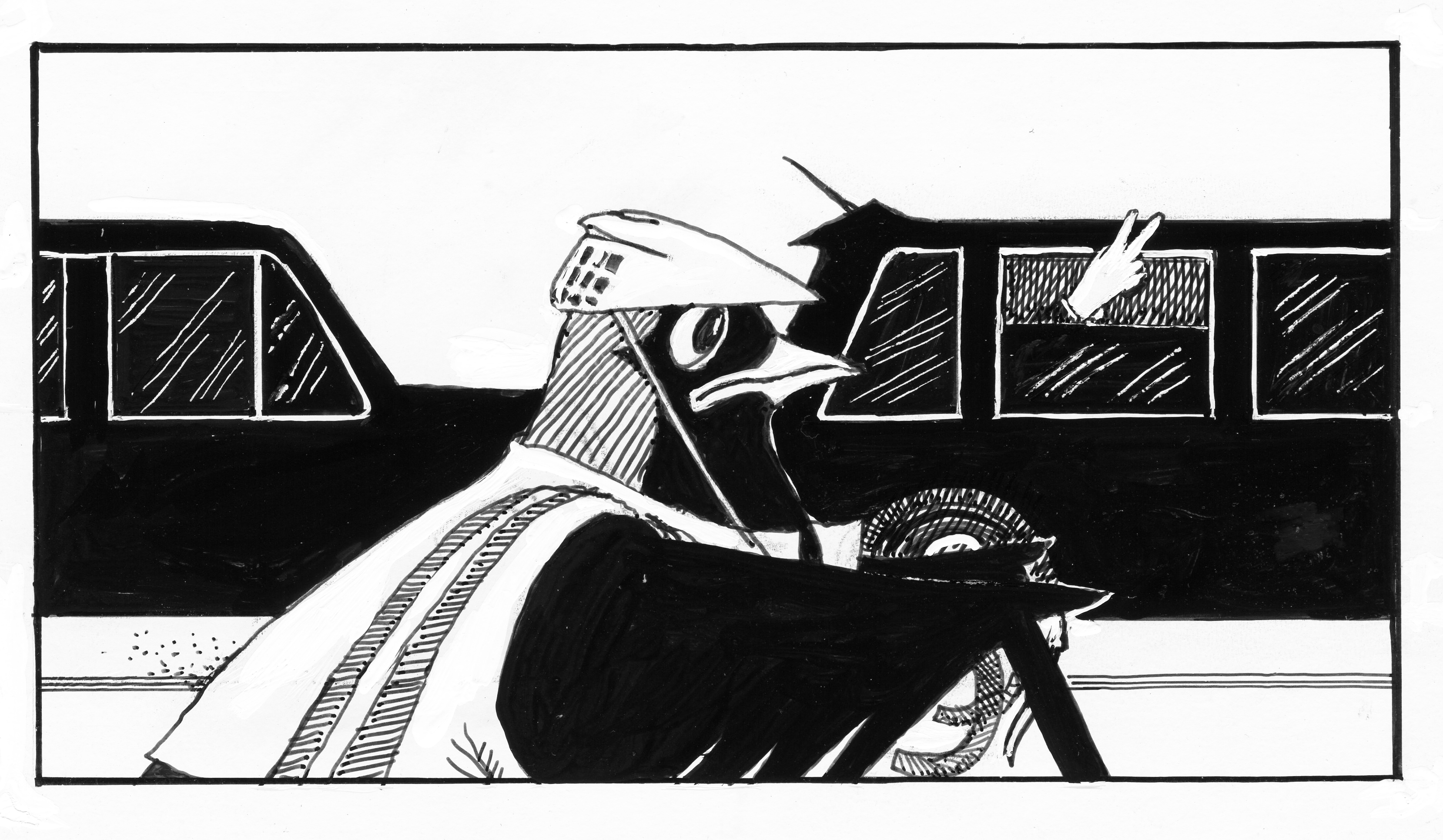
    What is the difference between a line of black limousines at a Mob funeral in Brooklyn and an identical cavalcade at the opening party of the new Serpentine Gallery annexe in Hyde Park? Well, not as much as you’d think. Although Cosa Nostra are undoubtedly the subtler of the two coteries represented, both have a common interest in protection rackets. In the case of the Serpentine this means inflating the reputation and value of the deluxe ‘branded’ art which will be shown there and will have originated, or will end up, in the collections of the limousines’ occupants.

    Unaware that a shindig was in progress I cycled past the Serpentine while the limos were chrome-to-chrome outside. At first this didn’t register as unusual: another evening, another hoolie for the vain and vulgar at the Serpentine… One has got used to it. But the image of those black limousines, just that few inches too long, that shade too opaque, that chauffeur-wipe too shiny, lingered until it formed an indelible symbol for everything that stinks about State Art. What is passed off as ‘public interest’ and ‘the public appetite for contemporary art’ (the latter is the often repeated favourite lie of President-For-Life Serota himself) is yet another means by which the wealthy protect their interests. The public has no say in what is shown in the Serpentine despite the fact we have always paid for it. And if we don’t like it we can eat cake.

    Here is a publicly funded art gallery which specializes in showing recent art of negligible visible quality, that the public couldn’t care a toss about, which is hawked by the world’s wealthiest and most powerful shopkeepers, has its value maintained by salerooms who rig prices during glamorous soirées, is traded in by billionaire collectors who purport to like it but treat it merely as a secure commodity of exchange, and is endorsed using a new language written by “international curators” no literate outsider can fathom. You couldn’t invent a more perfectly rounded system of self-interest and exclusion.

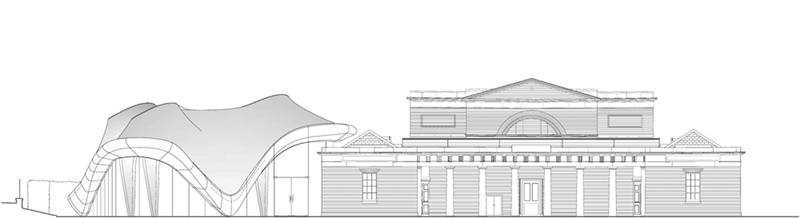
    The limos were celebrating the Serpentine’s latest expansion. A listed neo-classical building of agreeable proportions by Decimus Burton, formerly an arsenal close to the main gallery, has had a café and restaurant designed by Zaha Hadid attached to it. Enjoying limitless freedoms of manoeuvre as it does, State Art never has any problem acquiring permission for one of its chosen architects to tamper with the historically important and therefore supposedly protected. In this case what resembles the roots of a gigantic wisdom tooth have been impacted on the side of a Doric portico. It couldn’t be less sympathetic and like everything gratuitously eye-catching it is unnecessary. New gallery spaces are poky and the café charges £3.38 for a small cup of waiter-delivered coffee. How very charitable – come to think of it just like those other exemplary, public-spirited ‘charities’, the Royal Academy and The Art Fund.

    Between them the limousines paid the £14 million cost for the expansion, as well they might as many of them will be its main beneficiaries. Running costs and an exhibition programme have been underwritten with a £3 million endowment from the Lottery. This comes on top of the minimum £1.3 million a year the gallery has always received from the Arts Council. In fact, in the 19-year history of the National Lottery, the Serpentine has received no fewer than twelve awards totalling £6.8 million. Thus is the Serpentine the means by which money from the poorest, those who buy lotto tickets and scratch cards, is laundered to assist the wealthiest (non-doms many of them) in the appreciation of their investment portfolios. This revolting system is defended by the all-purpose State Art lie that the likes of the Serpentine “provide a public service”. Up to a point, but the real winners are behind all that dark glass.

    The Serpentine is run by a pair perfectly suited to their task: one is a dim socialite who does as she’s told, while the other is a Swiss “international curator” who speaks six languages and has neither penned nor spoken a clear sentence in any one of them.

    So who pays for the Serpentine? You do. Who is it for? Definitely not you. What is its purpose? Mind your own business.

    David Lee

  • Serpentine Gallery extension: limousines are good causes

    Serpentine Gallery extension: limousines are good causes

    What is the difference between a line of black limousines at a Mob funeral in Brooklyn and an identical cavalcade at the opening party of the new Serpentine Gallery annexe in Hyde Park? Well, not as much as you’d think. Although Cosa Nostra are undoubtedly the subtler of the two coteries represented, both have a common interest in protection rackets. In the case of the Serpentine this means inflating the reputation and value of the deluxe ‘branded’ art which will be shown there and will have originated, or will end up, in the collections of the limousines’ occupants.

    Unaware that a shindig was in progress I cycled past the Serpentine while the limos were chrome-to-chrome outside. At first this didn’t register as unusual: another evening, another hoolie for the vain and vulgar at the Serpentine… One has got used to it. But the image of those black limousines, just that few inches too long, that shade too opaque, that chauffeur-wipe too shiny, lingered until it formed an indelible symbol for everything that stinks about State Art. What is passed off as ‘public interest’ and ‘the public appetite for contemporary art’ (the latter is the often repeated favourite lie of President-For-Life Serota himself) is yet another means by which the wealthy protect their interests. The public has no say in what is shown in the Serpentine despite the fact we have always paid for it. And if we don’t like it we can eat cake.

    Here is a publicly funded art gallery which specializes in showing recent art of negligible visible quality, that the public couldn’t care a toss about, which is hawked by the world’s wealthiest and most powerful shopkeepers, has its value maintained by salerooms who rig prices during glamorous soirées, is traded in by billionaire collectors who purport to like it but treat it merely as a secure commodity of exchange, and is endorsed using a new language written by “international curators” no literate outsider can fathom. You couldn’t invent a more perfectly rounded system of self-interest and exclusion.

    The limos were celebrating the Serpentine’s latest expansion. A listed neo-classical building of agreeable proportions by Decimus Burton, formerly an arsenal close to the main gallery, has had a café and restaurant designed by Zaha Hadid attached to it. Enjoying limitless freedoms of manoeuvre as it does, State Art never has any problem acquiring permission for one of its chosen architects to tamper with the historically important and therefore supposedly protected. In this case what resembles the roots of a gigantic wisdom tooth have been impacted on the side of a Doric portico. It couldn’t be less sympathetic and like everything gratuitously eye-catching it is unnecessary. New gallery spaces are poky and the café charges £3.38 for a small cup of waiter-delivered coffee. How very charitable – come to think of it just like those other exemplary, public-spirited ‘charities’, the Royal Academy and The Art Fund.

    Between them the limousines paid the £14 million cost for the expansion, as well they might as many of them will be its main beneficiaries. Running costs and an exhibition programme have been underwritten with a £3 million endowment from the Lottery. This comes on top of the minimum £1.3 million a year the gallery has always received from the Arts Council. In fact, in the 19-year history of the National Lottery, the Serpentine has received no fewer than twelve awards totalling £6.8 million. Thus is the Serpentine the means by which money from the poorest, those who buy lotto tickets and scratch cards, is laundered to assist the wealthiest (non-doms many of them) in the appreciation of their investment portfolios. This revolting system is defended by the all-purpose State Art lie that the likes of the Serpentine “provide a public service”. Up to a point, but the real winners are behind all that dark glass.

    The Serpentine is run by a pair perfectly suited to their task: one is a dim socialite who does as she’s told, while the other is a Swiss “international curator” who speaks six languages and has neither penned nor spoken a clear sentence in any one of them.

    So who pays for the Serpentine? You do. Who is it for? Definitely not you. What is its purpose? Mind your own business.

    David Lee

    The Jackdaw, November 2013